Context: Theyyam is a ritualistic art form practiced in the northern districts of Kerala, especially Kannur and Kasaragod. It is a sacred performance tradition in which the performer is believed to embody a deity or ancestral spirit during the ritual.
Key Features
- Religious–ritual nature: Performed in kavus (sacred groves) and temples.
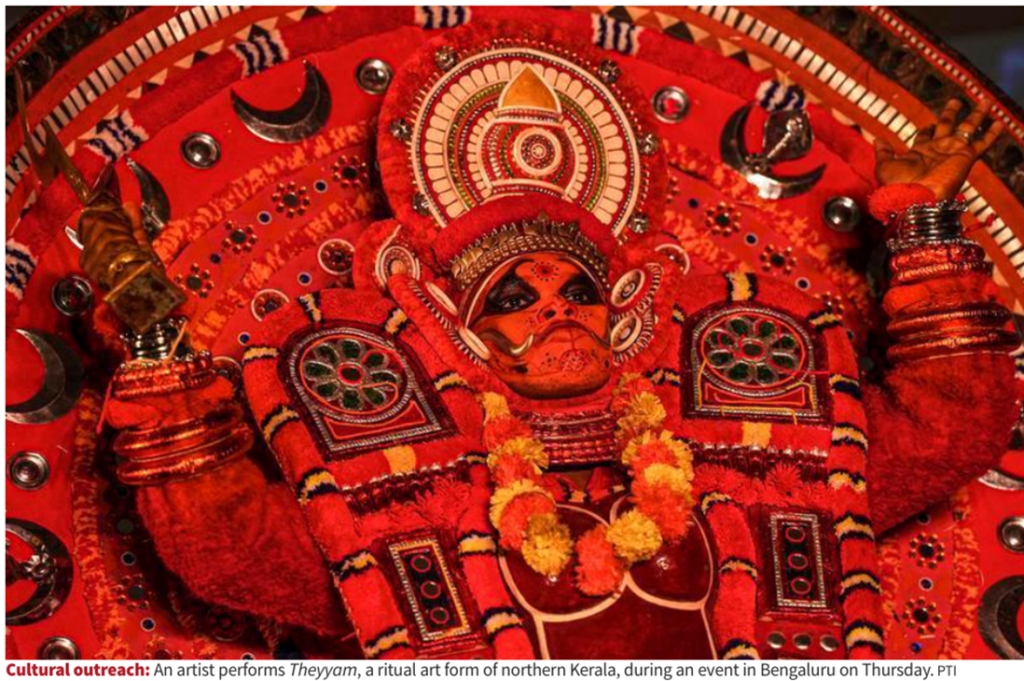
- Transformation of the performer: Elaborate make-up, face painting, towering headgear, and costumes symbolize the deity.
- Trance and possession: The performer enters a trance state, during which devotees seek blessings and oracles.
- Social dimension: Many Theyyam deities represent folk heroes, ancestors, and oppressed communities, reflecting social justice themes.
Music and Performance
- Accompanied by traditional percussion like chenda and elathalam.
- Includes ritual dances, songs, and fire rituals.
Cultural Significance
- Preserves folk beliefs, oral traditions, and local history.
- Represents the syncretic culture of Kerala, blending religion, art, and social memory.