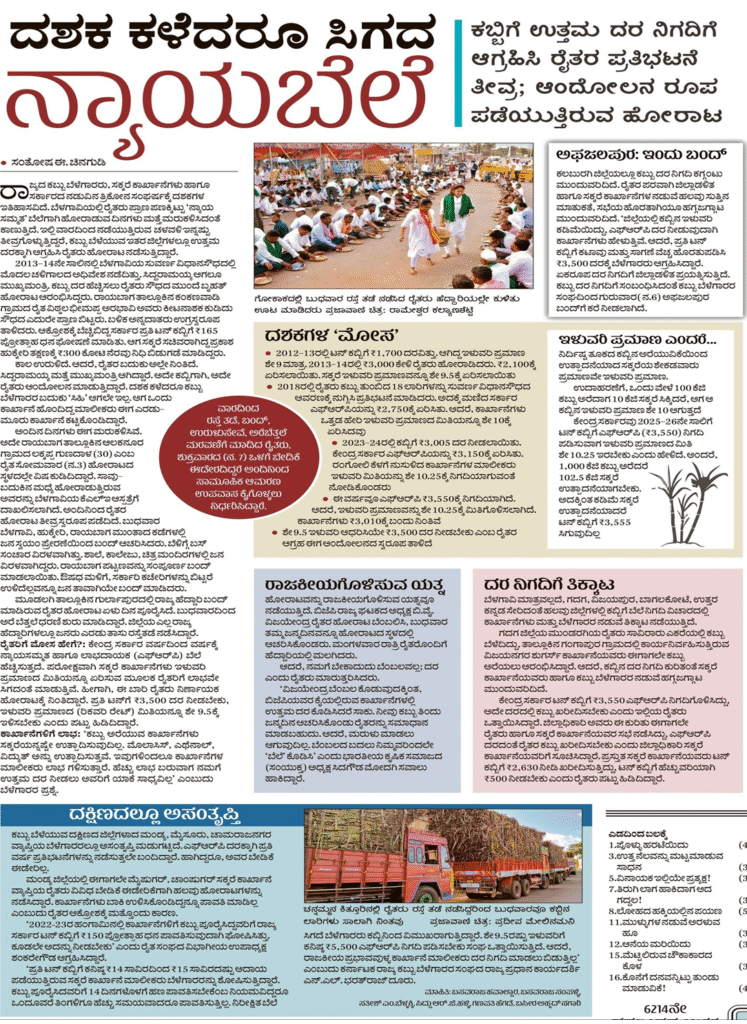
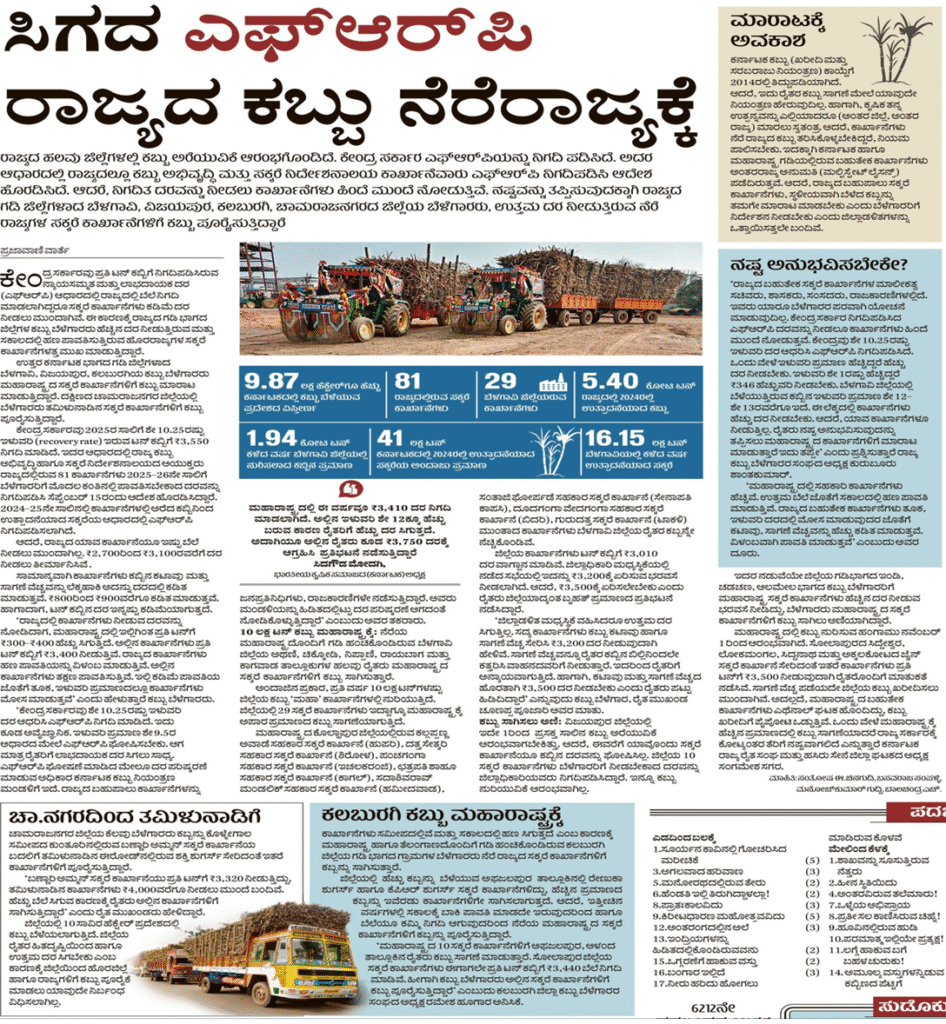
‘ಕೇಂದ್ರದಿಂದ ಸಕ್ಕರೆ ಕಾರ್ಖಾನೆ ಮಾಲೀಕರು ಹಾಗೂ ರೈತರಿಗೆ ಅನ್ಯಾಯವಾಗಿದೆ. ರಾಜಕೀಯ ಪಕ್ಷಗಳ ಪ್ರತಿನಿಧಿಗಳು, ಮಾಲೀಕರು, ರೈತರನ್ನು ಒಳಗೊಂಡು ಕೇಂದ್ರಕ್ಕೆ ನಿಯೋಗ ತೆಗೆದುಕೊಂಡು ಹೋಗಲಾಗುವುದು’ ಎಂದು ಮುಖ್ಯಮಂತ್ರಿ ಸಿದ್ದರಾಮಯ್ಯ ಹೇಳಿದರು.
ಸಕ್ಕರೆಯ ಎಂಎಸ್ಪಿ ಹೆಚ್ಚಳ, ಎಥೆನಾಲ್ ಹಂಚಿಕೆ ಹೆಚ್ಚಳ, ಸಕ್ಕರೆ ರಫ್ತು ಮಿತಿಯನ್ನು ಹೆಚ್ಚಿಸುವುದು ಸೇರಿದಂತೆ ಕೇಂದ್ರ ಸರ್ಕಾರವನ್ನು ಒತ್ತಾಯಿಸಲಾಗುವುದು’ ಎಂದರು.
ಕೇಂದ್ರ ಸರ್ಕಾರ ಕಟಾವು ಮತ್ತು ಸಾಗಣೆ ವೆಚ್ಚ ಸೇರಿಸಿ ಶೇ 10.5 ಇಳುವರಿ ಪ್ರಮಾಣ ಇರುವ ಪ್ರತಿ ಟನ್ ಕಬ್ಬಿಗೆ ನ್ಯಾಯಯುತ ಮತ್ತು ಲಾಭದಾಯಕ ದರ (ಎಫ್ಆರ್ಪಿ) ₹3,550 ನಿಗದಿಪಡಿಸಿದೆ. ಸಾಗಣೆ, ಕಟಾವು ವೆಚ್ಚ ಹೊರತುಪಡಿಸಿ ಸಕ್ಕರೆ ಕಾರ್ಖಾನೆಗಳಿಗೆ ಪೂರೈಸುವ ಕಬ್ಬಿಗೆ ₹3,500 ದರ ನೀಡಬೇಕು ಎಂದು ಆಗ್ರಹಿಸಿ ಬೆಳಗಾವಿ, ವಿಜಯಪುರ, ಬಾಗಲಕೋಟೆ, ಹಾವೇರಿ ಮತ್ತು ಕಲಬುರಗಿ ಸೇರಿದಂತೆ ವಿವಿಧೆಡೆ ರೈತರು ಅ.30ರಿಂದ ಪ್ರತಿಭಟನೆ ನಡೆಸುತ್ತಿದ್ದರು.
ಸಚಿವರು ಸ್ಥಳಕ್ಕೆ ತೆರಳಿ ಮಾತುಕತೆ ನಡೆಸಿದರೂ ರೈತರು ಪಟ್ಟು ಸಡಿಲಿಸಿರಲಿಲ್ಲ. ಬೆಳಗಾವಿ ಜಿಲ್ಲಾಧಿಕಾರಿ ನಿಗದಿ ಮಾಡಿದ್ದ ₹3,200 ದರವನ್ನೂ ಬೆಳೆಗಾರರು ತಿರಸ್ಕರಿಸಿದ್ದರು.
ಮುಖ್ಯಮಂತ್ರಿ ಸಿದ್ದರಾಮಯ್ಯ ಅವರು ಸಕ್ಕರೆ ಕಾರ್ಖಾನೆ ಮಾಲೀಕರು ಮತ್ತು ರೈತ ಮುಖಂಡರ ಸಭೆ ನಡೆಸಿ, ಪರಿಷ್ಕೃತ ದರ ಘೋಷಣೆ ಮಾಡಿದರು. ಕಬ್ಬಿನಇಳುವರಿಪ್ರಮಾಣಜಿಲ್ಲೆಯಿಂದಜಿಲ್ಲೆಗೆವ್ಯತ್ಯಾಸವಾಗುತ್ತದೆ. ಹಾಗಾಗಿ, ಎಲ್ಲಇಳುವರಿಪ್ರಮಾಣದಕಬ್ಬಿಗೂಪ್ರತಿಟನ್ಗೆ ₹100ರೂಹೆಚ್ಚಳಅನ್ವಯವಾಗಲಿದೆಎಂದುಖಚಿತಪಡಿಸಿದರು.
ಭಾರತದ ‘ವಿಶ್ವ ದರ್ಜೆ’ಯ ಡಿಜಿಟಲ್ ಸಾರ್ವಜನಿಕ ಮೂಲಸೌಕರ್ಯ ಮತ್ತು ಸರ್ಕಾರದ ಕಾರ್ಯಕ್ರಮಗಳಿಂದ ಪುರುಷರು ಮತ್ತು ಮಹಿಳೆಯರಿಗೆ ಹಣಕಾಸು ಸೇವೆಗಳು ಸುಲಭವಾಗಿ ಲಭ್ಯವಾಗುವಂತಾಗಿವೆ ಎಂದು ವಿಶ್ವ ಬ್ಯಾಂಕ್ನ ಹಣಕಾಸು ವಲಯದ ಮೌಲ್ಯಮಾಪನ ವರದಿ ತಿಳಿಸಿದೆ.
ವಿಶೇಷವಾಗಿ ಮಹಿಳೆಯರ ಪಾಲ್ಗೊಳ್ಳುವಿಕೆ ಪ್ರಮಾಣ ಹೆಚ್ಚಳವಾಗಬೇಕು. ವ್ಯಕ್ತಿಗಳು ಮತ್ತು ಎಂಎಸ್ಎಂಇಗಳಿಗೆ ಹೆಚ್ಚಿನ ಹಣಕಾಸು ಸೌಲಭ್ಯ ಲಭ್ಯವಾಗುವಂತೆ ಮಾಡಬೇಕು. ಸಹಕಾರಿ ಬ್ಯಾಂಕ್ಗಳ ಮೇಲೆ ಪ್ರಾಧಿಕಾರದ ನಿಯಂತ್ರಣ ಅಗತ್ಯ ಎಂದು ಸಲಹೆ ನೀಡಿದೆ.
ಹಣಕಾಸು ವಲಯದ ಮೌಲ್ಯಮಾಪನ ಕಾರ್ಯಕ್ರಮವು (ಎಫ್ಎಸ್ಎಪಿ) ಅಂತರರಾಷ್ಟ್ರೀಯ ಹಣಕಾಸು ನಿಧಿ ಮತ್ತು ವಿಶ್ವ ಬ್ಯಾಂಕ್ನ ಜಂಟಿ ಕಾರ್ಯಕ್ರಮವಾಗಿದೆ. ಇದು ದೇಶದ ಹಣಕಾಸು ವಲಯದ ಸಮಗ್ರ ಮತ್ತು ಆಳವಾದ ವಿಶ್ಲೇಷಣೆಯನ್ನು ಮಾಡುತ್ತದೆ.
ಜಿಎಸ್ಟಿ ಇಳಿಕೆ ಮತ್ತು ಆದಾಯ ತೆರಿಗೆ ವಿನಾಯಿತಿಯಿಂದ ಜನರು ಹೆಚ್ಚು ಹಣ ವ್ಯಯಿಸಲು ಉತ್ತೇಜನ ನೀಡಿದೆ ಎಂದು ಹೇಳಿದ್ದಾರೆ.
ಆರ್ಥಿಕ ಸಮೀಕ್ಷೆ ವರದಿ ಸಹ ಜಿಡಿಪಿ ಬೆಳವಣಿಗೆ ಶೇ 6.3ರಿಂದ ಶೇ 6.8ರಷ್ಟಾಗಲಿದೆ ಎಂದು ಅಂದಾಜಿಸಿದೆ. ಅಮೆರಿಕ ಮತ್ತು ಭಾರತದ ನಡುವಿನ ದ್ವಿಪಕ್ಷೀಯ ವ್ಯಾಪಾರ ಒಪ್ಪಂದವು ಬೆಳವಣಿಗೆಗೆ ಉತ್ತೇಜನ ನೀಡಲಿದೆ. ಈ ಒಪ್ಪಂದ ಶೀಘ್ರ ಆಗಲಿದೆ ಎಂದು ಹೇಳಿದ್ದಾರೆ.
ಪ್ರಸಕ್ತ ಆರ್ಥಿಕ ವರ್ಷದ ಜೂನ್ ತ್ರೈಮಾಸಿಕದಲ್ಲಿ ದೇಶದ ಜಿಡಿಪಿ ಬೆಳವಣಿಗೆ ಶೇ 7.8ರಷ್ಟಾಗಿತ್ತು. ಕೃಷಿ ವಲಯ ಮತ್ತು ಸೇವಾ ವಲಯದಿಂದ ಈ ಪ್ರಗತಿ ಸಾಧಿಸಿತ್ತು.
‘ಮಂಗಳೂರಿನ ಗೇರು ಸಂಸ್ಕರಣಾ ಉದ್ಯಮಕ್ಕೆ (1925ರಲ್ಲಿ ಆರಂಭ) ನೂರು ವರ್ಷ ತುಂಬಿರುವ ಹಿನ್ನೆಲೆಯಲ್ಲಿ ‘ಗೋಡಂಬಿ ಶತಮಾನೋತ್ಸವ ಶೃಂಗ’ವನ್ನು ಇದೇ 14ರಿಂದ 16ರವರೆಗೆ ಇಲ್ಲಿ ಆಯೋಜಿಸಲಾಗಿದೆ’ ಎಂದು ಸಂಘದ ಅಧ್ಯಕ್ಷ ಎಸ್. ಅನಂತ ಕೃಷ್ಣ ರಾವ್ ಹಾಗೂ ಶೃಂಗದ ಸಂಚಾಲಕ ಕೆ. ಪ್ರಕಾಶ್ ಕಲ್ಬಾವಿ ಇಲ್ಲಿ ಸುದ್ದಿಗೋಷ್ಠಿಯಲ್ಲಿ ತಿಳಿಸಿದರು.
‘ಗೇರು ಸಂಸ್ಕರಣೆಯಲ್ಲಿ ಹೊಸ ಆವಿಷ್ಕಾರಗಳ ಪರಿಚಯ, ಸಮಸ್ಯೆಗಳ ಬಗ್ಗೆ ಚರ್ಚೆ ಇರಲಿದೆ. ದೇಶದಲ್ಲಿ ಗೋಡಂಬಿ ಸಂಸ್ಕರಣೆಯಲ್ಲಿ ತೊಡಗಿರುವ ಸಾವಿರಕ್ಕೂ ಹೆಚ್ಚು ಉದ್ಯಮಿಗಳು ಪಾಲ್ಗೊಳ್ಳಲಿದ್ದಾರೆ’ ಎಂದರು.
‘ರಾಷ್ಟ್ರ ಮತ್ತು ಅಂತರ ರಾಷ್ಟ್ರೀಯ ಮಟ್ಟದಲ್ಲಿ ಕರ್ನಾಟಕ ಅದರಲ್ಲೂ ಮಂಗಳೂರು ಗೋಡಂಬಿಗೆ ಬೇಡಿಕೆ ಹೆಚ್ಚಿದೆ. ಆರಂಭದಲ್ಲಿ ವರ್ಷಕ್ಕೆ 50 ಸಾವಿರ ಟನ್ ಇದ್ದ ಕಚ್ಚಾ ಗೇರು ಬೀಜ ಸಂಸ್ಕರಣೆಯ ಪ್ರಮಾಣ ಈಗ ವರ್ಷಕ್ಕೆ 5 ಲಕ್ಷ ಟನ್ಗೆ ತಲುಪಿದೆ. ನವಮಂಗಳೂರು ಬಂದರಿಗೆ ಏಳು ತಿಂಗಳಲ್ಲಿ 3.45 ಲಕ್ಷ ಟನ್ ಕಚ್ಚಾಗೇರು ಆಮದಾಗಿದ್ದು, ಒಂದು ವರ್ಷದಲ್ಲಿ ಇದರ ಪ್ರಮಾಣ 5 ಲಕ್ಷ ಟನ್ ಆಗಲಿದೆ’ ಎಂದರು.
ಭಾರತದ ಸಂಸ್ಕರಣಾ ಉದ್ಯಮಕ್ಕೆ 20 ಲಕ್ಷ ಟನ್ ಕಚ್ಚಾ ಗೇರು ಬೀಜ ಬೇಕು. ಆದರೆ, ನಮ್ಮ ದೇಶದಲ್ಲಿ ಬೆಳೆಯುವುದು ಸರಾಸರಿ 5 ಲಕ್ಷ ಟನ್ ಮಾತ್ರ. ನಮಗೆ ಬೇಕಿರುವ ಕಚ್ಚಾ ಗೇರು ಬೀಜಗಳ ಪೈಕಿ ಶೇ 25ರಷ್ಟು ಮಾತ್ರ ದೇಶೀಯವಾಗಿ ಬೆಳೆಯಲಾಗುತ್ತಿದೆ. ಶೇ 75ರಷ್ಟು ಹೊರದೇಶಗಳನ್ನೇ ಅವಲಂಬಿಸಿದ್ದೇವೆ.
ಕರ್ನಾಟಕದಲ್ಲಿ ಕಚ್ಚಾ ಗೇರು ಬೆಳೆಯುವ ಪ್ರಮಾಣ 50 ಸಾವಿರ ಟನ್ನಷ್ಟು ಮಾತ್ರ. ರಾಜ್ಯದ 26 ಜಿಲ್ಲೆಗಳಲ್ಲಿ ಗೇರು ಕೃಷಿ ಇದ್ದು, ಇದಕ್ಕೆ ಇನ್ನಷ್ಟು ಉತ್ತೇಜನ ನೀಡಬೇಕು. ಗೇರು ಹಣ್ಣಿನಿಂದ ಕಚ್ಚಾ ಗೇರು ಬೀಜ ಹೊರ ತೆಗೆದ ನಂತರ, ಆ ಹಣ್ಣು (ಹಣ್ಣಿನ ಶೇ 80ರಷ್ಟು ಭಾಗ) ಈಗ ವ್ಯರ್ಥವಾಗುತ್ತಿದೆ. ಅದರಿಂದ ಉಪ ಉತ್ಪನ್ನ ತಯಾರಿಸಿ ಈ ಬೆಳೆಯನ್ನು ಲಾಭದಾಯಕವಾಗಿಸಬೇಕಿದೆ ಎಂದರು.
ದೇಶೀಯ ಮಾರುಕಟ್ಟೆಯಲ್ಲಿ ಬೇಡಿಕೆ ಮತ್ತು ದರ ಹೆಚ್ಚಾಗಿದೆ. ಹೀಗಾಗಿ ನಮ್ಮ ದೇಶದ ಗೋಡಂಬಿ ರಫ್ತು ಪ್ರಮಾಣ ಕೇವಲ 50 ಸಾವಿರ ಟನ್ನಷ್ಟು ಮಾತ್ರ ಇದೆ ಎಂದು ಹೇಳಿದರು.
ರಾಜ್ಯದ ಕರಾವಳಿಯಲ್ಲಿ ಅಂದಾಜು 400 ಗೋಡಂಬಿ ಸಂಸ್ಕರಣಾ ಘಟಕಗಳು ಇದ್ದವು. ಈಗ 250 ಘಟಕಗಳು ಮಾತ್ರ ಕಾರ್ಯನಿರ್ವಹಿಸುತ್ತಿವೆ. ಯಾಂತ್ರೀಕರಣಕ್ಕೆ ಒಗ್ಗಿಕೊಳ್ಳದಿರುವುದು ಮತ್ತಿತರ ಕಾರಣ ಕೆಲ ಘಟಕಗಳು ಮುಚ್ಚಿವೆ. ಘಟಕಗಳು ಕಡಿಮೆಯಾದರೂ, ಗೋಡಂಬಿ ಸಂಸ್ಕರಣೆಯ ಪ್ರಮಾಣ ಹೆಚ್ಚುತ್ತಲೇ ಇದೆ ಎಂದು ಅವರು ಹೇಳಿದರು.
ಎರ್ನಾಕುಲಂ ಜಂಕ್ಷನ್ನಿಂದ ಹೊರಡುವ ರೈಲು ತ್ರಿಶ್ಶೂರ್, ಪಾಲಕ್ಕಾಡ್, ಕೊಯಮತ್ತೂರು, ತಿರುಪ್ಪೂರು, ಈರೋಡ್, ಸೇಲಂ, ಕೃಷ್ಣರಾಜಪುರಂ ನಿಲ್ದಾಣಗಳ ಮೂಲಕ ಬೆಂಗಳೂರಿನ ಕ್ರಾಂತಿವೀರ ಸಂಗೊಳ್ಳಿ ರಾಯಣ್ಣ ರೈಲ್ವೆ ನಿಲ್ದಾಣ ತಲುಪಲಿದೆ. ಕೇರಳ–ತಮಿಳುನಾಡು–ಕರ್ನಾಟಕದಲ್ಲಿ ಸಂಚರಿಸುವ ಈ ರೈಲು ಎಂಟು ಕೋಚ್ಗಳನ್ನು ಒಳಗೊಂಡಿರಲಿದೆ.
ಒಪ್ಪಂದದ ಪ್ರಕಾರ, ಎಫ್404–ಜಿಇ–ಐಎನ್20 ಎಂಜಿನ್ಗಳ ವಿತರಣೆಯು 2027ರಿಂದ ಪ್ರಾರಂಭವಾಗಲಿದ್ದು, 2032ರ ವೇಳೆಗೆ ಪೂರೈಕೆ ಪೂರ್ಣಗೊಳಿಸಬೇಕಾಗಿದೆ ಎಂದು ಅಧಿಕಾರಿಗಳು ತಿಳಿಸಿದ್ದಾರೆ.
97 ಲಘು ಯುದ್ಧ ವಿಮಾನ ಎಂಕೆ1ಎ ಕಾರ್ಯಕ್ರಮವನ್ನು ಕಾರ್ಯಗತ ಗೊಳಿಸಲು ಎಂಜಿನ್ಗಳು ಹಾಗೂ ‘ಪೂರಕ ಪ್ಯಾಕೇಜ್’ ಖರೀದಿಗೆ ಜನರಲ್ ಎಲೆಕ್ಟ್ರಿಕ್ ಕಂಪನಿಯೊಂದಿಗೆ ಒಪ್ಪಂದ ಮಾಡಿಕೊಳ್ಳಲಾಗಿದೆ.
ಭಾರತೀಯ ವಾಯುಪಡೆಗೆ 97 ತೇಜಸ್ ಎಂಕೆ–1ಎ ಲಘು ಯುದ್ಧ ವಿಮಾನಗಳನ್ನು ಖರೀದಿಸಲು ರಕ್ಷಣಾ ಸಚಿವಾಲಯವು ಎಚ್ಎಎಲ್ನೊಂದಿಗೆ ಸೆಪ್ಟೆಂಬರ್ನಲ್ಲಿ ₹62,370 ಕೋಟಿ ಮೊತ್ತದ ಒಪ್ಪಂದ ಮಾಡಿಕೊಂಡಿತ್ತು.
ಭಾರತದ ಹಾಕಿ ಸುವರ್ಣಯುಗದಲ್ಲಿ ಆಡಿದ್ದ ಗುರುಬಕ್ಷ್ ಸಿಂಗ್, ಅಸ್ಲಂ ಶೇರ್ ಖಾನ್, ಹರ್ಬಿಂದರ್ ಸಿಂಗ್, ಅಜಿತ್ ಪಾಲ್ ಸಿಂಗ್, ಅಶೋಕ್ ಕುಮಾರ್, ಬಿ.ಪಿ.ಗೋವಿಂದ, ಜಾಫರ್ ಇಕ್ಬಾಲ್, ಬ್ರಿಗೇಡಿಯರ್ ಹರಚರಣ್ ಸಿಂಗ್, ವಿನೀತ್ ಕುಮಾರ್, ಮಿರ್ ರಂಜನ್ ನೇಗಿ, ರೋಮಿಯೊ ಜೇಮ್ಸ್, ಅಸುಂತ ಲಾಕ್ರಾ, ಸುಭದ್ರ ಪ್ರಧಾನ್ ಇವರಲ್ಲಿ ಒಳಗೊಂಡಿದ್ದರು.
ಈ ಸಂದರ್ಭದಲ್ಲಿ ಹಾಜರಿದ್ದ ಕೇಂದ್ರ ಕ್ರೀಡಾ ಸಚಿವ ಮನ್ಸುಖ್ ಮಾಂಡವೀಯ ಅವರು ಭಾರತದ ರಾಷ್ಟ್ರೀಯ ಕ್ರೀಡೆಯ ವೈಭವಯುತ ಪಯಣವನ್ನು ಕೊಂಡಾಡಿದರು. ದೇಶದ ಕ್ರೀಡಾ ಪರಂಪರೆಯಲ್ಲಿ ಈ ಆಟದ ಗಟ್ಟಿ ಬೇರುಗಳನ್ನು ನೆನಪಿಸಿದರು.
‘ಈ ಕ್ರೀಡೆಯು ದೇಶದಲ್ಲಿ ವಿವಿಧ ಹಂತಗಳನ್ನು ದಾಟಿದೆ. ಭಾರತ ಕ್ರೀಡಾ ಕ್ಷೇತ್ರದಲ್ಲಿ ಮೆರೆಯಬಹುದು ಎಂಬುದನ್ನು ಭಾರತ ಹಾಕಿ ತಂಡವು ಒಲಿಂಪಿಕ್ಸ್ನಲ್ಲಿ ಉತ್ತಮ ಪ್ರದರ್ಶನದ ಮೂಲಕ ಸಾಧಿಸಿ ತೋರಿಸಿತು’ ಎಂದು ಮಾಂಡವೀಯ ಬಣ್ಣಿಸಿದರು.
State enhances sugarcane FRP by ₹100; farmers call off strike
Context: Farmers will now get ₹3,300 per tonne, excluding harvesting and transportation cost, against the FRP of ₹3,200 fixed by the Centre. State government and sugar mills will contribute ₹50 each.
The Karnataka government announced an enhancement in the Fair and Remunerative Price (FRP) for sugarcane by ₹100 per tonne. Following this, farmers withdrew their protest.
The farmers will now get ₹3,300 per tonne (excluding harvesting and transportation cost) as against the FRP of ₹3,200 per tonne that has been fixed by the Centre.
In the increased amount, the State government and the sugar mills will contribute ₹50 each.
All-party delegation
The State government also decided to take an all-party delegation, which will also include farmers and sugar mill representatives, to the Centre to press for increasing the Minimum Support Price (MSP) for sugar, the FRP for sugarcane, the limit for export of sugar and ethanol production and distribution.
The farmers have been protesting since October 30 seeking an increase in the FRP across sugarcane growing districts of Belagavi, Vijayapura, Bagalkot, Haveri, and Kalaburagi.
In May, the Centre announced a FRP of ₹3,550 per tonne at the sugar recovery rate of 10.5%.
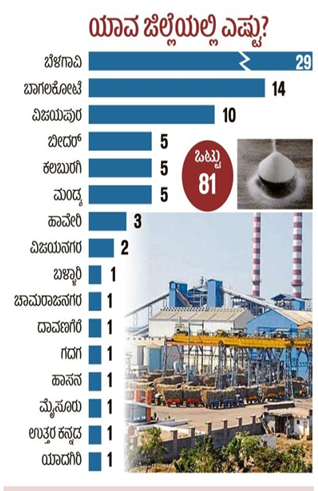
As many as 81 mills operate in Karnataka, of which one is in the public sector, while 11 are in the cooperative sector, and the rest are in the private sector.
The State government estimates that about 6 crore tonnes of cane will be crushed this year as against the 5.6 crore tonnes last year.
“Both farmer leaders and sugar mill representatives have explained their problem owing to the Centre’s policy.
The farmers are opposed to the FRP fixed at ₹3,100 for sugar recovery rate at 10.25% and ₹3,200 at the rate of 11.25%. We have decided to take a delegation to the Centre to discuss the issue.
Though the sugarcane yield differs from district to district, the ₹100 hike per tonne will be implemented uniformly,” the Chief Minister told presspersons.
The sugar mills have agreed to pay ₹3,250 per tonne as the FRP, and that the government will contribute another ₹50 per tonne. “Based on recovery rate, the FRP will be fixed in different districts.
The sugar mills have asked the government to revisit the proposal to impose 60 paise tax per unit on the power being sold by them, and will consider it.
Farmers have urged the government to open a laboratory to check the recovery rate in front of sugar mills.
They have also pointed out dues towards farmers by some factories.
Comparison Table: MSP vs FRP vs SAP
Parameter
MSP (Minimum Support Price)
FRP (Fair and Remunerative Price)
SAP (State Advised Price)
Who fixes it
Government of India (on recommendation of CACP)
Central Government (based on CACP & Cabinet approval)
Individual State Governments
Applicable Crops
23 major crops (mainly food grains, pulses, oilseeds, etc.)
Sugarcane only
Sugarcane (in some states like UP, Punjab, Haryana)
Purpose
To ensure farmers get a minimum price if market prices fall
To ensure sugarcane farmers get a fair return from sugar mills
To provide higher compensation above FRP as per local cost conditions
Legal Backing
Executive decision under Ministry of Agriculture
Statutory under Sugarcane (Control) Order, 1966
State policy decision — advisory, but often enforced by law in that state
Payment Responsibility
Government (through procurement agencies like FCI, NAFED, etc.)
Sugar mills directly pay farmers
Sugar mills (sometimes with state subsidy or enforced pricing)
Basis of Calculation
Cost of cultivation (A2 + FL + 50% profit margin)
Cost of production + reasonable profit margin (with sugar recovery % considered)
Local cost of cultivation, transport, irrigation, and farmer demand
National Example (2025-26)
Wheat MSP ₹2,275/quintal
Sugarcane FRP ₹355/quintal (for 10.25% recovery)
UP SAP ₹370–₹400/quintal; Punjab ₹380/quintal
Current Status in Karnataka (2025)
MSP not applicable for sugarcane
FRP applicable — ₹355/quintal fixed by Centre
SAP not yet announced (Union Minister suggests Karnataka adopt SAP like UP, Punjab)
Beneficiary Impact
Farmers of grains/pulses
Sugarcane farmers across India
Sugarcane farmers in states with SAP (better remuneration)
Challenges
Procurement delays, limited coverage
Uniform FRP doesn’t reflect state-specific costs
Fiscal burden on states, potential conflict with sugar mills
‘T.N.’s vision for inclusive economywill make blueprint for nation’
Context: In 2047, when India marks its centenary year of Independence, Tamil Nadu’s vision for sustainability and an inclusive economy will also become the blueprint for the nation.
The State has been at the forefront of renewable energy for many years. “At present, its third in terms of the total renewable energy [capacity] in the country.
The State is first in terms of wind capacity. It could continue to focus on this sector, and this will [benefit] the manufacturing ecosystem,”.
Southern States are advancing in tandem. “We can make significant progress by working on sustainability and towards enabling future growth. Sustainability is a profitable venture, something that is not spoken about,”.
10 Bills reserved for President, 170 granted assent: Raj Bhavan
Context: Clarification seeks to counter ‘unfounded and factually incorrect’ claims that the Tamil Nadu Governor has been delaying assent to Bills passed by State Assembly.
The Raj Bhavan said Governor R.N. Ravi had reserved 10 Bills for consideration by the President, as they were contrary to the provisions of the University Grants Commission (UGC) regulations framed under an Act of Parliament. They were “considered beyond the remit of the State Legislature”.
The Governor had granted assent to 81% of the 211 Bills received as of October 31, 2025.
The 10 Bills were initially withheld by the Governor, and the decisions were conveyed to the State government. However, they were adopted again by the Assembly and submitted to the Governor.
The clarification was issued after “certain unfounded and factually incorrect allegations” were made in the public domain that the Governor was delaying assent to Bills passed by the Assembly.
Between September 18, 2021, and October 31, 2025, a total of 211 Bills were received by the Governor, of which 170 were granted assent, while 27 were reserved for the President’s consideration.
Of the 27 Bills, 16 were reserved for the President’s consideration “at the request of the State government”. While four Bills were returned, two were withdrawn by the government.
Of the 170 Bills cleared, 73 were granted assent within a week; 61 within a month; 27 within three months; and nine after three months. Eight Bills were received in the last week of October this year, and they were under consideration, the Raj Bhavan said.
The Governor had examined every Bill with due diligence to uphold the rule of law and protect the interests of the people of Tamil Nadu, the Raj Bhavan said. He had always acted in accordance with the provisions of the Constitution, and had been performing his constitutional duties with “utmost sincerity, transparency, and commitment, and with complete fairness, diligence, and respect for democratic processes”, it added.
Trump hints at possible India visit next year, calls Modi a ‘great man’
Quad summit: India will host leaders from Australia, Japan, and the United States for the Quad summit in New Delhi after the 2024 summit was held in the U.S. However, the dates for the summit are yet to be announced.
Meanwhile, President Trump once again claimed that India has stopped buying from Russia.
Mr. Trump imposed 25% reciprocal tariffs and an additional 25% levies for New Delhi’s purchases of Russian oil, bringing the total duties imposed on India to 50%. India had described the U.S. action as “unfair, unjustified and unreasonable”.
Mr. Trump also reiterated his claim that he stopped the war between India and Pakistan in May using trade.
HAL inks $1-billion deal with GE Aerospace for 113 fighter jet engines
Context: Hindustan Aeronautics Limited (HAL) sealed a $1-billion deal with American defence major GE Aerospace to procure 113 jet engines for its Tejas light combat aircraft programme.
The firming up of the deal came notwithstanding a downturn in India-U.S. relations after the Trump administration slapped a 50% tariff on Indian goods.
Under the deal, the delivery of the F404-GE-IN20 engines will begin from 2027 and the supplies will have to be completed by 2032.
The size of the deal is learnt to be close to $1 billion (approximately ₹8,870 crore). HAL said it has entered into an agreement with General Electric Company to acquire the engines and support package for execution of 97 Light Combat Aircraft Mk1A programme.
The Defence Ministry in September had finalised a ₹62,370-crore deal with the state-owned aerospace major to procure 97 Tejas MK-1A light combat aircraft for the Indian Air Force.
ಸಂದರ್ಭ:‘ಸಂಸ್ಕರಿಸಿದನೀರಿನಗುಣಮಟ್ಟದಖಾತ್ರಿಗಾಗಿರಾಷ್ಟ್ರಮಟ್ಟದಲ್ಲಿಏಕರೂಪದನೀತಿರೂಪಿಸಲುಕೇಂದ್ರಸರ್ಕಾರಚಿಂತನೆನಡೆಸಿದೆ’ಎಂದು ನೀತಿ ಆಯೋಗದ ಸದಸ್ಯ ವಿ.ಕೆ.ಪಾಲ್ ತಿಳಿಸಿದರು.
ನೀತಿ ಆಯೋಗವು ಬೆಂಗಳೂರು ಜಲ ಮಂಡಳಿಯ ಸಹಯೋಗದಲ್ಲಿ ನಗರದಲ್ಲಿ ಆಯೋಜಿಸಿರುವ ಭಾರತದಲ್ಲಿ ಸಂಸ್ಕರಿಸಿದ ನೀರಿನ ಪುನರ್ಬಳಕೆ ಕುರಿತ ಎರಡು ದಿನಗಳ ಕಾರ್ಯಾಗಾರವನ್ನು ಉದ್ಘಾಟಿಸಿ ಅವರು ಮಾತನಾಡಿದರು.
‘ನಗರೀಕರಣದ ಪ್ರಭಾವದಿಂದಾಗಿ ನೀರಿನ ಬಳಕೆ ಪ್ರಮಾಣ ಹೆಚ್ಚಳವಾಗಿದೆ. ಆದರೆ, ಭಾರತದಲ್ಲಿ ನೀರಿನ ಲಭ್ಯತೆ ಕಡಿಮೆಯಾಗಿದೆ. ಅಂತರ್ಜಲ ಹಾಗೂ ನದಿ ನೀರಿನ ಅವಲಂಬನೆ ಜತೆಗೆ ಬಳಸಿದ ನೀರಿನ ಸಂಸ್ಕರಣೆಗೆ ಒತ್ತು ನೀಡಲಾಗುತ್ತಿದೆ.
ಈಗಾಗಲೇಕರ್ನಾಟಕವೂಸೇರಿ 11 ರಾಜ್ಯಗಳಲ್ಲಿಸಂಸ್ಕರಿಸಿದನೀರಿನಪುನರ್ಬಳಕೆನೀತಿಇದೆ. 2030ರೊಳಗೆ ಶೇ 50, 2045ರ ಹೊತ್ತಿಗೆ ಶೇ 100ರಷ್ಟು ನೀರಿನ ಪುನರ್ ಬಳಕೆಯನ್ನು ಮಾಡುವತ್ತ ದೇಶ ಹೆಜ್ಜೆ ಇಡಲೇಬೇಕಾಗಿರುವುದರಿಂದ ಏಕರೂಪದ ನೀತಿ ಜಾರಿಗೆ ಪ್ರಯತ್ನ ನಡೆದಿದೆ’ ಎಂದು ವಿವರಿಸಿದರು.
‘ಭಾರತದ ನಗರ ಪ್ರದೇಶಗಳಲ್ಲಿ ಪ್ರತಿ ನಿತ್ಯ 72,368 ಮಿಲಿಯನ್ ಲೀಟರ್ (ಎಂಎಲ್ಡಿ) ಕೊಳಚೆ ನೀರು ಉತ್ಪಾದನೆಯಾಗುತ್ತಿದೆ. ಇದರಲ್ಲಿ 31,885 ಎಂಎಲ್ಡಿ ಸಂಸ್ಕರಣೆ ಯಾಗುತ್ತಿದೆ. ಶೇ 60ರಷ್ಟು ಇನ್ನೂ ಸಂಸ್ಕರಣೆಯಾಗಬೇಕಿದೆ. ಬೆಂಗಳೂರಿನಲ್ಲಿನಿತ್ಯ 2,200 ಎಂಎಲ್ಡಿಕೊಳಚೆನೀರುಸಂಗ್ರಹವಾಗುತ್ತಿದ್ದು 1,300 ಎಂಎಲ್ಡಿಸಂಸ್ಕರಣೆಯಾಗುತ್ತಿದೆ. ಈ ಕಾರ್ಯ ಶ್ಲಾಘನೀಯ’ ಎಂದರು.
ಇದಕ್ಕಾಗಿ ಐದು ವರ್ಷಗಳಿಗೆ ₹518.27 ಕೋಟಿ ನಿಗದಿ ಮಾಡಲಾಗಿದೆ. ಬೆಂಗಳೂರಿನಲ್ಲಿ 15 ಸಾವಿರ ಮತ್ತು ರಾಜ್ಯದ ಇತರ ನಗರಗಳಲ್ಲಿ 10 ಸಾವಿರ ನವೋದ್ಯಮಗಳು ಸ್ಥಾಪನೆಗೊಳ್ಳಲಿವೆ.
ರಾಜ್ಯದಲ್ಲಿ ನವೋದ್ಯಮ ವ್ಯವಸ್ಥೆಯನ್ನು ಬಲಪಡಿಸುವ ಗುರಿಯನ್ನು ಸರ್ಕಾರ ಹೊಂದಿದೆ. ಅನುದಾನ, ಇನ್ಕ್ಯುಬೇಷನ್, ಮೂಲಸೌಕರ್ಯ, ಮಾರ್ಗದರ್ಶನ, ಕೌಶಲ ಅಭಿವೃದ್ಧಿ, ಮಾರುಕಟ್ಟೆ ಪ್ರವೇಶ, ವಿಸ್ತರಣೆ, ಅಂತರರಾಷ್ಟ್ರೀಯ ಸಹಯೋಗವನ್ನು ನವೋದ್ಯಮ ನೀತಿ ಒಳಗೊಂಡಿದೆ.
ಉದಯೋನ್ಮುಖ ಮತ್ತು ಮುಂದುವರಿದ ತಂತ್ರಜ್ಞಾನಗಳಲ್ಲಿ ರಾಜ್ಯವನ್ನು ಮುಂಚೂಣಿಗೆ ತರಲು ಕೃತಕ ಬುದ್ಧಿಮತ್ತೆ, ಬ್ಲಾಕ್ಚೈನ್, ಕ್ವಾಂಟಮ್ ಕಂಪ್ಯೂಟಿಂಗ್ ಮತ್ತು ಇತರ ಆಳವಾದ ತಂತ್ರಜ್ಞಾನ ಕ್ಷೇತ್ರಗಳಲ್ಲಿ ನಾವೀನ್ಯವನ್ನು ಪ್ರೋತ್ಸಾಹಿಸಲಾಗುವುದು. ರಾಜ್ಯದ ವಿವಿಧ ನಗರಗಳಲ್ಲಿ ಉದ್ಯಮಿಗಳನ್ನು ಬೆಂಬಲಿಸಲು ನಾವೀನ್ಯ ಕೇಂದ್ರಗಳು, ಇನ್ಕ್ಯುಬೇಶನ್ ಕೇಂದ್ರಗಳನ್ನು ವಿಸ್ತರಿಸಲು ನಿರ್ಧರಿಸಲಾಗಿದೆ.
‘ಇಂದಿರಾಕಿಟ್’ಪದಾರ್ಥಮಾರ್ಪಾಡು
ಇಂದಿರಾ ಆಹಾರ ಕಿಟ್ನಲ್ಲಿ ಫಲಾನುಭವಿಗಳಿಗೆ ತೊಗರಿ ಬೇಳೆ 1 ಕೆ.ಜಿ, ಅಡುಗೆ ಎಣ್ಣೆ 1 ಲೀಟರ್, ಸಕ್ಕರೆ 1 ಕೆ.ಜಿ, ಉಪ್ಪು 1 ಕೆ.ಜಿ ನೀಡಲಾಗುತ್ತದೆ. 1 ಕೆ.ಜಿ ಹೆಸರು ಕಾಳಿನ ಬದಲಿಗೆ ಅದರ ವೆಚ್ಚಕ್ಕನುಗುಣವಾಗಿ 1ರಿಂದ 3 ಸದಸ್ಯರಿಗೆ 1/4 ಕೆ.ಜಿ, 3 ರಿಂದ 4 ಸದಸ್ಯರಿರುವ ಕುಟುಂಬಕ್ಕೆ 1/2 ಕೆ.ಜಿ ಹಾಗೂ 5 ಕ್ಕೂ ಹೆಚ್ಚು ಸದಸ್ಯರಿರುವ ಕುಟುಂಬಕ್ಕೆ 3/4 ಕೆ.ಜಿ ತೊಗರಿ ಬೇಳೆಯನ್ನು ವಿತರಿಸಲು ತೀರ್ಮಾನಿಸಲಾಗಿದೆ.
ಐಎಂಎಸ್ ಫೌಂಡೇಷನ್, ಲಘು ಉದ್ಯೋಗ ಭಾರತಿ–ಕರ್ನಾಟಕ ಸಹಯೋಗದೊಂದಿಗೆ ಬೆಂಗಳೂರು ಅಂತರರಾಷ್ಟ್ರೀಯ ಪ್ರದರ್ಶನ ಕೇಂದ್ರದಲ್ಲಿ ಆಯೋಜಿಸಿದ್ದ ಭಾರತದ ಉತ್ಪಾದನಾ ಪ್ರದರ್ಶನ–7ನೇ ಆವೃತ್ತಿ ಉದ್ಘಾಟಿಸಿ ಮಾತನಾಡಿದರು.
‘ಈ ಹಿಂದೆ ಶೇಕಡ 70ರಷ್ಟು ರಕ್ಷಣಾ ಸಾಮಗ್ರಿಗಳು ಆಮದು ಆಗುತ್ತಿದ್ದವು. ಈಗ ಎಲ್ಲವೂ ಸ್ವದೇಶದಲ್ಲೇ ತಯಾರಾಗುತ್ತಿವೆ. ಇದು ದೇಶದ ಸೌರ್ವಭೌಮತ್ವಕ್ಕೆ ಹಿಡಿದ ಕನ್ನಡಿ. ಈ ಎಲ್ಲಾ ಬೆಳವಣಿಗೆಗೂ ಸೂಕ್ಷ್ಮ, ಸಣ್ಣ ಹಾಗೂ ಮಧ್ಯಮ ಕೈಗಾರಿಕೆ, ಸ್ಟಾರ್ಟ್ಅಪ್ಗಳು ಹಾಗೂ ಖಾಸಗಿ ಅನ್ವೇಷಕರ ಕೊಡುಗೆ ಬಹು ದೊಡ್ಡದು’ ಎಂದರು.
‘ಬೆಳವಣಿಗೆ ಹಾದಿಯಲ್ಲಿದ್ದರೂ ಕೈಗಾರಿಕೆಗಳನ್ನು ಅನುಮಾನಗಳಿಂದ ನೋಡುವ ಕಾಲವಿತ್ತು. ಆದರೆ, ಇಂದು ಪ್ರಧಾನಿ ನರೇಂದ್ರ ಮೋದಿ ನಾಯಕತ್ವದಲ್ಲಿ ದೇಶ ಪ್ರಗತಿಯತ್ತ ಸಾಗುತ್ತಿದೆ’ ಎಂದು ಹೇಳಿದರು.
80ರ ದಶಕದ ಘಟನೆ ನೆನಪಿಸಿಕೊಂಡ ಸಚಿವರು, ‘1984ರಲ್ಲಿ ನನ್ನ ತಂದೆ ಒಂದು ಚೀಲ ಸಿಮೆಂಟ್ಗಾಗಿ ದಿನವಿಡೀ ಸರದಿ ಸಾಲಿನಲ್ಲಿ ನಿಂತಿದ್ದರು. ಅಂದು ಅಷ್ಟು ಅಭಾವವಿತ್ತು. ಇಂದು ಪರಿಸ್ಥಿತಿ ಬದಲಾಗಿದ್ದು, ಇಸ್ರೊ ಅಗ್ಗದ ವೆಚ್ಚದಲ್ಲಿ ಉಪಗ್ರಹಗಳನ್ನು ಉಡಾವಣೆ ಮಾಡುತ್ತಿದೆ. ಇದು ನವ ಭಾರತ’ ಎಂದರು.
ಕೇಂದ್ರ ಸಚಿವೆ ಶೋಭಾ ಕರಂದ್ಲಾಜೆ ಮಾತನಾಡಿ, ‘ಸೂಕ್ಷ್ಮ, ಸಣ್ಣಹಾಗೂಮಧ್ಯಮಕೈಗಾರಿಕೆಉದ್ಯಮವುದೇಶದಆರ್ಥಿಕತೆಯಬೆನ್ನೆಲುಬುಆಗಿದೆ. ಈಕ್ಷೇತ್ರದಲ್ಲಿ 30 ಕೋಟಿಜನರುಕೆಲಸಮಾಡುತ್ತಿದ್ದು, ದೇಶದಆರ್ಥಿಕತೆಗೆಶೇಕಡ 30ರಷ್ಟುಕೊಡುಗೆಇದೆ. ತಯಾರಿಕಾವಲಯದಲ್ಲಿಶೇಕಡ 45 ಹಾಗೂರಫ್ತುಕ್ಷೇತ್ರದಲ್ಲಿಶೇಕಡ 40 ರಷ್ಟುಕೊಡುಗೆನೀಡಿದೆ. ಇಸ್ರೊ, ಡಿಆರ್ಡಿಒ, ಎಚ್ಎಎಲ್, ಬಿಎಚ್ಇಎಲ್ಸಂಸ್ಥೆಗಳುತಮ್ಮಪೂರೈಕೆಸರಪಳಿಯಲ್ಲಿಸಣ್ಣಮತ್ತುಕೈಗಾರಿಕಾವಲಯವನ್ನುಸೇರಿಸಿಕೊಂಡುಬೆಳೆಯಬೇಕು’ ಎಂದು ಹೇಳಿದರು.
ಇಸ್ರೊ ನಡೆದು ಬಂದ ಹಾದಿಯನ್ನು ವಿವರಿಸಿದ ಅಧ್ಯಕ್ಷ ವಿ.ನಾರಾಯಣನ್, ‘ಕೆಲ ದಿನಗಳ ಹಿಂದೆ ಸ್ವದೇಶಿನಿರ್ಮಿತ ‘ಬಾಹುಬಲಿ’ ರಾಕೆಟ್ ಮೂಲಕಅತ್ಯಂತಭಾರವಾದಉಪಗ್ರಹವನ್ನುಕಕ್ಷೆಗೆಸೇರಿಸುವುದರೊಂದಿಗೆಚಾರಿತ್ರಿಕಸಾಧನೆಮಾಡಿದ್ದೇವೆ. 4,410 ಕೆ.ಜಿತೂಕದಸಂವಹನಉಪಗ್ರಹವನ್ನು (ಸಿಎಂಎಸ್–03) ಹೊತ್ತುನಭಕ್ಕೆಚಿಮ್ಮಿದಲಾಂಚ್ ವೆಹಿಕಲ್ಮಾರ್ಕ್–3 (ಎಲ್ವಿಎಂ3-ಎಂ5) ‘ಬಾಹುಬಲಿ’ಯು ‘ಆತ್ಮನಿರ್ಭರಭಾರತ’ದಸಾಧನೆಗೆಸಾಕ್ಷಿ. ಪ್ರಸ್ತುತ 450 ಕ್ಕೂಹೆಚ್ಚುದೇಶಿಯಕಂಪನಿಗಳೊಂದಿಗೆಇಸ್ರೊಪಾಲುದಾರಿಕೆಹೊಂದಿದೆ’ ಎಂದು ತಿಳಿಸಿದರು.
ಸಕ್ಕರೆಕಾರ್ಖಾನೆ
ಸಕ್ಕರೆ ಕಾರ್ಖಾನೆಗಳು ಪ್ರತಿ ಟನ್ ಕಬ್ಬಿಗೆ ಕೇಂದ್ರ ಸರ್ಕಾರ ನಿಗದಿ ಪಡಿಸಿದಷ್ಟು ಎಫ್ಆರ್ಪಿ (₹3,550) ನೀಡಬೇಕು ಎಂದು ಆಗ್ರಹಿಸಿ ರಾಜ್ಯದ ಕಬ್ಬು ಬೆಳೆಗಾರರು ಪ್ರತಿಭಟನೆ ತೀವ್ರಗೊಳಿಸಿರುವುದರ ನಡುವೆಯೇ ರಾಜ್ಯದಲ್ಲಿರುವ ಕಾರ್ಖಾನೆಗಳ ಮಾಲೀಕತ್ವದ ಬಗ್ಗೆಯೂ ಚರ್ಚೆ ನಡೆಯುತ್ತಿದೆ.
ರಾಜ್ಯದಲ್ಲಿ 81 ಸಕ್ಕರೆ ಕಾರ್ಖಾನೆಗಳಿದ್ದು, ಈ ಪೈಕಿ ಬೆಳಗಾವಿ, ವಿಜಯಪುರ ಮತ್ತು ಕಲಬುರಗಿ ಜಿಲ್ಲೆಯಲ್ಲಿಯೇ 53 ಇವೆ. ಹಲವು ಕಾರ್ಖಾನೆಗಳು ಸಚಿವರು, ಶಾಸಕರು, ರಾಜಕಾರಣಿಗಳು ಹಾಗೂ ಅವರ ಸಂಬಂಧಿಕರ ನೇರ ಮಾಲೀಕತ್ವದಲ್ಲಿವೆ.
ಸಹಕಾರಿ ವ್ಯವಸ್ಥೆಯಡಿ ಹಲವು ಕಾರ್ಯನಿರ್ವಹಿಸುತ್ತಿದ್ದು, ಪರೋಕ್ಷವಾಗಿ ಪ್ರಭಾವಿ ರಾಜಕಾರಣಿಗಳ ಹಿಡಿತದಲ್ಲಿವೆ. ನಷ್ಟದ ಸುಳಿಗೆ ಸಿಲುಕಿರುವ ಕೆಲವು ಸಹಕಾರಿ ಕಾರ್ಖಾನೆಗಳನ್ನು ರಾಜಕಾರಣಿಗಳೇ ಗುತ್ತಿಗೆಗೆ ಪಡೆದು ನಿರ್ವಹಿಸುತ್ತಿದ್ದಾರೆ. ಉದ್ಯಮಿಗಳೇ ನೇರವಾಗಿ ನಡೆಸುತ್ತಿರುವ ಕಾರ್ಖಾನೆಗಳ ಸಂಖ್ಯೆ ಕೆಲವೇ ಕೆಲವು
‘ಸರ್ಕಾರವು ತೀರ್ಮಾನ ತೆಗೆದುಕೊಳ್ಳುವ ಮೊದಲು ಬಹಳಷ್ಟು ಕೆಲಸಗಳು ಆಗಬೇಕಿವೆ. ಈಗಾಗಲೇ ಅಸ್ತಿತ್ವದಲ್ಲಿರುವ ಬ್ಯಾಂಕ್ಗಳಿಂದ ಒಂದು ಬ್ಯಾಂಕ್ ಸೃಷ್ಟಿಸುವ ಮೂಲಕ ಈ ಕೆಲಸ ಆಗದು. ವಿಲೀನದ ಮೂಲಕ ಅದನ್ನು ಮಾಡಬಹುದು, ಅದು ಕೂಡ ಒಂದು ಮಾರ್ಗ. ಆದರೆ ಹೆಚ್ಚಿನ ಬ್ಯಾಂಕ್ಗಳು ಕೆಲಸ ಮಾಡಲು ಅವಕಾಶ ನೀಡುವ ವ್ಯವಸ್ಥೆಯೊಂದು ರೂಪುಗೊಳ್ಳಬೇಕು’ ಎಂದು ಅವರು ಹೇಳಿದ್ದಾರೆ.
ರಾಜ್ಯದಲ್ಲೇಸಿದ್ಧವಾಗಲಿವೆ ‘ಎಐಸರ್ವರ್’
ಸಂದರ್ಭ: ಕೃತಕಬುದ್ಧಿಮತ್ತೆತಂತ್ರಜ್ಞಾನದಿಂದಕಾರ್ಯನಿರ್ವಹಿಸುವಅತ್ಯಾಧುನಿಕ ‘ಎಐಸರ್ವರ್’ಗಳನ್ನುಅಮೆರಿಕದಬುರ್ಕಾನ್ ವರ್ಲ್ಡ್ ಇನ್ವೆಸ್ಟ್ಮೆಂಟ್ ಗ್ರೂಪ್ ಕರ್ನಾಟಕದಲ್ಲೇತಯಾರಿಸಲಿದೆ.
ಬುರ್ಕಾನ್ ವರ್ಲ್ಡ್ನ ಅಧೀನ ಸಂಸ್ಥೆ ದಿ ಘಾಜಿ ಗ್ರೂಪ್ ಸಿಇಒ ಶಫಿ ಖಾನ್ ಅವರ ನೇತೃತ್ವದ ನಿಯೋಗದ ಜತೆ ಹೂಡಿಕೆ ಕುರಿತು ಮಾತುಕತೆ ನಡೆಸಿದ ನಂತರ ಸುದ್ದಿಗಾರರ ಜತೆ ಮಾತನಾಡಿದ ಬೃಹತ್ ಕೈಗಾರಿಕಾ ಸಚಿವ ಎಂ.ಬಿ.ಪಾಟೀಲ ಅವರು ಈ ವಿಷಯ ತಿಳಿಸಿದರು.
ಅಮೆರಿಕದ ಮಿಯಾಮಿಯಲ್ಲಿ ಕೇಂದ್ರ ಕಚೇರಿ ಹೊಂದಿರುವ ಈ ಕಂಪನಿ ರಾಜ್ಯದಲ್ಲಿ ₹1,500 ಕೋಟಿ ಬಂಡವಾಳ ಹೂಡಲು ಮುಂದೆ ಬಂದಿದೆ. ದೇವನಹಳ್ಳಿ ಸಮೀಪ 10-15 ಎಕರೆ ಭೂಮಿ ನೀಡಲಾಗುವುದು. ಹೂಡಿಕೆಯಿಂದ ತಯಾರಿಕಾ ವಲಯದಲ್ಲಿ ಸಾಕಷ್ಟು ಉದ್ಯೋಗಗಳು ಸೃಷ್ಟಿಯಾಗಲಿವೆ ಎಂದು ಹೇಳಿದರು.
ಡೇಟಾ ಕೇಂದ್ರಗಳಲ್ಲಿ ಬಳಕೆಯಾಗುವ ಸರ್ವರ್ಗಳಿಗೆ ಬಹು ಬೇಡಿಕೆ ಇದೆ. ಇದಕ್ಕೆ ಸಂಬಂಧಿಸಿದ ತಂತ್ರಜ್ಞಾನ ಹಾಗೂ ಉಪಕರಣಗಳನ್ನು ಬೇರೆ ದೇಶಗಳಿಗೆ ರಫ್ತು ಮಾಡಲು ಸಹಕಾರ ನೀಡಲಾಗುವುದು. ಅತ್ಯಾ ಧುನಿಕ ಸಿಪಿಯು, ಜಿಪಿಯು, ಎಐ-ರೆಡಿ ನೆಟ್ವರ್ಕ್ ಸ್ವಿಚ್ ತಯಾರಿಕೆಯನ್ನೂ ಕಂಪನಿ ಆರಂಭಿಸಲಿದೆ. ಜಾಗತಿಕ ತಾಂತ್ರಿಕ ಪಾಲುದಾರ ಕಂಪನಿಗಳಾದ ಗಿಗಾಬೈಟ್ ಮತ್ತು ಸೆರಾ ನೆಟ್ವರ್ಕ್ ಸಹಯೋಗ ನೀಡಲಿವೆ. ಸೆಮಿಕಂಡಕ್ಟರ್, ಎಐ ಹಾರ್ಡ್-ವೇರ್, ಆಧುನಿಕ ಎಲೆಕ್ಟ್ರಾನಿಕ್ಸ್ ಕಾರ್ಯಪರಿಸರದ ಬಲವರ್ಧನೆ ಆಗಲಿದೆ. ಸ್ಥಳೀಯವಾಗಿ ಆರ್ ಆ್ಯಂಡ್ ಡಿ, ತಂತ್ರಜ್ಞಾನ ವರ್ಗಾವಣೆ, ಶಿಕ್ಷಣ ಸಂಸ್ಥೆಗಳು ಮತ್ತು ಇಲ್ಲಿಯ ಕೈಗಾರಿಕೆಗಳ ಸಹಭಾಗಿತ್ವ ಸಿಗಲಿದೆ ಎಂದರು.
ಎಚ್ಎಸ್ಬಿಸಿ ಇಂಡಿಯಾ ಸರ್ವಿಸಸ್ ಪಿಎಂಐ ಬ್ಯುಸಿನೆಸ್ ಆ್ಯಕ್ಟಿವಿಟಿ ಸೂಚ್ಯಂಕವು ಸೆಪ್ಟೆಂಬರ್ನಲ್ಲಿ 60.9 ದಾಖಲಾಗಿತ್ತು. ಆದರೆ, ಅಕ್ಟೋಬರ್ನಲ್ಲಿ 58.9ಕ್ಕೆ ಇಳಿದಿದೆ.
‘ಹೆಚ್ಚಿದ ಸ್ಪರ್ಧಾತ್ಮಕತೆಯ ಒತ್ತಡ ಮತ್ತು ಭಾರಿ ಮಳೆಯು ಚಟುವಟಿಕೆಯ ಇಳಿಕೆಗೆ ಕಾರಣವಾದವು. ಇದು ಸೂಚ್ಯಂಕ ಇಳಿಕೆಗೆ ದಾರಿ ಮಾಡಿಕೊಟ್ಟಿತು’ ಎಂದು ಎಚ್ಎಸ್ಬಿಸಿ ಇಂಡಿಯಾದ ಮುಖ್ಯ ಅರ್ಥಶಾಸ್ತ್ರಜ್ಞೆ ಪ್ರಾಂಜುಲ್ ಭಂಡಾರಿ ಹೇಳಿದ್ದಾರೆ.
ಹೆಚ್ಚಿದ ಬೇಡಿಕೆ ಮತ್ತು ಜಿಎಸ್ಟಿ ದರ ಇಳಿಕೆಯಂತಹ ಅಂಶಗಳು ಕಾರ್ಯಾಚರಣೆಯ ಸ್ಥಿತಿ ಸುಧಾರಿಸಲು ನೆರವಾದವು. ಆದರೂ, ಸ್ಪರ್ಧಾತ್ಮಕತೆ ಮತ್ತು ಹೆಚ್ಚಿನ ಮಳೆಯಿಂದ ಬೆಳವಣಿಗೆಯು ನಿಧಾನವಾಯಿತು ಎಂದು ಹೇಳಿದ್ದಾರೆ.
Centre says right to vote different from freedom of voting
Context: The Centre has argued in the Supreme Court that the ‘right to vote’ in an election is different from the ‘freedom of voting’, and while one is a mere statutory right, the second is a part of the fundamental right to freedom of speech and expression.
The Centre in respons to a petition seeking to declare Section 53(2) of the Representation of the People Act, 1951, and Rule 11 read with Forms 21 and 21B of the Conduct of Elections Rules, 1961, which apply to ‘uncontested elections’, ultra vires the Constitution for violating freedom of speech and expression under Article 19(1)(a). Section 53(2) kicks in when the number of candidates equals the number of seats to be filled in an Assembly or Lok Sabha election.
In such cases, the provision instructs a Returning Officer (RO) to declare all such candidates as duly elected by filling in Form 21 (in case of a general election) or Form 21B (in case of an election to fill a casual vacancy).
Prevents voters’ right to exercise NOTA
The petitioners, Vidhi Centre for Legal Policy, represented by advocate Harsh Parashar, and the Association for Democratic Reforms, through advocates Prashant Bhushan and Neha Rathi, submitted that the RO’s declaration without conducting a poll prevented citizens from expressing their right to vote the ‘None of the Above’ or the NOTA option and voice their dissatisfaction about the contesting candidate.
Both the government and the Election Commission of India have responded to whether declaration of a sole candidate without taking any poll was a violation of the electors’ right to express their unhappiness by voting NOTA.
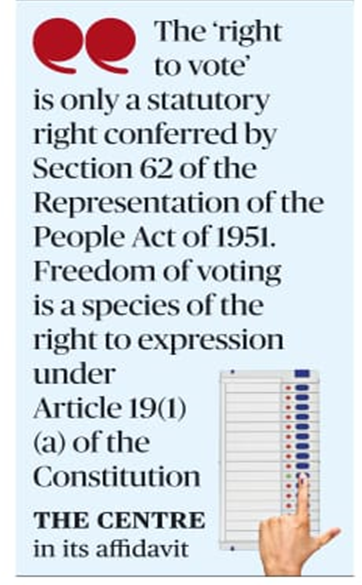
The Centre’s affidavit in court began with a fundamental lesson on the difference between ‘right to vote’ and the ‘freedom of voting’. It said the ‘right to vote’ was only a statutory right conferred by Section 62 of the Representation of the People Act of 1951, and subject to the limitations given in the statute. Freedom of voting, on the other hand, was a “species of the right to expression under Article 19(1)(a) of the Constitution”.
CM writes to PM seeking meet to address FRP concerns
Context: As the sugarcane growers’ protest demanding a Fair and Remunerative Price (FRP) of ₹3,500 per tonne in the Karnataka State’s northern sugar bowl turned the heat on the government, Chief Minister Siddaramaiah wrote to Prime Minister Narendra Modi seeking an urgent meeting with him to address the issues.
In the letter that was released to the press, the Chief Minister sought to draw the Prime Minister’s attention to the ongoing agitation by sugarcane farmers in North Karnataka, particularly in Belagavi, Bagalkote, Vijayapura, Vijayanagara, Bidar, Gadag, Hubli-Dharwad and Haveri districts.
He pointed out that the FRP fixed by the Central government for the 2025-26 season stands at ₹3,550 per tonne for a basic recovery rate of 10.25%.
“However, after deducting the mandatory harvesting and transport (H & T) costs, which range between ₹800 and ₹900 per tonne, the effective payment reaching the farmer is only about ₹2,600 to ₹3,000 per tonne.
But due to sharp increases in fertilizer, labour, irrigation and transport costs, this pricing structure has rendered sugarcane cultivation economically unsustainable,” he said.
He argued that the root of the problem is the Central policy levers, the FRP formula, the stagnating Minimum Support Price (MSP) for sugar, export curbs on sugar and the under-utilised ethanol offtake from sugar-based feedstock.
Pointing out that it was the Centre that had the authority to revise the FRP, he argued that the State only had the powers to ensure that the sugar factories adhered to the FRP norms.
“To respond constructively, we request that the Union government should immediately enable a central notification to allow States to fix or endorse a net price to farmers after H&T or mandate that mills absorb H&T so that ₹3,500/tonne net becomes feasible,” he said.
The letter also sought recalibration of the recovery rate linked calculation of FRP, revision of sugar MSP above ₹31 per kg, export window to relieve mills of unsold stocks, increased ethanol allocation and assured procurement from Karnataka’s sugar-based capacity.
The decision to write to the Prime Minister was taken at the State Cabinet meeting. The Ministers and district officials had managed to convince the sugar factories to offer an FRP of ₹3,200 per tonne at sugar recovery percentage of 11.25, and ₹3,100 at sugar recovery percentage of 10.25, he said.
He expressed concern that the Centre had increased the sugar recovery percentage to 10.25 from the level of 9.5 during the erstwhile NDA regime for determining the FRP. This would affect States that had low sugar recovery percentages, he said.
He alleged that though Karnataka was producing 271 crore litres of ethanol a year, the Centre had given permission for the oil companies to buy only 47 crore litres from the State.
NITI Aayog member advocates for Unified Water Reuse Standards
Context: Vinod K. Paul, a member of NITI Aayog, said that India needs a unified national standard to assure the public about the quality and safety of treated water.
‘Reuse of treated water’, Dr. Paul mentioned that deliberations are under way to formulate an integrated policy at the national-level for this purpose.
Jointly organised by the State government and the Bangalore Water Supply and Sewerage Board (BWSSB), the workshop spotlighted the critical decline in India’s per capita water availability, now below 1,400 cubic metres, and the pressing need for a unified national framework to promote water reuse.
Dr. Paul called for ambitious national targets: 50% reuse by 2030 and full reuse by 2045.
Currently, only 11 States have formal reuse policies, highlighting the urgency for a comprehensive national strategy.
Chief Secretary Shalini Rajneesh showcased Bengaluru’s efforts, including the rejuvenation of 110 lakes and a goal to achieve 100% water reuse and rainwater harvesting by 2028.
The BWSSB, which supplies 2,225 million litres of water daily, treats 1,350 MLD through 34 sewage treatment plants (STPs), with 12 more under construction, she said.
Tenth-century inscription dating to Ganga dynasty reign found on outskirts of Mysuru
Context: A 10th-century inscription from the Ganga dynasty reign has been found inside the Mahalingeshwara Temple at Nadanahalli on the outskirts of Mysuru.
The inscription, dating back to the time of Butuga II, a ruler from the dynasty, was discovered on the wall to the right and faces east inside the temple.
The six-line inscription was carved on white granite which is two feet wide and two-and-a-half feet tall.
“This inscription, dated 948 A.D., is inscribed in the Kannada script.
It is believed that during the reign of Butuga II, his bodyguard, Maremma, may have donated the garden to the temple tax-free and entrusted its management to the village chief Vijaketa Gavunda.
The full text of the inscription cannot be stated as it is corrupted. However, since the inscription references ‘Vijaketa Gavunda Dise’, it can be inferred that the management of the garden was entrusted to Vijaketa Gavunda, the chief of the village,” said a statement here.
Further, the embossed painting of the temple is symbolically engraved on the inscription, confirming that it was a donation related to the temple, the statement added.
“Since the Shiva Linga in the Mahalingeshwara Temple, where the inscription was found, is in the Ganga architectural style and the inscription is from the Ganga period, it can be understood that this donation is related to the Mahalingeshwara temple,” the statement further said.
An embossed sculpture of a cow feeding its calf is also carved at the end of the inscription, which is 1,076 years old.
Cabinet approves policy to help set up 25,000 start-ups in five years
Context: Policy aims to ensure that at least 10,000 of the targeted 25,000 start-ups are set up outside Bengaluru.
The Karnataka Cabinet approved the Karnataka Startup Policy 2025-30 that seeks to develop the State as a global innovation centre and help set up an additional 25,000 start-ups.
The policy seeks to set aside a budget of ₹518.27 crore over the next five years to offer financial support to start-ups.
The policy aims to ensure that at least 10,000 of the targeted 25,000 start-ups are set up outside.
The policy will seek to create an appropriate ecosystem and work towards building the necessary infrastructure and ensure the availability of the required skilled manpower.
The Cabinet also approved a proposal to modify the composition of the INDIRA (Integrated Nutrition and Dietary Initiative for Revitalising Anna Bhagya Beneficiaries) food kit under the Anna Bhagya scheme to provide additional quantum of toor dal in proportionate to the cost of the earlier proposed green gram.
Two Census apps, test portal for self-enumeration go live
Context: Enumerators have been trained to use apps to help in digital collection and faster processingof Census data; self-enumeration portal is open to the public in pre-test areas till today.
The Registrar-General and Census Commissioner of India launched two mobile applications this week in preparation for the trial phase of the country’s first digital Census in 2027.
The pre-test for the first phase, House Listing and Housing Operations (HLO), when a total of 30 questions on housing amenities will be asked, will be held in select areas across the country from November 10 to 30.
The enumerators, including block development officials, revenue officials, and government schoolteachers, have been trained to collect data on the two applications available on Google Play Store: Digital Layout Map (DLM) and Census 2027 – Houselist. The apps are compatible with both Android and Apple phones, and can only be downloaded by authorised personnel.
Public participation
The self-enumeration portal is available for testing from November 1 to 7.
“To encourage public participation, a Self-Enumeration facility will be made available through the Census Portal from 1st to 7th November 2025, allowing individuals residing in the areas selected for Pre-Test to submit their details online through the website https://test.census.gov.in/se, prior to field visits by enumerators,” a government statement said.
Digital mode
The DLM app’s description explains the evolution of India’s Census, the world’s largest data collection exercise, into a digital operation.
“Until the 2011 Census, data was collected on paper schedules, with layout map sketches prepared manually. These paper records were later digitised through scanning, a process that was both time-consuming and prone to inconsistencies.
With the upcoming 16th Census of India, a historic transformation is taking place. For the first time, Census operations are being carried out in digital mode, ensuring improved accuracy, faster data availability, and enhanced monitoring. A crucial part of this transition is the preparation of Digital Layout Maps and the geo-tagging of all buildings within each Houselisting Block (HLB),” it says.
It adds that the DLM app replicates the traditional methodology followed by supervisors and enumerators for drawing notional sketches for houselisting blocks, the primary unit for data collection, while introducing digital efficiency, accuracy, and real-time monitoring capabilities.
The app will record building coordinates (latitude and longitude for each structure), the names of localities, roads or streets, building numbers (if available; otherwise, temporary Census house numbers will be assigned by enumerators), building names (if available), building type (pucca or kutcha), building use (residential, partly residential, and non-residential), landmarks (mandatory), number of floors, and number of Census houses.
The description emphasised that “no personal information of the residents/ occupants of the buildings are collected through this app.”
The description for the House Listing Operation app says it was developed as part of the Census of India 2027 to modernise and streamline the data collection process. Both phases of the Census — houselisting and population enumeration — will be completed between April 1, 2026 and February 28, 2027.
CAG plans to create two new cadres for more centralisation
Context: The Comptroller and Auditor-General (CAG) of India has granted in-principle approval for the creation of two new specialised cadres for more centralisation.
These cadres are within its Indian Audit and Accounts Department, and they will be called the Central Revenue Audit (CRA) Cadre and the Central Expenditure Audit (CEA) Cadre.
Explaining the benefits of centralisation, K. Subramaniam, Deputy Auditor General (Human Resources, Industrial Relations, Content Delivery Network), said specialisation in the cadre of the CRA and the CEA will lead to deeper domain expertise in revenue and expenditure audits.
“This reform, which will come into effect from 1st January 2026, aims to build deeper professional expertise and further improve the quality of audit of Central Government finances,”by CAG.
At present, the audit of Central receipts and expenditure is undertaken by multiple offices with cadre control dispersed across multiple State Civil Audit offices leading to fragmentation.
The new cadres will consolidate over 4,000 audit professionals out of the total strength of the CAG at 42,000. This measure will also help reduce dependence on deployment and manage manpower in a more flexible manner.
Talks on with RBI, lenders for big, world class banks, says FM
Context:The Centre is holding discussions with the lenders and the Reserve Bank of India (RBI) for creating a ‘lot of big and world-class banks.’
“We will have to sit and talk with the Reserve Bank and also with the banks themselves to see how they want to take it forward and also discuss with the RBI about how they have an idea of taking or idea of building larger banks,” she said at an event.
“That work has already commenced. We are discussing with RBI, we are discussing with banks.”
“It is not by creating from among those which exist today just by amalgamation, that can also be one of the ways but you need an ecosystem and also an environment in which more banks can operate and operate to grow,” she emphasised.
“So, that environment is actually well established in India but I need it to be a bit more timely. So, some work is happening on it.”
Since 2017, the government had been facilitating merger of public sector banks to become stronger and further consolidation is on. Under regulatory supervision, private lenders are being strengthened and foreign banks are being encouraged to invest in Indian banks to improve capital base as well as bring in higher levels of corporate governance and financial prudence into the banking ecosystem.
India is capable
To another question on the impact of global uncertainties and protectionism by way of tariffs on India, she said “I do not want to sound too ambitious or give a statement of overconfidence but I can very clearly see India has shown its capability. In spite of global uncertainties, people of India have responded to next generation GST reforms and every sector saw it even on the first day [September 22, 2025].
Earlier, she told the gathering the world was today facing slower globalisation, fragile supply chains and rising climate transition costs.
“These external shocks test the resilience of our economy and underline the need for stronger domestic capabilities and diversified trade partnerships.
“To sustain high growth, we must invest in people. Our workforce needs continuous upskilling and reskilling to meet the demands of emerging technologies and global competitiveness, ensuring higher labour productivity and better-quality jobs,” the Finance Minister said.
India to unveil SAF national policy: Naidu
Context: The Centre will soon release a national policy on Sustainable Aviation Fuel (SAF), Minister for Civil Aviation Ram Mohan Naidu said, as he emphasised on India’s unique position as an agriculture powerhouse to cater to the rising global demand for the fuel.
SAF refers to aviation fuel derived from non-fossil sources.
At a FICCI event, he said the global need for SAF was 2 million tonne which by 2040 would rise to 183 million tonne. “As an agricultural powerhouse with over 750 million tonne of available biomass, India has the capacity to become the global leader in SAF production”.
India has a surplus of 213 million tonne of agricultural residue along with adequate manufacturing capacity, he said.
To achieve 1% blending of SAF by 2027, India will require 30 million litre, while the 2% target for 2028 translates to 62 million litre. Local oil makers collectively have an annual production capacity of 70 million litre. “We are well on course to meet the domestic demand and even emerge as a global production player in SAF”.
Trump’s nuclear test threat risks upending global test ban regime
Context: On October 29, just minutes before his meeting with Chinese President Xi Jinping in Busan, South Korea, U.S. President Donald Trump said the U.S. would “start testing our nuclear weapons on an equal basis with other nations”. Back in the U.S., Mr. Trump repeated his claims in an interview. “Russia is testing; China is testing, but they don’t talk about it… And certainly North Korea has been testing. Pakistan has been testing.”.
Mr. Trump is correct about North Korea, which has tested multiple nuclear weapons in the new century. But other nuclear powers, including the U.S., China and Russia, have maintained a moratorium on weapons testing since the 1990s. They, however, have tested weapons that can carry nuclear warheads.
Mr. Trump’s announcement came immediately after Russia announced that it successfully tested a nuclear-powered cruise missile (Burevestnik) and an undersea torpedo (Poseidon). Both are designed to overcome American missile defence systems and can carry nuclear warheads. But those were not nuclear detonation tests.
The last time Russia tested a nuclear weapon was in 1990, when the Soviet Union was still alive. The last American nuclear bomb test was held in 1992, and the last Chinese test was in 1996.
In 1996, the Comprehensive Test Ban Treaty (CTBT) banned all nuclear tests, but it never came into force as the required number of countries did not ratify it. The U.S. and China have signed the treaty but never ratified it. Russia had signed and ratified it, but in 2023, amid mounting tensions with the U.S., it decided to de-ratify it.
Debate in the U.S.
Russia remains the world’s largest nuclear power with an inventory of 4,309 warheads, according to the Federation of American Scientists.
The U.S. comes second with 3,700 weapons, while China is believed to have more than 1,000 warheads.
Historically, the U.S. has carried out the most number of nuclear tests — 1,030 detonations, followed by the Soviet Union (715) and the French (210). China has conducted more than 45 nuclear tests. In total, there have been 2,056 nuclear tests since ‘Trinity’, the first nuclear detonation by the U.S.
In the U.S., the debate on whether the country should resume nuclear tests has been raging for some time. Those who support tests argue that it is important to bolster the country’s nuclear deterrent — tests can prove that nuclear arsenals actually work, and provide critical data allowing countries to build more powerful, compact and specialised warheads.
On November 2, U.S. Secretary of Energy Chris Wright said the U.S. would not resume nuclear weapons tests but would conduct “subcritical tests”. A subcritical test uses conventional explosives to compress fissile material (Plutonium 239), without triggering nuclear chain reaction or explosion. But Mr. Trump, in another interview, clearly said, “We are going to test nuclear weapons like other countries do.”
Devastating effects
The 1963 Partial Test Ban Treaty, signed by the Soviet Union, the U.S. and the U.K., banned all nuclear test detonations in the atmosphere, outer space and underwater. Since then most tests were conducted underground. Even subterranean tests, experts say, could cause devastating environmental damages, including total destruction of ecosystems at test sites and contamination of soil, air and water.
If the U.S. starts testing weapons, it could cause a domino effect on other nuclear powers. There were reports that China had made preparations at Lop Nur, where Mao detonated China’s first bomb in 1964, in case it decides to resume testing. Russia was unambiguous in its reaction. “If they begin testing, naturally we will do the same,” Russia’s Security Council chief Sergey Shoygu said on October 31.
If the U.S. and Russia resume tests, China could do the same. And if China does it, India will come under internal pressure to start testing its weapons. Then Pakistan may not stand out. A new phase of nuclear arms race would begin, with long-term consequences for humanity.
Why the nomination process needs reform
The Representation of the People Act (RP), 1951 mandates that only qualified candidates can contest an election. However, the process of verifying said qualifications has accumulated complexity over the years, with too much importance being laid on procedural technicalities than actual ‘defects of a substantial character’
Kannan Gopinathan
A young woman from Dadra and Nagar Haveli called last week about the recent municipal council elections. This is a district in which I once served as Collector and Returning Officer. Her father’s nomination for municipal councillor had been rejected with no hearing or chance at verification. She asked, “Sir, is this how elections work?” The honest answer is yes. And that is the problem.
One often hears about how nominations of candidates contesting elections are rejected over technicalities without any chance for clarification. However, the fact of that matter is that such rejections are lawful. The most undemocratic part of India’s electoral process occurs before a single vote is cast — at the stage of nomination scrutiny.
The politics of procedure
India’s electoral nomination process vests extraordinary discretion in a single official — the Returning Officer (RO).
The Representation of the People Act (RP), 1951, particularly Sections 33 to 36, and the Conduct of Elections Rules, 1961, govern the nomination process. Section 36 authorises the RO to scrutinise nominations and reject those deemed invalid.
The RO’s power under Section 36(2) to conduct a “summary inquiry” and to reject nominations for “defects of a substantial character” is extraordinarily wide, and largely un-reviewable before polling, since Article 329 (b) bars courts from interfering mid-election. The law says no nomination should be rejected for defects not of a substantial character.
But there are no written guidelines on what is substantial. And the only remedy to protest it is an election petition after the polls, when the damage is irreversible. In a democracy, this absolutism dressed in legal language has the potential to become a tool of political exclusion.
In Bihar this year, a Rashtriya Janata Dal (RJD) candidate’s nomination was rejected for leaving some fields blank. Last year in Surat, Opposition candidates were eliminated after proposers denied signatures, delivering a Lok Sabha seat unopposed. In the 2019 elections in Varanasi, decorated BSF jawan Tej Bahadur Yadav was rejected because he could not obtain an Election Commission certificate overnight. In Birbhum, former IPS officer Debasish Dhar was kept off the ballot when his no-dues certificate from the government was delayed. Yet, there is no publicly available consolidated dataset on rejection grounds, patterns, or party-wise breakdowns. This opacity shields the weaponisation of procedure.
Procedural traps
Section 36 of the RP Act mandates that only qualified candidates can contest. However, the process of verifying qualification has accumulated complexity over the years. Well-intended judicial interventions have paradoxically worsened the problem. Supreme Court directions mandating detailed affidavits on assets, liabilities, and criminal cases were meant to ensure transparency, yet each new disclosure requirement added another opportunity for technical rejection. For example, in Resurgence India versus Election Commission (2013), the Supreme Court held that false declarations lead to prosecution but don’t invalidate nominations, only incomplete ones do. This means that a candidate who lies but fills all columns stays on the ballot, and one who makes a good-faith error can be rejected. The system now punishes incomplete declarations more harshly than dishonest ones.
A missing signature, a mismatched electoral number, a form filed at 3:05 PM instead of 3:00 PM, a blank column in an affidavit, a delayed oath, a missing no-dues certificate — any of these can end a candidacy. The burden of proof thus lies entirely on the citizen seeking to exercise a legal right, and not on the official denying it. This is constitutionally backwards. The right to be voted for is the necessary twin of the right to vote. Without candidates to choose from, the ballot is ritual without substance. The first principle must be that every qualified citizen has a presumptive right to contest. That right can be denied only when the RO establishes, with clear evidence, a substantive constitutional or statutory disqualification. Technical paperwork errors cannot be a reason for disqualification.
Some of the common procedural technicalities on which nominations are rejected include:
The oath trap: Every candidate must take an oath before a specified authority after filing nomination but before scrutiny. If its too early, it’s invalid, and if too late, the nomination is rejected. Moreover, if it is not before the specified authority, your form is again bound to be rejected.
The notarisation trap: Every Form 26 affidavit (an affidavit which needs to be filed by the candidate along with nomination papers) must be notarised by a specified authority. Not having done so can result in rejection of the nomination.
The certificate trap: Along with nomination papers, the candidate is liable to submit no-dues certificates from municipal bodies, electricity boards, or other government departments; clearance certificates from the Election Commission for government servants; and various other bureaucratic attestations, each of them a veto point when it comes to the time of scrutiny. Thus, each issuing office becomes a potential chokepoint where deliberate delay can eliminate a candidacy.
These procedures, once designed as safeguards, have turned into potential opportunities for delay and manipulation.
Here, bureaucratic compliance is being rewarded over democratic legitimacy.
Facilitation, not filtration
Other democracies show a different approach. In the U.K., ROs help candidates fix errors before deadlines. Canada mandates a 48-hour correction period. Germany requires written notice of problems, time to remedy them, and multiple appeal layers. Australia encourages early submission to allow corrections. The common idea being that officials are facilitators, not sentinels.
India also has a checklist system. The RO Handbook instructs ROs to point out defects at the time of filing and record them in a checklist. But this checklist has no legal standing. The Handbook itself clarifies that the checklist “will not prevent the Returning Officer from pointing out other defects, if any, discovered later during scrutiny.” A nomination can be marked defect-free at filing, yet rejected at scrutiny for defects the RO discovers later. The candidate has no right to rely on the checklist, and the RO faces no legal obligation to honour it. The checklist thus remains as an illusion of transparency without offering any real protection to the candidate.
The RO’s role must shift from discretion to duty. When a deficiency exists, the RO must issue a detailed written notice specifying the exact error, the legal provision violated, and the correction needed. Candidates must get a guaranteed 48-hour window to fix it after receiving this notice.
The law must thus classify deficiencies into three categories: (1) technical or paperwork defects such as missing signatures, blank affidavit columns, clerical errors, no-dues certificates etc. These cannot justify rejection; (2) matters requiring verification of authenticity such as disputed signatures, challenged documents etc. These require investigations before rejection; and (3) constitutional and statutory bars. These should lead to immediate and absolute disqualification. Moreover, every rejection order must be reasoned. The RO must specify which exact requirement was not met, which provision of law was violated, what evidence supports the finding, and why the defect is substantial enough to justify rejection.
A digital solution
The Election Commission of India (EC) can build a nomination system that is digital-by-default; one that doesn’t depend on excessive paperwork. This is not to argue for a digital-only framework, but a digital-by-default framework that can eliminate disqualifications based on blank columns and misspelt names or typos. The entire nomination process could move to an integrated online portal linked with the electoral roll. The system could automatically validate voter ID, age, and constituency details. Oath, affidavit submission, proposer verification, and deposit payment could all be digital. Moreover, every nomination’s progress such as when it was filed, verified, deficiency notified, corrected, accepted or rejected, should be visible on a public dashboard with timestamps and reasons.
Upholding democracy
When a nomination is rejected arbitrarily, two rights are violated: the candidate’s right to contest and the voters’ right to choose. The world’s largest democracy deserves a nomination process that is modern, fair, and inclusive, where the burden of proof is on the state to justify exclusion, not on citizens to prove their right to participate.
The EC should work towards a citizen-friendly nomination process that would end the bureaucratic red tape around disqualifications for blank columns, wrong payment modes, misplaced signatures, misspelt names and typos, no dues certificates or a delayed oath. It should work towards a simplified process that removes the possibility of using procedure as politics.
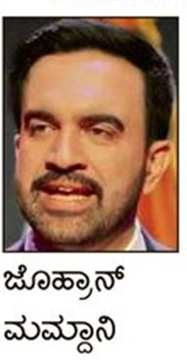
ಸಂದರ್ಭ: ನ್ಯೂಯಾರ್ಕ್ ನಗರದ ಮೇಯರ್ ಸ್ಥಾನಕ್ಕೆ ನಡೆದ ಚುನಾವಣೆಯಲ್ಲಿ ಡೆಮಾಕ್ರಟಿಕ್ ಪಕ್ಷದ ಅಭ್ಯರ್ಥಿ, ಭಾರತ ಸಂಜಾತ ಜೊಹ್ರಾನ್ ಮಮ್ದಾನಿ (34) ಐತಿಹಾಸಿಕ ಗೆಲುವು ದಾಖಲಿಸಿದ್ದಾರೆ.
ಅಮೆರಿಕದ ಅತಿ ದೊಡ್ಡ ನಗರವಾದ ನ್ಯೂಯಾರ್ಕ್ನ ‘ಪ್ರಥಮಪ್ರಜೆ’ಯಾಗಿಆಯ್ಕೆಯಾದಮೊದಲಮುಸ್ಲಿಂಹಾಗೂದಕ್ಷಿಣಏಷ್ಯಾದಮೊದಲವ್ಯಕ್ತಿ ಎಂಬ ಹೆಗ್ಗಳಿಕೆಗೂ ಅವರು ಪಾತ್ರರಾಗಿದ್ದಾರೆ.
ಜೊಹ್ರಾನ್ ಅವರು ಭಾರತದಸಿನಿಮಾನಿರ್ದೇಶಕಿಮತ್ತುನಿರ್ಮಾಪಕಿಮೀರಾನಾಯರ್ಮತ್ತುಪ್ರೊ. ಮಹಮದ್ ಮಮ್ದಾನಿಅವರಪುತ್ರ.
ಮಮ್ದಾನಿಜನಿಸಿದ್ದುಉಗಾಂಡಾದಕಂಪಾಲದಲ್ಲಿ. ಅವರಿಗೆ 5 ವರ್ಷವಿದ್ದಾಗದಕ್ಷಿಣಆಫ್ರಿಕಾದಕೇಪ್ ಟೌನ್ಗೆ, ನಂತರ 7 ವರ್ಷಇದ್ದಾಗನ್ಯೂಯಾರ್ಕ್ಗೆವಲಸೆಬಂದುಅವರಕುಟುಂಬನೆಲೆಗೊಂಡಿತ್ತು. ಮಮ್ದಾನಿಅವರಿಗೆ 2018ರಲ್ಲಿಅಮೆರಿಕದಪೌರತ್ವಲಭಿಸಿತ್ತು.ಅಮೆರಿಕನ್ಅನಿಮೇಟರ್ ರಮಾಸವಾಫ್ದುವಾಜಿಅವರಪತ್ನಿ.
ಯಾರ್ಕ್ನ ಮಾಜಿ ಗವರ್ನರ್, ಪ್ರಭಾವಿ ರಾಜಕೀಯ ಮುಖಂಡ ಆ್ಯಂಡ್ರ್ಯೂ ಕೌಮೊ ಮತ್ತು ರಿಪಬ್ಲಿಕನ್ ಅಭ್ಯರ್ಥಿ ಕರ್ಟಿಸ್ ಸ್ಲಿವಾ ಅವರನ್ನು ಮಮ್ದಾನಿ ಸೋಲಿಸಿದ್ದಾರೆ.
ಮಮ್ದಾನಿ ಅವರು ಜನವರಿ 1ರಂದು ಅಮೆರಿಕದ ಅತಿ ದೊಡ್ಡ ನಗರವಾದ ನ್ಯೂಯಾರ್ಕ್ನ ಮೇಯರ್ ಪಟ್ಟಕ್ಕೇರು ವಾಗ, ಈ ಸ್ಥಾನ ಅಲಂಕರಿಸುತ್ತಿರುವ ಮೊದಲ ಮುಸ್ಲಿಂ, ಮೊದಲ ಭಾರತೀಯ, ಆಫ್ರಿಕಾದಲ್ಲಿ ಜನಿಸಿದ ಮೊದಲ ವ್ಯಕ್ತಿ ಮತ್ತು ಕಳೆದೊಂದು ಶತಮಾನದಲ್ಲಿ ಮೇಯರ್ ಹುದ್ದೆಗೇರಿದ ಕಿರಿಯ ವ್ಯಕ್ತಿ ಎಂಬ ಹೆಗ್ಗಳಿಕೆಗಳಿಗೂ ಪಾತ್ರರಾಗಲಿದ್ದಾರೆ.
ಮಮ್ದಾನಿ ಗೆಲುವಿನೊಂದಿಗೆ ನ್ಯೂಯಾರ್ಕ್ ನಗರ ಮತ್ತು ಅಮೆರಿಕವು ಹೊಸ ರಾಜಕೀಯ ಮತ್ತು ಸೈದ್ಧಾಂತಿಕ ಯುಗಕ್ಕೆ ಮುನ್ನುಡಿ ಬರೆದಿದೆ. ಬಂಡವಾಳಶಾಹಿಯ ವಿರುದ್ಧ ಪ್ರಜಾಪ್ರಭುತ್ವವಾದಿ, ಸಮಾಜವಾದಿಯ ಐತಿಹಾಸಿಕ ಗೆಲುವು, ದೇಶದ ರಾಜಕೀಯ ಸ್ಥಿತ್ಯಂತರಕ್ಕೂ ಕಾರಣವಾಗಲಿವೆ ಎಂಬ ವಿಶ್ಲೇಷಣೆಗಳು ನಡೆಯುತ್ತಿವೆ.
ಮಮ್ದಾನಿ ಅವರು ಬ್ರಾಂಕ್ಸ್ ಹೈಸ್ಕೂಲ್ ಆಫ್ ಸೈನ್ಸ್ನಲ್ಲಿ ಪ್ರೌಢ ಶಿಕ್ಷಣ ಹಾಗೂ ಬೌಡೊಯಿನ್ ಕಾಲೇಜಿನಿಂದ ಪದವಿ ಪಡೆದಿದ್ದಾರೆ. ಪ್ರೌಢಶಾಲಾ ಹಂತದ ಕ್ರಿಕೆಟ್ ತಂಡದಲ್ಲೂ ಅವರು ಪ್ರಮುಖ ಆಟಗಾರರಾಗಿದ್ದರು.
ವಸತಿ ಸಲಹೆಗಾರ ಅಧಿಕಾರಿ ಯಾಗಿಯೂ ಕಾರ್ಯನಿರ್ವಹಿಸಿದ್ದ ಅವರು, ನ್ಯೂಯಾರ್ಕ್ನಲ್ಲಿ ಕಡಿಮೆ ಆದಾಯ ಹೊಂದಿರುವ ವಲಸಿಗರನ್ನು ಮನೆಗಳಿಂದ ಹೊರಹಾಕುವುದನ್ನು ತಡೆಗಟ್ಟಲು ಅಪಾರವಾಗಿ ಶ್ರಮಿಸಿದ್ದರು. ಈ ಕಾರ್ಯಕ್ಕಾಗಿ ವಲಸಿಗರ, ಕಾರ್ಮಿಕರ ವಿಶ್ವಾಸ ಗಳಿಸಿದ್ದ ಅವರು, 2020ರಲ್ಲಿ ಮೊದಲ ಬಾರಿ ನ್ಯೂಯಾರ್ಕ್ ಅಸೆಂಬ್ಲಿಗೆ ಆಯ್ಕೆಯಾಗಿದ್ದರು.
ನ್ಯೂಯಾರ್ಕ್ ಮೇಯರ್ ಚುನಾವಣೆಯ ಪ್ರಾಥಮಿಕ ಹಂತದಿಂದಲೇ ಅಮೆರಿಕದ ಅಧ್ಯಕ್ಷ ಡೊನಾಲ್ಡ್ ಟ್ರಂಪ್ ಅವರು ಮಮ್ದಾನಿ ಅವರನ್ನು ವಿರೋಧಿ ಸಿಕೊಂಡು ಬಂದಿದ್ದರು.
‘ವೆಚ್ಚಕಡಿಮೆಗೊಳಿಸಿ, ಜೀವನಸುಗಮಗೊಳಿಸಿ’
ಬೆಲೆ ಏರಿಕೆ, ಹಣದುಬ್ಬರ ಹೆಚ್ಚಳ, ಉದ್ಯೋಗ ಕಡಿತ ಸೇರಿದಂತೆ ರಾಜಕೀಯ ಮತ್ತು ಆರ್ಥಿಕ ಅಸ್ಥಿರತೆ ಎದುರಿಸುತ್ತಿರುವ ಅಮೆರಿಕನ್ನರಿಗೆ, ವಿಶೇಷವಾಗಿ ನ್ಯೂಯಾರ್ಕ್ನ ಜನರಿಗೆ, ‘ಜೀವನ ನಿರ್ವಹಣೆ ವೆಚ್ಚವನ್ನು ಕಡಿಮೆ ಮಾಡಲೆಂದೇ ನ್ಯೂಯಾರ್ಕ್ನ ಮೇಯರ್ ಸ್ಥಾನಕ್ಕೆ ಸ್ಪರ್ಧಿಸುತ್ತಿದ್ದೇನೆ’ ಎಂಬ ಮಮ್ದಾನಿ ಅವರ ಭರವಸೆಯ ನುಡಿಗಳು ವಿಶ್ವಾಸ ಮೂಡಿಸಿದ್ದವು. ನಗರ ಸಾರಿಗೆ ಬಸ್ಗಳಲ್ಲಿ ಉಚಿತ ಪ್ರಯಾಣ, ಮಕ್ಕಳಿಗಾಗಿ ಸಾರ್ವಜನಿಕ ಆಸ್ಪತ್ರೆ, ಕಡಿಮೆ ವೆಚ್ಚದ ಮನೆಗಳು ಸೇರಿದಂತೆ ‘ವೆಚ್ಚ ಕಡಿಮೆಗೊಳಿಸಿ, ಜೀವನ ಸುಗಮಗೊಳಿಸಿ’ ಎನ್ನುವುದು ಅವರ ಚುನಾವಣಾ ಘೋಷಣೆಯಾಗಿತ್ತು.
ಬಂಡವಾಳಶಾಹಿ ವ್ಯವಸ್ಥೆಗೆ ವಿರುದ್ಧವಾಗಿದ್ದ ಈ ಯುವ ರಾಜಕಾರಣಿಯು ನ್ಯೂಯಾರ್ಕ್ನ ಯುವಸಮೂಹ ಹಾಗೂ ಶ್ರಮಿಕ ವರ್ಗದ ಅಪಾರ ಬೆಂಬಲವನ್ನು ಗಳಿಸಿರುವುದು ಚುನಾವಣಾ ಫಲಿತಾಂಶದಲ್ಲಿ ಸ್ಪಷ್ಟವಾಗಿದೆ.
ಭಾರತದನಂಟು
ತಮ್ಮ ಮೊದಲ ವಿಜಯೋತ್ಸವ ಭಾಷಣದಲ್ಲಿ ಮಮ್ದಾನಿ, ಭಾರತ ಅಥವಾ ಭಾರತೀಯರನ್ನು ನೇರವಾಗಿ ಉಲ್ಲೇಖಿಸದಿದ್ದರೂ, ನೆಹರೂ ಮತ್ತು ‘ಧೂಮ್ ಮಚಾಲೆ’ ಹಾಡಿನ ಮೂಲಕ ತಮ್ಮ ಭಾರತೀಯ ಬೇರನ್ನು ಸ್ಮರಿಸಲು ಮರೆಯಲಿಲ್ಲ. ವಿಜಯೋತ್ಸವ ಭಾಷಣದ ಬೆನ್ನಲ್ಲೇ ವೇದಿಕೆಯಲ್ಲಿ ಬಾಲಿವುಡ್ನ ಜನಪ್ರಿಯ ‘ಧೂಮ್ ಮಚಾಲೆ’ ಹಾಡು ಕೇಳಿಬಂತು. ಮಮ್ದಾನಿ ಅವರ ವಾಕ್ಚಾತುರ್ಯ ಮತ್ತು ಸಾಮಾಜಿಕ ಮಾಧ್ಯಮದ ಮೇಲಿನ ಹಿಡಿತ ಕೂಡ ಅವರ ಗೆಲುವಿನಲ್ಲಿ ನಿರ್ಣಾಯಕ ಪಾತ್ರ ವಹಿಸಿದೆ ಎನ್ನಲಾಗುತ್ತಿದೆ.
ದಾಖಲೆಮತಚಲಾವಣೆ
ನ್ಯೂಯಾರ್ಕ್ ಮೇಯರ್ ಚುನಾವಣೆಯಲ್ಲಿ 1969ರ ಬಳಿಕ ಇದೇ ಮೊದಲ ಬಾರಿಗೆ 20 ಲಕ್ಷ ಮತಗಳು ಚಲಾವಣೆಯಾಗಿವೆ ಎಂದು ನ್ಯೂಯಾರ್ಕ್ನ ಚುನಾವಣಾ ಮಂಡಳಿ ಹೇಳಿದೆ.
ಬೆಂಗಳೂರು ಕೃಷಿ ವಿಶ್ವವಿದ್ಯಾಲ ಯವು ಸ್ಯಾಮ್ಸಂಗ್ ಕಂಪನಿಯೊಂದಿಗೆ ಎಐ ಮತ್ತು ಎಂಎಲ್ ವಿಷಯದ ತರಬೇತಿ ನೀಡುವ ಕುರಿತು ಒಪ್ಪಂದ ಮಾಡಿಕೊಂಡಿದೆ. ಸ್ಯಾಮ್ಸಂಗ್ನ ಕಾರ್ಪೊರೇಟ್ ಸಾಮಾಜಿಕ ಹೊಣೆಗಾರಿಕೆ ನಿಧಿಯಡಿ (ಸಿಎಸ್ಆರ್) ಮೊದಲ ಹಂತದಲ್ಲಿ ಸ್ನಾತಕೋತ್ತರ ಪದವಿ ಅಧ್ಯಯನ ಮಾಡುತ್ತಿರುವ 300 ವಿದ್ಯಾರ್ಥಿಗಳಿಗೆ ಎಐ–ಎಂಎಲ್ ವಿಷಯದ ಬಗ್ಗೆ 80 ಗಂಟೆಗಳ ಕಾಲ ಆನ್ಲೈನ್ ಹಾಗೂ ಆಫ್ಲೈನ್ ತರಬೇತಿ ಕಾರ್ಯಕ್ರಮ ನಡೆಯುತ್ತಿದೆ.
‘ಬೆಂಗಳೂರು ಕೃಷಿ ವಿಶ್ವವಿದ್ಯಾಲಯ ದ ಪ್ರಥಮ ವರ್ಷದ ಪದವಿಯ ಎರಡನೇ ಸೆಮಿಸ್ಟರ್ನಲ್ಲಿ ಎಐ–ಎಂಎಲ್ ವಿಷಯ ಇರಲಿದ್ದು, ಇದಕ್ಕೆ ಅಂಕಗಳು ಇರುವುದಿಲ್ಲ. ಆದರೆ ಕಡ್ಡಾಯವಾಗಿ ಉತ್ತೀರ್ಣ ಆಗಬೇಕು. ಎಂ.ಎಸ್ಸಿ ಪ್ರಥಮ ವರ್ಷದ ಎರಡನೇ ಸೆಮಿಸ್ಟರ್ಗೆ ಎಐ–ಎಲ್ ವಿಷಯ ಇರಲಿದ್ದು, ವಿದ್ಯಾರ್ಥಿಗಳಿಗೆ ಆರು ತಿಂಗಳ ತರಬೇತಿ ನೀಡಲಾಗುತ್ತದೆ.
‘ವಿಶ್ವವಿದ್ಯಾಲಯದಲ್ಲಿ ಕೃತಕ ಬುದ್ಧಿಮತ್ತೆ (ಎಐ) ಹಾಗೂ ಮಷಿನ್ ಲರ್ನಿಂಗ್ (ಎಂಎಲ್) ಎಂಬ ನೂತನ ವಿಭಾಗವನ್ನು ಪ್ರಾರಂಭಿಸಲಾಗಿದೆ. ಇದು ಬಹುಶಿಸ್ತೀಯ ಅಧ್ಯಯನ ವಿಭಾಗವಾಗಿದ್ದು, ಕಂಪ್ಯೂಟರ್ ತಂತ್ರಜ್ಞಾನದ ಬಗ್ಗೆ ಹೆಚ್ಚು ಮಾಹಿತಿ ಇರುವವರನ್ನು ಇದರ ಮುಖ್ಯಸ್ಥರನ್ನಾಗಿ ಮಾಡಲಾಗುತ್ತದೆ’ ಎಂದು ಹೇಳಿದರು.
‘ಎಐ–ಎಂಎಲ್ ನೂತನ ವಿಭಾಗದಲ್ಲಿ ಕೆಲಸ ಮಾಡುವ ಸಿಬ್ಬಂದಿಗೆ ನಗರದ ಹಲವು ಎಂಜಿನಿಯರಿಂಗ್ ಕಾಲೇಜುಗಳ ನುರಿತ ತಜ್ಞರಿಂದ ತರಬೇತಿ ನೀಡಲಾಗುತ್ತದೆ. ಇದರ ಭಾಗವಾಗಿ ಈಗಾಗಲೇ ಗೀತಂ ವಿಶ್ವ ವಿದ್ಯಾಲಯದೊಂದಿಗೆ ಒಪ್ಪಂದ ಮಾಡಿಕೊಳ್ಳಲಾಗಿದೆ. ರೇವಾ ವಿಶ್ವವಿದ್ಯಾಲಯ, ಮಣಿಪಾಲ್ ಅಕಾಡೆಮಿಯೊಂದಿಗೆ ಒಪ್ಪಂದ ಮಾಡಿಕೊಳ್ಳುವ ಕುರಿತು ಮಾತುಕತೆ ನಡೆಯುತ್ತಿದೆ. ಎಐ–ಎಂಎಲ್ಗೆ ಸಂಬಂಧಿಸಿದ ಕಂಪ್ಯೂಟರ್ ಆಧಾರಿತ ಪಠ್ಯ ವಿಷಯಗಳ ಬಗ್ಗೆ ಎಂಜಿನಿಯರಿಂಗ್ ಕಾಲೇಜು ಹಾಗೂ ವಿಶ್ವವಿದ್ಯಾಲಯಗಳ ಅಧ್ಯಾಪಕರು ನಮ್ಮ ವಿದ್ಯಾರ್ಥಿಗಳಿಗೆ ಪಾಠ ಮಾಡಲಿದ್ದಾರೆ’ ಎಂದರು.
‘ಸ್ಯಾಮ್ಸಂಗ್ ಕಂಪನಿಯೊಂದಿಗೆ ಮತ್ತೊಂದು ಒಪ್ಪಂದ ಮಾಡಿಕೊಳ್ಳ ಲಾಗುತ್ತಿದ್ದು, ನೂತನ ಎಐ–ಎಂಎಲ್ನ ವಿಭಾಗದ ವಿಷಯಗಳಿಗೆ ಸಂಬಂಧಿಸಿದಂತೆ ಕಂಪನಿಯ ಸಿಬ್ಬಂದಿಯು ವಿದ್ಯಾರ್ಥಿಗಳಿಗೆ ತರಬೇತಿ ನೀಡಲಿದ್ದಾರೆ. ಪದವಿ ಹಂತದಲ್ಲಿಯೇ ವಿದ್ಯಾರ್ಥಿಗಳಿಗೆ ಇಂತಹ ಈ ವಿಷಯಗಳನ್ನು ಪರಿಚಯಿಸುತ್ತಿದ್ದೇವೆ. ವಿದ್ಯಾರ್ಥಿಗಳು ಉತ್ತೀರ್ಣರಾದ ನಂತರ ಕೃಷಿ ಸೇರಿದಂತೆ ವಿವಿಧ ಕ್ಷೇತ್ರಗಳಲ್ಲಿ ಉದ್ಯೋಗ ಪಡೆದುಕೊಳ್ಳಲು ಸಹಾಯಕವಾಗಲಿದೆ’ ಎಂದು ತಿಳಿಸಿದರು.
‘ಎಐ–ಎಂಎಲ್ ಪದವಿಪ್ರಾರಂಭಿಸುವಚಿಂತನೆ’
‘ರಾಜ್ಯದಲ್ಲಿರುವ ಕೃಷಿ ವಿಶ್ವವಿದ್ಯಾಲಯಗಳ ಪೈಕಿ ಬೆಂಗಳೂರು ಕೃಷಿ ವಿಶ್ವವಿದ್ಯಾಲಯದಲ್ಲಿ ಎಐ–ಎಂಎಲ್ ಕೋರ್ಸ್ ಅನ್ನು ಮೊದಲ ಬಾರಿಗೆ ಪರಿಚಯಿಸಲಾಗುತ್ತಿದೆ. ನಾಲ್ಕು ವರ್ಷಗಳ ನಂತರ ಬಿ.ಎಸ್ಸಿ ಅಗ್ರಿ ಇನ್ ಎಐ–ಎಂಎಲ್, ಬಿ.ಎಸ್ಸಿ ಹಾರ್ಟಿಕಲ್ಚರ್ ಇನ್ ಎಐ–ಎಂಲ್ ವಿಷಯಗಳಲ್ಲಿ ಪದವಿಯನ್ನೂ ಪ್ರಾರಂಭಿಸುವ ಚಿಂತನೆ ಇದೆ’ ಎಂದು ಎಸ್.ವಿ. ಸುರೇಶ ತಿಳಿಸಿದರು.
‘ಈಗ ಬಹುತೇಕ ಎಲ್ಲ ಕ್ಷೇತ್ರಗಳಲ್ಲೂ ಎಐ–ಎಂಎಲ್ ಆಕ್ರಮಿಸಿಕೊಂಡಿದೆ. ಆದ್ದರಿಂದ ಕೃಷಿ ಕ್ಷೇತ್ರದಲ್ಲಿ ಬದಲಾವಣೆ ತರಲು ವಿದ್ಯಾರ್ಥಿಗಳನ್ನು ಈ ನೂತನ ಕೋರ್ಸ್ಗೆ ಅಣಿಗೊಳಿಸುತ್ತಿದ್ದೇವೆ’ ಎಂದರು.
ಅರಣ್ಯ: ಕಾಮಗಾರಿಗಳಿಗೆಷರತ್ತುಬದ್ಧಒಪ್ಪಿಗೆ
ಸಂದರ್ಭ: ವನ್ಯಜೀವಿಮಂಡಳಿಸ್ಥಾಯಿಸಮಿತಿಸಭೆ l ಚಿತ್ತಾಪುರದಲ್ಲಿಚಿರತೆಸಂರಕ್ಷಣಾಮೀಸಲುಪ್ರಸ್ತಾವ: ಶರಾವತಿಸಿಂಗಳೀಕವನ್ಯಜೀವಿಧಾಮ, ರಂಗನತಿಟ್ಟುಪಕ್ಷಿಧಾಮಪರಿಸರಸೂಕ್ಷ್ಮವಲಯಹಾಗೂಸೋಮೇಶ್ವರವನ್ಯಜೀವಿಧಾಮದಲ್ಲಿರಸ್ತೆನಿರ್ಮಾಣಮತ್ತುರಸ್ತೆಅಗಲೀಕರಣದಯೋಜನೆಗಳಿಗೆನಡೆದವನ್ಯಜೀವಿಮಂಡಳಿಯಸ್ಥಾಯಿಸಮಿತಿಸಭೆಷರತ್ತುಬದ್ಧಒಪ್ಪಿಗೆನೀಡಿದೆ.
ವನ್ಯಜೀವಿಗಳಿಗೆ ಯಾವುದೇ ರೀತಿಯಲ್ಲಿ ತೊಂದರೆ ಆಗದಂತೆ ಯೋಜನೆಯನ್ನು ರೂಪಿಸಬೇಕು ಎಂಬ ಕರಾರು ವಿಧಿಸಿ ಸಭೆ ಅನುಮೋದನೆ ನೀಡಿತು. ಚಿತ್ತಾಪುರದಲ್ಲಿ ಚಿರತೆ ಸಂರಕ್ಷಣಾ ಮೀಸಲು ಸ್ಥಾಪಿಸುವ ಕುರಿತು ಸ್ಥಳಕ್ಕೆ ಭೇಟಿ ನೀಡಿ, ಪರಿಶೀಲನೆ ನಡೆಸಿ ವರದಿ ಸಲ್ಲಿಸುವಂತೆ ಅರಣ್ಯ ಸಚಿವ ಈಶ್ವರ ಖಂಡ್ರೆ ಸೂಚಿಸಿದರು.
ಸಿಂಗಳೀಕ ವನ್ಯಜೀವಿಧಾಮದ ವ್ಯಾಪ್ತಿಯ ಉತ್ತರ ಕನ್ನಡ ಜಿಲ್ಲೆ ಹೊನ್ನಾವರ ತಾಲ್ಲೂಕಿನ ಹಿರೇಬೈಲ್ ಗ್ರಾಮದ ಅಂದಬಳ್ಳಿ ಮತ್ತು ಇತರ 5 ಗ್ರಾಮಗಳ 325 ಮನೆಗಳಿಗೆ, ಹೊನ್ನಾವರ ಪಟ್ಟಣ ಮತ್ತು ಮಾರ್ಗದಲ್ಲಿರುವ 9 ಗ್ರಾಮ ಪಂಚಾಯಿತಿಗಳಿಗೆ ಕುಡಿಯುವ ನೀರಿನ ಪೈಪ್ಲೈನ್ ಯೋಜನೆಗೆ 0.976 ಹೆಕ್ಟೇರ್ ಅರಣ್ಯ ಪ್ರದೇಶವನ್ನು ನೀಡುವ ಯೋಜನೆಗೆ ಅನುಮೋದನೆ ಪಡೆಯಲು ರಾಷ್ಟ್ರೀಯ ವನ್ಯಜೀವಿ ಮಂಡಳಿಗೆ ಪ್ರಸ್ತಾವ ಕಳುಹಿಸಲು ಸಭೆ ತೀರ್ಮಾನಿಸಿದೆ.
ಚಾಮರಾಜನಗರ ಜಿಲ್ಲೆ ಕೊಳ್ಳೇಗಾಲ ತಾಲ್ಲೂಕಿನ ಹನೂರು ವಿಧಾನಸಭಾ ಕ್ಷೇತ್ರ ವ್ಯಾಪ್ತಿಯ 291 ಜನವಸತಿ ಪ್ರದೇಶಗಳಿಗೆ (ಯೋಜನೆ ಹಂತ–2 ರಲ್ಲಿ 193 ಜನವಸತಿ ಪ್ರದೇಶಗಳಿಗೆ) ಕುಡಿಯುವ ನೀರಿನ ಸಂಪರ್ಕ ನೀಡುವ ಪ್ರಸ್ತಾವದ ಬಗ್ಗೆ ಚರ್ಚಿಸಿದ ಮಂಡಳಿ, ಇದಕ್ಕಾಗಿ 4.4 ಹೆಕ್ಟೇರ್ ಅರಣ್ಯ ಭೂಮಿ ನೀಡುವ ಪ್ರಸ್ತಾವಕ್ಕೆ ಒಪ್ಪಿಗೆ ಪಡೆಯಲು ರಾಷ್ಟ್ರೀಯ ವನ್ಯಜೀವಿ ಮಂಡಳಿಯ ಅನುಮೋದನೆಗೆ ಕಳುಹಿಸಲು ತೀರ್ಮಾನಿಸಲಾಗಿದೆ.
ಅತ್ತಿವೇರಿ ಪಕ್ಷಿಧಾಮ, ಶರಾವತಿ ಸಿಂಗಳೀಕ ವನ್ಯಜೀವಿಧಾಮ ಹಾಗೂ ಸೋಮೇಶ್ವರ ವನ್ಯಜೀವಿಧಾಮದಲ್ಲಿ ಸಂವಹನ ಕಂಬಗಳನ್ನು ಅಳವಡಿಸುವ ಕುರಿತಾದ ಬಿಎಸ್ಎನ್ಎಲ್ ಪ್ರಸ್ತಾವವನ್ನು ಮುಂದೂಡಲು ಸಭೆಯಲ್ಲಿ ತೀರ್ಮಾನಿಸಲಾಯಿತು. ಈ ಸಂವಹನ ಕಂಬಗಳಿಂದ ಪರಿಸರಕ್ಕೆ, ಪಶುಪಕ್ಷಿ ಗಳಿಗೆ ಆಗುವ ತೊಂದರೆ ಕುರಿತು ವಿವರ ಮಂಡಿಸಲು ಸೂಚಿಸಲಾಯಿತು.
ಪಶ್ಚಿಮಘಟ್ಟದಲ್ಲಿ ಕಾರ್ಯಗತವಾಗಿರುವ ರಸ್ತೆ ಮತ್ತಿತರ ಅಭಿವೃದ್ಧಿ ಯೋಜನೆಗಳಲ್ಲಿ ಷರತ್ತುಗಳ ಪಾಲನೆ ಆಗಿದೆಯೇ ಇಲ್ಲವೇ ಎಂಬ ಬಗ್ಗೆ ಪರಾಮರ್ಶೆ ನಡೆಸುವಂತೆ ಈಶ್ವರ ಖಂಡ್ರೆ ಸೂಚಿಸಿದರು.
ಅರಣ್ಯ ಮತ್ತು ವನ್ಯಜೀವಿಧಾಮಗಳಲ್ಲಿ ಯಾವುದೇ ಯೋಜನೆಗೆ ಅನುಮತಿ ನೀಡುವಾಗ ವನ್ಯಜೀವಿಗಳಿಗೆ ತೊಂದರೆ ಆಗದಂತೆ ಅಪಾಯ ತಗ್ಗಿಸುವ ಪರಿಹಾರಗಳೊಂದಿಗೆ ಪ್ರಸ್ತಾವನೆ ಮಂಡಿಸುವುದನ್ನು ಕಡ್ಡಾಯಗೊಳಿಸುವಂತೆ ಅವರು ನಿರ್ದೇಶನ ನೀಡಿದರು.
‘ರೇಡಿಯೊಕಾಲರ್ಹಾಕಿಕಾಡಿಗೆಬಿಡಿ’
ಚಿಕ್ಕಮಗಳೂರು ಜಿಲ್ಲೆ ಶೃಂಗೇರಿ ಬಳಿಯ ಕೆರೆಕಟ್ಟೆ ಸಮೀಪ ಸೆರೆ ಹಿಡಿಯಲಾಗಿರುವ ಆನೆಗೆ ರೇಡಿಯೊ ಕಾಲರ್ ಅಳವಡಿಸಿ ಕಾಡಿಗೆ ಬಿಡುವುದು ಸೂಕ್ತ ಎಂದು ಸಚಿವ ಈಶ್ವರ ಖಂಡ್ರೆ ಸಭೆಯಲ್ಲಿ ಸೂಚಿಸಿದರು.
ಕುಂಬ್ಳೆಕರೆಯಲುಸೂಚನೆ
ಅರಣ್ಯ ಮತ್ತು ವನ್ಯಜೀವಿ ರಾಯಭಾರಿ ಯಾಗಿ ನೇಮಕಗೊಂಡಿರುವ ಅನಿಲ್ ಕುಂಬ್ಳೆ ಅವರನ್ನು ಮುಂದಿನ ಸಭೆಗಳಿಗೆ ಆಹ್ವಾನಿಸುವಂತೆ ಮುಖ್ಯ ವನ್ಯಜೀವಿ ಪರಿಪಾಲಕರಿಗೆ ಖಂಡ್ರೆ ಸೂಚನೆ ನೀಡಿದರು.
2025ನೇ ಸಾಲಿನಲ್ಲಿ ಕಾಣಿಸಿ ಕೊಳ್ಳುವ ಮೂರು ಸೂಪರ್ ಮೂನ್ಗಳ ಪೈಕಿ ಇದು ಎರಡನೆಯದ್ದಾಗಿದ್ದು, ಸಾಮಾನ್ಯ ಹುಣ್ಣಿಮೆ ಚಂದ್ರನಿಗಿಂತ ಈ ಸೂಪರ್ ಮೂನ್ ಶೇಕಡ 14ರಷ್ಟು ದೊಡ್ಡದಾಗಿ ಹಾಗೂ ಶೇ 30ರಷ್ಟು ಹೆಚ್ಚು ಪ್ರಕಾಶಮಾನವಾಗಿ ಕಾಣಿಸಿಕೊಂಡಿದೆ.
ಭೂಮಿಯಿಂದ 3,57,000 ಕಿ.ಮೀ.ದೂರದಲ್ಲಿ ಅಂದರೆ ಅತ್ಯಂತ ಸಮೀಪದಲ್ಲಿ ಚಂದ್ರ ಗೋಚರಿಸಿರುವ ಕಾರಣ, ಇದು ಅತ್ಯಂತ ದೊಡ್ಡದಾಗಿ ಹಾಗೂ ಪ್ರಕಾಶಮಾನವಾಗಿ ಕಾಣಿಸಿಕೊಂಡಿದೆ ಎಂದು ಎನ್ಡಿಟಿವಿ ವರದಿ ಮಾಡಿದೆ.
ಸಂಜೆ 6.49ರ ಸುಮಾರಿಗೆ ದೇಶದ ವಿವಿಧ ಭಾಗಗಳಲ್ಲಿ ಜನರು ಸೂಪರ್ ಮೂನ್ ವೀಕ್ಷಿಸಲು ಸಾಧ್ಯವಾಗಿದ್ದು, ಹಲವರು ‘ಅತ್ಯಂತ ಪ್ರಕಾಶಮಾನವಾದ ಸೂಪರ್ ಮೂನ್’ ಎಂಬ ಶೀರ್ಷಿಕೆಗಳೊಂದಿಗೆ ಫೋಟೊಗಳನ್ನು ಜಾಲತಾಣಗಳಲ್ಲಿ ಹಂಚಿಕೊಂಡಿದ್ದಾರೆ.
ಈಗ ಸರ್ಕಾರವು ಕೃತಕ ಬುದ್ಧಿಮತ್ತೆ ವಲಯದಲ್ಲಿನ ಆವಿಷ್ಕಾರಗಳ ಮೇಲೆ ಗಮನ ನೀಡುತ್ತಿದೆ. ಎ.ಐ. ಮೂಲಕ ದೇಶದ ಜನರಿಗೆ ಅತ್ಯಂತ ಹೆಚ್ಚಿನ ಲಾಭ ತಂದುಕೊಡಲು ಸರ್ಕಾರ ಬಯಸುತ್ತಿದೆ ಎಂದು ಅವರು ಹೇಳಿದ್ದಾರೆ.
‘ಆವಿಷ್ಕಾರಗಳಿಗೆ ಹೆಚ್ಚಿನ ಆದ್ಯತೆ ನೀಡುವುದು ಇಂದಿನ ಅಗತ್ಯ ಎಂದು ಭಾವಿಸುವುದಾದರೆ, ನಿಯಂತ್ರಣ ಕ್ರಮಗಳನ್ನು ಜಾರಿಗೆ ತರುವುದು ಇಂದಿನ ಆದ್ಯತೆ ಆಗುವುದಿಲ್ಲ… ಆದರೆ ನಿಯಂತ್ರಣ ಕ್ರಮಗಳಿಗೆ ಅಥವಾ ಕಾನೂನಿನ ಜಾರಿಗೆ ಅಗತ್ಯ ಎದುರಾದರೆ ಸರ್ಕಾರ ಆಗ ಹಿಂದೇಟು ಹಾಕುವುದಿಲ್ಲ’ ಎಂದು ಕೃಷ್ಣನ್ ತಿಳಿಸಿದ್ದಾರೆ.
ರಷ್ಯಾದ ರೊಸ್ನೆಫ್ಟ್ ಹಾಗೂ ಲುಕಾಯಿಲ್ ಕಂಪನಿಗಳ ಮೇಲೆ ಅಮೆರಿಕವು ವಿಧಿಸಿರುವ ನಿರ್ಬಂಧಕ್ಕೆ ಅನುಗುಣವಾಗಿ ಭಾರತದ ತೈಲ ಸಂಸ್ಕರಣಾ ಕಂಪನಿಗಳು ನಡೆದುಕೊಳ್ಳುವ ನಿರೀಕ್ಷೆ ಇದೆ ಎಂದು ತಜ್ಞರು ಹೇಳಿದ್ದಾರೆ.
ಇದರಿಂದಾಗಿ ಡಿಸೆಂಬರ್ನಲ್ಲಿ ಭಾರತಕ್ಕೆ ಬರುವ ರಷ್ಯಾದ ಕಚ್ಚಾ ತೈಲದ ಪ್ರಮಾಣ ತೀವ್ರವಾಗಿ ತಗ್ಗಲಿದೆ. ನಂತರದಲ್ಲಿ, 2026ರ ಆರಂಭದಿಂದ ಮಧ್ಯವರ್ತಿಗಳು ಹಾಗೂ ಪರ್ಯಾಯ ವ್ಯಾಪಾರ ಮಾರ್ಗಗಳ ಮೂಲಕ ರಷ್ಯಾದ ಕಚ್ಚಾ ತೈಲದ ಆಮದು ನಿಧಾನವಾಗಿ ಹೆಚ್ಚಳವಾಗುವ ಅಂದಾಜು ಇದೆ.
ರಷ್ಯಾದಿಂದ ಕಚ್ಚಾ ತೈಲ ಆಮದು ಮಾಡಿಕೊಳ್ಳುವ ಕಂಪನಿಗಳ ಸಾಲಿನಲ್ಲಿ ಮೊದಲ ಸ್ಥಾನದಲ್ಲಿರುವ ರಿಲಯನ್ಸ್ ಇಂಡಸ್ಟ್ರೀಸ್ ಲಿಮಿಟೆಡ್ ಅಲ್ಲಿಂದ ಖರೀದಿಯನ್ನು ನಿಲ್ಲಿಸಲಿದೆ. ಸರ್ಕಾರಿ ಸ್ವಾಮ್ಯದ ಇತರ ಎರಡು ಸಂಸ್ಕರಣಾ ಕಂಪನಿಗಳು ರಷ್ಯಾದಿಂದ ತೈಲ ಆಮದು ನಿಲ್ಲಿಸುವುದಾಗಿ ಹೇಳಿವೆ. ಎಂಆರ್ಪಿಎಲ್ ಹಾಗೂ ಎಚ್ಪಿಸಿಎಲ್–ಮಿತ್ತಲ್ ಎನರ್ಜಿ ಲಿಮಿಟೆಡ್ ಕಂಪನಿ ಮುಂದಿನ ದಿನಗಳಲ್ಲಿ ಆಮದನ್ನು ಅಮಾನತಿನಲ್ಲಿ ಇರಿಸುವ ಆಲೋಚನೆ ಇರುವುದಾಗಿ ಹೇಳಿವೆ.
ಆದರೆ ನಯಾರಾ ಎನರ್ಜಿ ಕಂಪನಿಯ ವಾದಿನಾರ್ ತೈಲ ಸಂಸ್ಕರಣಾ ಘಟಕವು ರಷ್ಯಾದಿಂದ ತೈಲ ಆಮದನ್ನು ಮುಂದುವರಿಸುವ ನಿರೀಕ್ಷೆ ಇದೆ. ನಯಾರಾ ಕಂಪನಿಯಲ್ಲಿ ರೊಸ್ನೆಫ್ಟ್ನ ಹೂಡಿಕೆ ಇದೆ.
ದತ್ತಾಂಶ ವಿಶ್ಲೇಷಣಾ ಸಂಸ್ಥೆ ಕೆಪ್ಲರ್ನ ಮುಖ್ಯ ಸಂಶೋಧನಾ ವಿಶ್ಲೇಷಕ ಸುಮಿತ್ ರಿತೋಲಿಯಾ ಅವರ ಪ್ರಕಾರ, ಅಕ್ಟೋಬರ್ನಲ್ಲಿ ಭಾರತಕ್ಕೆ ಕಚ್ಚಾ ತೈಲ ಪೂರೈಸಿದ ದೇಶಗಳ ಸಾಲಿನಲ್ಲಿ ರಷ್ಯಾ ಮೊದಲ ಸ್ಥಾನದಲ್ಲಿದೆ. ಇರಾಕ್ ಮತ್ತು ಸೌದಿ ಅರೇಬಿಯಾ ನಂತರದ ಸ್ಥಾನಗಳಲ್ಲಿವೆ.
ತಜ್ಞರ ಪ್ರಕಾರ ರಷ್ಯಾದಿಂದ ಕಚ್ಚಾ ತೈಲ ಆಮದು ಸಂಪೂರ್ಣವಾಗಿ ನಿಲ್ಲುವ ಸಾಧ್ಯತೆ ಇಲ್ಲ. ಆದರೆ ಮುಂದಿನ ದಿನಗಳಲ್ಲಿ ಆಮದು ಹೆಚ್ಚು ಸಂಕೀರ್ಣವಾದ ಸಾಗಣೆ ಮತ್ತು ಖರೀದಿ ವ್ಯವಸ್ಥೆಯನ್ನು ಆಶ್ರಯಿಸಲಿದೆ.
‘ಡಿಸೆಂಬರ್ನಲ್ಲಿ ರಷ್ಯಾದ ಕಚ್ಚಾ ತೈಲ ಆಮದು ಗಣನೀಯವಾಗಿ ಕಡಿಮೆ ಆಗಬಹುದು. 2026ರ ಮೊದಲಾರ್ಧದ ಮಧ್ಯಭಾಗದಲ್ಲಿ ಅಥವಾ ಕೊನೆಯ ಹಂತದಲ್ಲಿ, ಹೊಸ ಮಧ್ಯವರ್ತಿಗಳು ಹಾಗೂ ಪರ್ಯಾಯ ಮಾರ್ಗಗಳು ಸೃಷ್ಟಿಯಾದ ನಂತರ ಅಲ್ಲಿಂದ ತೈಲ ತರಿಸಿಕೊಳ್ಳುವುದು ಹಂತ ಹಂತವಾಗಿ ಹೆಚ್ಚಳವಾಗಬಹುದು’ ಎಂದು ಹೇಳಿದ್ದಾರೆ.
ಮಹಾರಾಷ್ಟ್ರವು ಸ್ಟಾರ್ಲಿಂಕ್ ಜೊತೆಗೆ ಒಪ್ಪಂದ ಮಾಡಿಕೊಂಡ ದೇಶದ ಮೊದಲ ರಾಜ್ಯವಾಗಿದೆ ಎಂದು ಮಹಾರಾಷ್ಟ್ರ ಸರ್ಕಾರ ತಿಳಿಸಿದೆ. ಈ ಕುರಿತ ಒಪ್ಪಂದಕ್ಕೆ ಸರ್ಕಾರವು ಸ್ಟಾರ್ಲಿಂಕ್ ಸ್ಯಾಟ್ಲೈಟ್ ಕಮ್ಯುನಿಕೇಷನ್ಸ್ ಪ್ರೈವೆಟ್ ಲಿಮಿಟೆಡ್ನೊಂದಿಗೆ ಸಹಿ ಹಾಕಿದೆ.
‘ಈ ಒಪ್ಪಂದದಿಂದ ಉಪಗ್ರಹ ಆಧಾರಿತ ಇಂಟರ್ನೆಟ್ ಸೇವೆಯನ್ನು ಸರ್ಕಾರಿ ಸಂಸ್ಥೆಗಳು, ಗ್ರಾಮೀಣ ಪ್ರದೇಶಗಳು, ಕುಗ್ರಾಮ ಮತ್ತು ಹಿಂದುಳಿದ ಪ್ರದೇಶಗಳಲ್ಲಿ ಒದಗಿಸಲಾಗುವುದು’ ಎಂದು ಮಹಾರಾಷ್ಟ್ರದ ಮುಖ್ಯಮಂತ್ರಿ ದೇವೇಂದ್ರ ಫಡಣವೀಸ್ ‘ಎಕ್ಸ್’ನಲ್ಲಿ ತಿಳಿಸಿದ್ದಾರೆ.
‘ಸ್ಟಾರ್ಲಿಂಕ್ ಮಾಹಿತಿ ಮತ್ತು ಸಂವಹನ ತಂತ್ರಜ್ಞಾನ (ಐಸಿಟಿ) ಕ್ಷೇತ್ರದ ಅತಿದೊಡ್ಡ ಕಂಪನಿಗಳಲ್ಲಿ ಒಂದಾಗಿದೆ. ಕಂಪನಿಯೊಂದಿಗೆ ಮಹಾರಾಷ್ಟ್ರ ಒಪ್ಪಂದ ಹೊಂದಿರುವುದು ನಮಗೆ ಗೌರವವಾಗಿದೆ’ ಎಂದು ತಿಳಿಸಿದ್ದಾರೆ.
ಈ ಸಹಯೋಗವು ಡಿಜಿಟಲ್ ಮಹಾರಾಷ್ಟ್ರ ಮಿಷನ್, ಕರಾವಳಿ ಅಭಿವೃದ್ಧಿ ಸೇರಿ ಹಲವು ಅಭಿವೃದ್ಧಿಗೆ ನೆರವಾಗಲಿದೆ ಎಂದು ಹೇಳಿದ್ದಾರೆ.
ಡೆಟ್ರಾಯಿಟ್: ಮೊದಲಮಹಿಳಾಮೇಯರ್ ಆಯ್ಕೆ
ಡೆಟ್ರಾಯಿಟ್ನ ಮೊದಲ ಮಹಿಳಾ ಮೇಯರ್ ಆಗಿ ಮೇರಿ ಶೆಫೀಲ್ಡ್ ಅವರು ಆಯ್ಕೆಯಾಗಿದ್ದಾರೆ. ಸದ್ಯ ಅವರು ಸಿಟಿ ಕೌನ್ಸಿಲ್ ಅಧ್ಯಕ್ಷೆ ಆಗಿದ್ದಾರೆ.
ಪ್ರಮುಖ ಚರ್ಚ್ವೊಂದರ ಪ್ರಸಿದ್ಧ ಪಾದ್ರಿ ಸೊಲೊಮನ್ ಕಿನ್ನೊಚ್ ಅವರನ್ನು ಶೆಫೀಲ್ಡ್ ಸಾರ್ವತ್ರಿಕ ಚುನಾವಣೆಯಲ್ಲಿ ಪರಾಭವಗೊಳಿಸಿದ್ದಾರೆ. ಮೇಯರ್ ಆಗಿ ಜನವರಿಯಲ್ಲಿ ಅವರು ಅಧಿಕಾರ ಸ್ವೀಕರಿಸಲಿದ್ದಾರೆ.
2013ರಲ್ಲಿ ಶೆಫೀಲ್ಡ್ ತಮ್ಮ 26ನೇ ವಯಸ್ಸಿನಲ್ಲಿ ಸಿಟಿ ಕೌನ್ಸಿಲ್ಗೆ ಆಯ್ಕೆಯಾಗಿದ್ದು, 2022ರಲ್ಲಿ ಕೌನ್ಸಿಲ್ನ ಅಧ್ಯಕ್ಷರಾಗಿದ್ದರು.
‘ಡೆಟ್ರಾಯಿಟ್ನ ಮಕ್ಕಳಿಗೆ ಶಿಕ್ಷಣ ನೀಡುವ ಕಡೆ ಹೆಚ್ಚು ಗಮನ ನೀಡುತ್ತೇನೆ. ಸಾರ್ವಜನಿಕರ ಸುರಕ್ಷತೆ ಮತ್ತು ಜೀವನಮಟ್ಟ ಸುಧಾರಿಸುವುದು ಚುನಾಯಿತ ಮೇಯರ್ ಆಗಿ ನನ್ನ ಆದ್ಯತೆಯಾಗಿದೆ’ ಎಂದು ಮೇರಿ ಶೆಫೀಲ್ಡ್ ಹೇಳಿದ್ದಾರೆ.
ಸಾಲ ನೀಡುವ ವೇದಿಕೆ ಎಂ–ಪಾಕೆಟ್ ನಡೆಸಿರುವ ಸಮೀಕ್ಷೆಯ ಪ್ರಕಾರ ಇಂದಿನ ತಲೆಮಾರಿನ ಜನರಿಗೆ ಸಾಲ ಪಡೆಯುವುದು ಹೊಸ ಸಾಧ್ಯತೆಗಳನ್ನು ಅರಸಲು ಇರುವ ಒಂದು ಮಾರ್ಗ.
ಸಮೀಕ್ಷೆಯಲ್ಲಿ ಭಾಗಿಯಾಗಿದ್ದವರ ಪೈಕಿ ಶೇಕಡ 63ರಷ್ಟು ಮಂದಿ ಸಾಲದಿಂದಾಗಿ ತಮ್ಮ ಹಣಕಾಸಿನ ಸ್ಥಿತಿಯ ಮೇಲೆ ಉತ್ತಮ ಪರಿಣಾಮ ಉಂಟಾಗಿದೆ ಎಂದು ಹೇಳಿದ್ದಾರೆ, ಶೇ 40ರಷ್ಟು ಮಂದಿ ಸಾಲವನ್ನು ವೃತ್ತಿಯಲ್ಲಿ ಮುಂದೆ ಬರಲು, ಜೀವನಶೈಲಿಯಲ್ಲಿ ಸುಧಾರಣೆ ತರಲು, ಶಿಕ್ಷಣಕ್ಕಾಗಿ ಬಳಕೆ ಮಾಡಿಕೊಂಡಿದ್ದಾರೆ.
ಮೂರು ಸಾವಿರಕ್ಕೂ ಹೆಚ್ಚು ಯುವಕರು ಈ ಸಮೀಕ್ಷೆಯಲ್ಲಿ ಭಾಗಿಯಾಗಿದ್ದರು. ಶೇ 23.4ರಷ್ಟು ಮಂದಿ ಆರೋಗ್ಯ ವೆಚ್ಚ ನಿಭಾಯಿಸಲು ಸಾಲ ಪಡೆಯುತ್ತಿದ್ದಾರೆ, ಶೇ 12.4ರಷ್ಟು ಮಂದಿ ತುರ್ತು ಸಂದರ್ಭ ನಿಭಾಯಿಸಲು ಸಾಲ ಪಡೆಯುತ್ತಿದ್ದಾರೆ. ಯುವಕರು ಸಾಲ ಪಡೆದು ತಮ್ಮ ಸ್ಥಿತಿಯನ್ನು ಉತ್ತಮಪಡಿಸಿಕೊಳ್ಳಲು, ದೀರ್ಘಾವಧಿಯಲ್ಲಿ ಬೆಳವಣಿಗೆ ಸಾಧಿಸಲು ಅದನ್ನು ಬಳಸಿಕೊಳ್ಳುತ್ತಿರುವುದು ಸಮೀಕ್ಷೆಯಲ್ಲಿ ಕಂಡುಬಂದಿದೆ.
ಅಣ್ವಸ್ತ್ರಪರೀಕ್ಷೆ ಪುನರಾರಂಭ: ವ್ಲಾದಿಮಿರ್ ಪುಟಿನ್ ಸೂಚನೆ
ಅಮೆರಿಕವು ಅಣ್ವಸ್ತ್ರ ಪರೀಕ್ಷೆಗಳನ್ನು ಪುನರಾರಂಭಿಸುವ ಬಗ್ಗೆ, ಅಧ್ಯಕ್ಷ ಡೊನಾಲ್ಡ್ ಟ್ರಂಪ್ ಅವರ ಇತ್ತೀಚಿನ ಹೇಳಿಕೆಗೆ ಪ್ರತಿಯಾಗಿ ರಷ್ಯಾ ಈ ಪ್ರತಿಕ್ರಿಯೆ ನೀಡಿದೆ.
ಭದ್ರತಾ ಮಂಡಳಿ ಸದಸ್ಯರೊಂದಿಗೆ ಚರ್ಚೆ ನಡೆಸಿದ ಪುಟಿನ್, ‘ಅಮೆರಿಕ ಮೊದಲು ಅಣ್ವಸ್ತ್ರ ಪರೀಕ್ಷೆ ನಡೆಸಿದರೆ ಮಾತ್ರ ರಷ್ಯಾ ಅಣ್ವಸ್ತ್ರ ಪರೀಕ್ಷೆಗಳನ್ನು ಪುನರಾರಂಭಿಸುತ್ತದೆ’ ಎಂಬ ತಮ್ಮ ಹಿಂದಿನ ಹೇಳಿಕೆಯನ್ನು ದೃಢಪಡಿಸಿದರು.
ಇದರೊಂದಿಗೆ ಡೆಮಾಕ್ರಟ್ಗಳು ಸಿನ್ಸಿನಾಟಿಯ ಸ್ಥಳೀಯ ಸರ್ಕಾರದ ಹಿಡಿತವನ್ನು ಪಡೆದಿದ್ದಾರೆ ಮತ್ತು ಒಹಿಯೊನಲ್ಲಿ ಪುರೆವಾಲ್ ಅವರ ರಾಜಕೀಯ ಭವಿಷ್ಯವು ಉಜ್ವಲವಾಗುವ ಸೂಚನೆ ಲಭಿಸಿದೆ ಎಂದು ಸ್ಥಳೀಯ ಮಾಧ್ಯಮಗಳಲ್ಲಿ ವರದಿಯಾಗಿದೆ.
ಈ ಯೋಜನೆಯ ಮೂಲಕ ಮಹಿಳೆಯರ ನೇತೃತ್ವದ 200 ಉದ್ಯಮಗಳನ್ನು ಒಎನ್ಡಿಸಿ ನೆಟ್ವರ್ಕ್ ವ್ಯಾಪ್ತಿಗೆ ತರಲಾಗಿದೆ, ಅವರಿಗೆ ಇ–ವಾಣಿಜ್ಯ ಮಾರುಕಟ್ಟೆ ಲಭ್ಯವಾಗುವಂತೆ ಮಾಡಲಾಗಿದೆ ಎಂದು ಪ್ರಕಟಣೆ ತಿಳಿಸಿದೆ.
‘ಭಾರತದ ಇ–ವಾಣಿಜ್ಯ ಮಾರುಕಟ್ಟೆಯು 2034ರ ವೇಳೆಗೆ ಅಮೆರಿಕದ ಇ–ವಾಣಿಜ್ಯ ಮಾರುಕಟ್ಟೆಯನ್ನು ಮೀರಿ ಬೆಳೆಯುವ ಅಂದಾಜು ಇದೆ. ಹೀಗಿದ್ದರೂ, ಈ ವಲಯದಲ್ಲಿ ಬೆಳೆಯಲು ಬೇಕಿರುವ ಡಿಜಿಟಲ್ ಪರಿಣತಿಯು ಸಣ್ಣ ಹಾಗೂ ಮಧ್ಯಮ ಗಾತ್ರದ ವ್ಯಾಪಾರಿಗಳ ಪೈಕಿ ಹಲವರಿಗೆ ಈಗಲೂ ಇಲ್ಲ.
ಒಎನ್ಡಿಸಿ ಜೊತೆಗಿನ ನಮ್ಮ ಪಾಲುದಾರಿಕೆಯು 200ಕ್ಕೂ ಹೆಚ್ಚು ಮಹಿಳಾ ಉದ್ಯಮಿಗಳಿಗೆ ಆನ್ಲೈನ್ ಮಾರುಕಟ್ಟೆಯಲ್ಲಿ ಬೆಳವಣಿಗೆ ಸಾಧಿಸಲು ನೆರವಾಗಿದೆ’ ಎಂದು ನಾಸ್ಕಾಂ ಫೌಂಡೇಷನ್ನ ಸಿಇಒ ಜ್ಯೋತಿ ಶರ್ಮಾ ಹೇಳಿದ್ದಾರೆ. ಬೆಂಗಳೂರು, ಮೈಸೂರು, ಹುಬ್ಬಳ್ಳಿ, ಬೆಳಗಾವಿ, ಉಡುಪಿ ಸೇರಿದಂತೆ 22 ಜಿಲ್ಲೆಗಳ ಗ್ರಾಮೀಣ ಹಾಗೂ ನಗರ ಪ್ರದೇಶಗಳಲ್ಲಿ ಈ ಯೋಜನೆಯನ್ನು ಅನುಷ್ಠಾನಕ್ಕೆ ತರಲಾಗಿದೆ ಎಂದು ಪ್ರಕಟಣೆಯಲ್ಲಿ ಹೇಳಲಾಗಿದೆ.
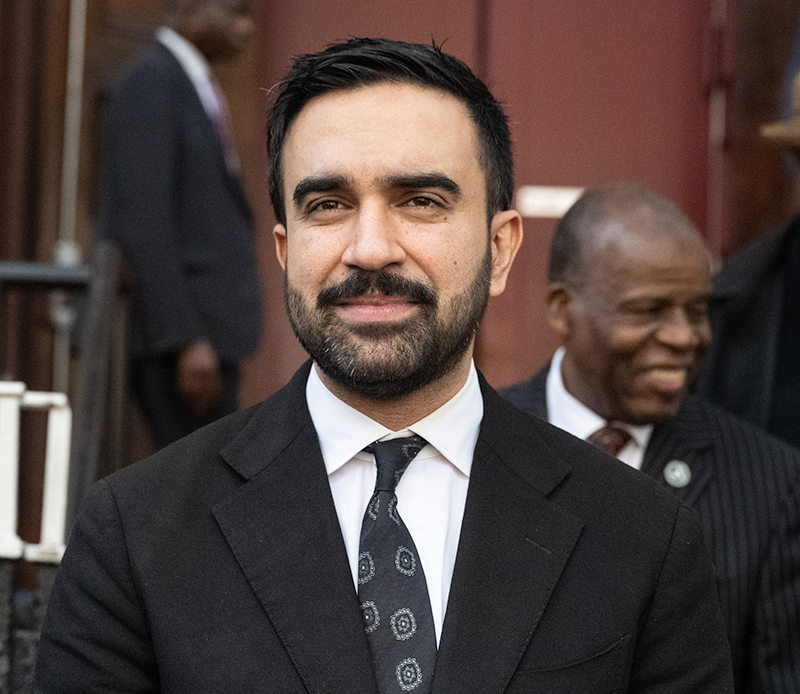
New York gets its first Mayor-elect of South Asian origin
Context: Zohran Mamdani made history by becoming New York City’s first Muslim and South Asian-origin Mayor-elect, and its youngest since 1917, topping off a stunning grassroots campaign led by the message of affordability and upending a political class dominated by wealthy donors.
In his victory speech before a jubilant crowd in Brooklyn, the 34-year-old declared: “We have toppled a political dynasty… tonight, New York has stepped from the old into the new.” Quoting from Jawaharlal Nehru’s “Tryst with Destiny” speech, Mr. Mamdani said: “Standing before you, I remember the words of Jawaharlal Nehru. A moment comes, which comes but rarely in history, when we step out from the old to the new, when an age ends, and when the soul of a nation, long suppressed, finds utterance.”
He defeated both a Republican challenger, Curtis Sliwa, and former New York Governor Andrew Cuomo, who was backed by a coalition of billionaires who spent millions to block Mr. Mamdani’s rise.
More than two million New Yorkers voted, the highest turnout for a mayoral contest in more than 50 years, according to the New York Board of Elections.
Mr. Mamdani won 50.4% of the votes, while Mr. Cuomo, running as independent, won 41.6%. Mr. Sliwa won 7.1%.
About:
QUICK FACTS
Born: 18 October 1991
Famous for: Mamdani is New York City’s first Muslim and South Asian mayor
Political views: He describes himself as a democratic socialist, which has no clear definition but essentially means giving a voice to workers, not corporations
Born in Uganda, Mamdani moved to New York with his family at the age of seven.
He attended the Bronx High School of Science and later earned a degree in Africana Studies from Bowdoin College, where he co-founded the campus chapter of Students for Justice in Palestine.
He became a naturalised American citizen in 2018.
He is of Indian descent. His mother, Mira Nair, is a celebrated film director and his father, Professor Mahmood Mamdani, teaches at Columbia University in New York. Both parents are Harvard alumni.
Mamdani and his wife, Brooklyn-based Syrian artist Rama Duwaji, met on the dating app Hinge.
Wildlife Board for diverting forest land
Context: The Standing Committee of the State Wildlife Board has recommended forwarding the proposal to divert forest land from the Sharavathi Lion-tailed Macaque Wildlife Sanctuary, to the National Board for Wildlife for approval.
The Standing Committee of the Board, chaired by Environment Minister Eshwar Khandre, decided to forwared to the National Board for Wildlife the proposal for diversion of 0.976 hectares of forest land
The Standing Committee of the State Wildlife Board has recommended forwarding the proposal to divert forest land from the Sharavathi Lion-tailed Macaque Wildlife Sanctuary, to the National Board for Wildlife (NBWL) for approval.
The Standing Committee of the State Wildlife Board, chaired by Environment Minister Eshwar Khandre, which met, decided to recommend the proposal for diversion of 0.976 hectares of forest land.
A proposal to release forest areas of the Sharavathi Lion-tailed Macaque Wildlife Sanctuary for approval by the Standing Committee of the NBWL was submitted to the State government through the Parivesh portal last September.
Approved
The committee also approved various road construction and widening proposals linked to the Sharavathi Lion-tailed Macaque Sanctuary, the Ranganathittu Bird Sanctuary Eco-Sensitive Zone, and the Someshwara Wildlife Sanctuary with the condition that project plans ensure that there is no harm to wildlife.
The Minister directed that while granting approval to any project in forest and wildlife sanctuary areas, proposals should mandatorily include measures to reduce risks and ensure no harm to wildlife.
On the proposal to establish a leopard conservation reserve in Chittapur, Mr. Khandre directed officials to conduct a field inspection and submit a detailed report.
Mr. Khandre also directed officials to fix a radio collar on the elephant captured near Kerekatte in Chikkamagaluru district and release it back into the forest. The elephant had reportedly caused the death of two persons in Kerekatte range of Kudremukh Wildlife Division in Sringeri taluk on October 31.
The Minister instructed the Principal Chief Conservator of Forests to invite former Indian cricket team captain Anil Kumble, who is the ambassador of the Karnataka Forest Department, and for wildlife conservation to attend future meetings of the Department.
Centre’s governance guidelines for AI call for trust and safety
Context: Advocating a hands-off approach to the regulation of artificial intelligence, the Ministry of Electronics and Information Technology on Wednesday released the India AI Governance Guidelines.
The document is a significantly changed revision of a framework put out for consultation in January.
The report was drafted by a panel formed in July and headed by Balaraman Ravindran, the head of the Department of Data Science and Artificial Intelligence at the Indian Institute of Technology, Madras. The broader group that worked on the previous framework was headed by Principal Scientific Adviser Ajay K. Sood.
The guidelines will “be a cornerstone in developing AI for India, and can be a role model for AI governance globally”, Abhishek Singh, Additional Secretary at the Ministry, said.
The report emphasises seven principles for AI: trust; people-centricity; “responsible innovation”; equity; accountability; understandability of LLMs; and “safety, resilience and sustainability.” Mr. Ravindran stressed that the governance guidelines seek to signal India’s largely hands-off approach to AI.
The report has six recommendations also: expand access to AI infrastructure and “leverage the power of digital public infrastructure for scale, impact and inclusion”; build capacity by skilling in AI; “adopt balanced, agile and flexible frameworks” as far as regulating AI is concerned; mitigate risks by looking at “India-specific” factors that need to be addressed; boost accountability in the AI ecosystem by requiring “greater transparency… about how different actors in the AI value chain operate”.
“We are calling this the AI Governance Guidelines, not AI regulation or anything like that, because we don’t want it to be viewed as something that throttles AI adoption in India,” he said.
While the previous framework laid emphasis on minimising risks inherent in deploying AI, the current model scales this back to promoting innovation with guardrails. The report also strips away much of the previous work done by NITI Aayog and the Organisation for Economic Cooperation and Development that was foundational to the earlier draft framework’s approach.
In the long term, the report says, new laws should be drafted based on “emerging risks and capabilities” of AI systems. Responding to reports on the government considering a new AI law, IT Secretary S. Krishnan said that there were no immediate plans, but as and when there would be an urgent need for such legislation, the government would act swiftly.
The AI guidelines are separate from a draft amendment to the IT Rules, 2021.
Skilling treated as extracurricular activity: NITI Aayog CEO
Context: Skilling is still treated as an extracurricular activity in India and yet to be treated as part of mainstream education, said B.V.R Subrahmanyam, CEO, NITI Aayog.
“Skilling is yet to be part of our country’s education system, unfortunately. This is at the root of the problem India is currently facing. Since our curriculum lacks general employability skill training, a majority of our population remains hugely unskilled, doing very low paying jobs or even staying unemployed,’’ he lamented, while delivering the keynote address at Bengaluru Skill Summit, being organised by the Government of Karnataka.
Addressing a gathering of law/policy makers, educators, industry leaders, and start-ups, he said, India as a whole has to think differently and focus on skilling its people of all ages: young, old, students, women and farmers and others.
The country’s 50-crore farmers have to be also trained otherwise the magic of agriculture won’t happen again.
“We are actually putting people in silos and treating skilling as something separate. Actually, skilling has to be an integral part of the education system and skilling has to be thrown open to people of all ages — 20, 30, 40, 50 or 60 years,’’ he suggested.
India was in a sweet spot, the country was at an important inflection point, with a positive growth trajectory, even geopolitics was also favouring India and the country has to invest in its demographic dividend, Mr. Subrahmanyam insisted adding, “If we don’t, our demographic advantage can be a curse for us. Only a skilled, employable, well-earning workforce having productive-livelihood will power India to become a $30 trillion economy by 2047, with each individual expected to contribute $18,000 (per capita income) to the economy.’’
According to Mr. Subrahmanyam, the country required integrated academic, skill and vocational training schools and institutes on a large scale. Many have done wrong education and taken up courses and wasted their time, and now they are 35 or 40 years old and think their life is over.
He suggested a system that would map skill sets, bring people and job roles on a common platform and establish interoperability (communication) between different educational platforms which would eventually help create diverse career roadmaps, define skill sets, identify newer job roles and create huge employment opportunities for a skilled workforce.
On the impact of artificial intelligence on employment oportunities, Mr. Subrahmanyam added that AI would remove roles and not jobs.
FATF releases updated asset recovery framework; India played a key role, says ED
Context: The global inter-governmental Financial Action Task Force (FATF) has released the “Asset Recovery Guidance and Best Practices” guidelines, which provide a comprehensive and updated framework to strengthen the global system for asset recovery against financial crimes.
“The guidance follows up on one of the most significant global reforms to the FATF standards on confiscation and international cooperation in over three decades. It outlines practical measures for policymakers and practitioners to identify, trace, freeze, manage, confiscate, and return assets derived from criminal activity,” the Enforcement Directorate (ED).
The ED stated that India played a prominent role in the development of both the revised FATF standards and the guidance document.
“The document contains multiple examples from cases investigated by the ED, which are cited as models of effective asset recovery practice and inter-agency coordination. This recognition reflects the increasing international standing of India and the ED in the global discourse on asset recovery and financial crime enforcement,” it said.
The new framework expands the definition of asset recovery to cover the entire process from the identification of criminal property to its eventual confiscation and return.
“For the first time, the FATF has mandated that countries provide for non-conviction-based confiscation, enabling authorities to recover criminal assets even in the absence of a criminal conviction where prosecution is not possible or practical,” the agency said.
The guidance also promotes the adoption of tools such as extended confiscations and unexplained-wealth orders that require individuals to show the lawful origin of their assets when there is reasonable suspicion of criminal linkage. Greater emphasis has been placed on provisional measures to secure assets at an early stage and prevent their dissipation.
Sikh relic brought to Patna from Delhi after over 300 years
Context: An important holy relic related to the Sikh faith, the sacred Jore Sahib, the footwear of the 10th Sikh Guru, Shri Guru Gobind Singh Ji Maharaj, and his wife, Mata Sahib Kaur Ji, had an unusual journey of 1,500 kilometres from New Delhi to Patna after a gap of more than 300 years.
It was established on November 1 at the Takhat Sri Harmandir Ji Patna Sahib.
The establishment of the reliquary at Patna Sahib, the birthplace of Shri Guru Gobind Singh Ji, is being seen as a major event in the Sikh faith, as the private custodians of the relics have offered them to the larger Sikh congregation.
The relics were scientifically validated by the Indira Gandhi National Centre for the Arts, and a system for transporting and further preservation of the relics was created. The provenance of the relics were authenticated by the Union Ministry of Culture via carbon dating. Interestingly, the private custodians of the relics are related to the family of the Union Minister for Petroleum and Natural Gas, Hardeep Singh Puri.
“Our ancestors were in the service of Guru Maharaj with the holy Jore Sahib ‘Charan Suhawa’ more than 300 years ago…,” Mr. Puri said in a post on X at the conclusion of a yatra.
Stubble-burning area in Punjab 20% lower than last year’s in three major districts: data
Context: While instances of stubble burning in Punjab in October were at a five-year low, the area that was actually set afire in three major districts — Amritsar, Taran Taran and Ferozpur — was likely 20% less than last year’s, according to data sourced by The Hindu from a satellite-imagery firm and a senior official formerly with the Punjab Pollution Control Board.
However, the first fortnight of November is historically when farm fires in Punjab peak and there may well be a surge in the burnt area.
The government regularly shares daily data on the fire count but does not disclose burnt area. The link between fire counts and burnt area is significant for an accurate picture on efforts to curb farm fires, which in previous years have contributed as much as 35% of the daily winter pollution load in Delhi.
Last November,— triggering the Supreme Court to order increased scrutiny — that Punjab’s claims of a reduction in farm fires, by publicising only fire counts caught on satellite, did not capture reality. The area actually burnt in Punjab had increased in 2023 (19.1 lakh hectares) compared to 2022 (15.4 lakh hectares). This was likely due to farmers burning stubble after satellite-passes to avoid detection. In 2024, the burnt area was nearly the same as 2023, at 19.4 lakh hectares.
This year, satellite imagery of farm fires over Punjab only began emerging around October 10 — almost a month-long delay — due to heavy rain and flooding during most of September, contributing to a delayed harvest. Between October 13 and 28, the three districts were responsible for 515 fire events detected by satellite, about 55% of the 933 such events in the State. During the period, 2.46 lakh hectares were burnt in these districts, according to an analysis shared with by Noida-based Suhora Technologies, a space-analytics company with expertise in using satellite imagery for a variety of applications.
Krunesh Garg, who had served as the Member Secretary, Punjab Pollution Control Board, until September 2025 and has for years monitored and implemented measures to address stubble burning, told that data with him showed ”the three districts at the same time last year reported 3.15 lakh hectares of burnt area”. “If it is indeed 2.46 lakh hectares, that is a reduction and is certainly a positive sign…it shows that measures implemented in the last five years have started to show results,” he added. He said that Amritsar and Taran Taran belt (north-east Punjab) typically saw fires start early and conclude by October-end. “I believe whatever burning that usually happens in those regions has already concluded,” he noted.
Couldn’t establish what proportion of cultivated area in the three districts of Amritsar, Taran Taran and Firozpur has been harvested.
In the week from October 28 to November 4, fire counts have sharply spiked from 993 to 2,839 — nearly three times higher than the cumulative October figure. Still, this is nearly half of the fire count logged at the same time last year and about a fifth of figures from 2023. The spike was attributed to the window for sowing wheat — the rabi crop — fast closing and available till November 15.
Chinese varsities dominate QS Asia rankings; India slips
Context: China has overtaken India as the most-represented location in the QS World University Rankings: Asia 2026, according to the rankings released this week.
While India added 132 universities and institutes to the list this year, taking its tally to a record high of 294, China added 259 institutions, bringing its total to 394.
In the last two editions, India had the highest number of universities and institutes in the rankings, ahead of China. This year, a total of 1,526 universities were ranked, of which 557 are new entries.
Among the top 100
Seven Indian institutions feature in the top 100, with the Indian Institute of Technology, Delhi, ranked highest at 59, followed by the Indian Institute of Science (IISc), and the IITs in Madras, Bombay, Kharagpur, and Kanpur, along with the University of Delhi.
China, meanwhile, has 25 universities in the top 100. While India retained the same number of institutes in the top 100 as last year, their rankings declined. The IIT-Delhi slipped from 44 in the 2025 rankings to 59 this year.
Delhi University fell from 81 to 95, the IISc from 62 to 64, and the IIT Madras from 56 to 70.
The top 10 positions in the 2026 rankings were dominated by universities from Hong Kong, Singapore, and China.
‘Highest’ FPI sell-off signals waning confidence in India
Context: Unless corporate performance improves significantly, foreign investors won’t find India attractive for investments, say experts; tepid corporate profitability has more to do than just stock returns.
Foreign investors have sold ₹1.5 lakh crore worth of Indian stocks as of November 4, 2025, according to NSDL data. Continued selling will make this the largest sell-off in about 20 years.
“India benefitted from investors leaving China, but this benefit has run out,” said Mike Coop, Chief Investment Officer, EMEA at Morningstar Investment Management.
“I think India was like the mirror image of China when the latter collapsed, and people thought it was uninvestable. India boomed and benefited from the reshoring from China to India. We have reached the end of that and probably, that’s not a great starting point for Indian equities. The valuation level has not been positive as it was,” he said.
“On a PE basis, Indian markets have remained expensive relatively to peers in most years [in the past nine years],” said Dhananjay Sinha, CEO and co-head of Institutional Research at Systematix, an Indian financial services firm. Price to earnings (PE) ratio is a measure used to determine if the price of a stock justifies its earnings to the shareholder. “Currently, Indian stocks are trading 22 times their earnings,” Mr. Sinha said.
A section of experts though believes that the market is past the stage of expensive valuations and may now be ready for better returns. “Over the last year, returns have been weak in India, whereas returns in many other parts of the world have been much stronger,” Pranjul Bhandari, Chief Economist ASEAN, HSBC, said.
“Today, we are seeing our relative valuation actually going back to long term average. It’s not looking too rich,” she added.
“This is because investors have understood that earnings growth can’t be in teens when the nominal gross domestic product (GDP) growth is in single digits. A more realistic expectation may trigger foreign investors to return and an improvement in market returns might be around the corner,” Ms. Bhandari said.
Despite divergent views, there is consensus among experts that corporate India’s profits must grow at a faster pace. For FPI participation to revive, either corporate earnings growth must quicken to 15-20% or valuations must compress significantly, Mr. Sinha said. “Currently, trailing earnings over the past 4-6 quarters are flattish, while forward expectations for the next two years are only approximately 10-11%; hardly enticing, especially amid visible downside risks,” he added.
FDIs trend lower
While FPIs are selling, net foreign direct investments (FDI) also trend lower. Total foreign investment, which includes portfolio and direct investment as a share of gross domestic product (GDP), hit a 25-year low in 2024-25, he said. What makes this more concerning is that, FPIs who invest in India based on their conviction in the economy’s long-term growth redeemed for the eighth consecutive week as of October 31, 2025, according to Sunil Jain, V-P of Elara Capital.
A low-performing corporate sector has consequences beyond just the stock market. “Elusive private capital expenditure and slowing household incomes are inter-linked trends that have curtailed private demand and lending growth. These issues, persisting for years and recently intensifying, have been partly offset by government spending on infrastructure and household transfers. Amid intensifying de-globalisation, India’s structural growth outlook faces considerable risks,” Mr. Sinha reiterated.
Adding credence to his views, the World Bank, in its World Development Report 2024, highlighted the need for sweeping institutional reforms in the absence of which developing economies like India can run the risk of slowing down before it becomes a high income economy, a phenomenon that economists call “The Middle Income Trap.”
That being said, conversations about middle income trap happen all over emerging economies in Southeast Asian economies and is not exclusive to India. With policy reforms, India can reduce the risk of structural economic slowdown, Ms. Bhandari asserted.
Agri tech a ‘big part’ of FTA negotiations with India: McClay
Context: Agricultural technology sharing and methods to increase output are a “big part” of the negotiations between New Zealand and India on a free trade agreement (FTA), New Zealand’s Minister for Trade and Investment Todd McClay.
India and New Zealand began the fourth round of negotiations towards an FTA on Monday, with the Indian team visiting Auckland until Friday. Commerce Minister Piyush Goyal also visited New Zealand on Wednesday to discuss various issues with Mr. McClay.
Speaking to reporters in Auckland along with Mr. Goyal, Mr. McClay said that New Zealand had been innovating over the years and working with its farmers to find ways to produce more and to increase its farmers’ incomes.
“Prime Minister [Christopher] Luxon has directed me in our discussions and negotiations to make sure New Zealand does its part to help Prime Minister [Narendra] Modi meet his commitment to increasing the earnings of Indian farmers by 50% by 2030,” Mr. McClay said.
“So a lot of the science that we have developed here to help them produce more is available to us in cooperation with India and that’s been a big part of our discussion around the negotiation so far,” he added.
Negotiations with India regarding agriculture have been tricky as the Indian government has been steadfast in protecting the interests of its farmers.
This has been a speed bump in negotiations with the U.S., European Union, and even the United Kingdom.
‘Challenges remain’
“It’s fair to say that on both sides, there are always challenges in a trade negotiation,” Mr. McClay acknowledged.
“What Minister [Piyush] Goyal and I have agreed is that rather than our negotiators arguing, we will find solutions together. And so far, I think we’ve made great progress.”
Neither Minister was forthcoming about a deadline by which the deal would be finalised.
ಸಂದರ್ಭ: ಜಿಲ್ಲಾ ಮತ್ತು ತಾಲ್ಲೂಕು ಮಟ್ಟದ ನ್ಯಾಯಾಲಯಗಳಲ್ಲಿ ಕೃತಕ ಬುದ್ಧಿಮತ್ತೆ ತಂತ್ರಜ್ಞಾನ ಅಳವಡಿಕೆ, ಬಾಕಿ ಪ್ರಕರಣಗಳ ಇತ್ಯರ್ಥಕ್ಕೆ ಪ್ರತಿ ಜಿಲ್ಲೆಯಲ್ಲಿ ಕನಿಷ್ಠ ಒಂದು ತ್ವರಿತ ನ್ಯಾಯಾಲಯ ಸ್ಥಾಪಿಸುವುದೂ ಸೇರಿದಂತೆ ಜಿಲ್ಲಾ ನ್ಯಾಯಾಂಗಕ್ಕೆ ಸಮಗ್ರ ಸುಧಾರಣೆ ತರಲು ಸರ್ಕಾರ ಮುಂದಡಿ ಇಟ್ಟಿದೆ.
ಈ ಉದ್ದೇಶದಿಂದ ‘ಕರ್ನಾಟಕ ಜಿಲ್ಲಾ ನ್ಯಾಯಾಂಗ ಸುಧಾರಣೆಗಳ ಮಸೂದೆ– 2025’ರ ಕರಡು ಸಿದ್ಧಗೊಂಡಿದೆ. ಬೆಳಗಾವಿ ಅಧಿವೇಶನದಲ್ಲಿ ಈ ಮಸೂದೆ ಮಂಡಿಸುವ ತಯಾರಿಯೂ ನಡೆದಿದೆ.
ನ್ಯಾಯಾಂಗ ಪ್ರಕ್ರಿಯೆ ಗಳಲ್ಲಿ ವೇಗ, ನಿಖರತೆ, ಪಾರದರ್ಶಕತೆ ಮತ್ತು ವಸ್ತುನಿಷ್ಠತೆ ಹೆಚ್ಚಿಸಲು ಕೃತಕ ಬುದ್ಧಿಮತ್ತೆ (ಎಐ) ಸಾಧನ ಬಳಸಬೇಕು ಮತ್ತು ಡಿಜಿಟಲ್ ತಂತ್ರಜ್ಞಾನಗಳನ್ನು ಪರಿಚಯಿಸಬೇಕು. ಆ ಮೂಲಕ ಜಿಲ್ಲಾ ನ್ಯಾಯಾಂಗದಲ್ಲಿ ನ್ಯಾಯದಾನ ವ್ಯವಸ್ಥೆಯನ್ನು ವ್ಯವಸ್ಥಿತಗೊಳಿಸಲು ರಾಜ್ಯ ಸರ್ಕಾರ ಮತ್ತು ಹೈಕೋರ್ಟ್ ಸಮನ್ವಯದಿಂದ ಕ್ರಮಗಳನ್ನು ತೆಗೆದುಕೊಳ್ಳಬೇಕು ಎಂಬ ಪ್ರಸ್ತಾವ ಮಸೂದೆಯಲ್ಲಿದೆ.
ಮಸೂದೆಯಲ್ಲಿಏನಿದೆ?: ರೈತರು, ನಿರುದ್ಯೋಗಿಗಳು, ಉದ್ಯೋಗ ವಂಚಿತರು, ಭೂ ವಿವಾದಗಳು, ಕೃಷಿ ಸಾಲಗಳು, ಬೆಳೆ ವಿಮೆ ಮತ್ತು ಹಿಡುವಳಿ ಸಮಸ್ಯೆಗಳು ಸೇರಿದಂತೆ ಕೃಷಿ ವಿವಾದಗಳನ್ನು ಒಳಗೊಂಡ ಸಿವಿಲ್ ಪ್ರಕರಣಗಳನ್ನು ತ್ವರಿತವಾಗಿ ವಿಲೇವಾರಿ ಮಾಡುವುದಕ್ಕೆ ಅನುಗುಣವಾಗಿ ಪ್ರತಿ ಜಿಲ್ಲೆಗೆ ಕನಿಷ್ಠ ಒಂದು ‘ತ್ವರಿತ ನ್ಯಾಯಾಲಯ’ ಸ್ಥಾಪಿಸಬೇಕು.
ಈ ನ್ಯಾಯಾಲಯಗಳ ಮುಂದಿರುವ ಎಲ್ಲ ಪ್ರಕರಣಗಳಿಗೆ ಮಧ್ಯಸ್ಥಿಕೆ ಕೇಂದ್ರಗಳು, ಲೋಕ ಅದಾಲತ್ಗಳು ಅಥವಾ ಪರ್ಯಾಯ ವಿವಾದ ಪರಿಹಾರ ಕೇಂದ್ರಗಳ ಮೂಲಕ ಪೂರ್ವ ವಿಚಾರಣೆಯ ಮಧ್ಯಸ್ಥಿಕೆ ಕಡ್ಡಾಯವಾಗಿ ಮಾಡಬೇಕು.
ತ್ವರಿತ ನ್ಯಾಯಾಲಯಗಳ ಕಾರ್ಯಕ್ಷಮತೆಯ ಬಗ್ಗೆ ಜಿಲ್ಲಾ ನ್ಯಾಯಾಂಗ ಮೇಲ್ವಿಚಾರಣಾ ಸಮಿತಿಯು ತ್ರೈಮಾಸಿಕ ವರದಿಯನ್ನು ಹೈಕೋರ್ಟ್ಗೆ ಸಲ್ಲಿಸಬೇಕು. ಈ ನ್ಯಾಯಾಲಯಗಳ ಪೀಠಾಸೀನ ಅಧಿಕಾರಿಯು, ಜಿಲ್ಲಾ ಕಾನೂನು ಸೇವೆಗಳ ಪ್ರಾಧಿಕಾರ ದೊಂದಿಗೆ ಸಮನ್ವಯ ಸಾಧಿಸಿ, ರೈತರಿಗೆ, ನಿರುದ್ಯೋಗಿಗಳಿಗೆ ಮತ್ತು ಉದ್ಯೋಗ ವಂಚಿತರಿಗೆ ಕಾನೂನು ನೆರವಿನ ಲಭ್ಯತೆಯನ್ನು ಖಾತರಿಪಡಿಸಬೇಕು.
10 ವರ್ಷಗಳಿಗಿಂತ ಹೆಚ್ಚು ಅವಧಿಯಿಂದ ಬಾಕಿ ಇರುವ ಪ್ರಕರಣ ಗಳನ್ನು (ವಿಶೇಷ ಕಾರಣಗಳಿಗಾಗಿ ಹೈಕೋರ್ಟ್ ನಿರ್ದೇಶನ ನೀಡದ ಹೊರತು) ಪ್ರಾದೇಶಿಕ ಮತ್ತು ವಿಷಯದ ಅಧಿಕಾರ ವ್ಯಾಪ್ತಿ ಹೊಂದಿರುವ ತ್ವರಿತ ನ್ಯಾಯಾಲಯಕ್ಕೆ ವರ್ಗಾಯಿಸಬೇಕು.
ಐದು ಮತ್ತು ಹತ್ತು ವರ್ಷಗಳ ನಡುವೆ ಬಾಕಿ ಉಳಿದಿರುವ ಪ್ರಕರಣಗಳನ್ನು ಜಿಲ್ಲಾ ನ್ಯಾಯಾಧೀಶರ ಶಿಫಾರಸಿನ ಆಧಾರದಲ್ಲಿ ಅಥವಾ ಹೈಕೋರ್ಟ್ ನಿರ್ದೇಶನದ ಮೂಲಕ ತ್ವರಿತ ನ್ಯಾಯಾಲಯಕ್ಕೆ ವರ್ಗಾಯಿಸಬಹುದು. ಹೀಗೆ ವರ್ಗಾಯಿಸಿದ ಪ್ರತಿಯೊಂದು ಪ್ರಕರಣವನ್ನು ಸಾಧ್ಯವಾದಷ್ಟು ಮಟ್ಟಿಗೆ ವರ್ಗಾವಣೆಯಾದ ದಿನದಿಂದ 12 ತಿಂಗಳ ಒಳಗೆ ವಿಲೇವಾರಿ ಮಾಡಬೇಕು. ಈ ಬಗ್ಗೆ ಹೈಕೋರ್ಟ್ಗೆ ಪ್ರಗತಿ ವರದಿ ಸಲ್ಲಿಸಬೇಕು.
ಮೇಲ್ವಿಚಾರಣಾ ಸಮಿತಿ ರಚನೆ: ಪ್ರತಿ ಜಿಲ್ಲೆಯಲ್ಲಿ ಪ್ರಧಾನ ಜಿಲ್ಲಾ ನ್ಯಾಯಾಧೀಶರ ಅಧ್ಯಕ್ಷತೆಯಲ್ಲಿ, ಇಬ್ಬರು ಹಿರಿಯ ಸಿವಿಲ್ ನ್ಯಾಯಾಧೀಶರು ಮತ್ತು ಜಿಲ್ಲಾ ವಕೀಲರ ಸಂಘದ ಒಬ್ಬ ಪ್ರತಿನಿಧಿಯನ್ನು ಒಳಗೊಂಡ ‘ಜಿಲ್ಲಾ ನ್ಯಾಯಾಂಗ ಮೇಲ್ವಿಚಾರಣಾ ಸಮಿತಿ’ಯನ್ನು ಹೈಕೋರ್ಟ್ ಸ್ಥಾಪಿಸಬೇಕು ಎಂದೂ ಮಸೂದೆಯಲ್ಲಿ ಉಲ್ಲೇಖಿಸಲಾಗಿದೆ.
ರಾಜ್ಯದ ಜನಸಂಖ್ಯೆಯ ಶೇಕಡ 60ಕ್ಕಿಂತ ಹೆಚ್ಚು ಜನರು 35 ವರ್ಷದ ಒಳಗೆ ಇದ್ದಾರೆ. ಯುವಪೀಳಿಗೆಯನ್ನು ಸರಿಯಾದ ಕೌಶಲ ಮತ್ತು ಆತ್ಮ ವಿಶ್ವಾಸದಿಂದ ಸಜ್ಜುಗೊಳಿಸ ಬೇಕಿದೆ.ನವೋದ್ಯಮ ರಾಜಧಾನಿಯಾಗಿ ರೂಪಾಂತರಗೊಂಡಿರುವ ಬೆಂಗಳೂರು ನಗರ, ಈಗ ಭಾರತದ ಕೌಶಲ ರಾಜಧಾನಿ ಆಗಿರುವುದು ಹೆಮ್ಮೆಎಂದರು.
‘ಬಜೆಟ್ನಲ್ಲಿಘೋಷಿಸಿದ್ದಕರ್ನಾಟಕಕೌಶಲಾಭಿವೃದ್ಧಿನೀತಿ 2025-32 ಅನ್ನುಕೌಶಲಶೃಂಗಸಭೆ–2025ರಮೂಲಕಕಾರ್ಯರೂಪಕ್ಕೆತರಲಾಗುತ್ತಿದೆ. ಏಳು ವರ್ಷದ ಕಾರ್ಯತಂತ್ರದ ನೀಲನಕ್ಷೆಗೆ ₹4,432 ಕೋಟಿ ಅನುದಾನ ನೀಡಿ, ರಾಜ್ಯವನ್ನು ಕೌಶಲಭರಿತ ಹಾಗೂ ಭವಿಷ್ಯದ ಸವಾಲುಗಳಿಗೆ ಸನ್ನದ್ಧ ವಾಗಿಸುವ ಹಾಗೂ ಕಾರ್ಮಿಕ ಶಕ್ತಿಯ ಜಾಗತಿಕ ಕೇಂದ್ರವನ್ನಾಗಿ ರೂಪಿಸುವ ಉದ್ದೇಶವಿದೆ’ ಎಂದು ವಿವರಿಸಿದರು.
2032ರವೇಳೆಗೆಸುಮಾರು 30 ಲಕ್ಷಯುವಜನರಿಗೆಕೌಶಲತರಬೇತಿನೀಡಲಾಗುವುದು. ಐಟಿಐಗಳಲ್ಲಿ ಮಹಿಳೆಯರ ಪ್ರವೇಶವನ್ನು ಶೇಕಡ 33ಕ್ಕೆ ಹೆಚ್ಚಿಸುವ ಹಾಗೂ ಅಂತರರಾಷ್ಟ್ರೀಯ ವಲಸೆ ಕೇಂದ್ರ ಮೂಲಕ ಜಾಗತಿಕ ಉದ್ಯೋಗಾವಕಾಶಗಳನ್ನು ಸೃಷ್ಟಿಸುವ ಗುರಿ ಹೊಂದಲಾಗಿದೆ ಎಂದರು..
ನೀಲನಕ್ಷೆಬಿಡುಗಡೆ: 2025–2032 ಹಾಗೂ ಕರ್ನಾಟಕ ವರ್ಕ್ಫೋರ್ಸ್ ಬ್ಲೂಪ್ರಿಂಟ್–2030 ಬಿಡುಗಡೆ ಮಾಡಲಾಯಿತು.
‘ಆಹಾರಸುರಕ್ಷತೆಗೆಮಾನದಂಡರೂಪಿಸಿ’
ಸಂದರ್ಭ: ‘ಬೀದಿಬದಿವ್ಯಾಪಾರಿಗಳುಹಾಗೂದೊಡ್ಡ–ದೊಡ್ಡರೆಸ್ಟೋರೆಂಟ್ಗಳುಆರೋಗ್ಯಮತ್ತುಸುರಕ್ಷತಾಮಾನದಂಡನಿಯಮಗಳನ್ನುಚಾಚೂತಪ್ಪದೆಅನುಸರಣೆಮಾಡುವಜತೆಗೆ, ನಿಯಮಗಳಕಟ್ಟುನಿಟ್ಟಿನಅನುಷ್ಠಾನದಬಗ್ಗೆನಿಗಾಇರಿಸುವುದಕ್ಕೆಸೂಕ್ತಕಾರ್ಯವಿಧಾನವೊಂದನ್ನುರೂಪಿಸಬೇಕು’ಎಂದುರಾಜ್ಯಸರ್ಕಾರಕ್ಕೆಹೈಕೋರ್ಟ್ಮಹತ್ವದನಿರ್ದೇಶನ ನೀಡಿದೆ.
‘ಕರ್ನಾಟಕ ಪ್ರದೇಶ ಹೋಟೆಲ್ ಮತ್ತು ರೆಸ್ಟೋರೆಂಟ್ಗಳ ಸಂಘ’ದ ಗೌರವ ಕಾರ್ಯದರ್ಶಿ ನಾಗರಾಜ ಧನ್ಯ ಮತ್ತು ‘ಬೃಹತ್ ಬೆಂಗಳೂರು ಹೋಟೆಲ್ಗಳ ಸಂಘ’ದ ಅಧ್ಯಕ್ಷ ಕೆ.ಎನ್. ವಾಸುದೇವ ಅಡಿಗ ಸಲ್ಲಿಸಿದ್ದ ರಿಟ್ ಅರ್ಜಿ ವಿಚಾರಣೆ ನಡೆಸಿದ ನ್ಯಾಯಮೂರ್ತಿ ಎಂ.ನಾಗಪ್ರಸನ್ನ ಅವರಿದ್ದ ಏಕಸದಸ್ಯ ನ್ಯಾಯಪೀಠ ಈ ಕುರಿತಂತೆ ತೀರ್ಪು ನೀಡಿದೆ.
ನ್ಯಾಯಪೀಠಹೇಳಿದ್ದೇನು?
‘ಮಾನವನ ಆಹಾರ ಸೇವನೆ ಎಲ್ಲಿಯವರೆಗೆ ಜೀವಂತವಾಗಿರುತ್ತದೆಯೋ ಅಲ್ಲಿಯವರೆಗೂ ಸೇವಿಸುವ ಆಹಾರ ಆರೋಗ್ಯಕರವಾಗಿ ಇರಬೇಕು. ಆರೋಗ್ಯ ಕಾರಣಗಳಿಗಾಗಿ, ಪ್ರತಿಯೊಬ್ಬ ನಾಗರಿಕನೂ ತನ್ನ ಆಹಾರದ ಗುಣಮಟ್ಟವನ್ನು ಕಾಪಾಡಿಕೊಳ್ಳುವುದು ಅತ್ಯಗತ್ಯ.
‘ಭಾರತದಲ್ಲಿ ಬೀದಿ ಬದಿ ಆಹಾರಕ್ಕೆ ಅದರದೇ ಆದ ಸಾಂಸ್ಕೃತಿಕ ಆಯಾಮವಿದೆ. ರಸ್ತೆಬದಿಯ ಸಾಮಾನ್ಯ ಅಂಗಡಿಗಳಿಂದ ಹಿಡಿದು ಆಧುನಿಕ ರೆಸ್ಟೋರೆಂಟ್ಗಳವರೆಗೆ, ಭಾರತೀಯ ಪಾಕಪದ್ಧತಿಯ ವಿಶೇಷ ಘಮಲು ಚೈತನ್ಯಶೀಲ ಅಭಿವೃದ್ಧಿ ಉದ್ಯಮದ ಸಂಕೇತವಾಗಿದೆ. ಆದ್ದರಿಂದ, ಈ ಎಲ್ಲ ಉದ್ಯಮಗಳ ವಾರ್ಷಿಕ ವಹಿವಾಟನ್ನು ಆರ್ಥಿಕ ಮಾಪಕದ ಮೂಲಕ ಆಹಾರ ವ್ಯವಹಾರಗಳ ಪರವಾನಗಿ ಮತ್ತು ನೋಂದಣಿ ನಿಯಮಗಳು-2011ರಡಿ ಸಣ್ಣ ಮತ್ತು ದೊಡ್ಡ ರೆಸ್ಟೋರೆಂಟ್ಗಳೆಂದು ಪ್ರತ್ಯೇಕಿಸುತ್ತವೆ ಎಂಬುದು ಗಮನಾರ್ಹ.’
‘ಮನುಷ್ಯರ ಆರೋಗ್ಯಕ್ಕೆ ಎದುರಾಗುವ ಅಪಾಯಗಳ ಬಗ್ಗೆ ಆಹಾರ ಸುರಕ್ಷತೆ ಮತ್ತು ಮಾನದಂಡಗಳ ಕಾಯ್ದೆ-2006ರ ನಿಯಮಗಳ ಅಡಿಯಲ್ಲಿ ಸಣ್ಣ, ಮಧ್ಯಮ ಮತ್ತು ಬೃಹತ್ ರೆಸ್ಟೋರೆಂಟ್ಗಳಿಗೆ ತ್ರಿಪಕ್ಷೀಯ ಮಾರ್ಗಸೂಚಿಯೊಂದನ್ನು ರೂಪಿಸಬೇಕು’ ಎಂದೂ ನ್ಯಾಯಪೀಠ ಇದೇ ವೇಳೆ ಕೇಂದ್ರ ಸರ್ಕಾರಕ್ಕೆ ಖಡಕ್ ತಾಕೀತು ಮಾಡಿದೆ.
‘ಅರ್ಜಿದಾರರು ಆಕ್ಷೇಪಿಸಿರುವ ನಿಬಂಧನೆಗಳನ್ನು ಅಸಾಂವಿಧಾನಿಕ ಎಂದು ನಿರ್ಣಯಿಸಿ ಅವುಗಳನ್ನು ರದ್ದುಗೊಳಿಸಲು ಯಾವುದೇ ಕಾರಣಗಳಿಲ್ಲ’ ಎಂದು ಸ್ಪಷ್ಟಪಡಿಸಿದೆ.
ಏನಿದುಅರ್ಜಿ?: ‘ಆಹಾರ ಸುರಕ್ಷತೆ ದೃಷ್ಟಿಯಿಂದ ನಿಯಮಗಳನ್ನು ರೂಪಿಸಿ, ಸೂಕ್ತ ಮಾರ್ಗಸೂಚಿಗಳನ್ನು ಹೊರಡಿಸಬೇಕು’ ಎಂದು ಕೇಂದ್ರ ಸರ್ಕಾರ ಎಲ್ಲ ರಾಜ್ಯಗಳಿಗೆ ನಿರ್ದೇಶನ ನೀಡಿತ್ತು. ಈ ಸಂಬಂಧ ಆಹಾರ ಸುರಕ್ಷಾ ಆಯುಕ್ತರು 2012ರ ಮಾರ್ಚ್ 13ರಂದು ಅಧಿಸೂಚನೆ ಹೊರಡಿಸಿದ್ದರು.
‘ಈ ಅಧಿಸೂಚನೆಯನ್ನು ರದ್ದುಪಡಿಸಬೇಕು’ ಎಂದು ಕೋರಿ ಅರ್ಜಿದಾರರು ಹೈಕೋರ್ಟ್ ಮೆಟ್ಟಿಲೇರಿದ್ದರು. ‘ಆಹಾರಸುರಕ್ಷತೆಮತ್ತುಮಾನದಂಡಗಳನಿಯಂತ್ರಣ, (ಪ್ಯಾಕೇಜಿಂಗ್ಮತ್ತುಲೇಬಲಿಂಗ್) ನಿಯಮಗಳು-2011, ಆಹಾರಸುರಕ್ಷತೆಮತ್ತುಮಾನದಂಡಗಳು, ಆಹಾರಉತ್ಪನ್ನಗಳಮಾನದಂಡಗಳುಮತ್ತುಆಹಾರಸೇರ್ಪಡೆಗಳನಿಯಮಗಳು-2011 ಮತ್ತುಆಹಾರಸುರಕ್ಷತೆಮತ್ತುಪ್ರಮಾಣಿತಕಾಯ್ದೆ-2006ರ 50 ರಿಂದ 65 ರವರೆಗಿನ ಕಲಂಗಳುಅಸಾಂವಿಧಾನಿಕ’ ಎಂದುಅರ್ಜಿದಾರರುಆಕ್ಷೇಪಿಸಿದ್ದರು.
‘ಮಾನದಂಡಗಳನ್ನು ಅನ್ವಯಿಸಲು ನಮಗೆ ಸಾಧ್ಯವಿಲ್ಲ’ ಎಂದು ಅರ್ಜಿದಾರರಾದ ಹೋಟೆಲ್ ಸಂಘಗಳು ಪ್ರತಿಪಾದಿಸಿದ್ದವು.
ಶಕ್ತಿ ಮತ್ತು ಶುದ್ಧ ಗಾಳಿಯ ಸಂಶೋಧನಾ ಕೇಂದ್ರ (ಸಿಆರ್ಇಎ) ಬಿಡುಗಡೆ ಮಾಡಿದ ಅಕ್ಟೋಬರ್ ತಿಂಗಳ ವಾಯು ಗುಣಮಟ್ಟದ ವರದಿಯ ಪ್ರಕಾರ, ಹರಿಯಾಣದ ಧಾರುಹೆಡಾ ನಗರವು ಅಕ್ಟೋಬರ್ನಲ್ಲಿ ವಾಯು ಮಾಲಿನ್ಯದಲ್ಲಿ ಮೊದಲ ಸ್ಥಾನದಲ್ಲಿತ್ತು. ಅಲ್ಲಿ ಪ್ರತಿ ಘನ ಮೀಟರ್ ಗಾಳಿಯಲ್ಲಿ 123 ಮೈಕ್ರೋ ಗ್ರಾಂನಷ್ಟು ಮಾಲಿನ್ಯಕಾರಕ ಕಣಗಳು ಪತ್ತೆಯಾಗಿದ್ದವು.
ದೇಶದಾದ್ಯಂತ ಗಾಳಿಯ ಗುಣಮಟ್ಟದಲ್ಲಿ ತೀವ್ರ ಕುಸಿತ ಕಂಡುಬಂದಿದ್ದು, ಇಂಡೋ–ಗಂಗಾ ಬಯಲು (ಐಜಿಪಿ), ವಿಶೇಷವಾಗಿ ರಾಷ್ಟ್ರ ರಾಜಧಾನಿ ಪ್ರದೇಶದಲ್ಲಿ (ಎನ್ಆರ್ಸಿ) ಪರಿಸ್ಥಿತಿ ತೀವ್ರ ಹದಗೆಟ್ಟಿದೆ ಎಂದು ಅಧಿಕೃತ ಹೇಳಿಕೆ ತಿಳಿಸಿದೆ.
ಈ ಸಂಬಂಧ ಕಾನೂನು ನಿಬಂಧನೆಗಳ ಕುರಿತು ಬಾಲಕರು ಮತ್ತು ಪುರುಷರಿಗೆ ಜಾಗೃತಿ ಮೂಡಿಸಬೇಕಾದ ಅಗತ್ಯವಿದೆ ಎಂದು ನ್ಯಾಯಮೂರ್ತಿಗಳಾದ ಬಿ.ವಿ.ನಾಗರತ್ನ ಮತ್ತು ಆರ್. ಮಹದೇವನ್ ಅವರ ಪೀಠ ಒತ್ತಿ ಹೇಳಿದೆ.
‘ದೇಶದಲ್ಲಿ ಬಾಲಕಿಯರು ಮತ್ತು ಮಹಿಳೆಯರಿಗೆ ಸುರಕ್ಷಿತ ವಾತಾವರಣ ಮೂಡಿಸಲು ‘ಪೋಕ್ಸೊ’ ಕಾಯ್ದೆ ಬಗ್ಗೆ ಜನರಲ್ಲಿ ಸಂವೇದನಾಶೀಲತೆ ಬೆಳೆಯುವಂತೆ ಮಾಡಬೇಕಿದೆ. ಅದಕ್ಕೆ ಅಗತ್ಯ ನಿರ್ದೇಶನಗಳನ್ನು ನೀಡಬೇಕು’ ಎಂದು ಕೋರಿ ಸಲ್ಲಿಕೆಯಾಗಿರುವ ಸಾರ್ವಜನಿಕ ಹಿತಾಸಕ್ತಿ ಅರ್ಜಿಯ (ಪಿಐಎಲ್) ವಿಚಾರಣೆಯನ್ನು ಪೀಠ ನಡೆಸಿತು.
ಮೂರು ಕೇಂದ್ರಾಡಳಿತ ಪ್ರದೇಶ ಮತ್ತು 9 ರಾಜ್ಯಗಳಲ್ಲಿ ಮತದಾರರ ಪಟ್ಟಿ ವಿಶೇಷ ಸಮಗ್ರ ಪರಿಷ್ಕರಣೆ (ಎಸ್ಐಆರ್) ಕಾರ್ಯವನ್ನು ಚುನಾವಣಾ ಆಯೋಗವು ಆರಂಭಿಸಿದೆ.
ಮತಗಟ್ಟೆ ಹಂತದ ಅಧಿಕಾರಿಗಳು ಮನೆ ಮನೆಗೆ ತೆರಳಿ ಸ್ವಯಂ ಮಾಹಿತಿ ಗಳನ್ನು ತುಂಬುವ ನಮೂನೆಗಳನ್ನು ವಿತರಿಸಿದರು.
ಪಶ್ವಿಮ ಬಂಗಾಳದಲ್ಲಿ ಮಮತಾ ಬ್ಯಾನರ್ಜಿ ನೇತೃತ್ವದ ಸರ್ಕಾರವು ಎಸ್ಐ ಆರ್ಗೆ ತೀವ್ರ ವಿರೋಧ ವ್ಯಕ್ತಪಡಿಸಿದೆ. ‘ಎಸ್ಐಆರ್ ಅಂದರೆ ಮತ್ತೇನೂ ಅಲ್ಲ, ಅದು ‘ರಾಷ್ಟ್ರೀಯ ಪೌರತ್ವ ನೋಂದಣಿ (ಎನ್ಆರ್ಸಿ)’ ಇದ್ದಂತೆ’ ಎಂದಿರುವ ತಮಿಳುನಾಡು ಸರ್ಕಾರ, ಇದರ ವಿರುದ್ಧ ಸುಪ್ರೀಂ ಕೋರ್ಟ್ ಮೆಟ್ಟಿಲೇರಿದೆ.
ಎಸ್ಐಆರ್ ಕುರಿತು ನಿರ್ಧಾರ ಕೈಗೊಳ್ಳಲು ಕೇರಳ ಮುಖ್ಯಮಂತ್ರಿ ಪಿಣರಾಯಿ ವಿಜಯನ್ ಅವರು ಬುಧವಾರ ಆನ್ಲೈನ್ ಮೂಲಕ ಸರ್ವ ಪಕ್ಷ ಸಭೆ ಕರೆದಿದ್ದಾರೆ.
ವ್ಯಕ್ತಿಆತ್ಮಹತ್ಯೆ:‘ಪಶ್ಚಿಮ ಬಂಗಾಳದಲ್ಲಿ ಎಸ್ಐಆರ್ ಪ್ರಕ್ರಿಯೆ ಆರಂಭಗೊಂಡ ಕಾರಣ, ದಾಖಲೆಗಳಲ್ಲಿ ಇರುವ ತನ್ನ ಹೆಸರಿನ ಕಾಗುಣಿತದಲ್ಲಿ ತಪ್ಪುಗಳಿವೆ ಎಂದು ಹೆದರಿ ಹೌರಾ ಜಿಲ್ಲೆಯ ಜಾಹಿರ್ ಮಲ್ (30) ಎಂಬುವರು ಆತ್ಮಹತ್ಯೆ ಮಾಡಿಕೊಂಡಿದ್ದಾರೆ ಎನ್ನಲಾಗಿದೆ’ ಎಂದು ಪೊಲೀಸರು ತಿಳಿಸಿದರು.
ದೇಶಿ ಉತ್ಪಾದನೆ ಹೆಚ್ಚಿಸುವುದು ಹಾಗೂ ಆಮದನ್ನು ತಗ್ಗಿಸುವುದು ಕೂಡ ಪಿಎಲ್ಐ ಯೋಜನೆಯ ಉದ್ದೇಶಗಳಲ್ಲಿ ಒಂದಾಗಿದೆ. ಕೇಂದ್ರದ ಬೃಹತ್ ಕೈಗಾರಿಕೆ ಹಾಗೂ ಉಕ್ಕು ಸಚಿವ ಎಚ್.ಡಿ. ಕುಮಾರಸ್ವಾಮಿ ಅವರು ಈ ಯೋಜನೆಗೆ ಚಾಲನೆ ನೀಡಿದರು.
ರಕ್ಷಣೆ, ವೈಮಾಂತರಿಕ್ಷ, ಇಂಧನ, ವಾಹನ ಮತ್ತು ಮೂಲಸೌಕರ್ಯ ವಲಯಗಳಲ್ಲಿ ಬಳಕೆ ಮಾಡುವ ‘ವಿಶೇಷ ಬಳಕೆ ಉದ್ದೇಶದ ಉಕ್ಕು’ ತಯಾರಿಕಾ ವಲಯಕ್ಕೆ ಸಂಬಂಧಿಸಿದ ಪಿಎಲ್ಐ ಯೋಜನೆಗೆ ಕೇಂದ್ರ ಸಚಿವ ಸಂಪುಟವು 2021ರ ಜುಲೈನಲ್ಲಿ ಒಪ್ಪಿಗೆ ನೀಡಿತ್ತು. ಇದಕ್ಕೆ ₹6,322 ಕೋಟಿ ಅನುದಾನ ನಿಗದಿ ಮಾಡಲಾಗಿತ್ತು.
ಈ ಯೋಜನೆಯು ಮೊದಲ ಎರಡು ಸುತ್ತುಗಳಲ್ಲಿ ಇದುವರೆಗೆ ₹43,874 ಕೋಟಿ ಹೂಡಿಕೆಯನ್ನು ಆಕರ್ಷಿಸಿದೆ. ಈ ಪೈಕಿ ₹22,973 ಕೋಟಿ ಈಗಾಗಲೇ ಹೂಡಿಕೆ ಆಗಿದೆ. ಅಲ್ಲದೆ, ಮೊದಲ ಎರಡು ಸುತ್ತುಗಳ ಮೂಲಕ 13 ಸಾವಿರಕ್ಕೂ ಹೆಚ್ಚಿನ ಉದ್ಯೋಗ ಸೃಷ್ಟಿಯಾಗಿದೆ.
‘ಮೊದಲ ಎರಡು ಸುತ್ತುಗಳಲ್ಲಿ ದೊರೆತ ಸ್ಪಂದನೆಯು ಉತ್ತೇಜನಕಾರಿ ಯಾಗಿದೆ. ಆ ಯಶಸ್ಸು ಸುಧಾರಣೆ ಆಧಾರಿತ ಹಾಗೂ ಕೈಗಾರಿಕೆಗಳಿಗೆ ಅಗತ್ಯವಿರುವ ನೀತಿಗಳ ಶಕ್ತಿಯನ್ನು ಹೇಳುತ್ತಿದೆ’ ಎಂದು ಕುಮಾರಸ್ವಾಮಿ ಅವರು ತಿಳಿಸಿದ್ದಾರೆ.
‘ಈ ಯೋಜನೆಯ ಮೂಲಕ ನಾವು ಭಾರತದಲ್ಲಿ ಉಕ್ಕು ತಯಾರಿಕೆ ಮಾಡುವುದಕ್ಕೆ ಮಾತ್ರ ಗಮನ ನೀಡುತ್ತಿಲ್ಲ. ಬದಲಿಗೆ, ಭಾರತದಿಂದ ಜಗತ್ತಿಗೆ ಉಕ್ಕು ಪೂರೈಕೆ ಮಾಡುವತ್ತಲೂ ಆಲೋಚನೆ ಹೊಂದಿದ್ದೇವೆ’ ಎಂದು ಹೇಳಿದ್ದಾರೆ.
ಯೋಜನೆಯ ಮೂರನೆಯ ಸುತ್ತು ಹೊಸ ಉದ್ದಿಮೆಗಳಿಗೆ ಹಾಗೂ ಈಗಾಗಲೇ ಇರುವ ಉದ್ದಿಮೆಗಳಿಗೆ ಹೊಸ ಅವಕಾಶಗಳನ್ನು ತೆರೆಯುತ್ತದೆ ಎಂದು ಅಧಿಕಾರಿಗಳು ಹೇಳಿದ್ದಾರೆ.
1969ರಲ್ಲಿ ನಡೆದ ಬ್ಯಾಂಕ್ಗಳ ರಾಷ್ಟ್ರೀಕರಣ ಪ್ರಕ್ರಿಯೆಯು ಹಣಕಾಸಿನ ಒಳಗೊಳ್ಳುವಿಕೆಯ ವಿಚಾರದಲ್ಲಿ ಅಪೇಕ್ಷಿತ ಫಲಿತಾಂಶವನ್ನು ನೀಡಿಲ್ಲ ಎಂದು ಅವರು ಹೇಳಿದರು.
ಡೆಲ್ಲಿ ಸ್ಕೂಲ್ ಆಫ್ ಎಕನಾಮಿಕ್ಸ್ನ ವಿದ್ಯಾರ್ಥಿಗಳನ್ನು ಉದ್ದೇಶಿಸಿ ಮಾತನಾಡಿದ ಅವರು, ‘ರಾಷ್ಟ್ರೀಕರಣದಿಂದಾಗಿ ಆದ್ಯತಾ ವಲಯಗಳಿಗೆ ಸಾಲ ನೀಡುವ ವಿಚಾರದಲ್ಲಿ, ಸರ್ಕಾರದ ಯೋಜನೆಗಳ ವಿಚಾರದಲ್ಲಿ ಅನುಕೂಲ ಆಗಿದ್ದು ನಿಜ. ಆದರೆ ಸರ್ಕಾರದ ನಿಯಂತ್ರಣದ ಕಾರಣದಿಂದಾಗಿ ಸರ್ಕಾರಿ ಸ್ವಾಮ್ಯದ ಬ್ಯಾಂಕ್ಗಳು ವೃತ್ತಿಪರತೆ ಯನ್ನು ಕಳೆದುಕೊಂಡವು’ ಎಂದು ಹೇಳಿದರು.
‘ನಾವು ಬ್ಯಾಂಕ್ಗಳನ್ನು ವೃತ್ತಿಪರವಾಗಿಸಿದ ನಂತರದಲ್ಲಿ’ ರಾಷ್ಟ್ರೀಕರಣದ ಉದ್ದೇಶಗಳು ‘ಬಹಳ ಚೆಂದವಾಗಿ ಅನುಷ್ಠಾನ ಗೊಳ್ಳುತ್ತಿವೆ’ ಎಂದು ನಿರ್ಮಲಾ ವಿವರಿಸಿದರು. ‘ಬ್ಯಾಂಕ್ಗಳನ್ನು ವೃತ್ತಿಪರವಾಗಿ ಸಲು ಯತ್ನಿಸಿದಾಗ, ಅಥವಾ ಅವುಗಳ ಖಾಸಗೀಕರಣದ ಉದ್ದೇಶ ಹೊಂದಿದಾಗ, ಬ್ಯಾಂಕ್ಗಳನ್ನು ಎಲ್ಲರಿಗೂ ತೆರೆದು ಕೊಳ್ಳುವಂತೆ ಮಾಡುವ ಉದ್ದೇಶವು ಸೋಲುತ್ತದೆ ಎಂಬ ಗ್ರಹಿಕೆ ತಪ್ಪು’ ಎಂದು ವಿವರಿಸಿದರು.
ಬ್ಯಾಂಕ್ಗಳು ವೃತ್ತಿಪರವಾಗಿ ನಡೆಯಲು ಅವಕಾಶ ಕಲ್ಪಿಸಿದಾಗ, ಬ್ಯಾಂಕ್ಗಳಿಗೆ ಸಂಬಂಧಿಸಿದ ತೀರ್ಮಾನಗಳನ್ನು ಅಲ್ಲಿನ ಆಡಳಿತ ಮಂಡಳಿಗಳೇ ತೆಗೆದುಕೊಂಡಾಗ, ರಾಷ್ಟ್ರೀಯ ಹಿತಾಸಕ್ತಿ ಹಾಗೂ ಬ್ಯಾಂಕಿನ ಹಿತಾಸಕ್ತಿಗಳು ಈಡೇರುತ್ತವೆ ಎಂದು ಹೇಳಿದರು.
ಬ್ಯಾಂಕ್ ಖಾಸಗೀಕರಣದ ಭಾಗವಾಗಿ ಕೇಂದ್ರ ಸರ್ಕಾರವು ಐಡಿಬಿಐ ಬ್ಯಾಂಕ್ನ ಶೇ 51ರಷ್ಟು ಷೇರುಗಳನ್ನು ಭಾರತೀಯ ಜೀವ ವಿಮಾ ನಿಗಮಕ್ಕೆ (ಎಲ್ಐಸಿ) 2019ರಲ್ಲಿ ಮಾರಾಟ ಮಾಡಿದೆ.
ಮಹಿಳಾ ಏಕದಿನ ವಿಶ್ವಕಪ್ನ ಸೆಮಿಫೈನಲ್ ಮತ್ತು ಫೈನಲ್ನಲ್ಲಿ ಅಮೋಘ ಶತಕ ದಾಖಲಿಸಿದ್ದ ದಕ್ಷಿಣ ಆಫ್ರಿಕಾ ತಂಡದ ನಾಯಕಿ ಲಾರಾ ವೋಲ್ವಾರ್ಟ್ ಎರಡು ಸ್ಥಾನಗಳ ಬಡ್ತಿ ಪಡೆದು, ಮಂದಾನ ಅವರನ್ನು ಹಿಂದಿಕ್ಕಿ ಅಗ್ರಸ್ಥಾನಕ್ಕೇರಿದ್ದಾರೆ.
ಟೂರ್ನಿಯಲ್ಲಿ ದಾಖಲೆಯ 571 ರನ್ ಗಳಿಸಿದ ವೋಲ್ವಾರ್ಟ್ ಅವರು ವೃತ್ತಿಜೀವನದಲ್ಲೇ ಗರಿಷ್ಠ ರೇಟಿಂಗ್ (814) ಸಂಪಾದಿಸಿದ್ದಾರೆ. ಮಂದಾನ ಎರಡನೇ ಸ್ಥಾನ ಸ್ಥಾನಕ್ಕೆ ಸರಿದಿದ್ದಾರೆ.
ವಿಶ್ವಕಪ್ ಸೆಮಿಫೈನಲ್ನಲ್ಲಿ ಆಸ್ಟ್ರೇಲಿಯಾ ವಿರುದ್ಧ ಅಜೇಯ ಶತಕ ದಾಖಲಿಸಿದ್ದ ಜೆಮಿಮಾ ಒಂಬತ್ತು ಸ್ಥಾನಗಳ ಬಡ್ತಿ ಪಡೆದು 10ನೇ ಸ್ಥಾನಕ್ಕೆ ಜಿಗಿದಿದ್ದಾರೆ. ನಾಯಕಿ ಹರ್ಮನ್ಪ್ರೀತ್ ಕೌರ್ ನಾಲ್ಕು ಸ್ಥಾನಗಳ ಬಡ್ತಿಯೊಂದಿಗೆ 14ನೇ ಸ್ಥಾನದಲ್ಲಿದ್ದಾರೆ.
ಬೌಲರ್ಗಳ ರ್ಯಾಂಕಿಂಗ್ನಲ್ಲಿ ಇಂಗ್ಲೆಂಡ್ನ ಸೋಫಿ ಎಕ್ಲೆಸ್ಟೊನ್ ಅಗ್ರಸ್ಥಾನದಲ್ಲಿ ಮುಂದುವರಿದಿದ್ದಾರೆ. ಭಾರತದ ದೀಪ್ತಿ ಶರ್ಮಾ ಐದನೇ ಸ್ಥಾನದಲ್ಲಿದ್ದಾರೆ.
ಭಾರತದ ತಂಡದ ಜಯದಲ್ಲಿ ಈ ಮೂವರೂ ಉತ್ತಮ ಕಾಣಿಕೆ ನೀಡಿದ್ದಾರೆ. ಆದ್ದರಿಂದ ಅವರನ್ನು ತಂಡಕ್ಕೆ ಪರಿಗಣಿಸ ಲಾಗಿದೆ.
ರನ್ನರ್ಸ್ ಅಪ್ ದಕ್ಷಿಣ ಆಫ್ರಿಕಾ ತಂಡದ ಲಾರಾ ವೊಲ್ವಾರ್ಟ್ ಅವರನ್ನು ಈ ತಂಡಕ್ಕೆ ನಾಯಕಿಯನ್ನಾಗಿ ನೇಮಕ ಮಾಡಲಾಗಿದೆ. ಪಾಕಿಸ್ತಾನದ ಸಿದ್ರಾ ನವಾಜ್ ಅವರನ್ನು ವಿಕೆಟ್ಕೀಪರ್ ಆಗಿ ಆಯ್ಕೆ ಮಾಡಲಾಗಿದೆ.
31 ವರ್ಷ ವಯಸ್ಸಿನ ಚಾನು 2020ರ ಟೋಕಿಯೊ ಕ್ರೀಡೆಗಳ 49 ಕೆ.ಜಿ. ವಿಭಾಗದಲ್ಲಿ ಬೆಳ್ಳಿ ಪದಕ ಗೆದ್ದು ಕೊಂಡಿದ್ದರು. ಆದರೆ 2028ರ ಕ್ರೀಡೆಗಳ ವೇಟ್ಲಿಫ್ಟಿಂಗ್ ಸ್ಪರ್ಧೆಗಳು 53 ಕೆ.ಜಿ. ತೂಕ ವಿಭಾಗದಿಂದ ಆರಂಭವಾಗಲಿವೆ. ವೇಟ್ಲಿಫ್ಟಿಂಗ್ನಲ್ಲಿ ಒಟ್ಟು ಸ್ಪರ್ಧೆಗಳ ಸಂಖ್ಯೆಯನ್ನು 12ಕ್ಕೆ ಹೆಚ್ಚಿಸಲು ಅಂತರ ರಾಷ್ಟ್ರೀಯ ಒಲಿಂಪಿಕ್ ಸಮಿತಿ ನಿರ್ಧರಿಸಿದೆ.
53 ಕೆ.ಜಿ. ತೂಕ ವಿಭಾಗದಲ್ಲಿ ಸ್ಪರ್ಧಿ ಸುವುದರಿಂದ ಚಾನು ಅವರಿಗೆ ಅನು ಕೂಲವಾಗಲಿದೆ. ಆದರೆ ಮಣಿಪುರದ ಸ್ಪರ್ಧಿಯು ಮುಂದಿನ ವರ್ಷದ ಏಷ್ಯನ್ ಗೇಮ್ಸ್ವರೆಗೆ ಈ ಹಿಂದಿನಂತೆ 49 ಕೆ.ಜಿ. ವಿಭಾಗದಲ್ಲೇ ಸ್ಪರ್ಧಿಸಲಿದ್ದಾರೆ ಎಂದು ರಾಷ್ಟ್ರೀಯ ಮುಖ್ಯ ಕೋಚ್ ವಿಜಯ್ ಶರ್ಮಾ ತಿಳಿಸಿದ್ದಾರೆ.
ಪುರುಷರ ವಿಭಾಗ ಮತ್ತು ಮಹಿಳೆಯರ ವಿಭಾಗಗಳಲ್ಲಿ ತಲಾ ಆರು ತೂಕ ವಿಭಾಗಗಳಲ್ಲಿ ಸ್ಪರ್ಧೆಗಳು ನಡೆಯಲಿವೆ. ಈ ವರ್ಷ ಎರಡನೇ ಬಾರಿ ಅಂತರಾಷ್ಟ್ರೀಯ ವೇಟ್ಲಿಫ್ಟಿಂಗ್ ಫೆಡರೇಷನ್ ತೂಕ ವಿಭಾಗಗಳಲ್ಲಿ ಬದಲಾವಣೆ ತಂದಿದೆ. ಈ ಹಿಂದಿನ ಪಟ್ಟಿಯ ಪ್ರಕಾರ ಅವರು 48 ಕೆ.ಜಿ. ವಿಭಾಗದಲ್ಲಿ (49 ಕೆ.ಜಿ. ತೆಗೆದುಹಾಕಿದ ಕಾರಣ) ಕಣಕ್ಕಿಳಿಯಲು ಯೋಚಿಸಿದ್ದರು.
48 ಕೆ.ಜಿ. ವಿಭಾಗದಲ್ಲಿ ಸ್ಪರ್ಧಿಸಲು ಆಗುತ್ತಿರುವ ದೈಹಿಕ ಸವಾಲುಗಳ ಬಗ್ಗೆ ಚಾನು ಹಲವು ಬಾರಿ ಮಾತನಾಡಿದ್ದರು. ‘ಏಷ್ಯನ್ ಗೇಮ್ಸ್ ನಂತರ 53 ಕೆ.ಜಿ. ತೂಕ ವಿಭಾಗದಲ್ಲಿ ಸ್ಪರ್ಧಿಸಲು ಬೇಕಾದ ಪ್ರಕ್ರಿಯೆಗಳನ್ನು ಆರಂಭಿಸುತ್ತೇವೆ’ ಎಂದು ಶರ್ಮಾ ಹೇಳಿದ್ದಾರೆ.
SIR second phase beginsin nine States, three U.T.s
Context: The exercise will cover 51 crore voters; West Bengal CM Mamata Banerjee alleges ‘silent, invisible rigging’, while ruling DMK in Tamil Nadu moves Supreme Court, terming the exercise ‘arbitrary’.
The Election Commission launched the second phase of the Special Intensive Revision (SIR) of electoral rolls in nine States and three Union Territories, covering around 51 crore voters, with booth-level officers distributing enumeration forms to electors.
The exercise, however, drew sharp opposition from several parties. West Bengal Chief Minister and Trinamool Congress leader Mamata Banerjee led a rally in Kolkata, alleging “silent, invisible rigging”, while the ruling Dravida Munnetra Kazhagam (DMK) in Tamil Nadu challenged the exercise in the Supreme Court, calling it “arbitrary, unreasonable, and prone to disenfranchising voters”.
The 12 States and Union Territories where the SIR is being conducted are the Andaman and Nicobar Islands, Lakshadweep, Chhattisgarh, Goa, Gujarat, Kerala, Madhya Pradesh, Puducherry, Rajasthan, Tamil Nadu, Uttar Pradesh and West Bengal.
State releases new Skill Development Policy
Context: Chief Minister Siddaramaiah unveiled Karnataka’s new Skill Development Policy 2025–32, here.
Speaking at the inaugural ceremony of the Bengaluru Skill Summit, the Chief Minister said the policy came with a seven-year strategic blueprint, backed by a robust outlay of ₹4,432 crore.
“This aims to position Karnataka as a global hub for a skilled, inclusive, and future-ready workforce,’’ he added.
Mr. Siddaramaiah also said that his government has been, since 2023, redefining its skilling vision to align with the demands of a rapidly changing, post pandemic, global economy.
According to Sharanaprakash Patil, Minister for Medical Education, Skill Development, Entrepreneurship & Livelihood Ends, the new Karnataka State Skill Development Policy 2025–32 aims to train 3 million youth by 2032.
“This policy document will serve as the backbone for the state’s skilling vision, integrating schemes, improving quality and aligning with the $1 trillion economic goal,” he added while speaking at the opening session of a two-day Skill Development Summit which began on Wednesday.
The policy also envisages to increase women’s ITI enrolment to 33%, to double district-level skilling capacity, and to strengthen global placement linkages through the International Migration Centre–Karnataka (IMC-K).
It focuses on lifelong learning, reskilling, and upskilling, with strong industry collaboration through apprenticeships and partnerships. It also proposes special interventions for women, persons with disabilities, marginalised communities, and the informal workforce.
Speaking on the occasion, Deputy Chief Minister D.K Shivakumar said Karnataka’s commitment to global partnership in knowledge sharing was critical to shape its workforce development. He said the State produced more than 1.6 lakh engineering graduates annually through 270 colleges and operated 1,160 ITIs, contributing to a robust talent pipeline for domestic as well as global enterprises.
The Skill summit is being organised by the Karnataka Skill Development Corporation (KSDC), Karnataka Skill Development Authority (KSDA) and the Karnataka Digital Economy Mission (KDEM). The Hindu is a media partner of the event.
Bengaluru among 3 Indian cities of 33 worldwide to reimagine urban spaces for a hotter future
Context: As Indian cities experience record-breaking temperatures, three major urban centres i.e. Bengaluru, Ahmedabad, and Mumbai, have joined a global coalition of 33 cities committed to addressing one of the most serious impacts of the climate crisis: extreme heat.
Announced on the first day of the C40 World Mayors Summit in Rio de Janeiro, the Cool Cities Accelerator will help urban leaders protect residents, safeguard economies, and redesign cities for a hotter future.
The initiative brings together 33 founding cities representing over 145 million people from every region of the world, including Austin, Boston, Buenos Aires, Freetown, London, Nairobi, Phoenix, Paris, Singapore and others, all committed to protect residents and transform urban spaces for a hotter future by 2030, said a release.
C40 established the Accelerator with support from The Rockefeller Foundation, and with implementation support from ClimateWorks Foundation, Robert Wood Johnson Foundation, Z Zurich Foundation and Danish Ministry of Foreign Affairs.
Extreme heat is already the deadliest weather-related hazard worldwide, responsible for nearly half a million deaths each year. Without decisive action, the number of people exposed to life-threatening urban heat is projected to increase five-fold by 2050, said the release, adding, “The vast majority of deaths caused by extreme heat are preventable through timely access to cooling, hydration, medical care, public health interventions, and improved infrastructure. These preventable deaths typically occur when individuals are not adequately protected during periods of dangerously high temperatures.”
The Cool Cities Accelerator provides a science-based, practical framework for cities to take both immediate and long-term action. Participating cities will collaborate, share best practices, and issue progress reports on protecting residents by establishing clear heat leadership, strengthening early warning systems, and ensuring access to cooling during emergencies within two years, as well as transforming cities for the future by improving building standards, expanding urban tree cover and shade, and future-proofing critical infrastructure within 5 years.
In support of the Cool Cities Accelerator, The Rockefeller Foundation is providing a grant of approximately $1 million to develop the targets for heat adaptation and provide technical assistance for cities to implement solutions that mitigate the dangerous effects of extreme heat, the release added.
IISc professor Arpita Patra summits highest volcanic peaks of four continents
Context: A professor at the Indian Institute of Science (IISc) has summited the highest volcanic peaks of four continents in the last one year, with the latest being accomplished on October 24 when she successfully climbed Pico de Orizaba in Mexico – the highest volcanic peak in North America.
Arpita Patra who is a professor at IISc’s Department of Computer Science and Automation has climbed the highest volcanic peaks of four continents: Mt. Kilimanjaro (5,895 metres), Africa in July 2024; Mt. Elbrus (5,642 metres), Europe in August 2024; Mt. Giluwe (4,367 metres) Oceania in May 2025; and Mt. Pico de Orizaba (5,636 metres) in North America.
Childhood dream
Prof. Patra, who has been with the IISc since 2014, said that mountaineering was a childhood dream which she had not been able to pursue. “This was a childhood dream which I could not pursue earlier as I come from a very humble background and grew up in a very small village in West Bengal.
Growing up, my focus was on completing my studies following which I pursued a career in academics. In 2024, I started my mountaineering journey when I summited Mt. Kilimanjaro and Mt. Elbrus.”
Following this, I did a course at the National Institute of Mountaineering and Adventure Sport in Arunachal Pradesh,”.
She said that summiting the Pico de Orizaba marks a major milestone in her mountaineering journey.
Her journey to summit Pico de Orizaba started on October 19 and she completed it on October 24, along with her guide.
Challenging climb
“I had earlier climbed the highest mountains of three continents. Pico de Orizaba was, by far, the most challenging climb I have undertaken. The ascent was technically demanding, involving glacier travel and a relentless 45-degree incline up the conical volcanic slope.
On summit day, we gained nearly 1,450 meters of elevation, climbing from 4,200 m to 5,636 m via the Jamapa Glacier route on the northern face. What makes this achievement particularly meaningful to me is that I am not a full-time mountaineer,” she said.
In preparation for the expedition, Prof. Patra said that on a daily basis she followed a four hour workout routine which involved either running, cycling or swimming along with strength building exercises.
‘Karnataka to turn its demographic strength into demographic dividend’
Context: Karnataka currently stands at a unique demographic crossroads: over 60% of our population is below the age of 35, and nearly 1.2 crore young people will enter the workforce in the next decade, said Chief Minister Siddaramaiah while inaugurating the Bengaluru Skill Summit, the State’s maiden initiative to train and nurture its most previous asset, the human capital.
Addressing the audience here, he said, “This is an extraordinary opportunity if we equip this generation with the right skills, mindset, and confidence.’’
He said the Bengaluru Skill Summit, a new annual exposition created by the State to focus on skill development, reskilling and deskilling was more than an event.
“It is a movement to prepare our people for careers in a rapidly transforming world. This event is part of the commitment by the government to bring together the best minds from industry, academia, start-ups, and the youth to re-imagine the future of skills, jobs, and innovation,’’ the Chief Minister said.
The summit will showcase emerging funding models, technological enablers, and partnerships that will shape the next decade of skilling in Karnataka.
“This is how we will turn Karnataka’s demographic strength into a demographic dividend, and ensure that every youth becomes a builder of the new Karnataka,’’ he said.
In his inaugural address, he said, “the Buddha once compared the head to the seat of wisdom, the heart to the source of compassion, and the hands to the instrument of service. Only when the head, heart, and hand work together does a person become complete. This harmony of intellect, empathy, and ability is what true skill development must aim for.’’
Karnataka has always been at the forefront of skilling, and the State was among the first in India to create a dedicated Department for Skill Development, Entrepreneurship and Livelihood in 2016-17. He also clarified that it was (initiation of this event) not a bureaucratic move, it was a visionary step to unify all skill initiatives under one umbrella, with one mission, to make Karnataka Skills Gateway to the World.However, he said skill was not built in a day, it was built through patience, perseverance, and continuous practice.
Giving a snapshot on the State’s various initiatives towards skill development, Mr. Siddaramaiah said, through Chief Minister Kaushalya Karnataka Yojana (CMKKY), the target was to train 5 lakh youth, but the State exceeded that target.
Between 2013 and 18, the State started 100 new ITIs, upgraded 104 ITI buildings, and introduced 11,835 short-term and 19,500 long-term training programmes through Government Tool Room and Training Centers, he said.
Under Yuva Yuga, the State imparted advanced digital skills on over 1.10 lakh youth in IT, electronics, and animation sectors. Karnataka also conducted 16 mega job fairs, connecting over 52,000 youth to employment opportunities, and 75 Mini job melas
SWR launches ‘MUTS Sahayak’ ticketing scheme
Context: In a bid to streamline the ticketing process, South Western Railway (SWR) has launched the Mobile Unreserved Ticketing System (MUTS) Sahayak Scheme at the KSR Bengaluru Station. This makes SWR the first railway zone in the country to introduce the initiative.
Under the scheme, trained MUTS Sahayaks will use MUTS handheld devices to issue unreserved tickets to passengers. The move is aimed at easing congestion at ticket counters and providing commuters with a quicker, hassle-free option for purchasing tickets, according to officials.
NSG-1 category station
The KSR Bengaluru is among five NSG-1 category stations identified by the Railway Board for the pilot implementation of the MUTS Sahayak model.
“The launch of the MUTS Sahayak Scheme marks an important step towards enhancing passenger convenience through the use of technology. By enabling Sahayaks to issue unreserved tickets through handheld MUTS devices, we are providing passengers with an additional ticketing option and reducing the pressure on conventional counters,” said Manjunath Kanamadi, Chief Public Relations Officer, SWR.
Viksit Bharat scheme to generate3.5 cr. jobs
Context: The Pradhan Mantri Viksit Bharat Rozgar Yojana (PMVBRY) has earmarked a budget of ₹99,446 crore with an ambitious target of generating over 3.5 crore new jobs across the country.
In this regard, the Employees’ Provident Fund Organisation (EPFO), Regional Office, Bengaluru, conducted a training programme for its staff to enhance outreach efforts towards establishments for coverage under the scheme, which is aimed at promoting employment generation and formalisation of the workforce.
The PMVBRY, launched under the vision of Viksit Bharat @2047, provides incentives both to employees and employers to encourage formal job creation.
Under the scheme, first-time employees will receive an incentive equivalent to one month’s wage (up to ₹15,000), paid in two instalments after six and twelve months, provided they are registered under EPFOa monthly gross salary up to ₹1 lakh, said an official release.
SC flags misuse of POCSO Act to punish adolescent relations
Context: The court mulls directions to raise awareness of provisions of the Act, and sexual equality among students, asks States and U.T.s to respond.
The Supreme Court expressed concern over the growing misuse of the Protection of Children from Sexual Offences (POCSO) Act to criminalise consensual adolescent relationships, and said it was considering issuing directions to spread legal awareness of the subject.
A Bench of Justices B.V. Nagarathna and R. Mahadevan observed that while adjudicating bail pleas, it had repeatedly come across instances where stringent provisions of the law were being invoked as a form of retribution in situations not envisaged by its framers.
The judges stressed the need for greater legal awareness, particularly among male adolescents, who are often at the receiving end of such prosecution.
“The POCSO Act is being misused in cases concerning consensual relationships between adolescents,” Justice Nagarathna remarked, adding that parents frequently lodged complaints against boys involved in such relationships with girls of similar age. “We should spread awareness among boys and men about the legal provisions,” she said.
The court was hearing a writ petition filed by senior advocate and petitioner-in-person Aabad Ponda, who had attributed the rise in sexual offences and crimes against women to inadequate education on gender equality. Accordingly, he had urged the inclusion of early sensitisation on gender parity and legal literacy in school curricula.
Earlier, the court had directed the Centre to indicate steps taken to include the concept of sexual equality and moral education in school syllabi, observing that “ethical and behavioural training on how men should treat women with respect” must be a vital part of education.
The Bench noted that several States and Union Territories, including Telangana, Tripura, Himachal Pradesh, and Jammu and Kashmir, were yet to file their responses. Granting them “one last opportunity”, the court said it would consider issuing directions to promote awareness regarding the POCSO framework once all responses were received.
‘India-Israel ties are defined by trust, must ensure global approach to fight terrorism’
Context: Against the backdrop of growing concern over the fragile ceasefire in Gaza Strip, Israel’s Foreign Minister Gideon Sa’ar held talks with External Affairs Minister S. Jaishankar and National Security Adviser Ajit Doval.
Starting the conversation at Hyderabad House, Mr. Jaishankar said the India-Israel ties were marked by a “high degree of trust” and “reliability”. He said India-Israel counter-terror cooperation was “essential”.
“India and Israel have a strategic partnership and particularly in our case, that term has a real meaning. We have stood together in testing times. And we have created a relationship with a high degree of trust and reliability,” said Mr. Jaishankar. He said the two sides should work for “ensuring a global approach of zero-tolerance towards terrorism, in all its forms and manifestations”.
The two Ministers presided over the signing of an agreement between the Sushma Swaraj Institute of Foreign Service of the Ministry of External Affairs and the Foreign Ministry of Israel for training of diplomats.
After the meeting with Mr. Doval, Mr. Sa’ar said, “We discussed ways to cooperate and confront our common challenges, especially the mutual threat of terror. We are building a long-term strategic partnership between Israel and India.
Mr. Jaishankar expressed support for business-level cooperation between the two sides, adding, “Our businesses are very keen to explore opportunities in Israel, and we would certainly like to give that more attention.”
Diplomatic sources had told that Israel will undergo a major construction and infrastructure boom in the near future, for which it would require globally available expertise, including from relevant sectors in India.
SC to review surrogacy ban on couples with one child
Context: Centre says there is no basic right to surrogacy, which involves the use of another woman’s body; petitioner cites secondary fertility is emotionally taxing, notes India has no one-child policy.
The Supreme Court decided to examine whether a law banning married couples facing secondary infertility from using surrogacy to have a second child amounts to a state restriction on the reproductive choices of citizens.
The Union government has supported the constitutionality of the legal provision, Section 4(iii)(C)(II) of the Surrogacy (Regulation) Act, 2021, arguing that availing surrogacy cannot be claimed as a fundamental right. It has contended that surrogacy involves the use of the womb of another woman, the surrogate mother, and should be availed only after all other options to attain parenthood have failed, including natural birth and assisted reproductive technologies (ART).
“The Constitution does not recognise a right over another individual’s body. Thus, the right to avail surrogacy cannot be claimed as a fundamental right and exists purely as a statutory right subject to conditions/restrictions prescribed in the 2021 Act,” the government submitted in the top court.
‘Emotional toll’
Appearing before a Bench headed by Justice B.V. Nagarathna on Tuesday, advocate Mohini Priya, representing a couple facing secondary infertility and seeking to use surrogacy, argued that the state cannot interfere in the private lives and reproductive choices of citizens.
“Secondary infertility is a complex and emotionally challenging issue that many couples face when they struggle to conceive a second child after having successfully given birth to one or more children previously. This condition, often shrouded in stigma and misconceptions, can be just as distressing as primary infertility,” Ms. Priya submitted.
The lawyer submitted that the definition of “infertility” in the context of surrogacy both in the ART Act and the Surrogacy Act was not restricted to primary infertility. She urged the court to read down Section 4(iii)(C)(II) to allow couples with secondary infertility to have a second child through surrogacy.
Balancing interests
The government pointed to the proviso to the Section, which offers an exception for couples with a child who is mentally or physically challenged or suffers from a life-threatening disorder or a fatal illness with no permanent cure. This applies whether their existing child is biologically theirs, adopted, or through surrogacy.
“This is a well-considered provision which balances the interests of an intending couple who may have a genuine, grave need to have a second child through surrogacy, while ensuring that a surrogacy procedure is not availed and a surrogate mother does not undergo an entire pregnancy when the intending couple already has a healthy, living child,” the Centre said, backing the restriction.
‘No one-child policy’
Justice Nagarathna orally remarked in court that the restriction imposed under the provision was “reasonable”. The judge, on one occasion, referred to the burgeoning population of the country.
Ms. Priya noted that the country does not have a “one-child policy”, insisting that couples could ensure the best interests of their first child while availing of surrogacy for a second child. She referred to the Adoption Regulations, 2017 under the Juvenile Justice Act, 2015, which allow three children of any gender to be adopted.
Online tournaments may be excluded from gaming ban: SC
Context: The Supreme Court orally indicated that regular competitions and tournaments may be excluded from the ambit of the Promotion and Regulation of Online Gaming Act, 2025 as they do not come under the definition of “betting and gambling”.
The 2025 law bans real money games, related banking services, and advertisements.
A Bench of Justices J.B. Pardiwala and K.V. Viswanathan was hearing a request made by a “chess player” who plays the game online as a “livelihood”, and said he was about to launch an app.
“India is a strange country… you say you are a player, it is your only source of income and you want to join these proceedings here… Are you betting or gambling?” Justice Pardiwala asked counsel for the player.
Counsel, speaking on behalf of his client, said he was a chess player who participated in “tournaments”.
“Then there is no problem for you [from the Act]. They [the government] do not object to tournaments… Tournaments are completely excluded… So why come here?” Justice Pardiwala questioned the chess player. Additional Solicitor-General N. Venkataraman, appearing for the Union government, remarked the petitioner “does not play tournaments”.
Counsel for the petitioner denied his client was into betting or gambling. He said these were online tournaments organised by companies.
Justice Pardiwala agreed to club the plea with other petitions filed by online platforms challenging the new law.
The court scheduled the case for a detailed hearing on November 26 even as senior advocate C.A. Sundaram and advocate Rohini Musa, appearing for the platforms, conveyed urgency.
Food systems huge violators of planetary limits: study
Context: Warning that food systems are the largest contributor to the breaching of planetary boundaries, accounting for five of seven breached boundaries, the 2025 EAT-Lancet Commission on Healthy, Sustainable and Just Food Systems has, in a report, called for placing justice at the centre of all food systems transformations.
India performed poorly on nitrogen overloading and pesticide pollution, straying from the global requirement of having 50-60% of intact nature, leading to loss of ecological functioning, the report stated. The report said under 1% of the world’s population lives in a “safe and just space” meeting food needs sustainably.
After visit to Vantara, global wildlife panel recommends India pause animal imports
Context: A committee of CITES, the globe’s most influential agreement on wildlife conservation, whose strictures on the cross-border movement of protected animal species inform national wildlife laws, has recommended that India’s wildlife authorities pause the issue of permits that allow endangered animals to be imported by zoos, and wildlife rescue and rehabilitation centres.
This, CITES says, should be in place until India comprehensively reviews its practices and ensures that “due diligence is exercised systematically and consistently”, and animal trade is not carried out in “violation of the Convention”.
The recommendations are part of a report prepared by a CITES-designated committee after a visit to the Greens Zoological Rescue and Rehabilitation Centre (GZRRC) in Jamnagar, a part of the Vantara animal rescue and rehabilitation centre affiliated to the Reliance Foundation. The Radha Krishna Temple Elephant Welfare Trust (RKTEWT) is also a part of Vantara, and while primarily focused on elephant welfare, also has permissions to manage other imported species of fauna.
It also noted that it “could not find evidence” that the facility brought in animals for commercial purposes nor evidence that animals being imported to India lacked import, export, and re-export CITES permits.
Due diligence
The committee’s report, uploaded on October 31 on the CITES website, noted that “…several imports [by GZRRC and RKTEWT] still raise questions regarding the origin of the specimens… the use of source and purpose-of-transaction codes, and the exercise of due diligence by India”.
India can be a beacon of how AI can be used for social good: OpenAI official
Context: OpenAI, a San Francisco-based AI research and deployment firm that created ChatGPT, has introduced IndQA, a new benchmark for evaluating AI systems on Indian culture and languages.
The company said its mission was to make AGI (Artificial General Intelligence) benefit all of humanity, across languages and cultures. Some 80% of people worldwide do not speak English as their primary language and yet most existing benchmarks that measure non-English language capabilities fell short, the firm noted.
That means, existing multilingual benchmarks like MMMLU are now saturated, which make them less useful for measuring real progress.
In addition, current benchmarks mostly focus on translation or multiple-choice tasks. They don’t adequately capture what rally matters for evaluating an AI system’s language capabilities — understanding context, culture, history, and things that matter to people where they live.
That’s why IndQA, a new benchmark designed to evaluate how well AI models understand and reason questions that matter in Indian languages, across cultural domains.
“We are rolling out IndQA. Built in collaboration with 261 experts across 12 languages, IndQA fills a key gap by enabling fair and rigorous evaluation that reflects India’s cultural and linguistic diversity,’’ said Srinivas Narayanan, CTO, B2B Application, OpenAI .
Indian satellites: laden with features
Why are India’s communications satellites so heavy
On November 2, ISRO launched the GSAT-7R satellite for the Indian Navy. The satellite’s launch mass was 4,410 kg — rendering the launch the heaviest of a communications satellite from Indian soil.
India’s communications satellites are heavy because they combine wide coverage, high power, and long service life in one spacecraft.
To serve the entire country and nearby seas, the communications payload needs to support many channels across multiple frequencies, including the C, Ku, and Ka bands. These in turn require many large deployable antennas, high-power amplifiers, waveguides, filters, switches, and either many analog transponders or flexible digital processors.
The antennas and pointing mechanisms also need to hold tight alignment in space, so their structure and thermal control systems add more mass.
The satellites’ high throughput demands several kilowatt of electrical power available for 12-15 years, so satellites carry large solar arrays, large batteries, and power-conditioning units, plus structures to shield them in space.
The spacecrafts’ long life demands redundancy, ergo they’re fit with duplicate computers, radios, and power units.
Getting to the geostationary orbit (GTO) adds more mass in propellant. The GTO is a highly elliptical orbit; once a rocket places a satellite in this orbit, the satellite will use its own propulsion to move into a geostationary (like GSAT-7R) or geosynchronous orbit.
The satellite also needs to perform station-keeping manoeuvres and manage its momentum. The chemical propulsion systems still common on many Indian satellites thus need significant quantities of fuel for these tasks.
How BRICS is challenging SWIFT
Context: The BRICS grouping’s motivation to challenge Western financial dominance is driven by a desire for greater financial sovereignty and reduced exposure to U.S. sanctions. However, navigating the maze of individual countries’ ambitions with respect to their own payment systems could dent early progress towards this goal.
For over a decade, the BRICS have taken a series of steps showing their increasing determination to reduce dependence on the dollar-dominated international financial system.
The Fortaleza Summit in 2014 marked the beginning of this process with the grouping taking the initiative of setting up financial institutions to meet not only their needs but also of other developing countries.
The New Development Bank, the BRICS’ development bank, and the Contingent Reserve Arrangement, their lender of last resort, was the first time developing countries had established financial institutions, until then, the exclusive preserve of advanced countries.
The following year, after the imposition of Western sanctions on Russia for deployment of its troops in Crimea, the BRICS grouping decided to explore the potential of expanding the use of their national currencies in inter se transactions.
In 2017, the grouping agreed to communicate closely to enhance currency cooperation, including through currency swap, local currency settlement, and local currency direct investment. At the turn of the decade, the grouping agreed to set up the BRICS Payments Task Force to develop systems to facilitate transactions between member countries.
This step seemed to come together at the Kazan Summit in 2024 wherein BRICS leaders underscored the importance of “strengthening of correspondent banking networks within BRICS and enabling settlements in local currencies in line with BRICS Cross-Border Payments Initiative”.
Challenging status quo
The BRICS Cross-Border Payments Initiative, or BRICS Pay is the most concrete step that the grouping has taken to explore the possibility of reducing their dependence on the “SWIFT network”, the messaging system used by over 11,000 banks and financial institutions worldwide for international money transfers, and which is controlled by the G-10 central banks.
BRICS’ motivation to challenge Western financial dominance is driven by a desire for greater financial sovereignty and reduced exposure to U.S. sanctions. The decision to include Iran in the grouping in 2024, a country that has long faced similar sanctions, lent further relevance to this objective.
However, the development that attracted most attention was the symbolic step taken by the BRICS during the Kazan summit to unveil a BRICS banknote.
This symbolic move ignited discussions about the intent of emerging economies to move away from the dominance of the dollar.
This was especially so since it raised the hackles of the then President-elect Donald Trump who threatened to impose 100% tariffs on members of the grouping if they were to “create a new BRICS currency, [or] back any other currency to replace the mighty U.S. Dollar”.
Building BRICS Pay
Amid these developments, the possibility that holds out maximum promise is BRICS Pay. This sentiment was reflected in the grouping’s Rio Summit Declaration earlier in the year wherein they “agreed to continue the discussion on the BRICS Cross-Border Payments Initiative, and [acknowledged] the progress made by the BRICS Payment Task Force (BPTF) in identifying possible pathways to support the continuation of discussions on the potential for greater interoperability of BRICS payment systems”.
Clearly, BRICS is in a good position to develop a new financial network. Besides the strong motivation to bypass the dollar-dominated system and avoid Western sanctions, these countries have the necessary infrastructure to put in place BRICS Pay.
The Russian System for Transfer of Financial Messages (SPFS), the Chinese Cross-Border Interbank Payment System (CIPS), India’s Unified Payments Interface (UPI) and Brazil’s Pix system are well-equipped to support the proposed network. Of course, the interoperability of these systems is essential for creating a cohesive BRICS-led payment infrastructure that can rival SWIFT in scope and reliability, albeit within a more limited geographic and political bloc.
A prototype demonstration of BRICS Pay was unveiled in Moscow in October 2024, marking an important landmark in the project’s progress. Expectedly, Russia is most enthusiastic about this project, but the remaining original BRICS nations seem to be more circumspect because of interests in promoting their own platforms globally.
India’s UPI is accepted in nine countries, but is yet to find acceptance within BRICS. China’s increasing clout in the international financial system and the prominence its currency (the RMB) has received after it was included in the basket of currencies making up the Special Drawing Right has increased the acceptance of CIPS, which currently has participants in more than 120 countries, including all BRICS members with the exception of India.
Brazil’s Pix system, introduced in 2020 and operated by the country’s central bank, is used across several Latin American countries. While navigating through the maze of ambitions of individual countries to promote their own payment systems could dent the progress towards an early realisation of BRICS Pay, Mr. Trump’s aggressive intent, particularly against members of the grouping, could force them into a political understanding towards launching their payment system, sooner than expected.
A nationwide SIR: the need to check double entries in the electoral list
Context: With the credibility of India’s electoral processes at stake, the success of the nationwide Special Intensive Revision relies on leveraging technology and administrative efficiency to eliminate duplicate entries and ensure that every vote counts.
After the completion of the Special Intensive Revision (SIR) exercise in Bihar, which faced sharp criticisms from political parties and eventually the Supreme Court, the Election Commission of India (EC) has now announced a nationwide SIR, referred to herein as SIR 2.0. This exercise has been purported to be a paperless, people-friendly, and procedurally robust undertaking.
With nearly one billion voter entries, a digital approach is not only inevitable but essential. The electoral roll is no longer a static, State-wise record; it is a dynamic national database whose precision defines the integrity of India’s elections. Yet, despite judicial caution, one persistent issue remains unresolved — the double or multiple listing of a single voter.
This problem, affecting countless citizens who shift residences, is not about fraud but rather procedural lapses that erode confidence in the system. A recent case involving a voter (Prashant Kishor), whose name appears in both the Bihar and West Bengal rolls, illustrates the flaw.
While the SIR in West Bengal is yet to begin, such duplication defeats the core purpose of the Bihar exercise — ensuring that no voter listed in Bihar remains enrolled elsewhere. It questions the credibility of the SIR process and undermines trust in the voter database.
Governing duplicate entries
Under the Representation of the People (RP) Act, 1950, duplicate entries technically constitute a violation, though such lapses are rarely intentional.
Many law-abiding citizens, simply by shifting residence, unintentionally find themselves in breach of the Act through no fault of their own.
This underscores the urgent need for a systematic, technology-driven correction mechanism within the EC’s digital framework to make SIR 2.0 robust, reliable, and error-free.
The RP Act, 1950, defines the framework for maintaining integrity of electoral rolls and preventing duplication. Under Section 22(b) of the Act, if a voter changes residence within the same constituency, the Electoral Registration Officer (ERO) should transpose the entry to the appropriate part of the roll.
When a voter moves to another constituency, Section 23(2) governs inclusion in the new roll. It mandates that the ERO, if satisfied that the applicant is entitled to be registered, shall direct inclusion of the applicant’s name in the new roll.
The section further requires that if the applicant is already registered in the roll of another constituency, the concerned ERO must inform the officer of that constituency, who shall then strike off the applicant’s name from that roll.
To ensure the uniqueness of every voter’s registration, Sections 17 and 18 explicitly prohibit multiple registrations — no person may be listed in more than one constituency, or more than once in the same constituency. Violations constitute an offence under electoral law. Duplication often occurs when a voter’s name is added at a new place of residence but not simultaneously deleted from the previous one.
In essence, the Act places the primary responsibility on the EROs to ensure that transposition, inclusion, and deletion are carried out accurately, promptly, and simultaneously. This process is crucial in preventing duplicate registration and ensuring the credibility, transparency, and integrity of the national electoral database.
The EC has consolidated the above provisions related to change of residence and correction of voter details in Form 8, used for transposition or correction of entries. A change of address request may fall under four categories: (I) No change in constituency or polling station, (II) No change in constituency but a change in polling station, (III) Change in constituency within the same State, and (IV) Change in both constituency and State. The most frequent cause of double entries arises in Type IV cases, where a voter relocates to another State. The new entry may either retain the same EPIC (Electors Photo Identity Card) number or generate a new one. For instance, Bihar voter (Prashant Kishor)’s double entry involves different EPICs, whereas the author has encountered several cases where both entries shared the same EPIC.
In such situations, accountability for failing to delete the old entry lies squarely with the concerned EROs, whose prompt coordination was essential to prevent duplication in the national electoral roll. Another source of duplication arises when a voter uses Form 6 —meant for new inclusion without declaring the existence of a registration elsewhere. A false declaration constitutes a legal violation, with accountability shared by both the voter and the officials responsible for verification.
Decoding the procedure
The backbone of India’s electoral roll is ECINet — a fully digital, nationwide system managed by the Centre for Development of Advanced Computing (C-DAC), Pune. With records of nearly one billion voters, ECINet ranks among the world’s largest dynamic databases. Each voter is identified by a unique EPIC number, ensuring a single verifiable entry per individual. ECINet can detect duplicates, flag inconsistencies, and facilitate corrections through authorised verification. It should also be extended to incorporate a voter’s update history for complete traceability.
The EC and C-DAC deserve credit for developing robust search and verification APIs that enable efficient detection of duplicates. Ideally, any double entry should automatically trigger an alert for review and deletion upon verification. With such tools available, there is little justification for the persistence of duplicate records. Whether SIR is paper-based or paperless, the real challenge lies in database accuracy and administrative responsiveness. In a digital framework, detection and deletion should be instantaneous.
Ultimately, most cases of duplicate entries stem from the failure to delete older records, whether linked to the same or different EPIC number. This recurring problem reflects not a technological shortcoming but an administrative lapse — a failure of timely coordination and accountability within the electoral machinery.
The way forward
SIR 2.0 must not degenerate into another bureaucratic ritual. India cannot afford another exercise mired in procedural inertia. The gaps are administrative, not technological. ECINet already holds the potential and should be further enhanced through seamless integration with Aadhaar, the only credible pan-India database for independent verification.
Before SIR 2.0 begins, electoral data must be cleaned, duplicates flagged, and deleted. With proper use of technology, this can become a trust revolution — one where transparency, verification, and integrity are built into the system. The focus must shift decisively to software-led validation, digital audit trails, and real-time corrections. The ECINet should function as a reliable public utility — intuitive, glitch-free, and responsive. A real-time dispute resolution mechanism is needed to replace long queues and unanswered complaints.
With a transparent, self-correcting feedback system in place, future SIRs will be unnecessary and electoral rolls will stay perpetually accurate, updated, and verifiable. Only then can India move from ‘verification by ritual’ to ‘verification by design’.
ಹರಿಯಾಣದ ವೃದ್ಧ ದಂಪತಿ ತಾವು ‘ಡಿಜಿಟಲ್ ಅರೆಸ್ಟ್’ನಲ್ಲಿ ₹1.5 ಕೋಟಿ ಕಳೆದುಕೊಂಡಿರುವ ಬಗ್ಗೆ ಸುಪ್ರೀಂ ಕೋರ್ಟ್ನ ಮುಖ್ಯ ನ್ಯಾಯಮೂರ್ತಿ ಬಿ.ಆರ್. ಗವಾಯಿ ಅವರಿಗೆ ಪತ್ರ ಬರೆದಿದ್ದರು. ಇದನ್ನು ಆಧರಿಸಿ ನ್ಯಾಯಾಲಯವು ಸ್ವಯಂಪ್ರೇರಿತ ಪ್ರಕರಣ ದಾಖಲಿಸಿಕೊಂಡು ವಿಚಾರಣೆ ನಡೆಸುತ್ತಿದೆ.
ಎಲ್ಲ ಕೇಂದ್ರಾಡಳಿತ ಪ್ರದೇಶಗಳು ಮತ್ತು ರಾಜ್ಯಗಳು ತಮ್ಮ ವ್ಯಾಪ್ತಿಯಲ್ಲಿ ನಡೆದ ಇಂಥ ಪ್ರಕರಣಗಳ ಮಾಹಿತಿ ನೀಡುವಂತೆ ಸುಪ್ರೀಂ ಕೋರ್ಟ್ ಅ.27ರಂದು ನಡೆದ ವಿಚಾರಣೆ ವೇಳೆ ಸೂಚನೆ ನೀಡಿತ್ತು. ಇದರಂತೆ, ಕೇಂದ್ರ ಗೃಹ ಸಚಿವಾಲಯ ಮತ್ತು ಸಿಬಿಐ ಮುಚ್ಚಿದ ಲಕೋಟೆಯಲ್ಲಿ ವರದಿ ನೀಡಿವೆ.
ನ್ಯಾಯಮೂರ್ತಿಗಳಾದ ಸೂರ್ಯ ಕಾಂತ್, ಉಜ್ಜಲ್ ಭುಯಾನ್ ಮತ್ತು ಜಾಯ್ ಮಾಲ್ಯಾ ಬಾಗ್ಚಿ ಅವರಿರುವ ಪೀಠವು ಈ ವರದಿಯನ್ನು ಪರಿಶೀಲಿಸಿತು. ‘ಗೃಹ ಸಚಿವಾಲಯ ಮತ್ತು ಸಿಬಿಐ ವರದಿಯನ್ನು ಪರಿಶೀಲಿಸಿ ನಮ್ಮ ಕಚೇರಿಯು ಸಣ್ಣ ವರದಿಯೊಂದನ್ನು ಸಿದ್ಧಪಡಿಸಿದೆ’ ಎಂದು ಪೀಠ ತಿಳಿಸಿತು.
‘ಡಿಜಿಟಲ್ ಅರೆಸ್ಟ್’ ಎನ್ನವುದು ನಾವು ಅಂದುಕೊಂಡಿದ್ದಕ್ಕಿಂತ ಬಹಳ ದೊಡ್ಡ ಸಮಸ್ಯೆಯಾಗಿ ಪರಿಣಮಿಸಿದೆ. ವರದಿಯನ್ನು ನೋಡಿದರೆ ದಿಗಿಲಾಗುತ್ತಿದೆ ಎಂದರು.
ಅಮಿಕಸ್ ಕ್ಯೂರಿನೇಮಕ: ಸೈಬರ್ ಅಪರಾಧ, ಪ್ರಮುಖವಾಗಿ ‘ಡಿಜಿಟಲ್ ಅರೆಸ್ಟ್’ ಹೆಸರಿನ ವಂಚನೆ ನಿಯಂತ್ರಣ ಕುರಿತು ನ್ಯಾಯಾಲಯಕ್ಕೆ ಸಲಹೆ ಮತ್ತು ಸಹಕಾರ ನೀಡಲು ಅಮಿಕಸ್ ಕ್ಯೂರಿಯನ್ನು ನೇಮಿಸಲಾಗುವುದು ಎಂದು ಪೀಠ ಹೇಳಿತು. ಹಿರಿಯ ವಕೀಲೆ, ಸೈಬರ್ ಕಾನೂನು ತಜ್ಞೆ ಎನ್.ಎಸ್. ನಪ್ಪಿನಾಯ್ ಅವರನ್ನು ಅಮಿಕಸ್ ಕ್ಯೂರಿಯನ್ನಾಗಿ ನೇಮಿಸಿತು. ಸೈಬರ್ ಅಪರಾಧಗಳಿಗೆ ಸಂಬಂಧಿಸಿ ಕಾನೂನುಗಳ ಬಗ್ಗೆ ಮಾಹಿತಿ ನೀಡುವ ‘ಸೈಬರ್ ಸಾಥಿ’ ಎಂಬ ವೆಬ್ಸೈಟ್ ಅನ್ನೂ ಇವರು ಸ್ಥಾಪಿಸಿದ್ದಾರೆ.
‘ಕೇಂದ್ರ ಗೃಹ ಸಚಿವಾಲಯದಲ್ಲಿ ಪ್ರತ್ಯೇಕ ತಂಡವೊಂದು ಸೈಬರ್ ಅಪರಾಧಗಳಿಗೆ ಸಂಬಂಧಿಸಿ ಕೆಲಸ ಮಾಡುತ್ತಿದೆ, ಬೇಕಾದ ಕ್ರಮಗಳನ್ನೂ ಕೈಗೊಂಡಿದೆ’ ಎಂದು ಸಾಲಿಸಿಟರ್ ಜನರಲ್ ತುಷಾರ್ ಮೆಹ್ತಾ ಪೀಠಕ್ಕೆ ತಿಳಿಸಿದರು. ಅಮಿಕಸ್ ಕ್ಯೂರಿ ಅವರಿಂದ ಸಲಹೆ ಪಡೆದ ಬಳಿಕ ಕೆಲವು ಮಾರ್ಗಸೂಚಿಗಳನ್ನು ನೀಡುವುದಾಗಿ ಹೇಳಿದ ಪೀಠವು, ಮುಂದಿನ ವಿಚಾರಣೆಯನ್ನು ನ.10ಕ್ಕೆ ಮುಂದೂಡಿತು.
‘ಒನ್ ವೇ ಸ್ಟ್ರೀಟ್’ ಸಿದ್ಧಾಂತವನ್ನು ವಿವರಿಸಿದ ಅವರು, ‘ನಾನು ಸಮೃದ್ಧಿ ಮತ್ತು ಪ್ರಗತಿ ಬಗ್ಗೆ ಯೋಚಿಸುವಾಗ, ಈ ವಿಚಾರಗಳ ಕುರಿತ ಚಿಂತನೆ ಯಾವಾಗ ಪ್ರಾರಂಭವಾಯಿತು’ ಎಂಬ ಪ್ರಶ್ನೆ ತಲೆದೋರುತ್ತದೆ. ಇದನ್ನು ವಿಶ್ವ ಇತಿಹಾಸದ ಅನೇಕ ಹಂತಗಳಲ್ಲಿ ಪರಿಗ ಣಿಸಬಹುದು. ಆದರೆ, ಅದಕ್ಕೆ ಒಂದು ಉಲ್ಲೇಖದ ಬಿಂದುವಾಗಿ ಇಬ್ಬರು ಸ್ಕಾಟ್ಲೆಂಡ್ ಚಿಂತಕರು 18ನೇಶತಮಾನದಲ್ಲಿನಡೆದನಗರೀಕರಣ, ಕೈಗಾರೀಕರಣ, ಸಾಮಾಜಿಕಬದಲಾವಣೆಗಮನಿಸುತ್ತಾ ಒಂದು ಸಿದ್ಧಾಂತ ರೂಪಿಸಿ ದರು. ಅದನ್ನು ‘ಒನ್ ವೇ ಸ್ಟ್ರೀಟ್ ಸಿದ್ಧಾಂತ’ ಎಂದು ಕರೆಯುವೆ’ ಎಂದರು.
ಸಿಗದಎಫ್ಆರ್ಪಿರಾಜ್ಯದಕಬ್ಬುನೆರೆರಾಜ್ಯಕ್ಕೆ
ಕೇಂದ್ರ ಸರ್ಕಾರವು ಪ್ರತಿ ಟನ್ ಕಬ್ಬಿಗೆ ನಿಗದಿಪಡಿಸಿರುವ ನ್ಯಾಯಸಮ್ಮತ ಮತ್ತು ಲಾಭದಾಯಕ ದರ (ಎಫ್ಆರ್ಪಿ) ಆಧಾರದಲ್ಲಿ ರಾಜ್ಯದಲ್ಲಿ ಬೆಲೆ ನಿಗದಿ ಮಾಡಲಾಗಿದ್ದರೂ ಸಕ್ಕರೆ ಕಾರ್ಖಾನೆಗಳು ಕಡಿಮೆ ದರ ನೀಡಲು ಮುಂದಾಗಿವೆ. ಈ ಕಾರಣಕ್ಕೆ ರಾಜ್ಯದ ಗಡಿ ಭಾಗದ ಜಿಲ್ಲೆಗಳ ಕಬ್ಬು ಬೆಳೆಗಾರರು ಹೆಚ್ಚಿನ ದರ ನೀಡುತ್ತಿರುವ ಮತ್ತು ಸಕಾಲದಲ್ಲಿ ಹಣ ಪಾವತಿಸುತ್ತಿರುವ ಹೊರರಾಜ್ಯಗಳ ಸಕ್ಕರೆ ಕಾರ್ಖಾನೆಗಳತ್ತ ಮುಖ ಮಾಡುತ್ತಿದ್ದಾರೆ.
ಉತ್ತರ ಕರ್ನಾಟಕ ಭಾಗದ ಗಡಿ ಜಿಲ್ಲೆಗಳಾದ ಬೆಳಗಾವಿ, ವಿಜಯಪುರ, ಕಲಬುರಗಿಯ ಕಬ್ಬು ಬೆಳೆಗಾರರು ಮಹಾರಾಷ್ಟ್ರದ ಸಕ್ಕರೆ ಕಾರ್ಖಾನೆಗಳಿಗೆ ಕಬ್ಬು ಮಾರಾಟ ಮಾಡುತ್ತಿದ್ದಾರೆ. ದಕ್ಷಿಣದ ಚಾಮರಾಜನಗರ ಜಿಲ್ಲೆಯಲ್ಲಿ ಬೆಳೆಗಾರರು ತಮಿಳುನಾಡಿನ ಸಕ್ಕರೆ ಕಾರ್ಖಾನೆಗಳಿಗೆ ಕಬ್ಬು ಪೂರೈಸುತ್ತಿದ್ದಾರೆ.
ಕೇಂದ್ರ ಸರ್ಕಾರವು 2025ರ ಸಾಲಿಗೆ ಶೇ 10.25ರಷ್ಟು ಇಳುವರಿ (recovery rate) ಇರುವ ಟನ್ ಕಬ್ಬಿಗೆ ₹3,550 ನಿಗದಿ ಮಾಡಿದೆ. ಇದರ ಆಧಾರದಲ್ಲಿ ರಾಜ್ಯ ಕಬ್ಬು ಅಭಿವೃದ್ಧಿ ಹಾಗೂ ಸಕ್ಕರೆ ನಿರ್ದೇಶನಾಲಯದ ಆಯುಕ್ತರು ರಾಜ್ಯದಲ್ಲಿರುವ 81 ಕಾರ್ಖಾನೆಗಳು 2025–26ನೇ ಸಾಲಿಗೆ ಬೆಳೆಗಾರರಿಗೆ ಮೊದಲ ಕಂತಿನಲ್ಲಿ ಪಾವತಿಸಬೇಕಾದ ದರವನ್ನು ನಿಗದಿಪಡಿಸಿ ಸೆಪ್ಟೆಂಬರ್ 15ರಂದು ಆದೇಶ ಹೊರಡಿಸಿದ್ದಾರೆ. 2024–25ನೇ ಸಾಲಿನಲ್ಲಿ ಕಾರ್ಖಾನೆಗಳಲ್ಲಿ ಅರೆದ ಕಬ್ಬಿನಿಂದ ಉತ್ಪಾದನೆಯಾದ ಸಕ್ಕರೆಯ ಆಧಾರದಲ್ಲಿ ಎಫ್ಆರ್ಪಿ ನಿಗದಿಪಡಿಸಲಾಗಿದೆ.
ಆದರೆ, ರಾಜ್ಯದ ಯಾವ ಕಾರ್ಖಾನೆಯೂ ಇಷ್ಟು ಬೆಲೆ ನೀಡಲು ಮುಂದಾಗಿಲ್ಲ. ₹2,700ರಿಂದ ₹3,100ರವರೆಗೆ ದರ ನೀಡಲು ತೀರ್ಮಾನಿಸಿವೆ .
ಸಾಮಾನ್ಯವಾಗಿ ಕಾರ್ಖಾನೆಗಳು ಕಬ್ಬಿನ ಕಟಾವು ಮತ್ತು ಸಾಗಣೆ ವೆಚ್ಚವನ್ನು ಲೆಕ್ಕಹಾಕಿ ಅದನ್ನು ದರದಲ್ಲಿ ಕಡಿತ ಮಾಡುತ್ತವೆ. ₹800ರಿಂದ ₹900ವರೆಗೂ ಕಡಿತ ಮಾಡುತ್ತವೆ. ಹಾಗಾದಾಗ, ಟನ್ ಕಬ್ಬಿನ ದರ ಇನ್ನಷ್ಟು ಕಡಿಮೆಯಾಗುತ್ತದೆ.
‘ರಾಜ್ಯದಲ್ಲಿ ಕಾರ್ಖಾನೆಗಳು ನೀಡುವ ದರವನ್ನು ನೋಡಿದಾಗ, ಮಹಾರಾಷ್ಟ್ರದಲ್ಲಿ ಇಲ್ಲಿಗಿಂತ ಪ್ರತಿ ಟನ್ಗೆ ₹300–₹400 ಹೆಚ್ಚು ಸಿಗುತ್ತಿದೆ. ಅಲ್ಲಿನ ಕಾರ್ಖಾನೆಗಳು ಪ್ರತಿ ಟನ್ ಕಬ್ಬಿಗೆ ₹3,400 ನೀಡುತ್ತಿವೆ. ರಾಜ್ಯದ ಕಾರ್ಖಾನೆಗಳು ಹಣ ಪಾವತಿಯನ್ನು ವಿಳಂಬ ಮಾಡುತ್ತಿವೆ. ಅಲ್ಲಿನ ಕಾರ್ಖಾನೆಗಳು ತಕ್ಷಣ ಪಾವತಿಸುತ್ತಿವೆ. ಇಲ್ಲಿ ಕಡಿಮೆ ಪಾವತಿಯ ಜೊತೆಗೆ ತೂಕ, ಇಳುವರಿ ಪ್ರಮಾಣದಲ್ಲೂ ಕಾರ್ಖಾನೆಗಳು ಮೋಸ ಮಾಡುತ್ತವೆ’ ಎಂದು ಹೇಳುತ್ತಾರೆ ಕಬ್ಬು ಬೆಳೆಗಾರರು.
‘ಕೇಂದ್ರ ಸರ್ಕಾರವು ಶೇ 10.25ರಷ್ಟು ಇಳುವರಿ ದರ ಆಧರಿಸಿ ಎಫ್ಆರ್ಪಿ ನಿಗದಿ ಮಾಡಿದೆ. ಇದು ಕೂಡ ಅವೈಜ್ಞಾನಿಕ. ಇಳುವರಿ ಪ್ರಮಾಣ ಶೇ 9.5ರ ಆಧಾರದ ಮೇಲೆ ಎಫ್ಆರ್ಪಿ ಘೋಷಿಸಬೇಕು. ಆಗ ಮಾತ್ರ ರೈತರಿಗೆ ಲಾಭದಾಯಕ ದರ ಸಿಗಲು ಸಾಧ್ಯ. ಎಫ್ಆರ್ಪಿ ಘೋಷಣೆ ಮಾಡಿದ ಮೇಲೂ ದರ ಪರಿಷ್ಕರಣೆ ಮಾಡುವ ಅಧಿಕಾರ ಕರ್ನಾಟಕ ಕಬ್ಬು ನಿಯಂತ್ರಣ ಮಂಡಳಿಗೆ ಇದೆ. ರಾಜ್ಯದ ಬಹುಪಾಲು ಕಾರ್ಖಾನೆಗಳನ್ನು ಜನಪ್ರತಿನಿಧಿಗಳು, ರಾಜಕಾರಣಿಗಳೇ ನಡೆಸುತ್ತಿದ್ದಾರೆ. ಅವರು ಮಂಡಳಿಯನ್ನು ಹಿಡಿತದಲ್ಲಿಟ್ಟು ದರ ಪರಿಷ್ಕರಣೆ ಆಗದಂತೆ ನೋಡಿಕೊಳ್ಳುತ್ತಿದ್ದಾರೆ’ ಎಂಬುದು ಅವರ ತಕರಾರು.
10 ಲಕ್ಷ ಟನ್ ಕಬ್ಬು ಮಹಾರಾಷ್ಟ್ರಕ್ಕೆ: ನೆರೆಯ ಮಹಾರಾಷ್ಟ್ರದೊಂದಿಗೆ ಗಡಿ ಹಂಚಿಕೊಂಡಿರುವ ಬೆಳಗಾವಿ ಜಿಲ್ಲೆಯ ಅಥಣಿ, ಚಿಕ್ಕೋಡಿ, ನಿಪ್ಪಾಣಿ, ರಾಯಬಾಗ ಮತ್ತು ಕಾಗವಾಡ ತಾಲ್ಲೂಕುಗಳ ಹಲವು ರೈತರು ಮಹಾರಾಷ್ಟ್ರದ ಸಕ್ಕರೆ ಕಾರ್ಖಾನೆಗಳಿಗೆ ಕಬ್ಬು ಸಾಗಿಸುತ್ತಾರೆ.
ಅಂದಾಜಿನ ಪ್ರಕಾರ, ಪ್ರತಿ ವರ್ಷ 10 ಲಕ್ಷ ಟನ್ಗಳಷ್ಟು ಜಿಲ್ಲೆಯ ಕಬ್ಬು ‘ಮಹಾ’ ಕಾರ್ಖಾನೆಗಳಲ್ಲಿ ನುರಿಯುತ್ತಿದೆ. ಜಿಲ್ಲೆಯಲ್ಲಿ 29 ಸಕ್ಕರೆ ಕಾರ್ಖಾನೆಗಳು ಇದ್ದಾಗ್ಯೂ ಮಹಾರಾಷ್ಟ್ರಕ್ಕೆ ಅಪಾರ ಪ್ರಮಾಣದ ಕಬ್ಬು ಸಾಗಣೆಯಾಗುತ್ತಿದೆ.
ಮಹಾರಾಷ್ಟ್ರದ ಕೊಲ್ಹಾಪುರ ಜಿಲ್ಲೆಯಲ್ಲಿರುವ ಕಲ್ಲಪ್ಪಣ್ಣ ಅವಾಡೆ ಸಹಕಾರ ಸಕ್ಕರೆ ಕಾರ್ಖಾನೆ (ಹುಪರಿ), ದತ್ತ ಸೇತ್ಕರಿ ಸಹಕಾರ ಸಕ್ಕರೆ ಕಾರ್ಖಾನೆ (ಶಿರೋಳ), ಪಂಚಗಂಗಾ ಸಹಕಾರ ಸಕ್ಕರೆ ಕಾರ್ಖಾನೆ (ಇಚಲಕರಂಜಿ), ಛತ್ರಪತಿ ಶಾಹೂ ಸಹಕಾರ ಸಕ್ಕರೆ ಕಾರ್ಖಾನೆ (ಕಾಗಲ್), ಸದಾಶಿವರಾವ್ ಮಂಡಲಿಕ್ ಸಹಕಾರ ಸಕ್ಕರೆ ಕಾರ್ಖಾನೆ (ಹಮೀದವಾಡ), ಸಂತಾಜಿ ಘೋರ್ಪಡೆ ಸಹಕಾರ ಸಕ್ಕರೆ ಕಾರ್ಖಾನೆ (ಸೇನಾಪತಿ ಕಾಪಸಿ), ದೂದಗಂಗಾ ವೇದಗಂಗಾ ಸಹಕಾರ ಸಕ್ಕರೆ ಕಾರ್ಖಾನೆ (ಬಿದರಿ), ಗುರುದತ್ತ ಸಕ್ಕರೆ ಕಾರ್ಖಾನೆ (ಟಾಕಳಿ) ಮುಂತಾದ ಕಾರ್ಖಾನೆಗಳು ಬೆಳಗಾವಿ ಜಿಲ್ಲೆಯ ರೈತರ ಕಬ್ಬನ್ನೇ ನೆಚ್ಚಿಕೊಂಡಿವೆ.
ಜಿಲ್ಲೆಯ ಕಾರ್ಖಾನೆಗಳು ಟನ್ ಕಬ್ಬಿಗೆ ₹3,010 ದರ ವಾಗ್ದಾನ ಮಾಡಿವೆ. ಜಿಲ್ಲಾಧಿಕಾರಿ ಮಧ್ಯಸ್ಥಿಕೆಯಲ್ಲಿ ನಡೆದ ಸಭೆಯಲ್ಲಿ ಇದನ್ನು ₹3,200ಕ್ಕೆ ಏರಿಸುವ ಭರವಸೆ ನೀಡಲಾಗಿದೆ. ಆದರೆ, ₹3,500ಕ್ಕೆ ಏರಿಸಲೇಬೇಕು ಎಂದು ರೈತರು ಜಿಲ್ಲೆಯಾದ್ಯಂತ ಬೃಹತ್ ಪ್ರಮಾಣದ ಪ್ರತಿಭಟನೆ ನಡೆಸಿದ್ದಾರೆ.
‘ಜಿಲ್ಲಾಡಳಿತ ಮಧ್ಯಸ್ಥಿಕೆ ವಹಿಸಿದರೂ ಉತ್ತಮ ದರ ಸಿಗುತ್ತಿಲ್ಲ. ಸದ್ಯ ಕಾರ್ಖಾನೆಗಳು ಕಬ್ಬು ಕಟಾವು ಹಾಗೂ ಸಾಗಣೆ ವೆಚ್ಚ ಸೇರಿಸಿ ₹3,200 ದರ ನೀಡುವುದಾಗಿ ಹೇಳಿವೆ. ಸಾಗಣೆ ವೆಚ್ಚವನ್ನೂ ರೈತರ ಕಬ್ಬಿನ ಬಿಲ್ಲಿನಿಂದಲೇ ಕತ್ತರಿಸಿ ವಾಹನದವರಿಗೆ ನೀಡುತ್ತಾರೆ. ಇದರಿಂದ ರೈತರಿಗೆ ಅನ್ಯಾಯವಾಗುತ್ತಿದೆ. ಹಾಗಾಗಿ, ಕಟಾವು ಮತ್ತು ಸಾಗಣೆ ವೆಚ್ಚದ ಹೊರತಾಗಿ ₹3,500 ದರ ನೀಡಬೇಕು ಎಂದು ರೈತರು ಪಟ್ಟು ಹಿಡಿದಿದ್ದಾರೆ’ ಎನ್ನುವುದು ಕಬ್ಬು ಬೆಳೆಗಾರ, ರೈತ ಮುಖಂಡ ಚೂಣಪ್ಪ ಪೂಜಾರಿ ಅವರ ಮಾತು.
ಕಬ್ಬು ಸಾಗಿಸಲು ಅಣಿ: ವಿಜಯಪುರ ಜಿಲ್ಲೆಯಲ್ಲಿ ಇದೇ 1ರಿಂದ ಪ್ರಸಕ್ತ ಸಾಲಿನ ಕಬ್ಬು ಅರೆಯುವಿಕೆ ಆರಂಭವಾಗಬೇಕಿತ್ತು. ಆದರೆ, ಈವರೆಗೆ ಯಾವೊಂದು ಸಕ್ಕರೆ ಕಾರ್ಖಾನೆಯೂ ಕಬ್ಬಿನ ದರವನ್ನು ಘೋಷಿಸಿಲ್ಲ. ಜಿಲ್ಲೆಯ 10 ಸಕ್ಕರೆ ಕಾರ್ಖಾನೆಗಳು ಬೆಳೆಗಾರರಿಗೆ ನೀಡಬೇಕಾದ ದರವನ್ನು ಜಿಲ್ಲಾಧಿಕಾರಿಯವರು ನಿಗದಿಪಡಿಸಿದ್ದಾರೆ. ಇನ್ನೂ ಕಬ್ಬು ನುರಿಯುವಿಕೆ ಆರಂಭವಾಗಿಲ್ಲ.
ಇದರ ನಡುವೆಯೇ ಜಿಲ್ಲೆಯ ಗಡಿಭಾಗದ ಇಂಡಿ, ಚಡಚಣ, ಆಲಮೇಲ ಭಾಗದ ಕಬ್ಬು ಬೆಳೆಗಾರರಿಗೆ ಮಹಾರಾಷ್ಟ್ರ ಸಕ್ಕರೆ ಕಾರ್ಖಾನೆಗಳು ಹೆಚ್ಚಿನ ದರ ನೀಡುವ ಭರವಸೆ ನೀಡಿದ್ದು, ಬೆಳೆಗಾರರು ಮಹಾರಾಷ್ಟ್ರದ ಸಕ್ಕರೆ ಕಾರ್ಖಾನೆಗಳಿಗೆ ಕಬ್ಬು ಸಾಗಿಲು ಅಣಿಯಾಗಿದ್ದಾರೆ.
ಮಹಾರಾಷ್ಟ್ರದಲ್ಲಿ ಕಬ್ಬು ನುರಿಸುವ ಹಂಗಾಮು ನವೆಂಬರ್ 1 ರಿಂದ ಆರಂಭವಾಗಿದೆ. ಸೋಲಾಪುರದ ಸಿದ್ದೇಶ್ವರ, ಲೋಕಮಂಗಲ, ಸಿದ್ದನಾಥ ಮತ್ತು ಅಕ್ಕಲಕೋಟದ ಜೈನ್ ಸಕ್ಕರೆ ಕಾರ್ಖಾನೆ ಸೇರಿದಂತೆ ಇತರೆ ಕಾರ್ಖಾನೆಗಳು ಪ್ರತಿ ಟನ್ಗೆ ₹3,500 ನೀಡುವುದಾಗಿ ರೈತರೊಂದಿಗೆ ಮಾತುಕತೆ ನಡೆಸಿವೆ. ಸಾಗಣೆ ವೆಚ್ಚ ಪಡೆಯದೇ ಜಿಲ್ಲೆಯ ಕಬ್ಬು ಖರೀದಿಸಲು ಮುಂದಾಗಿವೆ. ಅದಲ್ಲದೆ, ಮಹಾರಾಷ್ಟ್ರದ ಬಹುತೇಕ ಕಾರ್ಖಾನೆಗಳು ಎಥೆನಾಲ್ ಘಟಕ ಹೊಂದಿದ್ದು, ಕಬ್ಬು ಖರೀದಿಗೆ ಪೈಪೋಟಿ ಒಡ್ಡುತ್ತಿವೆ. ಒಂದು ವೇಳೆ ಮಹಾರಾಷ್ಟ್ರಕ್ಕೆ ಹೆಚ್ಚಿನ ಪ್ರಮಾಣದಲ್ಲಿ ಕಬ್ಬು ಸಾಗಣೆಯಾದರೆ ರಾಜ್ಯ ಸರ್ಕಾರಕ್ಕೆ ಕೋಟ್ಯಂತರ ತೆರಿಗೆ ನಷ್ಟವಾಗಲಿದೆ ಎನ್ನುತ್ತಾರೆ ಕರ್ನಾಟಕ ರಾಜ್ಯ ರೈತ ಸಂಘ ಮತ್ತು ಹಸಿರು ಸೇನೆ ಜಿಲ್ಲಾ ಘಟಕದ ಅಧ್ಯಕ್ಷ ಸಂಗಮೇಶ ಸಗರ.
ಕಾರ್ಖಾನೆಗಳು ಸಮೀಪದಲ್ಲಿವೆ ಮತ್ತು ಸಕಾಲದಲ್ಲಿ ಹಣ ಸಿಗುತ್ತದೆ ಎಂಬ ಕಾರಣಕ್ಕೆ ಮಹಾರಾಷ್ಟ್ರ ಹಾಗೂ ತೆಲಂಗಾಣದೊಂದಿಗೆ ಗಡಿ ಹಂಚಿಕೊಂಡಿರುವ ಕಲಬುರಗಿ ಜಿಲ್ಲೆಯ ಗಡಿ ಭಾಗದ ಗ್ರಾಮಗಳ ಬೆಳೆಗಾರರು ನೆರೆ ರಾಜ್ಯದ ಸಕ್ಕರೆ ಕಾರ್ಖಾನೆಗಳಿಗೆ ಕಬ್ಬನ್ನು ಸಾಗಿಸುತ್ತಾರೆ.
ಜಿಲ್ಲೆಯಲ್ಲಿ ಹೆಚ್ಚು ಕಬ್ಬನ್ನು ಬೆಳೆಯುವ ಅಫಜಲಪುರ ತಾಲ್ಲೂಕಿನಲ್ಲಿ ರೇಣುಕಾ ಶುಗರ್ಸ್ ಹಾಗೂ ಕೆಪಿಆರ್ ಶುಗರ್ಸ್ ಸಕ್ಕರೆ ಕಾರ್ಖಾನೆಗಳಿದ್ದು, ಹೆಚ್ಚಿನ ಪ್ರಮಾಣದ ಕಬ್ಬನ್ನು ಇವೆರಡು ಕಾರ್ಖಾನೆಗಳಿಗೇ ಸಾಗಿಸಲಾಗುತ್ತದೆ. ಆದರೆ, ಇತ್ತೀಚಿನ ವರ್ಷಗಳಲ್ಲಿ ಸಕಾಲಕ್ಕೆ ಬಾಕಿ ಪಾವತಿ ಮಾಡದೇ ಇರುವುದರಿಂದ ಹಾಗೂ ಬೆಲೆಯೂ ಕಮ್ಮಿ ನಿಗದಿ ಆಗುವುದರಿಂದ ನೆರೆಯ ಮಹಾರಾಷ್ಟ್ರದ ಸಕ್ಕರೆ ಕಾರ್ಖಾನೆಗಳಿಗೆ ಕಬ್ಬನ್ನು ಪೂರೈಸುತ್ತಿದ್ದಾರೆ.
‘ಮಹಾರಾಷ್ಟ್ರದ 10 ಸಕ್ಕರೆ ಕಾರ್ಖಾನೆಗಳಿಗೆ ಅಫಜಲಪುರ, ಆಳಂದ ತಾಲ್ಲೂಕಿನ ರೈತರು ಕಬ್ಬು ಸಾಗಣೆ ಮಾಡುತ್ತಾರೆ. ಸೋಲಾಪುರ ಜಿಲ್ಲೆಯ ಸಕ್ಕರೆ ಕಾರ್ಖಾನೆಗಳು ಈಗಾಗಲೇ ಪ್ರತಿ ಟನ್ ಕಬ್ಬಿಗೆ ₹3,440 ಬೆಲೆ ನಿಗದಿ ಮಾಡಿವೆ. ಹೀಗಾಗಿ ಕಬ್ಬು ಬೆಳೆಗಾರರು ಅಲ್ಲಿನ ಸಕ್ಕರೆ ಕಾರ್ಖಾನೆಗಳಿಗೆ ಕಬ್ಬು ಪೂರೈಸುತ್ತಿದ್ದಾರೆ’ ಎಂಬುದು ಕಲಬುರಗಿ ಜಿಲ್ಲಾ ಕಬ್ಬು ಬೆಳೆಗಾರರ ಸಂಘದ ಅಧ್ಯಕ್ಷ ರಮೇಶ ಹೂಗಾರ ಅನಿಸಿಕೆ.
ಚಾ.ನಗರದಿಂದ ತಮಿಳುನಾಡಿಗೆ
ಚಾಮರಾಜನಗರ ಜಿಲ್ಲೆಯ ಕೆಲವು ಬೆಳೆಗಾರರು ಕಬ್ಬನ್ನು ಕೊಳ್ಳೇಗಾಲ ಸಮೀಪದ ಕುಂತೂರಿನಲ್ಲಿರುವ ಬಣ್ಣಾರಿ ಅಮ್ಮನ್ ಸಕ್ಕರೆ ಕಾರ್ಖಾನೆಯ ಬದಲಿಗೆ ತಮಿಳುನಾಡಿನ ಈರೋಡ್ನಲ್ಲಿರುವ ಶಕ್ತಿ ಶುಗರ್ಸ್ ಸೇರಿದಂತೆ ಇತರೆ ಕಾರ್ಖಾನೆಗಳಿಗೆ ಪೂರೈಸುತ್ತಿದ್ದಾರೆ.
‘ಬಣ್ಣಾರಿ ಅಮ್ಮನ್ ಸಕ್ಕರೆ ಕಾರ್ಖಾನೆಯು ಪ್ರತಿ ಟನ್ಗೆ ₹3,320 ನೀಡುತ್ತಿದ್ದು, ತಮಿಳುನಾಡಿನ ಕಾರ್ಖಾನೆಗಳು ₹4,000ವರೆಗೂ ನೀಡಲು ಮುಂದೆ ಬಂದಿವೆ. ಹೆಚ್ಚು ಬೆಲೆ ಸಿಗುವ ಕಾರಣಕ್ಕೆ ರೈತರು ಅಲ್ಲಿನ ಕಾರ್ಖಾನೆಗಳಿಗೆ ಸಾಗಿಸುತ್ತಿದ್ದಾರೆ’ ಎಂದು ರೈತ ಮುಖಂಡರು ಹೇಳಿದ್ದಾರೆ.
ಜಿಲ್ಲೆಯಲ್ಲಿ 10 ಸಾವಿರ ಹೆಕ್ಟೇರ್ ಪ್ರದೇಶದಲ್ಲಿ ಕಬ್ಬು ಬೆಳೆಯಲಾಗುತ್ತಿದೆ. ಜಿಲ್ಲೆಯ ರೈತರ ಹಿತದೃಷ್ಟಿಯಿಂದ ಹಾಗೂ ಉತ್ತಮ ದರ ಸಿಗಬೇಕು ಎಂಬ ಕಾರಣಕ್ಕೆ ಜಿಲ್ಲೆಯಿಂದ ಹೊರಜಿಲ್ಲೆ ಹಾಗೂ ರಾಜ್ಯಗಳಿಗೆ ಕಬ್ಬು ಪೂರೈಕೆ ಮಾಡಲು ಯಾವುದೇ ನಿರ್ಬಂಧ ವಿಧಿಸಲಾಗಿಲ್ಲ.
ನಷ್ಟ ಅನುಭವಿಸಬೇಕೇ?
‘ರಾಜ್ಯದ ಬಹುತೇಕ ಸಕ್ಕರೆ ಕಾರ್ಖಾನೆಗಳ ಮಾಲೀಕತ್ವ ಸಚಿವರು, ಶಾಸಕರು, ಸಂಸದರು, ರಾಜಕಾರಣಿಗಳಲ್ಲಿದೆ. ಇವರು ಯಾರೂ ಬೆಳೆಗಾರರ ಪರವಾಗಿ ಯೋಚನೆ ಮಾಡುವುದಿಲ್ಲ. ಕೇಂದ್ರ ಸರ್ಕಾರ ನಿಗದಿಪಡಿಸಿದ ಎಫ್ಆರ್ಪಿ ದರವನ್ನು ನೀಡಲೂ ಕಾರ್ಖಾನೆಗಳು ಹಿಂದೆ ಮುಂದೆ ನೋಡುತ್ತವೆ. ಕೇಂದ್ರವು ಶೇ 10.25ರಷ್ಟು ಇಳುವರಿ ದರ ಆಧರಿಸಿ ಎಫ್ಆರ್ಪಿ ನಿಗದಿಪಡಿಸಿದೆ. ಒಂದು ವೇಳೆ ಇಳುವರಿ ಪ್ರಮಾಣ ಹೆಚ್ಚಿದ್ದರೆ ಹೆಚ್ಚು ದರ ನೀಡಬೇಕು. ಇಳುವರಿ ಶೇ 1ರಷ್ಟು ಹೆಚ್ಚಿದ್ದರೆ ₹346 ಹೆಚ್ಚುವರಿ ನೀಡಬೇಕು. ಬೆಳಗಾವಿ ಜಿಲ್ಲೆಯಲ್ಲಿ ಬೆಳೆಯುತ್ತಿರುವ ಕಬ್ಬಿನ ಇಳುವರಿ ಪ್ರಮಾಣ ಶೇ 12– ಶೇ 13ರವರೆಗೂ ಇದೆ. ಈ ಲೆಕ್ಕದಲ್ಲಿ ಕಾರ್ಖಾನೆಗಳು ಹೆಚ್ಚು ದರ ನೀಡಬೇಕು. ಆದರೆ, ಯಾವ ಕಾರ್ಖಾನೆಗಳೂ ನೀಡುತ್ತಿಲ್ಲ. ರೈತರು ನಷ್ಟ ಅನುಭವಿಸುವುದನ್ನು ತಪ್ಪಿಸಲು ಮಹಾರಾಷ್ಟ್ರದ ಕಾರ್ಖಾನೆಗಳಿಗೆ ಮಾರಾಟ ಮಾಡುತ್ತಾರೆ ಇದು ತಪ್ಪೇ’ ಎಂದು ಪ್ರಶ್ನಿಸುತ್ತಾರೆ ರಾಜ್ಯ ಕಬ್ಬು ಬೆಳೆಗಾರರ ಸಂಘದ ಅಧ್ಯಕ್ಷ ಕುರುಬೂರು ಶಾಂತಕುಮಾರ್.
‘ಮಹಾರಾಷ್ಟ್ರದಲ್ಲಿ ಸಹಕಾರಿ ಕಾರ್ಖಾನೆಗಳು ಹೆಚ್ಚಿವೆ. ಉತ್ತಮ ಬೆಲೆ ಜೊತೆಗೆ ಸಕಾಲದಲ್ಲಿ ಹಣ ಪಾವತಿ ಮಾಡುತ್ತಿವೆ. ರಾಜ್ಯದ ಬಹುತೇಕ ಕಾರ್ಖಾನೆಗಳು ತೂಕ, ಇಳುವರಿ ದರದಲ್ಲಿ ಮೋಸ ಮಾಡುವುದರ ಜೊತೆಗೆ ಕಟಾವು, ಸಾಗಣೆ ವೆಚ್ಚವನ್ನು ಹೆಚ್ಚು ಕಡಿತ ಮಾಡುತ್ತವೆ. ವಿಳಂಬವಾಗಿ ಪಾವತಿ ಮಾಡುತ್ತವೆ’ ಎಂಬುದು ಅವರ ದೂರು.
ಮಾರಾಟಕ್ಕೆ ಅವಕಾಶ
ಕರ್ನಾಟಕ ಕಬ್ಬು (ಖರೀದಿ ಮತ್ತು ಸರಬರಾಜು ನಿಯಂತ್ರಣ) ಕಾಯ್ದೆಗೆ 2014ರಲ್ಲಿ ತಿದ್ದುಪಡಿಯಾಗಿದೆ. ಆದರೆ, ಇದು ರೈತರ ಕಬ್ಬು ಸಾಗಣೆ ಮೇಲೆ ಯಾವುದೇ ನಿಯಂತ್ರಣ ಹೇರುವುದಿಲ್ಲ. ಹಾಗಾಗಿ, ಕೃಷಿಕ ತನ್ನ ಉತ್ಪನ್ನವನ್ನು ಎಲ್ಲಿಯಾದರೂ (ಅಂತರ ಜಿಲ್ಲೆ, ಅಂತರ ರಾಜ್ಯ) ಮಾರಲು ಸ್ವತಂತ್ರ. ಆದರೆ, ಕಾರ್ಖಾನೆಗಳು ನೆರೆ ರಾಜ್ಯದ ಕಬ್ಬು ತರಿಸಿಕೊಳ್ಳಬೇಕಿದ್ದರೆ, ನಿಯಮ ಪಾಲಿಸಬೇಕು. ಇದಕ್ಕಾಗಿ ಕರ್ನಾಟಕ ಹಾಗೂ ಮಹಾರಾಷ್ಟ್ರ ಗಡಿಯಲ್ಲಿರುವ ಬಹುತೇಕ ಕಾರ್ಖಾನೆಗಳು ಅಂತರರಾಜ್ಯ ಅನುಮತಿ (ಮಲ್ಟಿಸ್ಟೇಟ್ ಲೈಸನ್ಸ್) ಪಡೆದಿರುತ್ತವೆ. ಆದರೆ, ರಾಜ್ಯದ ಬಹುಪಾಲು ಸಕ್ಕರೆ ಕಾರ್ಖಾನೆಗಳು, ಸ್ಥಳೀಯವಾಗಿ ಬೆಳೆದ ಕಬ್ಬನ್ನು ತಮಗೇ ಮಾರಾಟ ಮಾಡಬೇಕು ಎಂದು ಬೆಳೆಗಾರರಿಗೆ ನಿರ್ದೇಶನ ನೀಡಬೇಕು ಎಂದು ಜಿಲ್ಲಾಡಳಿತಗಳನ್ನು ಒತ್ತಾಯಿಸತ್ತಲೇ ಬಂದಿವೆ.
ಡಿಸೆಂಬರ್ 4ಕ್ಕೆ ಎಸ್ಐಆರ್ ಪ್ರಕ್ರಿಯೆ ಪೂರ್ಣಗೊಳ್ಳಲಿದ್ದು, ಡಿ.9ಕ್ಕೆ ಮತದಾರರ ಪಟ್ಟಿಯ ಕರಡನ್ನು ಚುನಾವಣಾ ಆಯೋಗವು ಬಿಡುಗಡೆ ಮಾಡಲಿದೆ. ಅಂತಿಮ ಪಟ್ಟಿಯನ್ನು 2026ರ ಫೆ.7ರಂದು ಬಿಡುಗಡೆ ಮಾಡಲಿದೆ. ಆಯೋಗವು ಬಿಹಾರದಲ್ಲಿ ಇತ್ತೀಚೆಗಷ್ಟೇ ಎಸ್ಐಆರ್ ಪ್ರಕ್ರಿಯೆ ಪೂರ್ಣಗೊಳಿಸಿತ್ತು.
ಈ ಪೈಕಿ ತಮಿಳುನಾಡು, ಪಶ್ಚಿಮ ಬಂಗಾಳ, ಪುದುಚೇರಿ ಮತ್ತು ಕೇರಳದಲ್ಲಿ 2026ರಲ್ಲಿ ಚುನಾವಣೆ ನಡೆಯಲಿದೆ. ತಮಿಳುನಾಡಿನಲ್ಲಿ ಎಸ್ಐಆರ್ ನಡೆಸದಂತೆ ತಡೆಯಲು ಸುಪ್ರೀಂ ಕೋರ್ಟ್ಗೆ ಹೋಗುವುದಾಗಿ ಅಲ್ಲಿನ ಸರ್ಕಾರ ಹೇಳಿದೆ.
‘ಅಸ್ಸಾಂಗೆಪ್ರತ್ಯೇಕದಿನಾಂಕ’
‘ಅಸ್ಸಾಂನಲ್ಲಿ ಪೌರತ್ವವನ್ನು ಪರಿಶೀಲಿಸುವ ಕಾರ್ಯ ಪ್ರಗತಿಯಲ್ಲಿದೆ. ಈ ಕಾರ್ಯವು ಸುಪ್ರೀಂ ಕೋರ್ಟ್ನ ಮೇಲ್ವಿಚಾರಣೆಯಲ್ಲಿ ನಡೆಯುತ್ತಿದೆ. ಆದ್ದರಿಂದ, ಈ ರಾಜ್ಯದಲ್ಲಿ ಎಸ್ಐಆರ್ ಆರಂಭಿಸಲು ಪ್ರತ್ಯೇಕವಾಗಿ ದಿನಾಂಕ ಘೋಷಿಸಲಾಗುವುದು’ ಎಂದು ಚುನಾವಣಾ ಆಯೋಗ ಹೇಳಿದೆ. ಅಸ್ಸಾಂನಲ್ಲಿ 2026ರಲ್ಲಿ ವಿಧಾನಸಭೆಗೆ ಚುನಾವಣೆ ನಡೆಯಲಿದೆ.
‘ಐತಿಹಾಸಿಕಸಾಧನೆ’
ಬಿಹಾರದಲ್ಲಿ ಎಸ್ಐಆರ್ ನಡೆದಿದ್ದು, ಜಗತ್ತಿನಲ್ಲೇ ಅತಿ ದೊಡ್ಡ ‘ಶುದ್ಧೀಕರಣ’ ಪ್ರಕ್ರಿಯೆಯಾಗಿತ್ತು. ಜೊತೆಗೆ, ಭಾರತದ ಪ್ರಜಾಪ್ರಭುತ್ವಕ್ಕೆ ಇದೊಂದು ಮೈಲಿಗಲ್ಲು. ಸದ್ಯ ಬಿಹಾರದಲ್ಲಿ ಮಾತ್ರವೇ ಈ ಪ್ರಕ್ರಿಯೆ ಪೂರ್ಣಗೊಂಡಿದೆ.
ಈ ಪ್ರಕ್ರಿಯೆ ಯನ್ನು ದೇಶದಾದ್ಯಂತ ವಿಸ್ತರಿಸಿದರೆ, ಅದು ದೇಶದ ಮತ್ತು ಚುನಾವಣಾ ಆಯೋಗದ ಅತ್ಯಂತ ದೊಡ್ಡ ಐತಿಹಾಸಿಕ ಸಾಧನೆಯಾಗಲಿದೆ.
ದೇಶದಾದ್ಯಂತ ಈ ಪ್ರಕ್ರಿಯೆಯು ಪೂರ್ಣಗೊಂಡರೆ, ಆಯೋಗದ ಕುರಿತು ಮಾತ್ರವಲ್ಲ, ನಮ್ಮ ದೇಶ ಪ್ರಜಾತಂತ್ರ ವ್ಯವಸ್ಥೆ ಬಗ್ಗೆಯೇ ದೇಶದ ಜನರು ಹೆಮ್ಮೆ ಪಡುತ್ತಾರೆ
ಯುಪಿಐವಹಿವಾಟು ₹27.28 ಲಕ್ಷಕೋಟಿ
ಸಂದರ್ಭ: ಅಕ್ಟೋಬರ್ತಿಂಗಳಿನಲ್ಲಿಏಕೀಕೃತಪಾವತಿವ್ಯವಸ್ಥೆ (ಯುಪಿಐ) ಮೂಲಕ 2,070 ಕೋಟಿವಹಿವಾಟುಗಳುನಡೆದಿವೆ. ಹಣದಲೆಕ್ಕದಲ್ಲಿಒಟ್ಟು ₹27.28 ಲಕ್ಷಕೋಟಿಯಷ್ಟುವಹಿವಾಟುಗಳುನಡೆದಿವೆಎಂದುರಾಷ್ಟ್ರೀಯಪಾವತಿನಿಗಮ (ಎನ್ಪಿಸಿಐ) ತಿಳಿಸಿದೆ.
ಹಬ್ಬದ ಋತುವಿನ ಅಂಗವಾಗಿ ಖರೀದಿ ಹೆಚ್ಚಿದ ಕಾರಣದಿಂದಾಗಿ ವಹಿವಾಟು ಹೆಚ್ಚಳ ಆಗಿದೆ ಎಂದು ನಿಗಮ ತಿಳಿಸಿದೆ.
ಕಳೆದ ವರ್ಷದ ಅಕ್ಟೋಬರ್ನಲ್ಲಿ ₹23.49 ಲಕ್ಷ ಕೋಟಿ ಮೌಲ್ಯದ ವಹಿವಾಟು ನಡೆದಿತ್ತು. ಇದಕ್ಕೆ ಹೋಲಿಸಿದರೆ ಶೇ 16ರಷ್ಟು ಬೆಳವಣಿಗೆ ದಾಖಲಿಸಿದೆ ಎಂದು ಹೇಳಿದೆ. ಅಕ್ಟೋಬರ್ನಲ್ಲಿ ದಿನನಿತ್ಯ ಸರಾಸರಿ 66.8 ಕೋಟಿ ವಹಿವಾಟುಗಳು ನಡೆದಿವೆ. ಇದರ ಮೌಲ್ಯ ದಿನಕ್ಕೆ ಸರಾಸರಿ ₹87,993 ಕೋಟಿ.
ಈ ವರ್ಷದ ಮೇ ತಿಂಗಳಿನಲ್ಲಿ ₹25.14 ಲಕ್ಷ ಕೋಟಿಯಷ್ಟು ಮೌಲ್ಯದ ವಹಿವಾಟು ನಡೆದಿತ್ತು. ಇದು ಆವರೆಗಿನ ಗರಿಷ್ಠ ಮಟ್ಟದ ವಹಿವಾಟು ನಡೆದ ತಿಂಗಳಾ ಗಿತ್ತು. ಆದರೆ, ಅಕ್ಟೋಬರ್ ವಹಿವಾಟು ಇದಕ್ಕಿಂತಲೂ ಹೆಚ್ಚಳವಾಗಿದೆ.
ಸಂದರ್ಭ:‘28ನೇಆವೃತ್ತಿಯಬೆಂಗಳೂರುಟೆಕ್ಶೃಂಗಸಭೆತುಮಕೂರುರಸ್ತೆಯಬೆಂಗಳೂರುಅಂತರರಾಷ್ಟ್ರೀಯವಸ್ತುಪ್ರದರ್ಶನಕೇಂದ್ರದಲ್ಲಿ (ಬಿಐಇಸಿ) ಇದೇ 18ರಿಂದಮೂರುದಿನನಡೆಯಲಿದೆ’ಎಂದುಮಾಹಿತಿಮತ್ತುಜೈವಿಕತಂತ್ರಜ್ಞಾನಸಚಿವಪ್ರಿಯಾಂಕ್ಖರ್ಗೆತಿಳಿಸಿದರು.
‘ಈ ಶೃಂಗಸಭೆ ಯಲ್ಲಿ 60 ದೇಶಗಳ ಪ್ರತಿನಿಧಿಗಳು ಭಾಗವಹಿಸಲಿದ್ದಾರೆ. ತಂತ್ರಜ್ಞಾನ ಮತ್ತು ಉದ್ಯಮವನ್ನು ಒಂದೇ ವೇದಿಕೆಗೆ ತರುವ ಜಾಗತಿಕ ಕಾರ್ಯಕ್ರಮ ಇದಾಗಿದ್ದು, ಈ ಬಾರಿ ಕ್ವಾಂಟಮ್ಕಂಪ್ಯೂಟಿಂಗ್, ಎಐ, ಸ್ಪೇಸ್ಟೆಕ್, ಹೆಲ್ತ್ ಟೆಕ್ಗೆವಿಶೇಷಗಮನನೀಡಲಾಗುವುದು’ ಎಂದು ಹೇಳಿದರು.
‘20ರಂದು ಫ್ಯೂಚರ್ ಮೇಕರ್ಸ್ ಕಾನ್ಕ್ಲೇವ್ ನಡೆಯ ಲಿದ್ದು, 10 ಸಾವಿರಕ್ಕೂ ಹೆಚ್ಚಿನ ಉದ್ಯಮಿಗಳು, ಹೂಡಿಕೆದಾರರು, ಸ್ಟಾರ್ಟ್ ಅಪ್ ಸಂಸ್ಥಾಪಕರು ಮತ್ತು ತಂತ್ರಜ್ಞಾನ ಕ್ಷೇತ್ರದಲ್ಲಿ ಆವಿಷ್ಕಾರ ಮಾಡಿ ರುವವರು ಪಾಲ್ಗೊಳ್ಳಲಿದ್ದಾರೆ’ ಎಂದರು.
ಹೊಸನೀತಿ:‘ಸ್ಟಾರ್ಟ್ಅಪ್ಐಟಿಸ್ಪೇಸ್ಟೆಕ್ಗೆಹೊಸನೀತಿತರಲುನಿರ್ಧರಿಸಲಾಗಿದೆ. ಒಟ್ಟಾರೆ, ಈಬಾರಿನೀತಿಗಳನ್ನುಜಾಗತಿಕದೃಷ್ಟಿಕೋನದಲ್ಲೇರೂಪಿಸಲಾಗಿದೆ. ಮಾಹಿತಿತಂತ್ರಜ್ಞಾನ, ಸ್ಟಾರ್ಟ್ಅಪ್, ಸ್ಪೇಸ್ ಟೆಕ್ನಲ್ಲಿಕರ್ನಾಟಕಮುಂಚೂಣಿಯಲ್ಲಿದೆ. ಈನೀತಿಯಮೂಲಕಕರ್ನಾಟಕದಲ್ಲಿರುವಇನ್ನಷ್ಟುಅವಕಾಶಗಳಅರಿವುಮೂಡಿಸಲುಪ್ರಯತ್ನಿಸಲಾಗುವುದು’ ಎಂದರು.
₹600 ಕೋಟಿಹೂಡಿಕೆ: ‘ಕರ್ನಾಟಕವನ್ನು ಭಾರತದ ಡೀಪ್ ಟೆಕ್ ರಾಜಧಾನಿಯಾಗಿ ರೂಪಿಸುವ ಉದ್ದೇಶದಿಂದ ಸರ್ಕಾರ ₹600 ಕೋಟಿ ಹೂಡಿಕೆಗೆ ಬದ್ಧವಾಗಿದೆ. ಇದರಲ್ಲಿ ಎಐ, ಕ್ವಾಂಟಮ್ ಕಂಪ್ಯೂಟಿಂಗ್, ರೋಬೊಟಿಕ್ಸ್ ಹಾಗೂ ಸುಸ್ಥಿರತೆ ಆಧಾರಿತ ಆವಿಷ್ಕಾರಗಳಿಗೂ ಪ್ರೋತ್ಸಾಹ ನೀಡಲಾಗುವುದು’ ಎಂದೂ ಅವರು ತಿಳಿಸಿದರು.
ಎಸ್ ಆ್ಯಂಡ್ ಪಿ ಗ್ಲೋಬಲ್ ಸಂಸ್ಥೆಯು ನಿರ್ವಹಿಸುವ ‘ಎಚ್ಎಸ್ಬಿಸಿ ಇಂಡಿಯಾ ಮ್ಯಾನುಫ್ಯಾಕ್ಚರಿಂಗ್ ಪರ್ಚೇಸಿಂಗ್ ಮ್ಯಾನೇಜರ್ಸ್ ಸೂಚ್ಯಂಕ’ವು ಸೆಪ್ಟೆಂಬರ್ ತಿಂಗಳಲ್ಲಿ 57.7 ದಾಖಲಾಗಿತ್ತು. ಇದು ಅಕ್ಟೋಬರ್ನಲ್ಲಿ 59.2ಕ್ಕೆ ಏರಿಕೆಯಾಗಿದೆ.
ಪಿಎಂಐಸೂಚ್ಯಂಕವು 50ಕ್ಕಿಂತಹೆಚ್ಚಿನಮಟ್ಟದಲ್ಲಿಇದ್ದರೆಅದನ್ನುಬೆಳವಣಿಗೆ ಎಂದು ಗುರುತಿಸಲಾಗುತ್ತದೆ.
ಜಿಎಸ್ಟಿ ಇಳಿಕೆಯಿಂದ ಖರೀದಿ ಹೆಚ್ಚಳವಾಯಿತು. ದೇಶೀಯ ಮಾರುಕಟ್ಟೆಯಲ್ಲಿ ಸರಕುಗಳಿಗೆ ಹೆಚ್ಚಿದ ಬೇಡಿಕೆ ಮತ್ತು ಹೊಸ ರಫ್ತು ಕಾರ್ಯಾದೇಶದಿಂದ ಸೂಚ್ಯಂಕವು ಏರಿಕೆ ಕಂಡಿದೆ ಎಂದು ತಿಳಿಸಿದೆ. ಜೊತೆಗೆ ತಂತ್ರಜ್ಞಾನ ಕಂಪನಿಗಳು ಹೂಡಿಕೆ ಪ್ರಮಾಣವನ್ನು ಹೆಚ್ಚಿಸಿದ್ದು ಸಹ ಸೂಚ್ಯಂಕಗಳ ಏರಿಕೆಗೆ ಕಾರಣವಾಗಿದೆ ಎಂದು ತಿಳಿಸಿದೆ.
ಆದರೆ, ಇದೇ ಅವಧಿಯಲ್ಲಿ ಅಂತರರಾಷ್ಟ್ರೀಯ ಮಾರುಕಟ್ಟೆಯಲ್ಲಿ ಮಾರಾಟ ಮಂದಗೊಂಡಿದೆ ಎಂದು ಹೇಳಿದೆ.
‘ಅಕ್ಟೋಬರ್ನಲ್ಲಿ ತಯಾರಿಕಾ ವಲಯದ ಉತ್ಪಾದನೆ ಏರಿಕೆಯಾಗಿದೆ. ಹೊಸ ಕಾರ್ಯಾದೇಶ ಮತ್ತು ಉದ್ಯೋಗ ಸೃಷ್ಟಿ ಹೆಚ್ಚಳವಾಗಿದೆ’ ಎಂದು ಎಚ್ಎಸ್ಬಿಸಿ ಇಂಡಿಯಾದ ಮುಖ್ಯ ಅರ್ಥಶಾಸ್ತ್ರಜ್ಞೆ ಪ್ರಾಂಜುಲ್ ಭಂಡಾರಿ ಹೇಳಿದ್ದಾರೆ.
ಅಣ್ವಸ್ತ್ರಪರೀಕ್ಷೆ: ಟ್ರಂಪ್ಸಮರ್ಥನೆ
ಸಂದರ್ಭ:‘ಅಣ್ವಸ್ತ್ರಗಳನ್ನುಪರೀಕ್ಷಿಸುತ್ತಿರುವದೇಶಗಳಲ್ಲಿಪಾಕಿಸ್ತಾನಮತ್ತುಚೀನಾಸೇರಿವೆ’ಎಂದುಅಮೆರಿಕಅಧ್ಯಕ್ಷಡೊನಾಲ್ಡ್ ಟ್ರಂಪ್ ಹೇಳಿದ್ದಾರೆ.
ಮೂರು ದಶಕಗಳ ನಂತರ ಅಮೆರಿಕದ ಸ್ವಂತ ಅಣ್ವಸ್ತ್ರಗಳ ಪರೀಕ್ಷೆಯನ್ನು ಪುನರಾರಂಭಿಸುವ ತಮ್ಮ ಆಡಳಿತದ ಯೋಜನೆಗಳನ್ನು ಸಮರ್ಥಿಸಿಕೊಳ್ಳುವ ಭಾಗವಾಗಿ ಟ್ರಂಪ್ ಈ ಹೇಳಿಕೆ ನೀಡಿದ್ದಾರೆ ಎನ್ನಲಾಗಿದೆ.
ಕಳೆದ ವಾರ ಚೀನಾ ಅಧ್ಯಕ್ಷ ಷಿ ಜಿನ್ಪಿಂಗ್ ಅವರೊಂದಿಗಿನ ಭೇಟಿಗೂ ಮುನ್ನ ಟ್ರಂಪ್ ಅವರು, ಅಮೆರಿಕವು ಪ್ರತಿಸ್ಪರ್ಧಿ ಶಕ್ತಿಗಳೊಂದಿಗೆ ಸರಿಸಮವಾಗಿ ಅಣ್ವಸ್ತ್ರಗಳ ಪರೀಕ್ಷೆ ಆರಂಭಿಸುವುದಾಗಿ ಘೋಷಿಸಿದ್ದರು.
‘ಸಿಬಿಎಸ್ ನ್ಯೂಸ್’ಗೆ ನೀಡಿದ ಸಂದರ್ಶನದಲ್ಲಿ ಟ್ರಂಪ್ ಅವರು, ರಷ್ಯಾ, ಚೀನಾ, ಉತ್ತರ ಕೊರಿಯಾ ಮತ್ತು ಪಾಕಿಸ್ತಾನ ಪರಮಾಣು ಶಸ್ತ್ರಾಸ್ತ್ರಗಳನ್ನು ಪರೀಕ್ಷಿಸುವ ದೇಶಗಳೆಂದು ಹೆಸರಿಸಿದರು.
‘ರಷ್ಯಾ, ಚೀನಾ ಪರೀಕ್ಷೆ ನಡೆಸುತ್ತಿವೆ. ಆದರೆ, ಅವರು ಅದರ ಬಗ್ಗೆ ಮಾತನಾಡುವು ದಿಲ್ಲ. ಉತ್ತರ ಕೊರಿಯಾ, ಪಾಕಿಸ್ತಾನ ಪರೀಕ್ಷೆ ನಡೆಸುತ್ತಿ ರುವುದು ನಿಸ್ಸಂಶಯ’ ಎಂದು ಟ್ರಂಪ್ ಹೇಳಿದರು.
‘ನಾವೂ ಪರಮಾಣು ಶಸ್ತ್ರಾಸ್ತ್ರಗಳನ್ನು ಪರೀಕ್ಷಿಸಬೇಕು. ಶಸ್ತ್ರಾಸ್ತ್ರಗಳ ವಿಶ್ವಾಸಾರ್ಹತೆ ಯನ್ನು ಖಚಿತಪಡಿಸಿ ಕೊಳ್ಳಲು ಇಂತಹ ಪರೀಕ್ಷೆ ಅಗತ್ಯ’ ಎಂದು ಟ್ರಂಪ್ ಹೇಳಿದರು.
ಅಮೆರಿಕದ ಮಾಧ್ಯಮ ವರದಿಗಳ ಪ್ರಕಾರ, ‘ಅಮೆರಿಕ ಸೇನೆಯು ಪರಮಾಣು ಸಿಡಿತಲೆಯನ್ನು ಹೊತ್ತೊಯ್ಯುವ ಸಾಮರ್ಥ್ಯವಿರುವ ತನ್ನ ಕ್ಷಿಪಣಿಗಳನ್ನು ನಿಯಮಿತವಾಗಿ ಪರೀಕ್ಷಿಸುತ್ತದೆ. ಆದರೆ, 1992ರಿಂದ ಶಸ್ತ್ರಾಸ್ತ್ರಗಳನ್ನು ಸ್ಫೋಟಿಸಿಲ್ಲ.
ರಷ್ಯಾ ಪೋಸಿಡಾನ್ ಪರಮಾಣು ಸಾಮರ್ಥ್ಯದ ಸೂಪರ್ ಟಾರ್ಪಿಡೊವನ್ನು ಪರೀಕ್ಷಿಸಿದೆ ಎಂದು ಅಧ್ಯಕ್ಷ ವ್ಲಾದಿಮಿರ್ ಪುಟಿನ್ ಕಳೆದ ವಾರ ಹೇಳಿದ್ದರು.
SIR of electoral rolls begins in 12 States and U.T.s today
Context: The Election Commission will begin the enumeration phase of the special intensive revision (SIR) of electoral rolls in 12 States and Union Territories.
The SIR exercise will cover close to 51 crore voters in Tamil Nadu, West Bengal, Kerala, Uttar Pradesh, Madhya Pradesh, Rajasthan, Chhattisgarh, Goa, Gujarat, Puducherry, Andaman and Nicobar Islands, and Lakshadweep.
Among these, Tamil Nadu, Kerala, West Bengal, and Puducherry will go to the polls in 2026.
The first round of the clean-up exercise was carried out in Bihar earlier this year, during which more than 68 lakh names were deleted from the electoral rolls.
The house-to-house enumeration process will take place from November 4 to December 4. The poll body will publish the draft rolls on December 9, after which claims and objections can be submitted from December 9 to January 8. Notices will be issued, and hearings and verifications will take place from December 9 to January 31. The final electoral rolls will be published on February 7.
In most of these States, the SIR exercise was last carried out between 2002 and 2004.
The poll body has implemented certain changes to the SIR 2.0, drawing upon insights gained from the experience in Bihar. Among the most significant changes is the directive that no documents should be collected from electors during the enumeration phase.
The poll body took this decision after it found in Bihar that a substantial number of voters could be traced to the electoral rolls prepared after the preceding SIR.
Secondly, prior to the announcement of the SIR, the poll body had begun the process of matching the current voters’ lists with those from the years 2002 to 2004, during which the last SIR was conducted in these states. This procedure has been referred to as pre-mapping. So most States are expected to have the lists of people whose names were already there in the voters’ list, and they are thus not expected to submit any of the 11 indicative documents along with their enumeration forms.
Aadhaar has been added as the 12th document, as directed by the Supreme Court, but only as proof of identity and not of citizenship.
The poll body has also amended the enumeration form, incorporating a column where a parent or a relative can provide a signature in the absence of the voter. This signature will be counter-signed by the booth-level officer (BLO).
For electors whose enumeration forms have not been returned, the BLO may ascertain a probable cause, including death or duplication, through inquiries conducted with neighbouring electors and document these findings.
Since the draft electoral rolls will only include the names of those who have submitted the enumeration forms, booth-wise lists of electors whose names have not been included in the draft rolls will be displayed on the notice board of the respective Panchayat Bhavan or the urban local body office and at the offices of the block development officers. This will enable the general public to access the aforementioned voters’ lists, along with the probable reasons for the non-inclusion of their names.
The electoral registration officers will issue a notice only after the publication of the draft rolls to those electors who could not be linked with the previous SIR in order to ascertain their eligibility.
Also, unlike Bihar, the voter rolls of all States will be available for mapping the names of voters and their parents or guardians. This means that voters can check their names in the voter list of any State in the country, not just in the State where they are currently residing.
In another modification to the process, fresh voter registrations will be carried out simultaneously during the house-to-house enumeration exercise. The BLO will carry at least 30 blank Form 6s along with blank declaration forms to provide to anyone who seeks to enrol as a new elector.
State announces ₹600 crore fund to push ‘Deep Tech Decade’
Context: The Karnataka government said it was entering into a ‘Deep Tech Decade’ and also announced an investment pool of ₹600 crore to kick off various initiatives to trigger growth in deep-tech across the State.
Addressing a media conference, Minister for IT/BT, Panchayat Raj and Rural Development Priyank Kharge said the government’s ₹600 crore investment commitment would power the ‘Deep Tech Decade’, aimed at positioning Karnataka as the deep tech capital of India.
“This initiative reflects our vision to create a robust deep-tech pipeline supporting entrepreneurs working on technologies such as AI, ML, quantum computing, advanced manufacturing, robotics, and sustainability-driven innovation,” he said.
He further said the government was also in talks with various players in the venture capital industry, including the ones he met last week, to expand the size of this investment pool to ₹1,000 crore or more.
“It is not that ₹600 crore will be enough for deep-tech growth for the whole decade. We will re-look at the investment required. We will certainly require more funds to create deep-tech and AI startups across the State and for this we are also exploring to create joint funds in collaboration with venture capital players.” The Minister further said the blueprint of the rollout and funding was already ready as the State was absolutely serious about retaining its global leadership in the technology landscape.
According to Mr. Kharge, the ₹600 crore investment earmarked for deep-tech would comprise ₹150 crore for DeepTech Elevate Fund, with a special focus on AI and frontier technologies; ₹80 crore under the Elevate Beyond Bengaluru Fund to promote startups in Mysuru, Mangaluru, Hubballi-Dharwad and Kalaburagi; ₹75 crore through the KITVIN Fund for equity-based investments in deep-tech and AI startups, with funding between ₹50 lakh to ₹2 crore; ₹48 crore for new incubators and accelerators at IIT and IIIT Dharwad and Kalaburagi; and ₹110 crore for business incubators in higher education institutions, nurturing early innovation and entrepreneurship across 11 institutions already cleared by the Cabinet.
He said the government would explore a fund-of-funds through co-investment models with the VC ecosystem to ensure continuous capital flow and scalability across the deep-tech value chain.
The Minister further said, the 28th edition of the Bengaluru Tech Summit (BTS 2025), the State’s tech exposition scheduled from November 18 to 20 at the Bangalore International Exhibition Centre (BIEC), would feature Future Makers Conclave (FMC).
Need for shift in focus from food security to nutrition security: PM
Context: Modi addresses experts at first Emerging Science Technology and Innovation Conclave, which replaces the Indian Science Congress.
In his inaugural address at the first Emerging Science Technology and Innovation Conclave (ESTIC), Prime Minister Narendra Modi said India’s scientists should generate ideas to move from food security to nutrition security; create biofortified crops to address malnutrition; develop low-cost fertilizers; better map India’s genomic biodiversity for personalised medicine; and arrive at new and cheap innovation in clean battery storage.
“This conclave should make a collective roadmap towards achieving these goals,” Mr. Modi said, addressing an auditorium full of representatives from scientific Ministries, and technologists.
Commencing his speech by congratulating the Indian women’s cricket team on their maiden World Cup win, he said the 21st century was an epoch of “unusual changes” that were being shaped by science and technology.
Doubling R&D
India’s expenditure on research and development had doubled in the past decade, the number of patents registered had grown 17 times, and the number of “deep-tech start-ups” risen to 6,000, Mr. Modi said.
India had made operational a fund of ₹1 lakh crore via the Anusandhan National Research Foundation, which would help scientists and technologists in the public and private sectors to invest more substantially in research and development, he said.
The ESTIC replaces the Indian Science Congress, the oldest congregation of scientists in India, with a history predating Independence. Over the years, the Indian Science Congress had gone into oblivion, with its last session held in 2023.
The ESTIC continues till November 5, with sessions on quantum science, bio-engineering and energy environment, and climate.
Great Nicobar project: map ready for denotification of tribal reserve
Context: The Andaman and Nicobar Islands administration has prepared a map for the denotification and renotification of tribal reserve land for the Great Nicobar Island mega-infrastructure project, and will soon be finalising the sites for setting up towers in these lands.
The administration has also said that transit accommodation to initially serve all Great Nicobar Island project staff has been constructed, and that a “Comprehensive Tribal Welfare Plan” is slated to be finalised by next month.
The administration made a presentation to this effect to the Andaman and Nicobar Islands Integrated Development Corporation’s (ANIIDCO) Monitoring Committee overseeing tribal-related matters for the ₹92,000-crore infrastructure project proposed on the Great Nicobar Island, which includes a transhipment port, an airport, a power plant, and a township. The project is being developed by the ANIIDCO, even as forest and environment clearances issued for the project are under challenge in courts and tribunals.
In a meeting of the monitoring committee on tribal-related matters held in October, the Tribal Welfare Department of the islands’ administration noted that a Geographic Information System (GIS) map had been prepared for the denotification and renotification of land with help from the Forest Department. Additionally, sites for towers will be finalised after consultations with the Assistant Commissioner of Campbell Bay and the Andaman Adim Janjati Vikas Samiti, the administration body representing the Shompen people.
Notably, any denotification of tribal reserve land for the GNI project requires that forest rights over it be first settled under the Forest Rights Act, 2006. This finalisation of maps for denotification comes even as the Calcutta High Court is hearing petitions challenging the administration’s claim that it had settled forest rights here as per law.
India, Bahrain hold talks on boosting defence, trade ties
Context: India reiterated that the Gaza peace plan of U.S. President Donald Trump will lead to a “lasting” solution to the West Asian conflict.
Welcoming Bahrain’s Foreign Minister Abdullatif bin Rashid Alzayani, External Affairs Minister S. Jaishankar said there are “unprecedented” changes in the West Asian region as well as in the world.
“So I take the opportunity to reiterate our support for the Gaza Peace Plan which we hope will lead to a lasting and durable solution,” said Mr. Jaishankar in his opening remarks.
A joint statement issued after the meeting of the High Joint Commission headed by Mr. Jaishankar and Mr. Alzayani said that India and Bahrain expressed optimism for “enhancing future collaboration in the areas of defence and security”. The joint statement also mentioned unequivocal condemnation of “terrorism, in all its forms and manifestations and reaffirmed strong commitment to combat terrorism, including cross border terrorism.”
The two sides highlighted that India is among the top five trading partners of the Kingdom of Bahrain.
Both sides agreed to develop a common understanding to commence Double Taxation Avoidance Agreement (DTAA) negotiations, which will help eliminate double taxation, provide tax certainty and promote trade and investment.
‘Digital arrests’ are a very big challenge; victims, mostly elderly, lost ₹3,000 cr. in India alone: SC
Context: The Supreme Court said more than ₹3,000 crore had been scammed by fraudsters from victims, mostly drawn from the elderly population, through “digital arrests”.
A Bench headed by Justice Surya Kant was referring to a confidential report submitted by the Union government. Justice Kant, who is the Chief Justice of India-designate, said the report showed that the problem of digital arrests was a “very big challenge”. “Much more than we thought…” Justice Kant observed.
“The report shows the extent of fraud is very big… ₹3,000 crore was collected from victims in India alone. What would be the suffering at the global level?” Justice Kant asked.
Solicitor-General Tushar Mehta, for the Centre, agreed with Justice Kant, saying digital arrest scam was initially found to be beyond what they had expected.
Justice Kant said the judiciary would pass harsh and stringent orders to strengthen the hands of the agencies against the fraudsters, “give you all support”. “Otherwise, this problem will magnify, and the victims are aged people,” Mr. Mehta said.
In an earlier hearing, the Supreme Court had orally mooted tasking the Central Bureau of Investigation (CBI) with probing the menace of digital arrests orchestrated by fraudsters posing as judges and police officers who use forged documents.
Attorney-General R. Venkataramani had submitted that these cyber crimes originate from across the border and were fashioned by “money-laundering gangs”.
‘Scam compounds’
The Solicitor-General had informed that the organised cybercrimes behind digital arrests were generated from “scam compounds” and done at a large-scale level.
The Supreme Court had originally taken suo motu cognisance of a case of digital arrest of a senior citizen couple in Haryana’s Ambala on the basis of forged orders of the court and probe agencies by fraudsters to extort ₹1.05 crore. However, the court was later informed that there were numerous cases across the country in which innocent people, especially senior citizens, were threatened with “cyber arrests” by criminals, who misuse Artificial Intelligence and other advanced technology to morph courtrooms and police stations, unless they cough up huge sums of money.
“The impact of the problem is great. There is not only a financial but also a human angle. Gullible people are promised employment abroad and reduced to the status of human slaves. Criminals morph the faces of judges and make calls to victims with the Court rooms shown as the background,” Mr. Mehta had said.
Delhi HC upholds FSSAI ban on ‘ORS’ tagged drinks
Context: The Delhi High Court has rejected a plea challenging the Food Safety and Standards Authority of India’s (FSSAI) decision to ban the use of the word ‘ORS’ (Oral Rehydration Solution) in the naming of any fruit-based, non-carbonated, or ready-to-drink beverages.
Justice Sachin Datta passed the order on October 31, dismissing a petition by Dr. Reddy’s Laboratories Ltd., which had challenged the FSSAI’s directive restricting the use of the label ‘ORS’ for its brand Rebalanz VITORS.
On October 14, the FSSAI withdrew all prior permissions for using the term ‘ORS’ in product names or branding unless they met the medical standards.
India, New Zealand begin fourth round of FTA talks
Context: India and New Zealand began the fourth round of negotiations towards a free trade agreement, with the Indian team visiting Auckland until November 7, the Ministry of Commerce and Industry announced.
“Negotiations in this round are focusing on key areas, including trade in goods, trade in services, and rules of origin,” the statement added. “Both sides are working constructively to build on the progress achieved in earlier rounds.”
Strong demand lifts manufacturing PMI to 59.2 in October
Context: Manufacturing activity accelerated to 59.2 in October, nearly a 17-year high, driven by strong demand and the Goods and Services Tax (GST) rate reductions, according to a private sector survey.
The seasonally adjusted HSBC India Manufacturing Purchasing Managers’ Index in October was higher than the 57.7 in September, which it said indicated a quicker improvement in the health of the sector.
October’s 59.2 was just lower than the 59.3 recorded in August, which was the highest in 17-and-a-half years.
“Manufacturing sector conditions in India continued to strengthen in October, buoyed by GST relief, productivity gains and tech investment,” the report noted.
Rise in new orders
“A faster increase in new orders boosted growth of output and buying levels, and the latter drove a near-record expansion in input inventories.”
According to the survey, companies attributed the increase in new orders to “advertising, buoyant demand and the GST reform”.
UAE is supplying weapons to RSF militia, says Sudan’s ambassador to India Eltom
Context: Sudan is not in a state of civil war and is confronting attacks from “non-regional actors” that include the UAE, which is supplying weapons to the Rapid Support Forces (RSF) militia that has been killing civilians in El Fasher city in Darfur in western Sudan, said the Sudanese ambassador to India.
Addressing a press conference at the Embassy here, Ambassador Mohammed Abdalla Ali Eltom said stopping the supply of weapons by the UAE to the RSF will be the “first step” in “ending the war”.
“Sudan is not facing a civil war. We are confronting conspiracies of non-regional actors. The RSF is acting like a proxy foreign powers and a few countries in the region are acting as corridors for arms supply to the RSF,” said Mr. Eltom, explaining that the UAE’s weapons are being channelled through Libya and Chad.
“The militia threatens to destabilise the entire region from the Red Sea to the Central African region. Therefore, the international community must designate the RSF as a terrorist organisation and impose targeted sanctions on them and on all weapons suppliers that are supporting the RSF,” said Mr. Eltom.
The RSF, which has been carrying out attacks in El Fasher, is using “strategic drones” that are capable of flying for long duration which indicate that state-level armed forces are involved in arming the RSF.
The Sudanese envoy acknowledged India’s humanitarian assistance to Sudan during the crisis that has been continuing since April 2023. He appreciated India’s decision to maintain the embassy in Sudan despite the violence.
He also confirmed that an Indian national was captured by RSF in El Fasher as militants entered the city on October 26.
Has cloud seeding been effective?
Context: For the first time in nearly 50 years, Delhi conducted two cloud seeding trials with the Indian Institute of Technology Kanpur (IITK) last week. The aim was to induce rain over Delhi to settle the build of smog and particulate matter that had deteriorated the air quality.
What is cloud seeding?
Cloud seeding involves spraying a salt mixture into clouds. The science is that such seeding, which is done by aircraft fitted with flares that fire the salt mixture into clouds, can induce ice or water vapour within the clouds to form water droplets. When lots of such droplets coalesce, they can pour down as rain.
What has been its history?
Cloud seeding has been around for at least three quarters of a century with mixed success. Beginning in the 1940s, General Electric scientists William Schaefer and Bernard Vonnegut chanced upon the principle of using dry ice to form ice crystals in their lab freezer. They then decided to experiment on real clouds. It was reported that they successfully made it snow over Pittsfield in Massachusetts, U.S. This got the U.S. government excited and a formal programme called Project Cirrus was born. While creating rain was certainly on the back of their minds, the big excitement was the prospect of taming hurricanes, which did not pan out well. In the 1950s and 60s, the use of cloud seeding as a weather modification tool became popular. The Soviets seeded clouds over Leningrad to protect May Day parades — years before China used cloud seeding for clear skies ahead of the inaugural ceremony of the Olympics in 2008. The U.S. launched Project Skywater, dumping silver iodide from planes over the Rockies.
What has India’s experience been?
Nearly coincident with Project Cirrus, S.K. Banerji, the first Indian Director General of the India Meteorological Department (IMD), oversaw the first cloud seeding experiments in Kolkata by releasing salt and silver iodide in hydrogen balloons in 1952.
Most of these were administered as rockets that were fired from the ground. And while these experiments seemed to suggest that on the days when seeding was done, there was more rain compared to days when there was no seeding, it wasn’t verifiable if the rain was due to natural sources or from the seeding.
There was even an attempt to conduct such seeding in Delhi in 1962 but it failed.
It’s only from the 1970s that researchers properly started to use planes and fly to the top of the clouds to spray salt solutions. They also studied cloud physics, condensation, what kind of clouds gave rain, which ones didn’t, and so on. Several States, when grappling with drought, have experimented with cloud seeding. The results have been sporadic and there was never any systematic way to tell how much rain could reasonably be expected if a certain amount of salt mixture was scattered. There was also less clarity on where exactly one could expect rain. The cost-benefit also was not clear, given that hiring aircraft, pilots, technical personnel and making salt mixtures was expensive.
What was the CAIPEEX?
Initiated by the Pune-based Indian Institute of Tropical Meteorology in 2009, Cloud Aerosol Interaction and Precipitation Enhancement Experiment (CAIPEEX) was a systematic scientific investigation to quantify if there were any benefits from cloud seeding.
For that it actually studied the interior world of clouds, its physics, and water droplet formation for nearly a decade after which from 2017-2019 they physically identified, using radar and other instruments, clouds that were suitable for seeding.
This experiment was conducted over a drought prone region called Solapur, Maharashtra, and hence a natural test ground to measure enhancement (if there was any). Once the clouds were identified they flew aircraft and fired flares of calcium chloride (no silver iodide used) into some clouds and left others ‘unseeded.’
Their overall finding was that Solapur got an extra 867 million litres of water — which is considerable. In terms of rainfall measured on the ground: seeded clouds gave an average 46% more rain at the seeded locations relative to the unseeded ones.
Over a 100 square km area downwind, there was 18% more rain in the seed versus unseeded.
What happened in Delhi?
There were two flights on October 28 when IIT Kanpur flew its own plane and flared clouds. The results were disappointing with no rainfall triggered, though researchers at IITK said that some parts of Delhi reported a ‘light drizzle’ and a ‘small improvement’ in air quality. The drawback was the quality of clouds.
The CAIPEEX demonstrated that only monsoon clouds which had a certain quantity of moisture could hope to yield sufficient water. Such clouds are absent in the post-monsoon over Delhi.
For seven years, there have been various proposals for seeding over Delhi that have been discouraged by scientists due to the winter atmospheric characteristics. IIT Kanpur has however said that it will continue ‘trials’ during this season.
What are the challenges with the High Seas Treaty?
Context:The High Seas Treaty was ratified by over 60 countries in September; it will now be enforced in January 2026. The treaty sets rules to preserve and use marine biodiversity sustainably and addresses threats from climate change, overfishing and pollution.
What is the treaty about?
The Biodiversity Beyond National Jurisdiction (BBNJ) agreement, as the High Seas treaty is formally referred to, creates an all-inclusive framework to govern and manage common marine biodiversity.
It identifies Marine Genetic Resources (MGRs) as the common heritage of humankind, insisting on a fair and equitable sharing of benefits.
Besides, the Area-Based Management Tools (ABMTs) include Marine Protected Areas (MPAs) that can be recognised to protect biodiversity.
This will help in improving climate resilience and provide food security, combining science and indigenous knowledge.
The treaty also entails Environmental Impact Assessments (EIAs) for events potentially affecting these areas, especially when cumulative and transboundary impacts are taken into account.
The first steps for the treaty began two decades ago. In 2004, the UN General Assembly formed an ad-hoc working group to fix the gap in the UN Convention on the Law of the Sea (UNCLOS), 1982, which did not have clear guidelines on protecting BBNJ. By 2011, states had agreed to negotiate on four key issues, mainly MGRs, ABMTs, EIAs, and capacity building and technology transfer. Following this, four Intergovernmental Conference sessions were held between 2018 and 2023. The parties to these discussions finally reached an agreement in March 2023, which led to the adoption of the treaty in June 2023.
What are the major issues?
First is the uncertainty over the principles of “common heritage of humankind” and “freedom of the high seas.” The “common heritage principle” supports equitable access and benefit-sharing of marine resources for all, while the “freedom on the high seas” stresses on unrestricted rights of states to carry out navigation, resource usage and research activities. However, the common heritage principle is only applicable partially, especially when it comes to MGRs. This shows a compromise instead of a resolution. It also creates ambiguity in exploration, research and benefit sharing.
Second, is the use of MGRs. The governance of MGRs was earlier not defined, raising concerns over “biopiracy” and unfair exploitation by developed countries. Developing nations were concerned that they would be excluded from the profits of scientific discoveries from the high seas. The treaty now includes a framework on sharing monetary and non-monetary benefits, but with no clear details on how such benefits will be calculated or shared.
Third is the reluctance of big powers to get engaged. The treaty is under threat due to non-participation from the U.S., China, and Russia, who are yet to ratify the treaty.
Fourth, is interaction with multilateral institutions. The treaty must coexist and not ignore existing international institutions, such as the International Seabed Authority (ISA) and Regional Fisheries Management Organisations (RFMOs). The BBNJ agreement must also blend with existing international treaties to prevent legal conflicts and lead to more fragmentation of ocean governance.
What next?
The treaty provides more clarity to the UNCLOS provisions, focusing on science-based requirements for EIAs, ABMTs and benefit sharing.
However, the ambiguous language in the MGRs and the common heritage of humankind principle challenge the execution of the treaty.
There is a need for dynamic management of MPAs, and regular monitoring. To deliver the BBNJ, linking climate-biodiversity with the ocean will be crucial for resilient management.