ಕೆ.ಎ.ಎಸ್ ಪ್ರಚಲಿತ ವಿದ್ಯಮಾನಗಳು: ಪ್ರಚಲಿತ ವಿದ್ಯಮಾನಗಳು ಕೆ.ಪಿ.ಎಸ್.ಸಿ ಪಠ್ಯಕ್ರಮದ ‘ಜೀವಂತ ನಾಡಿಮಿಡಿತ’ವಿದ್ದಂತೆ. ಇದು ಕೇವಲ ಪ್ರತ್ಯೇಕವಾಗಿ ನೆನಪಿಡಬೇಕಾದ ವಿಷಯವಲ್ಲ; ಬದಲಿಗೆ ಪೂರ್ವಭಾವಿ ಮತ್ತು ಮುಖ್ಯ ಪರೀಕ್ಷೆಗಳೆರಡರಲ್ಲೂ ಇತಿಹಾಸ, ಅರ್ಥಶಾಸ್ತ್ರ, ರಾಜ್ಯಶಾಸ್ತ್ರ ಮತ್ತು ನೀತಿಶಾಸ್ತ್ರವನ್ನು ಒಂದಕ್ಕೊಂದು ಬೆಸೆಯುವ ಒಂದು ಚಲನಶೀಲ ಕೊಂಡಿಯಾಗಿದೆ. ಮುಂಬರುವ ಪರೀಕ್ಷೆಗಳ ಸಂದರ್ಭದಲ್ಲಿ, ಕೇವಲ “ಸುದ್ದಿ ಓದುವುದರಿಂದ” “ಸುದ್ದಿಯ ಮೂಲಕ ಪಠ್ಯಕ್ರಮವನ್ನು ಅಭ್ಯಾಸ ಮಾಡುವುದು” ಎಂಬ ಹಂತಕ್ಕೆ ಬದಲಾಗುವುದು ಒಬ್ಬ ಗಂಭೀರ ಅಭ್ಯರ್ಥಿಯನ್ನು ಸಾಮಾನ್ಯ ಓದುಗನಿಂದ ಪ್ರತ್ಯೇಕಿಸುವ ಪ್ರಮುಖ ಬದಲಾವಣೆಯಾಗಿದೆ.
“ಪಠ್ಯಕ್ರಮಕ್ಕೆ ಮೊದಲ ಆದ್ಯತೆ” ಎಂಬ ತತ್ವ ಕೆ.ಪಿ.ಎಸ್.ಸಿ ಪಠ್ಯಕ್ರಮಕ್ಕೆ ಕಟ್ಟುನಿಟ್ಟಾಗಿ ಹೊಂದಿಕೆಯಾಗುವ ಪ್ರಚಲಿತ ವಿದ್ಯಮಾನಗಳ ಮಾದರಿಯನ್ನು ಅನುಸರಿಸುವ ಮೂಲಕ, ನೀವು ದಿನಪತ್ರಿಕೆ ಓದಲು ವ್ಯಯಿಸುವ ಪ್ರತಿ ಗಂಟೆಯೂ ನಿಮ್ಮ ಪರೀಕ್ಷೆಯ ಶ್ರೇಣಿಯನ್ನು (Rank) ಉತ್ತಮಪಡಿಸಲು ಪೂರಕವಾಗುತ್ತದೆ ಎಂಬುದನ್ನು ಖಚಿತಪಡಿಸಿಕೊಳ್ಳಬಹುದು.
ಪತ್ರಿಕೆ-I: ರಾಷ್ಟ್ರೀಯ ಮತ್ತು ಅಂತರರಾಷ್ಟ್ರೀಯ ಮಹತ್ವದ ಪ್ರಚಲಿತ ವಿದ್ಯಮಾನಗಳು ಪತ್ರಿಕೆ-II: ರಾಜ್ಯದ ಪ್ರಾಮುಖ್ಯತೆಯ ಪ್ರಸ್ತುತ ಘಟನೆಗಳು ಮತ್ತು ರಾಜ್ಯ ಸರ್ಕಾರದ ಪ್ರಮುಖ ಯೋಜನೆಗಳು
ಮುಖ್ಯ ಪರೀಕ್ಷೆ
ಪತ್ರಿಕೆ-I: ಪ್ರಬಂಧಗಳು
ಪ್ರಬಂಧ-1: ರಾಷ್ಟ್ರೀಯ ಮತ್ತು ಅಂತರರಾಷ್ಟ್ರೀಯ ಮಹತ್ವದ ವಿಷಯ
ಪ್ರಬಂಧ-2: ರಾಜ್ಯ ಮಹತ್ವ/ ಸ್ಥಳೀಯ ಮಹತ್ವ ವಿಷಯ
ಪತ್ರಿಕೆ-II: ಸಾಮಾನ್ಯ ಅಧ್ಯಯನ-1
ಪತ್ರಿಕೆ-III: ಸಾಮಾನ್ಯ ಅಧ್ಯಯನ-2
ಆರೋಪಿಗೆ ಆಕ್ಷೇಪವಿಲ್ಲದಿದ್ದರೆ ದೇಶದ್ರೋಹ ಪ್ರಕರಣದ ವಿಚಾರಣೆ ನಡೆಸಬಹುದು — ಸುಪ್ರೀಂ ಕೋರ್ಟ್
ಸುದ್ದಿಯಲ್ಲಿರುವುದು ಏನು? ಭಾರತೀಯ ದಂಡ ಸಂಹಿತೆ (ಐಪಿಸಿ) ಸೆಕ್ಷನ್ 124ಎ ಅಡಿಯಲ್ಲಿನ ದೇಶದ್ರೋಹ/ರಾಜದ್ರೋಹ ಆರೋಪಕ್ಕೆ ಸಂಬಂಧಿಸಿದ ವಿಚಾರಣೆ, ಮೇಲ್ಮನವಿ ಅಥವಾ ಇತರ ನ್ಯಾಯಾಂಗ ಪ್ರಕ್ರಿಯೆಯನ್ನು ಆರೋಪಿಗೆ ಆಕ್ಷೇಪವಿಲ್ಲದಿದ್ದರೆ ನ್ಯಾಯಾಲಯಗಳು ಮುಂದುವರಿಸಬಹುದು ಎಂದು ಸುಪ್ರೀಂ ಕೋರ್ಟ್ ಸ್ಪಷ್ಟಪಡಿಸಿದೆ. ಸುಮಾರು 17 ವರ್ಷಗಳಿಂದ ಜೈಲಿನಲ್ಲಿರುವ ಆರೋಪಿಯ ಮೇಲ್ಮನವಿಯನ್ನು ವಿಚಾರಿಸುವ ಸಂದರ್ಭದಲ್ಲಿ, ಮುಖ್ಯ ನ್ಯಾಯಮೂರ್ತಿ ಸೂರ್ಯ ಕಾಂತ್, ನ್ಯಾಯಮೂರ್ತಿಗಳಾದ ಜಾಯ್ಮಾಲ್ಯ ಬಾಗ್ಚಿ ಮತ್ತು ವಿಪುಲ್ ಎಂ. ಪಂಚೋಲಿ ಅವರನ್ನೊಳಗೊಂಡ ಪೀಠ ಈ ಸ್ಪಷ್ಟನೆ ನೀಡಿದೆ. ಪ್ರಕರಣವು ಕಮ್ರಾನ್ ವಿರುದ್ಧ ಮಧ್ಯಪ್ರದೇಶ ರಾಜ್ಯ ಎಂಬುದಾಗಿದ್ದು, 2026ರ ಮೇ 21ರಂದು ಆದೇಶ ನೀಡಲಾಗಿದೆ.
ಪ್ರಕರಣದ ಹಿನ್ನೆಲೆ ಅರ್ಜಿದಾರ ಕಮ್ರಾನ್ ಅವರು ಸೆಷನ್ಸ್ ನ್ಯಾಯಾಲಯದಿಂದ ಐಪಿಸಿ ಸೆಕ್ಷನ್ 122, 124ಎ ಮತ್ತು 153ಎ, ಜೊತೆಗೆ ಕಾನೂನುಬಾಹಿರ ಚಟುವಟಿಕೆಗಳ ತಡೆ ಕಾಯ್ದೆ ಹಾಗೂ ಶಸ್ತ್ರಾಸ್ತ್ರ ಕಾಯ್ದೆಯ ಕೆಲವು ವಿಧಿಗಳಡಿ ದೋಷಿ ಎಂದು ತೀರ್ಪು ಪಡೆದು ಜೀವಾವಧಿ ಶಿಕ್ಷೆಗೆ ಒಳಗಾಗಿದ್ದರು. ಅವರ ಮೇಲ್ಮನವಿ ಮಧ್ಯಪ್ರದೇಶ ಹೈಕೋರ್ಟ್ನಲ್ಲಿ ಬಾಕಿಯಿತ್ತು. ಆದರೆ 2022ರಲ್ಲಿ ಸುಪ್ರೀಂ ಕೋರ್ಟ್ ದೇಶದ್ರೋಹ ಪ್ರಕರಣಗಳ ವಿಚಾರಣೆಯನ್ನು ತಾತ್ಕಾಲಿಕವಾಗಿ ತಡೆಹಿಡಿದಿದ್ದರಿಂದ ಮೇಲ್ಮನವಿಯ ಅಂತಿಮ ವಿಚಾರಣೆಯೂ ಮುಂದುವರಿಯಲಿಲ್ಲ. ಅರ್ಜಿದಾರರು ತಮ್ಮ ಮೇಲಿನ ಎಲ್ಲಾ ಆರೋಪಗಳ ಕುರಿತು, ಸೆಕ್ಷನ್ 124ಎ ಆರೋಪವನ್ನೂ ಒಳಗೊಂಡಂತೆ, ಮೇಲ್ಮನವಿಯನ್ನು ಸಂಪೂರ್ಣವಾಗಿ ವಿಚಾರಿಸಲು ತಮಗೆ ಯಾವುದೇ ಆಕ್ಷೇಪವಿಲ್ಲ ಎಂದು ತಿಳಿಸಿದರು. ಈ ಹಿನ್ನೆಲೆಯಲ್ಲಿಯೇ ಸುಪ್ರೀಂ ಕೋರ್ಟ್, ಆರೋಪಿಯ ಒಪ್ಪಿಗೆ ಇದ್ದಲ್ಲಿ ಸೆಕ್ಷನ್ 124ಎ ಒಳಗೊಂಡ ಪ್ರಕರಣದ ನ್ಯಾಯನಿರ್ಣಯಕ್ಕೆ ಅಡ್ಡಿಯಿಲ್ಲ ಎಂದು ಹೇಳಿತು.
ಸುಪ್ರೀಂ ಕೋರ್ಟ್ ಏನು ಹೇಳಿತು? ನ್ಯಾಯಾಲಯದ ಸ್ಪಷ್ಟನೆಯ ಸಾರಾಂಶ: ಸೆಕ್ಷನ್ 124ಎ ಆರೋಪವಿರುವ ಪ್ರಕರಣದ ವಿಚಾರಣೆ, ಮೇಲ್ಮನವಿ ಅಥವಾ ಇತರ ಪ್ರಕ್ರಿಯೆಗೆ ಆರೋಪಿಯೇ ಆಕ್ಷೇಪಿಸದಿದ್ದರೆ, ನ್ಯಾಯಾಲಯವು ಅದನ್ನು ಮುಂದುವರಿಸಬಹುದು. ಅಂತಹ ಪ್ರಕರಣವನ್ನು ಪ್ರಕರಣದ ಗುಣಮಟ್ಟ ಮತ್ತು ಕಾನೂನಿನ ಪ್ರಕಾರ ನಿರ್ಧರಿಸಬಹುದು. ಕಮ್ರಾನ್ ಅವರ ಮೇಲ್ಮನವಿಯನ್ನು ಸಂಬಂಧಿತ ಮೇಲ್ಮನವಿಗಳೊಂದಿಗೆ ವಿಚಾರಿಸಿ, ಅರ್ಹತೆಯ ಆಧಾರದ ಮೇಲೆ ತೀರ್ಮಾನಿಸುವಂತೆ ಮಧ್ಯಪ್ರದೇಶ ಹೈಕೋರ್ಟ್ಗೆ ಸೂಚಿಸಲಾಗಿದೆ. ಸುಪ್ರೀಂ ಕೋರ್ಟ್ ಈ ಹಂತದಲ್ಲಿ ಆರೋಪಿಯ ಅಪರಾಧಿತ್ವ ಅಥವಾ ನಿರಪರಾಧಿತ್ವದ ಕುರಿತು ಯಾವುದೇ ಅಭಿಪ್ರಾಯ ವ್ಯಕ್ತಪಡಿಸಿಲ್ಲ.
ಇದು ದೇಶದ್ರೋಹ ಕಾನೂನಿನ ಮೇಲಿನ ತಡೆಯನ್ನು ಸಂಪೂರ್ಣವಾಗಿ ತೆಗೆದುಹಾಕಿದೆಯೇ? ಇಲ್ಲ. ಈ ಆದೇಶವು 2022ರ ತಡೆಯನ್ನು ಸಂಪೂರ್ಣವಾಗಿ ರದ್ದುಪಡಿಸಿರುವುದಿಲ್ಲ. ಸುಪ್ರೀಂ ಕೋರ್ಟ್ ನೀಡಿರುವುದು ಸೀಮಿತ ಸ್ಪಷ್ಟನೆ ಮಾತ್ರ: ಆರೋಪಿಗೆ ಆಕ್ಷೇಪವಿಲ್ಲದಿದ್ದರೆ ಮಾತ್ರ, ಹಳೆಯ ಐಪಿಸಿ ಸೆಕ್ಷನ್ 124ಎ ಆರೋಪವಿರುವ ವಿಚಾರಣೆ ಅಥವಾ ಮೇಲ್ಮನವಿಯನ್ನು ನ್ಯಾಯಾಲಯ ಮುಂದುವರಿಸಬಹುದು. ಅಂದರೆ, ದೇಶದ್ರೋಹ ಕಾನೂನಿನ ಸಂವಿಧಾನಬದ್ಧತೆ ಕುರಿತ ದೊಡ್ಡ ಪ್ರಶ್ನೆ ಇನ್ನೂ ಪ್ರತ್ಯೇಕ ವಿಚಾರಣೆಯ ವಿಷಯವಾಗಿಯೇ ಉಳಿದಿದೆ.
ಐಪಿಸಿ ಸೆಕ್ಷನ್ 124ಎ ಎಂದರೇನು? ಐಪಿಸಿ ಸೆಕ್ಷನ್ 124ಎ ಅನ್ನು ಸಾಮಾನ್ಯವಾಗಿ ದೇಶದ್ರೋಹ ಅಥವಾ ರಾಜದ್ರೋಹ ಕಾನೂನು ಎಂದು ಕರೆಯಲಾಗುತ್ತಿತ್ತು. ಈ ವಿಧಿಯ ಪ್ರಕಾರ, ಮಾತು, ಬರಹ, ಸಂಕೇತ, ದೃಶ್ಯ ಪ್ರತಿನಿಧಾನ ಅಥವಾ ಇತರ ವಿಧಾನಗಳ ಮೂಲಕ ಕಾನೂನಿನಿಂದ ಸ್ಥಾಪಿತವಾದ ಸರ್ಕಾರದ ವಿರುದ್ಧ ದ್ವೇಷ, ತಿರಸ್ಕಾರ ಅಥವಾ ಅಸಮಾಧಾನವನ್ನು ಉಂಟುಮಾಡಲು ಅಥವಾ ಉಂಟುಮಾಡಲು ಪ್ರಯತ್ನಿಸುವುದು ಅಪರಾಧವಾಗಿತ್ತು.
ಶಿಕ್ಷೆ ಜೀವಾವಧಿ ಕಾರಾಗೃಹ ಶಿಕ್ಷೆ ವಿಧಿಸುವ ಅವಕಾಶವಿತ್ತು. ಜೊತೆಗೆ ದಂಡ ವಿಧಿಸಬಹುದಾಗಿತ್ತು.
ದೇಶದ್ರೋಹ ಕಾನೂನಿನ ವಸಾಹತುಶಾಹಿ ಹಿನ್ನೆಲೆ
ವರ್ಷ / ಘಟನೆ
ವಿವರ
1860
ಭಾರತೀಯ ದಂಡ ಸಂಹಿತೆ ಜಾರಿಗೆ ಬಂದಿತು; ಮೂಲ ಸಂಹಿತೆಯಲ್ಲಿ ದೇಶದ್ರೋಹ ವಿಧಿ ಇರಲಿಲ್ಲ
1870
ಬ್ರಿಟಿಷ್ ಆಡಳಿತವು ಸೆಕ್ಷನ್ 124ಎ ಅನ್ನು ಸೇರಿಸಿತು
ಸ್ವಾತಂತ್ರ್ಯ ಹೋರಾಟದ ಅವಧಿ
ಬಾಲ ಗಂಗಾಧರ ತಿಲಕ್ ಮತ್ತು ಮಹಾತ್ಮ ಗಾಂಧಿ ಮೊದಲಾದವರ ವಿರುದ್ಧ ಈ ವಿಧಿ ಬಳಸಲಾಯಿತು
1962
ಕೇದಾರನಾಥ್ ಸಿಂಗ್ ಪ್ರಕರಣದಲ್ಲಿ ಸುಪ್ರೀಂ ಕೋರ್ಟ್ ವಿಧಿಯನ್ನು ಸೀಮಿತ ಅರ್ಥದಲ್ಲಿ ಮಾನ್ಯಗೊಳಿಸಿತು
2022
ಎಸ್.ಜಿ. ವೊಂಬಟ್ಕೆರೆ ಪ್ರಕರಣದಲ್ಲಿ ಸೆಕ್ಷನ್ 124ಎ ಬಳಕೆಯನ್ನು ಸುಪ್ರೀಂ ಕೋರ್ಟ್ ತಾತ್ಕಾಲಿಕವಾಗಿ ತಡೆಹಿಡಿದಿತು
2024
ಭಾರತೀಯ ನ್ಯಾಯ ಸಂಹಿತೆ ಜಾರಿಗೆ ಬಂದು ಐಪಿಸಿಯನ್ನು ರದ್ದುಗೊಳಿಸಿತು
2026
ಆರೋಪಿಯ ಆಕ್ಷೇಪವಿಲ್ಲದಿದ್ದರೆ ಬಾಕಿ ಇರುವ ಸೆಕ್ಷನ್ 124ಎ ಪ್ರಕರಣದ ವಿಚಾರಣೆ ನಡೆಸಬಹುದು ಎಂದು ಸ್ಪಷ್ಟನೆ
ಕೇದಾರನಾಥ್ ಸಿಂಗ್ ವಿರುದ್ಧ ಬಿಹಾರ ರಾಜ್ಯ ಪ್ರಕರಣ, 1962 ಕೇದಾರನಾಥ್ ಸಿಂಗ್ ಪ್ರಕರಣ ದೇಶದ್ರೋಹ ಕಾನೂನಿಗೆ ಸಂಬಂಧಿಸಿದ ಪ್ರಮುಖ ತೀರ್ಪಾಗಿದೆ. ಈ ಪ್ರಕರಣದಲ್ಲಿ ಸುಪ್ರೀಂ ಕೋರ್ಟ್ ಸೆಕ್ಷನ್ 124ಎ ಅನ್ನು ಸಂವಿಧಾನಬದ್ಧವೆಂದು ಉಳಿಸಿಕೊಂಡರೂ, ಅದರ ಬಳಕೆಗೆ ಮಿತಿ ವಿಧಿಸಿತು.
ನ್ಯಾಯಾಲಯದ ನಿಲುವು ಸರ್ಕಾರದ ವಿರುದ್ಧ ಟೀಕೆ ಮಾಡುವುದಷ್ಟೇ ದೇಶದ್ರೋಹವಾಗುವುದಿಲ್ಲ. ಕೆಳಗಿನ ಪರಿಸ್ಥಿತಿಗಳಲ್ಲಿ ಮಾತ್ರ ಈ ವಿಧಿಯನ್ನು ಅನ್ವಯಿಸಬಹುದು:
ಹಿಂಸೆಗೆ ಪ್ರಚೋದನೆ ನೀಡಿದಾಗ
ಸಾರ್ವಜನಿಕ ಶಾಂತಿ ಭಂಗಕ್ಕೆ ಕಾರಣವಾಗುವ ಪ್ರವೃತ್ತಿ ಇದ್ದಾಗ
ಕಾನೂನು ಸುವ್ಯವಸ್ಥೆಗೆ ಗಂಭೀರ ಬೆದರಿಕೆ ಉಂಟಾದಾಗ
ಇದರಿಂದ ಸರ್ಕಾರವನ್ನು ಟೀಕಿಸುವ ಹಕ್ಕು ಮತ್ತು ರಾಷ್ಟ್ರೀಯ ಭದ್ರತೆ ನಡುವೆ ಸಮತೋಲನ ಸಾಧಿಸಲು ಪ್ರಯತ್ನಿಸಲಾಯಿತು. ಸುಪ್ರೀಂ ಕೋರ್ಟ್ 2023ರ ಆದೇಶದಲ್ಲಿಯೂ ಕೇದಾರನಾಥ್ ತೀರ್ಪು ಸೆಕ್ಷನ್ 124ಎ ಅನ್ನು ಹಿಂಸೆ ಅಥವಾ ಸಾರ್ವಜನಿಕ ಶಾಂತಿ ಭಂಗಕ್ಕೆ ಸಂಬಂಧಿಸಿದ ಚಟುವಟಿಕೆಗಳಿಗೆ ಸೀಮಿತಗೊಳಿಸಿದ್ದನ್ನು ದಾಖಲಿಸಿದೆ.
2022ರ ಸುಪ್ರೀಂ ಕೋರ್ಟ್ ಆದೇಶ: ಎಸ್.ಜಿ. ವೊಂಬಟ್ಕೆರೆ ಪ್ರಕರಣ 2022ರ ಮೇ 11ರಂದು ಸುಪ್ರೀಂ ಕೋರ್ಟ್, ದೇಶದ್ರೋಹ ಕಾನೂನಿನ ಮರುಪರಿಶೀಲನೆ ನಡೆಯುವವರೆಗೆ ಸೆಕ್ಷನ್ 124ಎ ಬಳಕೆಯ ಕುರಿತು ಮಹತ್ವದ ಮಧ್ಯಂತರ ಆದೇಶ ನೀಡಿತು. 2022ರ ಆದೇಶದ ಪ್ರಮುಖ ಅಂಶಗಳು
ಕೇಂದ್ರ ಮತ್ತು ರಾಜ್ಯ ಸರ್ಕಾರಗಳು ಸೆಕ್ಷನ್ 124ಎ ಅಡಿ ಹೊಸ ಪ್ರಕರಣಗಳನ್ನು ದಾಖಲಿಸುವುದನ್ನು ತಡೆಯಬೇಕು.
ಸೆಕ್ಷನ್ 124ಎ ಅಡಿ ನಡೆಯುತ್ತಿರುವ ತನಿಖೆ ಮತ್ತು ಬಲವಂತದ ಕ್ರಮಗಳನ್ನು ಕೈಗೊಳ್ಳಬಾರದು.
ಬಾಕಿ ಇರುವ ವಿಚಾರಣೆಗಳು, ಮೇಲ್ಮನವಿಗಳು ಮತ್ತು ನ್ಯಾಯಾಂಗ ಪ್ರಕ್ರಿಯೆಗಳನ್ನು ತಾತ್ಕಾಲಿಕವಾಗಿ ಸ್ಥಗಿತಗೊಳಿಸಬೇಕು.
ಆದರೆ ಇತರ ಅಪರಾಧ ವಿಧಿಗಳ ವಿಚಾರಣೆಯನ್ನು, ಆರೋಪಿಗೆ ಅನ್ಯಾಯವಾಗದಿದ್ದರೆ, ಮುಂದುವರಿಸಬಹುದು.
2026ರ ಇತ್ತೀಚಿನ ಸ್ಪಷ್ಟನೆಯು ಇದೇ 2022ರ ಆದೇಶದ ವ್ಯಾಪ್ತಿಯನ್ನು ವಿವರಿಸಿದೆ: ಆರೋಪಿಯೇ ಸೆಕ್ಷನ್ 124ಎ ಕುರಿತ ತೀರ್ಪಿಗೆ ಸಮ್ಮತಿಸಿದರೆ, ಪ್ರಕರಣವನ್ನು ಅನಿರ್ದಿಷ್ಟ ಕಾಲ ಬಾಕಿ ಇಡುವ ಅಗತ್ಯವಿಲ್ಲ.
ಭಾರತೀಯ ನ್ಯಾಯ ಸಂಹಿತೆ ಮತ್ತು ದೇಶದ್ರೋಹದ ಪ್ರಶ್ನೆ ಭಾರತೀಯ ನ್ಯಾಯ ಸಂಹಿತೆ, 2023 ಜಾರಿಯಾದ ನಂತರ ಭಾರತೀಯ ದಂಡ ಸಂಹಿತೆ ರದ್ದುಗೊಂಡಿದೆ. ಆದಾಗ್ಯೂ, ಹಿಂದಿನ ಐಪಿಸಿ ಅಡಿಯಲ್ಲಿ ನಡೆದ ಅಪರಾಧಗಳು, ತನಿಖೆಗಳು, ಶಿಕ್ಷೆಗಳು ಮತ್ತು ಬಾಕಿ ಇರುವ ನ್ಯಾಯಾಂಗ ಪ್ರಕ್ರಿಯೆಗಳು ಮುಂದುವರಿಯಬಹುದು ಎಂದು ಭಾರತೀಯ ನ್ಯಾಯ ಸಂಹಿತೆಯ ಸೆಕ್ಷನ್ 358 — ರದ್ದುಪಡಿಸುವಿಕೆ ಮತ್ತು ಉಳಿವು ಸ್ಪಷ್ಟಪಡಿಸುತ್ತದೆ.
ಹೊಸ ಭಾರತೀಯ ನ್ಯಾಯ ಸಂಹಿತೆಯಲ್ಲಿ ಸೆಕ್ಷನ್ 152 ಅಡಿಯಲ್ಲಿ “ಭಾರತದ ಸಾರ್ವಭೌಮತ್ವ, ಏಕತೆ ಮತ್ತು ಅಖಂಡತೆಗೆ ಅಪಾಯ ಉಂಟುಮಾಡುವ ಕೃತ್ಯ”ವನ್ನು ಅಪರಾಧವೆಂದು ಪರಿಗಣಿಸಲಾಗಿದೆ.
ಸೆಕ್ಷನ್ 152ರ ಅಂಶಗಳು
ಪ್ರತ್ಯೇಕತಾವಾದಕ್ಕೆ ಪ್ರಚೋದನೆ
ಸಶಸ್ತ್ರ ಬಂಡಾಯಕ್ಕೆ ಪ್ರಚೋದನೆ
ವಿಧ್ವಂಸಕ ಚಟುವಟಿಕೆಗಳಿಗೆ ಉತ್ತೇಜನ
ಭಾರತದ ಸಾರ್ವಭೌಮತ್ವ, ಏಕತೆ ಮತ್ತು ಅಖಂಡತೆಗೆ ಅಪಾಯ
ಮಾತು, ಬರಹ, ದೃಶ್ಯ ರೂಪ, ವಿದ್ಯುನ್ಮಾನ ಸಂವಹನ ಅಥವಾ ಹಣಕಾಸು ಮಾರ್ಗಗಳ ಬಳಕೆ
ಶಿಕ್ಷೆ
ಜೀವಾವಧಿ ಕಾರಾಗೃಹ ಶಿಕ್ಷೆ; ಅಥವಾ
ಏಳು ವರ್ಷಗಳವರೆಗೆ ಕಾರಾಗೃಹ ಶಿಕ್ಷೆ; ಮತ್ತು
ದಂಡ.
ಆದರೆ ಕಾನೂನುಬದ್ಧ ಮಾರ್ಗದಲ್ಲಿ ಸರ್ಕಾರದ ಕ್ರಮಗಳನ್ನು ಟೀಕಿಸುವುದು ಮಾತ್ರ ಸೆಕ್ಷನ್ 152 ಅಡಿಯಲ್ಲಿ ಅಪರಾಧವಾಗುವುದಿಲ್ಲ ಎಂಬ ವಿವರಣೆಯೂ ಕಾಯ್ದೆಯಲ್ಲಿ ಸೇರಿಸಲಾಗಿದೆ.
ಐಪಿಸಿ ಸೆಕ್ಷನ್ 124ಎ ಮತ್ತು ಭಾರತೀಯ ನ್ಯಾಯ ಸಂಹಿತೆ ಸೆಕ್ಷನ್ 152: ಹೋಲಿಕೆ
ಅಂಶ
ಐಪಿಸಿ ಸೆಕ್ಷನ್ 124ಎ
ಭಾರತೀಯ ನ್ಯಾಯ ಸಂಹಿತೆ ಸೆಕ್ಷನ್ 152
ಸಾಮಾನ್ಯ ಗುರುತು
ದೇಶದ್ರೋಹ / ರಾಜದ್ರೋಹ
ಭಾರತದ ಸಾರ್ವಭೌಮತ್ವ, ಏಕತೆ ಮತ್ತು ಅಖಂಡತೆಗೆ ಅಪಾಯ ಉಂಟುಮಾಡುವ ಕೃತ್ಯ
ಕೇಂದ್ರಬಿಂದು
ಸರ್ಕಾರದ ವಿರುದ್ಧ ದ್ವೇಷ ಅಥವಾ ಅಸಮಾಧಾನ ಪ್ರಚೋದನೆ
ಪ್ರತ್ಯೇಕತೆ, ಸಶಸ್ತ್ರ ಬಂಡಾಯ, ವಿಧ್ವಂಸಕ ಚಟುವಟಿಕೆ, ಸಾರ್ವಭೌಮತ್ವಕ್ಕೆ ಅಪಾಯ
ವಿದ್ಯುನ್ಮಾನ ಸಂವಹನ
ಸ್ಪಷ್ಟ ಉಲ್ಲೇಖ ಇರಲಿಲ್ಲ
ಸ್ಪಷ್ಟವಾಗಿ ಒಳಗೊಂಡಿದೆ
ಹಣಕಾಸು ಮಾರ್ಗ
ಸ್ಪಷ್ಟ ಉಲ್ಲೇಖ ಇರಲಿಲ್ಲ
ಒಳಗೊಂಡಿದೆ
ಗರಿಷ್ಠ ಶಿಕ್ಷೆ
ಜೀವಾವಧಿ ಶಿಕ್ಷೆ
ಜೀವಾವಧಿ ಶಿಕ್ಷೆ
ಪ್ರಸ್ತುತ ಸ್ಥಿತಿ
ಐಪಿಸಿ ರದ್ದಾದರೂ ಹಳೆಯ ಪ್ರಕರಣಗಳಿಗೆ ಅನ್ವಯಿಸಬಹುದು
ಹೊಸ ಕಾನೂನಿನಡಿ ಜಾರಿಯಲ್ಲಿರುವ ವಿಧಿ
ಸಂವಿಧಾನಿಕ ಆಯಾಮಗಳು ಅನುಚ್ಛೇದ 19(1)(ಎ): ವಾಕ್ ಮತ್ತು ಅಭಿವ್ಯಕ್ತಿ ಸ್ವಾತಂತ್ರ್ಯ ಪ್ರಜಾಪ್ರಭುತ್ವದಲ್ಲಿ ನಾಗರಿಕರಿಗೆ ಸರ್ಕಾರದ ನೀತಿಗಳನ್ನು ಟೀಕಿಸುವ, ವಿರೋಧಿಸುವ ಮತ್ತು ಬದಲಾವಣೆಗಾಗಿ ಆಗ್ರಹಿಸುವ ಹಕ್ಕಿದೆ. ಸರ್ಕಾರದ ಟೀಕೆಯನ್ನು ದೇಶದ್ರೋಹವೆಂದು ಪರಿಗಣಿಸಿದರೆ ಪ್ರಜಾಪ್ರಭುತ್ವದ ಮೂಲವೇ ದುರ್ಬಲಗೊಳ್ಳಬಹುದು.
ಅನುಚ್ಛೇದ 19(2): ಯುಕ್ತಿಯುಕ್ತ ನಿರ್ಬಂಧಗಳು ವಾಕ್ಸ್ವಾತಂತ್ರ್ಯ ಸಂಪೂರ್ಣ ನಿರ್ಬಂಧರಹಿತವಲ್ಲ. ಭಾರತದ ಸಾರ್ವಭೌಮತ್ವ, ಏಕತೆ, ರಾಜ್ಯ ಭದ್ರತೆ ಮತ್ತು ಸಾರ್ವಜನಿಕ ಸುವ್ಯವಸ್ಥೆಯ ಹಿತಕ್ಕಾಗಿ ಯುಕ್ತಿಯುಕ್ತ ನಿರ್ಬಂಧ ವಿಧಿಸಬಹುದು.
ಅನುಚ್ಛೇದ 21: ವೈಯಕ್ತಿಕ ಸ್ವಾತಂತ್ರ್ಯ ಮತ್ತು ನ್ಯಾಯಯುತ ವಿಚಾರಣೆ ಒಬ್ಬ ವ್ಯಕ್ತಿ ದೀರ್ಘಕಾಲ ಜೈಲಿನಲ್ಲಿದ್ದರೂ, ಅವನ ಮೇಲ್ಮನವಿ ಕೇವಲ ಪ್ರಕ್ರಿಯಾತ್ಮಕ ತಡೆಯಿಂದ ವಿಚಾರಣೆಗೆ ಬಾರದೆ ಉಳಿದರೆ ಅದು ವೈಯಕ್ತಿಕ ಸ್ವಾತಂತ್ರ್ಯ ಮತ್ತು ವೇಗವಾದ ನ್ಯಾಯದ ಹಕ್ಕಿನ ಪ್ರಶ್ನೆಯನ್ನು ಎತ್ತುತ್ತದೆ.
ಅನುಚ್ಛೇದ 14: ಕಾನೂನಿನ ಸಮಾನ ರಕ್ಷಣೆ ದೇಶದ್ರೋಹದಂತಹ ಗಂಭೀರ ವಿಧಿಗಳನ್ನು ಆಯ್ದ ವ್ಯಕ್ತಿಗಳ ವಿರುದ್ಧ ಅಥವಾ ಭಿನ್ನಾಭಿಪ್ರಾಯವನ್ನು ಹತ್ತಿಕ್ಕಲು ಬಳಸಿದರೆ ಸಮಾನತೆಯ ತತ್ವಕ್ಕೆ ಧಕ್ಕೆಯಾಗಬಹುದು.
ಈ ತೀರ್ಪಿನ ಮಹತ್ವ
ವೇಗವಾದ ನ್ಯಾಯಕ್ಕೆ ನೆರವು ಆರೋಪಿಯೇ ಸಂಪೂರ್ಣ ವಿಚಾರಣೆಯನ್ನು ಬಯಸುತ್ತಿರುವ ಸಂದರ್ಭದಲ್ಲಿ, ಪ್ರಕರಣವನ್ನು ವರ್ಷಗಳ ಕಾಲ ಬಾಕಿ ಇಡುವುದು ನ್ಯಾಯಸಮ್ಮತವಲ್ಲ. ಈ ಸ್ಪಷ್ಟನೆಯಿಂದ ದೀರ್ಘಕಾಲ ಬಾಕಿ ಇರುವ ಕೆಲವು ಮೇಲ್ಮನವಿಗಳನ್ನು ತೀರ್ಮಾನಿಸಲು ಅವಕಾಶ ಸಿಗುತ್ತದೆ.
ಆರೋಪಿಯ ಹಕ್ಕಿನ ರಕ್ಷಣೆ ತಡೆ ಆದೇಶವು ಮೂಲತಃ ಆರೋಪಿಗಳ ರಕ್ಷಣೆಗೆ ನೀಡಲ್ಪಟ್ಟಿತ್ತು. ಆದರೆ ಅದೇ ತಡೆ ಆದೇಶವು ಕೆಲವರ ಮೇಲ್ಮನವಿಯನ್ನು ವಿಳಂಬಗೊಳಿಸಿ ಅವರಿಗೆ ತೊಂದರೆ ತಂದರೆ, ಅವರ ಒಪ್ಪಿಗೆಯೊಂದಿಗೆ ವಿಚಾರಣೆ ಮುಂದುವರಿಸುವುದು ನ್ಯಾಯಯುತವಾಗಿದೆ.
ದೇಶದ್ರೋಹ ಕಾನೂನಿನ ಸಾಮಾನ್ಯ ಪುನರುಜ್ಜೀವನ ಅಲ್ಲ ಈ ಆದೇಶವನ್ನು ದೇಶದ್ರೋಹ ವಿಧಿಯ ಮೇಲಿನ ಸಾಮಾನ್ಯ ತಡೆ ತೆರವು ಎಂದು ಅರ್ಥೈಸಬಾರದು. ಇದು ಆರೋಪಿಯ ಒಪ್ಪಿಗೆ ಇರುವ ನಿರ್ದಿಷ್ಟ ಪರಿಸ್ಥಿತಿಗೆ ಸೀಮಿತವಾದ ಸ್ಪಷ್ಟನೆ.
ಸ್ವಾತಂತ್ರ್ಯ ಮತ್ತು ಭದ್ರತೆಯ ಸಮತೋಲನ ಪ್ರಕರಣವು ಒಂದು ಕಡೆ ರಾಷ್ಟ್ರೀಯ ಭದ್ರತೆಯ ಕಾಳಜಿಯನ್ನು, ಮತ್ತೊಂದು ಕಡೆ ವಾಕ್ಸ್ವಾತಂತ್ರ್ಯ, ವೈಯಕ್ತಿಕ ಸ್ವಾತಂತ್ರ್ಯ ಮತ್ತು ನ್ಯಾಯಯುತ ವಿಚಾರಣೆಯ ಹಕ್ಕನ್ನು ಸಮತೋಲನಗೊಳಿಸುವ ಅಗತ್ಯವನ್ನು ತೋರಿಸುತ್ತದೆ.
ಸವಾಲುಗಳು ಮತ್ತು ಚರ್ಚೆಯ ವಿಷಯಗಳು ದೇಶದ್ರೋಹದಂತಹ ಕಾನೂನುಗಳನ್ನು ಭಿನ್ನಾಭಿಪ್ರಾಯ ಹತ್ತಿಕ್ಕಲು ದುರುಪಯೋಗಪಡಿಸಿಕೊಳ್ಳುವ ಅಪಾಯ ರಾಷ್ಟ್ರೀಯ ಭದ್ರತೆ ಮತ್ತು ಪ್ರಜಾಪ್ರಭುತ್ವದ ಟೀಕೆಯ ನಡುವಿನ ಸ್ಪಷ್ಟ ಗಡಿ ಗುರುತಿಸುವ ಸವಾಲು ಐಪಿಸಿ ಸೆಕ್ಷನ್ 124ಎ ಅಡಿಯಲ್ಲಿ ಬಾಕಿ ಇರುವ ಹಳೆಯ ಪ್ರಕರಣಗಳ ನಿರ್ವಹಣೆ ಭಾರತೀಯ ನ್ಯಾಯ ಸಂಹಿತೆಯ ಸೆಕ್ಷನ್ 152ರ ವ್ಯಾಪ್ತಿಯ ಬಗ್ಗೆ ಮುಂದುವರಿದ ಸಂವಿಧಾನಿಕ ಚರ್ಚೆ ದೀರ್ಘಾವಧಿಯ ವಿಚಾರಣೆಯಿಂದ ಆರೋಪಿಗಳ ವೈಯಕ್ತಿಕ ಸ್ವಾತಂತ್ರ್ಯಕ್ಕೆ ಉಂಟಾಗುವ ಹಾನಿ
ಪ್ರಶ್ನೆ: “ರಾಷ್ಟ್ರೀಯ ಭದ್ರತೆಯನ್ನು ರಕ್ಷಿಸುವ ಅಗತ್ಯವಿದ್ದರೂ, ದೇಶದ್ರೋಹದಂತಹ ಅಪರಾಧ ಕಾನೂನುಗಳು ಪ್ರಜಾಪ್ರಭುತ್ವದ ಭಿನ್ನಾಭಿಪ್ರಾಯವನ್ನು ಹತ್ತಿಕ್ಕುವ ಸಾಧನವಾಗಬಾರದು.” ಇತ್ತೀಚಿನ ಸುಪ್ರೀಂ ಕೋರ್ಟ್ ಸ್ಪಷ್ಟನೆಯ ಹಿನ್ನೆಲೆಯಲ್ಲಿ ಚರ್ಚಿಸಿ.
ಪತ್ರಿಕೆ-IV: ಸಾಮಾನ್ಯ ಅಧ್ಯಯನ-3
ಪತ್ರಿಕೆ-V: ಸಾಮಾನ್ಯ ಅಧ್ಯಯನ-4
ಮಾಲಿನ್ಯಕಾರಕ ಕಾರ್ಖಾನೆಗಳಿಗೆ ಬೀಗಮುದ್ರೆ: ಪರಿಸರ ನ್ಯಾಯ ಮತ್ತು ಆಡಳಿತಾತ್ಮಕ ಹೊಣೆಗಾರಿಕೆಯ ಪರೀಕ್ಷೆ
ಸುದ್ದಿಯ ಹಿನ್ನೆಲೆ ಕೊಪ್ಪಳ ತಾಲ್ಲೂಕಿನ ಸುತ್ತಮುತ್ತಲಿನ ಗ್ರಾಮಗಳಲ್ಲಿ ವಾಯು, ನೀರು ಮತ್ತು ಕೃಷಿ ಭೂಮಿಯ ಮೇಲೆ ದುಷ್ಪರಿಣಾಮ ಉಂಟುಮಾಡುತ್ತಿದ್ದ ಆರೋಪದ ಹಿನ್ನೆಲೆಯಲ್ಲಿ ಎರಡು ಕೈಗಾರಿಕಾ ಘಟಕಗಳಿಗೆ ಜಿಲ್ಲಾಡಳಿತ ಬೀಗಮುದ್ರೆ ಹಾಕಿದೆ. ಮಾಲಿನ್ಯದಿಂದಾಗಿ ಸ್ಥಳೀಯ ಜನರಲ್ಲಿ ಅಸ್ತಮಾ, ಉಸಿರಾಟದ ತೊಂದರೆ ಹಾಗೂ ಆರೋಗ್ಯ ಸಮಸ್ಯೆಗಳು ಕಾಣಿಸಿಕೊಂಡಿವೆ ಎಂಬ ವರದಿಗಳ ಹಿನ್ನೆಲೆಯಲ್ಲಿ ಈ ಕ್ರಮ ಕೈಗೊಳ್ಳಲಾಗಿದೆ. ಕಾರ್ಖಾನೆಗಳ ವಿರುದ್ಧ ಸ್ಥಳೀಯ ನಾಗರಿಕ ಸಂಘಟನೆಗಳು ಮತ್ತು ಪರಿಸರ ಹಿತರಕ್ಷಣಾ ವೇದಿಕೆಗಳು 203 ದಿನಗಳಿಂದ ಧರಣಿ ನಡೆಸುತ್ತಿದ್ದು, ಆಡಳಿತದ ಕ್ರಮವು ಹೋರಾಟಗಾರರಲ್ಲಿ ಆಶಾಭಾವ ಮೂಡಿಸಿದೆ. ಉಳಿದ ಮಾಲಿನ್ಯಕಾರಕ ಘಟಕಗಳ ಮೇಲೂ ಕ್ರಮ ಕೈಗೊಳ್ಳಬೇಕು ಎಂಬ ಬೇಡಿಕೆ ಮುಂದುವರಿದಿದೆ.
ಪ್ರಮುಖ ನೈತಿಕ ಪ್ರಶ್ನೆ ಕೈಗಾರಿಕಾ ಅಭಿವೃದ್ಧಿಯಿಂದ ಉದ್ಯೋಗ ಮತ್ತು ಆದಾಯ ಸೃಷ್ಟಿಯಾಗುವುದಾದರೂ, ಅದಕ್ಕಾಗಿ ಜನರ ಆರೋಗ್ಯ, ಶುದ್ಧ ಗಾಳಿ, ನೀರು ಮತ್ತು ಕೃಷಿ ಜೀವನೋಪಾಯವನ್ನು ಬಲಿಕೊಡಬಹುದೇ? ಈ ಪ್ರಕರಣವು ಅಭಿವೃದ್ಧಿ ಮತ್ತು ಪರಿಸರ ಸಂರಕ್ಷಣೆಯ ನಡುವಿನ ಸಂಘರ್ಷಕ್ಕಿಂತಲೂ ಹೆಚ್ಚಾಗಿ, ಜನರ ಬದುಕುವ ಹಕ್ಕು ಮತ್ತು ಆಡಳಿತದ ನೈತಿಕ ಹೊಣೆಗಾರಿಕೆಯ ಪ್ರಶ್ನೆಯಾಗಿದೆ.
ಪ್ರಕರಣದಲ್ಲಿನ ಪ್ರಮುಖ ಹಿತಾಸಕ್ತಿದಾರರು
ಹಿತಾಸಕ್ತಿದಾರರು
ಅವರ ಆಸಕ್ತಿ / ಕಾಳಜಿ
ಸ್ಥಳೀಯ ಗ್ರಾಮಸ್ಥರು
ಶುದ್ಧ ಗಾಳಿ, ಸುರಕ್ಷಿತ ಕುಡಿಯುವ ನೀರು, ಆರೋಗ್ಯಕರ ಜೀವನ
ರೈತರು
ಮಾಲಿನ್ಯರಹಿತ ಕೃಷಿ ಭೂಮಿ, ಬೆಳೆ ಉತ್ಪಾದನೆ ಮತ್ತು ಜೀವನೋಪಾಯ
ಮಕ್ಕಳು ಮತ್ತು ವೃದ್ಧರು
ಉಸಿರಾಟ ಹಾಗೂ ಆರೋಗ್ಯ ರಕ್ಷಣೆ
ಕಾರ್ಖಾನೆಗಳ ಮಾಲೀಕರು
ಉತ್ಪಾದನೆ, ಲಾಭ ಮತ್ತು ಕೈಗಾರಿಕಾ ನಿರಂತರತೆ
ಕಾರ್ಮಿಕರು
ಉದ್ಯೋಗ ಮತ್ತು ಆದಾಯ ಭದ್ರತೆ
ಜಿಲ್ಲಾಡಳಿತ
ಕಾನೂನು ಅನುಷ್ಠಾನ, ಸಾರ್ವಜನಿಕ ಹಿತ ರಕ್ಷಣೆ
ರಾಜ್ಯ ಮಾಲಿನ್ಯ ನಿಯಂತ್ರಣ ಮಂಡಳಿ
ಮಾಲಿನ್ಯ ನಿಯಂತ್ರಣ, ಪರಿಸರ ಮಾನದಂಡಗಳ ಪಾಲನೆ
ಪರಿಸರ ಸಂಘಟನೆಗಳು
ಪರಿಸರ ನ್ಯಾಯ ಮತ್ತು ಸಾರ್ವಜನಿಕ ಜವಾಬ್ದಾರಿ
ಭವಿಷ್ಯದ ಪೀಳಿಗೆ
ಆರೋಗ್ಯಕರ ಮತ್ತು ಸುಸ್ಥಿರ ಪರಿಸರ
ಒಳಗೊಂಡಿರುವ ನೈತಿಕ ಮೌಲ್ಯಗಳು
ಪರಿಸರ ನ್ಯಾಯ ಮಾಲಿನ್ಯದ ಲಾಭವನ್ನು ಕೈಗಾರಿಕೆಗಳು ಪಡೆಯುತ್ತಿದ್ದರೆ, ಅದರ ಆರೋಗ್ಯ ಮತ್ತು ಜೀವನೋಪಾಯದ ವೆಚ್ಚವನ್ನು ಗ್ರಾಮಸ್ಥರು ಭರಿಸಬೇಕಾಗುತ್ತದೆ. ಇದು ನ್ಯಾಯಸಮ್ಮತವಲ್ಲ.
ಸಾರ್ವಜನಿಕ ಹಿತ ಆಡಳಿತವು ಖಾಸಗಿ ಕೈಗಾರಿಕಾ ಲಾಭಕ್ಕಿಂತ ಜನರ ಆರೋಗ್ಯ ಮತ್ತು ಸುರಕ್ಷತೆಗೆ ಆದ್ಯತೆ ನೀಡಬೇಕು.
ಹೊಣೆಗಾರಿಕೆ ಮತ್ತು ಉತ್ತರದಾಯಿತ್ವ ಮಾಲಿನ್ಯ ನಿಯಮಗಳನ್ನು ಉಲ್ಲಂಘಿಸುವ ಕೈಗಾರಿಕೆಗಳ ವಿರುದ್ಧ ಕಠಿಣ ಕ್ರಮ ಕೈಗೊಳ್ಳುವುದು ಆಡಳಿತದ ಕರ್ತವ್ಯವಾಗಿದೆ.
ಅನುಕಂಪ ಮತ್ತು ಮಾನವೀಯತೆ ಅಸ್ತಮಾ, ಉಸಿರಾಟದ ತೊಂದರೆ ಮತ್ತು ಕಲುಷಿತ ನೀರಿನಿಂದ ಬಳಲುತ್ತಿರುವ ಗ್ರಾಮಸ್ಥರ ನೋವನ್ನು ಕೇವಲ ಅಂಕಿ-ಅಂಶಗಳಾಗಿ ಪರಿಗಣಿಸದೆ ಮಾನವೀಯ ದೃಷ್ಟಿಯಿಂದ ನೋಡಬೇಕು.
ತಲೆಮಾರುಗಳ ನಡುವಿನ ಸಮಾನತೆ ಇಂದಿನ ಕೈಗಾರಿಕಾ ಲಾಭಕ್ಕಾಗಿ ಭವಿಷ್ಯದ ಪೀಳಿಗೆಗೆ ಮಾಲಿನ್ಯಗೊಂಡ ನೀರು, ಭೂಮಿ ಮತ್ತು ಗಾಳಿಯನ್ನು ಬಿಟ್ಟುಹೋಗುವುದು ನೈತಿಕವಾಗಿ ತಪ್ಪಾಗಿದೆ.
ನೈತಿಕ ಧೈರ್ಯ 203 ದಿನಗಳ ಕಾಲ ಹೋರಾಟ ಮುಂದುವರಿಸಿದ ನಾಗರಿಕರು ಪ್ರಜಾಸತ್ತಾತ್ಮಕ ಜಾಗೃತಿ ಮತ್ತು ನೈತಿಕ ಧೈರ್ಯದ ಉದಾಹರಣೆಯಾಗಿದ್ದಾರೆ.
ನೈತಿಕ ಸಂಘರ್ಷಗಳು
ಸಂಘರ್ಷ
ವಿವರಣೆ
ಕೈಗಾರಿಕಾ ಅಭಿವೃದ್ಧಿ vs ಸಾರ್ವಜನಿಕ ಆರೋಗ್ಯ
ಕಾರ್ಖಾನೆಗಳು ಉದ್ಯೋಗ ನೀಡಬಹುದು; ಆದರೆ ಅವು ಜನರ ಆರೋಗ್ಯಕ್ಕೆ ಅಪಾಯ ಉಂಟುಮಾಡಬಾರದು.
ಉದ್ಯೋಗ ರಕ್ಷಣೆ vs ಪರಿಸರ ಸಂರಕ್ಷಣೆ
ಕಾರ್ಖಾನೆ ಬಂದ್ ಮಾಡಿದರೆ ಕಾರ್ಮಿಕರ ಉದ್ಯೋಗಕ್ಕೆ ಪರಿಣಾಮವಾಗಬಹುದು; ಆದರೆ ಮಾಲಿನ್ಯ ಮುಂದುವರಿಸುವುದು ಸಮರ್ಥನೀಯವಲ್ಲ.
ಆಡಳಿತದ ವಿಳಂಬ vs ನಾಗರಿಕರ ಹಕ್ಕು
203 ದಿನಗಳ ಹೋರಾಟದ ನಂತರ ಕ್ರಮ ಕೈಗೊಳ್ಳಲಾಗಿದೆ; ತಕ್ಷಣದ ಸ್ಪಂದನೆಯ ಕೊರತೆಯ ಪ್ರಶ್ನೆ ಉದ್ಭವಿಸುತ್ತದೆ.
ಖಾಸಗಿ ಲಾಭ vs ಸಾಮೂಹಿಕ ಹಿತ
ಕೈಗಾರಿಕಾ ಲಾಭವು ಜನರ ಆರೋಗ್ಯ ಮತ್ತು ಪ್ರಕೃತಿ ಸಂಪನ್ಮೂಲಗಳ ಬೆಲೆಗೆ ಇರಬಾರದು.
ಆಡಳಿತಾತ್ಮಕ ನೈತಿಕತೆಯ ದೃಷ್ಟಿಯಿಂದ ವಿಶ್ಲೇಷಣೆ
ಪ್ರತಿಕ್ರಿಯಾತ್ಮಕ ಆಡಳಿತಕ್ಕಿಂತ ಮುನ್ನೆಚ್ಚರಿಕಾ ಆಡಳಿತ ಅಗತ್ಯ ಜನರು ತಿಂಗಳುಗಳ ಕಾಲ ಹೋರಾಟ ನಡೆಸಿದ ನಂತರ ಕ್ರಮ ಕೈಗೊಳ್ಳುವುದಕ್ಕಿಂತ, ಮಾಲಿನ್ಯದ ಮೊದಲ ಸೂಚನೆಗಳಲ್ಲಿಯೇ ಪರಿಶೀಲನೆ ಮತ್ತು ನಿಯಂತ್ರಣ ಕೈಗೊಳ್ಳಬೇಕಿತ್ತು.
ಕಾನೂನಿನ ಸಮಾನ ಅನುಷ್ಠಾನ ಎರಡು ಕಾರ್ಖಾನೆಗಳಿಗೆ ಮಾತ್ರ ಕ್ರಮ ಕೈಗೊಂಡು ಉಳಿದ ಮಾಲಿನ್ಯಕಾರಕ ಘಟಕಗಳನ್ನು ಕಡೆಗಣಿಸಿದರೆ ಅದು ಆಯ್ಕೆಮಾಡಿದ ಕ್ರಮವೆಂದು ಕಾಣಬಹುದು. ಎಲ್ಲ ಘಟಕಗಳ ಮೇಲೂ ಸಮಾನ ಮಾನದಂಡ ಅನ್ವಯಿಸಬೇಕು.
ಪಾರದರ್ಶಕತೆ ಮಾಲಿನ್ಯ ಪರೀಕ್ಷಾ ವರದಿಗಳು, ಆರೋಗ್ಯ ಪರಿಣಾಮ ಅಧ್ಯಯನಗಳು ಮತ್ತು ಕೈಗೊಂಡ ಕ್ರಮಗಳ ವಿವರಗಳನ್ನು ಸಾರ್ವಜನಿಕರಿಗೆ ಲಭ್ಯವಾಗುವಂತೆ ಮಾಡಬೇಕು.
ಜನಸಹಭಾಗಿತ್ವ ಸ್ಥಳೀಯ ಗ್ರಾಮಸ್ಥರು, ರೈತರು ಮತ್ತು ನಾಗರಿಕ ಸಂಘಟನೆಗಳ ಮಾತುಗಳನ್ನು ನಿಯಮಿತವಾಗಿ ಆಲಿಸುವ ವ್ಯವಸ್ಥೆ ಇರಬೇಕು.
ಪರಿಹಾರಾತ್ಮಕ ನ್ಯಾಯ ಕೇವಲ ಕಾರ್ಖಾನೆಗಳನ್ನು ಬಂದ್ ಮಾಡುವುದರಿಂದ ಸಮಸ್ಯೆ ಸಂಪೂರ್ಣ ಪರಿಹಾರವಾಗುವುದಿಲ್ಲ. ಈಗಾಗಲೇ ಆರೋಗ್ಯ ಮತ್ತು ಕೃಷಿ ಹಾನಿಗೊಳಗಾದ ಜನರಿಗೆ ಪರಿಹಾರ ಮತ್ತು ಪುನರ್ವಸತಿ ಕ್ರಮಗಳು ಅಗತ್ಯ.
ಸಂಬಂಧಿತ ನೈತಿಕ ತತ್ವಗಳು Polluter Pays Principle – ಮಾಲಿನ್ಯಕಾರನೇ ವೆಚ್ಚ ಭರಿಸಬೇಕು ಮಾಲಿನ್ಯ ಉಂಟುಮಾಡಿದ ಕೈಗಾರಿಕೆಗಳು ಪರಿಸರ ಪುನರುಜ್ಜೀವನ, ಆರೋಗ್ಯ ಚಿಕಿತ್ಸೆ ಮತ್ತು ಹಾನಿ ಪರಿಹಾರದ ವೆಚ್ಚವನ್ನು ಭರಿಸಬೇಕು.
Precautionary Principle – ಮುನ್ನೆಚ್ಚರಿಕಾ ತತ್ವ ಪರಿಸರ ಅಥವಾ ಆರೋಗ್ಯಕ್ಕೆ ಗಂಭೀರ ಅಪಾಯದ ಸಾಧ್ಯತೆ ಇದ್ದಾಗ, ಸಂಪೂರ್ಣ ವೈಜ್ಞಾನಿಕ ಖಚಿತತೆಗಾಗಿ ಕಾಯದೆ ಮುನ್ನೆಚ್ಚರಿಕಾ ಕ್ರಮ ಕೈಗೊಳ್ಳಬೇಕು.
Sustainable Development – ಸುಸ್ಥಿರ ಅಭಿವೃದ್ಧಿ ಅಭಿವೃದ್ಧಿಯು ಇಂದಿನ ಅಗತ್ಯಗಳನ್ನು ಪೂರೈಸುವ ಜೊತೆಗೆ ಭವಿಷ್ಯದ ಪೀಳಿಗೆಯ ಜೀವನಾಧಾರವನ್ನು ಹಾಳುಮಾಡಬಾರದು.
Right to Life – ಬದುಕುವ ಹಕ್ಕು ಶುದ್ಧ ಗಾಳಿ ಮತ್ತು ಸುರಕ್ಷಿತ ನೀರು ಗೌರವಯುತ ಬದುಕಿನ ಅವಿಭಾಜ್ಯ ಭಾಗಗಳಾಗಿವೆ.
ಉದಾಹರಣೆ ಆಧಾರಿತ ನೈತಿಕ ವಿವರಣೆ ಉದಾಹರಣೆ: ಒಂದು ಕೈಗಾರಿಕೆ ನೂರಾರು ಜನರಿಗೆ ಉದ್ಯೋಗ ನೀಡುತ್ತಿದ್ದರೂ, ಅದರ ಹೊಗೆ ಮತ್ತು ತ್ಯಾಜ್ಯದಿಂದ ಸುತ್ತಮುತ್ತಲಿನ ಗ್ರಾಮಗಳ ಮಕ್ಕಳಲ್ಲಿ ಉಸಿರಾಟದ ಸಮಸ್ಯೆ ಉಂಟಾದರೆ, ಆ ಕೈಗಾರಿಕೆ ಅಭಿವೃದ್ಧಿಯ ಸಂಕೇತವಲ್ಲ; ಅದು ಸಾರ್ವಜನಿಕ ಹಿತದ ವಿರುದ್ಧ ನಡೆಯುತ್ತಿರುವ ಅನ್ಯಾಯದ ಉದಾಹರಣೆಯಾಗುತ್ತದೆ.
ಸಂದೇಶ: ಉದ್ಯೋಗ ಸೃಷ್ಟಿಸುವ ಕೈಗಾರಿಕೆಗಳು ಅಗತ್ಯ; ಆದರೆ ಅವು ಜೀವನ ಕಸಿದುಕೊಳ್ಳುವ ಮಾಲಿನ್ಯ ಕೇಂದ್ರಗಳಾಗಿ ಮಾರ್ಪಡಬಾರದು.
ಪತ್ರಿಕೆ-I: ರಾಷ್ಟ್ರೀಯ ಮತ್ತು ಅಂತರರಾಷ್ಟ್ರೀಯ ಮಹತ್ವದ ಪ್ರಚಲಿತ ವಿದ್ಯಮಾನಗಳು
ಹಾಕಿ ಕೋಚ್ ಬಲದೇವ್ ಸಿಂಗ್ ಅವರಿಗೆ ಪದ್ಮಶ್ರೀ ಪ್ರಶಸ್ತಿ
ಸುದ್ದಿಯಲ್ಲಿರುವುದು ಏನು? ಹರಿಯಾಣದ ಶಾಹಬಾದ್ ಮಾರ್ಕಂಡ ನಗರವನ್ನು ಹಾಕಿ ಪ್ರತಿಭೆಗಳ ಪ್ರಮುಖ ಕೇಂದ್ರವನ್ನಾಗಿ ರೂಪಿಸಿದ ಖ್ಯಾತ ಹಾಕಿ ತರಬೇತುದಾರ ಬಲದೇವ್ ಸಿಂಗ್ ಅವರಿಗೆ ರಾಷ್ಟ್ರಪತಿ ದ್ರೌಪದಿ ಮುರ್ಮು ಅವರು ಮೇ 25ರಂದು ಪದ್ಮಶ್ರೀ ಪ್ರಶಸ್ತಿ ಪ್ರದಾನ ಮಾಡಲಿದ್ದಾರೆ. 75 ವರ್ಷದ ಬಲದೇವ್ ಸಿಂಗ್ ಅವರು 1982ರಲ್ಲಿ ಹರಿಯಾಣ ಕ್ರೀಡಾ ಇಲಾಖೆಯ ಕೋಚ್ ಆಗಿ ಶಾಹಬಾದ್ ಮಾರ್ಕಂಡದಲ್ಲಿ ನೇಮಕಗೊಂಡಿದ್ದರು. ನಂತರ 1993ರಲ್ಲಿ ಮತ್ತೆ ಮರಳಿ ಬಂದು, ಈ ನಗರವನ್ನು ಹಾಕಿ ಆಟಗಾರರನ್ನು ಸೃಷ್ಟಿಸುವ ಪ್ರಮುಖ ಕೇಂದ್ರವನ್ನಾಗಿ ರೂಪಿಸಿದರು.
ಬಲದೇವ್ ಸಿಂಗ್ ಯಾರು? ಬಲದೇವ್ ಸಿಂಗ್ ಅವರು ಹರಿಯಾಣದ ಪ್ರಸಿದ್ಧ ಹಾಕಿ ಕೋಚ್. ಅವರು ಶಾಹಬಾದ್ ಮಾರ್ಕಂಡದಂತಹ ಸಣ್ಣ ನಗರದಲ್ಲಿ ಹಾಕಿ ತರಬೇತಿಗೆ ಶಿಸ್ತುಬದ್ಧ ರೂಪ ನೀಡಿದರು. ಗ್ರಾಮೀಣ ಮತ್ತು ಅರೆನಗರ ಪ್ರದೇಶದ ಯುವ ಪ್ರತಿಭೆಗಳನ್ನು ಗುರುತಿಸಿ, ಅವರಿಗೆ ಸೂಕ್ತ ತರಬೇತಿ ನೀಡಿ, ರಾಜ್ಯ ಮತ್ತು ರಾಷ್ಟ್ರೀಯ ಮಟ್ಟಕ್ಕೆ ತಲುಪಿಸುವಲ್ಲಿ ಮಹತ್ವದ ಪಾತ್ರ ವಹಿಸಿದ್ದಾರೆ. ಅವರ ಸಾಧನೆ ಕೇವಲ ಕ್ರೀಡಾ ತರಬೇತಿಗೆ ಸೀಮಿತವಾಗಿಲ್ಲ; ಅವರು ಯುವಕರಲ್ಲಿ ಶಿಸ್ತು, ಪರಿಶ್ರಮ, ಆತ್ಮವಿಶ್ವಾಸ ಮತ್ತು ಸ್ಪರ್ಧಾತ್ಮಕ ಮನೋಭಾವ ಬೆಳೆಸಿದವರು.
ಶಾಹಬಾದ್ ಮಾರ್ಕಂಡದ ಮಹತ್ವ ಶಾಹಬಾದ್ ಮಾರ್ಕಂಡವು ಹರಿಯಾಣದ ಒಂದು ಸಣ್ಣ ನಗರ. ಆದರೆ ಬಲದೇವ್ ಸಿಂಗ್ ಅವರ ತರಬೇತಿ ಮತ್ತು ಸಮರ್ಪಣೆಯಿಂದ ಇದು ಹಾಕಿ ಪ್ರತಿಭೆಗಳ ಕೇಂದ್ರವಾಗಿ ಬೆಳೆದಿದೆ. ಇದರ ಮಹತ್ವ: ಸಣ್ಣ ನಗರಗಳಿಂದಲೂ ರಾಷ್ಟ್ರೀಯ ಮಟ್ಟದ ಕ್ರೀಡಾಪಟುಗಳು ಹೊರಬರಬಹುದು ಎಂಬುದಕ್ಕೆ ಉದಾಹರಣೆ ತಳಮಟ್ಟದ ಕ್ರೀಡಾ ತರಬೇತಿಯ ಶಕ್ತಿಯನ್ನು ತೋರಿಸುತ್ತದೆ ಕೋಚ್ಗಳ ಪಾತ್ರ ಕ್ರೀಡಾಪಟುಗಳ ಯಶಸ್ಸಿನಲ್ಲಿ ಎಷ್ಟು ಮುಖ್ಯ ಎಂಬುದನ್ನು ಸಾರುತ್ತದೆ ಗ್ರಾಮೀಣ ಯುವಕರಿಗೆ ಕ್ರೀಡೆಯ ಮೂಲಕ ಅವಕಾಶ ಸೃಷ್ಟಿಸುತ್ತದೆ ಮಹಿಳಾ ಮತ್ತು ಯುವ ಕ್ರೀಡಾಪಟುಗಳ ಬೆಳವಣಿಗೆಗೆ ಪೂರಕ ವಾತಾವರಣ ನೀಡುತ್ತದೆ
ಪದ್ಮಶ್ರೀ ಪ್ರಶಸ್ತಿ ಎಂದರೇನು? ಪದ್ಮಶ್ರೀ ಭಾರತ ಸರ್ಕಾರ ನೀಡುವ ಪ್ರಮುಖ ನಾಗರಿಕ ಪ್ರಶಸ್ತಿಗಳಲ್ಲಿ ಒಂದಾಗಿದೆ. ಕಲೆ, ಸಾಹಿತ್ಯ, ಶಿಕ್ಷಣ, ಕ್ರೀಡೆ, ಸಮಾಜಸೇವೆ, ವಿಜ್ಞಾನ, ವೈದ್ಯಕೀಯ, ಸಾರ್ವಜನಿಕ ಸೇವೆ ಮುಂತಾದ ಕ್ಷೇತ್ರಗಳಲ್ಲಿ ವಿಶೇಷ ಸಾಧನೆ ಮಾಡಿದವರಿಗೆ ಈ ಪ್ರಶಸ್ತಿ ನೀಡಲಾಗುತ್ತದೆ. ಪದ್ಮ ಪ್ರಶಸ್ತಿಗಳ ಕ್ರಮ 1.ಪದ್ಮ ವಿಭೂಷಣ 2.ಪದ್ಮ ಭೂಷಣ 3.ಪದ್ಮಶ್ರೀ ಪದ್ಮಶ್ರೀ ಪ್ರಶಸ್ತಿಯು ಸಾಮಾನ್ಯವಾಗಿ ಸಮಾಜದ ವಿವಿಧ ಕ್ಷೇತ್ರಗಳಲ್ಲಿ ಮೌನವಾಗಿ, ನಿರಂತರವಾಗಿ ಸೇವೆ ಸಲ್ಲಿಸಿದ ಸಾಧಕರನ್ನು ರಾಷ್ಟ್ರಮಟ್ಟದಲ್ಲಿ ಗುರುತಿಸುವ ಗೌರವವಾಗಿದೆ.
ಪತ್ರಿಕೆ-II: ರಾಜ್ಯದ ಪ್ರಾಮುಖ್ಯತೆಯ ಪ್ರಸ್ತುತ ಘಟನೆಗಳು ಮತ್ತು ರಾಜ್ಯ ಸರ್ಕಾರದ ಪ್ರಮುಖ ಯೋಜನೆಗಳು
ತುಮಕೂರಿನಲ್ಲಿ ಮ್ಯಾನ್+ಹಮ್ಮೆಲ್ನ ಜಾಗತಿಕ ತಂತ್ರಜ್ಞಾನ ಮತ್ತು ನಾವೀನ್ಯ ಕೇಂದ್ರ
ಸುದ್ದಿಯಲ್ಲಿರುವುದು ಏನು? ಜರ್ಮನಿ ಮೂಲದ ಮ್ಯಾನ್+ಹಮ್ಮೆಲ್ / MANN+HUMMEL ಕಂಪನಿಯು ತುಮಕೂರಿನಲ್ಲಿ ತನ್ನ ಜಾಗತಿಕ ತಂತ್ರಜ್ಞಾನ ಮತ್ತು ನಾವೀನ್ಯ ಕೇಂದ್ರವನ್ನು ಆರಂಭಿಸಿದೆ. ಈ ಕೇಂದ್ರವು ಇಂಜಿನಿಯರಿಂಗ್, ನಾವೀನ್ಯ, ಸುಧಾರಿತ ಫಿಲ್ಟ್ರೇಷನ್ ತಂತ್ರಜ್ಞಾನ, ಡಿಜಿಟಲ್ ಎಂಜಿನಿಯರಿಂಗ್ ಮತ್ತು ಡೇಟಾ ವಿಶ್ಲೇಷಣೆ ಕ್ಷೇತ್ರಗಳಲ್ಲಿ ಕಾರ್ಯನಿರ್ವಹಿಸಲಿದೆ. ಕಂಪನಿಯು ಭಾರತದಲ್ಲಿ ತನ್ನ ಕಾರ್ಯಾಚರಣೆ ವಿಸ್ತರಿಸಲು ಮುಂದಾಗಿದ್ದು, ಇದಕ್ಕಾಗಿ ಸುಮಾರು ₹100 ಕೋಟಿ ಹೂಡಿಕೆ ಮಾಡಲಿದೆ ಎಂದು ಸುದ್ದಿಯಲ್ಲಿ ಉಲ್ಲೇಖಿಸಲಾಗಿದೆ. ಇದು ಕರ್ನಾಟಕದ ಕೈಗಾರಿಕಾ ಬೆಳವಣಿಗೆ, ತಂತ್ರಜ್ಞಾನ ಹೂಡಿಕೆ ಮತ್ತು ಜಾಗತಿಕ ಉತ್ಪಾದನಾ ಸರಪಳಿಯಲ್ಲಿ ರಾಜ್ಯದ ಪಾತ್ರದ ದೃಷ್ಟಿಯಿಂದ ಮಹತ್ವದ ಬೆಳವಣಿಗೆ.
ಮ್ಯಾನ್+ಹಮ್ಮೆಲ್ ಕಂಪನಿ ಎಂದರೇನು? MANN+HUMMEL ಜರ್ಮನಿ ಮೂಲದ ಜಾಗತಿಕ ಕಂಪನಿ. ಇದು ಮುಖ್ಯವಾಗಿ ಫಿಲ್ಟ್ರೇಷನ್ ತಂತ್ರಜ್ಞಾನ ಕ್ಷೇತ್ರದಲ್ಲಿ ಪ್ರಸಿದ್ಧವಾಗಿದೆ.
ಫಿಲ್ಟ್ರೇಷನ್ ತಂತ್ರಜ್ಞಾನವನ್ನು ಈ ಕೆಳಗಿನ ಕ್ಷೇತ್ರಗಳಲ್ಲಿ ಬಳಸಲಾಗುತ್ತದೆ:
ವಾಹನ ಉದ್ಯಮ
ಕೈಗಾರಿಕಾ ಯಂತ್ರೋಪಕರಣಗಳು
ಗಾಳಿ ಶುದ್ಧೀಕರಣ
ನೀರು ಶುದ್ಧೀಕರಣ
ಆರೋಗ್ಯ ಮತ್ತು ಪರಿಸರ ಸಂಬಂಧಿತ ತಂತ್ರಜ್ಞಾನ
ಎಂಜಿನ್ ಮತ್ತು ಬ್ಯಾಟರಿ ವ್ಯವಸ್ಥೆಗಳು
ಉತ್ಪಾದನಾ ಘಟಕಗಳ ಮಾಲಿನ್ಯ ನಿಯಂತ್ರಣ
ಫಿಲ್ಟ್ರೇಷನ್ ತಂತ್ರಜ್ಞಾನ ಎಂದರೇನು? ಫಿಲ್ಟ್ರೇಷನ್ ಎಂದರೆ ಗಾಳಿ, ನೀರು, ಎಣ್ಣೆ, ಇಂಧನ ಅಥವಾ ಇತರ ದ್ರವ/ವಾಯುಗಳಿಂದ ಅಶುದ್ಧ ಕಣಗಳನ್ನು ಬೇರ್ಪಡಿಸುವ ತಂತ್ರಜ್ಞಾನ. ಸರಳವಾಗಿ ಹೇಳುವುದಾದರೆ: ಕಲುಷಿತ ವಸ್ತು → ಫಿಲ್ಟರ್ → ಶುದ್ಧ ವಸ್ತು
ಉದಾಹರಣೆಗಳು:
ಕಾರಿನ ಎಂಜಿನ್ನಲ್ಲಿ ಏರ್ ಫಿಲ್ಟರ್
ನೀರು ಶುದ್ಧೀಕರಣ ವ್ಯವಸ್ಥೆ
ಕೈಗಾರಿಕಾ ಘಟಕಗಳಲ್ಲಿ ಮಾಲಿನ್ಯ ನಿಯಂತ್ರಣ ಫಿಲ್ಟರ್
ಆಸ್ಪತ್ರೆಗಳಲ್ಲಿ ಶುದ್ಧ ಗಾಳಿ ವ್ಯವಸ್ಥೆ
ವಿದ್ಯುತ್ ವಾಹನಗಳ ಬ್ಯಾಟರಿ ತಾಪಮಾನ ಮತ್ತು ಗಾಳಿ ನಿರ್ವಹಣೆ ವ್ಯವಸ್ಥೆಗಳು
ತುಮಕೂರಿಗೆ ಇದರ ಮಹತ್ವ
ಕೈಗಾರಿಕಾ ಹೂಡಿಕೆ ಹೆಚ್ಚಳ ತುಮಕೂರು ಈಗಾಗಲೇ ಕೈಗಾರಿಕಾ ಬೆಳವಣಿಗೆಯ ಪ್ರಮುಖ ಕೇಂದ್ರವಾಗಿ ಬೆಳೆಯುತ್ತಿದೆ. ಜರ್ಮನಿ ಮೂಲದ ಕಂಪನಿ ಇಲ್ಲಿ ತಂತ್ರಜ್ಞಾನ ಕೇಂದ್ರ ಸ್ಥಾಪಿಸುವುದು ವಿದೇಶಿ ಹೂಡಿಕೆದಾರರ ವಿಶ್ವಾಸವನ್ನು ತೋರಿಸುತ್ತದೆ.
ಬೆಂಗಳೂರಿನ ಹೊರಗಿನ ಕೈಗಾರಿಕಾ ವಿಸ್ತರಣೆ ಕರ್ನಾಟಕದಲ್ಲಿ ಹೆಚ್ಚಿನ ತಂತ್ರಜ್ಞಾನ ಹೂಡಿಕೆಗಳು ಸಾಮಾನ್ಯವಾಗಿ ಬೆಂಗಳೂರಿನಲ್ಲಿ ಕೇಂದ್ರೀಕೃತವಾಗಿರುತ್ತವೆ. ಆದರೆ ತುಮಕೂರಿನಲ್ಲಿ ಇಂತಹ ಕೇಂದ್ರ ಸ್ಥಾಪನೆಯಾಗುವುದು ಬೆಂಗಳೂರು ಹೊರಗಿನ ಕೈಗಾರಿಕಾ ವಿಕೇಂದ್ರೀಕರಣಕ್ಕೆ ಉದಾಹರಣೆ.
ಉದ್ಯೋಗ ಮತ್ತು ಕೌಶಲ್ಯ ಅಭಿವೃದ್ಧಿ ಈ ರೀತಿಯ ತಂತ್ರಜ್ಞಾನ ಕೇಂದ್ರಗಳು ಎಂಜಿನಿಯರ್ಗಳು, ತಾಂತ್ರಿಕ ತಜ್ಞರು, ಡೇಟಾ ವಿಶ್ಲೇಷಕರು, ಸಂಶೋಧಕರು ಮತ್ತು ಕೈಗಾರಿಕಾ ಕಾರ್ಮಿಕರಿಗೆ ಹೊಸ ಅವಕಾಶಗಳನ್ನು ಸೃಷ್ಟಿಸಬಹುದು.
MSMEಗಳಿಗೆ ಅವಕಾಶ ದೊಡ್ಡ ಜಾಗತಿಕ ಕಂಪನಿಗಳು ಬಂದಾಗ ಸಣ್ಣ ಮತ್ತು ಮಧ್ಯಮ ಕೈಗಾರಿಕೆಗಳಿಗೆ ಸರಬರಾಜು ಸರಪಳಿ, ಉಪಕರಣ ಪೂರೈಕೆ, ನಿರ್ವಹಣಾ ಸೇವೆಗಳು, ಲಾಜಿಸ್ಟಿಕ್ಸ್ ಮತ್ತು ಭಾಗಗಳ ತಯಾರಿಕೆಯಲ್ಲಿ ಅವಕಾಶಗಳು ಸಿಗಬಹುದು.
ಸವಾಲುಗಳು
ಕೌಶಲ್ಯ ಅಂತರ ಉನ್ನತ ತಂತ್ರಜ್ಞಾನ ಕೇಂದ್ರಗಳಿಗೆ ತಾಂತ್ರಿಕವಾಗಿ ನಿಪುಣವಾದ ಮಾನವ ಸಂಪನ್ಮೂಲ ಅಗತ್ಯ. ಸ್ಥಳೀಯ ಯುವಕರಿಗೆ Industry 4.0, automation, data analytics, design engineering ಮುಂತಾದ ಕೌಶಲ್ಯ ತರಬೇತಿ ಅಗತ್ಯ.
ಮೂಲಸೌಕರ್ಯ ಉತ್ತಮ ರಸ್ತೆ, ವಿದ್ಯುತ್, ನೀರು, ಡಿಜಿಟಲ್ ಸಂಪರ್ಕ, ಲಾಜಿಸ್ಟಿಕ್ಸ್ ಮತ್ತು ಕೈಗಾರಿಕಾ ಭೂಮಿ ಲಭ್ಯತೆ ಇಂತಹ ಹೂಡಿಕೆಗಳ ಯಶಸ್ಸಿಗೆ ಅಗತ್ಯ.
ಪರಿಸರ ಸಮತೋಲನ ಕೈಗಾರಿಕಾ ವಿಸ್ತರಣೆ ಪರಿಸರದ ಮೇಲೆ ಒತ್ತಡ ತರಬಹುದು. ಆದ್ದರಿಂದ ಮಾಲಿನ್ಯ ನಿಯಂತ್ರಣ, ನೀರಿನ ಬಳಕೆ ನಿರ್ವಹಣೆ ಮತ್ತು ಹಸಿರು ಕೈಗಾರಿಕಾ ವಿಧಾನಗಳನ್ನು ಅನುಸರಿಸಬೇಕು.
ಸ್ಥಳೀಯ MSMEಗಳ ಸಾಮರ್ಥ್ಯ ಜಾಗತಿಕ ಕಂಪನಿಗಳ ಸರಬರಾಜು ಸರಪಳಿಗೆ ಸೇರಲು MSMEಗಳು ಗುಣಮಟ್ಟ, ಪ್ರಮಾಣಪತ್ರ, ತಂತ್ರಜ್ಞಾನ ಮತ್ತು ಸಮಯಪಾಲನೆಯಲ್ಲಿ ಸ್ಪರ್ಧಾತ್ಮಕವಾಗಿರಬೇಕು.
ಪ್ರಾಜೆಕ್ಟ್ ಸುರಕ್ಷಾ ಯೋಜನೆಯಡಿ ಆತ್ಮಹತ್ಯೆ ತಡೆ
ಸುದ್ದಿಯಲ್ಲಿರುವುದು ಏನು? ಬೆಂಗಳೂರಿನ ನಿಮ್ಹಾನ್ಸ್ — ರಾಷ್ಟ್ರೀಯ ಮಾನಸಿಕ ಆರೋಗ್ಯ ಮತ್ತು ನರ ವಿಜ್ಞಾನ ಸಂಸ್ಥೆ ಜಾರಿಗೊಳಿಸಿದ ‘ಪ್ರಾಜೆಕ್ಟ್ ಸುರಕ್ಷಾ’ ಆತ್ಮಹತ್ಯೆ ತಡೆ ಯೋಜನೆ ಸುದ್ದಿಯಲ್ಲಿದೆ. ಈ ಯೋಜನೆಯನ್ನು ಪ್ರಾಯೋಗಿಕವಾಗಿ ರಾಮನಗರ ಜಿಲ್ಲೆಯ ಚನ್ನಪಟ್ಟಣದಲ್ಲಿ ಜಾರಿಗೆ ತರಲಾಗಿದ್ದು, ಆತ್ಮಹತ್ಯೆ ಪ್ರಯತ್ನ ಮಾಡಿದವರು ಮತ್ತು ಹೆಚ್ಚಿನ ಅಪಾಯದಲ್ಲಿರುವ ವ್ಯಕ್ತಿಗಳಿಗೆ ಸಮಾಲೋಚನೆ, ನಿರಂತರ ಮೇಲ್ವಿಚಾರಣೆ ಮತ್ತು ಕುಟುಂಬ ಆಧಾರಿತ ಬೆಂಬಲ ನೀಡಲಾಗಿದೆ. ಈ ಯೋಜನೆಯಡಿ 1,261 ಪ್ರಕರಣಗಳನ್ನು ಗುರುತಿಸಿ, ಆತ್ಮಹತ್ಯೆ ಅಪಾಯದಲ್ಲಿರುವವರಿಗೆ 24 ತಿಂಗಳವರೆಗೆ ಸಮಾಲೋಚನೆ ಮತ್ತು ಮಾನಸಿಕ ಆರೋಗ್ಯ ಬೆಂಬಲ ಒದಗಿಸುವ ಪ್ರಯತ್ನ ನಡೆದಿದೆ.
ಪ್ರಾಜೆಕ್ಟ್ ಸುರಕ್ಷಾ ಎಂದರೇನು? ಪ್ರಾಜೆಕ್ಟ್ ಸುರಕ್ಷಾ ಆತ್ಮಹತ್ಯೆ ತಡೆಗಾಗಿ ರೂಪಿಸಲಾದ ಸಾರ್ವಜನಿಕ ಆರೋಗ್ಯ ಆಧಾರಿತ ಮಾನಸಿಕ ಆರೋಗ್ಯ ಯೋಜನೆ. ಇದು ಆತ್ಮಹತ್ಯೆಯನ್ನು ಕೇವಲ ವೈಯಕ್ತಿಕ ಸಮಸ್ಯೆಯಾಗಿ ನೋಡುವುದಿಲ್ಲ; ಬದಲಾಗಿ ಕುಟುಂಬ, ಸಮಾಜ, ಆರೋಗ್ಯ ವ್ಯವಸ್ಥೆ ಮತ್ತು ಆಡಳಿತದ ಜವಾಬ್ದಾರಿಯೊಂದಿಗೆ ಸಂಬಂಧಿಸಿದ ಸಮಸ್ಯೆಯಾಗಿ ನೋಡುತ್ತದೆ.
ಯೋಜನೆಯ ಮುಖ್ಯ ಉದ್ದೇಶಗಳು:
ಆತ್ಮಹತ್ಯೆ ಅಪಾಯದಲ್ಲಿರುವ ವ್ಯಕ್ತಿಗಳನ್ನು ಗುರುತಿಸುವುದು
ಆತ್ಮಹತ್ಯೆ ಪ್ರಯತ್ನ ಮಾಡಿದವರಿಗೆ ತಕ್ಷಣದ ಮಾನಸಿಕ ಆರೋಗ್ಯ ನೆರವು ನೀಡುವುದು
ಕುಟುಂಬದವರನ್ನು ಜಾಗೃತಗೊಳಿಸುವುದು
ದೀರ್ಘಕಾಲಿನ ಸಮಾಲೋಚನೆ ಮತ್ತು ಅನುಸರಣೆ ಮಾಡುವುದು
ಆರೋಗ್ಯ ಸಿಬ್ಬಂದಿ ಮತ್ತು ಸಮುದಾಯ ಕಾರ್ಯಕರ್ತರಿಗೆ ತರಬೇತಿ ನೀಡುವುದು
ಆತ್ಮಹತ್ಯೆ ತಡೆಗೆ ಸ್ಥಳೀಯ ಮಟ್ಟದ ಬೆಂಬಲ ವ್ಯವಸ್ಥೆ ನಿರ್ಮಿಸುವುದು
ಕಾನೂನು ಮತ್ತು ನೀತಿ ಆಯಾಮ: ಮಾನಸಿಕ ಆರೋಗ್ಯ ಆರೈಕೆ ಕಾಯ್ದೆ, 2017 ಈ ಕಾಯ್ದೆಯು ಆತ್ಮಹತ್ಯೆ ಪ್ರಯತ್ನವನ್ನು ದಂಡನೀಯ ಅಪರಾಧದ ದೃಷ್ಟಿಯಿಂದ ನೋಡಬಾರದು ಎಂದು ಒತ್ತಿಹೇಳುತ್ತದೆ. ಆತ್ಮಹತ್ಯೆ ಪ್ರಯತ್ನಿಸಿದ ವ್ಯಕ್ತಿಯನ್ನು ಶಿಕ್ಷಿಸುವುದಕ್ಕಿಂತ ಅವರಿಗೆ ಚಿಕಿತ್ಸೆ, ಆರೈಕೆ ಮತ್ತು ಪುನರ್ವಸತಿ ಒದಗಿಸಬೇಕು ಎಂಬುದು ಇದರ ಪ್ರಮುಖ ನಿಲುವು.
ರಾಷ್ಟ್ರೀಯ ಆತ್ಮಹತ್ಯೆ ತಡೆ ಕಾರ್ಯತಂತ್ರ ಭಾರತವು ಆತ್ಮಹತ್ಯೆ ಮರಣ ಪ್ರಮಾಣವನ್ನು ಕಡಿಮೆ ಮಾಡುವ ಉದ್ದೇಶದಿಂದ ರಾಷ್ಟ್ರೀಯ ಮಟ್ಟದಲ್ಲಿ ಆತ್ಮಹತ್ಯೆ ತಡೆ ಕಾರ್ಯತಂತ್ರ ರೂಪಿಸಿದೆ. ಇದರ ಪ್ರಮುಖ ಅಂಶಗಳು: ಆತ್ಮಹತ್ಯೆ ಅಪಾಯದ ಗುರುತು ಮಾನಸಿಕ ಆರೋಗ್ಯ ಸೇವೆಗಳ ವಿಸ್ತರಣೆ ಶಾಲೆ ಮತ್ತು ಕಾಲೇಜುಗಳಲ್ಲಿ ಜಾಗೃತಿ ಮಾಧ್ಯಮ ವರದಿಗಾರಿಕೆಯಲ್ಲಿ ಸಂವೇದನಾಶೀಲತೆ ಸಮುದಾಯ ಮಟ್ಟದ ಬೆಂಬಲ ವ್ಯವಸ್ಥೆ
ಮುಖ್ಯ ಪರೀಕ್ಷೆ
ಪತ್ರಿಕೆ-I: ಪ್ರಬಂಧಗಳು
ಪ್ರಬಂಧ-1: ರಾಷ್ಟ್ರೀಯ ಮತ್ತು ಅಂತರರಾಷ್ಟ್ರೀಯ ಮಹತ್ವದ ವಿಷಯ
ಪ್ರಬಂಧ-2: ರಾಜ್ಯ ಮಹತ್ವ/ ಸ್ಥಳೀಯ ಮಹತ್ವ ವಿಷಯ
ಪತ್ರಿಕೆ-II: ಸಾಮಾನ್ಯ ಅಧ್ಯಯನ-1
ಜಿಡಿಪಿ ಬೆಳವಣಿಗೆ ಅಂದಾಜು ಇಳಿಕೆ: 2026ರಲ್ಲಿ ಭಾರತದ ಬೆಳವಣಿಗೆ ಶೇ 6.4ರಷ್ಟು ಇರಬಹುದು
ಸುದ್ದಿಯಲ್ಲಿರುವುದು ಏನು? ವಿಶ್ವಸಂಸ್ಥೆಯ ಅಂದಾಜಿನ ಪ್ರಕಾರ, ಭಾರತದ ಆರ್ಥಿಕತೆಯು 2026ರಲ್ಲಿ ಶೇ 6.4ರಷ್ಟು ಬೆಳೆಯಬಹುದು. ಈ ಹಿಂದಿನ ಅಂದಾಜಿನಲ್ಲಿ ಭಾರತದ ಜಿಡಿಪಿ ಬೆಳವಣಿಗೆ ಶೇ 6.6ರಷ್ಟು ಇರಬಹುದು ಎಂದು ಹೇಳಲಾಗಿತ್ತು. ಅಂದರೆ, ಜಾಗತಿಕ ಆರ್ಥಿಕ ಅನಿಶ್ಚಿತತೆ, ಪಶ್ಚಿಮ ಏಷ್ಯಾದ ಬಿಕ್ಕಟ್ಟು, ಇಂಧನ ಬೆಲೆ ಒತ್ತಡ ಮತ್ತು ವಿದೇಶಿ ಬೇಡಿಕೆಯ ದುರ್ಬಲತೆಯಿಂದ ಭಾರತದ ಬೆಳವಣಿಗೆ ಅಂದಾಜು ಸ್ವಲ್ಪ ಇಳಿಕೆಯಾಗಿದೆ. ಆದರೆ ಅಂದಾಜು ಇಳಿಕೆಯಾದರೂ, ಭಾರತವು ಇನ್ನೂ ವಿಶ್ವದ ಪ್ರಮುಖ ಆರ್ಥಿಕತೆಗಳ ಪೈಕಿ ವೇಗವಾಗಿ ಬೆಳೆಯುತ್ತಿರುವ ಆರ್ಥಿಕತೆಯಾಗಿ ಉಳಿಯುವ ಸಾಧ್ಯತೆ ಇದೆ.
GDP ಎಂದರೇನು? GDP — Gross Domestic Product ಎಂದರೆ ಒಂದು ದೇಶದ ಗಡಿಗಳ ಒಳಗೆ ಒಂದು ನಿರ್ದಿಷ್ಟ ಅವಧಿಯಲ್ಲಿ ಉತ್ಪಾದನೆಯಾದ ಎಲ್ಲಾ ಅಂತಿಮ ಸರಕುಗಳು ಮತ್ತು ಸೇವೆಗಳ ಒಟ್ಟು ಮೌಲ್ಯ.
ಸರಳವಾಗಿ ಹೇಳುವುದಾದರೆ: ಕೃಷಿ + ಕೈಗಾರಿಕೆ + ಸೇವೆಗಳು = GDP GDP ಒಂದು ದೇಶದ ಆರ್ಥಿಕ ಆರೋಗ್ಯವನ್ನು ಅಳೆಯುವ ಪ್ರಮುಖ ಸೂಚಕವಾಗಿದೆ. GDP ಬೆಳವಣಿಗೆ ಹೆಚ್ಚಾದರೆ ಉತ್ಪಾದನೆ, ಆದಾಯ, ಉದ್ಯೋಗ ಮತ್ತು ಬಳಕೆ ಹೆಚ್ಚಾಗುವ ಸಾಧ್ಯತೆ ಇರುತ್ತದೆ.
ಭಾರತದ GDP ಬೆಳವಣಿಗೆ ಅಂದಾಜು ಏಕೆ ಇಳಿಕೆಯಾಗಿದೆ?
ಪಶ್ಚಿಮ ಏಷ್ಯಾದ ಬಿಕ್ಕಟ್ಟು ಪಶ್ಚಿಮ ಏಷ್ಯಾ ಪ್ರದೇಶವು ಜಾಗತಿಕ ಇಂಧನ ಮಾರುಕಟ್ಟೆಗೆ ಅತ್ಯಂತ ಮಹತ್ವದ್ದು. ಈ ಪ್ರದೇಶದಲ್ಲಿ ಸಂಘರ್ಷ ಅಥವಾ ಅನಿಶ್ಚಿತತೆ ಹೆಚ್ಚಾದರೆ ಕಚ್ಚಾ ತೈಲದ ಬೆಲೆ ಏರಬಹುದು. ಭಾರತ ತನ್ನ ಕಚ್ಚಾ ತೈಲದ ದೊಡ್ಡ ಭಾಗವನ್ನು ಆಮದು ಮಾಡಿಕೊಳ್ಳುವುದರಿಂದ, ತೈಲ ಬೆಲೆ ಏರಿಕೆ ಭಾರತದ ಆರ್ಥಿಕತೆಯ ಮೇಲೆ ಒತ್ತಡ ತರಬಹುದು.
ಇಂಧನ ಬೆಲೆಗಳ ಏರಿಕೆ ಕಚ್ಚಾ ತೈಲದ ಬೆಲೆ ಹೆಚ್ಚಾದರೆ ಪೆಟ್ರೋಲ್, ಡೀಸೆಲ್, ಸಾರಿಗೆ, ಉತ್ಪಾದನೆ ಮತ್ತು ವಿದ್ಯುತ್ ವೆಚ್ಚಗಳು ಹೆಚ್ಚುತ್ತವೆ. ಇದರಿಂದ ಹಣದುಬ್ಬರ ಹೆಚ್ಚಾಗಬಹುದು. ಹಣದುಬ್ಬರ ಹೆಚ್ಚಾದರೆ ಜನರ ಖರೀದಿ ಸಾಮರ್ಥ್ಯ ಕಡಿಮೆಯಾಗುತ್ತದೆ ಮತ್ತು ಆರ್ಥಿಕ ಬೆಳವಣಿಗೆ ನಿಧಾನವಾಗಬಹುದು.
ಜಾಗತಿಕ ಬೇಡಿಕೆಯ ದುರ್ಬಲತೆ ಭಾರತದ ರಫ್ತು ವಲಯವು ಅಮೆರಿಕ, ಯುರೋಪ್, ಮಧ್ಯಪ್ರಾಚ್ಯ ಮತ್ತು ಏಷ್ಯಾದ ಮಾರುಕಟ್ಟೆಗಳ ಮೇಲೆ ಅವಲಂಬಿತವಾಗಿದೆ. ಜಾಗತಿಕ ಆರ್ಥಿಕತೆ ನಿಧಾನವಾದರೆ ಭಾರತದ ಸರಕು ಮತ್ತು ಸೇವೆಗಳ ರಫ್ತು ಮೇಲೆ ಪರಿಣಾಮ ಬೀರುತ್ತದೆ.
ವಾಣಿಜ್ಯ ಅನಿಶ್ಚಿತತೆ ಜಾಗತಿಕ ವ್ಯಾಪಾರದಲ್ಲಿ ಸುಂಕಗಳು, ರಕ್ಷಣಾತ್ಮಕ ನೀತಿಗಳು, ಸರಬರಾಜು ಸರಪಳಿ ಸಮಸ್ಯೆಗಳು ಮತ್ತು ಭೌಗೋಳಿಕ ರಾಜಕೀಯ ಉದ್ವಿಗ್ನತೆಗಳು ಹೆಚ್ಚಾದರೆ, ಹೂಡಿಕೆ ಮತ್ತು ವ್ಯಾಪಾರದಲ್ಲಿ ಅನಿಶ್ಚಿತತೆ ಉಂಟಾಗುತ್ತದೆ.
ಖಾಸಗಿ ಹೂಡಿಕೆಯ ನಿಧಾನಗತಿ ಭಾರತದಲ್ಲಿ ಸಾರ್ವಜನಿಕ ಮೂಲಸೌಕರ್ಯ ಹೂಡಿಕೆ ಬಲವಾಗಿದ್ದರೂ, ಖಾಸಗಿ ಹೂಡಿಕೆ ಪೂರ್ಣ ಪ್ರಮಾಣದಲ್ಲಿ ವೇಗ ಪಡೆಯದಿದ್ದರೆ ಬೆಳವಣಿಗೆ ದರದ ಮೇಲೆ ಪರಿಣಾಮ ಬೀರುತ್ತದೆ.
ಆದರೂ ಭಾರತಕ್ಕೆ ಧನಾತ್ಮಕ ಅಂಶಗಳು ಯಾವುವು?
ಬಲವಾದ ದೇಶೀಯ ಬೇಡಿಕೆ ಭಾರತದ ದೊಡ್ಡ ಜನಸಂಖ್ಯೆ, ಬೆಳೆಯುತ್ತಿರುವ ಮಧ್ಯಮ ವರ್ಗ, ನಗರೀಕರಣ ಮತ್ತು ಬಳಕೆ ಸಾಮರ್ಥ್ಯವು ದೇಶೀಯ ಬೇಡಿಕೆಯನ್ನು ಬಲವಾಗಿರಿಸುತ್ತದೆ. ಇದು ಆರ್ಥಿಕ ಬೆಳವಣಿಗೆಗೆ ಪ್ರಮುಖ ಆಧಾರ.
ಸೇವಾ ವಲಯದ ಬಲ ಭಾರತದ ಐಟಿ, ಹಣಕಾಸು ಸೇವೆಗಳು, ಡಿಜಿಟಲ್ ಸೇವೆಗಳು, ಆರೋಗ್ಯ ಸೇವೆಗಳು ಮತ್ತು ಶಿಕ್ಷಣ ಸೇವೆಗಳು ಜಾಗತಿಕ ಮಟ್ಟದಲ್ಲಿ ಸ್ಪರ್ಧಾತ್ಮಕವಾಗಿವೆ. ಸೇವಾ ವಲಯವು GDP ಬೆಳವಣಿಗೆಗೆ ಪ್ರಮುಖ ಕೊಡುಗೆ ನೀಡುತ್ತದೆ.
ಮೂಲಸೌಕರ್ಯ ಹೂಡಿಕೆ ರಸ್ತೆ, ರೈಲು, ಬಂದರು, ವಿಮಾನ ನಿಲ್ದಾಣ, ಡಿಜಿಟಲ್ ಮೂಲಸೌಕರ್ಯ ಮತ್ತು ನಗರಾಭಿವೃದ್ಧಿ ಯೋಜನೆಗಳ ಮೇಲೆ ಸರ್ಕಾರದ ಹೂಡಿಕೆ ಆರ್ಥಿಕ ಚಟುವಟಿಕೆಗಳಿಗೆ ಉತ್ತೇಜನ ನೀಡುತ್ತದೆ.
ಉತ್ಪಾದನಾ ವಲಯಕ್ಕೆ ಉತ್ತೇಜನ Make in India, Production Linked Incentive Scheme, ಆತ್ಮನಿರ್ಭರ ಭಾರತ ಮುಂತಾದ ಕ್ರಮಗಳು ಉತ್ಪಾದನಾ ವಲಯವನ್ನು ಬಲಪಡಿಸಲು ಸಹಾಯ ಮಾಡುತ್ತಿವೆ.
ಯುವ ಜನಸಂಖ್ಯೆ ಭಾರತದ ಯುವ ಜನಸಂಖ್ಯೆ ಕಾರ್ಮಿಕ ಶಕ್ತಿ ಮತ್ತು ಬಳಕೆದಾರ ಮಾರುಕಟ್ಟೆ ಎರಡಕ್ಕೂ ಆಧಾರವಾಗಿದೆ. ಕೌಶಲ್ಯ ಅಭಿವೃದ್ಧಿ ಮತ್ತು ಉದ್ಯೋಗ ಸೃಷ್ಟಿ ಸರಿಯಾಗಿ ನಡೆದರೆ ಇದು ಆರ್ಥಿಕ ಬೆಳವಣಿಗೆಯ ಎಂಜಿನ್ ಆಗಬಹುದು.
ಭಾರತಕ್ಕೆ ಪ್ರಮುಖ ಸವಾಲುಗಳು
ಹಣದುಬ್ಬರ ನಿಯಂತ್ರಣ ಆಹಾರ, ಇಂಧನ ಮತ್ತು ಸಾರಿಗೆ ವೆಚ್ಚಗಳ ಏರಿಕೆ ಸಾಮಾನ್ಯ ಜನರ ಜೀವನ ವೆಚ್ಚವನ್ನು ಹೆಚ್ಚಿಸಬಹುದು.
ಉದ್ಯೋಗ ಸೃಷ್ಟಿ GDP ಬೆಳವಣಿಗೆ ಹೆಚ್ಚಾದರೂ ಉದ್ಯೋಗ ಸೃಷ್ಟಿ ಸಮಾನವಾಗಿ ನಡೆಯದಿದ್ದರೆ “jobless growth” ಸಮಸ್ಯೆ ಉಂಟಾಗಬಹುದು.
ಕೃಷಿ ಅವಲಂಬನೆ ಭಾರತದ ಕೃಷಿ ಇನ್ನೂ ಮಳೆಯ ಮೇಲೆ ಅವಲಂಬಿತವಾಗಿದೆ. ದುರ್ಬಲ ಮುಂಗಾರು ಅಥವಾ ಹವಾಮಾನ ಅಸ್ಥಿರತೆ ಕೃಷಿ ಉತ್ಪಾದನೆ ಮತ್ತು ಗ್ರಾಮೀಣ ಬೇಡಿಕೆಯ ಮೇಲೆ ಪರಿಣಾಮ ಬೀರುತ್ತದೆ.
ರಫ್ತು ಸ್ಪರ್ಧಾತ್ಮಕತೆ ಭಾರತದ ಉತ್ಪನ್ನಗಳು ಜಾಗತಿಕ ಮಾರುಕಟ್ಟೆಯಲ್ಲಿ ಸ್ಪರ್ಧಾತ್ಮಕವಾಗಿರಲು ಗುಣಮಟ್ಟ, ವೆಚ್ಚ, ಲಾಜಿಸ್ಟಿಕ್ಸ್ ಮತ್ತು ತಂತ್ರಜ್ಞಾನ ಸುಧಾರಣೆ ಅಗತ್ಯ.
ಜಾಗತಿಕ ರಾಜಕೀಯ ಅಪಾಯ ಪಶ್ಚಿಮ ಏಷ್ಯಾ, ರಷ್ಯಾ–ಉಕ್ರೇನ್ ಸಂಘರ್ಷ, ಅಮೆರಿಕ–ಚೀನಾ ವ್ಯಾಪಾರ ಉದ್ವಿಗ್ನತೆ ಮುಂತಾದವುಗಳು ಜಾಗತಿಕ ಆರ್ಥಿಕತೆಯನ್ನು ಪ್ರಭಾವಿಸುತ್ತವೆ.
ಪತ್ರಿಕೆ-III: ಸಾಮಾನ್ಯ ಅಧ್ಯಯನ-2
ಭಾರತ–ಇಟಲಿ ಸಂಬಂಧ: ಮೋದಿ–ಮೆಲೋನಿ ಮಾತುಕತೆ, ವ್ಯಾಪಾರ–ಹೂಡಿಕೆ ಸಹಕಾರಕ್ಕೆ ಒತ್ತು
ಸುದ್ದಿಯಲ್ಲಿರುವುದು ಏನು? ಪ್ರಧಾನಿ ನರೇಂದ್ರ ಮೋದಿ ಅವರು ಇಟಲಿ ಭೇಟಿಯ ಸಂದರ್ಭದಲ್ಲಿ ಇಟಲಿ ಪ್ರಧಾನಿ ಜಾರ್ಜಿಯಾ ಮೆಲೋನಿ ಅವರೊಂದಿಗೆ ದ್ವಿಪಕ್ಷೀಯ ಮಾತುಕತೆ ನಡೆಸಿದರು. ಈ ಭೇಟಿಯಲ್ಲಿ ಭಾರತ–ಇಟಲಿ ಕಾರ್ಯತಂತ್ರದ ಸಹಭಾಗಿತ್ವ, ವ್ಯಾಪಾರ ಮತ್ತು ಹೂಡಿಕೆ, ರಕ್ಷಣಾ ಸಹಕಾರ, ತಂತ್ರಜ್ಞಾನ, ಸ್ವಚ್ಛ ಇಂಧನ, ಸಂಸ್ಕೃತಿ ಮತ್ತು ಭಾರತ–ಪಶ್ಚಿಮ ಏಷ್ಯಾ–ಯುರೋಪ್ ಆರ್ಥಿಕ ಕಾರಿಡಾರ್ ಕುರಿತು ಚರ್ಚೆ ನಡೆಸಲಾಗಿದೆ. ಇಟಲಿ ಪ್ರಧಾನಿ ಮೆಲೋನಿ ಅವರು ಮೋದಿ ಅವರ ಗೌರವಾರ್ಥ ಔತಣಕೂಟ ಆಯೋಜಿಸಿದ್ದರು. ಮೋದಿ ಅವರು ರೋಮ್ನ ಪ್ರಸಿದ್ಧ ಕೊಲೋಸಿಯಮ್ಗೂ ಭೇಟಿ ನೀಡಿದರು. ಭಾರತೀಯ ಸಮುದಾಯದವರು ಮೋದಿ ಅವರನ್ನು ಆತ್ಮೀಯವಾಗಿ ಸ್ವಾಗತಿಸಿದರು.
ಭಾರತ–ಇಟಲಿ ಸಂಬಂಧ ಏಕೆ ಮಹತ್ವದ್ದು? ಭಾರತ ಮತ್ತು ಇಟಲಿ ಎರಡೂ ಪ್ರಮುಖ ಆರ್ಥಿಕತೆಗಳು. ಭಾರತವು ವೇಗವಾಗಿ ಬೆಳೆಯುತ್ತಿರುವ ಆರ್ಥಿಕತೆ; ಇಟಲಿ ಯುರೋಪಿನ ಪ್ರಮುಖ ಕೈಗಾರಿಕಾ ರಾಷ್ಟ್ರ. ಇಟಲಿ ವಿಶೇಷವಾಗಿ ಯಂತ್ರೋಪಕರಣಗಳು, ವಿನ್ಯಾಸ, ಫ್ಯಾಷನ್, ಆಹಾರ ಸಂಸ್ಕರಣೆ, ರಕ್ಷಣಾ ತಂತ್ರಜ್ಞಾನ, ಹಸಿರು ಇಂಧನ ಮತ್ತು ಉತ್ಪಾದನಾ ತಂತ್ರಜ್ಞಾನ ಕ್ಷೇತ್ರಗಳಲ್ಲಿ ಬಲವಾಗಿದೆ. ಭಾರತಕ್ಕೆ ಇಟಲಿ ಜೊತೆಗಿನ ಸಂಬಂಧವು ಯುರೋಪಿಯನ್ ಯೂನಿಯನ್ನೊಂದಿಗೆ ಆರ್ಥಿಕ ಮತ್ತು ರಾಜತಾಂತ್ರಿಕ ಸಂಪರ್ಕವನ್ನು ಬಲಪಡಿಸಲು ಸಹಾಯಕ. ಇಟಲಿಗೆ ಭಾರತವು ದೊಡ್ಡ ಮಾರುಕಟ್ಟೆ, ಹೂಡಿಕೆ ಅವಕಾಶ ಮತ್ತು ಜಾಗತಿಕ ದಕ್ಷಿಣದಲ್ಲಿ ಪ್ರಮುಖ ಪಾಲುದಾರ.
ವ್ಯಾಪಾರ ಮತ್ತು ಹೂಡಿಕೆ ಆಯಾಮ ಮೋದಿ–ಮೆಲೋನಿ ಮಾತುಕತೆಯಲ್ಲಿ ವ್ಯಾಪಾರ ಮತ್ತು ಹೂಡಿಕೆಯನ್ನು ಹೆಚ್ಚಿಸುವುದಕ್ಕೆ ಒತ್ತು ನೀಡಲಾಗಿದೆ. ಎರಡೂ ದೇಶಗಳು ಕೈಗಾರಿಕೆ, ಉತ್ಪಾದನೆ, ಮೂಲಸೌಕರ್ಯ, ಆಹಾರ ಸಂಸ್ಕರಣೆ, ಯಂತ್ರೋಪಕರಣಗಳು, ಆಟೋಮೊಬೈಲ್, ರಕ್ಷಣಾ ಉತ್ಪಾದನೆ ಮತ್ತು ನವೀಕರಿಸಬಹುದಾದ ಇಂಧನ ಕ್ಷೇತ್ರಗಳಲ್ಲಿ ಸಹಕಾರ ವಿಸ್ತರಿಸಲು ಆಸಕ್ತಿ ತೋರಿವೆ. ಭಾರತಕ್ಕೆ ಇಟಲಿಯಿಂದ ತಂತ್ರಜ್ಞಾನ, ಬಂಡವಾಳ, ವಿನ್ಯಾಸ ಸಾಮರ್ಥ್ಯ ಮತ್ತು ಕೈಗಾರಿಕಾ ಪರಿಣತಿ ದೊರೆಯಬಹುದು. ಇಟಲಿಗೆ ಭಾರತದಲ್ಲಿ ದೊಡ್ಡ ಗ್ರಾಹಕ ಮಾರುಕಟ್ಟೆ, ಯುವ ಕಾರ್ಮಿಕ ಶಕ್ತಿ ಮತ್ತು ಉತ್ಪಾದನಾ ಅವಕಾಶಗಳು ಲಭ್ಯವಾಗುತ್ತವೆ.
ರಕ್ಷಣಾ ಮತ್ತು ಭದ್ರತಾ ಸಹಕಾರ ಭಾರತ–ಇಟಲಿ ಸಂಬಂಧದಲ್ಲಿ ರಕ್ಷಣಾ ಸಹಕಾರವೂ ಪ್ರಮುಖ ಆಯಾಮವಾಗಿದೆ. ರಕ್ಷಣಾ ಉತ್ಪಾದನೆ, ಸಮುದ್ರ ಭದ್ರತೆ, ಭಯೋತ್ಪಾದನೆ ವಿರೋಧ, ಸೈಬರ್ ಭದ್ರತೆ ಮತ್ತು ತಂತ್ರಜ್ಞಾನ ವಿನಿಮಯ ಕ್ಷೇತ್ರಗಳಲ್ಲಿ ಸಹಕಾರವನ್ನು ವಿಸ್ತರಿಸುವ ಅವಕಾಶವಿದೆ. ಭಾರತೀಯ ಮಹಾಸಾಗರ ಪ್ರದೇಶ, ಮೆಡಿಟರೇನಿಯನ್ ಪ್ರದೇಶ ಮತ್ತು ಕೆಂಪು ಸಮುದ್ರ ಮಾರ್ಗಗಳು ಜಾಗತಿಕ ವ್ಯಾಪಾರಕ್ಕೆ ಅತ್ಯಂತ ಮುಖ್ಯ. ಆದ್ದರಿಂದ ಸಮುದ್ರ ಭದ್ರತೆಯಲ್ಲಿ ಭಾರತ–ಇಟಲಿ ಸಹಕಾರವು ವ್ಯಾಪಾರ ಮತ್ತು ಇಂಧನ ಭದ್ರತೆಯ ದೃಷ್ಟಿಯಿಂದ ಮಹತ್ವದ್ದು.
ಭಾರತ–ಪಶ್ಚಿಮ ಏಷ್ಯಾ–ಯುರೋಪ್ ಆರ್ಥಿಕ ಕಾರಿಡಾರ್ ಈ ಭೇಟಿಯಲ್ಲಿ India–Middle East–Europe Economic Corridor — IMEEC ಕುರಿತು ವಿಶೇಷ ಗಮನ ನೀಡಲಾಗಿದೆ. ಈ ಕಾರಿಡಾರ್ ಭಾರತವನ್ನು ಪಶ್ಚಿಮ ಏಷ್ಯಾ ಮೂಲಕ ಯುರೋಪ್ ಜೊತೆ ಸಂಪರ್ಕಿಸುವ ಪ್ರಮುಖ ಆರ್ಥಿಕ ಮಾರ್ಗವಾಗಿದೆ. IMEEC ಮೂಲಕ: ಸರಕು ಸಾಗಣೆ ವೇಗ ಹೆಚ್ಚಾಗಬಹುದು ಭಾರತ–ಯುರೋಪ್ ವ್ಯಾಪಾರ ಸುಲಭವಾಗಬಹುದು ಬಂದರು, ರೈಲು, ರಸ್ತೆ ಮತ್ತು ಡಿಜಿಟಲ್ ಸಂಪರ್ಕ ಬಲವಾಗಬಹುದು ಇಂಧನ ಮತ್ತು ಡೇಟಾ ಸಂಪರ್ಕಕ್ಕೆ ಹೊಸ ಅವಕಾಶ ಸಿಗಬಹುದು ಚೀನಾದ Belt and Road Initiativeಗೆ ಪರ್ಯಾಯ ಸಂಪರ್ಕ ಮಾದರಿ ರೂಪುಗೊಳ್ಳಬಹುದು ಇಟಲಿ ಯುರೋಪಿನ ಪ್ರಮುಖ ಸ್ಥಳೀಯ ಕೇಂದ್ರವಾಗಿರುವುದರಿಂದ, ಈ ಕಾರಿಡಾರ್ನಲ್ಲಿ ಅದರ ಪಾತ್ರ ಭಾರತಕ್ಕೆ ಮಹತ್ವದ್ದಾಗಿದೆ.
ತಂತ್ರಜ್ಞಾನ ಮತ್ತು ನಾವೀನ್ಯ ಸಹಕಾರ ಇಟಲಿ ಉತ್ಪಾದನಾ ತಂತ್ರಜ್ಞಾನ, ಯಂತ್ರೋಪಕರಣ, ವಿನ್ಯಾಸ, ಸ್ವಯಂಚಾಲಿತ ಉತ್ಪಾದನೆ ಮತ್ತು ಹಸಿರು ತಂತ್ರಜ್ಞಾನಗಳಲ್ಲಿ ಬಲವಾಗಿದೆ. ಭಾರತ ಡಿಜಿಟಲ್ ತಂತ್ರಜ್ಞಾನ, ಐಟಿ ಸೇವೆಗಳು, ಸ್ಟಾರ್ಟ್ಅಪ್ಗಳು ಮತ್ತು ಮಾನವ ಸಂಪನ್ಮೂಲದಲ್ಲಿ ಬಲವಾಗಿದೆ. ಎರಡೂ ದೇಶಗಳು ಕೆಳಗಿನ ಕ್ಷೇತ್ರಗಳಲ್ಲಿ ಸಹಕಾರ ಹೆಚ್ಚಿಸಬಹುದು: ಕೃತಕ ಬುದ್ಧಿಮತ್ತೆ ಡಿಜಿಟಲ್ ತಂತ್ರಜ್ಞಾನ ಶುದ್ಧ ಶಕ್ತಿ ಹಸಿರು ಹೈಡ್ರೋಜನ್ ಸುಧಾರಿತ ಉತ್ಪಾದನೆ ಬಾಹ್ಯಾಕಾಶ ತಂತ್ರಜ್ಞಾನ ಸ್ಟಾರ್ಟ್-ಅಪ್ ಸಹಯೋಗ ಕೌಶಲ್ಯ ಅಭಿವೃದ್ಧಿ
ಇಂಧನ ಮತ್ತು ಹವಾಮಾನ ಆಯಾಮ ಹವಾಮಾನ ಬದಲಾವಣೆ ಮತ್ತು ಇಂಧನ ಪರಿವರ್ತನೆ ಜಾಗತಿಕ ರಾಜಕೀಯದ ಪ್ರಮುಖ ವಿಷಯಗಳಾಗಿವೆ. ಭಾರತ ಮತ್ತು ಇಟಲಿ ಸೌರಶಕ್ತಿ, ಗಾಳಿ ವಿದ್ಯುತ್, ಹಸಿರು ಹೈಡ್ರಜನ್, ಇಂಧನ ದಕ್ಷತೆ ಮತ್ತು ಶುದ್ಧ ತಂತ್ರಜ್ಞಾನದಲ್ಲಿ ಸಹಕಾರ ವಿಸ್ತರಿಸಬಹುದು. ಭಾರತದ Net Zero ಗುರಿ ಮತ್ತು ಇಟಲಿಯ ಹಸಿರು ತಂತ್ರಜ್ಞಾನ ಅನುಭವ ಎರಡೂ ದೇಶಗಳ ಸಹಕಾರಕ್ಕೆ ಹೊಸ ಅವಕಾಶ ನೀಡುತ್ತವೆ.
ಸಾಂಸ್ಕೃತಿಕ ರಾಜತಾಂತ್ರಿಕತೆ ಈ ಭೇಟಿಯಲ್ಲಿ ಭಾರತೀಯ ಸಂಸ್ಕೃತಿಯೂ ಪ್ರಮುಖವಾಗಿ ಗಮನ ಸೆಳೆಯಿತು. ಇಟಲಿಯಲ್ಲಿ ಭಾರತೀಯ ಸಮುದಾಯದವರು ಮೋದಿ ಅವರನ್ನು ಸ್ವಾಗತಿಸಿದರು. ಭಾರತೀಯ ಸಂಗೀತ, ನೃತ್ಯ ಮತ್ತು ಕಲೆಯ ಪ್ರದರ್ಶನದ ಮೂಲಕ ಸಾಂಸ್ಕೃತಿಕ ಸಂಪರ್ಕವನ್ನು ಬಲಪಡಿಸಲಾಯಿತು. ಚಿತ್ರದಲ್ಲಿರುವ ಮಾಹಿತಿಯಂತೆ, ಭಾರತೀಯ ಕಲಾಪ್ರಕಾರಗಳಾದ ಕಥಕ್, ಕುಚಿಪುಡಿ, ಭರತನಾಟ್ಯ ಹಾಗೂ ಸಂತೂರ್, ತಬಲಾ, ಕೊಳಲು, ಸಿತಾರ್ ಮೊದಲಾದ ಭಾರತೀಯ ವಾದ್ಯಗಳ ಪ್ರದರ್ಶನ ನಡೆಯಿತು. ಇದು ವಿದೇಶಾಂಗ ನೀತಿಯಲ್ಲಿ soft power diplomacyಗೆ ಉದಾಹರಣೆ.
‘ಮೆಲೋಡಿ’ ಉಡುಗೊರೆ: ಸಾಫ್ಟ್ ಡಿಪ್ಲೊಮಸಿ ಉದಾಹರಣೆ ಸುದ್ದಿಯಲ್ಲಿ ಉಲ್ಲೇಖವಾದಂತೆ, ಇಟಲಿ ಪ್ರಧಾನಿ ಜಾರ್ಜಿಯಾ ಮೆಲೋನಿ ಅವರಿಗೆ ‘ಮೆಲೋಡಿ’ ಚಾಕೊಲೇಟ್ ಉಡುಗೊರೆಯಾಗಿ ನೀಡಿರುವುದು ಸಾಮಾಜಿಕ ಮಾಧ್ಯಮಗಳಲ್ಲಿ ಗಮನ ಸೆಳೆದಿದೆ. ಮೋದಿ ಮತ್ತು ಮೆಲೋನಿ ಅವರ ಸ್ನೇಹಪರ ಸಂಬಂಧವನ್ನು ಜನರು “Melodi” ಎಂಬ ಹೆಸರಿನಿಂದ ಸಾಮಾಜಿಕ ಮಾಧ್ಯಮಗಳಲ್ಲಿ ಚರ್ಚಿಸುತ್ತಾರೆ. ಇಂತಹ ಘಟನೆಗಳು ರಾಜತಾಂತ್ರಿಕ ಸಂಬಂಧಗಳಲ್ಲಿ ಅಧಿಕೃತ ಒಪ್ಪಂದಗಳಷ್ಟೇ ಅಲ್ಲದೆ, ಜನಸಾಮಾನ್ಯರ ಸಂಪರ್ಕ ಮತ್ತು ಮೃದುಶಕ್ತಿ ರಾಜತಾಂತ್ರಿಕತೆಯನ್ನೂ ಬಲಪಡಿಸುತ್ತವೆ.
Paper-I: Current Events of National and International Importance
Paper-II: Current Events of State Importance and Important Government Schemes and Programs
Main Examination
Paper-I: Essays
Essay – 1: Topic of International/National Importance
Essay-2: Topic of State importance/Local Importance
Paper-II: General Studies 1
Paper-III: General Studies 2
Paper-IV: General Studies 3
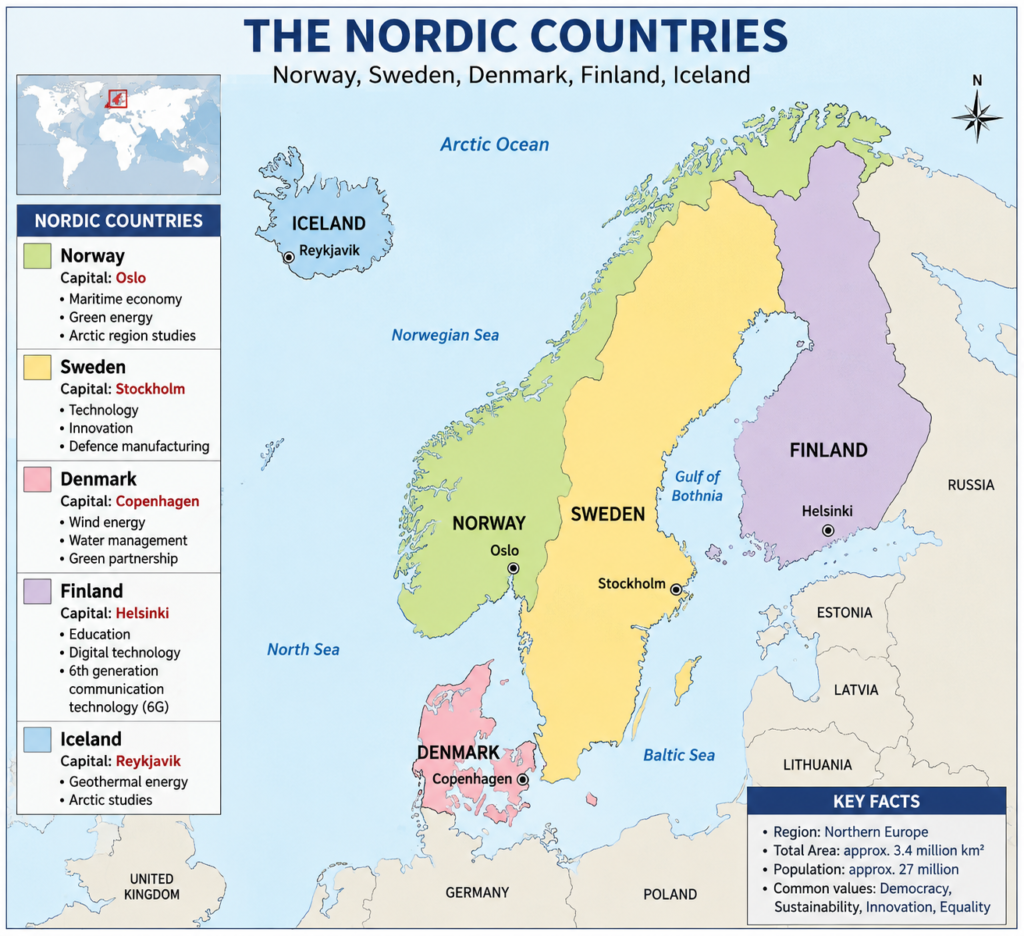
India–Nordic Relations and Norway’s Appeal on Ukraine Truce
Why in News? Prime Minister Narendra Modi attended the India–Nordic Summit in Oslo, Norway, where he met leaders of Norway, Denmark, Finland, Iceland and Sweden. The summit focused on democracy, rule of law, green technology, maritime cooperation, Arctic research, trade, and global security. During the visit, Norway’s Prime Minister Jonas Gahr Støre said that India could use its communication channels with Russia to help push for a ceasefire in the Russia–Ukraine war.
Key Highlights
Area
Details
Event
India–Nordic Summit
Venue
Oslo, Norway
Participating countries
India + Norway, Sweden, Denmark, Finland, Iceland
Major focus
Green technology, innovation, maritime cooperation, Arctic research, democracy, rule of law
Important statement
Norway hopes India can help push for Ukraine ceasefire
Next India–Nordic Summit
To be hosted by Finland
Trade figure
India’s combined trade with Nordic countries is around $19 billion
Global support
Nordic countries backed India’s bid for a permanent seat in a reformed UN Security Council and welcomed India’s NSG membership application
Nordic Countries and Their Importance for India
Nordic Country
Capital
Importance for India
Norway
Oslo
Maritime economy, green energy, Arctic studies
Sweden
Stockholm
Technology, innovation, defence manufacturing
Denmark
Copenhagen
Wind energy, water management, green partnership
Finland
Helsinki
Education, digital technology, 6G communication
Iceland
Reykjavik
Geothermal energy, Arctic research
India–Nordic Summit: Main Outcomes
Green Technology and Innovation Partnership India and the Nordic countries decided to upgrade their ties into a Green Technology and Innovation Strategic Partnership. This is important for: Clean energy Green hydrogen Carbon reduction Sustainable cities Climate-friendly technology Renewable energy
Shared Democratic Values Prime Minister Modi said India and Nordic countries are natural partners because they share values such as: Democracy Rule of law Multilateralism Human rights Gender equality Freedom Sustainable development
Maritime Cooperation India and Nordic countries agreed to strengthen cooperation in: Sustainable shipping Maritime safety Blue economy Ocean management Port development Marine technology This is important because India has a long coastline and wants to expand its maritime economy.
Arctic Research The summit also discussed cooperation in the Arctic region, especially in climate research, polar science, ocean management and new trade routes. India has Observer status in the Arctic Council since 2013. The Arctic Council includes Canada, Denmark, Finland, Iceland, Norway, Russia, Sweden and the United States.
Norway’s Appeal on Ukraine Ceasefire Norwegian Prime Minister Jonas Gahr Støre said that India has strong diplomatic channels with Russia and could use them to push for a ceasefire in Ukraine.
Norway’s View Norway has supported Ukraine and imposed sanctions on Russia. It wants more pressure on Russia to come to the negotiating table.
India’s Position India has maintained a balanced position on the Russia–Ukraine conflict. India has repeatedly called for dialogue and diplomacy, while also continuing energy imports from Russia due to its domestic energy needs.
Why India Matters in the Ukraine Conflict India is important because:
India has good relations with Russia.
India also has strong ties with Western countries.
India is a major global power and voice of the Global South.
India has consistently supported peaceful dialogue.
India’s position can influence diplomatic conversations.
India’s Energy Security Angle
Since the Russia–Ukraine war began in 2022, India has increased its import of Russian crude oil because of energy security and price considerations.
Norway said it respects India’s energy needs, but also believes there should be more pressure on Russia to end the war.
This shows the tension between: Energy security vs Moral and geopolitical pressure on Russia
Significance for India
Strengthening Ties with Europe Nordic countries are advanced economies with strong technology, innovation and clean energy sectors. Better ties with them can strengthen India’s engagement with Europe.
Support for UNSC Reform The Nordic countries supported India’s claim for a permanent seat in a reformed UN Security Council. This is important for India’s global diplomatic ambitions.
Green Growth Nordic countries are global leaders in green energy, climate action and sustainable technology. India can benefit from their expertise.
Arctic Diplomacy The Arctic region is becoming important due to climate change, new sea routes and natural resources. India’s cooperation with Nordic countries can improve its Arctic research and strategic understanding.
Trade and Investment India’s trade with Nordic countries is still relatively low. The summit gives scope to increase trade in technology, clean energy, start-ups, education and maritime industries.
Challenges
Challenge
Explanation
Low trade volume
India’s trade with Nordic countries is still limited compared to potential
Ukraine war differences
India and Nordic countries do not fully agree on Russia policy
Energy dependence
India needs affordable oil and energy security
Technology cost
Green technology can be expensive
Arctic geopolitics
Russia’s role in the Arctic makes cooperation more complex
Climate finance
India needs affordable climate finance and technology transfer
Way Forward India should deepen cooperation with Nordic countries in:
Green hydrogen
Offshore wind energy
Blue economy
Arctic research
6G technology
Artificial intelligence
Climate finance
Sustainable urban development
Defence and maritime security
Higher education and research exchanges
India should also continue its diplomatic approach on Ukraine by supporting dialogue, ceasefire and peaceful resolution.
Question. Which country will host the next India–Nordic Summit? A. Norway B. Sweden C. Finland D. Iceland Answer: C. Finland Explanation: During the Oslo summit, it was announced that the next India–Nordic Summit would be hosted by Finland.
Question. India–Nordic relations are based on shared democratic values, green technology and strategic cooperation. Discuss their significance for India’s foreign policy.
Paper-V: General Studies 4
Ethics Case Study: PMAY Housing Scam and Administrative Integrity
Case Background You are posted as the Deputy Commissioner of Belagavi district. A complaint reaches your office regarding irregularities in housing projects under Pradhan Mantri Awas Yojana – Urban 2022 in Ramdurg town, Belagavi district.
A preliminary inquiry reveals that nearly 600 houses were allegedly incomplete, but officials certified them as completed. Payments were released by preparing fake inspection reports and fabricated GPS-based photographic records. Around ₹29.45 crore was released to the contractor between April 2019 and November 2024, but construction materials worth only around ₹6.10 crore were allegedly supplied. The estimated loss to the government is around ₹23.35 crore.
The accused include officials of the Karnataka Slum Development Board and a private contractor. The Lokayukta has registered a case and conducted raids at government offices, residences of officials, contractors, and the contractor’s office in Bengaluru.
As the District Commissioner, you are expected to protect public interest, ensure justice to poor beneficiaries, and maintain administrative integrity.
Ethical Issues Involved
Corruption and Misuse of Public Funds Funds meant for poor housing beneficiaries were allegedly diverted through collusion between officials and contractors.
Violation of Public Trust PMAY is meant to provide affordable housing to the urban poor. Irregularities in such schemes weaken people’s faith in government.
Neglect of Vulnerable Sections The real victims are poor families who were supposed to receive completed houses but were left with incomplete shelters.
Administrative Collusion The case shows possible collusion between public officials and private contractors, leading to fraud.
False Documentation Fake inspection reports and fabricated GPS-based photos indicate deliberate manipulation of official records.
Lack of Accountability If officials released payments despite incomplete houses, it reflects weak supervision and poor monitoring.
Stakeholders
Stakeholder
Concern
PMAY beneficiaries
Need completed houses and justice
Government
Recovery of public money and credibility
Karnataka Slum Development Board
Institutional accountability
Lokayukta
Investigation and prosecution
Contractor
Legal accountability if guilty
Honest officials
Protection from pressure and false blame
Public
Trust in welfare schemes
Values Involved
Integrity
Probity in governance
Accountability
Transparency
Compassion for the poor
Rule of law
Public service ethics
Responsiveness
Social justice
Ethical Dilemmas
Speed vs Due Process Immediate action is needed to protect beneficiaries, but the accused must also get a fair investigation.
Public Pressure vs Legal Procedure There may be public anger, but administrative action should be based on evidence.
Political/Contractor Pressure vs Integrity Influential contractors or officials may try to suppress the case. The officer must remain neutral and firm.
Punishment vs Service Delivery While investigation continues, the houses must still be completed for beneficiaries.
Course of Action Step 1: Protect Evidence Seal and secure all project files, inspection reports, payment records, GPS photographs, bills, and approval documents.
Step 2: Beneficiary Verification Conduct a door-to-door physical verification of all PMAY houses in Ramdurg with geo-tagged photographs and beneficiary statements.
Step 3: Stop Further Payments Suspend all pending payments to the contractor until verification is complete.
Step 4: Support Lokayukta Investigation Provide all documents and administrative support to the Lokayukta.
Step 5: Departmental Action Recommend suspension or transfer of officials directly involved in inspection, certification, and payment approval to prevent tampering of evidence.
Step 6: Recovery of Loss Initiate steps for recovery of misappropriated funds from the contractor and guilty officials after legal verification.
Step 7: Complete the Houses Prepare a time-bound plan to complete the pending houses through a transparent tendering process or government-supervised construction.
Step 8: Systemic Reform Introduce third-party audits, social audits, real-time geo-tagging, public dashboards, and beneficiary-based payment confirmation.
Best Ethical Response The best response is not only to punish the guilty but also to ensure that poor beneficiaries receive their houses. A welfare scheme should not fail because of corruption. The officer must balance strict legal action, administrative reform, and compassion for beneficiaries.
Examples to Use in Answer Example 1: Fake Documentation In this case, officials allegedly used fake inspection reports and GPS-based photographs to show incomplete houses as completed. This shows how technology can be misused if there is no independent verification.
Example 2: Welfare Scheme Corruption PMAY aims to provide housing to the urban poor. Misappropriation of funds in such schemes directly affects social justice and inclusive development.
Example 3: Role of Lokayukta The Karnataka Lokayukta’s raids show the importance of independent anti-corruption institutions in ensuring accountability.
Example 4: Public Trust When money meant for poor families is misused, citizens lose faith in government schemes and public institutions.
ಪತ್ರಿಕೆ-I: ರಾಷ್ಟ್ರೀಯ ಮತ್ತು ಅಂತರರಾಷ್ಟ್ರೀಯ ಮಹತ್ವದ ಪ್ರಚಲಿತ ವಿದ್ಯಮಾನಗಳು
ಭಾರತ–ನಾರ್ಡಿಕ್ ಶೃಂಗಸಭೆ: ನಾರ್ಡಿಕ್ ರಾಷ್ಟ್ರಗಳ ಪ್ರಧಾನಿಗಳ ಜೊತೆ ಪ್ರಧಾನಿ ಮೋದಿ ಚರ್ಚೆ
ಸುದ್ದಿಯಲ್ಲಿ ಏಕೆ? ಪ್ರಧಾನಿ ನರೇಂದ್ರ ಮೋದಿ ಅವರು ನಾರ್ವೆ, ಡೆನ್ಮಾರ್ಕ್, ಫಿನ್ಲ್ಯಾಂಡ್, ಐಸ್ಲ್ಯಾಂಡ್ ಮತ್ತು ಸ್ವೀಡನ್ ದೇಶಗಳ ಪ್ರಧಾನಿಗಳೊಂದಿಗೆ ಭಾರತ–ನಾರ್ಡಿಕ್ ಶೃಂಗಸಭೆಯಲ್ಲಿ ಭಾಗವಹಿಸಿ, ದ್ವಿಪಕ್ಷೀಯ ಸಂಬಂಧ, ಹಸಿರು ತಂತ್ರಜ್ಞಾನ, ವ್ಯಾಪಾರ, ಹೂಡಿಕೆ, ಭಯೋತ್ಪಾದನೆ ವಿರೋಧಿ ಸಹಕಾರ, ಡಿಜಿಟಲ್ ತಂತ್ರಜ್ಞಾನ ಹಾಗೂ ಜಾಗತಿಕ ಭದ್ರತೆ ಕುರಿತು ಚರ್ಚಿಸಿದರು. ಈ ಸಭೆಯ ಮುಖ್ಯ ಉದ್ದೇಶ ಭಾರತ ಮತ್ತು ನಾರ್ಡಿಕ್ ರಾಷ್ಟ್ರಗಳ ನಡುವೆ ಹಸಿರು ತಂತ್ರಜ್ಞಾನ ಹಾಗೂ ನವೀನ ಆವಿಷ್ಕಾರ ಆಧಾರಿತ ಸಹಕಾರವನ್ನು ಹೆಚ್ಚಿಸುವುದು.
ನಾರ್ಡಿಕ್ ರಾಷ್ಟ್ರಗಳು ಯಾವುವು?
ನಾರ್ಡಿಕ್ ದೇಶ
ರಾಜಧಾನಿ
ಭಾರತದ ದೃಷ್ಟಿಯಿಂದ ಮಹತ್ವ
ನಾರ್ವೆ
ಒಸ್ಲೊ
ಸಮುದ್ರ ಆರ್ಥಿಕತೆ, ಹಸಿರು ಇಂಧನ, ಆರ್ಕ್ಟಿಕ್ ಪ್ರದೇಶ ಅಧ್ಯಯನ
ಸ್ವೀಡನ್
ಸ್ಟಾಕ್ಹೋಮ್
ತಂತ್ರಜ್ಞಾನ, ಆವಿಷ್ಕಾರ, ರಕ್ಷಣಾ ಉತ್ಪಾದನೆ
ಡೆನ್ಮಾರ್ಕ್
ಕೋಪನ್ಹೇಗನ್
ಗಾಳಿ ವಿದ್ಯುತ್, ಜಲ ನಿರ್ವಹಣೆ, ಹಸಿರು ಸಹಭಾಗಿತ್ವ
ಫಿನ್ಲ್ಯಾಂಡ್
ಹೆಲ್ಸಿಂಕಿ
ಶಿಕ್ಷಣ, ಡಿಜಿಟಲ್ ತಂತ್ರಜ್ಞಾನ, ಆರನೇ ತಲೆಮಾರಿನ ಸಂವಹನ ತಂತ್ರಜ್ಞಾನ
ಐಸ್ಲ್ಯಾಂಡ್
ರೇಕ್ಯಾವಿಕ್
ಭೂತಾಪೀಯ ಶಕ್ತಿ, ಆರ್ಕ್ಟಿಕ್ ಅಧ್ಯಯನ
ಶೃಂಗಸಭೆಯ ಪ್ರಮುಖ ಚರ್ಚಾ ವಿಷಯಗಳು ಭಾರತ ಮತ್ತು ನಾರ್ಡಿಕ್ ರಾಷ್ಟ್ರಗಳ ನಡುವೆ ಕೆಳಗಿನ ಕ್ಷೇತ್ರಗಳಲ್ಲಿ ಸಹಕಾರ ವಿಸ್ತರಿಸುವ ಬಗ್ಗೆ ಚರ್ಚಿಸಲಾಯಿತು:
ಕ್ಷೇತ್ರ
ಚರ್ಚೆಯ ಅಂಶ
ಹಸಿರು ತಂತ್ರಜ್ಞಾನ
ಶುದ್ಧ ಇಂಧನ, ಹಸಿರು ಹೈಡ್ರೋಜನ್, ಕಾರ್ಬನ್ ಕಡಿತ
ವ್ಯಾಪಾರ ಮತ್ತು ಹೂಡಿಕೆ
ಕೈಗಾರಿಕೆ, ಉದ್ಯಮ, ಸ್ಟಾರ್ಟ್ಅಪ್ಗಳಿಗೆ ಅವಕಾಶ
ಸಮುದ್ರ ಆರ್ಥಿಕತೆ
ನೀಲಿ ಆರ್ಥಿಕತೆ, ಸುಸ್ಥಿರ ಮೀನುಗಾರಿಕೆ, ಹಡಗು ಸಾಗಣೆ
ಡಿಜಿಟಲ್ ತಂತ್ರಜ್ಞಾನ
ಕೃತಕ ಬುದ್ಧಿಮತ್ತೆ, ಡಿಜಿಟಲ್ ಸಾರ್ವಜನಿಕ ಮೂಲಸೌಕರ್ಯ
ಭದ್ರತೆ
ಭಯೋತ್ಪಾದನೆ ವಿರೋಧಿ ಸಹಕಾರ, ಗಡಿ ದಾಟುವ ಭಯೋತ್ಪಾದನೆ ವಿರುದ್ಧ ನಿಲುವು
ಶಿಕ್ಷಣ ಮತ್ತು ಸಂಶೋಧನೆ
ವಿದ್ಯಾರ್ಥಿ ವಿನಿಮಯ, ಸಂಶೋಧನಾ ಸಹಕಾರ
ಹವಾಮಾನ ಕ್ರಮ
ಹವಾಮಾನ ಬದಲಾವಣೆ ನಿಯಂತ್ರಣ, ಶುದ್ಧ ತಂತ್ರಜ್ಞಾನ ಬಳಕೆ
ಭಾರತಕ್ಕೆ ನಾರ್ಡಿಕ್ ರಾಷ್ಟ್ರಗಳು ಏಕೆ ಮುಖ್ಯ?
ಹಸಿರು ತಂತ್ರಜ್ಞಾನದಲ್ಲಿ ಮುಂಚೂಣಿ ರಾಷ್ಟ್ರಗಳು ನಾರ್ಡಿಕ್ ದೇಶಗಳು ಜಗತ್ತಿನಲ್ಲಿ ಹಸಿರು ತಂತ್ರಜ್ಞಾನ, ನವೀಕರಿಸಬಹುದಾದ ಇಂಧನ, ಗಾಳಿ ವಿದ್ಯುತ್, ಶುದ್ಧ ಸಾರಿಗೆ ಮತ್ತು ಪರಿಸರ ಸ್ನೇಹಿ ನಗರಗಳ ನಿರ್ಮಾಣದಲ್ಲಿ ಮುಂಚೂಣಿಯಲ್ಲಿವೆ. ಭಾರತದ ಶುದ್ಧ ಇಂಧನ ಗುರಿಗಳಿಗೆ ಈ ರಾಷ್ಟ್ರಗಳ ತಂತ್ರಜ್ಞಾನ ಸಹಕಾರ ಬಹಳ ಮಹತ್ವದ್ದಾಗಿದೆ.
ಆವಿಷ್ಕಾರ ಮತ್ತು ಸ್ಟಾರ್ಟ್ಅಪ್ ಸಹಕಾರ ನಾರ್ಡಿಕ್ ರಾಷ್ಟ್ರಗಳು ಆವಿಷ್ಕಾರ, ಸಂಶೋಧನೆ ಮತ್ತು ತಂತ್ರಜ್ಞಾನ ಆಧಾರಿತ ಉದ್ಯಮಗಳಲ್ಲಿ ಬಲವಾದ ಪರಿಸರ ಹೊಂದಿವೆ. ಭಾರತದಲ್ಲಿ ವೇಗವಾಗಿ ಬೆಳೆಯುತ್ತಿರುವ ಸ್ಟಾರ್ಟ್ಅಪ್ ಪರಿಸರಕ್ಕೆ ಈ ಸಹಕಾರ ಹೊಸ ಅವಕಾಶಗಳನ್ನು ಸೃಷ್ಟಿಸಬಹುದು.
ಸಮುದ್ರ ಆರ್ಥಿಕತೆ ಭಾರತವು ದೀರ್ಘ ಕರಾವಳಿ ಹೊಂದಿದ ದೇಶ. ನಾರ್ಡಿಕ್ ರಾಷ್ಟ್ರಗಳು ಸಮುದ್ರ ಸಂಪನ್ಮೂಲ ಬಳಕೆ, ಹಡಗು ಸಾಗಣೆ, ಬಂದರು ನಿರ್ವಹಣೆ ಮತ್ತು ಸುಸ್ಥಿರ ಮೀನುಗಾರಿಕೆಯಲ್ಲಿ ಅನುಭವ ಹೊಂದಿವೆ. ಆದ್ದರಿಂದ ನೀಲಿ ಆರ್ಥಿಕತೆ ಕ್ಷೇತ್ರದಲ್ಲಿ ಸಹಕಾರ ಭಾರತಕ್ಕೆ ಉಪಯುಕ್ತ.
ಆರ್ಕ್ಟಿಕ್ ಪ್ರದೇಶದ ಮಹತ್ವ ಹವಾಮಾನ ಬದಲಾವಣೆ, ಹೊಸ ಸಮುದ್ರ ಮಾರ್ಗಗಳು, ಖನಿಜ ಸಂಪನ್ಮೂಲಗಳು ಮತ್ತು ಭೌಗೋಳಿಕ ರಾಜಕೀಯದ ದೃಷ್ಟಿಯಿಂದ ಆರ್ಕ್ಟಿಕ್ ಪ್ರದೇಶದ ಮಹತ್ವ ಹೆಚ್ಚುತ್ತಿದೆ. ನಾರ್ಡಿಕ್ ರಾಷ್ಟ್ರಗಳೊಂದಿಗೆ ಸಂಬಂಧ ಬಲಪಡಿಸುವುದು ಭಾರತಕ್ಕೆ ಆರ್ಕ್ಟಿಕ್ ಅಧ್ಯಯನ ಮತ್ತು ಸಂಶೋಧನೆಗೆ ಸಹಕಾರಿ.
ಜಾಗತಿಕ ವೇದಿಕೆಯಲ್ಲಿ ಭಾರತದ ಸ್ಥಾನ ಬಲಪಡಿಸುವುದು ನಾರ್ಡಿಕ್ ರಾಷ್ಟ್ರಗಳು ಜಾಗತಿಕ ಶಾಂತಿ, ಸುಸ್ಥಿರ ಅಭಿವೃದ್ಧಿ, ಮಾನವ ಹಕ್ಕುಗಳು ಮತ್ತು ಬಹುಪಕ್ಷೀಯ ಸಹಕಾರಕ್ಕೆ ಮಹತ್ವ ನೀಡುತ್ತವೆ. ಇವುಗಳೊಂದಿಗೆ ಭಾರತದ ಸಂಬಂಧ ಬಲವಾಗುವುದು ಜಾಗತಿಕ ರಾಜತಾಂತ್ರಿಕತೆಯಲ್ಲಿ ಭಾರತದ ಪ್ರಭಾವವನ್ನು ಹೆಚ್ಚಿಸುತ್ತದೆ.
ಭಯೋತ್ಪಾದನೆ ವಿರುದ್ಧ ಭಾರತದ ನಿಲುವು ಭಾರತವು ಶೃಂಗಸಭೆಯಲ್ಲಿ ಭಯೋತ್ಪಾದನೆ ಮತ್ತು ಹಿಂಸಾತ್ಮಕ ಅತಿರೇಕದ ವಿರುದ್ಧ ಕಠಿಣ ನಿಲುವು ವ್ಯಕ್ತಪಡಿಸಿದೆ. ಗಡಿ ದಾಟುವ ಭಯೋತ್ಪಾದನೆ, ಉಗ್ರರಿಗೆ ಹಣಕಾಸು ನೆರವು, ತಂತ್ರಜ್ಞಾನ ದುರುಪಯೋಗ ಮತ್ತು ಉಗ್ರ ಸಂಘಟನೆಗಳ ಜಾಗತಿಕ ಜಾಲವನ್ನು ಎದುರಿಸಲು ರಾಷ್ಟ್ರಗಳ ನಡುವೆ ಸಮನ್ವಯ ಅಗತ್ಯವಿದೆ ಎಂದು ಒತ್ತಿಹೇಳಲಾಗಿದೆ.
ಭಾರತದ ವಿದೇಶಾಂಗ ನೀತಿಯಲ್ಲಿ ಇದರ ಮಹತ್ವ ಭಾರತದ ವಿದೇಶಾಂಗ ನೀತಿ ಈಗ ಕೇವಲ ಸಾಂಪ್ರದಾಯಿಕ ರಾಜಕೀಯ ಸಂಬಂಧಗಳಿಗೆ ಸೀಮಿತವಾಗಿಲ್ಲ. ಅದು ತಂತ್ರಜ್ಞಾನ, ಹವಾಮಾನ ಬದಲಾವಣೆ, ಶುದ್ಧ ಇಂಧನ, ಸಮುದ್ರ ಭದ್ರತೆ, ಡಿಜಿಟಲ್ ಆಡಳಿತ ಮತ್ತು ಆರ್ಥಿಕ ಹೂಡಿಕೆಗಳತ್ತ ವಿಸ್ತರಿಸಿದೆ. ಭಾರತ–ನಾರ್ಡಿಕ್ ಸಂಬಂಧಗಳು ಈ ಹೊಸ ರಾಜತಾಂತ್ರಿಕ ದಿಕ್ಕನ್ನು ತೋರಿಸುತ್ತವೆ.
ಸವಾಲುಗಳು
ಸವಾಲು
ವಿವರಣೆ
ತಂತ್ರಜ್ಞಾನ ವೆಚ್ಚ
ಹಸಿರು ತಂತ್ರಜ್ಞಾನ ದುಬಾರಿಯಾಗಿರುವುದರಿಂದ ಅಭಿವೃದ್ಧಿಶೀಲ ರಾಷ್ಟ್ರಗಳಿಗೆ ಸವಾಲು
ತಂತ್ರಜ್ಞಾನ ವರ್ಗಾವಣೆ
ಮುಂದುವರಿದ ರಾಷ್ಟ್ರಗಳಿಂದ ತಂತ್ರಜ್ಞಾನ ಹಂಚಿಕೆ ಸುಲಭವಾಗಬೇಕಿದೆ
ಜಾಗತಿಕ ರಾಜಕೀಯ
ರಷ್ಯಾ–ಉಕ್ರೇನ್ ಯುದ್ಧದ ಪರಿಣಾಮ ಯುರೋಪಿನ ಭದ್ರತಾ ಪರಿಸ್ಥಿತಿಯ ಮೇಲೆ ಇದೆ
ಹವಾಮಾನ ಹಣಕಾಸು
ಅಭಿವೃದ್ಧಿಶೀಲ ರಾಷ್ಟ್ರಗಳಿಗೆ ಹಣಕಾಸು ಮತ್ತು ತಂತ್ರಜ್ಞಾನ ನೆರವು ಅಗತ್ಯ
ಆರ್ಕ್ಟಿಕ್ ಸ್ಪರ್ಧೆ
ಆರ್ಕ್ಟಿಕ್ ಪ್ರದೇಶದಲ್ಲಿ ಜಾಗತಿಕ ಶಕ್ತಿಗಳ ಆಸಕ್ತಿ ಹೆಚ್ಚುತ್ತಿದೆ
ಡಿಜಿಟಲ್ ಭದ್ರತೆ
ಕೃತಕ ಬುದ್ಧಿಮತ್ತೆ ಮತ್ತು ಡೇಟಾ ಸುರಕ್ಷತೆಯ ಬಗ್ಗೆ ಸ್ಪಷ್ಟ ನಿಯಂತ್ರಣ ಅಗತ್ಯ
ಮುಂದಿನ ದಾರಿ
ಭಾರತವು ನಾರ್ಡಿಕ್ ರಾಷ್ಟ್ರಗಳೊಂದಿಗೆ ಕೆಳಗಿನ ಕ್ಷೇತ್ರಗಳಲ್ಲಿ ಸಹಕಾರ ಹೆಚ್ಚಿಸಬೇಕು:
ಹಸಿರು ಹೈಡ್ರೋಜನ್ ಮತ್ತು ಶುದ್ಧ ಇಂಧನ ಯೋಜನೆಗಳು
ಗಾಳಿ ವಿದ್ಯುತ್ ಮತ್ತು ಸಮುದ್ರ ಆಧಾರಿತ ಇಂಧನ ಉತ್ಪಾದನೆ
ಕೃತಕ ಬುದ್ಧಿಮತ್ತೆಯ ನೈತಿಕ ಬಳಕೆ
ಡಿಜಿಟಲ್ ಸಾರ್ವಜನಿಕ ಮೂಲಸೌಕರ್ಯ ಹಂಚಿಕೆ
ಆರ್ಕ್ಟಿಕ್ ಸಂಶೋಧನೆ ಮತ್ತು ಹವಾಮಾನ ಅಧ್ಯಯನ
ವಿದ್ಯಾರ್ಥಿ, ಸಂಶೋಧಕ ಮತ್ತು ಉದ್ಯಮಿಗಳ ವಿನಿಮಯ
ಸಮುದ್ರ ಭದ್ರತೆ ಮತ್ತು ನೀಲಿ ಆರ್ಥಿಕತೆ ಸಹಕಾರ
ಸ್ಟಾರ್ಟ್ಅಪ್ ಮತ್ತು ಆವಿಷ್ಕಾರ ಪರಿಸರ ಬಲಪಡಿಸುವುದು
ಪ್ರಶ್ನೆ: ನಾರ್ಡಿಕ್ ರಾಷ್ಟ್ರಗಳ ಗುಂಪಿನಲ್ಲಿ ಕೆಳಗಿನ ಯಾವ ದೇಶ ಸೇರಿಲ್ಲ? ಅ. ನಾರ್ವೆ ಆ. ಸ್ವೀಡನ್ ಇ. ಫಿನ್ಲ್ಯಾಂಡ್ ಈ. ಸ್ಪೇನ್ ಸರಿಯಾದ ಉತ್ತರ: ಈ. ಸ್ಪೇನ್ ವಿವರಣೆ: ನಾರ್ಡಿಕ್ ರಾಷ್ಟ್ರಗಳಲ್ಲಿ ನಾರ್ವೆ, ಸ್ವೀಡನ್, ಡೆನ್ಮಾರ್ಕ್, ಫಿನ್ಲ್ಯಾಂಡ್ ಮತ್ತು ಐಸ್ಲ್ಯಾಂಡ್ ಸೇರಿವೆ. ಸ್ಪೇನ್ ನಾರ್ಡಿಕ್ ರಾಷ್ಟ್ರವಲ್ಲ.
ಪ್ರಶ್ನೆ. ಭಾರತ–ನಾರ್ಡಿಕ್ ಸಂಬಂಧಗಳು ಭಾರತದ ಹಸಿರು ಅಭಿವೃದ್ಧಿ, ತಂತ್ರಜ್ಞಾನ ಸಹಕಾರ ಮತ್ತು ಜಾಗತಿಕ ರಾಜತಾಂತ್ರಿಕ ಪ್ರಭಾವವನ್ನು ಬಲಪಡಿಸಬಹುದು. ಚರ್ಚಿಸಿ.
ಪತ್ರಿಕೆ-II: ರಾಜ್ಯದ ಪ್ರಾಮುಖ್ಯತೆಯ ಪ್ರಸ್ತುತ ಘಟನೆಗಳು ಮತ್ತು ರಾಜ್ಯ ಸರ್ಕಾರದ ಪ್ರಮುಖ ಯೋಜನೆಗಳು
ಮುಖ್ಯ ಪರೀಕ್ಷೆ
ಪತ್ರಿಕೆ-I: ಪ್ರಬಂಧಗಳು
ಪ್ರಬಂಧ-1: ರಾಷ್ಟ್ರೀಯ ಮತ್ತು ಅಂತರರಾಷ್ಟ್ರೀಯ ಮಹತ್ವದ ವಿಷಯ
ಪ್ರಬಂಧ-2: ರಾಜ್ಯ ಮಹತ್ವ/ ಸ್ಥಳೀಯ ಮಹತ್ವ ವಿಷಯ
ಪತ್ರಿಕೆ-II: ಸಾಮಾನ್ಯ ಅಧ್ಯಯನ-1
ಪತ್ರಿಕೆ-III: ಸಾಮಾನ್ಯ ಅಧ್ಯಯನ-2
ದೇವಾಲಯಗಳ ಆಡಳಿತ ನಿಯಂತ್ರಿಸುವ ಕಾಯ್ದೆಗಳು: ಸುಪ್ರೀಂ ಕೋರ್ಟ್ ಪರಿಶೀಲನೆ
ಸುದ್ದಿಯಲ್ಲಿ ಏಕೆ? ತಮಿಳುನಾಡು, ಆಂಧ್ರಪ್ರದೇಶ, ತೆಲಂಗಾಣ ಮತ್ತು ಪುದುಚೇರಿಯಲ್ಲಿ ಹಿಂದೂ ದೇವಾಲಯಗಳು ಹಾಗೂ ಧಾರ್ಮಿಕ ಸಂಸ್ಥೆಗಳ ಆಡಳಿತವನ್ನು ನಿಯಂತ್ರಿಸುವ ಕಾಯ್ದೆಗಳ ಸಾಂವಿಧಾನಿಕ ಮಾನ್ಯತೆ ಕುರಿತು ಸುಪ್ರೀಂ ಕೋರ್ಟ್ ಪರಿಶೀಲನೆ ನಡೆಸಲಿದೆ. 2012ರಲ್ಲಿ ಸಲ್ಲಿಕೆಯಾಗಿದ್ದ ಅರ್ಜಿಗಳಲ್ಲಿ, ರಾಜ್ಯ ಸರ್ಕಾರಗಳು ಹಿಂದೂ ದೇವಾಲಯಗಳ ಆಡಳಿತದಲ್ಲಿ ಅತಿಯಾದ ಹಸ್ತಕ್ಷೇಪ ಮಾಡುತ್ತಿರುವುದರಿಂದ ಅದು ಧಾರ್ಮಿಕ ಸ್ವಾತಂತ್ರ್ಯ ಮತ್ತು ಸಮಾನತೆಯ ಹಕ್ಕುಗಳಿಗೆ ವಿರುದ್ಧವಾಗಿದೆ ಎಂದು ಪ್ರಶ್ನಿಸಲಾಗಿದೆ.
ಪ್ರಮುಖ ಕಾಯ್ದೆಗಳು
ರಾಜ್ಯ / ಕೇಂದ್ರಾಡಳಿತ ಪ್ರದೇಶ
ಸಂಬಂಧಿತ ಕಾಯ್ದೆ
ತಮಿಳುನಾಡು
ಹಿಂದೂ ಧಾರ್ಮಿಕ ಮತ್ತು ದತ್ತಿ ನಿಧಿಗಳ ಕಾಯ್ದೆ, 1959
ಆಂಧ್ರಪ್ರದೇಶ
ದತ್ತಿ ಮತ್ತು ಹಿಂದೂ ಧಾರ್ಮಿಕ ಸಂಸ್ಥೆಗಳು ಹಾಗೂ ದತ್ತಿ ನಿಧಿಗಳ ಕಾಯ್ದೆ, 1987
ತೆಲಂಗಾಣ
ದತ್ತಿ ಮತ್ತು ಹಿಂದೂ ಧಾರ್ಮಿಕ ಸಂಸ್ಥೆಗಳು ಹಾಗೂ ದತ್ತಿ ನಿಧಿಗಳ ಕಾಯ್ದೆ, 1987
ಪುದುಚೇರಿ
ಹಿಂದೂ ಧಾರ್ಮಿಕ ಸಂಸ್ಥೆಗಳ ಕಾಯ್ದೆ, 1972
ಅರ್ಜಿದಾರರ ಮುಖ್ಯ ವಾದ ಅರ್ಜಿದಾರರ ಪ್ರಕಾರ, ಈ ಕಾಯ್ದೆಗಳು ಹಿಂದೂ ದೇವಾಲಯಗಳ ಆಡಳಿತವನ್ನು ಸರ್ಕಾರದ ನಿಯಂತ್ರಣಕ್ಕೆ ತರುತ್ತವೆ. ಆದರೆ ಇತರ ಧರ್ಮಗಳ ಧಾರ್ಮಿಕ ಸಂಸ್ಥೆಗಳು ಇದೇ ರೀತಿಯ ಸರ್ಕಾರಿ ನಿಯಂತ್ರಣಕ್ಕೆ ಒಳಪಡುತ್ತಿಲ್ಲ. ಆದ್ದರಿಂದ ಇದು ಸಮಾನತೆಯ ಹಕ್ಕು ಮತ್ತು ಧಾರ್ಮಿಕ ಸ್ವಾತಂತ್ರ್ಯಕ್ಕೆ ವಿರುದ್ಧವಾಗಿದೆ ಎಂದು ವಾದಿಸಲಾಗಿದೆ.
ಸಂವಿಧಾನಾತ್ಮಕ ಆಯಾಮ
Article 14 – ಸಮಾನತೆಯ ಹಕ್ಕು ಎಲ್ಲಾ ಧರ್ಮಗಳ ಧಾರ್ಮಿಕ ಸಂಸ್ಥೆಗಳಿಗೂ ಸಮಾನ ಕಾನೂನು ಮಾನದಂಡ ಇರಬೇಕೆಂಬ ಪ್ರಶ್ನೆ ಇಲ್ಲಿ ಉದ್ಭವಿಸುತ್ತದೆ.
Article 25 – ಧಾರ್ಮಿಕ ಸ್ವಾತಂತ್ರ್ಯ ವ್ಯಕ್ತಿಗೆ ತನ್ನ ಧರ್ಮವನ್ನು ಆಚರಿಸುವ, ಪ್ರಚಾರ ಮಾಡುವ ಮತ್ತು ಅನುಸರಿಸುವ ಸ್ವಾತಂತ್ರ್ಯ ಇದೆ.
Article 26 – ಧಾರ್ಮಿಕ ಸಂಸ್ಥೆಗಳ ಹಕ್ಕು ಧಾರ್ಮಿಕ ಪಂಥಗಳು ತಮ್ಮ ಧಾರ್ಮಿಕ ವ್ಯವಹಾರಗಳನ್ನು ಸ್ವತಃ ನಿರ್ವಹಿಸುವ ಹಕ್ಕು ಹೊಂದಿವೆ.
Article 19 – ಸ್ವಾತಂತ್ರ್ಯದ ಹಕ್ಕು ಧಾರ್ಮಿಕ ಸಂಸ್ಥೆಗಳ ನಿರ್ವಹಣೆ, ಆಸ್ತಿ ಬಳಕೆ ಮತ್ತು ಸಂಘಟನಾ ಸ್ವಾತಂತ್ರ್ಯದ ವಿಷಯವೂ ಇಲ್ಲಿ ಸಂಬಂಧಿಸುತ್ತದೆ.
ಸರ್ಕಾರದ ನಿಯಂತ್ರಣದ ಪರವಾದ ವಾದಗಳು ಸರ್ಕಾರದ ನಿಯಂತ್ರಣದಿಂದ ದೇವಾಲಯಗಳ ಆದಾಯ, ಆಸ್ತಿ ಮತ್ತು ದತ್ತಿ ಹಣದ ದುರುಪಯೋಗವನ್ನು ತಡೆಯಬಹುದು. ದೊಡ್ಡ ದೇವಾಲಯಗಳಲ್ಲಿ ಭಕ್ತರಿಂದ ಬರುವ ಹಣ ಸಾರ್ವಜನಿಕ ನಂಬಿಕೆಗೆ ಸಂಬಂಧಿಸಿದ್ದರಿಂದ ಪಾರದರ್ಶಕತೆ ಮತ್ತು ಲೆಕ್ಕಪತ್ರ ನಿರ್ವಹಣೆ ಅಗತ್ಯ. ದೇವಾಲಯಗಳ ಭೂಮಿ, ಆಸ್ತಿ, ದತ್ತಿ ಸಂಪತ್ತು ಮತ್ತು ಸೇವಾ ವ್ಯವಸ್ಥೆಯಲ್ಲಿ ಭ್ರಷ್ಟಾಚಾರ ತಡೆಯಲು ಸರ್ಕಾರದ ಮೇಲ್ವಿಚಾರಣೆ ಸಹಾಯಕವಾಗಬಹುದು.
ಸರ್ಕಾರದ ನಿಯಂತ್ರಣದ ವಿರುದ್ಧದ ವಾದಗಳು ಧಾರ್ಮಿಕ ಸಂಸ್ಥೆಗಳ ಮೇಲೆ ಸರ್ಕಾರದ ಅತಿಯಾದ ನಿಯಂತ್ರಣವು ಧಾರ್ಮಿಕ ಸ್ವಾಯತ್ತತೆಯನ್ನು ಕುಗ್ಗಿಸಬಹುದು. ವಿಶೇಷವಾಗಿ ಹಿಂದೂ ದೇವಾಲಯಗಳನ್ನೇ ಹೆಚ್ಚು ನಿಯಂತ್ರಣಕ್ಕೆ ಒಳಪಡಿಸುವುದು ಧರ್ಮನಿರಪೇಕ್ಷತೆಯ ತತ್ವಕ್ಕೆ ವಿರುದ್ಧವೆಂದು ಕೆಲವರು ವಾದಿಸುತ್ತಾರೆ. ದೇವಾಲಯದ ಆದಾಯವನ್ನು ಅದರ ಧಾರ್ಮಿಕ ಹಾಗೂ ಸಾಂಸ್ಕೃತಿಕ ಉದ್ದೇಶಗಳಿಗೆ ಮಾತ್ರ ಬಳಸಬೇಕು ಎಂಬ ಪ್ರಶ್ನೆಯೂ ಮಹತ್ವದ್ದಾಗಿದೆ.
ಮುಖ್ಯ ಚರ್ಚೆ ಈ ಪ್ರಕರಣವು ಕೇವಲ ದೇವಾಲಯ ಆಡಳಿತದ ವಿಷಯವಲ್ಲ. ಇದು ಧಾರ್ಮಿಕ ಸ್ವಾತಂತ್ರ್ಯ, ಸರ್ಕಾರದ ನಿಯಂತ್ರಣ, ಧರ್ಮನಿರಪೇಕ್ಷತೆ, ಸಮಾನತೆ ಮತ್ತು ಸಾರ್ವಜನಿಕ ಪಾರದರ್ಶಕತೆಗಳ ನಡುವಿನ ಸಮತೋಲನದ ವಿಚಾರವಾಗಿದೆ.
ಗಡುವಿಗೂ ಮುನ್ನವೇ ದೇಶ ನಕ್ಸಲ್ ಮುಕ್ತ: ಅಮಿತ್ ಶಾ
ಸುದ್ದಿಯಲ್ಲಿ ಏಕೆ? ಕೇಂದ್ರ ಗೃಹ ಸಚಿವ ಅಮಿತ್ ಶಾ ಅವರು, 2026ರ ಮಾರ್ಚ್ 31ರ ಗಡುವಿಗೂ ಮುನ್ನವೇ ಭಾರತ ನಕ್ಸಲ್ ಮುಕ್ತವಾಗಲಿದೆ / ನಕ್ಸಲ್ ಮುಕ್ತ ದಿಕ್ಕಿನಲ್ಲಿ ನಿರ್ಣಾಯಕ ಹಂತ ತಲುಪಿದೆ ಎಂದು ಹೇಳಿದ್ದಾರೆ. ಭದ್ರತಾ ಪಡೆಗಳ ಧೈರ್ಯ, ಶೌರ್ಯ ಮತ್ತು ತ್ಯಾಗದಿಂದ ನಕ್ಸಲ್ವಾದದ ವಿರುದ್ಧದ ಅಭಿಯಾನ ಯಶಸ್ವಿಯಾಗಿದೆ ಎಂದು ಅವರು ತಿಳಿಸಿದ್ದಾರೆ.
ನಕ್ಸಲ್ವಾದ ಎಂದರೇನು?
ನಕ್ಸಲ್ವಾದವು ಎಡಪಂಥೀಯ ಅತಿರೇಕವಾದದ ಒಂದು ರೂಪ. ಇದು ಮುಖ್ಯವಾಗಿ ಸಾಮಾಜಿಕ–ಆರ್ಥಿಕ ಅಸಮಾನತೆ, ಭೂಹೀನತೆ, ಬುಡಕಟ್ಟು ಜನರ ಹಕ್ಕುಗಳು, ಅರಣ್ಯ ಸಂಪನ್ಮೂಲಗಳ ಮೇಲಿನ ನಿಯಂತ್ರಣ ಮತ್ತು ಅಭಿವೃದ್ಧಿಯಿಂದ ವಂಚಿತ ಪ್ರದೇಶಗಳಲ್ಲಿ ಬೆಳೆದಿದೆ.
ಸರ್ಕಾರದ ಕ್ರಮಗಳು
ಭದ್ರತಾ ಕಾರ್ಯಾಚರಣೆಗಳ ಬಲಪಡಿಕೆ CRPF, CoBRA, ರಾಜ್ಯ ಪೊಲೀಸ್ ಪಡೆಗಳು ಮತ್ತು ವಿಶೇಷ ಪಡೆಗಳ ಮೂಲಕ ನಕ್ಸಲ್ ಪ್ರಭಾವಿತ ಪ್ರದೇಶಗಳಲ್ಲಿ ಕಾರ್ಯಾಚರಣೆ.
ಕೇಂದ್ರ–ರಾಜ್ಯ ಸಮನ್ವಯ ಕೇಂದ್ರ ಸರ್ಕಾರ ಮತ್ತು ರಾಜ್ಯ ಸರ್ಕಾರಗಳ ನಡುವೆ ಗುಪ್ತಚರ ಮಾಹಿತಿ ಹಂಚಿಕೆ ಹಾಗೂ ಕಾರ್ಯಾಚರಣೆ ಯೋಜನೆ.
ಅಭಿವೃದ್ಧಿ ಯೋಜನೆಗಳು ರಸ್ತೆ, ವಿದ್ಯುತ್, ಶಾಲೆ, ಆರೋಗ್ಯ ಕೇಂದ್ರ, ಮೊಬೈಲ್ ಸಂಪರ್ಕ ಮತ್ತು ಬ್ಯಾಂಕಿಂಗ್ ಸೇವೆಗಳನ್ನು ನಕ್ಸಲ್ ಪೀಡಿತ ಪ್ರದೇಶಗಳಿಗೆ ತಲುಪಿಸುವುದು.
ಶರಣಾಗತಿ ಮತ್ತು ಪುನರ್ವಸತಿ ನೀತಿ ನಕ್ಸಲ್ ಚಟುವಟಿಕೆಯಿಂದ ಹೊರಬರುವವರಿಗೆ ಪುನರ್ವಸತಿ, ಉದ್ಯೋಗಾವಕಾಶ ಮತ್ತು ಆರ್ಥಿಕ ನೆರವು.
ನಕ್ಸಲ್ವಾದ ಕಡಿಮೆಯಾಗುತ್ತಿರುವ ಕಾರಣಗಳು
ಭದ್ರತಾ ಪಡೆಗಳ ನಿರಂತರ ಕಾರ್ಯಾಚರಣೆ
ನಕ್ಸಲ್ ನಾಯಕರ ಬಂಧನ ಅಥವಾ ನಿಷ್ಕ್ರಿಯತೆ
ಸ್ಥಳೀಯ ಜನರ ಬೆಂಬಲ ಕಡಿಮೆಯಾಗುತ್ತಿರುವುದು
ಮೂಲಸೌಕರ್ಯ ಅಭಿವೃದ್ಧಿ
ಯುವಕರಿಗೆ ಶಿಕ್ಷಣ ಮತ್ತು ಉದ್ಯೋಗದ ಅವಕಾಶಗಳು
ಸರ್ಕಾರದ ಕಲ್ಯಾಣ ಯೋಜನೆಗಳ ವಿಸ್ತರಣೆ
ಸವಾಲುಗಳು ನಕ್ಸಲ್ವಾದ ಸಂಪೂರ್ಣವಾಗಿ ನಿರ್ಮೂಲನೆಯಾದರೂ, ಅದರ ಮೂಲ ಕಾರಣಗಳಾದ ಬಡತನ, ಭೂಹಕ್ಕು ಸಮಸ್ಯೆ, ಅರಣ್ಯ ಹಕ್ಕು, ಸ್ಥಳೀಯ ಜನರ ಆಡಳಿತದಲ್ಲಿ ಭಾಗವಹಿಸುವಿಕೆ ಮತ್ತು ಅಭಿವೃದ್ಧಿಯ ಅಸಮಾನತೆಗಳನ್ನು ಪರಿಹರಿಸುವುದು ಇನ್ನೂ ಮುಖ್ಯವಾಗಿದೆ. ಕೇವಲ ಭದ್ರತಾ ಕ್ರಮಗಳಿಂದ ಶಾಶ್ವತ ಪರಿಹಾರ ಸಾಧ್ಯವಿಲ್ಲ.
ಆಡಳಿತಾತ್ಮಕ ಮಹತ್ವ ಈ ವಿಷಯವು ಆಂತರಿಕ ಭದ್ರತೆ, ಅಭಿವೃದ್ಧಿ ಆಡಳಿತ, ಬುಡಕಟ್ಟು ಕಲ್ಯಾಣ, ಅರಣ್ಯ ಹಕ್ಕುಗಳು ಮತ್ತು ಕೇಂದ್ರ–ರಾಜ್ಯ ಸಹಕಾರಕ್ಕೆ ಸಂಬಂಧಿಸಿದೆ. ನಕ್ಸಲ್ ಪೀಡಿತ ಪ್ರದೇಶಗಳಲ್ಲಿ ಶಾಂತಿ ಸ್ಥಾಪನೆಯಾದರೆ ಅಭಿವೃದ್ಧಿ ಯೋಜನೆಗಳ ಅನುಷ್ಠಾನ ವೇಗಗೊಳ್ಳುತ್ತದೆ.
ಪತ್ರಿಕೆ-IV: ಸಾಮಾನ್ಯ ಅಧ್ಯಯನ-3
ಎಚ್ಪಿಎಂ ವ್ಯವಸ್ಥೆ: ಟಾನ್ಬೊ ಕಂಪನಿಗೆ ಭಾರತೀಯ ನೌಕಾಪಡೆಯ ಗುತ್ತಿಗೆ
ಸುದ್ದಿಯಲ್ಲಿರುವುದು ಏನು? ಭಾರತೀಯ ನೌಕಾಪಡೆಯು ‘ಅದಿತಿ 3.0’ ಯೋಜನೆಯಡಿ ಅತ್ಯಾಧುನಿಕ ಹೈ ಪವರ್ ಮೈಕ್ರೊವೇವ್ ವ್ಯವಸ್ಥೆ ಅಭಿವೃದ್ಧಿಪಡಿಸುವ ಗುತ್ತಿಗೆಯನ್ನು ಟಾನ್ಬೊ ಇಮೇಜಿಂಗ್ ಇಂಡಿಯಾ ಲಿಮಿಟೆಡ್ ಕಂಪನಿಗೆ ನೀಡಿದೆ. ಈ ವ್ಯವಸ್ಥೆಯ ಉದ್ದೇಶವು ಶತ್ರು ರಾಷ್ಟ್ರಗಳ ಡ್ರೋನ್ಗಳು, ಸೆನ್ಸರ್ಗಳು, ಸಂವಹನ ಸಾಧನಗಳು ಮತ್ತು ಎಲೆಕ್ಟ್ರಾನಿಕ್ ವ್ಯವಸ್ಥೆಗಳನ್ನು ನಿಷ್ಕ್ರಿಯಗೊಳಿಸುವುದು.
ಎಚ್ಪಿಎಂ ವ್ಯವಸ್ಥೆ ಎಂದರೇನು? ಎಚ್ಪಿಎಂ ಎಂದರೆ ಹೈ ಪವರ್ ಮೈಕ್ರೊವೇವ್ ವ್ಯವಸ್ಥೆ. ಇದು ಶಕ್ತಿಶಾಲಿ ವಿದ್ಯುತ್ಚುಂಬಕೀಯ ಅಲೆಗಳನ್ನು ಬಳಸಿ ಶತ್ರುವಿನ ಎಲೆಕ್ಟ್ರಾನಿಕ್ ಸಾಧನಗಳನ್ನು ಅಸ್ತವ್ಯಸ್ತಗೊಳಿಸುವ ರಕ್ಷಣಾ ತಂತ್ರಜ್ಞಾನ. ಇದು ಸಾಮಾನ್ಯ ಬಾಂಬ್ ಅಥವಾ ಕ್ಷಿಪಣಿಯಂತೆ ಸ್ಫೋಟಕ ದಾಳಿ ಮಾಡುವುದಿಲ್ಲ. ಬದಲಾಗಿ, ಗುರಿಯೊಳಗಿನ ಎಲೆಕ್ಟ್ರಾನಿಕ್ ಸರ್ಕ್ಯೂಟ್ಗಳು, ಸಂವೇದಕಗಳು ಮತ್ತು ಸಂವಹನ ವ್ಯವಸ್ಥೆಗಳ ಮೇಲೆ ಪರಿಣಾಮ ಬೀರಿ ಅವುಗಳನ್ನು ನಿಷ್ಕ್ರಿಯಗೊಳಿಸುತ್ತದೆ.
ಅದಿತಿ 3.0 ಯೋಜನೆ ಅದಿತಿ 3.0 ರಕ್ಷಣಾ ಕ್ಷೇತ್ರದಲ್ಲಿ ಹೊಸ ತಂತ್ರಜ್ಞಾನಗಳನ್ನು ಅಭಿವೃದ್ಧಿಪಡಿಸಲು ರೂಪಿಸಲಾದ ನವೀನ ಯೋಜನೆ. ಇದರ ಉದ್ದೇಶ ದೇಶೀಯ ಸ್ಟಾರ್ಟ್ಅಪ್ಗಳು, ಸಣ್ಣ ಮತ್ತು ಮಧ್ಯಮ ಕೈಗಾರಿಕೆಗಳು ಹಾಗೂ ಖಾಸಗಿ ಕಂಪನಿಗಳ ಮೂಲಕ ರಕ್ಷಣಾ ತಂತ್ರಜ್ಞಾನ ಅಭಿವೃದ್ಧಿಗೆ ಉತ್ತೇಜನ ನೀಡುವುದು. ಇದರ ಮುಖ್ಯ ಉದ್ದೇಶಗಳು: ದೇಶೀಯ ರಕ್ಷಣಾ ಉತ್ಪಾದನೆಗೆ ಉತ್ತೇಜನ ಖಾಸಗಿ ವಲಯದ ಭಾಗವಹಿಸುವಿಕೆ ಹೆಚ್ಚಿಸುವುದು ನವೋದ್ಯಮಗಳನ್ನು ರಕ್ಷಣಾ ಕ್ಷೇತ್ರಕ್ಕೆ ಸಂಪರ್ಕಿಸುವುದು ಆಧುನಿಕ ಯುದ್ಧ ತಂತ್ರಜ್ಞಾನಗಳನ್ನು ಭಾರತದಲ್ಲೇ ಅಭಿವೃದ್ಧಿಪಡಿಸುವುದು ಆತ್ಮನಿರ್ಭರ ಭಾರತ ಗುರಿಗೆ ಬಲ ನೀಡುವುದು
ಐಡೆಕ್ಸ್ ಮತ್ತು ಡಿಐಒ ಎಂದರೇನು? ಐಡೆಕ್ಸ್ ಐಡೆಕ್ಸ್ ಎಂದರೆ ರಕ್ಷಣಾ ಕ್ಷೇತ್ರದಲ್ಲಿ ನವೀನ ತಂತ್ರಜ್ಞಾನ ಅಭಿವೃದ್ಧಿಗೆ ನೆರವಾಗುವ ವೇದಿಕೆ. ಇದು ಸ್ಟಾರ್ಟ್ಅಪ್ಗಳು, ಕೈಗಾರಿಕೆಗಳು ಮತ್ತು ಸಂಶೋಧನಾ ಸಂಸ್ಥೆಗಳನ್ನು ರಕ್ಷಣಾ ಪಡೆಗಳ ಅಗತ್ಯಗಳೊಂದಿಗೆ ಜೋಡಿಸುತ್ತದೆ.
ಡಿಐಒ
ಡಿಐಒ ರಕ್ಷಣಾ ನವೀನತೆ ಸಂಸ್ಥೆಯಾಗಿದೆ. ಇದು ಐಡೆಕ್ಸ್ ಯೋಜನೆಗಳಿಗೆ ಬೆಂಬಲ ನೀಡುತ್ತದೆ ಮತ್ತು ಹೊಸ ತಂತ್ರಜ್ಞಾನಗಳ ಅಭಿವೃದ್ಧಿಗೆ ನೆರವಾಗುತ್ತದೆ.
ಎಚ್ಪಿಎಂ ಹೇಗೆ ಕಾರ್ಯನಿರ್ವಹಿಸುತ್ತದೆ? ಎಚ್ಪಿಎಂ ವ್ಯವಸ್ಥೆ ಅತ್ಯಧಿಕ ಶಕ್ತಿಯ ಮೈಕ್ರೊವೇವ್ ಅಲೆಗಳನ್ನು ಗುರಿಯತ್ತ ಕಳುಹಿಸುತ್ತದೆ. ಈ ಅಲೆಗಳು ಶತ್ರುವಿನ ಸಾಧನಗಳಲ್ಲಿರುವ ಎಲೆಕ್ಟ್ರಾನಿಕ್ ಸರ್ಕ್ಯೂಟ್ಗಳ ಮೇಲೆ ಪರಿಣಾಮ ಬೀರುತ್ತವೆ. ಪರಿಣಾಮಗಳು: ಡ್ರೋನ್ಗಳ ನಿಯಂತ್ರಣ ಕಳೆದುಹೋಗಬಹುದು ಸಂವಹನ ವ್ಯವಸ್ಥೆಗಳು ಸ್ಥಗಿತಗೊಳ್ಳಬಹುದು ರಾಡಾರ್ ಮತ್ತು ಸೆನ್ಸರ್ಗಳು ಕಾರ್ಯನಿರ್ವಹಿಸದೆ ಹೋಗಬಹುದು ಶತ್ರುವಿನ ಎಲೆಕ್ಟ್ರಾನಿಕ್ ಯುದ್ಧ ಸಾಮರ್ಥ್ಯ ಕುಗ್ಗಬಹುದು ಮಾನವರಹಿತ ಯುದ್ಧ ವ್ಯವಸ್ಥೆಗಳು ನಿಷ್ಕ್ರಿಯವಾಗಬಹುದು
ನೌಕಾಪಡೆಯಿಗೆ ಇದರ ಮಹತ್ವ
ಸಮುದ್ರ ಭದ್ರತೆ ಬಲಪಡಿಸುತ್ತದೆ ಭಾರತೀಯ ನೌಕಾಪಡೆಯು ಹಿಂದೂ ಮಹಾಸಾಗರ ಪ್ರದೇಶದಲ್ಲಿ ಹಲವು ಭದ್ರತಾ ಸವಾಲುಗಳನ್ನು ಎದುರಿಸುತ್ತಿದೆ. ಡ್ರೋನ್ ದಾಳಿ, ಕ್ಷಿಪಣಿ ಬೆದರಿಕೆ, ಎಲೆಕ್ಟ್ರಾನಿಕ್ ನಿಗಾವ್ಯವಸ್ಥೆ ಮತ್ತು ಸಮುದ್ರದ ಅಕ್ರಮ ಚಟುವಟಿಕೆಗಳನ್ನು ಎದುರಿಸಲು ಇಂತಹ ತಂತ್ರಜ್ಞಾನ ಸಹಾಯಕವಾಗುತ್ತದೆ.
ಡ್ರೋನ್ ಯುದ್ಧಕ್ಕೆ ಪ್ರತಿರೋಧ ಇತ್ತೀಚಿನ ಯುದ್ಧಗಳಲ್ಲಿ ಡ್ರೋನ್ಗಳು ಮತ್ತು ಸ್ವಾರ್ಮ್ ಡ್ರೋನ್ಗಳ ಬಳಕೆ ಹೆಚ್ಚಾಗಿದೆ. ಎಚ್ಪಿಎಂ ವ್ಯವಸ್ಥೆ ಒಂದೇ ಸಮಯದಲ್ಲಿ ಹಲವು ಡ್ರೋನ್ಗಳ ಎಲೆಕ್ಟ್ರಾನಿಕ್ ವ್ಯವಸ್ಥೆಗಳನ್ನು ಅಸ್ತವ್ಯಸ್ತಗೊಳಿಸುವ ಸಾಮರ್ಥ್ಯ ಹೊಂದಿರಬಹುದು.
ಸಾಂಪ್ರದಾಯಿಕ ದಾಳಿಗಿಂತ ವಿಭಿನ್ನ ಇದು ಸ್ಫೋಟಕ ದಾಳಿ ಅಲ್ಲ. ಗುರಿಯನ್ನು ನೇರವಾಗಿ ನಾಶಪಡಿಸುವ ಬದಲು ಅದರ ತಾಂತ್ರಿಕ ಸಾಮರ್ಥ್ಯವನ್ನು ನಿಷ್ಕ್ರಿಯಗೊಳಿಸುತ್ತದೆ.
ಭವಿಷ್ಯದ ಯುದ್ಧಕ್ಕೆ ತಯಾರಿ ಮುಂದಿನ ದಿನಗಳಲ್ಲಿ ಯುದ್ಧಗಳು ಕೇವಲ ಭೂಮಿ, ಸಮುದ್ರ ಮತ್ತು ಆಕಾಶದಲ್ಲಿ ಮಾತ್ರವಲ್ಲ; ಸೈಬರ್ ಕ್ಷೇತ್ರ ಮತ್ತು ವಿದ್ಯುತ್ಚುಂಬಕೀಯ ಕ್ಷೇತ್ರದಲ್ಲೂ ನಡೆಯಲಿವೆ. ಈ ಹಿನ್ನೆಲೆಯಲ್ಲಿ ಎಚ್ಪಿಎಂ ಮಹತ್ವ ಪಡೆಯುತ್ತದೆ.
ನಿರ್ದೇಶಿತ ಶಕ್ತಿ ಶಸ್ತ್ರ ಎಂದರೇನು? ನಿರ್ದೇಶಿತ ಶಕ್ತಿ ಶಸ್ತ್ರ ಎಂದರೆ ಶಕ್ತಿಯನ್ನು ನಿರ್ದಿಷ್ಟ ಗುರಿಯತ್ತ ಕೇಂದ್ರೀಕರಿಸಿ ಬಳಸುವ ಶಸ್ತ್ರತಂತ್ರ. ಇದರಲ್ಲಿ ಲೇಸರ್, ಮೈಕ್ರೊವೇವ್ ಮತ್ತು ವಿದ್ಯುತ್ಚುಂಬಕೀಯ ಅಲೆಗಳನ್ನು ಬಳಸಬಹುದು. ಉದಾಹರಣೆಗಳು: ಹೈ ಪವರ್ ಮೈಕ್ರೊವೇವ್ ವ್ಯವಸ್ಥೆ ಲೇಸರ್ ಶಸ್ತ್ರ ವ್ಯವಸ್ಥೆ ವಿದ್ಯುತ್ಚುಂಬಕೀಯ ಪಲ್ಸ್ ವ್ಯವಸ್ಥೆ
ಭಾರತದ ರಕ್ಷಣಾ ಸಾಮರ್ಥ್ಯಕ್ಕೆ ಮಹತ್ವ ಭಾರತವು ರಕ್ಷಣಾ ಆಧುನೀಕರಣದ ಹಂತದಲ್ಲಿದೆ. ಈ ಸಂದರ್ಭದಲ್ಲಿ ಎಚ್ಪಿಎಂ ವ್ಯವಸ್ಥೆಯಂತಹ ತಂತ್ರಜ್ಞಾನಗಳು ಭಾರತದ ನೌಕಾ ಶಕ್ತಿಯನ್ನು ಹೆಚ್ಚಿಸಬಲ್ಲವು. ಮಹತ್ವದ ಅಂಶಗಳು: ಆತ್ಮನಿರ್ಭರ ರಕ್ಷಣಾ ಉತ್ಪಾದನೆಗೆ ಬಲ ಖಾಸಗಿ ಕಂಪನಿಗಳ ರಕ್ಷಣಾ ಕ್ಷೇತ್ರ ಪ್ರವೇಶಕ್ಕೆ ಉತ್ತೇಜನ ಡ್ರೋನ್ ಮತ್ತು ಎಲೆಕ್ಟ್ರಾನಿಕ್ ಬೆದರಿಕೆಗಳಿಗೆ ಪರಿಣಾಮಕಾರಿ ಪ್ರತಿರೋಧ ನೌಕಾಪಡೆಯ ತಾಂತ್ರಿಕ ಆಧುನೀಕರಣ ಭವಿಷ್ಯದ ಯುದ್ಧತಂತ್ರದಲ್ಲಿ ಭಾರತಕ್ಕೆ ಮುಂಚೂಣಿ ಸ್ಥಾನ
ಸವಾಲುಗಳು ಈ ತಂತ್ರಜ್ಞಾನ ಅಭಿವೃದ್ಧಿಗೆ ಹೆಚ್ಚಿನ ಸಂಶೋಧನೆ ಅಗತ್ಯ ಸಮುದ್ರ ಪರಿಸರದಲ್ಲಿ ಕಾರ್ಯಕ್ಷಮತೆ ಪರೀಕ್ಷೆ ಅಗತ್ಯ ಮೈಕ್ರೊವೇವ್ ಅಲೆಗಳ ನಿಖರ ಗುರಿಸಾಧನೆ ಸವಾಲಿನ ವಿಷಯ ಶತ್ರು ರಾಷ್ಟ್ರಗಳ ಪ್ರತಿತಂತ್ರಜ್ಞಾನವನ್ನು ಎದುರಿಸಬೇಕಾಗುತ್ತದೆ ನೈತಿಕ ಮತ್ತು ಕಾನೂನು ಸಂಬಂಧಿತ ನಿಯಂತ್ರಣಗಳು ಬೇಕಾಗಬಹುದು
ಮುಂದಿನ ದಾರಿ ದೇಶೀಯ ಸಂಶೋಧನೆ ಮತ್ತು ಅಭಿವೃದ್ಧಿಗೆ ಹೆಚ್ಚಿನ ಹೂಡಿಕೆ ನೌಕಾಪಡೆ, ಖಾಸಗಿ ಕಂಪನಿಗಳು ಮತ್ತು ಸಂಶೋಧನಾ ಸಂಸ್ಥೆಗಳ ಸಹಕಾರ ಸ್ಟಾರ್ಟ್ಅಪ್ಗಳಿಗೆ ರಕ್ಷಣಾ ತಂತ್ರಜ್ಞಾನ ಕ್ಷೇತ್ರದಲ್ಲಿ ಅವಕಾಶ ಡ್ರೋನ್ ವಿರೋಧಿ ವ್ಯವಸ್ಥೆಗಳನ್ನು ಬಲಪಡಿಸುವುದು ಸೈಬರ್ ಮತ್ತು ಎಲೆಕ್ಟ್ರಾನಿಕ್ ಯುದ್ಧ ಸಾಮರ್ಥ್ಯ ವೃದ್ಧಿ ಪರೀಕ್ಷೆ, ಸುರಕ್ಷತೆ ಮತ್ತು ನಿಯಂತ್ರಣ ವ್ಯವಸ್ಥೆಗಳನ್ನು ರೂಪಿಸುವುದು
ಪ್ರಶ್ನೆ. ಆಧುನಿಕ ಯುದ್ಧತಂತ್ರದಲ್ಲಿ ನಿರ್ದೇಶಿತ ಶಕ್ತಿ ಶಸ್ತ್ರಗಳ ಮಹತ್ವವನ್ನು ಚರ್ಚಿಸಿ.
Paper-I: Current Events of National and International Importance
Paper-II: Current Events of State Importance and Important Government Schemes and Programs
Main Examination
Paper-I: Essays
Essay – 1: Topic of International/National Importance
Essay-2: Topic of State importance/Local Importance
Paper-II: General Studies 1
Paper-III: General Studies 2
India–Norway Green Strategic Partnership: Modi meets Norwegian PM as they seek to raise ties to Green Strategic Partnership
Why in News? Prime Minister Narendra Modi and Norwegian Prime Minister Jonas Gahr Støre held bilateral talks in Oslo on May 18, 2026, where India and Norway upgraded their relationship to a Green Strategic Partnership. The focus is on clean energy, climate resilience, blue economy, green shipping, technology, space, health, and digital public infrastructure.
Background India and Norway already cooperate in areas such as maritime trade, renewable energy, climate action, ocean economy, technology, and multilateral diplomacy. The new partnership comes at a time when the world is facing geopolitical tensions due to the Ukraine war, West Asia crisis, supply chain disruptions, and increasing use of trade and technology as strategic tools. Norway is part of EFTA along with Switzerland, Iceland and Liechtenstein. The India–EFTA Trade and Economic Partnership Agreement aims to mobilise $100 billion investment into India over 15 years and create one million jobs.
What is the Green Strategic Partnership? A Green Strategic Partnership means a deeper bilateral cooperation focused on sustainable development, green technology, climate-friendly growth and future-oriented economic sectors.
Adaptation to climate change and disaster resilience
Blue Economy
Sustainable use of ocean resources
Green Shipping
Low-emission maritime transport
Space Cooperation
MoU between ISRO and Norway’s space agency
Digital Public Infrastructure
Use of India’s DPI model for development cooperation
Health and Technology
Digital health, high-tech health solutions
AI and Start-ups
Future-ready innovation partnership
Multiple MoUs were signed in sectors such as high-tech health solutions, digital health, digital public infrastructure and space cooperation.
Strategic Significance for India
Boost to Green Economy Norway has expertise in carbon capture, offshore wind, hydrogen and maritime technology, while India has scale, engineering capability and a large renewable energy market. This creates scope for green industrial growth.
Strengthening India–Europe Relations PM Modi described India and Europe as entering a new phase of cooperation. The partnership with Norway complements India’s broader engagement with Europe through trade, technology and sustainability.
Blue Economy and Maritime Security Norway is a major maritime nation, while India is emerging as an important Indo-Pacific naval and maritime power. Cooperation in shipping, ocean resources and freedom of navigation is significant for trade and energy security.
Support for Global South The triangular cooperation agreement shows that India and Norway can jointly support developing countries, especially through digital public infrastructure and human development solutions.
Technology and Innovation Cooperation in AI, digital health, start-ups and space can support India’s innovation ecosystem and strengthen strategic technology partnerships.
Geopolitical Dimension Norway’s Prime Minister said that India and Norway may have differences, but they must cooperate against countries that “weaponise” diplomacy, trade and technology. This reflects concerns over the use of economic sanctions, technology restrictions, supply chains and trade dependencies as geopolitical tools. Both countries also emphasised that conflicts cannot be resolved through military action alone and supported dialogue and diplomacy in Ukraine and West Asia.
Challenges
Challenge
Explanation
Different geopolitical positions
India and Norway may differ on some global issues, especially regarding Russia and Ukraine.
Implementation gap
Translating partnership announcements into actual investment and projects will be crucial.
Technology transfer barriers
Green technologies may involve high costs and intellectual property issues.
Maritime competition
Indo-Pacific tensions may complicate cooperation.
Climate finance
Ensuring affordable green finance for India’s transition remains a challenge.
Question. India–Norway Green Strategic Partnership reflects the growing importance of climate diplomacy in India’s foreign policy. Discuss.
JPC Consultation on “One Nation, One Election”
Why in News? The Joint Parliamentary Committee (JPC) examining the proposal for “One Nation, One Election” held consultations in Bengaluru with various stakeholders, including 12 Padma awardees from Karnataka.
The consultation was related to: The Constitution (129th Amendment) Bill, 2024 The Union Territories Laws (Amendment) Bill, 2024 These Bills aim to create a legal framework for holding simultaneous elections to the Lok Sabha, State Legislative Assemblies and Union Territory Assemblies. The Bills were introduced in the Lok Sabha in December 2024 and referred to a JPC headed by P.P. Chaudhary.
What is “One Nation, One Election”? One Nation, One Election means holding elections to the Lok Sabha and State Legislative Assemblies together, instead of conducting elections in different States at different times. It does not necessarily mean voting on one single day across India. The elections may still be held in phases, depending on the Election Commission’s convenience.
Background India held simultaneous elections to the Lok Sabha and State Assemblies during the early years after Independence, especially from 1951–52 to 1967. This cycle was disturbed after premature dissolution of some State Assemblies and the Lok Sabha. Since then, elections have been held at different times. The idea has now been revived to reduce election expenditure, reduce repeated imposition of the Model Code of Conduct, and ensure more time for governance.
Key Provisions of the Constitution 129th Amendment Bill, 2024
Provision
Explanation
Simultaneous elections
Lok Sabha and all State Assemblies to go to polls together
President’s notification
President may notify the system after the first sitting of the Lok Sabha after a general election
State Assembly terms
Assemblies formed after the notification will end with the Lok Sabha’s term
Premature dissolution
If Lok Sabha or an Assembly is dissolved early, fresh election will be only for the remaining term
ECI recommendation
Election Commission may recommend deferment of a State Assembly election if needed
UT Assemblies
Union Territories Laws Amendment Bill extends the system to UT Assemblies
Views of Padma Awardees from Karnataka Most of the Padma awardees reportedly welcomed the proposal, citing: political stability reduction in public expenditure more time for governance lower environmental burden caused by repeated elections reduced uncertainty over public representatives’ tenure However, some awardees also gave cautionary views.
Important Caution K.S. Jayalakshmi, editor of the Sanskrit daily Sudharma, said that the idea must be implemented carefully while protecting democracy and the rights of States. Prahlada R. Rao, former DRDO director, said synchronising elections would be difficult but possible with a proper strategy.
Significance of the Issue
Reduces Election Expenditure Frequent elections require heavy spending by the government, political parties and candidates. Simultaneous elections may reduce repeated expenditure on polling staff, security, logistics and campaign management.
Improves Governance Time Repeated elections lead to frequent imposition of the Model Code of Conduct, which may slow down policy announcements and administrative decision-making. The JPC chairman also argued that frequent elections affect administration, education, banks, tourism and economic activity.
Political Stability Supporters argue that simultaneous elections will give governments more time to focus on development instead of remaining in continuous election mode.
Environmental Benefit Repeated elections involve rallies, posters, banners, travel, fuel use and waste generation. Fewer election cycles may reduce the environmental footprint of elections.
Economic Confidence Supporters argue that continuous elections may create policy uncertainty, while a fixed election cycle may improve investor confidence.
Concerns and Challenges
Concern
Explanation
Federalism
State elections may get overshadowed by national issues
State autonomy
States may face shortened or adjusted Assembly terms
Accountability
Fixed cycles may reduce the flexibility of parliamentary democracy
Implementation difficulty
Synchronising all States is administratively complex
Premature dissolution
If a government falls early, elections only for the remaining term may create short-term governments
ECI powers
The Bill gives ECI a role in recommending deferment of some Assembly elections
Voter behaviour
National and State issues may get mixed, affecting regional parties
Constitutional Dimensions The issue is important for Indian polity because it touches upon: Article 83 – Duration of Houses of Parliament Article 172 – Duration of State Legislatures Article 327 – Power of Parliament to make laws regarding elections Federal structure Parliamentary democracy Election Commission’s role Basic structure doctrine The Bill proposes to insert a new Article 82A to enable simultaneous elections.
Arguments in Favour Reduces election-related expenditure. Ensures policy continuity. Reduces frequent Model Code of Conduct disruptions. Allows governments to focus more on governance. Reduces administrative and security burden. May increase voter participation due to a single coordinated election cycle. Reduces political instability and uncertainty.
Against May weaken federalism by making State elections dependent on national election cycles. Regional issues may be overshadowed by national campaigns. Could affect the autonomy of State governments. Difficult to manage if a government loses majority midway. Shortened Assembly terms may go against the spirit of representative democracy. It may benefit larger national parties over regional parties. Logistical and constitutional amendments would be complex.
Way Forward Protect the federal character of the Constitution. Ensure that State governments’ autonomy is not weakened. Build political consensus across parties and States. Strengthen the Election Commission’s capacity. Clarify what happens if governments fall before completing their term. Consider phased implementation instead of sudden nationwide rollout. Ensure that simultaneous elections do not dilute regional issues and local accountability.
Question. The Constitution 129th Amendment Bill, 2024 is related to: A. Women’s reservation in Parliament B. Simultaneous elections in India C. Delimitation of constituencies D. Appointment of Governors
Question. “One Nation, One Election” promises stability and efficiency, but raises concerns about federalism and democratic accountability. Discuss.
RTI Act Does Not Apply to BCCI, Says CIC
Why in News? The Central Information Commission (CIC) has held that the Board of Control for Cricket in India (BCCI) does not fall within the definition of a “public authority” under the Right to Information Act, 2005. Therefore, BCCI is not legally bound to provide information under RTI. The order was passed by Information Commissioner P.R. Ramesh while dismissing an RTI-related plea filed by Geeta Rani.
Background BCCI is registered under the Tamil Nadu Societies Registration Act, 1975. The CIC observed that it was: not established by the Constitution, not created by any law of Parliament or State Legislature, not created by a government notification or order, not substantially financed by the government. Hence, CIC held that BCCI does not satisfy the conditions under Section 2(h) of the RTI Act.
What does Section 2(h) of the RTI Act say? Under Section 2(h), a body can be treated as a public authority if it is established or constituted:
Basis
Meaning
By the Constitution
Example: constitutional bodies
By law made by Parliament
Example: statutory authorities
By law made by State Legislature
Example: State statutory bodies
By government notification or order
Government-created bodies
Owned, controlled or substantially financed by government
Includes certain autonomous bodies
NGOs substantially financed by government
Directly or indirectly funded NGOs
The CIC said BCCI does not meet these legal conditions.
Key Reasoning of the CIC
BCCI is an autonomous body BCCI functions as a private autonomous cricket body and is registered as a society.
No substantial government funding The CIC held that BCCI is neither materially dependent on nor sustained by government funds.
Public function alone is not enough Even though BCCI selects the Indian cricket team and regulates cricket at the national level, the CIC observed that performing a public function is not by itself a criterion under Section 2(h) of the RTI Act.
No deep government control The order also noted that the government does not exercise deep administrative control over BCCI’s internal functioning.
Earlier Position and Reversal This order is significant because it marks a reversal from the CIC’s 2018 position, when it had taken the view that BCCI should come under the RTI framework. The latest order says BCCI is not a public authority under the RTI Act.
Significance of the Issue
Transparency vs Autonomy Debate The case raises a major question: should a body performing important national-level public functions be brought under transparency laws, even if it is not government-funded?
Importance of Cricket in India BCCI controls selection of the Indian cricket team, domestic cricket, IPL, player contracts and major cricket administration. Hence, many argue that greater transparency is needed.
Limits of RTI Act The order shows that RTI coverage depends on the legal definition of public authority, not merely on public importance or popularity.
Impact on Sports Governance The ruling may affect debates over transparency in other sports bodies and national sports federations.
Arguments Supporting CIC’s View
Argument
Explanation
Legal definition is clear
BCCI is not created by law or Constitution
No government funding
It is not substantially financed by government
Autonomy of sports body
Excessive government control may affect independent sports administration
Commercial confidentiality
BCCI handles large commercial contracts and broadcasting rights
RTI cannot be expanded judicially
Public function alone is not mentioned in Section 2(h)
Arguments Against CIC’s View
Argument
Explanation
Performs public function
BCCI selects the national cricket team
Uses national identity
Team selected by BCCI represents India internationally
Monopoly over cricket
It effectively controls organised cricket in India
Public interest involved
Selection, finance, conflict of interest and governance affect millions of fans
Law Commission view
The Law Commission had earlier recommended bringing BCCI within RTI due to its public functions and national importance. (S3WaaS)
Challenges in Bringing BCCI under RTI BCCI is not a statutory body. It does not receive substantial government funding. Bringing it under RTI may require legislative clarity. Commercial and contractual confidentiality may become contentious. Government control over sports bodies may raise concerns of political interference.
Way Forward Parliament may clarify whether bodies performing major public functions should come under RTI. BCCI can voluntarily adopt stronger transparency norms. Sports governance reforms should ensure disclosure of selection rules, conflict of interest, finances and disciplinary processes. A separate sports governance law can balance transparency with institutional autonomy. Commercially sensitive information may be protected while matters of public interest are disclosed.
Question. According to the latest CIC order, BCCI does not come under RTI because: A. It is a constitutional body B. It is directly controlled by Parliament C. It is not substantially financed or controlled by government D. It is part of the Election Commission
Question. Section 2(h) of the RTI Act, 2005 deals with: A. Appointment of Information Commissioners B. Definition of public authority C. Penalties for non-disclosure D. Exemptions from disclosure
Question. The debate over bringing BCCI under the RTI Act reflects the tension between institutional autonomy and public accountability. Discuss.
Paper-IV: General Studies 3
Namma Metro Blue Line Can Run Fully on Solar Power
Why in News? A study by the Indian Institute of Science (IISc) has found that Bengaluru’s upcoming Namma Metro Blue Line can potentially operate entirely on solar energy on a net annual basis. The study says that BMRCL can use its own existing land and infrastructure, such as station rooftops, viaducts, canopies and depot rooftops, to install solar panels.
Key Findings of the IISc Study
Full Solar Operation Possible The study found that the Blue Line can achieve annual energy self-sufficiency through large-scale solar photovoltaic integration. This means that over a year, the corridor can generate enough solar power to match its annual electricity requirement.
Energy Requirement Under full-scale operations, with 21 trains running at two-minute intervals, the Blue Line is expected to require around 152 GWh of electricity per year. To meet this demand, the study estimates that an installed solar capacity of 83.3 MWp would be sufficient.
Solar Installation Potential Phase 1: Immediate Rooftop Solar Plan The study says that BMRCL can immediately install up to 30 MWp rooftop solar capacity without modifying the existing traction infrastructure.
Phase 2: Expanded Solar Infrastructure The second phase proposes extending solar panels to viaduct parapets and station side canopies.
Role of Regenerative Braking Regenerative braking is a system in which trains recover energy while braking. According to the study, regenerative braking can recover around 29% of traction energy. When combined with rooftop solar generation, nearly 61% of the Blue Line’s traction energy demand can be offset.
Question. The study on using solar power for Namma Metro Blue Line was conducted by: A. IIT Madras B. IISc Bengaluru C. TERI D. NITI Aayog
Question. Solar-powered metro systems can become a model for sustainable urban mobility in India. Discuss with reference to Bengaluru’s Namma Metro Blue Line.
ಪತ್ರಿಕೆ-I: ರಾಷ್ಟ್ರೀಯ ಮತ್ತು ಅಂತರರಾಷ್ಟ್ರೀಯ ಮಹತ್ವದ ಪ್ರಚಲಿತ ವಿದ್ಯಮಾನಗಳು
ಹೋರ್ಮುಜ್ ದಾಟಿದ ಭಾರತದ ‘ಸರ್ವ ಶಕ್ತಿ’ ಸುದ್ದಿಯ ಹಿನ್ನೆಲೆ: ಭಾರತಕ್ಕೆ ಎಲ್ಪಿಜಿ ಹೊತ್ತೊಯ್ಯುತ್ತಿದ್ದ ‘ಸರ್ವ ಶಕ್ತಿ’ ಎಂಬ ಟ್ಯಾಂಕರ್ ಹಡಗು ಹೋರ್ಮುಜ್ ಜಲಸಂಧಿಯನ್ನು ಯಶಸ್ವಿಯಾಗಿ ದಾಟಿದೆ. ಈ ಹಡಗು ಮಾರ್ಷಲ್ ದ್ವೀಪದ ಧ್ವಜ ಹೊಂದಿದ್ದು, ಸುಮಾರು 45,000 ಟನ್ ಎಲ್ಪಿಜಿ ಸಾಗಿಸುತ್ತಿದೆ.
ಪ್ರಮುಖ ಅಂಶಗಳು
ಹಡಗಿನ ಹೆಸರು: ‘ಸರ್ವ ಶಕ್ತಿ’
ಸಾಗಣೆ ವಸ್ತು: ಎಲ್ಪಿಜಿ — Liquefied Petroleum Gas
ಪ್ರಮಾಣ: ಸುಮಾರು 45,000 ಟನ್
ಮಾರ್ಗ: ಇರಾನ್ನ ಲಾರಕ್ ಮತ್ತು ಕೇಶ್ಮ್ ದ್ವೀಪಗಳ ಸಮೀಪದಿಂದ ದಾಟಿ, ಒಮಾನ್ ಕೊಲ್ಲಿಯತ್ತ ಸಾಗುತ್ತಿದೆ.
ಗಮ್ಯಸ್ಥಾನ: ವಿಶಾಖಪಟ್ಟಣ ಬಂದರು ತಲುಪುವ ಸಾಧ್ಯತೆ.
ಹೋರ್ಮುಜ್ ಜಲಸಂಧಿಯ ಮಹತ್ವ ಹೋರ್ಮುಜ್ ಜಲಸಂಧಿ ಜಾಗತಿಕ ಇಂಧನ ಸಾಗಣೆಯ ಅತ್ಯಂತ ಪ್ರಮುಖ ಸಮುದ್ರ ಮಾರ್ಗಗಳಲ್ಲಿ ಒಂದು. ಇದು ಪರ್ಷಿಯನ್ ಗಲ್ಫ್ ಮತ್ತು ಒಮಾನ್ ಕೊಲ್ಲಿಯನ್ನು ಸಂಪರ್ಕಿಸುತ್ತದೆ. ಪಶ್ಚಿಮ ಏಷ್ಯಾದ ತೈಲ ಮತ್ತು ಅನಿಲ ಸಾಗಣೆಗೆ ಇದು ಪ್ರಮುಖ ದಾರಿಯಾಗಿದೆ.
ಭಾರತಕ್ಕೆ ಪ್ರಾಮುಖ್ಯತೆ ಭಾರತವು ತನ್ನ ಇಂಧನ ಅಗತ್ಯಗಳಿಗೆ ದೊಡ್ಡ ಪ್ರಮಾಣದಲ್ಲಿ ಆಮದುಗಳ ಮೇಲೆ ಅವಲಂಬಿತವಾಗಿದೆ. ಆದ್ದರಿಂದ ಹೋರ್ಮುಜ್ ಜಲಸಂಧಿಯ ಮೂಲಕ ಸುರಕ್ಷಿತವಾಗಿ ಹಡಗು ಸಂಚಾರ ನಡೆಯುವುದು ಭಾರತದ ಇಂಧನ ಭದ್ರತೆ, ಎಲ್ಪಿಜಿ ಪೂರೈಕೆ ಮತ್ತು ಬೆಲೆ ಸ್ಥಿರತೆ ದೃಷ್ಟಿಯಿಂದ ಮಹತ್ವದ್ದಾಗಿದೆ.
ಪತ್ರಿಕೆ-II: ರಾಜ್ಯದ ಪ್ರಾಮುಖ್ಯತೆಯ ಪ್ರಸ್ತುತ ಘಟನೆಗಳು ಮತ್ತು ರಾಜ್ಯ ಸರ್ಕಾರದ ಪ್ರಮುಖ ಯೋಜನೆಗಳು
ಬೇಡ್ತಿ-ವರದಾ ನದಿ ಜೋಡಣೆ ಯೋಜನೆ ಯೋಜನೆಯ ಪರಿಚಯ ಬೇಡ್ತಿ-ವರದಾ ಯೋಜನೆಯನ್ನು 1992ರಲ್ಲಿ ಕುಡಿಯುವ ನೀರು ಒದಗಿಸುವ ಉದ್ದೇಶದಿಂದ ಪ್ರಸ್ತಾಪಿಸಲಾಯಿತು. ಅರಬ್ಬೀ ಸಮುದ್ರಕ್ಕೆ ಹರಿಯುವ ಬೇಡ್ತಿ ನದಿಯನ್ನು, ತುಂಗಭದ್ರಾ ನದಿಯ ಉಪನದಿಯಾದ ವರದಾ ನದಿಯೊಂದಿಗೆ ಜೋಡಿಸುವ ಗುರಿ ಈ ಯೋಜನೆಯದ್ದಾಗಿದೆ. ವರದಾ ನದಿ ತುಂಗಭದ್ರಾ ಮೂಲಕ ಕೃಷ್ಣಾ ನದಿಗೆ ಸೇರಿ ಕೊನೆಗೆ ಬಂಗಾಳ ಕೊಲ್ಲಿಗೆ ಹರಿಯುತ್ತದೆ.
ಯೋಜನೆಯ ವಿವರಗಳು
ಬೇಡ್ತಿ-ವರದಾ ಜೋಡಣೆ ಯೋಜನೆಯಲ್ಲಿ ಬೇಡ್ತಿ ಜಲಾನಯನ ಪ್ರದೇಶದ 242 ಮಿಲಿಯನ್ ಘನ ಮೀಟರ್ ಹೆಚ್ಚುವರಿ ನೀರನ್ನು ನೀರಿನ ಕೊರತೆ ಇರುವ ತುಂಗಭದ್ರಾ ಉಪ-ಜಲಾನಯನ ಪ್ರದೇಶಕ್ಕೆ ತಿರುಗಿಸಲಾಗುವುದು. ಇದರ ಅಡಿಯಲ್ಲಿ ಕರ್ನಾಟಕದ ಬರಪೀಡಿತ ರಾಯಚೂರು ಜಿಲ್ಲೆಯಲ್ಲಿ 60,200 ಹೆಕ್ಟೇರ್ ಜಮೀನಿಗೆ ನೀರಾವರಿ ಒದಗಿಸಲು ಪ್ರಸ್ತಾಪಿಸಲಾಗಿದೆ.
ಗದಗ ಜಿಲ್ಲೆಯ ಹಿರೇವಡ್ಡಟ್ಟಿಯಲ್ಲಿ ಒಂದು ದೊಡ್ಡ ಅಣೆಕಟ್ಟು ನಿರ್ಮಿಸಲಾಗುವುದು. ಉತ್ತರ ಕನ್ನಡ ಜಿಲ್ಲೆಯ ಸಿರಸಿಯ ಮೇನಸಗೊಡದಲ್ಲಿ ಪಟ್ಟನಹಳ್ಳ ನದಿಯ ಮೇಲೆ ಎರಡನೇ ಅಣೆಕಟ್ಟು ನಿರ್ಮಿಸಲಾಗುವುದು. ಈ ಎರಡೂ ಅಣೆಕಟ್ಟುಗಳ ನೀರು ಸುರಂಗಗಳ ಮೂಲಕ ವರದಾ ನದಿಗೆ ಸೇರಲಿದೆ.
ನೀರು ಕೆಂಗ್ರೆ ಎಂಬ ಸ್ಥಳ ತಲುಪಿದ ನಂತರ, 6.88 ಕಿ.ಮೀ. ಉದ್ದದ ಸುರಂಗದ ಮೂಲಕ ಹಕ್ಕಲುಮನೆಗೆ ಹರಿದು ವರದಾ ನದಿಗೆ ಸೇರಲಿದೆ. ಈ ಯೋಜನೆಯು ಉತ್ತರ ಕನ್ನಡ ಜಿಲ್ಲೆಯ ಸಿರಸಿ-ಯಲ್ಲಾಪುರ ಪ್ರದೇಶದ ಹೆಚ್ಚುವರಿ ನೀರನ್ನು ಬರಪೀಡಿತ ರಾಯಚೂರು, ಗದಗ ಮತ್ತು ಕೊಪ್ಪಳ ಜಿಲ್ಲೆಗಳಿಗೆ ತಲುಪಿಸುವ ಗುರಿ ಹೊಂದಿದೆ.
ಇತ್ತೀಚಿನ ಬೆಳವಣಿಗೆಗಳು
ಕರ್ನಾಟಕ ಉಪಮುಖ್ಯಮಂತ್ರಿ ಮತ್ತು ಜಲಸಂಪನ್ಮೂಲ ಸಚಿವ ಡಿ.ಕೆ. ಶಿವಕುಮಾರ್ ಅವರು ಕೇಂದ್ರ ಸರ್ಕಾರಕ್ಕೆ ನದಿ ಜೋಡಣೆ ಯೋಜನೆಯಡಿ ಕರ್ನಾಟಕಕ್ಕೆ ಕನಿಷ್ಠ 40-45 TMC ನೀರು ನಿಗದಿಪಡಿಸುವಂತೆ ಮನವಿ ಮಾಡಿದ್ದಾರೆ. ಬೇಡ್ತಿ-ವರದಾ ನದಿ ಜೋಡಣೆ ಯೋಜನೆಗೆ DPR ತಯಾರಿಸಲು ರಾಜ್ಯ ಸರ್ಕಾರ ಅನುಮೋದನೆ ನೀಡಿದ್ದು, ಅದರ ಅಂದಾಜು ವೆಚ್ಚ ₹10,000 ಕೋಟಿ ಆಗಲಿದೆ. ಕೇಂದ್ರ ಸರ್ಕಾರ 90% ಮತ್ತು ರಾಜ್ಯ ಸರ್ಕಾರ 10% ವೆಚ್ಚ ಭರಿಸಲಿದೆ.
ವಿವಾದಗಳು ಮತ್ತು ಆಕ್ಷೇಪಗಳು
ಪರಿಸರ ಸಂಘಟನೆಗಳು ಈ ಯೋಜನೆಯನ್ನು ಅವೈಜ್ಞಾನಿಕ ಮತ್ತು ಸಾರ್ವಜನಿಕ ಹಣದ ಪೋಲು ಎಂದು ಟೀಕಿಸಿವೆ. ಬೇಡ್ತಿ ಮತ್ತು ವರದಾ ನದಿಗಳು ಮಲೆನಾಡು ಪ್ರದೇಶದ ಸಾವಿರಾರು ರೈತರ ಮತ್ತು ಕರಾವಳಿಯ ಮೀನುಗಾರ ಸಮುದಾಯಗಳ ಜೀವನಾಡಿಯಾಗಿವೆ.
ಯೋಜನೆಯ ಪ್ರದೇಶವು ಪಶ್ಚಿಮ ಘಟ್ಟಗಳ ಅತ್ಯಂತ ಸೂಕ್ಷ್ಮ ಜೀವವೈವಿಧ್ಯ ತಾಣಗಳನ್ನು ಒಳಗೊಂಡಿದೆ. ಬೇಡ್ತಿ ಕನ್ಸರ್ವೇಶನ್ ರಿಸರ್ವ್ ಮತ್ತು ಶಾಲ್ಮಲಾ ರಿಪೇರಿಯನ್ ಕನ್ಸರ್ವೇಶನ್ ರಿಸರ್ವ್ ಅನ್ನು ಕರ್ನಾಟಕ ಸರ್ಕಾರ 2012ರ ಮೇ 22ರ ಗೆಜೆಟ್ ಅಧಿಸೂಚನೆ ಮೂಲಕ ಘೋಷಿಸಿದೆ. ಸ್ಥಳೀಯ ಜನರು ಮತ್ತು ಗ್ರಾಮ ಪಂಚಾಯಿತಿಗಳು ಈ ಯೋಜನೆಯ ವಿರುದ್ಧ ನಿರ್ಣಯ ಅಂಗೀಕರಿಸಿವೆ.
ಮುಖ್ಯ ಅಂಕಿ-ಅಂಶಗಳು
ವಿವರ
ಮಾಹಿತಿ
ಯೋಜನೆ ಪ್ರಾರಂಭ
1992
ಅಂದಾಜು ವೆಚ್ಚ
₹10,000 ಕೋಟಿ
ತಿರುಗಿಸುವ ನೀರು
302 MCM (ಮಿಲಿಯನ್ ಘನ ಮೀಟರ್)
ನೀರಾವರಿ ಗುರಿ
60,200 ಹೆಕ್ಟೇರ್
ಬೇಕಾಗುವ ವಿದ್ಯುತ್
61 ಮೆಗಾವಾಟ್
ಸುರಂಗ ಉದ್ದ
6.88 ಕಿ.ಮೀ. (ಪ್ರಮುಖ)
ಕೇಂದ್ರ ಹಣ
90%
ರಾಜ್ಯ ಹಣ
10%
ಈ ಯೋಜನೆ ಪಶ್ಚಿಮ ಕರ್ನಾಟಕದ ಹೆಚ್ಚುವರಿ ನೀರನ್ನು ಬರಪೀಡಿತ ಉತ್ತರ ಕರ್ನಾಟಕಕ್ಕೆ ತಲುಪಿಸುವ ದೊಡ್ಡ ಕನಸನ್ನು ಹೊಂದಿದ್ದರೂ, ಪರಿಸರ ಹಾನಿ ಮತ್ತು ತಾಂತ್ರಿಕ ಸಾಧ್ಯತೆಯ ಬಗ್ಗೆ ಇನ್ನೂ ಚರ್ಚೆ ನಡೆಯುತ್ತಿದೆ.
ನೀತಿ ಆಯೋಗಕ್ಕೆ ಡಾ. ಆರ್. ಬಾಲಸುಬ್ರಮಣ್ಯಂ ನೇಮಕ ಸುದ್ದಿ ಏನು? ಕೇಂದ್ರ ಸರ್ಕಾರವು ವಿದ್ವಾಂಸ, ಲೇಖಕ ಹಾಗೂ ಅಭಿವೃದ್ಧಿ ಕ್ಷೇತ್ರದ ತಜ್ಞರಾದ ಡಾ. ಆರ್. ಬಾಲಸುಬ್ರಮಣ್ಯಂ ಅವರನ್ನು ನೀತಿ ಆಯೋಗದ ಪೂರ್ಣಾವಧಿ ಸದಸ್ಯರಾಗಿ ನೇಮಕ ಮಾಡಿದೆ.
ಡಾ. ಆರ್. ಬಾಲಸುಬ್ರಮಣ್ಯಂ ಕುರಿತು
ಇವರು ಸಾರ್ವಜನಿಕ ನೀತಿ, ಗ್ರಾಮೀಣ ಅಭಿವೃದ್ಧಿ, ಸಾಮಾಜಿಕ ಅಭಿವೃದ್ಧಿ ಮತ್ತು ಆಡಳಿತ ಕ್ಷೇತ್ರದಲ್ಲಿ ದೀರ್ಘ ಅನುಭವ ಹೊಂದಿದ್ದಾರೆ.
ಕರ್ನಾಟಕದೊಂದಿಗೆ ನಿಕಟ ಸಂಬಂಧ ಹೊಂದಿರುವ ಅಭಿವೃದ್ಧಿ ಚಿಂತಕರಾಗಿ ಗುರುತಿಸಿಕೊಂಡಿದ್ದಾರೆ.
ಸ್ವಾಮಿ ವಿವೇಕಾನಂದ ಯೂತ್ ಮೂವ್ಮೆಂಟ್ (SVYM) ಸ್ಥಾಪಕರಾಗಿದ್ದಾರೆ.
ಗ್ರಾಸ್ರೂಟ್ಸ್ ರಿಸರ್ಚ್ ಅಂಡ್ ಅಡ್ವೊಕಸಿ ಮೂವ್ಮೆಂಟ್ (GRAAM) ಸಂಸ್ಥಾಪಕರಾಗಿದ್ದಾರೆ.
ಹಾರ್ವರ್ಡ್ ವಿಶ್ವವಿದ್ಯಾಲಯದಿಂದ ಸಾಮಾಜಿಕ ಅಭಿವೃದ್ಧಿ ಸಂಬಂಧಿತ ಉನ್ನತ ಶಿಕ್ಷಣ ಪಡೆದಿದ್ದಾರೆ.
ಜನಸಾಮಾನ್ಯರ ಸಮಸ್ಯೆಗಳನ್ನು ನೀತಿ ರೂಪಣೆಯೊಂದಿಗೆ ಸಂಪರ್ಕಿಸುವಲ್ಲಿ ಮಹತ್ವದ ಪಾತ್ರ ವಹಿಸಿದ್ದಾರೆ.
ನೀತಿ ಆಯೋಗ ಎಂದರೇನು? ನೀತಿ ಆಯೋಗ ಎಂದರೆ National Institution for Transforming India. ಇದು ಭಾರತ ಸರ್ಕಾರದ ಪ್ರಮುಖ ನೀತಿ ಚಿಂತನಾ ಸಂಸ್ಥೆಯಾಗಿದ್ದು, ದೇಶದ ದೀರ್ಘಾವಧಿ ಅಭಿವೃದ್ಧಿ ಕಾರ್ಯತಂತ್ರ, ಸುಧಾರಣೆಗಳು ಮತ್ತು ರಾಜ್ಯಗಳೊಂದಿಗೆ ಸಹಕಾರಿ ಫೆಡರಲಿಸಂ ಅನ್ನು ಬಲಪಡಿಸುವ ಉದ್ದೇಶ ಹೊಂದಿದೆ.
ನೀತಿ ಆಯೋಗದ ಪ್ರಮುಖ ಅಂಶಗಳು ಸ್ಥಾಪನೆ: 2015 ಜನವರಿ 1 ಇದು ಯೋಜನಾ ಆಯೋಗದ ಬದಲಿಗೆ ಸ್ಥಾಪಿಸಲಾಯಿತು. ಅಧ್ಯಕ್ಷರು: ಭಾರತದ ಪ್ರಧಾನಮಂತ್ರಿ ಮುಖ್ಯ ಉದ್ದೇಶ:
ಸಹಕಾರಿ ಫೆಡರಲಿಸಂ
ರಾಜ್ಯಗಳ ಸಕ್ರಿಯ ಪಾಲ್ಗೊಳ್ಳಿಕೆ
ಸಾಕ್ಷ್ಯಾಧಾರಿತ ನೀತಿ ರೂಪಣೆ
ಸುಸ್ಥಿರ ಅಭಿವೃದ್ಧಿ ಗುರಿಗಳ ಅನುಷ್ಠಾನ
ಆಕಾಂಕ್ಷಿ ಜಿಲ್ಲೆಗಳು ಮತ್ತು ಆಕಾಂಕ್ಷಿ ಬ್ಲಾಕ್ಗಳ ಅಭಿವೃದ್ಧಿ
ಈ ನೇಮಕಾತಿಯ ಮಹತ್ವ
ನೆಲಮಟ್ಟದ ಅನುಭವಕ್ಕೆ ಆದ್ಯತೆ ಡಾ. ಬಾಲಸುಬ್ರಮಣ್ಯಂ ಅವರು ಗ್ರಾಮೀಣ ಪ್ರದೇಶ, ಬುಡಕಟ್ಟು ಸಮುದಾಯಗಳು ಮತ್ತು ಸಾಮಾಜಿಕ ಅಭಿವೃದ್ಧಿ ಕ್ಷೇತ್ರದಲ್ಲಿ ಕೆಲಸ ಮಾಡಿದ ಅನುಭವ ಹೊಂದಿರುವುದರಿಂದ ನೀತಿ ಆಯೋಗದಲ್ಲಿ ನೆಲಮಟ್ಟದ ದೃಷ್ಟಿಕೋನ ಬಲವಾಗಬಹುದು.
ಸಾಕ್ಷ್ಯಾಧಾರಿತ ಆಡಳಿತಕ್ಕೆ ಬಲ GRAAM ಮುಂತಾದ ಸಂಸ್ಥೆಗಳ ಮೂಲಕ ಸಂಶೋಧನೆ ಮತ್ತು ನೀತಿ ವಿಶ್ಲೇಷಣೆಯಲ್ಲಿ ತೊಡಗಿಸಿಕೊಂಡಿರುವುದರಿಂದ, ಸರ್ಕಾರದ ಯೋಜನೆಗಳ ಮೌಲ್ಯಮಾಪನ ಮತ್ತು ಪರಿಣಾಮಕಾರಿ ಅನುಷ್ಠಾನಕ್ಕೆ ಸಹಕಾರಿಯಾಗಬಹುದು.
ಸಾಮಾಜಿಕ ಕ್ಷೇತ್ರದ ಸುಧಾರಣೆಗೆ ಸಹಾಯ ಆರೋಗ್ಯ, ಶಿಕ್ಷಣ, ಗ್ರಾಮೀಣಾಭಿವೃದ್ಧಿ, ಜೀವನೋಪಾಯ ಮತ್ತು ಸಾಮರ್ಥ್ಯ ನಿರ್ಮಾಣದಂತಹ ಕ್ಷೇತ್ರಗಳಲ್ಲಿ ನೀತಿ ರೂಪಣೆಗೆ ಇವರ ಅನುಭವ ಉಪಯುಕ್ತವಾಗಬಹುದು.
ನಾಗರಿಕ ಸಮಾಜ–ಸರ್ಕಾರ ಸಂಪರ್ಕ ಸರ್ಕಾರ ಮತ್ತು ಜನಸಂಘಟನೆಗಳ ನಡುವೆ ಸೇತುವೆಯಂತೆ ಕಾರ್ಯನಿರ್ವಹಿಸುವ ದೃಷ್ಟಿಕೋನ ನೀತಿ ಆಯೋಗಕ್ಕೆ ಹೆಚ್ಚಿನ ಒಳನೋಟ ನೀಡಬಹುದು.
ಪ್ರಶ್ನೆ. ಡಾ. ಆರ್. ಬಾಲಸುಬ್ರಮಣ್ಯಂ ಅವರು ಇತ್ತೀಚೆಗೆ ಯಾವ ಸಂಸ್ಥೆಯ ಪೂರ್ಣಾವಧಿ ಸದಸ್ಯರಾಗಿ ನೇಮಕಗೊಂಡಿದ್ದಾರೆ?
A. ಹಣಕಾಸು ಆಯೋಗ B. ನೀತಿ ಆಯೋಗ C. ಚುನಾವಣಾ ಆಯೋಗ D. ಮಾನವ ಹಕ್ಕುಗಳ ಆಯೋಗ
ಮುಖ್ಯ ಪರೀಕ್ಷೆ
ಪತ್ರಿಕೆ-I: ಪ್ರಬಂಧಗಳು
ಪ್ರಬಂಧ-1: ರಾಷ್ಟ್ರೀಯ ಮತ್ತು ಅಂತರರಾಷ್ಟ್ರೀಯ ಮಹತ್ವದ ವಿಷಯ
ಪ್ರಬಂಧ-2: ರಾಜ್ಯ ಮಹತ್ವ/ ಸ್ಥಳೀಯ ಮಹತ್ವ ವಿಷಯ
ಪತ್ರಿಕೆ-II: ಸಾಮಾನ್ಯ ಅಧ್ಯಯನ-1
ಚೀನಾ: ಎಫ್ಡಿಐಗೆ ಅನುಮತಿ
ಚೀನಾದವರ ಷೇರುಪಾಲು ಶೇ 10ರವರೆಗೆ ಇರುವ ವಿದೇಶಿ ಕಂಪನಿಗಳು ಭಾರತದಲ್ಲಿ ಸರ್ಕಾರದ ಪೂರ್ವಾನುಮತಿ ಇಲ್ಲದೆ ಹೂಡಿಕೆ ಮಾಡುವುದಕ್ಕೆ ಅವಕಾಶ ಕಲ್ಪಿಸುವ ನಿಯಮವನ್ನು ಕೇಂದ್ರವು ಅಧಿಸೂಚನೆಯಲ್ಲಿ ಪ್ರಕಟಿಸಿದೆ.
ಇಂತಹ ಕಂಪನಿಗಳು ‘ವಿದೇಶಿ ವಿನಿಮಯ ನಿರ್ವಹಣಾ ಕಾಯ್ದೆ’ಯ (ಫೆಮಾ) ಅಡಿಯಲ್ಲಿ ಈ ಹೂಡಿಕೆ ಮಾಡಬಹುದಾಗಿದೆ.
ಇದರ ಪ್ರಕಾರ ಚೀನಾ ಅಥವಾ ಹಾಂಗ್ ಕಾಂಗ್ನವರ ಹೂಡಿಕೆ ಶೇ 10ರವರೆಗೆ ಇರುವ ವಿದೇಶಿ ಕಂಪನಿಗಳು ಎಫ್ಡಿಐ ಅವಕಾಶ ಇರುವ ವಲಯಗಳಲ್ಲಿ ಸರ್ಕಾರದ ಪೂರ್ವಾನುಮತಿ ಇಲ್ಲದೆ ಹೂಡಿಕೆ ಮಾಡಬಹುದಾಗಿದೆ.
ಆದರೆ ಈ ನಿಯಮಗಳು ಚೀನಾ ಅಥವಾ ಹಾಂಗ್ ಕಾಂಗ್ನಲ್ಲಿ ನೋಂದಣಿ ಆಗಿರುವ ಅಥವಾ ಭಾರತದ ಜೊತೆ ಗಡಿ ಹಂಚಿಕೊಂಡಿರುವ ಸಂಸ್ಥೆಗಳಿಗೆ ಅನ್ವಯ ಆಗುವುದಿಲ್ಲ.
ವಿಮಾ ವಲಯದಲ್ಲಿ ಎಫ್ಡಿಐ: ಸರ್ಕಾರದ ಪೂರ್ವಾನುಮತಿಯ ಅಗತ್ಯ ಇಲ್ಲದೆ ವಿಮಾ ವಲಯದಲ್ಲಿ ಶೇಕಡ 100ರಷ್ಟು ವಿದೇಶಿ ನೇರ ಬಂಡವಾಳ (ಎಫ್ಡಿಐ) ಹೂಡಿಕೆಗೆ ಅವಕಾಶ ಕಲ್ಪಿಸಿ ಕೇಂದ್ರ ಹಣಕಾಸು ಸಚಿವಾಲಯವು ಅಧಿಸೂಚನೆ ಪ್ರಕಟಿಸಿದೆ.
ವಿಮಾ ವಲಯದಲ್ಲಿ ಶೇ 100ರಷ್ಟು ಹೂಡಿಕೆ ಮಾಡಲು ಅವಕಾಶ ಕಲ್ಪಿಸಲಾಗಿದ್ದರೂ ಭಾರತೀಯ ಜೀವ ವಿಮಾ ನಿಗಮದ (ಎಲ್ಐಸಿ) ಪಾಲಿಗೆ ಶೇ 20ರಷ್ಟು ಮಿತಿ ಇರಲಿದೆ.
ಪತ್ರಿಕೆ-III: ಸಾಮಾನ್ಯ ಅಧ್ಯಯನ-2
ಸರ್ಕಾರ ರಚನೆಯಲ್ಲಿ ರಾಜ್ಯಪಾಲರ ಪಾತ್ರ
ಸುದ್ದಿಯಲ್ಲಿರುವ ಕಾರಣ ತಮಿಳುನಾಡು ವಿಧಾನಸಭಾ ಚುನಾವಣೆಯಲ್ಲಿ ತಮಿಳಗ ವೆಟ್ರಿ ಕಳಗಂ ಪಕ್ಷವು 108 ಸ್ಥಾನಗಳನ್ನು ಗಳಿಸಿತು. ಬಹುಮತಕ್ಕೆ 10 ಸ್ಥಾನಗಳ ಕೊರತೆ ಇದ್ದ ಕಾರಣ, ಸಣ್ಣ ಪಕ್ಷಗಳ ಬೆಂಬಲ ಪಡೆದು 120 ಸದಸ್ಯರ ಬೆಂಬಲ ಪತ್ರಗಳನ್ನು ರಾಜ್ಯಪಾಲರಿಗೆ ಸಲ್ಲಿಸಲಾಯಿತು. ನಂತರ ರಾಜ್ಯಪಾಲರು ಪಕ್ಷದ ನಾಯಕ ಸಿ. ಜೋಸೆಫ್ ವಿಜಯ್ ಅವರನ್ನು ಸರ್ಕಾರ ರಚಿಸಲು ಆಹ್ವಾನಿಸಿ, ಮುಖ್ಯಮಂತ್ರಿ ಆಗಿ ಪ್ರಮಾಣವಚನ ಸ್ವೀಕರಿಸಿದರು.
ಈ ಹಿನ್ನೆಲೆಯಲ್ಲಿ ಅತಂತ್ರ ವಿಧಾನಸಭೆಯಲ್ಲಿ ರಾಜ್ಯಪಾಲರ ಪಾತ್ರ, ವಿವೇಚನಾ ಅಧಿಕಾರ ಮತ್ತು ಸರ್ಕಾರ ರಚನೆಯ ಸಂವಿಧಾನಾತ್ಮಕ ನಿಯಮಗಳು ಚರ್ಚೆಗೆ ಬಂದಿವೆ.
ಸಂವಿಧಾನಾತ್ಮಕ ನಿಯಮಗಳು ಅನುಚ್ಛೇದ 164(1) ಏನು ಹೇಳುತ್ತದೆ? ಭಾರತದ ಸಂವಿಧಾನದ ಅನುಚ್ಛೇದ 164(1) ಪ್ರಕಾರ: ರಾಜ್ಯದ ಮುಖ್ಯಮಂತ್ರಿಯನ್ನು ರಾಜ್ಯಪಾಲರು ನೇಮಿಸುತ್ತಾರೆ. ಇತರ ಸಚಿವರನ್ನು ಮುಖ್ಯಮಂತ್ರಿಯ ಸಲಹೆಯ ಮೇರೆಗೆ ರಾಜ್ಯಪಾಲರು ನೇಮಿಸುತ್ತಾರೆ. ಒಂದು ಪಕ್ಷಕ್ಕೆ ಸ್ಪಷ್ಟ ಬಹುಮತ ಬಂದರೆ, ರಾಜ್ಯಪಾಲರು ಆ ಪಕ್ಷದ ಶಾಸಕರ ನಾಯಕನನ್ನು ಸರ್ಕಾರ ರಚಿಸಲು ಆಹ್ವಾನಿಸುತ್ತಾರೆ. ಯಾವುದೇ ಪಕ್ಷಕ್ಕೆ ಸ್ಪಷ್ಟ ಬಹುಮತ ಬರದಿದ್ದರೆ, ರಾಜ್ಯಪಾಲರು ತಮ್ಮ ವಿವೇಚನಾ ಅಧಿಕಾರ ಬಳಸುತ್ತಾರೆ.
ಅತಂತ್ರ ವಿಧಾನಸಭೆ ಎಂದರೇನು? ಯಾವುದೇ ಪಕ್ಷ ಅಥವಾ ಮೈತ್ರಿಗೆ ವಿಧಾನಸಭೆಯಲ್ಲಿ ಸ್ಪಷ್ಟ ಬಹುಮತ ಸಿಗದ ಪರಿಸ್ಥಿತಿಯನ್ನು ಅತಂತ್ರ ವಿಧಾನಸಭೆ ಎಂದು ಕರೆಯಲಾಗುತ್ತದೆ. ಉದಾಹರಣೆಗೆ, 234 ಸದಸ್ಯರ ವಿಧಾನಸಭೆಯಲ್ಲಿ ಸರ್ಕಾರ ರಚಿಸಲು ಸಾಮಾನ್ಯವಾಗಿ 118 ಸದಸ್ಯರ ಬೆಂಬಲ ಅಗತ್ಯ. ಆದರೆ ಒಂದೇ ಪಕ್ಷಕ್ಕೆ 118 ಸ್ಥಾನಗಳು ಸಿಗದಿದ್ದರೆ, ಇತರ ಪಕ್ಷಗಳು ಅಥವಾ ಸ್ವತಂತ್ರ ಸದಸ್ಯರ ಬೆಂಬಲ ಅಗತ್ಯವಾಗುತ್ತದೆ.
ರಾಜ್ಯಪಾಲರು ಯಾವಾಗ ವಿವೇಚನಾ ಅಧಿಕಾರ ಬಳಸುತ್ತಾರೆ? ರಾಜ್ಯಪಾಲರು ಸಾಮಾನ್ಯವಾಗಿ ಸಚಿವ ಸಂಪುಟದ ಸಲಹೆಯ ಮೇರೆಗೆ ಕಾರ್ಯನಿರ್ವಹಿಸುತ್ತಾರೆ. ಆದರೆ ಕೆಲವು ಸಂದರ್ಭಗಳಲ್ಲಿ ಅವರಿಗೆ ವಿವೇಚನಾ ಅಧಿಕಾರ ಇರುತ್ತದೆ. ಸರ್ಕಾರ ರಚನೆಗೆ ಸಂಬಂಧಿಸಿದಂತೆ ವಿವೇಚನಾ ಅಧಿಕಾರ ಬಳಸುವ ಸಂದರ್ಭಗಳು: ಯಾವುದೇ ಪಕ್ಷಕ್ಕೆ ಸ್ಪಷ್ಟ ಬಹುಮತವಿಲ್ಲದಿದ್ದಾಗ ಎರಡು ಅಥವಾ ಹೆಚ್ಚು ಪಕ್ಷಗಳು ಸರ್ಕಾರ ರಚನೆಯ ಹಕ್ಕು ಮಂಡಿಸಿದಾಗ ಚುನಾವಣೆಯ ನಂತರ ಮೈತ್ರಿ ರಚನೆಯಾದಾಗ ಯಾರಿಗೆ ಸ್ಥಿರ ಬಹುಮತವಿದೆ ಎಂಬುದು ಸ್ಪಷ್ಟವಾಗದಿದ್ದಾಗ ಮುಖ್ಯಮಂತ್ರಿಯ ಬಹುಮತದ ಬಗ್ಗೆ ಅನುಮಾನ ಉಂಟಾದಾಗ ಇಂತಹ ಸಂದರ್ಭಗಳಲ್ಲಿ ರಾಜ್ಯಪಾಲರ ಮುಖ್ಯ ಕರ್ತವ್ಯವೆಂದರೆ ವಿಧಾನಸಭೆಯಲ್ಲಿ ಬಹುಮತ ಸಾಬೀತುಪಡಿಸಬಲ್ಲ ಸ್ಥಿರ ಸರ್ಕಾರವನ್ನು ನೇಮಿಸುವುದು.
ಸರ್ಕಾರ ರಚನೆಗೆ ಸಂಬಂಧಿಸಿದ ಆಯೋಗಗಳ ಶಿಫಾರಸುಗಳು ಸಂವಿಧಾನವು ಅತಂತ್ರ ವಿಧಾನಸಭೆಯಲ್ಲಿ ಮುಖ್ಯಮಂತ್ರಿಯನ್ನು ಆಯ್ಕೆ ಮಾಡುವ ಕುರಿತು ಸ್ಪಷ್ಟ ಮಾನದಂಡ ನೀಡಿಲ್ಲ. ಆದ್ದರಿಂದ ಸರ್ಕಾರಿಯಾ ಆಯೋಗ ಮತ್ತು ಪುಂಚಿ ಆಯೋಗ ರಾಜ್ಯಪಾಲರು ಅನುಸರಿಸಬೇಕಾದ ಕ್ರಮಗಳ ಬಗ್ಗೆ ಶಿಫಾರಸು ಮಾಡಿವೆ.
ಸರ್ಕಾರಿಯಾ ಆಯೋಗ ಮತ್ತು ಪುಂಚಿ ಆಯೋಗದ ಆದ್ಯತಾ ಕ್ರಮ
ಆದ್ಯತೆ
ಸರ್ಕಾರ ರಚನೆಯ ಮಾದರಿ
1
ಚುನಾವಣೆಗೆ ಮುನ್ನ ರಚನೆಯಾದ ಮೈತ್ರಿಗೆ ಬಹುಮತ ಇದ್ದರೆ ಅದಕ್ಕೆ ಮೊದಲ ಆದ್ಯತೆ
2
ಅತಿ ದೊಡ್ಡ ಏಕೈಕ ಪಕ್ಷವು ಇತರರ ಬೆಂಬಲದೊಂದಿಗೆ ಸರ್ಕಾರ ರಚನೆಗೆ ಹಕ್ಕು ಮಂಡಿಸಿದರೆ
3
ಚುನಾವಣೆಯ ನಂತರ ರಚನೆಯಾದ ಮೈತ್ರಿ, ಅದರ ಎಲ್ಲ ಪಕ್ಷಗಳು ಸರ್ಕಾರದಲ್ಲಿ ಸೇರಿದ್ದರೆ
4
ಚುನಾವಣೆಯ ನಂತರದ ಮೈತ್ರಿ, ಕೆಲವು ಪಕ್ಷಗಳು ಸರ್ಕಾರದಲ್ಲಿ ಸೇರಿ ಉಳಿದವರು ಹೊರಗಿನಿಂದ ಬೆಂಬಲಿಸಿದರೆ
ಈ ಕ್ರಮದ ಉದ್ದೇಶ ರಾಜ್ಯಪಾಲರು ಪಕ್ಷಪಾತವಿಲ್ಲದೆ, ಸ್ಥಿರ ಮತ್ತು ಬಹುಮತ ಹೊಂದಿರುವ ಸರ್ಕಾರ ರಚನೆಗೆ ಅವಕಾಶ ನೀಡುವುದು.
5. ರಾಜ್ಯಪಾಲರ ವರ್ತನೆ ಬಗ್ಗೆ ಉದ್ಭವಿಸಿರುವ ಪ್ರಶ್ನೆಗಳು ಅತಂತ್ರ ವಿಧಾನಸಭೆಗಳಲ್ಲಿ ರಾಜ್ಯಪಾಲರು ಕೆಲವೊಮ್ಮೆ ಸ್ಥಿರ ನಿಯಮ ಅಥವಾ ಶಿಫಾರಸುಗಳನ್ನು ಅನುಸರಿಸದೇ ನಿರ್ಧಾರ ಕೈಗೊಂಡಿದ್ದಾರೆ ಎಂಬ ಟೀಕೆಗಳು ಕೇಳಿಬಂದಿವೆ.
ಉದಾಹರಣೆಗಳು ಗೋವಾ ಮತ್ತು ಮಣಿಪುರ — 2017 ಈ ರಾಜ್ಯಗಳಲ್ಲಿ ಕಾಂಗ್ರೆಸ್ ಅತಿ ದೊಡ್ಡ ಪಕ್ಷವಾಗಿ ಹೊರಹೊಮ್ಮಿದ್ದರೂ, ರಾಜ್ಯಪಾಲರು ಬಿಜೆಪಿ ನೇತೃತ್ವದ ಚುನಾವಣೋತ್ತರ ಮೈತ್ರಿಯನ್ನು ಸರ್ಕಾರ ರಚಿಸಲು ಆಹ್ವಾನಿಸಿದರು. ನಂತರ ಆ ಸರ್ಕಾರಗಳು ಸದನದಲ್ಲಿ ಬಹುಮತ ಸಾಬೀತುಪಡಿಸಿದವು.
ಕರ್ನಾಟಕ — 2018 ಕಾಂಗ್ರೆಸ್ ಮತ್ತು ಜೆಡಿಎಸ್ ಚುನಾವಣೋತ್ತರ ಮೈತ್ರಿ ಸರ್ಕಾರ ರಚನೆಗೆ ಹಕ್ಕು ಮಂಡಿಸಿದ್ದರೂ, ರಾಜ್ಯಪಾಲರು ಅತಿ ದೊಡ್ಡ ಪಕ್ಷವಾಗಿದ್ದ ಬಿಜೆಪಿಯನ್ನು ಮೊದಲು ಸರ್ಕಾರ ರಚಿಸಲು ಆಹ್ವಾನಿಸಿದರು. ಆದರೆ ಮುಖ್ಯಮಂತ್ರಿ ಬಹುಮತ ಸಾಬೀತುಪಡಿಸಲು ಸಾಧ್ಯವಾಗದೆ ರಾಜೀನಾಮೆ ನೀಡಿದರು.
ಮಹಾರಾಷ್ಟ್ರ — 2019 ಬಹುಮತ ಸ್ಪಷ್ಟವಾಗದ ಸಂದರ್ಭದಲ್ಲಿಯೇ ಬಿಜೆಪಿ ನೇತೃತ್ವದ ಸರ್ಕಾರವನ್ನು ನೇಮಿಸಲಾಯಿತು. ನಂತರ ಬಹುಮತ ಸಾಬೀತಾಗದ ಕಾರಣ ಸರ್ಕಾರ ಮುಂದುವರಿಯಲಿಲ್ಲ.
ಸಮಸ್ಯೆಯ ಮೂಲ ಕಾರಣ ರಾಜ್ಯಪಾಲರು ರಾಜ್ಯದ ಸಂವಿಧಾನಾತ್ಮಕ ಮುಖ್ಯಸ್ಥರು. ಅವರು ಪಕ್ಷಪಾತವಿಲ್ಲದೆ ಕಾರ್ಯನಿರ್ವಹಿಸಬೇಕು. ಆದರೆ ಅತಂತ್ರ ವಿಧಾನಸಭೆಯ ಸಂದರ್ಭಗಳಲ್ಲಿ ರಾಜ್ಯಪಾಲರ ನಿರ್ಧಾರಗಳು ಕೆಲವೊಮ್ಮೆ ರಾಜಕೀಯ ಪಕ್ಷಪಾತದಿಂದ ಪ್ರಭಾವಿತವಾಗಿವೆ ಎಂಬ ಆರೋಪಗಳು ಕೇಳಿಬಂದಿವೆ. ಪ್ರಮುಖ ಆತಂಕಗಳು ರಾಜ್ಯಪಾಲರು ಕೇಂದ್ರ ಸರ್ಕಾರದ ಪ್ರತಿನಿಧಿಗಳಂತೆ ವರ್ತಿಸುತ್ತಿದ್ದಾರೆ ಎಂಬ ಟೀಕೆ ಅತಿ ದೊಡ್ಡ ಪಕ್ಷವೇ ಮೊದಲ ಆಯ್ಕೆಯೇ ಅಥವಾ ಬಹುಮತ ಹೊಂದಿರುವ ಮೈತ್ರಿಯೇ ಮೊದಲ ಆಯ್ಕೆಯೇ ಎಂಬ ಗೊಂದಲ ಚುನಾವಣೋತ್ತರ ಮೈತ್ರಿಗಳನ್ನು ಪರಿಗಣಿಸುವಲ್ಲಿ ಏಕರೂಪತೆ ಇಲ್ಲದಿರುವುದು ಬಹುಮತ ಪರೀಕ್ಷೆಯನ್ನು ವಿಳಂಬಗೊಳಿಸುವುದು ಅಥವಾ ರಾಜಕೀಯ ಲಾಭಕ್ಕೆ ಬಳಸುವುದು ಸಂವಿಧಾನಾತ್ಮಕ ಹುದ್ದೆಯ ನಿಷ್ಪಕ್ಷಪಾತತೆ ಕುಗ್ಗುವ ಸಾಧ್ಯತೆ
ನ್ಯಾಯಾಲಯದ ನಿಲುವು ಎಸ್. ಆರ್. ಬೊಮ್ಮಾಯಿ ಪ್ರಕರಣ — 1994 ಸುಪ್ರೀಂ ಕೋರ್ಟ್ ಸ್ಪಷ್ಟವಾಗಿ ಹೇಳಿದ್ದು, ಸರ್ಕಾರಕ್ಕೆ ಬಹುಮತವಿದೆಯೇ ಇಲ್ಲವೇ ಎಂಬುದನ್ನು ಪರೀಕ್ಷಿಸುವ ಸರಿಯಾದ ವೇದಿಕೆ ವಿಧಾನಸಭೆಯ ನೆಲ. ಅಂದರೆ, ರಾಜಭವನದಲ್ಲಿ ಅಥವಾ ರಾಜ್ಯಪಾಲರ ವೈಯಕ್ತಿಕ ಅಂದಾಜಿನ ಆಧಾರದ ಮೇಲೆ ಬಹುಮತ ನಿರ್ಧರಿಸಬಾರದು. Floor Test ಮೂಲಕವೇ ಬಹುಮತ ಸಾಬೀತಾಗಬೇಕು.
ರಾಮೇಶ್ವರ ಪ್ರಸಾದ್ ಪ್ರಕರಣ — 2006 ಈ ಪ್ರಕರಣದಲ್ಲಿಯೂ ಸುಪ್ರೀಂ ಕೋರ್ಟ್ ವಿಧಾನಸಭೆಯಲ್ಲಿಯೇ ಬಹುಮತ ಪರೀಕ್ಷೆ ನಡೆಯಬೇಕು ಎಂಬ ತತ್ವವನ್ನು ಪುನರುಚ್ಚರಿಸಿತು.
ಪ್ರಸ್ತುತ ತಮಿಳುನಾಡು ಉದಾಹರಣೆಯ ಮಹತ್ವ ತಮಿಳುನಾಡಿನ ಸಂದರ್ಭದಲ್ಲಿ TVK ಪಕ್ಷವು 108 ಸ್ಥಾನಗಳನ್ನು ಪಡೆದಿತ್ತು. ಬಹುಮತಕ್ಕೆ ಅಗತ್ಯವಿದ್ದ 118 ಸ್ಥಾನಗಳು ಇಲ್ಲದ ಕಾರಣ, ಅದು ಸಣ್ಣ ಪಕ್ಷಗಳ ಬೆಂಬಲ ಪಡೆದು 120 ಸದಸ್ಯರ ಬೆಂಬಲ ಪತ್ರ ಸಲ್ಲಿಸಿತು. ರಾಜ್ಯಪಾಲರು ಚುನಾವಣೋತ್ತರ ಮೈತ್ರಿಯ ಬಹುಮತವನ್ನು ಪರಿಶೀಲಿಸುವ ಅಗತ್ಯವಿದೆ ಎಂದು ಹೇಳಿದರು. ಆದರೆ ಸಂವಿಧಾನಾತ್ಮಕವಾಗಿ ಸರ್ಕಾರಕ್ಕೆ ಅಂತಿಮ ಮಾನ್ಯತೆ ಸಿಗುವುದು ವಿಧಾನಸಭೆಯ ನೆಲದಲ್ಲಿ ಬಹುಮತ ಸಾಬೀತಾದಾಗ ಮಾತ್ರ. ಇಲ್ಲಿ ಗಮನಿಸಬೇಕಾದ ಅಂಶವೆಂದರೆ, 118 ಎಂಬ ಸಂಖ್ಯೆ ವಿಧಾನಸಭೆಯ ಒಟ್ಟು ಬಲದ ಆಧಾರದಲ್ಲಿ ಲೆಕ್ಕಿಸಲಾಗುತ್ತದೆ. ಆದರೆ ವಿಶ್ವಾಸ ಮತದಾನದ ಸಂದರ್ಭದಲ್ಲಿ ಹಾಜರಿದ್ದು ಮತದಾನ ಮಾಡುವ ಸದಸ್ಯರ ಬಹುಮತ ಮುಖ್ಯವಾಗುತ್ತದೆ.
ಮುಂದಿನ ದಾರಿ
ರಾಜ್ಯಪಾಲರ ವಿವೇಚನಾ ಅಧಿಕಾರಕ್ಕೆ ಸ್ಪಷ್ಟ ನಿಯಮ ಅಗತ್ಯ ಅತಂತ್ರ ವಿಧಾನಸಭೆಯಲ್ಲಿ ಯಾರನ್ನು ಮೊದಲು ಆಹ್ವಾನಿಸಬೇಕು ಎಂಬುದರ ಕುರಿತು ಸಂವಿಧಾನ ಅಥವಾ ಕಾನೂನಿನಲ್ಲಿ ಸ್ಪಷ್ಟ ಮಾರ್ಗಸೂಚಿ ಇರಬೇಕು.
ಆಯೋಗಗಳ ಶಿಫಾರಸುಗಳಿಗೆ ಕಾನೂನುಬದ್ಧ ಸ್ಥಾನ ಸರ್ಕಾರಿಯಾ ಮತ್ತು ಪುಂಚಿ ಆಯೋಗಗಳ ಶಿಫಾರಸುಗಳನ್ನು ಕೇವಲ ಪರಂಪರೆಯಾಗಿ ಅಲ್ಲದೆ, ಸ್ಪಷ್ಟ ನಿಯಮಗಳಾಗಿ ಪರಿಗಣಿಸಬೇಕು.
ಶೀಘ್ರ ವಿಶ್ವಾಸ ಮತ ಪರೀಕ್ಷೆ ಸರ್ಕಾರ ರಚನೆಯ ಹಕ್ಕು ವಿವಾದಾತ್ಮಕವಾಗಿದ್ದರೆ, ಕಡಿಮೆ ಅವಧಿಯೊಳಗೆ ವಿಧಾನಸಭೆಯಲ್ಲಿ ವಿಶ್ವಾಸ ಮತ ಪರೀಕ್ಷೆ ನಡೆಸಬೇಕು.
ರಾಜ್ಯಪಾಲರ ನಿಷ್ಪಕ್ಷಪಾತತೆ ರಾಜ್ಯಪಾಲರು ಯಾವುದೇ ಪಕ್ಷದ ಹಿತಾಸಕ್ತಿಗಿಂತ ಸಂವಿಧಾನದ ಹಿತಾಸಕ್ತಿಯನ್ನು ಮೊದಲಿಗರಾಗಿ ಪರಿಗಣಿಸಬೇಕು.
ವಿವೇಚನಾ ಅಧಿಕಾರದ ಸಂಹಿತೀಕರಣ ನ್ಯಾಯಮೂರ್ತಿ ಕುರಿಯನ್ ಜೋಸೆಫ್ ಸಮಿತಿಯ ಶಿಫಾರಸಿನಂತೆ, ರಾಜ್ಯಪಾಲರ ವಿವೇಚನಾ ಅಧಿಕಾರದ ಬಳಕೆಗೆ ಸ್ಪಷ್ಟ ಸಂವಿಧಾನಾತ್ಮಕ ವೇಳಾಪಟ್ಟಿ ಅಥವಾ ನಿಯಮಾವಳಿ ರೂಪಿಸಬಹುದು.
ಪೂರ್ವಭಾವಿ ಪರೀಕ್ಷೆಗೆ ಪ್ರಶ್ನೆ ಅತಂತ್ರ ವಿಧಾನಸಭೆಯ ಸಂದರ್ಭದಲ್ಲಿ ಸರ್ಕಾರ ರಚನೆಗೆ ಸಂಬಂಧಿಸಿದ ಮಾರ್ಗಸೂಚಿಗಳನ್ನು ಯಾವ ಆಯೋಗಗಳು ಶಿಫಾರಸು ಮಾಡಿವೆ? A. ಮಂಡಲ್ ಆಯೋಗ ಮತ್ತು ಹಣಕಾಸು ಆಯೋಗ B. ಸರ್ಕಾರಿಯಾ ಆಯೋಗ ಮತ್ತು ಪುಂಚಿ ಆಯೋಗ C. ವರ್ಮಾ ಸಮಿತಿ ಮತ್ತು ಲೋಧಾ ಸಮಿತಿ D. ಕಸ್ತೂರಿರಂಗನ್ ಸಮಿತಿ ಮತ್ತು ಗಾಡ್ಗಿಲ್ ಸಮಿತಿ
ಮುಖ್ಯ ಪರೀಕ್ಷೆಗೆ ಪ್ರಶ್ನೆ “ಅತಂತ್ರ ವಿಧಾನಸಭೆಯ ಸಂದರ್ಭದಲ್ಲಿ ಸರ್ಕಾರ ರಚನೆಯಲ್ಲಿ ರಾಜ್ಯಪಾಲರ ವಿವೇಚನಾ ಅಧಿಕಾರವು ಸಂವಿಧಾನಾತ್ಮಕ ಅಗತ್ಯವಾದರೂ, ಅದರ ದುರುಪಯೋಗವು ಒಕ್ಕೂಟ ವ್ಯವಸ್ಥೆಗೆ ಆತಂಕ ಉಂಟುಮಾಡುತ್ತದೆ. ಚರ್ಚಿಸಿ.”
ಪತ್ರಿಕೆ-IV: ಸಾಮಾನ್ಯ ಅಧ್ಯಯನ-3
ಹೋರ್ಮುಜ್: ಜಲಬಾಂಬ್ ಪತ್ತೆಗೆ ಕೃತಕ ಬುದ್ಧಿಮತ್ತೆ ಬಲ
ಹೋರ್ಮುಜ್ ಜಲಸಂಧಿಯಲ್ಲಿ ಇರಾನ್ ಅಳವಡಿಸಿರುವ ಜಲಬಾಂಬ್ಗಳನ್ನು ಪತ್ತೆಹಚ್ಚಲು ಅಮೆರಿಕದ ನೌಕಾಪಡೆಯು ತನ್ನ ಕೃತಕ ಬುದ್ಧಿಮತ್ತೆ (ಎ.ಐ) ಸಾಮರ್ಥ್ಯವನ್ನು ಹೆಚ್ಚಿಸುತ್ತಿದೆ.
ಇದಕ್ಕಾಗಿ ನೌಕಾಪಡೆಯು ‘ಸಮುದ್ರ ಕಾರ್ಯಾಚರಣೆಗಳಿಗಾಗಿ ವೇಗದ ಮಷಿನ್ ಲರ್ನಿಂಗ್ ತಂತ್ರಜ್ಞಾನ ಯೋಜನೆ’ಯಡಿ (ಪ್ರಾಜೆಕ್ಟ್ ಎಎಂಎಂಒ) ಸ್ಯಾನ್ ಫ್ರಾನ್ಸಿಸ್ಕೋದ ಎ.ಐ ಕಂಪನಿ ‘ಡೊಮಿನೊ ಡೇಟಾ ಲ್ಯಾಬ್’ನೊಂದಿಗೆ 99.7 ಮಿಲಿಯನ್ ಡಾಲರ್ (ಸುಮಾರು ₹945.8 ಕೋಟಿ) ಮೊತ್ತದ ಒಪ್ಪಂದ ಮಾಡಿಕೊಂಡಿದೆ.
ಈ ಯೋಜನೆಗೆ ಅಗತ್ಯವಿರುವ ಎ.ಐ ವ್ಯವಸ್ಥೆಯನ್ನು ಡೊಮಿನೊ ಕಂಪನಿ ಒದಗಿಸಲಿದೆ. ಇದರಿಂದ ಜಲಬಾಂಬ್ಗಳನ್ನು ಪತ್ತೆಹಚ್ಚುವ ಪ್ರಕ್ರಿಯೆಯಲ್ಲಿ ವೇಗ ಹಾಗೂ ನಿಖರತೆ ದೊರೆಯಲಿದೆ. ಅಲ್ಲದೆ, ಈ ಕಾರ್ಯದಲ್ಲಿ ನಾವಿಕರು ನೇರವಾಗಿ ತೊಡಗಿಸಿಕೊಳ್ಳುವುದು ಕಡಿಮೆಯಾಗಲಿದೆ.
“ಸಮುದ್ರದಾಳದಲ್ಲಿರುವ ಸ್ಫೋಟಕಗಳನ್ನು ಪತ್ತೆ ಮಾಡುವುದು ಈ ಹಿಂದೆ ಹಡಗುಗಳ ಕೆಲಸವಾಗಿತ್ತು. ಈಗ ಆ ಕೆಲಸವನ್ನು ಎ.ಐ ಮಾಡಲಿದೆ”.
“ತೈಲ ಸಾಗಣೆಯ ಪ್ರಮುಖ ಸಮುದ್ರ ಮಾರ್ಗವಾಗಿರುವ ಈ ಜಲಸಂಧಿಯಲ್ಲಿ ಇರಾನ್ನ ಜಲಬಾಂಬ್ಗಳನ್ನು ನಮ್ಮ ನೌಕಾಪಡೆಯು ತೆರವುಗೊಳಿಸಲಿದೆ” ಎಂದು ಅಮೆರಿಕ ಅಧ್ಯಕ್ಷ ಡೊನಾಲ್ಡ್ ಟ್ರಂಪ್ ತಿಳಿಸಿದ್ದಾರೆ.
ಈ ಮಾರ್ಗದಲ್ಲಿ ಹಡಗುಗಳ ಸಂಚಾರಕ್ಕೆ ಉಂಟಾಗುತ್ತಿರುವ ಅಡಚಣೆಯಿಂದಾಗಿ ಜಾಗತಿಕ ಆರ್ಥಿಕತೆಯ ಮೇಲೆ ತೀವ್ರ ದುಷ್ಪರಿಣಾಮ ಬೀರುತ್ತಿದೆ. ಅಮೆರಿಕ ಮತ್ತು ಇರಾನ್ ನಡುವೆ ತಾತ್ಕಾಲಿಕವಾಗಿ ಕದನ ವಿರಾಮ ಏರ್ಪಟ್ಟಿದ್ದರೂ, ಸಮುದ್ರದೊಳಗಿನ ಸ್ಫೋಟಕಗಳನ್ನು ಪತ್ತೆಹಚ್ಚಿ ತೆರವುಗೊಳಿಸಲು ಹಲವು ತಿಂಗಳುಗಳೇ ಹಿಡಿಯುವ ಸಾಧ್ಯತೆಯಿದೆ.
ಕರ್ನಾಟಕದ ಕರಾವಳಿ ಪ್ರವಾಸೋದ್ಯಮ: ಪ್ರಚಲಿತ ಘಟನೆ ವಿಶ್ಲೇಷಣೆ ಸುದ್ದಿಯಲ್ಲಿರುವ ಕಾರಣ ಕರ್ನಾಟಕ ಸರ್ಕಾರವು ಕರಾವಳಿ ಪ್ರವಾಸೋದ್ಯಮಕ್ಕೆ ಹೊಸ ಒತ್ತು ನೀಡುತ್ತಿದೆ. ಕರ್ನಾಟಕ ಬಜೆಟ್ 2026–27 ಮತ್ತು ಕರ್ನಾಟಕ ಪ್ರವಾಸೋದ್ಯಮ ನೀತಿ 2024–29 ಕರಾವಳಿ ಪ್ರದೇಶಗಳನ್ನು ಪ್ರವಾಸೋದ್ಯಮದ ಪ್ರಮುಖ ಕೇಂದ್ರಗಳಾಗಿ ಅಭಿವೃದ್ಧಿಪಡಿಸುವ ಗುರಿ ಹೊಂದಿವೆ. ಬಜೆಟ್ನಲ್ಲಿ ಕರಾವಳಿ ಜಿಲ್ಲೆಗಳಿಗಾಗಿ “ಸಮಗ್ರ ಕರಾವಳಿ ಪ್ರವಾಸೋದ್ಯಮ ಅಭಿವೃದ್ಧಿ ಯೋಜನೆ” ಘೋಷಿಸಲಾಗಿದೆ. ಇದರಲ್ಲಿ ಸೀಪ್ಲೇನ್, ಹೆಲಿ-ಟ್ಯಾಕ್ಸಿ, ಜಾಯ್ ರೈಡ್ಸ್ ಮತ್ತು ನದಿ ಕ್ರೂಸ್ ಪ್ರವಾಸೋದ್ಯಮಕ್ಕೆ ಒತ್ತು ನೀಡಲಾಗಿದೆ.
ಕರ್ನಾಟಕದ ಕರಾವಳಿ ಪ್ರವಾಸೋದ್ಯಮದ ಹಿನ್ನೆಲೆ ಕರ್ನಾಟಕವು ಸುಮಾರು 320 ಕಿ.ಮೀ. ಕರಾವಳಿ ತೀರ ಹೊಂದಿದೆ. ಇದು ಮುಖ್ಯವಾಗಿ ಮೂರು ಜಿಲ್ಲೆಗಳಲ್ಲಿ ಹರಡಿದೆ:
ದಕ್ಷಿಣ ಕನ್ನಡ
ಉಡುಪಿ
ಉತ್ತರ ಕನ್ನಡ
ಕರ್ನಾಟಕದ ಕರಾವಳಿಯು ಕೇವಲ ಬೀಚ್ಗಳಿಗೆ ಮಾತ್ರ ಸೀಮಿತವಾಗಿಲ್ಲ. ಇಲ್ಲಿ ಸಮುದ್ರ ತೀರಗಳು, ನದಿದ್ವೀಪಗಳು, ಹಿನ್ನೀರು ಪ್ರದೇಶಗಳು, ದೇವಸ್ಥಾನಗಳು, ಪಶ್ಚಿಮ ಘಟ್ಟಗಳು, ಮೀನುಗಾರಿಕೆ ಸಂಸ್ಕೃತಿ ಮತ್ತು ಕರಾವಳಿ ಆಹಾರ ಪದ್ಧತಿಗಳ ವಿಶಿಷ್ಟ ಸಂಯೋಜನೆ ಇದೆ.
ಪ್ರಮುಖ ಕರಾವಳಿ ಪ್ರವಾಸಿ ಸ್ಥಳಗಳು
ಜಿಲ್ಲೆ
ಪ್ರಮುಖ ಪ್ರವಾಸಿ ಸ್ಥಳಗಳು
ದಕ್ಷಿಣ ಕನ್ನಡ
ಪಣಂಬೂರು, ತಣ್ಣೀರುಬಾವಿ, ಸೋಮೇಶ್ವರ, ಸಸಿಹಿತ್ಲು, ಮುಲ್ಕಿ
ಉಡುಪಿ
ಮಲ್ಪೆ, ಸೇಂಟ್ ಮೇರೀಸ್ ದ್ವೀಪ, ಕಾಪು, ಮರವಂತೆ, ಪಡುಬಿದ್ರಿ
ಕರ್ನಾಟಕ ಪ್ರವಾಸೋದ್ಯಮ ನೀತಿ 2024–29 ಮತ್ತು ಕರಾವಳಿ ಪ್ರವಾಸೋದ್ಯಮ
ಕರ್ನಾಟಕ ಪ್ರವಾಸೋದ್ಯಮ ನೀತಿ 2024–29 ರ ಮುಖ್ಯ ಉದ್ದೇಶಗಳು:
ಕರ್ನಾಟಕವನ್ನು ದೇಶದ ಪ್ರಮುಖ ಪ್ರವಾಸೋದ್ಯಮ ರಾಜ್ಯವನ್ನಾಗಿ ರೂಪಿಸುವುದು
ದೇಶೀಯ ಮತ್ತು ವಿದೇಶಿ ಪ್ರವಾಸಿಗರ ಸಂಖ್ಯೆಯನ್ನು ಹೆಚ್ಚಿಸುವುದು
ಖಾಸಗಿ ಹೂಡಿಕೆ ಆಕರ್ಷಿಸುವುದು
ಉದ್ಯೋಗ ಸೃಷ್ಟಿ ಮಾಡುವುದು
ಸುಸ್ಥಿರ ಮತ್ತು ಸಮುದಾಯ ಆಧಾರಿತ ಪ್ರವಾಸೋದ್ಯಮವನ್ನು ಉತ್ತೇಜಿಸುವುದು
ಕರಾವಳಿ ಪ್ರವಾಸೋದ್ಯಮ, ಸಾಹಸ ಪ್ರವಾಸೋದ್ಯಮ, ಕ್ರೂಸ್ ಪ್ರವಾಸೋದ್ಯಮ ಮತ್ತು ವೆಲ್ನೆಸ್ ಪ್ರವಾಸೋದ್ಯಮಕ್ಕೆ ಉತ್ತೇಜನ ನೀಡುವುದು
ಈ ನೀತಿಯಲ್ಲಿ ಹೋಟೆಲ್ಗಳು, ರೆಸಾರ್ಟ್ಗಳು, ಹೌಸ್ಬೋಟ್ಗಳು, ಕ್ರೂಸ್ ಸೇವೆಗಳು, ಕಾರವಾನ್ ಪ್ರವಾಸೋದ್ಯಮ, ಸಾಹಸ ಚಟುವಟಿಕೆಗಳು ಮತ್ತು ಪ್ರವಾಸಿ ಸೌಲಭ್ಯಗಳ ಅಭಿವೃದ್ಧಿಗೆ ಪ್ರೋತ್ಸಾಹ ನೀಡಲಾಗಿದೆ.
ಕರ್ನಾಟಕ ಕರಾವಳಿ ಪ್ರವಾಸೋದ್ಯಮದ ಸಾಮರ್ಥ್ಯ
ಬೀಚ್ ಪ್ರವಾಸೋದ್ಯಮ ಮಲ್ಪೆ, ಮರವಂತೆ, ಗೋಕರ್ಣ, ಪಣಂಬೂರು, ಕಾಪು ಮುಂತಾದ ಕಡಲತೀರಗಳು ಪ್ರವಾಸಿಗರನ್ನು ಆಕರ್ಷಿಸುವ ಸಾಮರ್ಥ್ಯ ಹೊಂದಿವೆ.
ಸಾಹಸ ಪ್ರವಾಸೋದ್ಯಮ ಮುಲ್ಕಿ ಪ್ರದೇಶದಲ್ಲಿ ಸರ್ಫಿಂಗ್, ಕಯಾಕಿಂಗ್, ಸ್ನಾರ್ಕಲಿಂಗ್ ಮುಂತಾದ ಜಲಕ್ರೀಡೆಗಳನ್ನು ಅಭಿವೃದ್ಧಿಪಡಿಸಬಹುದು.
ಧಾರ್ಮಿಕ ಪ್ರವಾಸೋದ್ಯಮ ಉಡುಪಿ ಶ್ರೀಕೃಷ್ಣ ಮಠ, ಮುರುಡೇಶ್ವರ, ಗೋಕರ್ಣ, ಕೊಲ್ಲೂರು ಮುಂತಾದ ಧಾರ್ಮಿಕ ಕೇಂದ್ರಗಳು ಕರಾವಳಿ ಪ್ರವಾಸೋದ್ಯಮಕ್ಕೆ ಬಲ ನೀಡುತ್ತವೆ.
ಪರಿಸರ ಪ್ರವಾಸೋದ್ಯಮ ನದಿಮುಖಗಳು, ಮ್ಯಾಂಗ್ರೋವ್ ಕಾಡುಗಳು, ದ್ವೀಪಗಳು, ಹಿನ್ನೀರು ಪ್ರದೇಶಗಳು ಮತ್ತು ಪಶ್ಚಿಮ ಘಟ್ಟಗಳ ಸಮೀಪ ಇರುವಿಕೆ ಪರಿಸರ ಪ್ರವಾಸೋದ್ಯಮಕ್ಕೆ ಅವಕಾಶ ನೀಡುತ್ತದೆ.
ಸಾಂಸ್ಕೃತಿಕ ಪ್ರವಾಸೋದ್ಯಮ ಯಕ್ಷಗಾನ, ಕಂಬಳ, ಭೂತಕೋಲ, ಕರಾವಳಿ ಆಹಾರ ಪದ್ಧತಿ ಮತ್ತು ಮೀನುಗಾರರ ಜೀವನಶೈಲಿ ಪ್ರವಾಸಿಗರಿಗೆ ವಿಶಿಷ್ಟ ಅನುಭವ ನೀಡಬಹುದು.
ಕರ್ನಾಟಕ ಮತ್ತು ಗೋವಾ ಕರಾವಳಿ ಪ್ರವಾಸೋದ್ಯಮ: ಹೋಲಿಕೆ
ಅಂಶ
ಕರ್ನಾಟಕ
ಗೋವಾ
ಅಭಿವೃದ್ಧಿ ಹಂತ
ಇನ್ನೂ ಅಭಿವೃದ್ಧಿ ಹಂತದಲ್ಲಿರುವ, ಸಂಪೂರ್ಣವಾಗಿ ಬಳಸಿಕೊಳ್ಳದ ಸಾಮರ್ಥ್ಯ
ಈಗಾಗಲೇ ಅಭಿವೃದ್ಧಿ ಹೊಂದಿದ ಜಾಗತಿಕ ಬೀಚ್ ಪ್ರವಾಸಿ ತಾಣ
ಪ್ರವಾಸೋದ್ಯಮದ ಗುರುತು
ಬೀಚ್ + ದೇವಸ್ಥಾನ + ಹಿನ್ನೀರು + ಪಶ್ಚಿಮ ಘಟ್ಟ + ಸಂಸ್ಕೃತಿ
ಬೀಚ್ + ನೈಟ್ ಲೈಫ್ + ರೆಸಾರ್ಟ್ಗಳು + ವಿದೇಶಿ ಪ್ರವಾಸಿಗರು
ಮಾದರಿ
ಸುಸ್ಥಿರ, ಕುಟುಂಬ ಸ್ನೇಹಿ ಮತ್ತು ಸಾಂಸ್ಕೃತಿಕ ಪ್ರವಾಸೋದ್ಯಮಕ್ಕೆ ಅವಕಾಶ
ಹೆಚ್ಚು ವಾಣಿಜ್ಯೀಕರಣಗೊಂಡ ಮತ್ತು ಜನಸಂದಣಿ ಆಧಾರಿತ ಪ್ರವಾಸೋದ್ಯಮ
ಬಲಗಳು
ಸ್ವಚ್ಛ ಕಡಲತೀರಗಳು, ಧಾರ್ಮಿಕ ಕೇಂದ್ರಗಳು, ಪರಿಸರ ವೈವಿಧ್ಯತೆ
ಬಲವಾದ ಬ್ರ್ಯಾಂಡಿಂಗ್, ಹೋಟೆಲ್ ಮೂಲಸೌಕರ್ಯ, ನೈಟ್ ಲೈಫ್
ಸಮಸ್ಯೆಗಳು
ಮೂಲಸೌಕರ್ಯ ಕೊರತೆ, ಕಡಿಮೆ ಬ್ರ್ಯಾಂಡಿಂಗ್, ಖಾಸಗಿ ಹೂಡಿಕೆ ಕೊರತೆ
ಅತಿಯಾದ ಪ್ರವಾಸೋದ್ಯಮ, ತ್ಯಾಜ್ಯ ಸಮಸ್ಯೆ, ಪರಿಸರ ಒತ್ತಡ
ಅವಕಾಶ
ಗೋವಾಕ್ಕೆ ಪರ್ಯಾಯವಾದ ಶಾಂತ ಮತ್ತು ಸುಸ್ಥಿರ ಕರಾವಳಿ ಪ್ರವಾಸಿ ತಾಣ
ಬೀಚ್ ಪ್ರವಾಸೋದ್ಯಮವನ್ನು ಇನ್ನಷ್ಟು ವೈವಿಧ್ಯಗೊಳಿಸುವ ಅಗತ್ಯ
ಕರ್ನಾಟಕವು ಗೋವಾ ಮಾದರಿಯನ್ನು ನೇರವಾಗಿ ಅನುಸರಿಸಬಾರದು ಏಕೆ? ಕರ್ನಾಟಕವು ಗೋವಾದಂತೆ ಸಂಪೂರ್ಣವಾಗಿ ವಾಣಿಜ್ಯೀಕರಣಗೊಂಡ ಬೀಚ್ ಪ್ರವಾಸೋದ್ಯಮ ಮಾದರಿಯನ್ನು ಅಂಧವಾಗಿ ಅನುಸರಿಸಬಾರದು. ಬದಲಾಗಿ, ತನ್ನದೇ ಆದ “ಸುಸ್ಥಿರ ಕರಾವಳಿ ಪ್ರವಾಸೋದ್ಯಮ ಮಾದರಿ”ಯನ್ನು ಅಭಿವೃದ್ಧಿಪಡಿಸಬೇಕು ಕರ್ನಾಟಕದ ಮಾದರಿ ಈ ಕೆಳಗಿನ ಅಂಶಗಳ ಮೇಲೆ ಆಧಾರವಾಗಿರಬೇಕು:
ಪರಿಸರ ಸ್ನೇಹಿ ಪ್ರವಾಸೋದ್ಯಮ
ಸ್ಥಳೀಯ ಸಮುದಾಯಗಳ ಭಾಗವಹಿಸುವಿಕೆ
ಮೀನುಗಾರರ ಜೀವನೋಪಾಯ ರಕ್ಷಣೆ
ಕರಾವಳಿ ಸಂಸ್ಕೃತಿಯ ಸಂರಕ್ಷಣೆ
ನಿಯಂತ್ರಿತ ಜಲಕ್ರೀಡೆಗಳು
ತ್ಯಾಜ್ಯ ನಿರ್ವಹಣೆ ಮತ್ತು ಸ್ವಚ್ಛ ಕಡಲತೀರಗಳು
ಕುಟುಂಬ ಸ್ನೇಹಿ ಮತ್ತು ಶಾಂತ ಪ್ರವಾಸಿ ಅನುಭವ
ಕರ್ನಾಟಕ ಕರಾವಳಿ ಪ್ರವಾಸೋದ್ಯಮದ ಸವಾಲುಗಳು
ಮೂಲಸೌಕರ್ಯ ಕೊರತೆ ಹಲವು ಕಡಲತೀರಗಳಲ್ಲಿ ಶೌಚಾಲಯ, ಕುಡಿಯುವ ನೀರು, ಪಾರ್ಕಿಂಗ್, ದಾರಿ ಸೂಚನಾ ಫಲಕಗಳು, ಬೆಳಕು ಮತ್ತು ಸುರಕ್ಷತಾ ವ್ಯವಸ್ಥೆಗಳ ಕೊರತೆ ಇದೆ.
ಬ್ರ್ಯಾಂಡಿಂಗ್ ಕೊರತೆ ಗೋವಾ “ಬೀಚ್ ಡೆಸ್ಟಿನೇಶನ್” ಆಗಿ ಜಾಗತಿಕವಾಗಿ ಗುರುತಿಸಿಕೊಂಡಿದೆ. ಆದರೆ ಕರ್ನಾಟಕದ ಕರಾವಳಿ ಇನ್ನೂ ಬಲವಾದ ಬ್ರ್ಯಾಂಡ್ ಆಗಿ ಮೂಡಿಬಂದಿಲ್ಲ.
ಪರಿಸರ ಸವಾಲುಗಳು ಕರಾವಳಿ ನಿಯಂತ್ರಣ ವಲಯ ನಿಯಮಗಳು, ಸಮುದ್ರ ತೀರ ಕುಸಿತ, ಮ್ಯಾಂಗ್ರೋವ್ಗಳ ಸಂರಕ್ಷಣೆ ಮತ್ತು ಜೈವ ವೈವಿಧ್ಯತೆಯ ರಕ್ಷಣೆ ಮುಖ್ಯವಾಗಿದೆ.
ಖಾಸಗಿ ಹೂಡಿಕೆ ಕೊರತೆ ಗೋವಾವಿನಂತೆ ದೊಡ್ಡ ಮಟ್ಟದ ಹೋಟೆಲ್ಗಳು, ರೆಸಾರ್ಟ್ಗಳು ಮತ್ತು ಪ್ರವಾಸಿ ಸೇವೆಗಳು ಕರ್ನಾಟಕ ಕರಾವಳಿಯಲ್ಲಿ ಇನ್ನೂ ಕಡಿಮೆ.
ಸ್ಥಳೀಯ ಸಮುದಾಯಗಳ ಆತಂಕ ಪ್ರವಾಸೋದ್ಯಮ ಅಭಿವೃದ್ಧಿಯಿಂದ ಮೀನುಗಾರರ ಜೀವನೋಪಾಯ, ಸ್ಥಳೀಯ ಸಂಸ್ಕೃತಿ ಮತ್ತು ಪರಿಸರಕ್ಕೆ ಹಾನಿಯಾಗದಂತೆ ನೋಡಿಕೊಳ್ಳಬೇಕು.
ಮುಂದಿನ ದಾರಿ
ದಕ್ಷಿಣ ಕನ್ನಡ, ಉಡುಪಿ ಮತ್ತು ಉತ್ತರ ಕನ್ನಡ ಜಿಲ್ಲೆಗಳಿಗೆ ಪ್ರತ್ಯೇಕ ಕರಾವಳಿ ಪ್ರವಾಸೋದ್ಯಮ ಮಾಸ್ಟರ್ ಪ್ಲಾನ್ ರೂಪಿಸಬೇಕು.
ಆಯ್ದ ಕಡಲತೀರಗಳನ್ನು Blue Flag ಮಾನದಂಡಗಳಿಗೆ ತಕ್ಕಂತೆ ಅಭಿವೃದ್ಧಿಪಡಿಸಬೇಕು.
ಸ್ವಚ್ಛತೆ, ಸುರಕ್ಷತೆ, ಲೈಫ್ಗಾರ್ಡ್ ವ್ಯವಸ್ಥೆ ಮತ್ತು ತ್ಯಾಜ್ಯ ನಿರ್ವಹಣೆಗೆ ಆದ್ಯತೆ ನೀಡಬೇಕು.
ನಿಯಂತ್ರಿತ ರೀತಿಯಲ್ಲಿ ಬೀಚ್ ಶ್ಯಾಕ್ಗಳು ಮತ್ತು ಜಲಕ್ರೀಡೆಗಳನ್ನು ಅನುಮತಿಸಬೇಕು.
ಮಂಗಳೂರು–ಉಡುಪಿ–ಕಾರವಾರ ಕರಾವಳಿ ಪ್ರವಾಸಿ ವಲಯವನ್ನು ಬಲಪಡಿಸಬೇಕು.
ಸ್ಥಳೀಯ ಜನರನ್ನು ಗೈಡ್ಗಳು, ಹೋಂಸ್ಟೇ ಮಾಲೀಕರು, ಆಹಾರ ಉದ್ಯಮಿಗಳು ಮತ್ತು ಸಾಂಸ್ಕೃತಿಕ ಪ್ರದರ್ಶಕರಾಗಿ ಒಳಗೊಳ್ಳಬೇಕು.
ಪ್ರವಾಸೋದ್ಯಮ ಯೋಜನೆಗಳಿಗೆ ಮೊದಲು carrying capacity assessment ಮಾಡಬೇಕು.
ಕರ್ನಾಟಕ ಕರಾವಳಿಯನ್ನು “ಗೋವಾಕ್ಕೆ ಪರ್ಯಾಯವಾದ ಸ್ವಚ್ಛ, ಶಾಂತ ಮತ್ತು ಸುಸ್ಥಿರ ಪ್ರವಾಸಿ ತಾಣ”ವಾಗಿ ಬ್ರ್ಯಾಂಡ್ ಮಾಡಬೇಕು.
KAS Current Affairs: Current Affairs is the living pulse of the KPSC syllabus. It is not a standalone subject to be memorized in isolation; rather, it is a dynamic thread that weaves together History, Economy, Polity, and Ethics across both the Preliminary and Main stages. In the context of the upcoming examinations, transitioning from simply “reading the news” to “studying the syllabus through the news” is the critical shift that separates a serious aspirant from a casual reader.
The “Syllabus-First” Philosophy By following a current affairs pattern strictly mapped to the KPSC syllabus, you ensure that every hour spent reading the newspaper is an hour spent building your exam rank.
Preliminary Examination
Paper-I: Current Events of National and International Importance
Paper-II: Current Events of State Importance and Important Government Schemes and Programs
Main Examination
Paper-I: Essays
Essay – 1: Topic of International/National Importance
Essay-2: Topic of State importance/Local Importance
Paper-II: General Studies 1
Karnataka Launches Digital Grievance Redressal System for Gig Workers Why in News? The Government of Karnataka has operationalised a specialised digital grievance redressal mechanism for platform-based gig workers. It is described as the first-of-its-kind initiative in India, aimed at giving gig workers a formal channel to raise complaints related to pay, working conditions and platform-specific disputes.
What is the Initiative? The system has been developed by the Karnataka Platform-based Gig Workers’ Board in collaboration with the Department of e-Governance. Gig workers can now submit complaints through the Integrated Public Grievance Redressal System (IPGRS) portal. These complaints will be routed to the concerned aggregator platform’s internal grievance mechanism for resolution.
Key Features
Feature
Details
Initiative
Digital grievance redressal system for gig workers
State
Karnataka
Portal
Integrated Public Grievance Redressal System
Nodal body
Karnataka Platform-based Gig Workers’ Board
Supporting department
Department of e-Governance
Beneficiaries
Platform-based gig workers
Coverage
Pay, working conditions and platform-specific disputes
Status
First-of-its-kind government-backed mechanism in India
Legal Basis The initiative is being implemented under The Karnataka Platform-Based Gig Workers (Social Security and Welfare) Act and Rules. Under this framework, every aggregator platform must set up an Internal Dispute Resolution Committee to address complaints raised by gig workers.
How the System Works
Step
Process
1. Complaint filing
Gig workers lodge complaints on the IPGRS portal
2. Automatic routing
Complaint is sent to the concerned platform’s Internal Dispute Resolution Committee
3. Resolution
Platform must address and settle the grievance within a defined timeframe
4. Monitoring
Government monitors the process to ensure transparency and accountability
5. Follow-up
The Board acts as a facilitator between workers and aggregator platforms
Platforms Covered Platforms such as Namma Yatri and Yulu have already integrated their Internal Dispute Resolution Committee contact details with the government portal. Other platforms, including Amazon, are in the process of onboarding
Why is it Important?
Formal recognition of gig workers Gig workers often operate in an informal and weakly protected employment space. This mechanism gives them a formal route to raise grievances.
Accountability of aggregator platforms Platforms will now have to respond to worker complaints through an officially monitored system.
Transparency in dispute resolution The portal creates a digital record of complaints, responses and timelines, reducing arbitrary handling of disputes.
Legal recourse for workers Workers facing issues related to payment, working conditions or platform practices will have access to a structured grievance mechanism.
Model for other States Since Karnataka is the first State to launch such a system, it can serve as a model for other States dealing with gig worker welfare.
Gig Worker Database According to the government, details of around 12 lakh active gig workers have been shared by aggregator platforms. Since many workers work on multiple platforms, duplicate entries may exist. To address this, the government plans to assign each gig worker a unique identification number through software-based verification.
Welfare Contribution Aggregator platforms will be required to pay a 1% welfare contribution, subject to the prescribed cap. This contribution is expected to support welfare schemes for gig workers.
Future Welfare Schemes The government is planning platform-specific welfare schemes. These schemes may vary based on:
Criteria
Explanation
Nature of work
Cab driving, delivery work, domestic services, etc.
Workload
Full-time or occasional gig work
Time spent
Workers doing more than 8 hours may need different protection
Gender profile
Some sectors are male-dominated, while urban domestic work is mostly done by women
Contribution level
Benefits may be linked to work intensity and platform contribution
Significance for Labour Governance This initiative marks a shift from treating the gig economy as a purely informal space to creating a structured welfare and accountability framework.
It reflects the need to balance:
digital innovation
platform economy growth
worker dignity
social security
fair working conditions
grievance redressal
Challenges
Challenge
Explanation
Duplicate worker data
Many workers are registered on multiple platforms
Platform compliance
Aggregators must actively participate and resolve complaints
Awareness among workers
Gig workers must know how to use the portal
Timely resolution
Complaints should not remain pending for long periods
Fairness of IDRCs
Internal committees must not become platform-controlled mechanisms
Social security design
Welfare schemes must reflect the diversity of gig work
Karnataka’s digital grievance redressal system for gig workers marks an important step towards formalising labour rights in the platform economy. Discuss its significance, challenges and potential as a model for other States.
Paper-III: General Studies 2
Social Media Regulation and Free Speech in India Why in News? Recent concerns have emerged over the growing use of social media takedown orders and account blocking by governments and law enforcement agencies in India. Several journalists, independent media platforms, activists and online critics have reported restrictions on their social media accounts. The issue has revived debate on the balance between national security, misinformation control, platform accountability and freedom of speech.
Key Issues Highlighted
Issue
Explanation
Account takedowns
Social media accounts and posts are being restricted or blocked through official notices
Impact on independent media
Small media platforms and journalists may lose reach, income and public visibility
Use of IT laws
Takedowns are often issued under the Information Technology Act and IT Rules
Lack of transparency
Many users are not informed clearly about the reason for blocking
Safe harbour concerns
Platforms may comply quickly to avoid losing legal protection
Chilling effect
Fear of takedown may discourage criticism of the government
Deepfake and misinformation challenge
Government argues that stronger regulation is needed to counter harmful content
What is Safe Harbour? Safe harbour is a legal protection given to social media platforms and online intermediaries. It means that platforms like X, Facebook, Instagram, YouTube and Telegram are generally not legally responsible for content posted by users, provided they follow due diligence requirements and remove unlawful content when legally required. In India, this protection is mainly provided under Section 79 of the Information Technology Act, 2000.
Important Legal Provisions
Law / Provision
Relevance
Section 79, IT Act, 2000
Provides safe harbour protection to intermediaries
Section 69A, IT Act, 2000
Allows government to block online content in the interest of sovereignty, security, public order, etc.
IT Rules, 2021
Lay down due diligence requirements for social media intermediaries
Article 19(1)(a)
Guarantees freedom of speech and expression
Article 19(2)
Allows reasonable restrictions on speech in the interest of sovereignty, security, public order, decency, morality, etc.
Supreme Court View: Shreya Singhal Case In Shreya Singhal v. Union of India (2015), the Supreme Court held that intermediaries are required to remove content only when they receive:
a court order, or
a valid government notification.
This judgment was important because it protected online speech from arbitrary takedowns and clarified the responsibilities of intermediaries.
Government’s Argument The government argues that social media regulation is necessary to deal with:
misinformation
fake news
deepfakes
hate speech
threats to national security
cybercrime
foreign interference
public order concerns
According to this view, digital platforms cannot be left completely unregulated because online content can cause real-world harm.
Concerns Raised by Critics
Threat to freedom of speech If takedown powers are used excessively, they can restrict legitimate criticism and democratic debate.
Lack of due process Users may not get proper notice, opportunity to respond or reasons for blocking.
Impact on journalists and activists Independent journalists and activists often depend on social media to reach audiences. Blocking their accounts can weaken public accountability.
Vague grounds for restriction Broad terms such as “public order” or “national security” may be misused if not applied carefully.
Platform over-compliance Platforms may remove content quickly to avoid legal risk, even when the content is not clearly unlawful.
Need for Balance India needs a balanced framework that protects both digital safety and constitutional freedoms.
Need
Purpose
Transparent takedown process
Users should know why content is removed
Reasoned orders
Blocking orders must clearly mention legal grounds
Independent review mechanism
To prevent misuse of executive power
Time-bound appeals
Users should have a quick remedy against wrongful takedowns
Protection of journalists
Legitimate reporting and criticism should not be suppressed
Strong action on deepfakes
Harmful synthetic media must be regulated without harming free speech
Platform accountability
Social media companies must act responsibly and transparently
Significance for Democracy Social media has become a major space for political debate, journalism, activism and public participation. Therefore, regulation of online speech directly affects democracy. The challenge is to ensure that social media does not become a tool for misinformation and hate, while also ensuring that regulation does not become a tool for censorship.
Social media regulation must balance the need to curb misinformation and deepfakes with the protection of freedom of speech. Discuss in the context of India’s IT laws and recent concerns over online content takedowns.
Paper-IV: General Studies 3
India’s first State-led CoE for space tech launched in Bengaluru Context: Karnataka has launched the country’s first State-led Centre of Excellence for Space Technology (CoE SpaceTech Foundation) in Bengaluru.
The initiative aims to strengthen India’s capabilities to translate space innovation into scalable, commercial outcomes.
The centre has been established by the State government through the Karnataka Innovation and Technology Society in collaboration with SIA-India.
The idea is to drive advanced research and innovation in space technologies, industry-aligned training, and talent development, start-up incubation and ecosystem building and cross-sector applications of space technologies.
What is the CoE SpaceTech Foundation? The Centre of Excellence for Space Technology is a dedicated institutional platform to promote research, innovation, start-up incubation, skill development and commercial applications in the space technology sector. It has been established by the Government of Karnataka through the Karnataka Innovation and Technology Society, in collaboration with SIA-India.
Key Facts
Aspect
Details
Initiative
Centre of Excellence for Space Technology
Name
CoE SpaceTech Foundation
Location
Bengaluru, Karnataka
Significance
India’s first State-led CoE for space technology
Established by
Government of Karnataka
Implementing body
Karnataka Innovation and Technology Society
Collaborating partner
SIA-India
Focus area
Space technology innovation, commercialisation and ecosystem building
Major Objectives
Objective
Explanation
Advanced research
Promote research in emerging space technologies
Innovation support
Help convert space ideas into scalable products and services
Start-up incubation
Support space-tech start-ups with mentoring and ecosystem access
Talent development
Provide industry-aligned training and skill development
Commercialisation
Enable space innovations to become market-ready solutions
Cross-sector applications
Use space technologies in agriculture, disaster management, climate monitoring, communication and governance
Focus Areas of the Centre
Research and Innovation The centre will support advanced research in satellite technology, space communication, remote sensing, geospatial analytics and related areas.
Start-up Ecosystem Building It will help space-tech start-ups through incubation, mentorship, industry linkages and access to technical expertise.
Industry-Aligned Training The centre will train students, researchers and professionals according to the needs of the space industry.
Commercial Applications The focus will be on turning space-based innovations into practical and commercial solutions.
Cross-Sector Use of Space Technology Space technology can be used in agriculture, urban planning, environmental monitoring, disaster management, logistics, defence and communication.
Significance
Strengthens Karnataka’s technology leadership Karnataka is already a leader in IT, biotechnology, start-ups and aerospace. This centre will further strengthen Bengaluru’s position as a space-tech hub.
Supports India’s space economy India is aiming to expand its space economy through private sector participation, start-ups and commercial space applications.
Encourages private participation The centre will create a bridge between government, industry, start-ups, research institutions and investors.
Promotes employment and skill development Industry-oriented training can create a skilled workforce for the growing space sector.
Helps convert innovation into market outcomes Many space innovations remain limited to research. The CoE aims to help convert them into scalable and commercially useful products.
Governance and Policy Relevance This initiative reflects the growing importance of State governments in promoting deep-tech sectors. It also aligns with India’s broader push for:
Atmanirbhar Bharat
Start-up India
Space sector reforms
Private sector participation in space
Innovation-led economic growth
Commercialisation of space technology
Challenges
Challenge
Explanation
Funding and sustainability
Long-term financial support is needed for research and incubation
Industry linkage
Start-ups need strong market and industry connections
Innovations must be converted into affordable and scalable products
Regulatory clarity
Space-tech start-ups need clear policies on data, licensing and operations
Global competition
Indian start-ups must compete with advanced global space companies
India’s space sector reforms require strong participation from States, start-ups and private industry. Discuss with reference to Karnataka’s State-led Centre of Excellence for Space Technology.
ಕೆ.ಎ.ಎಸ್ ಪ್ರಚಲಿತ ವಿದ್ಯಮಾನಗಳು: ಪ್ರಚಲಿತ ವಿದ್ಯಮಾನಗಳು ಕೆ.ಪಿ.ಎಸ್.ಸಿ ಪಠ್ಯಕ್ರಮದ ‘ಜೀವಂತ ನಾಡಿಮಿಡಿತ’ವಿದ್ದಂತೆ. ಇದು ಕೇವಲ ಪ್ರತ್ಯೇಕವಾಗಿ ನೆನಪಿಡಬೇಕಾದ ವಿಷಯವಲ್ಲ; ಬದಲಿಗೆ ಪೂರ್ವಭಾವಿ ಮತ್ತು ಮುಖ್ಯ ಪರೀಕ್ಷೆಗಳೆರಡರಲ್ಲೂ ಇತಿಹಾಸ, ಅರ್ಥಶಾಸ್ತ್ರ, ರಾಜ್ಯಶಾಸ್ತ್ರ ಮತ್ತು ನೀತಿಶಾಸ್ತ್ರವನ್ನು ಒಂದಕ್ಕೊಂದು ಬೆಸೆಯುವ ಒಂದು ಚಲನಶೀಲ ಕೊಂಡಿಯಾಗಿದೆ. ಮುಂಬರುವ ಪರೀಕ್ಷೆಗಳ ಸಂದರ್ಭದಲ್ಲಿ, ಕೇವಲ “ಸುದ್ದಿ ಓದುವುದರಿಂದ” “ಸುದ್ದಿಯ ಮೂಲಕ ಪಠ್ಯಕ್ರಮವನ್ನು ಅಭ್ಯಾಸ ಮಾಡುವುದು” ಎಂಬ ಹಂತಕ್ಕೆ ಬದಲಾಗುವುದು ಒಬ್ಬ ಗಂಭೀರ ಅಭ್ಯರ್ಥಿಯನ್ನು ಸಾಮಾನ್ಯ ಓದುಗನಿಂದ ಪ್ರತ್ಯೇಕಿಸುವ ಪ್ರಮುಖ ಬದಲಾವಣೆಯಾಗಿದೆ.
“ಪಠ್ಯಕ್ರಮಕ್ಕೆ ಮೊದಲ ಆದ್ಯತೆ” ಎಂಬ ತತ್ವ ಕೆ.ಪಿ.ಎಸ್.ಸಿ ಪಠ್ಯಕ್ರಮಕ್ಕೆ ಕಟ್ಟುನಿಟ್ಟಾಗಿ ಹೊಂದಿಕೆಯಾಗುವ ಪ್ರಚಲಿತ ವಿದ್ಯಮಾನಗಳ ಮಾದರಿಯನ್ನು ಅನುಸರಿಸುವ ಮೂಲಕ, ನೀವು ದಿನಪತ್ರಿಕೆ ಓದಲು ವ್ಯಯಿಸುವ ಪ್ರತಿ ಗಂಟೆಯೂ ನಿಮ್ಮ ಪರೀಕ್ಷೆಯ ಶ್ರೇಣಿಯನ್ನು (Rank) ಉತ್ತಮಪಡಿಸಲು ಪೂರಕವಾಗುತ್ತದೆ ಎಂಬುದನ್ನು ಖಚಿತಪಡಿಸಿಕೊಳ್ಳಬಹುದು.
ಪೂರ್ವಭಾವಿ ಪರೀಕ್ಷೆ
ಪತ್ರಿಕೆ-I: ರಾಷ್ಟ್ರೀಯ ಮತ್ತು ಅಂತರರಾಷ್ಟ್ರೀಯ ಮಹತ್ವದ ಪ್ರಚಲಿತ ವಿದ್ಯಮಾನಗಳು
ಪತ್ರಿಕೆ-II: ರಾಜ್ಯದ ಪ್ರಾಮುಖ್ಯತೆಯ ಪ್ರಸ್ತುತ ಘಟನೆಗಳು ಮತ್ತು ರಾಜ್ಯ ಸರ್ಕಾರದ ಪ್ರಮುಖ ಯೋಜನೆಗಳು
‘ಗೃಹ ಆರೋಗ್ಯ’ ಯೋಜನೆ: ಮನೆಬಾಗಿಲಿಗೆ ಆರೋಗ್ಯ ಸೇವೆ ಸುದ್ದಿಯಲ್ಲಿ ಏಕೆ? ಕರ್ನಾಟಕ ಸರ್ಕಾರದ ‘ಗೃಹ ಆರೋಗ್ಯ’ ಯೋಜನೆ ಮೂಲಕ ಜನಸಾಮಾನ್ಯರ ಮನೆಬಾಗಿಲಿಗೆ ಆರೋಗ್ಯ ಸೇವೆ ತಲುಪಿಸುವ ಕಾರ್ಯ ನಡೆಯುತ್ತಿದೆ. ವಿಶೇಷವಾಗಿ ಅಸಾಂಕ್ರಾಮಿಕ ರೋಗಗಳ ತಪಾಸಣೆ, ಪತ್ತೆ, ಮಾರ್ಗದರ್ಶನ ಮತ್ತು ಚಿಕಿತ್ಸೆ ಒದಗಿಸುವುದು ಈ ಯೋಜನೆಯ ಪ್ರಮುಖ ಉದ್ದೇಶವಾಗಿದೆ.
ಯೋಜನೆಯ ಪ್ರಮುಖ ಅಂಶಗಳು
ಗೃಹ ಆರೋಗ್ಯ ಯೋಜನೆ ಕರ್ನಾಟಕದಲ್ಲಿ ಅಕ್ಟೋಬರ್ 24, 2024 ರಂದು ಅಧಿಕೃತವಾಗಿ ಆರಂಭವಾಯಿತು. ಮುಖ್ಯಮಂತ್ರಿ ಸಿದ್ದರಾಮಯ್ಯ ಅವರು ಇದಕ್ಕೆ ಚಾಲನೆ ನೀಡಿದರು. ಆರಂಭಿಕ ಹಂತ: ಕೋಲಾರ ಜಿಲ್ಲೆಯಲ್ಲಿ ಪ್ರಾಯೋಗಿಕವಾಗಿ ಆರಂಭಿಸಲಾಯಿತು. ರಾಜ್ಯಾದ್ಯಂತ ವಿಸ್ತರಣೆ: ನಂತರ 2025ರಲ್ಲಿ ರಾಜ್ಯದಾದ್ಯಂತ ವಿಸ್ತರಿಸಲಾಯಿತು. ಯಾವ ಕಾಯಿಲೆಗಳನ್ನು ಪತ್ತೆಹಚ್ಚಲಾಗುತ್ತದೆ? ಯೋಜನೆಯಡಿ ಸುಮಾರು 14 ಬಗೆಯ ಪ್ರಮುಖ ಅಸಾಂಕ್ರಾಮಿಕ ಕಾಯಿಲೆಗಳನ್ನು ಗುರುತಿಸಿ, ಅಗತ್ಯ ಚಿಕಿತ್ಸೆ ಮತ್ತು ಮಾರ್ಗದರ್ಶನ ನೀಡಲಾಗುತ್ತದೆ.
ಕಾಯಿಲೆ / ಸಮಸ್ಯೆ
ಯೋಜನೆಯಡಿ ಕ್ರಮ
ಮಧುಮೇಹ
ತಪಾಸಣೆ, ಔಷಧೋಪಚಾರ ಮತ್ತು ಜೀವನಶೈಲಿ ಸಲಹೆ
ಅಧಿಕ ರಕ್ತದೊತ್ತಡ
ರಕ್ತದೊತ್ತಡ ಪರೀಕ್ಷೆ ಮತ್ತು ಚಿಕಿತ್ಸೆ
ಬಾಯಿ ಕ್ಯಾನ್ಸರ್
ಆರಂಭಿಕ ಹಂತದಲ್ಲೇ ಲಕ್ಷಣ ಪತ್ತೆ
ಸ್ತನ ಕ್ಯಾನ್ಸರ್
ಮಹಿಳೆಯರಲ್ಲಿ ತಪಾಸಣೆ ಮತ್ತು ರೆಫರಲ್
ಗರ್ಭಕಂಠ ಕ್ಯಾನ್ಸರ್
ತಪಾಸಣೆ ಮತ್ತು ಮುಂದಿನ ಚಿಕಿತ್ಸೆ
ದೀರ್ಘಕಾಲದ ಕಿಡ್ನಿ ಕಾಯಿಲೆ
ಅಪಾಯ ಗುರುತಿಸಿ ಹೆಚ್ಚಿನ ಚಿಕಿತ್ಸೆಗೆ ಕಳುಹಿಸುವುದು
ರಕ್ತಹೀನತೆ
ಪತ್ತೆಹಚ್ಚಿ ಪೌಷ್ಟಿಕತೆ ಮತ್ತು ಚಿಕಿತ್ಸೆ
ಉಸಿರಾಟದ ತೊಂದರೆ
ಲಕ್ಷಣ ಪತ್ತೆ ಮತ್ತು ಚಿಕಿತ್ಸೆ
ಮಧುಮೇಹದಿಂದ ಪಾದದ ಸಮಸ್ಯೆ
ಪಾದದ ಆರೈಕೆ ಮತ್ತು ಚಿಕಿತ್ಸೆ
ಮಾನಸಿಕ ಆರೋಗ್ಯ ಸಮಸ್ಯೆಗಳು
ತಪಾಸಣೆ, ಸಮಾಲೋಚನೆ ಮತ್ತು ರೆಫರಲ್
ಯೋಜನೆಯಡಿ ಕಂಡುಬಂದ ಪ್ರಮುಖ ಮಾಹಿತಿ
ಸೂಚಕ
ಮಾಹಿತಿ
ಮಧುಮೇಹ ಪತ್ತೆ
19.46 ಲಕ್ಷಕ್ಕೂ ಹೆಚ್ಚು ಜನರಲ್ಲಿ ಮಧುಮೇಹ ಗುರುತು
ಅಧಿಕ ರಕ್ತದೊತ್ತಡ
25.12 ಲಕ್ಷಕ್ಕೂ ಹೆಚ್ಚು ಜನರಲ್ಲಿ ಅಧಿಕ ರಕ್ತದೊತ್ತಡ ಪತ್ತೆ
ಕ್ಯಾನ್ಸರ್ ತಪಾಸಣೆ
76 ಲಕ್ಷಕ್ಕೂ ಹೆಚ್ಚು ಜನರಿಗೆ ಬಾಯಿ, ಸ್ತನ ಮತ್ತು ಗರ್ಭಕಂಠ ಕ್ಯಾನ್ಸರ್ ತಪಾಸಣೆ
ಗಂಭೀರ ಕ್ಯಾನ್ಸರ್ ಲಕ್ಷಣಗಳು
ಸುಮಾರು 1,483 ಜನರಲ್ಲಿ ಗಂಭೀರ ಲಕ್ಷಣ ಪತ್ತೆ
ಮಾನಸಿಕ ಆರೋಗ್ಯ ತಪಾಸಣೆ
51.72 ಲಕ್ಷ ಜನರ ತಪಾಸಣೆ
ಹೆಚ್ಚಿನ ಚಿಕಿತ್ಸೆಗಾಗಿ ರೆಫರಲ್
26,000ಕ್ಕೂ ಹೆಚ್ಚು ಜನರನ್ನು ಮುಂದಿನ ಚಿಕಿತ್ಸೆಗೆ ಕಳುಹಿಸಲಾಗಿದೆ
ಉಸಿರಾಟದ ತೊಂದರೆ
1.52 ಲಕ್ಷ ಜನರಲ್ಲಿ ಪತ್ತೆ
ಮಧುಮೇಹದಿಂದ ಪಾದದ ಸಮಸ್ಯೆ
13,218 ಪ್ರಕರಣಗಳು ಪತ್ತೆ
ಯೋಜನೆಯ ಮಹತ್ವ
ತಡೆಗಟ್ಟುವ ಆರೋಗ್ಯ ಸೇವೆಗೆ ಒತ್ತು ಈ ಯೋಜನೆ ಕಾಯಿಲೆ ಉಲ್ಬಣವಾದ ನಂತರ ಚಿಕಿತ್ಸೆ ನೀಡುವುದಕ್ಕಿಂತ, ಆರಂಭಿಕ ಹಂತದಲ್ಲೇ ರೋಗ ಪತ್ತೆಹಚ್ಚುವಿಕೆಗೆ ಒತ್ತು ನೀಡುತ್ತದೆ.
ಮನೆಬಾಗಿಲಿಗೆ ಆರೋಗ್ಯ ಸೇವೆ ಗ್ರಾಮೀಣ ಮತ್ತು ನಗರ ಬಡ ಜನರಿಗೆ ಆಸ್ಪತ್ರೆಗೆ ಹೋಗದೇ ಪ್ರಾಥಮಿಕ ತಪಾಸಣೆ ಮನೆಮಟ್ಟದಲ್ಲೇ ದೊರೆಯುತ್ತದೆ.
ಅಸಾಂಕ್ರಾಮಿಕ ರೋಗಗಳ ನಿಯಂತ್ರಣ ಮಧುಮೇಹ, ರಕ್ತದೊತ್ತಡ, ಕ್ಯಾನ್ಸರ್, ಕಿಡ್ನಿ ಕಾಯಿಲೆ ಮುಂತಾದವುಗಳು ದೀರ್ಘಕಾಲದ ಆರೋಗ್ಯ ಸಮಸ್ಯೆಗಳಾಗಿದ್ದು, ಅವುಗಳನ್ನು ಬೇಗ ಪತ್ತೆಹಚ್ಚುವುದು ಮುಖ್ಯ.
ಮಹಿಳಾ ಆರೋಗ್ಯಕ್ಕೆ ಆದ್ಯತೆ ಸ್ತನ ಕ್ಯಾನ್ಸರ್ ಮತ್ತು ಗರ್ಭಕಂಠ ಕ್ಯಾನ್ಸರ್ ತಪಾಸಣೆ ಮೂಲಕ ಮಹಿಳೆಯರಲ್ಲಿ ಗಂಭೀರ ಕಾಯಿಲೆಗಳನ್ನು ಆರಂಭಿಕ ಹಂತದಲ್ಲೇ ಗುರುತಿಸಲು ಸಾಧ್ಯವಾಗುತ್ತದೆ.
ಮಾನಸಿಕ ಆರೋಗ್ಯಕ್ಕೂ ಗಮನ ಯೋಜನೆಯಡಿ ಮಾನಸಿಕ ಆರೋಗ್ಯ ತಪಾಸಣೆಯನ್ನೂ ಒಳಗೊಂಡಿರುವುದು ಸಮಗ್ರ ಆರೋಗ್ಯ ಸೇವೆಯ ದೃಷ್ಟಿಯಿಂದ ಮಹತ್ವದ್ದಾಗಿದೆ.
ಸವಾಲುಗಳು
ಸವಾಲು
ವಿವರಣೆ
ಮಾನವ ಸಂಪನ್ಮೂಲದ ಕೊರತೆ
ಮನೆಮನೆಗೆ ತಲುಪಲು ಸಾಕಷ್ಟು ಆರೋಗ್ಯ ಸಿಬ್ಬಂದಿ ಅಗತ್ಯ
ನಿರಂತರ ಫಾಲೋ-ಅಪ್
ಪತ್ತೆಯಾದ ರೋಗಿಗಳಿಗೆ ನಿರಂತರ ಚಿಕಿತ್ಸೆ ಮತ್ತು ಔಷಧಿ ಲಭ್ಯವಾಗಬೇಕು
ಡೇಟಾ ನಿರ್ವಹಣೆ
ಲಕ್ಷಾಂತರ ಜನರ ಆರೋಗ್ಯ ಮಾಹಿತಿಯನ್ನು ಸರಿಯಾಗಿ ದಾಖಲಿಸಿ ಬಳಸಬೇಕು
ಜಾಗೃತಿ ಕೊರತೆ
ಜನರು ತಪಾಸಣೆಗೆ ಸಹಕರಿಸಲು ಆರೋಗ್ಯ ಜಾಗೃತಿ ಹೆಚ್ಚಬೇಕು
ರೆಫರಲ್ ವ್ಯವಸ್ಥೆ
ಗಂಭೀರ ಪ್ರಕರಣಗಳನ್ನು ತಕ್ಷಣ ಹೆಚ್ಚಿನ ಆಸ್ಪತ್ರೆಗಳಿಗೆ ಕಳುಹಿಸುವ ವ್ಯವಸ್ಥೆ ಬಲವಾಗಿರಬೇಕು
ಮುಖ್ಯ ಪರೀಕ್ಷೆ ಪ್ರಶ್ನೆ: ‘ಗೃಹ ಆರೋಗ್ಯ’ ಯೋಜನೆಯು ತಡೆಗಟ್ಟುವ ಆರೋಗ್ಯ ಸೇವೆ ಮತ್ತು ಮನೆಬಾಗಿಲಿನ ಆರೋಗ್ಯ ಸೇವೆಯನ್ನು ಬಲಪಡಿಸುವ ಪ್ರಮುಖ ಹೆಜ್ಜೆಯಾಗಿದೆ. ಕರ್ನಾಟಕದ ಸಾರ್ವಜನಿಕ ಆರೋಗ್ಯ ವ್ಯವಸ್ಥೆಯ ಹಿನ್ನೆಲೆಯಲ್ಲಿ ಚರ್ಚಿಸಿ.
ಮುಖ್ಯ ಪರೀಕ್ಷೆ
ಪತ್ರಿಕೆ-I: ಪ್ರಬಂಧಗಳು
ಪ್ರಬಂಧ-1: ರಾಷ್ಟ್ರೀಯ ಮತ್ತು ಅಂತರರಾಷ್ಟ್ರೀಯ ಮಹತ್ವದ ವಿಷಯ
ಪ್ರಬಂಧ-2: ರಾಜ್ಯ ಮಹತ್ವ/ ಸ್ಥಳೀಯ ಮಹತ್ವ ವಿಷಯ
ನದಿ ಜೋಡಣೆ ಯೋಜನೆಗಳು ಜಲಸಂಪನ್ಮೂಲ ನಿರ್ವಹಣೆಗೆ ಪರಿಹಾರವೇ ಅಥವಾ ಪರಿಸರ ಸಮತೋಲನಕ್ಕೆ ಸವಾಲೇ? ಬೇಡ್ತಿ–ವರದಾ ಯೋಜನೆಯ ಹಿನ್ನೆಲೆಯಲ್ಲಿ ವಿಮರ್ಶಾತ್ಮಕವಾಗಿ ಚರ್ಚಿಸಿ.
ಪತ್ರಿಕೆ-II: ಸಾಮಾನ್ಯ ಅಧ್ಯಯನ-1
ಪತ್ರಿಕೆ-III: ಸಾಮಾನ್ಯ ಅಧ್ಯಯನ-2
ನದಿ ಜೋಡಣೆಗೆ ಸಮೀಕ್ಷೆ: ಬೇಡ್ತಿ–ವರದಾ ಯೋಜನೆಗೆ ಪರಿಸರವಾದಿಗಳ ವಿರೋಧ ಸುದ್ದಿಯಲ್ಲಿ ಏಕೆ? ಬೇಡ್ತಿ–ವರದಾ ನದಿ ಜೋಡಣೆ ಯೋಜನೆಗೆ ಸಂಬಂಧಿಸಿದಂತೆ ತಾಂತ್ರಿಕ ಸಮೀಕ್ಷೆ ನಡೆಸಿರುವುದಕ್ಕೆ ಪರಿಸರವಾದಿಗಳು ಮತ್ತು ಸ್ಥಳೀಯ ಸಂಘಟನೆಗಳು ಆಕ್ಷೇಪ ವ್ಯಕ್ತಪಡಿಸಿವೆ. ಯೋಜನೆಯಿಂದ ಪಶ್ಚಿಮ ಘಟ್ಟದ ಸೂಕ್ಷ್ಮ ಪರಿಸರ, ನದಿ ವ್ಯವಸ್ಥೆ ಮತ್ತು ಸ್ಥಳೀಯ ಜನರ ಜೀವನೋಪಾಯಕ್ಕೆ ಧಕ್ಕೆ ಉಂಟಾಗಬಹುದು ಎಂಬ ಆತಂಕ ವ್ಯಕ್ತವಾಗಿದೆ.
1. ಬೇಡ್ತಿ–ವರದಾ ಯೋಜನೆ ಎಂದರೇನು? ಬೇಡ್ತಿ–ವರದಾ ನದಿ ಜೋಡಣೆ ಯೋಜನೆಯು ಬೇಡ್ತಿ ನದಿಯ ನೀರನ್ನು ವರದಾ ನದಿ ವ್ಯವಸ್ಥೆಗೆ ತಿರುಗಿಸುವ ಉದ್ದೇಶ ಹೊಂದಿರುವ ಪ್ರಸ್ತಾವಿತ ನದಿ ಜೋಡಣೆ ಯೋಜನೆಯಾಗಿದೆ. ಇದನ್ನು ನೀರಾವರಿ ಮತ್ತು ಜಲಸಂಪನ್ಮೂಲ ಬಳಕೆಯ ದೃಷ್ಟಿಯಿಂದ ಪ್ರಸ್ತಾಪಿಸಲಾಗಿದ್ದರೂ, ಪರಿಸರದ ಮೇಲೆ ಅದರ ಪರಿಣಾಮಗಳ ಬಗ್ಗೆ ತೀವ್ರ ವಿರೋಧವಿದೆ. ಈ ಯೋಜನೆಯ ಮೂಲ ಉದ್ದೇಶ ಉತ್ತರ ಕರ್ನಾಟಕದ ನೀರಿನ ಕೊರತೆಯ ಪ್ರದೇಶಗಳಿಗೆ ಕುಡಿಯುವ ನೀರು ಮತ್ತು ನೀರಾವರಿ ಸೌಲಭ್ಯ ಒದಗಿಸುವುದು.
2. ಬೇಡ್ತಿ ಮತ್ತು ವರದಾ ನದಿಗಳ ಕುರಿತು
ನದಿ
ಪ್ರಮುಖ ಮಾಹಿತಿ
ಬೇಡ್ತಿ ನದಿ
ಪಶ್ಚಿಮ ಘಟ್ಟದಲ್ಲಿ ಹುಟ್ಟಿ ಪಶ್ಚಿಮಕ್ಕೆ ಹರಿದು ಅರಬ್ಬೀ ಸಮುದ್ರ ಸೇರುತ್ತದೆ
ವರದಾ ನದಿ
ತುಂಗಭದ್ರಾ ನದಿಯ ಉಪನದಿ; ಪೂರ್ವಾಭಿಮುಖವಾಗಿ ಹರಿಯುತ್ತದೆ
ಯೋಜನೆಯ ಸ್ವರೂಪ
ಪಶ್ಚಿಮಕ್ಕೆ ಹರಿಯುವ ನೀರನ್ನು ಪೂರ್ವ ಭಾಗದ ನದಿಗೆ ತಿರುಗಿಸುವುದು
ಪ್ರಮುಖ ಉದ್ದೇಶ
ನೀರಾವರಿ, ಕುಡಿಯುವ ನೀರು ಮತ್ತು ಜಲಸಂಪನ್ಮೂಲ ನಿರ್ವಹಣೆ
3. ಯೋಜನೆಯ ಪ್ರಮುಖ ಉದ್ದೇಶಗಳು ಉತ್ತರ ಕರ್ನಾಟಕದ ನೀರಿನ ಕೊರತೆಯ ಪ್ರದೇಶಗಳಿಗೆ ನೀರು ಒದಗಿಸುವುದು. ಕೃಷಿ ನೀರಾವರಿ ಸಾಮರ್ಥ್ಯವನ್ನು ಹೆಚ್ಚಿಸುವುದು. ಕುಡಿಯುವ ನೀರಿನ ಸಮಸ್ಯೆ ಇರುವ ಪ್ರದೇಶಗಳಿಗೆ ಪರಿಹಾರ ನೀಡುವುದು. ಮಳೆಗಾಲದಲ್ಲಿ ಸಮುದ್ರ ಸೇರುವ ನೀರನ್ನು ಉಪಯುಕ್ತವಾಗಿ ಬಳಸುವುದು. ಪ್ರಾದೇಶಿಕ ಅಸಮಾನತೆಯನ್ನು ಕಡಿಮೆ ಮಾಡುವುದು. ಜಲಸಂಪನ್ಮೂಲಗಳ ಸಮರ್ಪಕ ಬಳಕೆಗೆ ತಂತ್ರಜ್ಞಾನದ ಆಧಾರಿತ ಪರಿಹಾರ ಒದಗಿಸುವು
4. ಯೋಜನೆಯ ಪ್ರಸ್ತಾವಿತ ಕಾರ್ಯವಿಧಾನ ಬೇಡ್ತಿ ನದಿಯ ನೀರನ್ನು ಅಣೆಕಟ್ಟುಗಳು, ಕಾಲುವೆಗಳು, ಸುರಂಗ ಮಾರ್ಗಗಳು ಅಥವಾ ಪಂಪಿಂಗ್ ವ್ಯವಸ್ಥೆಗಳ ಮೂಲಕ ವರದಾ ನದಿ ವ್ಯವಸ್ಥೆಗೆ ತಿರುಗಿಸುವ ಪ್ರಸ್ತಾವನೆ ಇದೆ. ಇದರಿಂದ ಉತ್ತರ ಕರ್ನಾಟಕದ ಕೆಲವು ಬರಪೀಡಿತ ಮತ್ತು ನೀರಿನ ಕೊರತೆಯ ಪ್ರದೇಶಗಳಿಗೆ ನೀರು ಪೂರೈಕೆ ಮಾಡುವ ಉದ್ದೇಶವಿದೆ. ಆದರೆ ಯೋಜನೆಯ ನಿಖರ ರೂಪುರೇಷೆ, ತಾಂತ್ರಿಕ ವಿನ್ಯಾಸ, ನೀರಿನ ಲಭ್ಯತೆ, ಪರಿಸರ ಪರಿಣಾಮ ಮತ್ತು ಸಾಮಾಜಿಕ ಪರಿಣಾಮಗಳ ಕುರಿತು ಸಮಗ್ರ ಅಧ್ಯಯನ ಅಗತ್ಯವಿದೆ.
5. ಯೋಜನೆಯಿಂದ ನಿರೀಕ್ಷಿತ ಲಾಭಗಳು
ನಿರೀಕ್ಷಿತ ಲಾಭ
ವಿವರಣೆ
ನೀರಾವರಿ ಸೌಲಭ್ಯ
ಬರಪೀಡಿತ ಪ್ರದೇಶಗಳ ಕೃಷಿಗೆ ನೀರು ದೊರೆಯಬಹುದು
ಕುಡಿಯುವ ನೀರು
ಗ್ರಾಮೀಣ ಮತ್ತು ನಗರ ಪ್ರದೇಶಗಳ ಕುಡಿಯುವ ನೀರಿನ ಸಮಸ್ಯೆಗೆ ಪರಿಹಾರ ಸಿಗಬಹುದು
ಕೃಷಿ ಉತ್ಪಾದನೆ ಹೆಚ್ಚಳ
ನೀರಾವರಿ ದೊರೆತರೆ ಬೆಳೆ ಉತ್ಪಾದನೆ ಮತ್ತು ರೈತರ ಆದಾಯ ಹೆಚ್ಚಬಹುದು
ಪ್ರಾದೇಶಿಕ ಸಮತೋಲನ
ಉತ್ತರ ಕರ್ನಾಟಕದ ಅಭಿವೃದ್ಧಿಗೆ ಸಹಾಯವಾಗಬಹುದು
ಜಲಸಂಪನ್ಮೂಲ ಬಳಕೆ
ಸಮುದ್ರಕ್ಕೆ ಸೇರುವ ಹೆಚ್ಚುವರಿ ನೀರನ್ನು ಉಪಯುಕ್ತವಾಗಿ ಬಳಸಬಹುದು ಎಂಬ ವಾದವಿದೆ
ಉದ್ಯೋಗ ಅವಕಾಶಗಳು
ನಿರ್ಮಾಣ ಹಂತದಲ್ಲಿ ಸ್ಥಳೀಯ ಉದ್ಯೋಗ ಸೃಷ್ಟಿಯಾಗಬಹುದು
6. ಪರಿಸರ ಸಂಬಂಧಿತ ಆತಂಕಗಳು
ಪಶ್ಚಿಮ ಘಟ್ಟದ ಸೂಕ್ಷ್ಮ ಪರಿಸರಕ್ಕೆ ಧಕ್ಕೆ ಬೇಡ್ತಿ ನದಿ ಪಶ್ಚಿಮ ಘಟ್ಟದ ಜೀವವೈವಿಧ್ಯಪೂರ್ಣ ಪ್ರದೇಶದಲ್ಲಿ ಹರಿಯುತ್ತದೆ. ಈ ಪ್ರದೇಶವು ಅರಣ್ಯ, ವನ್ಯಜೀವಿ, ಔಷಧೀಯ ಸಸ್ಯಗಳು ಮತ್ತು ಜಲಚರಗಳ ನೆಲೆಯಾಗಿದೆ. ನದಿ ತಿರುಗಿಸುವ ಯೋಜನೆಯಿಂದ ಈ ಪರಿಸರ ವ್ಯವಸ್ಥೆಗೆ ಹಾನಿಯಾಗಬಹುದು.
ನದಿಯ ಸಹಜ ಹರಿವಿನ ಬದಲಾವಣೆ ನದಿಯ ನೀರನ್ನು ಬೇರೆ ಜಲಾನಯನ ಪ್ರದೇಶಕ್ಕೆ ತಿರುಗಿಸುವುದು ನದಿಯ ಸಹಜ ಹರಿವು, ಮಣ್ಣು ಸಾಗಣೆ, ಭೂಗರ್ಭಜಲ ಪುನರ್ಭರಣೆ ಮತ್ತು ನದಿ ತೀರದ ಪರಿಸರ ಸಮತೋಲನದ ಮೇಲೆ ಪರಿಣಾಮ ಬೀರುತ್ತದೆ.
ಜೀವವೈವಿಧ್ಯ ನಾಶ ಪಶ್ಚಿಮ ಘಟ್ಟವು ಜಾಗತಿಕ ಜೀವವೈವಿಧ್ಯ ಹಾಟ್ಸ್ಪಾಟ್ ಆಗಿದೆ. ಅಣೆಕಟ್ಟು, ಕಾಲುವೆ, ರಸ್ತೆ, ಸುರಂಗ ನಿರ್ಮಾಣದಿಂದ ಅರಣ್ಯ ನಾಶ ಮತ್ತು ವಾಸಸ್ಥಾನಗಳ ವಿಭಜನೆ ಉಂಟಾಗಬಹುದು.
ಸ್ಥಳೀಯ ಸಮುದಾಯಗಳ ಮೇಲೆ ಪರಿಣಾಮ ಅರಣ್ಯಾಧಾರಿತ ಜನರು, ರೈತರು, ಮೀನುಗಾರರು ಮತ್ತು ನದಿ ಅವಲಂಬಿತ ಸಮುದಾಯಗಳ ಜೀವನೋಪಾಯಕ್ಕೆ ಯೋಜನೆಯಿಂದ ಪರಿಣಾಮ ಉಂಟಾಗಬಹುದು.
ಸಮುದ್ರ ತೀರ ಪರಿಸರದ ಮೇಲೆ ಪರಿಣಾಮ ಪಶ್ಚಿಮಕ್ಕೆ ಹರಿಯುವ ನದಿಗಳ ನೀರು ಸಮುದ್ರ ತೀರದ ಪರಿಸರ, ಎಸ್ಟ್ಯುರಿ ಮತ್ತು ಮೀನುಗಾರಿಕೆ ವ್ಯವಸ್ಥೆಗೆ ಸಹಾಯಕವಾಗುತ್ತದೆ. ನೀರಿನ ಹರಿವು ಕಡಿಮೆಯಾದರೆ ಕರಾವಳಿ ಪರಿಸರಕ್ಕೂ ಪರಿಣಾಮ ಬೀರುವ ಸಾಧ್ಯತೆ ಇದೆ.
7. ಯೋಜನೆಯ ಪ್ರಮುಖ ಸವಾಲುಗಳು
ಸವಾಲು
ವಿವರಣೆ
ಪರಿಸರ ಅನುಮತಿ
ಪಶ್ಚಿಮ ಘಟ್ಟ ಪ್ರದೇಶದ ಕಾರಣ ಕಟ್ಟುನಿಟ್ಟಿನ ಪರಿಸರ ಅನುಮತಿ ಅಗತ್ಯ
ನೀರಿನ ಲಭ್ಯತೆ
ಬೇಡ್ತಿ ನದಿಯಲ್ಲಿ ವಾಸ್ತವವಾಗಿ ಎಷ್ಟು ಹೆಚ್ಚುವರಿ ನೀರು ಇದೆ ಎಂಬುದು ವೈಜ್ಞಾನಿಕವಾಗಿ ಪರಿಶೀಲಿಸಬೇಕು
ಸಾಮಾಜಿಕ ಪರಿಣಾಮ
ಸ್ಥಳೀಯ ಜನರ ಸ್ಥಳಾಂತರ, ಜೀವನೋಪಾಯ ಮತ್ತು ಭೂ ಹಕ್ಕುಗಳ ಪ್ರಶ್ನೆ ಉದ್ಭವಿಸಬಹುದು
ಹೆಚ್ಚಿನ ವೆಚ್ಚ
ಅಣೆಕಟ್ಟು, ಕಾಲುವೆ, ಪಂಪಿಂಗ್ ಮತ್ತು ಸುರಂಗಗಳ ನಿರ್ಮಾಣಕ್ಕೆ ಭಾರಿ ವೆಚ್ಚ ಬೇಕಾಗಬಹುದು
ಜನ ವಿರೋಧ
ಪರಿಸರವಾದಿಗಳು ಮತ್ತು ಸ್ಥಳೀಯ ಸಂಘಟನೆಗಳು ಯೋಜನೆಗೆ ವಿರೋಧ ವ್ಯಕ್ತಪಡಿಸುತ್ತಿವೆ
ದೀರ್ಘಕಾಲಿಕ ಸ್ಥಿರತೆ
ಹವಾಮಾನ ಬದಲಾವಣೆಯಿಂದ ಮಳೆ ಮಾದರಿ ಬದಲಾಗುತ್ತಿರುವುದರಿಂದ ಯೋಜನೆಯ ಪರಿಣಾಮಕಾರಿತ್ವ ಪ್ರಶ್ನಾರ್ಹವಾಗಬಹುದು
8. ಯೋಜನೆಯ ಸಾಧ್ಯ ಪರಿಣಾಮಗಳು ಸಕಾರಾತ್ಮಕ ಪರಿಣಾಮಗಳು ನೀರಿನ ಕೊರತೆಯ ಪ್ರದೇಶಗಳಿಗೆ ನೀರು ದೊರೆಯುವ ಸಾಧ್ಯತೆ. ಕೃಷಿ ಉತ್ಪಾದನೆ ಹೆಚ್ಚಳ. ಕುಡಿಯುವ ನೀರಿನ ಪೂರೈಕೆಗೆ ನೆರವು. ಉತ್ತರ ಕರ್ನಾಟಕದ ಅಭಿವೃದ್ಧಿಗೆ ಪೂರಕ. ಗ್ರಾಮೀಣ ಜೀವನಮಟ್ಟ ಸುಧಾರಣೆಗೆ ಅವಕಾಶ.
ನಕಾರಾತ್ಮಕ ಪರಿಣಾಮಗಳು ಪಶ್ಚಿಮ ಘಟ್ಟದ ಅರಣ್ಯ ಮತ್ತು ಜೀವವೈವಿಧ್ಯಕ್ಕೆ ಅಪಾಯ. ಬೇಡ್ತಿ ನದಿಯ ಸಹಜ ಹರಿವಿಗೆ ಧಕ್ಕೆ. ಸ್ಥಳೀಯ ಜನರ ಜೀವನೋಪಾಯದ ಮೇಲೆ ಪರಿಣಾಮ. ಕರಾವಳಿ ಮತ್ತು ನದಿ ತೀರ ಪರಿಸರದ ಮೇಲೆ ದೀರ್ಘಕಾಲಿಕ ಹಾನಿ. ದೊಡ್ಡ ಯೋಜನೆಯಾದ್ದರಿಂದ ಆರ್ಥಿಕ ಮತ್ತು ಪರಿಸರ ವೆಚ್ಚ ಹೆಚ್ಚಾಗುವ ಸಾಧ್ಯತೆ.
9. ಯೋಜನೆಯ ಫಲಿತಾಂಶ / Outcome ಯೋಜನೆ ಸಮರ್ಪಕವಾಗಿ ಜಾರಿಯಾದರೆ ಬರಪೀಡಿತ ಪ್ರದೇಶಗಳಿಗೆ ನೀರಾವರಿ ಮತ್ತು ಕುಡಿಯುವ ನೀರಿನ ಸೌಲಭ್ಯ ದೊರೆಯಬಹುದು. ಕೃಷಿ ಉತ್ಪಾದನೆ ಹೆಚ್ಚಬಹುದು ಮತ್ತು ಪ್ರಾದೇಶಿಕ ಅಭಿವೃದ್ಧಿಗೆ ಸಹಾಯವಾಗಬಹುದು.
ಯೋಜನೆ ಪರಿಸರ ಅಧ್ಯಯನವಿಲ್ಲದೆ ಜಾರಿಯಾದರೆ ಪಶ್ಚಿಮ ಘಟ್ಟದ ಸೂಕ್ಷ್ಮ ಪರಿಸರ ವ್ಯವಸ್ಥೆಗೆ ಗಂಭೀರ ಹಾನಿಯಾಗಬಹುದು. ನದಿಯ ಸಹಜ ಹರಿವು ಬದಲಾಗಬಹುದು. ಸ್ಥಳೀಯ ಜನರ ಜೀವನೋಪಾಯ ಮತ್ತು ಜೀವವೈವಿಧ್ಯಕ್ಕೆ ಅಪಾಯ ಉಂಟಾಗಬಹುದು.
ಸಮತೋಲನದ ಫಲಿತಾಂಶ ಈ ಯೋಜನೆಯ ನಿಜವಾದ ಪರಿಣಾಮ ಅದರ ತಾಂತ್ರಿಕ ವಿನ್ಯಾಸ, ಪರಿಸರ ಪರಿಣಾಮ ಮೌಲ್ಯಮಾಪನ, ಜನಪಾಲ್ಗೊಳ್ಳುವಿಕೆ ಮತ್ತು ಅನುಷ್ಠಾನದ ಪಾರದರ್ಶಕತೆ ಮೇಲೆ ಅವಲಂಬಿತವಾಗಿದೆ.
ಪತ್ರಿಕೆ-IV: ಸಾಮಾನ್ಯ ಅಧ್ಯಯನ-3
ದೇಶದ ಮಾದರಿ ಬಾಹ್ಯಾಕಾಶ ತಂತ್ರಜ್ಞಾನ ಶ್ರೇಷ್ಠತಾ ಕೇಂದ್ರಕ್ಕೆ ಚಾಲನೆ ಸುದ್ದಿಯಲ್ಲಿ ಏಕೆ? ಕರ್ನಾಟಕ ಸರ್ಕಾರ ಮತ್ತು ಸ್ಯಾಟ್ಕಾಂ ಇಂಡಸ್ಟ್ರಿ ಅಸೋಸಿಯೇಶನ್–ಇಂಡಿಯಾ ಸಹಭಾಗಿತ್ವದಲ್ಲಿ ಬಾಹ್ಯಾಕಾಶ ತಂತ್ರಜ್ಞಾನ ಶ್ರೇಷ್ಠತಾ ಕೇಂದ್ರವನ್ನು ಬೆಂಗಳೂರಿನಲ್ಲಿ ಆರಂಭಿಸಲಾಗಿದೆ. ಈ ಕೇಂದ್ರವು ಕರ್ನಾಟಕವನ್ನು ಬಾಹ್ಯಾಕಾಶ ತಂತ್ರಜ್ಞಾನ ಕ್ಷೇತ್ರದ ಪ್ರಮುಖ ಕೇಂದ್ರವನ್ನಾಗಿ ರೂಪಿಸುವ ಉದ್ದೇಶ ಹೊಂದಿದೆ.
ಪ್ರಮುಖ ಅಂಶಗಳು
ಅಂಶ
ವಿವರ
ಯೋಜನೆ
ಬಾಹ್ಯಾಕಾಶ ತಂತ್ರಜ್ಞಾನ ಶ್ರೇಷ್ಠತಾ ಕೇಂದ್ರ
ಸ್ಥಳ
ಬೆಂಗಳೂರು ಏರೋಸ್ಪೇಸ್ ಪಾರ್ಕ್
ಸಹಭಾಗಿತ್ವ
ಕರ್ನಾಟಕ ಸರ್ಕಾರ ಮತ್ತು ಸ್ಯಾಟ್ಕಾಂ ಇಂಡಸ್ಟ್ರಿ ಅಸೋಸಿಯೇಶನ್–ಇಂಡಿಯಾ
ಉದ್ದೇಶ
ಬಾಹ್ಯಾಕಾಶ ತಂತ್ರಜ್ಞಾನದಲ್ಲಿ ಸಂಶೋಧನೆ, ನವೋದ್ಯಮ ಮತ್ತು ಕೈಗಾರಿಕಾ ಬೆಳವಣಿಗೆಗೆ ಉತ್ತೇಜನ
ಪ್ರಮುಖ ಫಲಾನುಭವಿಗಳು
ವಿದ್ಯಾರ್ಥಿಗಳು, ಸಂಶೋಧಕರು, ನವೋದ್ಯಮಗಳು ಮತ್ತು ಬಾಹ್ಯಾಕಾಶ ಕ್ಷೇತ್ರದ ಕಂಪನಿಗಳು
ರಾಜ್ಯ ಸರ್ಕಾರದ ಗುರಿ
ಕರ್ನಾಟಕವನ್ನು ದೇಶದ ಬಾಹ್ಯಾಕಾಶ ತಂತ್ರಜ್ಞಾನ ಅಭಿವೃದ್ಧಿಯ ಪ್ರಮುಖ ಕೇಂದ್ರವನ್ನಾಗಿ ರೂಪಿಸುವುದು
ಕೇಂದ್ರದ ಪ್ರಮುಖ ಕಾರ್ಯಗಳು ಬಾಹ್ಯಾಕಾಶ ತಂತ್ರಜ್ಞಾನ ಕ್ಷೇತ್ರದಲ್ಲಿ ಸಂಶೋಧನೆ ಮತ್ತು ನವೀನತೆಗೆ ವೇದಿಕೆ ಒದಗಿಸುವುದು. ವಿದ್ಯಾರ್ಥಿಗಳು ಮತ್ತು ಸಂಶೋಧಕರಿಗೆ ತರಬೇತಿ ಮತ್ತು ಕೌಶಲ್ಯಾಭಿವೃದ್ಧಿ ನೀಡುವುದು. ನವೋದ್ಯಮಗಳಿಗೆ ಪ್ರಯೋಗ, ಸಂಶೋಧನೆ ಮತ್ತು ಉತ್ಪನ್ನ ಅಭಿವೃದ್ಧಿಗೆ ಅಗತ್ಯವಾದ ಬೆಂಬಲ ನೀಡುವುದು. ಸರ್ಕಾರ, ಕೈಗಾರಿಕೆ, ನವೋದ್ಯಮ ಮತ್ತು ಶಿಕ್ಷಣ ಸಂಸ್ಥೆಗಳ ನಡುವೆ ಸಂಯೋಜನೆ ಸಾಧಿಸುವುದು. ಬಾಹ್ಯಾಕಾಶ ಕ್ಷೇತ್ರದ ಕಂಪನಿಗಳ ಮೂಲಕ ವಿದ್ಯಾರ್ಥಿಗಳಿಗೆ ಪ್ರಾಯೋಗಿಕ ತರಬೇತಿ ಒದಗಿಸುವುದು. ಮಹತ್ವ
ಕರ್ನಾಟಕದ ತಂತ್ರಜ್ಞಾನ ನಾಯಕತ್ವಕ್ಕೆ ಬಲ ಕರ್ನಾಟಕ ಈಗಾಗಲೇ ಐಟಿ, ಬಿಟಿ, ಸ್ಟಾರ್ಟ್ಅಪ್ ಮತ್ತು ನವೀನತೆ ಕ್ಷೇತ್ರಗಳಲ್ಲಿ ಮುಂಚೂಣಿಯಲ್ಲಿದೆ. ಈ ಕೇಂದ್ರವು ರಾಜ್ಯದ ಬಾಹ್ಯಾಕಾಶ ತಂತ್ರಜ್ಞಾನ ಸಾಮರ್ಥ್ಯವನ್ನು ಇನ್ನಷ್ಟು ಬಲಪಡಿಸುತ್ತದೆ.
ಸ್ಪೇಸ್ಟೆಕ್ ಸ್ಟಾರ್ಟ್ಅಪ್ಗಳಿಗೆ ಉತ್ತೇಜನ ಬಾಹ್ಯಾಕಾಶ ತಂತ್ರಜ್ಞಾನ ಆಧಾರಿತ ನವೋದ್ಯಮಗಳಿಗೆ ತಾಂತ್ರಿಕ ಮಾರ್ಗದರ್ಶನ, ಸಂಶೋಧನಾ ಸಹಕಾರ ಮತ್ತು ಕೈಗಾರಿಕಾ ಸಂಪರ್ಕ ಸಿಗಲಿದೆ.
ಕೌಶಲ್ಯಾಭಿವೃದ್ಧಿಗೆ ಸಹಾಯಕ ವಿದ್ಯಾರ್ಥಿಗಳು ಮತ್ತು ಸಂಶೋಧಕರಿಗೆ ಉಪಗ್ರಹ ತಂತ್ರಜ್ಞಾನ, ಸಂವಹನ ವ್ಯವಸ್ಥೆ, ಡೇಟಾ ವಿಶ್ಲೇಷಣೆ ಮತ್ತು ಬಾಹ್ಯಾಕಾಶ ಅನ್ವಯಿಕೆಗಳ ಕುರಿತು ಪ್ರಾಯೋಗಿಕ ಜ್ಞಾನ ದೊರೆಯಲಿದೆ.
ಕೈಗಾರಿಕೆ–ಶಿಕ್ಷಣ ಸಂಸ್ಥೆಗಳ ಸಂಪರ್ಕ ಈ ಕೇಂದ್ರವು ಕೈಗಾರಿಕೆಗಳು, ಶಿಕ್ಷಣ ಸಂಸ್ಥೆಗಳು ಮತ್ತು ಸಂಶೋಧನಾ ವಲಯಗಳ ನಡುವೆ ಸಹಕಾರ ಹೆಚ್ಚಿಸುವ ಮೂಲಕ ಜ್ಞಾನಾಧಾರಿತ ಆರ್ಥಿಕತೆಯನ್ನು ಉತ್ತೇಜಿಸುತ್ತದೆ.
ಭಾರತದ ಬಾಹ್ಯಾಕಾಶ ಆರ್ಥಿಕತೆಗೆ ಕೊಡುಗೆ ಖಾಸಗಿ ವಲಯ ಮತ್ತು ನವೋದ್ಯಮಗಳ ಪಾಲ್ಗೊಳ್ಳುವಿಕೆ ಹೆಚ್ಚುತ್ತಿರುವ ಹಿನ್ನೆಲೆಯಲ್ಲಿ, ಇಂತಹ ಕೇಂದ್ರಗಳು ಭಾರತದ ಬಾಹ್ಯಾಕಾಶ ಆರ್ಥಿಕತೆಯ ವಿಸ್ತರಣೆಗೆ ಮಹತ್ವದ್ದಾಗಿವೆ.
ಬಾಹ್ಯಾಕಾಶ ತಂತ್ರಜ್ಞಾನ ಕ್ಷೇತ್ರದಲ್ಲಿ ಖಾಸಗಿ ವಲಯ, ನವೋದ್ಯಮಗಳು ಮತ್ತು ಶಿಕ್ಷಣ ಸಂಸ್ಥೆಗಳ ಸಹಭಾಗಿತ್ವವು ಭಾರತದ ತಂತ್ರಜ್ಞಾನ ಸಾಮರ್ಥ್ಯವನ್ನು ಹೇಗೆ ಬಲಪಡಿಸಬಹುದು? ಕರ್ನಾಟಕದ ಬಾಹ್ಯಾಕಾಶ ತಂತ್ರಜ್ಞಾನ ಶ್ರೇಷ್ಠತಾ ಕೇಂದ್ರದ ಹಿನ್ನೆಲೆಯಲ್ಲಿ ಚರ್ಚಿಸಿ.
ಹೋರ್ಮುಜ್ ಜಲಸಂಧಿ: ಜಲಬಾಂಬ್ ಪತ್ತೆಗೆ ಕೃತಕ ಬುದ್ಧಿಮತ್ತೆ ಬಳಕೆ ಸುದ್ದಿಯಲ್ಲಿ ಏಕೆ?
ಹೋರ್ಮುಜ್ ಜಲಸಂಧಿಯಲ್ಲಿ ಇರಾನ್ ಅಳವಡಿಸಿರಬಹುದು ಎಂದು ಶಂಕಿಸಲಾದ ಜಲಬಾಂಬ್ಗಳು / Sea Mines ಪತ್ತೆಹಚ್ಚಲು ಅಮೆರಿಕ ನೌಕಾಪಡೆ ಕೃತಕ ಬುದ್ಧಿಮತ್ತೆ ಆಧಾರಿತ ತಂತ್ರಜ್ಞಾನ ಬಳಸಲು ಮುಂದಾಗಿದೆ. ಇದಕ್ಕಾಗಿ ಅಮೆರಿಕ ನೌಕಾಪಡೆಯು Domino Data Lab ಕಂಪನಿಯೊಂದಿಗೆ ಸುಮಾರು 99.7 ಮಿಲಿಯನ್ ಡಾಲರ್ ಅಂದರೆ ಸುಮಾರು ₹945.8 ಕೋಟಿ ಮೌಲ್ಯದ ಒಪ್ಪಂದ ಮಾಡಿಕೊಂಡಿದೆ.
ಹೋರ್ಮುಜ್ ಜಲಸಂಧಿಯ ಮಹತ್ವ ಹೋರ್ಮುಜ್ ಜಲಸಂಧಿ ಪರ್ಶಿಯನ್ ಗಲ್ಫ್ ಮತ್ತು ಒಮಾನ್ ಕೊಲ್ಲಿಯನ್ನು ಸಂಪರ್ಕಿಸುವ ಅತ್ಯಂತ ಪ್ರಮುಖ ಸಮುದ್ರ ಮಾರ್ಗವಾಗಿದೆ. ಜಾಗತಿಕ ತೈಲ ಮತ್ತು LNG ಸಾಗಣೆಯ ದೊಡ್ಡ ಭಾಗ ಈ ಜಲಸಂಧಿಯ ಮೂಲಕ ಸಾಗುತ್ತದೆ. ಹೀಗಾಗಿ, ಇಲ್ಲಿ ಯಾವುದೇ ಅಡಚಣೆ ಉಂಟಾದರೆ ಜಾಗತಿಕ ತೈಲ ಬೆಲೆ, ಸಾಗಣೆ ವೆಚ್ಚ, ವಿಮಾ ವೆಚ್ಚ ಮತ್ತು ಇಂಧನ ಭದ್ರತೆಯ ಮೇಲೆ ತಕ್ಷಣದ ಪರಿಣಾಮ ಉಂಟಾಗುತ್ತದೆ.
ಕೃತಕ ಬುದ್ಧಿಮತ್ತೆ ಹೇಗೆ ಸಹಾಯ ಮಾಡುತ್ತದೆ?
ಕ್ಷೇತ್ರ
ಉಪಯೋಗ
ಜಲಬಾಂಬ್ ಪತ್ತೆ
ಸಮುದ್ರದಾಳದಲ್ಲಿರುವ ಸ್ಫೋಟಕಗಳನ್ನು ವೇಗವಾಗಿ ಗುರುತಿಸಲು ಸಹಾಯಕ
ನಿಖರತೆ ಹೆಚ್ಚಳ
ಮಾನವ ಪರಿಶೀಲನೆಗಿಂತ ವೇಗವಾಗಿ ದೊಡ್ಡ ಪ್ರಮಾಣದ ಡೇಟಾ ವಿಶ್ಲೇಷಣೆ
ನಾವಿಕರ ಸುರಕ್ಷತೆ
ಅಪಾಯಕಾರಿ ಪ್ರದೇಶಗಳಿಗೆ ನಾವಿಕರನ್ನು ನೇರವಾಗಿ ಕಳುಹಿಸುವ ಅಗತ್ಯ ಕಡಿಮೆ
ಸಮುದ್ರ ಮಾರ್ಗ ಭದ್ರತೆ
ತೈಲ ಮತ್ತು ಸರಕು ಸಾಗಣೆ ಹಡಗುಗಳ ಸುರಕ್ಷಿತ ಸಂಚಾರಕ್ಕೆ ನೆರವು
ರಕ್ಷಣಾ ಆಧುನೀಕರಣ
ನೌಕಾಪಡೆಯಲ್ಲಿ AI ಮತ್ತು ಮಷಿನ್ ಲರ್ನಿಂಗ್ ಬಳಕೆಗೆ ಉತ್ತೇಜನ
ಆಡಳಿತ ಮತ್ತು ತಂತ್ರಜ್ಞಾನ ಆಯಾಮ ಈ ಬೆಳವಣಿಗೆ ರಕ್ಷಣಾ ಕ್ಷೇತ್ರದಲ್ಲಿ Artificial Intelligence, Machine Learning, Maritime Surveillance ಮತ್ತು Autonomous Systems ಬಳಕೆ ಹೆಚ್ಚುತ್ತಿರುವುದನ್ನು ತೋರಿಸುತ್ತದೆ. ಭವಿಷ್ಯದ ಯುದ್ಧಗಳು ಕೇವಲ ಸೈನಿಕ ಶಕ್ತಿಯ ಮೇಲೆ ಮಾತ್ರವಲ್ಲ, ಡೇಟಾ, ಅಲ್ಗಾರಿದಮ್ ಮತ್ತು ತಂತ್ರಜ್ಞಾನ ಸಾಮರ್ಥ್ಯಗಳ ಮೇಲೂ ಅವಲಂಬಿತವಾಗಿರಲಿವೆ.
ಸವಾಲುಗಳು
AI ಆಧಾರಿತ ರಕ್ಷಣಾ ವ್ಯವಸ್ಥೆಗಳ ನಿಖರತೆ ಮತ್ತು ವಿಶ್ವಾಸಾರ್ಹತೆ
ತಪ್ಪು ಗುರುತಿಸುವಿಕೆಗಳಿಂದ ಸಂಘರ್ಷ ತೀವ್ರಗೊಳ್ಳುವ ಅಪಾಯ
ಸೈಬರ್ ದಾಳಿ ಮತ್ತು ಡೇಟಾ ಸುರಕ್ಷತಾ ಸಮಸ್ಯೆಗಳು
ಸ್ವಯಂಚಾಲಿತ ಯುದ್ಧ ತಂತ್ರಜ್ಞಾನಗಳ ನೈತಿಕ ಪ್ರಶ್ನೆಗಳು
ಸಮುದ್ರ ಮಾರ್ಗಗಳಲ್ಲಿ ಮಹಾಶಕ್ತಿಗಳ ಸೈನಿಕ ಸ್ಪರ್ಧೆ ಹೆಚ್ಚಾಗುವ ಸಾಧ್ಯತೆ
ಹೋರ್ಮುಜ್ ಜಲಸಂಧಿಯ ಭೂರಾಜಕೀಯ ಮಹತ್ವವನ್ನು ವಿವರಿಸಿ. ಸಮುದ್ರ ಭದ್ರತೆಯಲ್ಲಿ ಕೃತಕ ಬುದ್ಧಿಮತ್ತೆಯ ಬಳಕೆ ಜಾಗತಿಕ ಇಂಧನ ಭದ್ರತೆಯನ್ನು ಹೇಗೆ ಪ್ರಭಾವಿಸಬಹುದು? ಚರ್ಚಿಸಿ.
KAS Current Affairs: Current Affairs is the living pulse of the KPSC syllabus. It is not a standalone subject to be memorized in isolation; rather, it is a dynamic thread that weaves together History, Economy, Polity, and Ethics across both the Preliminary and Main stages. In the context of the upcoming examinations, transitioning from simply “reading the news” to “studying the syllabus through the news” is the critical shift that separates a serious aspirant from a casual reader.
The “Syllabus-First” Philosophy By following a current affairs pattern strictly mapped to the KPSC syllabus, you ensure that every hour spent reading the newspaper is an hour spent building your exam rank.
Preliminary Examination
Paper-I: Current Events of National and International Importance
Paper-II: Current Events of State Importance and Important Government Schemes and Programs
Integrated Satellite Township Project Approved Why in News? The Karnataka Cabinet has given in-principle approval to the Integrated Satellite Township Project in Bengaluru South district. The project will be implemented at an estimated cost of ₹18,133 crore and will involve acquisition of 7,404 acres in Ramanagara taluk.
Key Facts at a Glance
Particulars
Details
Project
Integrated Satellite Township Project
Location
Bengaluru South district
Land to be acquired
7,404 acres
Villages affected
9 villages in Ramanagara taluk
Estimated cost
₹18,133 crore
Bank guarantee by State government
₹7,500 crore
Compensation framework
Under the Land Acquisition Act, 2013
Developed site compensation
9,693 sq ft of developed site per acre acquired
Nature of project
Time-bound urban development project
What is the Project About? The Integrated Satellite Township Project aims to create a planned urban settlement outside Bengaluru. It is intended to reduce pressure on Bengaluru city by developing a new township with housing, infrastructure, economic activity and connectivity. Such satellite townships are generally planned to promote the “work–live–play” model, where people can live, work and access services within the same urban region.
Significance of the Project
Reducing Pressure on Bengaluru Bengaluru is facing challenges such as traffic congestion, high population density, rising housing demand, water stress and pressure on civic infrastructure. A planned satellite township can help distribute urban growth more evenly.
Planned Urbanisation The project can support structured urban expansion instead of unregulated real estate growth. If implemented properly, it can provide better roads, drainage, housing, public spaces and civic services.
Economic Growth The township can attract investment in housing, commercial spaces, IT, services and supporting industries. It may also create employment opportunities in construction, infrastructure and urban services.
Regional Development Since the project is located in Ramanagara taluk, it may promote development beyond Bengaluru’s core urban area and support balanced growth in the Bengaluru South region.
Improved Connectivity The project can gain further importance if integrated with highways, suburban rail, metro extensions and proposed high-speed rail corridors.
Concerns and Challenges
Concern
Explanation
Land acquisition
Acquisition of 7,404 acres may affect farmers and local communities
Farmer protests
The project has already faced opposition from farmers and political leaders
Livelihood impact
Farmers may lose agricultural land and traditional sources of income
Compensation issues
Fair compensation, rehabilitation and long-term livelihood security are crucial
Environmental stress
Large-scale urbanisation may affect water resources, green cover and local ecology
Urban governance
Without strong planning, the township may become another congested urban cluster
Infrastructure burden
Water, waste management, transport and electricity systems must be planned in advance
Land Acquisition and Compensation The State government has stated that compensation will be provided under the Land Acquisition Act, 2013. It has also proposed to allot 9,693 sq ft of developed site per acre in lieu of acquired land, or compensation equivalent to the land value. This is important because land acquisition for urban projects often raises questions of fair compensation, consent, rehabilitation and social justice.
Governance Angle The project reflects the need for balancing urban development, farmers’ rights, infrastructure planning and regional growth. While satellite townships can reduce pressure on metropolitan cities, they must not become instruments of forced land conversion or speculative real estate expansion. For successful implementation, the government must ensure:
Requirement
Purpose
Transparent land acquisition
To build trust among farmers and local communities
Fair compensation
To protect landowners from economic loss
Livelihood rehabilitation
To ensure affected families have long-term income security
Environmental assessment
To protect water bodies, green cover and local ecology
Integrated transport planning
To connect the township with Bengaluru and nearby districts
Affordable housing
To prevent exclusion of lower and middle-income groups
Strong urban governance
To avoid unplanned growth and civic failure
Main Examination
Paper-I: Essays
Essay – 1: Topic of International/National Importance
Essay-2: Topic of State importance/Local Importance
Paper-II: General Studies 1
Amit Shah to Attend First-Ever International Exposition of Buddha’s Relics in Ladakh Why in News? Union Home Minister Amit Shah arrived in Leh, Ladakh, to attend the first international exposition of holy relics of Lord Buddha in India on the occasion of Buddha Purnima. The visit is significant as it comes amid ongoing political demands in Ladakh for Statehood and inclusion under the Sixth Schedule of the Constitution.
Key Facts
Aspect
Details
Event
First international exposition of Lord Buddha’s holy relics in India
Occasion
2,569th Buddha Purnima
Location
Leh and Zanskar, Ladakh
Public display period
May 1 to May 15
Chief guest / visitor
Union Home Minister Amit Shah
Religious significance
Devotees will get a rare opportunity to offer prayers to Buddha’s relics
Political significance
Visit comes amid Ladakh’s demand for Statehood and Sixth Schedule status
Significance of the Event
Cultural and Religious Importance The exposition of Lord Buddha’s relics holds deep spiritual significance for Buddhists, especially in Ladakh, where Buddhism is an important part of cultural identity.
Promotion of Buddhist Heritage The event strengthens India’s position as a major centre of Buddhist heritage and pilgrimage. It may also boost spiritual tourism in Ladakh.
Ladakh’s Regional Aspirations Amit Shah’s visit comes after protests in Ladakh over demands for Statehood and inclusion in the Sixth Schedule. Hence, the visit also carries political importance.
Centre’s Outreach to Ladakh The creation of five more districts and the announcement of fresh Delhi–Ladakh talks indicate the Centre’s attempt to address the region’s governance and development concerns.
Ladakh’s Political Demands
Demand
Explanation
Statehood
Ladakh wants greater political representation and self-governance
Sixth Schedule status
To protect tribal identity, land rights, culture and local resources
Greater autonomy
Local groups seek stronger decision-making power in development and governance
Safeguards over land and jobs
Protection from demographic and economic changes after becoming a Union Territory
Sixth Schedule: Brief Explanation The Sixth Schedule of the Indian Constitution provides special administrative arrangements for tribal areas through Autonomous District Councils. It is currently applicable mainly in parts of the North-Eastern States. For Ladakh, Sixth Schedule status is demanded to protect:
Tribal culture
Land ownership
Local employment
Natural resources
Traditional institutions
Recent Concerns in Ladakh
Protests and Political Tensions Earlier street protests over Statehood and Sixth Schedule demands had resulted in deaths and injuries. The arrest of climate activist Sonam Wangchuk had further intensified the debate.
Delhi–Ladakh Talks The Centre has announced May 22 as the fresh date to resume talks with the Leh Apex Body and the Kargil Democratic Alliance.
Power Sector Concerns The Leh Apex Body and Kargil Democratic Alliance have raised objections to the proposed joint venture between the Ladakh Power Development Department and the Rural Electrification Corporation. They fear that such changes may affect local control over the power sector.
Governance Angle The issue highlights the challenge of balancing:
Cultural identity
Protection of Ladakh’s Buddhist and tribal heritage
Ladakh’s strategic location near China and Pakistan makes governance crucial
Revenue-Deficit States May Face Fiscal Stress Why in News? The Union Finance Ministry has warned that States with revenue deficits and high debt burdens may face greater fiscal stress due to external shocks such as the West Asia crisis. Such States may be forced to either cut productive expenditure or seek higher transfers from the Centre.
What is Revenue Deficit? A revenue deficit occurs when a government’s revenue expenditure is higher than its revenue receipts. In simple terms:
If a State borrows money to meet daily expenses instead of using it for capital investment, it creates fiscal stress.
Key Findings of the Finance Ministry
Out of 18 large States analysed, 9 States are projected to be revenue-deficit in 2026–27.
8 States are projected to be revenue-surplus.
One State is projected to be in revenue balance.
Tamil Nadu and West Bengal were excluded as they had presented only interim budgets for 2026–27.
Many revenue-deficit States spend more than 15% of their revenue receipts on interest payments.
Punjab has the highest projected interest payment burden at 22.8% of revenue receipts.
Revenue-Deficit States: State-wise Figures
State
Projected Revenue Deficit as % of GSDP
Himachal Pradesh
-2.4%
Punjab
-2.2%
Kerala
-2.1%
Andhra Pradesh
-1.1%
Rajasthan
-1.1%
Haryana
-0.9%
Karnataka
-0.7%
Maharashtra
-0.7%
Chhattisgarh
-0.3%
Revenue-Surplus States: State-wise Figures
State
Projected Revenue Surplus as % of GSDP
Odisha
3.0%
Jharkhand
2.5%
Uttar Pradesh
1.6%
Goa
1.3%
Gujarat
0.8%
Uttarakhand
0.6%
Telangana
0.3%
Bihar
0.1%
Special Case: Odisha Odisha has a projected fiscal deficit of 3.5% of GSDP, which is above the usual 3% norm. However, it also has:
Odisha has a projected fiscal deficit of 3.5% of GSDP, which is above the usual 3% norm. However, it also has:
Indicator
Odisha
Revenue Surplus
3.0% of GSDP
Capital Outlay
6.5% of GSDP
Fiscal Deficit
3.5% of GSDP
This indicates that Odisha’s borrowing is being used more for capital investment rather than routine expenditure. Hence, it is considered a case of deliberate investment, not fiscal stress.
Why Revenue-Deficit States Are Vulnerable
Limited fiscal space Revenue-deficit States already spend heavily on salaries, pensions, subsidies and interest payments. This leaves less money for development expenditure.
High debt servicing burden States with high outstanding liabilities must allocate a large share of their revenue to interest payments, reducing flexibility during crises.
Reduced capital expenditure To manage fiscal shocks, such States may cut spending on roads, irrigation, health infrastructure, education and industrial development.
Dependence on Centre Revenue-deficit States may demand higher central transfers or special assistance, creating pressure on the Centre’s own fiscal consolidation path.
Impact of external shocks Events such as the West Asia crisis can increase oil prices, inflation and subsidy pressure, worsening State finances.
Concept: Golden Rule of Fiscal Financing The Finance Ministry refers to the golden rule of fiscal financing, which means: Borrowing should be used for capital expenditure, not for revenue expenditure. In other words, governments should borrow to build assets such as roads, schools, hospitals, irrigation projects and infrastructure — not to pay salaries, subsidies or interest.
India and West Asia Crisis Link The West Asia crisis may affect State finances through:
Channel
Impact on States
Higher crude oil prices
Increased transport and input costs
Inflation
Higher welfare and subsidy burden
Slower growth
Lower tax revenue
Higher borrowing costs
Increased interest burden
Reduced fiscal space
Cuts in productive expenditure
Significance for Indian Economy This issue highlights the growing concern over State-level fiscal sustainability. While some States are borrowing for productive investment, others are borrowing to meet recurring expenses. This difference is important because State governments are major contributors to public expenditure, infrastructure creation and welfare delivery.
Paper-III: General Studies 2
Iran–U.S. Tensions and the Strait of Hormuz Why in News? Iran has declared that it will safeguard its nuclear and missile capabilities and introduce new rules for managing the Strait of Hormuz. This comes amid continuing U.S. restrictions on Iran-linked vessels and rising tensions in the Persian Gulf. The developments have affected global oil markets, with Brent crude prices rising sharply. Key Highlights
Aspect
Details
Region in focus
Persian Gulf and Strait of Hormuz
Main issue
Iran’s nuclear programme, missile capability and control over maritime routes
Iran’s stand
Iran says its nuclear and missile capabilities are part of its national strength and will be protected
U.S. action
Blockade/restrictions on Iran-linked vessels in the Gulf of Oman
Oil market impact
Brent crude rose to around $126 per barrel, a four-year high
India link
Impact on India’s energy imports, LNG shipping, inflation and trade balance
Importance of the Strait of Hormuz The Strait of Hormuz is one of the world’s most important maritime chokepoints. It connects the Persian Gulf with the Gulf of Oman and the Arabian Sea. A large share of global crude oil and LNG trade passes through this route. Any disruption in this strait can immediately affect global energy supply, shipping costs and crude oil prices. Global Implications
Rise in Crude Oil Prices The fear of conflict escalation in West Asia has increased uncertainty in oil markets. As a result, Brent crude prices touched around $126 per barrel.
Threat to Energy Supply Chains If the Strait of Hormuz becomes unstable, the movement of oil tankers and LNG carriers may be disrupted. This can affect countries dependent on energy imports.
Maritime Security Concerns The dispute has turned into a maritime power struggle involving Iran, the U.S. and regional actors. This increases the strategic importance of naval presence and freedom of navigation.
Geopolitical Instability The Iran–U.S. confrontation may further destabilise West Asia and affect the security environment in the Indo-Pacific and Arabian Sea region.
Impact on India
Area
Possible Impact
Energy security
India imports a large share of its crude oil and LNG; disruption in Hormuz may affect supply
Inflation
Higher oil prices can increase petrol, diesel, transport and food prices
Current Account Deficit
Higher crude oil import bills may widen India’s CAD
Rupee value
Increased dollar demand for oil imports can put pressure on the rupee
Foreign policy
India will need to balance relations with the U.S., Iran and Gulf countries
Shipping and trade
Higher insurance and freight costs may affect Indian trade routes
India-Related Shipping Development An LNG carrier that had unloaded cargo at Dahej in Gujarat was heading towards the Strait of Hormuz to load LNG from the UAE’s Das Island. This indicated some hope of normalcy in LNG movement through the strait. However, uncertainty remains as several loaded vessels are still affected by the situation.
Significance for India For India, the Strait of Hormuz is not only a geopolitical concern but also an economic and energy security issue. Since India depends heavily on imported crude oil and LNG, any instability in the Persian Gulf can directly affect fuel prices, inflation, trade balance and overall economic stability.
Public Interest Litigation (PIL) Jurisdiction: Need for Reconsideration Why in News? The Union government has urged the Supreme Court to reconsider the existing framework of Public Interest Litigation (PIL), arguing that many PILs have become agenda-driven or are being misused for political and personal motives. This debate arose during the ongoing proceedings in the Sabarimala reference case.
What is PIL? Public Interest Litigation is a judicial innovation that allows individuals or groups to approach courts on behalf of the poor, marginalised or vulnerable sections who cannot access justice themselves. It emerged in India in the 1970s as a tool to expand access to justice by relaxing the traditional rule of locus standi, which earlier allowed only directly affected persons to file cases.
Background
Aspect
Explanation
Origin
PIL evolved in the late 1970s
Purpose
To provide justice to the poor, marginalised and disadvantaged groups
Key change
Relaxation of strict locus standi rules
Important case
Hussainara Khatoon v. State of Bihar helped expand PIL jurisprudence
Judicial innovation
Courts allowed representative actions and suo motu cognisance of public issues
Why is PIL Important?
It improves access to justice for people who cannot approach courts directly.
It helps protect fundamental rights.
It can address executive inaction.
It has helped in cases related to environment, bonded labour, prisoners’ rights, slum dwellers, women and children.
It strengthens constitutionalism and rule of law.
Concerns Related to PIL
Concern
Explanation
Agenda-driven litigation
PILs may be filed for political, ideological or personal motives
Judicial overreach
Courts may enter areas meant for the executive or legislature
Exclusion of affected parties
Sometimes courts decide matters without hearing those directly affected
Ambush PILs
Poorly drafted PILs may be filed deliberately to get early dismissal and block genuine claims
Polycentric issues
Many PILs involve complex policy issues requiring technical and administrative expertise
Weak compliance
Court directions in PILs are not always properly implemented
Role of amicus curiae
The amicus may sometimes assume an overly powerful role, affecting procedural fairness
Arguments for Reconsidering PIL Jurisdiction
Misuse of PIL PILs are sometimes filed for publicity, political advantage or to settle personal disputes. This weakens the original purpose of PIL.
Judicial Overreach When courts issue directions on policy matters, it may disturb the separation of powers between the judiciary, executive and legislature.
Lack of Proper Stakeholder Participation In some PILs, directly affected communities are not heard. For example, in slum eviction cases, resident welfare associations filed PILs, but slum dwellers were not always made parties.
Ambush PILs Some petitions are filed with weak arguments so that courts dismiss them quickly. This can prevent genuine litigants from later raising the same issue effectively.
Compliance Problems Even when courts issue important directions, their implementation often remains weak, creating a culture of impunity.
Arguments Against Restricting PIL
Access to Justice is Still Unequal The poor, marginalised and vulnerable still face barriers in accessing courts. Strict locus standi rules may deny justice to them.
Protection of Constitutional Rights PIL remains important in cases where fundamental rights are violated but victims cannot approach the court directly.
Executive Inaction In many cases, PILs have forced governments to act where there was administrative failure or delay.
Rule of Law Third parties may need to approach courts when state action violates due process, such as illegal demolitions or custodial abuse.
Role of Amicus Curiae An amicus curiae is a lawyer appointed by the court to assist it. In PIL cases, the role of amicus curiae becomes important because many issues are complex. However, concerns arise when the amicus begins to act like a petitioner or takes one side. Therefore, clear guidelines are needed to ensure that the amicus remains neutral and assists the court fairly.
Reforms Needed
Reform
Purpose
Stricter scrutiny of PILs
To filter out frivolous and agenda-driven petitions
Clear locus standi guidelines
To ensure genuine public interest
Mandatory disclosure of petitioner’s credentials
To check political or personal motives
Affected parties must be heard
To ensure procedural fairness
Costs for frivolous PILs
To discourage misuse
Clear role for amicus curiae
To maintain neutrality and fairness
Post-judgment monitoring
To ensure compliance with court directions
Avoid policy-making through PILs
Courts should not replace the role of legislature or executive
Balanced View PIL should not be abolished or excessively restricted because it remains a powerful instrument for social justice. However, the present framework requires reform to prevent misuse. Courts must protect genuine public interest while discouraging politically motivated, publicity-oriented or poorly drafted petitions. The focus should be on restoring PIL to its original purpose — protecting the rights of those who cannot access justice themselves.
Supreme Court Notice on Petition for ‘Revenue Judicial Service Cadre’ Why in News? The Supreme Court has issued notice to the Centre and States on a petition seeking the creation of a separate Revenue Judicial Service Cadre for the exclusive adjudication of land-related disputes. The petition argues that land disputes involving title, succession, inheritance, possession and property rights should not be decided by revenue officers who lack formal legal education and judicial training.
Key Facts
What is the Petition About? The petition seeks a direction to establish a specialised revenue judicial service to decide land disputes. It argues that complex disputes relating to land ownership and property rights require officers with proper legal training. At present, many land-related disputes are adjudicated by revenue or consolidation officers. The petition claims that such officers often exercise powers similar to civil courts, but there is no uniform requirement of legal qualification or judicial training for them.
Major Issues Raised
Issue
Explanation
Lack of legal qualification
Revenue officers may decide complex land disputes without formal legal education
Absence of judicial training
Officers may not be trained in rules of evidence, procedure and natural justice
Article 14 concern
Different standards across States may lead to arbitrary and unequal treatment
Property rights
Decisions affect ownership, inheritance, possession and livelihood
Need for judicial supervision
Petition seeks High Court monitoring of such adjudication
Access to justice
Land disputes often affect farmers, rural citizens and vulnerable groups
Why Land Dispute Adjudication Matters?
Land is not only an economic asset but also a source of livelihood, identity and social security. In India, land disputes are often linked to:
Ownership and title conflicts
Succession and inheritance disputes
Possession and tenancy issues
Agricultural land rights
Urban property disputes
Compensation and acquisition-related claims
Wrong or arbitrary decisions in such matters can lead to long-term litigation, social conflict and loss of livelihood.
Constitutional and Legal Dimensions
Article 14 — Equality Before Law The petition argues that allowing officers without uniform legal training to decide complex land disputes may be arbitrary and irrational, violating Article 14.
Rule of Law Land rights must be decided through fair, reasoned and legally sound procedures. This is essential for maintaining public trust in governance.
Natural Justice People affected by land decisions must get a fair hearing, reasoned orders and access to appeal.
Judicial Oversight The petition seeks supervision by High Courts to ensure consistency, legality and accountability in land dispute adjudication.
Significance of a Revenue Judicial Service Cadre
Possible Benefit
Explanation
Specialised adjudication
Land disputes can be decided by trained officers with legal knowledge
Uniform standards
Common qualification and training norms can reduce inconsistency
Faster disposal
A dedicated cadre may reduce delay in land-related cases
Better quality decisions
Judicial training can improve reasoning and procedural fairness
Reduced burden on courts
Proper first-level adjudication can reduce appeals and civil litigation
Protection of rural citizens
Farmers and landowners can get more reliable justice
Possible Concerns
Concern
Explanation
Administrative complexity
Creating a new cadre may require major structural reform
Federal issues
Land and revenue administration are closely linked to State powers
Overlap with civil courts
Jurisdictional clarity will be needed to avoid conflict with existing courts
Training and recruitment cost
States may need resources to recruit and train specialised officers
Implementation challenge
Uniform standards across all States may be difficult
Governance Angle This issue reflects the need to reform India’s land governance system. Land disputes are among the most common and long-pending disputes in India. A specialised revenue judicial cadre may improve efficiency, but it must be designed carefully to respect federalism, judicial independence and citizens’ rights.
EC to Implement QR Code-Based Access at Counting Centres Why in News? The Election Commission of India (ECI) has introduced a QR code-based photo identity card system to prevent unauthorised entry into counting centres and counting halls during elections. The system will be first used during counting for Assembly elections and byelections and later extended to all future Lok Sabha and State Assembly elections.
Key Facts
Aspect
Details
Initiative
QR code-based photo identity cards
Introduced by
Election Commission of India
Purpose
To prevent unauthorised entry into counting centres
First use
Counting on May 4 for Assembly elections and byelections
Future use
All general and byelections to Lok Sabha and State Assemblies
Platform used
ECINET 2.0
Security mechanism
Three-tier verification system
Three-Tier Security System
Security Tier
Verification Method
First tier
Manual checking of photo identity cards issued by the Returning Officer
Second tier
Manual verification by election officials
Third / innermost tier
Entry near counting hall only after successful QR code scanning
Who Will Get QR Code-Based Cards? The QR code-based identity cards will be issued to persons authorised to enter counting centres and halls, including:
Returning Officers
Assistant Returning Officers
Counting staff
Technical personnel
Candidates
Election agents
Counting agents
Other authorised officials
Role of ECINET 2.0 The Election Commission has introduced a dedicated module on the ECINET 2.0 platform for generating and managing QR code-based photo identity cards. This will help in: Digital verification of authorised persons Better access control Faster authentication Reduction of fake or duplicate entry passes Strengthening transparency and security in counting centres
Media Access A separate media centre will be set up near counting halls in each counting centre. Authorised presspersons will continue to be allowed entry based on authority letters issued by the Election Commission as per existing rules.
Significance of the Move
Strengthens Electoral Integrity The system reduces the risk of unauthorised persons entering counting halls, thereby protecting the credibility of the counting process.
Improves Transparency Digital verification through QR codes makes access control more transparent and verifiable.
Enhances Security A three-tier security mechanism ensures that only authorised individuals reach the counting hall.
Supports Technology-Based Election Management The use of ECINET 2.0 shows the increasing role of digital tools in election administration.
Builds Public Trust Secure and transparent counting arrangements help strengthen public confidence in election results.
Governance Angle This initiative reflects the Election Commission’s effort to combine technology, security and transparency in the electoral process. It is also an example of administrative innovation in democratic governance. However, effective implementation will require trained personnel, proper scanning infrastructure, backup systems and clear instructions to avoid delays or confusion at counting centres.
Supreme Court on Abortion Time Limit for Minor Rape Survivors Why in News? The Supreme Court has asked the Union government to consider amending the abortion law to remove the time limit for medical termination of pregnancy in cases involving minor rape survivors. The observation came while the Court refused to entertain a curative petition filed by the government against a recent decision allowing a 15-year-old rape survivor to terminate a 30-week pregnancy.
Key Highlights
Aspect
Details
Issue
Abortion time limit for minor rape survivors
Court
Supreme Court of India
Bench
CJI Surya Kant and Justice Joymalya Bagchi
Case context
15-year-old rape survivor with 30-week pregnancy
Court’s view
Minor rape survivor cannot be forced to continue pregnancy
Main direction/observation
Union government should amend abortion law to remove time limit in such cases
Decision-making authority
Survivor and her parents should decide, not the State or doctors
Law involved
Medical Termination of Pregnancy Act, 1971 and 2021 Amendment
Existing Legal Position: MTP Act
Pregnancy Period
Legal Provision
Up to 20 weeks
Abortion allowed with opinion of one registered medical practitioner
20–24 weeks
Allowed for specified categories such as rape survivors, minors, women with disabilities, etc., with opinion of two doctors
Beyond 24 weeks
Generally allowed in cases of substantial foetal abnormalities, based on Medical Board opinion
Emergency cases
Termination may be allowed if necessary to save the life of the pregnant woman
Supreme Court’s Major Observations
Survivor’s autonomy must be respected The Court said that the State or doctors cannot decide what is best for a minor rape survivor. The decision should be left to the survivor and her parents after proper medical counselling.
Doctors should guide, not control Medical professionals should explain the procedure, risks and consequences, but they should not become the final decision-makers over the survivor’s will.
Trauma of rape must be considered The Court observed that a minor rape survivor has already suffered severe trauma and cannot be compelled to carry and give birth to a child.
Law must consider the survivor’s entire life The Court stressed that law should not be guided by momentary sentiment but must consider the lifelong impact of forced pregnancy on the survivor.
Need for legal amendment The Court suggested that the MTP law should be amended to remove any fixed time limit for termination of unwanted pregnancies caused by rape of minors.
Ethical and Constitutional Dimensions
Dimension
Explanation
Bodily autonomy
The survivor has the right to make decisions about her own body
Right to dignity
Forced continuation of pregnancy may violate the survivor’s dignity
Mental health
Pregnancy due to rape can cause lifelong psychological trauma
Best interest of the child
In the case of a minor survivor, her future, education and well-being must be prioritised
Medical ethics
Doctors must provide informed counselling and safe care, not impose choices
State responsibility
The State must protect victims of sexual violence and ensure access to justice
Significance of the Judgment
Strengthens survivor-centric justice The ruling places the rape survivor’s dignity, autonomy and future at the centre of legal decision-making.
Expands debate on reproductive rights It raises the question of whether rigid abortion time limits are suitable in cases involving minor rape survivors.
Highlights gaps in existing law Although the 2021 amendment extended abortion access to 24 weeks for rape survivors and minors, cases beyond 24 weeks still face legal and medical hurdles.
Links criminal justice with reproductive justice The Court also highlighted the need for speedy trial in such cases, showing that justice for minor rape survivors requires both medical relief and criminal accountability.
Concerns and Challenges
Concern
Explanation
Medical risk
Late-term abortion may involve health risks and requires expert medical supervision
Foetal viability debate
Advanced pregnancy raises ethical concerns regarding the foetus
Judicial delay
Many survivors approach courts late due to fear, stigma or lack of awareness
Access gap
Rural and poor survivors may not have timely access to medical boards or legal aid
Implementation
Removing time limits will require clear medical protocols and safeguards
Way Forward Amend the MTP Act to provide special protection for minor rape survivors. Ensure time-bound medical examination and legal decision-making. Provide trauma counselling to the survivor and family. Strengthen POCSO case investigation and fast-track trials. Create district-level medical boards for urgent reproductive health decisions. Ensure confidentiality, dignity and psychological support for survivors. Train doctors, police and judicial officers in survivor-sensitive procedures.
Paper-IV: General Studies 3
India’s First Green Methanol Plant in Kandla, Gujarat Why in News? India’s first green methanol production plant is being set up at the Deendayal Port Authority, Kandla, in Gujarat. The plant will use Prosopis juliflora, an invasive weed found widely in the Banni grasslands of Kutch, as feedstock to produce green methanol for use as marine fuel.
Key Facts
Aspect
Details
Project
India’s first green methanol production plant
Location
Deendayal Port Authority, Kandla, Gujarat
Feedstock
Prosopis juliflora
Local name in Kutch
Gando Baval
Other names
Vilayati Keekar in North India, Seemai Karuvelam in Tamil Nadu
Daily capacity
5 tonnes of methanol per day
Project developer
Thermax Energy, Pune
Technology support
Ankur Scientific, Vadodara
Owner
Deendayal Port Authority
End use
Marine fuel for ocean-going ships
What is Green Methanol? Green methanol is a low-carbon fuel produced from renewable sources such as biomass, agricultural residue or waste material. Unlike conventional methanol, which is produced from fossil fuels like natural gas or coal, green methanol uses renewable feedstock. In this project, the invasive shrub Prosopis juliflora will be converted into methanol through gasification technology.
About Prosopis Juliflora Prosopis juliflora is a Mexican-origin shrub that was introduced in India during the colonial period. It was first introduced by the British in the 1920s to green Delhi and later by the Gujarat Forest Department in 1961 to stop the spread of the salt desert in the Rann of Kutch. However, over time, it became highly invasive and spread across thousands of kilometres in Kutch, especially in the Banni grasslands. It has crowded out native grasses and threatened local biodiversity.
Why is Prosopis Juliflora a Problem?
Issue
Explanation
Invasive species
It spreads rapidly and dominates native vegetation
Threat to grasslands
It has reduced native grass cover in Banni grasslands
Biodiversity loss
Native plants, grazing systems and dependent species are affected
Livelihood impact
Pastoral communities depending on grasslands may be affected
Ecological imbalance
It alters the natural character of dryland ecosystems
How Will the Plant Work?
The production of green methanol involves a two-step process.
Step
Process
Step 1: Gasification
Prosopis juliflora biomass is heated in limited oxygen to produce syngas
Step 2: Methanol production
Syngas containing hydrogen, carbon monoxide and carbon dioxide is converted into methanol
Ankur Scientific will provide the gasification technology, while Thermax Energy will convert the syngas into methanol.
Why Green Methanol Matters for Shipping Methanol is increasingly being used as a cleaner alternative to traditional marine fuel, also known as bunker oil. The global shipping industry is under pressure to reduce greenhouse gas emissions under International Maritime Organization rules. Green methanol can help reduce emissions from ships and support the transition towards cleaner maritime transport.
Environmental Benefits
Pollutant
Potential Reduction
Carbon dioxide emissions
Up to 95% reduction
Nitrogen oxides
Up to 80% reduction
Sulphur oxides
Can be eliminated
Particulate matter
Can be significantly reduced
Significance of the Project
Converts an ecological problem into an energy resource The project uses an invasive weed that has damaged grassland biodiversity and converts it into a useful clean fuel.
Supports green ports The project aligns with India’s aim of developing ports on the western coast as green ports.
Promotes clean marine fuel Green methanol can reduce dependence on highly polluting bunker fuel used in shipping.
Helps restore grasslands Large-scale removal of Prosopis juliflora can support ecological restoration of Banni grasslands, if done scientifically.
Encourages circular economy The project is an example of converting biological waste or unwanted biomass into a value-added industrial product.
Reduces fossil fuel dependence If scaled up using biomass such as bagasse, cotton stalk and other agricultural residues, such technologies can reduce fossil fuel imports.
Challenges
Challenge
Explanation
Sustainable biomass supply
Continuous feedstock collection must not damage local ecology
Grassland restoration
Removing Prosopis alone is not enough; native grasses must be restored
Economic viability
Green methanol must be cost-competitive with conventional fuels
Technology scaling
Gasification and methanol conversion need reliable large-scale performance
Community participation
Local pastoral communities must benefit from weed removal and restoration
Policy support
Demand from shipping and green ports will be necessary for success