KAS Current Affairs: Current Affairs is the living pulse of the KPSC syllabus. It is not a standalone subject to be memorized in isolation; rather, it is a dynamic thread that weaves together History, Economy, Polity, and Ethics across both the Preliminary and Main stages. In the context of the upcoming examinations, transitioning from simply “reading the news” to “studying the syllabus through the news” is the critical shift that separates a serious aspirant from a casual reader.
The “Syllabus-First” Philosophy
By following a current affairs pattern strictly mapped to the KPSC syllabus, you ensure that every hour spent reading the newspaper is an hour spent building your exam rank.
Preliminary Examination
Paper-I: Current Events of National and International Importance
‘Private hospitals should mandatorily report minor pregnancy cases under POCSO Act’
Context: The Health Department has directed private hospitals to mandatorily report cases of minor pregnancies under the Protection of Children from Sexual Offences (POCSO) Act, warning that failure to do so would invite legal action against both doctors and hospital managements.
- As per the provisions of the Act, all cases involving pregnant girls below 18 years must be reported to the authorities.
- Guidelines issued by the Health Commissioner on April 1, 2026 stated that if a minor is admitted to a private hospital, the treating doctor must immediately inform the nearest Special Juvenile Police Unit or the local police station.
- Officials have also instructed that such cases should be promptly reported to the Child Helpline by dialling Childline 1098, to facilitate timely protection and rehabilitation measures.
Documentation
- Private hospitals have been asked to maintain proper documentation of POCSO cases and ensure that medical records are preserved in accordance with legal requirements.
- They must also safeguard patient confidentiality while extending necessary cooperation to investigating authorities.
- Further, the Department has emphasised the need for all private hospitals to sensitise their doctors and staff about the provisions and responsibilities under the POCSO Act.
Patented drug tariffs: ‘India more or less shielded’
Context: India is unlikely to be significantly impacted by U.S. President Donald Trump’s announcement of 100% tariffs on certain patented drugs, as the country primarily exports low-cost generic medicines to America, think tank GTRI said.
- Mr. Trump signed an executive order on April 2, announcing the imposition of a 100% ad valorem duty on the import of certain patented pharmaceuticals and associated pharmaceutical ingredients.
- The order builds on a Section 232 investigation launched on May 1, 2025, which cited national security risks from dependence on foreign drug supplies.
- The Global Trade Research Initiative (GTRI) said the move has left “India largely protected, given its dominance in low-cost generic drug exports to the U.S.” In 2025, India exported $9.7 billion pharmaceuticals to the U.S.
Paper-II: Current Events of State Importance and Important Government Schemes and Programs
State rolls out free reading glasses scheme
Context: The government has partnered with Restoring Vision to roll out a programme aimed at providing free vision screening and reading glasses to citizens aged 40 years and above across the State, beginning with Yadgir district.
- The State government has partnered with RestoringVision to roll out a programme aimed at providing free vision screening and reading glasses to citizens aged 40 years and above across the State, beginning with Yadgir district.
- The initiative, implemented through Ayushman Arogya Mandir Sub Centres, marks the first such collaboration in India to address presbyopia at scale at the sub-centre level. In the first phase, about one lakh reading glasses will be distributed free of cost across 216 government health facilities in Yadgir, covering hospitals, Community Health Centres, Primary Health Centres and sub-centres.
- The programme is expected to benefit nearly 3.28 lakh residents aged 40 and above in the district. Officials said Yadgir was chosen for the pilot as the initial supply is sufficient to meet the district’s near-vision correction needs.
- Presbyopia, an age-related decline in the ability to focus on nearby objects, is a leading cause of vision impairment. Health officials estimate that nearly 28% of Yadgir’s population is affected by the condition, which can be corrected with reading glasses.
GBA, five corporations unveil logos
Context: The GBA has unveiled official logos for the authority and the five city corporations on its website. The GBA logo features the image of Kempe Gowda along with the iconic Kempe Gowda tower.
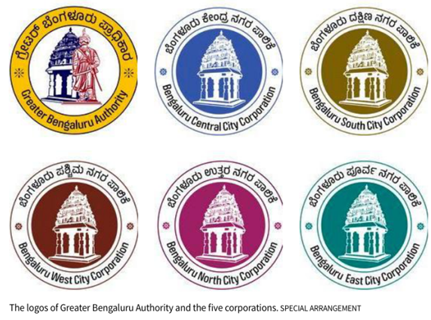
- GBA logo with image of Kempe Gowda and logos of five corporations unveiled
- The Greater Bengaluru Authority (GBA) has unveiled official logos for both the authority and the five city corporations on its website.
- While the GBA logo features the image of Kempe Gowda along with the iconic Kempe Gowda tower, the logos of the five corporations retain only the tower, each distinguished by a different colour.
English and Kannada
- All the logos carry the respective corporation names in both Kannada and English.
- According to a GBA official, the designs were approved during an executive meeting chaired by Deputy Chief Minister D.K. Shivakumar in March.
- The logos have been released on the corporations’ websites and were said to have been developed as part of their maiden budgets.
- Until now, all five corporations continued to function under the erstwhile Bruhat Bengaluru Mahanagara Palike (BBMP) website, even seven months after their formation. During their maiden budget announcements, all corporations except the East City Corporation had indicated plans to launch independent websites to bring “transparency”, the GBA official said.
- The East City Corporation, however, had only proposed setting up a “public dashboard”.
Third language grading row: Governor asks State government to re-examine decision
Context: Following a representation by the Association for Preservation of Local Languages, Bengaluru, the Karnataka Governor’s office has written to the Chief Secretary to examine the recent decision to award grading to third languages, including Hindi, instead of marking, in SSLC examination.
- In his letter to Chief Secretary Shalini Rajneesh, R. Prabhu Shankar, special secretary to Governor Thaawarchand Gehlot, said that the representation submitted recently highlighted “the significant role played by the third language in fostering linguistic diversity, awareness, and intellectual development among students.”
Academic importance
- “It has been pointed out that the proposed system of awarding only grades, in place of marks, may inadvertently diminish the academic importance of the subject and affect students’ motivation to engage seriously with it. The concerns raised also reflect apprehensions among teachers, parents, and educationists regarding the long-term implications of such a policy decision on the overall quality and inclusiveness of school education in the State,” the letter said.
- Further the letter stated that the Governor had taken note of the issues raised in the representation and desired that the matter be examined comprehensively, keeping in view its academic and administrative aspects across the education sector.
- “Therefore, examine the matter in consultation with the Department of School Education and other authorities concerned, and take such action as deemed appropriate in the larger interest of students and the State’s educational objectives,” he requested.
- Recently School Education Minister Madhu Bangarappa announced shifting from marks to grading system for third language in the State.
- The decision has received mixed reaction, with some welcoming the move and some others raising objections. The announcement had come even as the SSLC examinations were under way, creating confusion among students. Over 7.5 lakh students have Hindi as their third language, followed by English (32,000) and Kannada (11,400). Urdu, Sanskrit, Tulu, Konkani and Marathi are the other third languages.
Karnataka tops under ‘Namo Drone Didi Yojana’
Context: Karnataka, which is one of the leading aviation hubs in the country, also has the most number of women self-help groups (SHGs) to have undergone training as drone pilots under the ‘Namo Drone Didi Yojana’ (NDDY).
- Under the initiative, 145 members of SHGs from the State have been given drone pilot training which is the highest in the country followed by Uttar Pradesh (128) and Andhra Pradesh (108).
- In Karnataka, Koppal district topped the list, with 13 members of SHGs followed by Kalaburagi (12) and Mandya (11).
- One of the main objectives of this scheme, apart from empowering the SHGs, is to improve efficiency in agricultural practices and enhance crop yield. The programme’s success breaks the stereotype of SHGs being mostly engaged in the making of home-based products such as papads and pickles.
- Asha Rani C.S., from Churchugundi village in Shikaripur taluk of Shivamogga district, is among those who underwent this training in Mysuru in January, 2024. For the last two years, she has been operating drone to spray medicines in maize and paddy farms.
- “The training is helping me financially too. Under the scheme I got drone as well. In a year for about four to five months, I get work to spray medicine in the farm fields. Sometimes, my earnings go up to ₹1 lakh a month,” she said.
- As per information by Minister of State for Civil Aviation Murlidhar Mohol to a question in the Lok Sabha during the ongoing Budget session of Parliament a total of 1,094 SHG members have been trained as drone pilots in the country.
- Across India, Prayagraj in Uttar Pradesh was ranked first, with 16 members of SHGs. The NDDY was launched by the Central government for providing 15,000 drones to the Women SHGs with an outlay of ₹1,261 crore for the period from 2023-24 to 2025-26. “The NDDY was approved by the government as a Central Sector Scheme with an outlay of ₹1,261 crore for the period from the financial year 2023-24 to FY 2025-26. The scheme aims to provide 15,000 agricultural drones to select women SHGs,” the Minister said in his reply.
- He added that in 2023, 1,094 drones were distributed to SHGs by lead fertilizer companies using their internal resources. Out of these 1,094 drones, 500 were distributed under the NDDY scheme.
- According to the Ministry of Agriculture and Farmers Welfare, 15 days drone pilot training for one of the members of SHGs and five days drone assistant training for other member/family members of SHGs is provided as a part of the drone package.
Main Examination
Paper-I: Essays
Essay – 1: Topic of International/National Importance
Essay-2: Topic of State importance/Local Importance
Paper-II: General Studies 1
Paper-III: General Studies 2
Home Ministry revises classification ofdistricts affected by left-wing extremism
Context: The Union Home Ministry has re-categorised the total number of districts affected by left-wing extremism (LWE) in the country replacing the earlier classification of “most affected” with “LWE affected,” “districts of concern” and “legacy and thrust districts”.
- While the number of districts in the LWE category remains unchanged at 38 compared to 2024-25, the classification now reflects shifts in the severity of violence reported in these areas.
- The red corridor has significantly contracted — from over 200 districts in 2005 to just two in 2026 — and its definition has also been revised.
- On March 27, three days before Home Minister Amit Shah declared in Lok Sabha that the country is now “Naxal-free,” the Ministry reviewed the “categorisation of districts affected by LWE” and sent the fresh list to the Home Secretaries and Directors-General of Police (DGP) of Andhra Pradesh, Bihar, Chhattisgarh, Jharkhand, Madhya Pradesh, Maharashtra, Odisha, Telangana, and West Bengal. While Bijapur in Chhattisgarh and West Singbhum in Jharkhand are the only two districts that have been characterised as “LWE affected”, Kanker in Chhattisgarh is a “district of concern”, and there are 35 other “legacy and thrust districts” across nine States.
- These districts are Alluri Sitaramraju in Andhra Pradesh; Aurangabad, Gaya, Jamui, Lakhisarai in Bihar; Bastar, Narayanpur, Kondagaon, Bijapur, Dhamtari, Kabirdham, Khairagarh-Chhuikhadan-Gandai, Mohla-Manpur-Ambagarh Chowki, Gariyaband, Sukma and Dantewada in Chattisgarh; Bokaro, Chatra and Latehar in Jharkhand; Balaghat and Mandla in Madhya Pradesh; Gadchiroli and Gondia in Maharashtra; Boudh, Sundargarh, Kalahandi, Koraput, Malkangiri, Nabarangpur, Nuapada, Rayagada, Kandhamal in Odisha; Bhadradri-Kothagudem, Mulugu in Telangana and Jhargram in West Bengal.
- Till November 2025, Bijapur, Sukma and Narayanpur, in Chhattisgarh were included in the category of “most affected”.
- “The categorisation of districts provides the basis for deployment of resources under various schemes. The evolving LWE situation necessitates a periodic review of the districts in order to ensure that the focus of anti-LWE efforts remains aligned to the ground realities,” the Ministry said.
- It added that the districts covered under the Security Related Expenditure (SRE) Scheme have been comprehensively revised again.
Rajasthan High Court expunges remarks on Transgender Act
Context: The Rajasthan High Court has modified its March 30 verdict to expunge certain portions criticising the recently enacted Transgender Persons (Protection of Rights) Amendment Act, 2026. In a clarificatory order issued on Thursday, the court said that its observations that the amendment diluted constitutional guarantees had been included “by mistake” and were “neither intended nor necessary.”
- The March 30 ruling on a petition filed by a transgender woman included an epilogue authored by Justice Arun Monga, which observed that the new law, by curtailing the right to gender self-identification, departs from the “constitutional baseline” set by the Supreme Court’s 2014 ruling in National Legal Services Authority v. Union of India. It noted that the amendment risked reducing what the top court had recognised as an “inviolable aspect of personhood” to a “contingent, State-mediated entitlement”.
- The amendment Bill was passed in Parliament last week and became law with the President’s assent late on Monday.
- In its Thursday order, the High Court Bench observed that certain portions had been inadvertently included in the epilogue of the earlier judgment and directed the deletion of paragraphs which stated that the rights of transgender persons must not be “rendered illusory by procedural constraints” and which criticised the amendment for making legal recognition of gender identity contingent upon “certification, scrutiny, or other forms of administrative endorsement”.
- “Upon our re-reading of the epilogue, it appears that by mistake the following text was included therein, although it was neither intended nor necessary,” said the Bench, which included Justice Yogendra Kumar Purohit. However, the judges declined a request that the epilogue be excluded from the judgment or disregarded for precedential purposes.
- In the revised epilogue, the Bench retained its position that the right to self-identify one’s gender is an “intrinsic facet of dignity, autonomy, and personal liberty under Articles 14, 15, 16 and 21” and “not a matter of concession, but a matter of right”. It, however, added that the epilogue is to be treated as a “statement of facts in the process of a changing legal landscape”.
Paper-IV: General Studies 3
Great Nicobar plan stirs fresh concerns
Context: A draft plan outlining the “relocation” of Nicobarese tribal communities affected by the Union government’s Great Nicobar Island (GNI) mega-infrastructure project “to their ancestral lands” has created confusion and is exacerbating existing apprehensions among locals. They have been, for four years, protesting the clearance for the ₹92,000-crore project after withdrawing their consent in 2022, alleging that their forest rights had not been settled.
- This draft “Comprehensive Tribal Welfare Plan”, prepared by the Andaman and Nicobar Islands administration and circulated on March 13 for consultation with line departments and the Tribal Council of Great Nicobar, proposes a ₹42.52-crore outlay over 24 months for the “relocation of Nicobarese tribal communities from tsunami-affected or project-impacted areas”, which involves housing, land development and basic infrastructure.
- However, details of where the proposed relocation will take place and who will be relocated have left members of the Tribal Council of Great and Little Nicobar confused, according to Nicobarese community leaders who spoke to The Hindu.
- They said they were handed a copy of the draft plan on March 28 and have since been called for two meetings by the district administration in Campbell Bay to sign off on it. This comes as the Union government told a Calcutta High Court Bench on March 30 that it needed 15 days to “demonstrate that consent has been taken from the tribal people” for its project. At a meeting on April 1, the Tribal Council submitted a letter pointing out that some aspects of the draft were unclear and requested a Hindi translation of it. They said they would need at least a month to review the translated document.
- Notably, while the draft plan states the GNI project “involves relocation”, the Centre has repeatedly said the project would not “disturb or displace tribes”.
Unclear relocation plans
- According to a letter attached to the draft, the plan was prepared after Tribal Council leaders demanded a return to ancestral villages on the west coast of GNI that were destroyed in the 2004 tsunami, after which communities were shifted to encampments in Rajiv Nagar and New Chingenh near Campbell Bay. However, the draft plan states, “The project involves relocation to Rajiv Nagar (32 households, 101 persons) and New Chingenh (30 households, 117 persons).”
- In a section, the plan proposes Pulobhabi for “community purposes” of residents in Rajiv Nagar, to “facilitate periodic visits to ancestral lands”, while adding, “an option shall remain open” for families to return to ancestral villages outside the project area. For New Chingenh residents, the plan records their desire to return to Old Chingenh and Pulo Baha, but notes a final decision will be taken after assessing land availability and consultations, while their existing accommodations will be upgraded.
- Further, the plan lists all enumerated families in Rajiv Nagar and New Chingenh (62 families in total) and then states: “Proposed relocation site: Pulobhabi, western coast of GNI”.
- The tables in the draft also add to the ambiguity: allocations are made for upgrading 62 homes and building only 30 new homes, while another section states permanent shelters “will be built for all 62 households” — neither part explicitly mentions where these homes would come up. District authorities have not yet responded to The Hindu’s queries on what exactly the plan proposes.
- A leader of the Tribal Council said Pulobhabi is just one among several ancestral village sites, and the proposal lists only about 13 pre-tsunami Nicobarese villages when there are many more.
- In New Delhi on March 20, Great and Little Nicobar Tribal Council chief Barnabas Manju had said the community has long demanded a return to all ancestral villages along the west coast since displacement in 2004.
- Soon after the project was granted Stage-I clearance in 2022, the community withdrew their consent, fearing that it would encroach on their forest lands, including ancestral villages, preventing their return. Council leaders say the apprehension has been exacerbated as the administration has not clearly explained project boundaries.
Major hurdle for Yettinahole project cleared: MoEFCC gives in-principle approval for diversion of forestland
Context: The Ministry of Environment, Forest and Climate Change (MoEFCC), Government of India, has accorded in-principle (stage-1) approval for diversion of 111.02 hectares of forestland in Hassan and Tumakuru districts for the Yettinahole Drinking Water Project, targeted to provide water to drought-prone areas in Karnataka.
- In a letter dated April 1, 2026, the Forest Conservation Division of the MoEFCC informed the Additional Chief Secretary (Forest, Ecology and Environment) in Karnataka that the Centre accorded the stage-1 approval under the Van (Samrakshan Evam Samvardhan) Abdhiniyam, 1980, for diverting the land to construct a gravity canal passing through the two districts.
- Deputy Chief Minister D.K. Shivakumar, who holds the portfolio of Water Resources, had met Minister for Environment and Forests Bhupendra Yadav several times to request approval for the proposal.
- The MoEFCC has placed certain conditions with regard to compensatory afforestation, online transfer of the Net Present Value (NPV) of the forestland being diverted, settlement of the rights with respect to Scheduled Tribes and traditional forest-dwellers in the forestland, among others.
- The Visvesvaraya Jala Nigama Ltd., the project proponent, has to fulfil the conditions and take the working permit to begin the canal work in the forest. A senior official stated that, with the approval, a major hurdle for the project had been cleared. Earlier, the proposal was for the diversion of 173.31 hectares. However, it was revised to 111.02 hectares, due to which the estimation cost of the project went up by ₹425 crore.
- “Now, we have to show compliance for the condition and make necessary payments to get the permission to begin the work on the ground. The technical procedures will follow,” the official said.
- Of the 252-km-long canal, about 208 km has been completed. The work on the 25 km-long is under progress and the work of another 16 kms is yet to begin. “We are seeking cooperation from the departments of Revenue, Home, Forest to continue the civil work,” said the official.
- The first phase of the work, which includes constructing eight weirs at different locations in Sakleshpur, has been completed. The second phase was stuck due to the delay in getting forest clearance.
- As a result, the project implementation agency was forced to divert water to Vani Vilas Sagar in Hiriyur in Chitradurga district. The officials are now hopeful of directing the water to Tumakuru district by October this year.
- The project has been designed to ease drinking water woes of nearly 75 lakh people in drought-prone Kolar, Chickballapur, Ramanagara, Tumakuru, Bengaluru Rural, Chikkamagaluru, and Hassan districts.
VJNL hopeful of supplying water to Tumakuru by October
Context: Rainfall data collected since 2017 shows average availability of 18 tmcft of water from the streams in the Western Ghats; VJNL claims the water available is more than sufficient for drinking purposes.
- With the Ministry of Environment, Forest and Climate Change (MoEFCC) according in-principle (stage-1) approval for diversion of 111.02 hectares of forest land in Hassan and Tumakuru districts for the Yettinahole Drinking Water Project, officials of Visvesvaraya Jala Nigam Limited are hopeful of supplying water from the Western Ghats to Tumakuru district by October 2026, and completing the project by October 2027, provided funds are made available.
- The project aims to provide drinking water and fill the tanks in the drought-prone districts with a total population over 75 lakhs.
- As per the design, 24.01 tmcft of water will be diverted during the monsoon from four streams — Yettinahole, Kadumane Hole, Keri Hole and Hongadahalla. Of this, 14.056 tmcft is earmarked for drinking water supply, while the remaining water will be used to fill 527 tanks up to 50% of their capacity.
Approved in 2012
- The project was approved by the Karnataka government in July 2012 at an estimated cost of ₹8,323.5 crore. The cost was revised in February 2014 to ₹12,912.36 crore and again in January 2023 to ₹23,251.66 crore. As of the end of February 2026, the cumulative expenditure stood at ₹18,205.55 crore.
- The project is being executed in two stages. The first stage, lift component, has been completed. Eight weirs were constructed to tap water from the streams. The stage that has been completed was commissioned in September 2024. In the absence of the gravity canal, the lifted water was temporarily diverted to Vani Vilas Sagar in Chitradurga district. Over the last two years, 3.283 tmcft of water has been diverted to the reservoir.
- Sannachittaiah, Managing Director of VJNL, told The Hindu on Friday that in the second stage, the construction of gravity canal was going on. “Of the 252-km-long canal, work on 208 km has been completed. The work on 25 km is under progress. We could not tackle the remaining 16 km due to the forest issue. Now it has been resolved,” said the officer.
- The crucial 16-km stretch passes through Belur, Arsikere taluks of Hassan and Gubbi of Tumakuru. The officials are hopeful of completing the stretch with the cooperation of other departments and flow water up to Tumakuru by October 31, 2026.
- “The feeder canals of Madhugiri, Pavagada and Gowribidanur have been completed and the T.G. Halli feeder is 90% complete. We are confident of taking water to Tumakuru district by October,” the MD said. Similarly, if the government provided the remaining funds in two years, the project would be completed and people of Chikkaballapur and Kolar would get drinking water by October 2027.
Water availability
- Since the start of the project, many have questioned the availability of 24.01 tmcft of water from the streams in the Western Ghats. The Comptroller and Auditor General (CAG) also questioned the VJNL’s calculation of water availability.
- The rainfall data collected from the rain gauges at the weirs in Sakaleshpur since 2017 projected average availability of 18 tmcft, which is 6 tmcft less than the designed quantity.
- Mr. Sannachittaiah, however, claimed that there was no shortage of water for drinking water purposes. “This is primarily a drinking water project. Whenever there is excess availability of water, tanks will be filled up. Anyhow, there is no shortage to provide drinking water for people of 6,657 villages in 29 taluks of seven districts, besides 38 urban local bodies, covering over 75 lakh people,” said the MD.
- He added that VJNL has engaged consultants to conduct a pre-feasibility study to explore additional water availability at the Netravathi and Kumaradhara river junction to make up the shortfall of 6 tmcft.
Gaganyaan: ISRO’s Mission MITRA commences in Leh
Context: As part of the Gaganyaan mission, the Indian Space Research Organisation (ISRO) is undertaking Mission MITRA (Mapping of Interoperable Traits and Response Assessment) in Leh.
- Mission MITRA, a first-of-its-kind team behavioral study designed by ISRO and the India Air Force’s (IAF) Institute of Aerospace Medicine, commenced on April 2 and will go on till April 9.
- ISRO said that the crew safety and performance are the most critical elements of all human space flight missions.
- “The ability of crew to communicate effectively, adapt to stress, maintain psychological resilience and support one another determines the success and safety of any mission. Analog missions conducted under controlled yet realistic conditions are utilised to understand how crew perform under challenging conditions,” ISRO said.
- Towards this ISRO has undertaken mission MITRA in Leh where the altitude is approximately 3,500 metres. Besides Leh also has the environmental conditions of hypoxia, low temperature, and isolation as a natural analog for spaceflight operations.
Indigenous stealth frigate INS Taragiri commissioned
- In a significant boost to India’s maritime security and the ‘Aatmanirbharta’ initiative, the guided-missile stealth frigate INS Taragiri was commissioned into the Indian Navy at the Eastern Naval Command base in Visakhapatnam on Friday. The ceremony, attended by Defence Minister Rajnath Singh, Chief of Defence Staff General Anil Chauhan, and Chief of the Naval Staff Admiral Dinesh K. Tripathi, marked the induction of a vessel that represents a generational leap in naval engineering. Powered by a combined diesel or gas propulsion engine and equipped with supersonic surface-to-surface missiles and advanced anti-submarine suites, the frigate is now a cornerstone of the Eastern Fleet.
INS Aridhaman, nuclear-powered submarine, enters India’s naval fleet
Context: Defence Minister Rajnath Singh presided over a brief ceremony to formally commission the country’s third nuclear submarine, INS Aridhaman (S4), which is the third in the Arihant-class of SSBNs (Submersible Ship Ballistic Nuclear), on Friday at Visakhapatnam.
- The vessel, being part of the strategic weapons programme, falls under the domain of the Strategic Forces and is part of the country’s nuclear triad. As per sources in the Navy, the commissioning was not made public and was carried out quietly, but Mr. Singh dropped enough hints to acknowledge the commissioning of the vessel.
- While the event was kept under wraps, Defence Minister Rajnath Singh posted a cryptic message on X, describing the submarine as: “It’s not words but power, ‘Aridhaman’!”
- Sources in the Navy said that the commissioning of INS Aridhaman was on the cards, as the submarine had already undergone extensive sea trials, and it coincided with Mr. Singh’s visit to Visakhapatnam for the commissioning of the stealth guided-missile frigate INS Taragiri.
- The closely guarded SSBN project, initially launched as the Advanced Technology Vessel (ATV) project, is being executed by the Ship Building Centre (SBC) in Visakhapatnam. The first vessel was launched in July 2009 and was quietly commissioned in 2016. The second indigenously built SSBN, INS Arighaat, was commissioned in August 2024.
- While Arihant and Arighaat are smaller vessels of about 6,000 tonnes, Aridhaman (S4) and S4* are bigger vessels of about 7,000 tonnes. The S4* (which may be named Arisudan) is currently undergoing sea trials.
- Compared to its predecessors, Aridhaman and its successor S4* will have more firepower.
- India is already one of the nations, along with the U.S., Russia, China, and France, to possess a nuclear triad capability, which means it has the ability to launch nuclear-tipped missiles from air, land, and sea.
Paper-V: General Studies 4
Source: The Hindu