- Karntaka Legislative Assembly adopts Bill to add members to GBA
Context: The Assembly adopted the Greater Bengaluru Governance (Second Amendment) Bill, 2025, to include elected representatives as members of the GBA.
- The Legislative Assembly adopted the Greater Bengaluru Governance (Second Amendment) Bill, 2025, that seeks to include members of the Lok Sabha, the Rajya Sabha, the Legislative Assembly, and the Legislative Council as members of the Greater Bengaluru Authority (GBA) if they come under its jurisdiction.
- Names of some of the elected representatives, including Rajya Sabha MP Sudha Murthy and Chickballapur MP K. Sudhakar, had been left out from the GBA as its members, though they came under the GBA jurisdiction. The proposed amendment would provide for adding their names.
Ex-officio members
- It is also aimed at including Chief Secretary, Additional Chief Secretary to Urban Development Department, and Additional Chief Secretary/Principal Secretary to Finance Department as ex-officio members of the GBA.
- The Bill also provides for inclusion of ACS to Urban Development Department as a member of the Executive Committee of the GBA.
- It also provides for re-division of wards in respect to newly incorporated local areas to be carried out within a specified period.
- No provision for appointing nominated members to the GBA. “There are 369 members in the GBA. If the government adds one nominated person for every 20,000 population, there would be another 369 members. This would create confusion.”
- Karnataka tops National Energy Conservation Awards 2025
- Karnataka Renewable Energy Development Limited (KREDL) has won the National Energy Conservation Awards 2025 under the State Energy Efficiency Performance Award (SDA Group-1) category, The second place was taken by Maharashtra.
- President Droupadi Murmu presented the award in New Delhi on December 14 during the National Energy Conservation Day celebrations.
- Vishwas Gowda wins gold
- Powerlifter Vishwas Gowda P. won three gold medals in the 90 kg category at the WRPF World Championship 2025, held in Moscow, Russia, from December 4 to 7.
- According to the Pratham International Group of Institutions, Vishwas topped the podium in Full Powerlifting, Bench Press and Push Pull events, bringing international recognition to Indian powerlifting with his dominant showing at the prestigious championship.
- Forest Minister attributes human-animal conflict to increase in animal population
Context: Forest Minister Eshwar Khandre attributed the increase in the human-animal conflict in recent years to the increase in animal population.
- After the Wildlife Protection Act, 1972, came into effect, the hunting of animals was stopped. Gradually the number of animals increased.
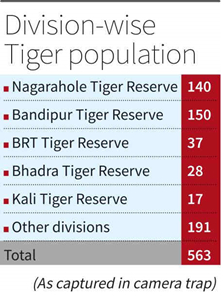
- Karnataka stands first in the country considering the elephant population (6,395) and second in terms of tiger population. As per the tiger census conducted in 2022, the tiger population was 563 in the State.
- “But, when analysed again after the recent incidents of human-tiger conflicts, we understood that the number has gone up to 600 in the State.
- In the year 1972, the number of tigers in Bandipur was only 12. During our last census the number was 150 and now it has gone to 200,”. The Bandipur National Park is spread over 1,000 sq. km.
- “I had asked the officers to study the carrying capacity of the park. According to an estimation, a tiger needs an area of 11 to 12 sq. km. Going by the land available, the park could accommodate around 100 to 110 tigers.
- But the current population is around 200, initiating territorial fights among them. We have also studied the population of mammals like deer that tigers require to survive. There is no shortage of such animals,” he said.
- The Minister said every year on an average 40-50 human deaths are reported in human-animal conflicts.
- Assembly adopts 12 Bills, including Land Revenue Bill
Context: Karnataka Land Revenue (Second Amendment) Bill, 2025, seeks to remove anomalies in classification and maintenance of land records in Kodagu district.
- The Karnataka Legislative Assembly adopted 12 Bills, including the Karnataka Land Revenue (Second Amendment) Bill, 2025, which seeks to remove anomalies in the classification and maintenance of land records in Kodagu district, and the Karnataka Rent (Amendment) Bill.
- Piloting the Karnataka Land Revenue (Second Amendment) Bill, Revenue Minister Krishna Byre Gowda noted that Kodagu had continued to operate its own traditional system of records even after 1964 when the Karnataka Land Revenue Act had come into effect.
- Under this pre-Independence system, those who served the British in their army had been appointed as agents (Pattedars) to collect revenue on behalf of the British regime. However, the problem started in 2000 when Karnataka moved towards of digitisation of land documents through the Bhoomi project, as there was no parity between the records under the Bhoomi and the land records in Kodagu, he noted.
- However, the then Deputy Commissioners of Kodagu had continued with the old system by issuing notifications at their level which created in additional columns in RTC that had entries for pattedars. This triggered legal issues over ownership of land as there was a need to clarify whether the land owner had absolute ownership or if it belonged to pattedars.
- Hence, the government was now amending this legislation to provide for empowering tahsildars of Kodagu district to hold hearings and make necessary corrections in the land records to bring them in conformity with present system.
- The Karnataka Rent (Amendment) Bill would seek to achieve the principle of “Minimum Government Maximum Governance” by decriminalisation of minor offences and rationalisation of monetary penalties as envisaged in the Jan Vishwas (Amendment of Provisions) Act 2023 (Central Act 18 of 2023).
- The Malnad Area Development Board (Amendment) Bill, The Bayaluseeme Development Board (Amendment) Bill, Shree Chamundeshwari Kshetra Development Authority and Certain Other Laws (Amendment) Bill, The Chandraguthi Shree Renukamba Kshetra Development Authority Bill, and Sri Malai Mahadeshwaraswamy Kshetra Development Authority (Amendment) Bill were also adopted by the Assembly.
- Study affirms Kerala’s rich butterfly diversity in the Western Ghats region
Context: Kerala hosts the highest butterfly diversity among all Indian States along the Western Ghats, with 328 species documented, including 41 species endemic to the Western Ghats, according to a new monograph published in ENTOMON, an open access quarterly journal by the Association for Advancement of Entomology.
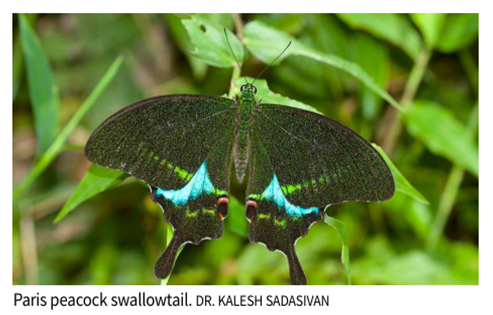
- The researchers of the study ‘The Butterflies (Lepidoptera, Rhopalocera) of Kerala: Status and Distribution’ have reported that the Western Ghats support 337 butterfly species and Kerala accounts for nearly the entire diversity. The butterfly fauna of the State spans six families, led by Nymphalidae (97 species), Lycaenidae (96 species), and Hesperiidae (82 species), followed by Papilionidae, Pieridae and Riodinidae.
- The study, undertaken by a team of researchers led by Kalesh Sadasivan, has also documented 36 migratory butterfly species to highlight the State’s role as a key corridor for seasonal butterfly movements. Notably, 22 species recorded from Kerala are included in the IUCN Red List, though most fall under the ‘Least Concern’ category, while two are listed as ‘Near Threatened.’
- The monograph highlights that 70 butterfly species found in Kerala are protected under the Wildlife (Protection) Act, 1972. Of these, only four have the highest level of protection under Schedule I.
- One of the most significant contributions of the work is the extensive larval host plant checklist which documents over 1,800 feeding records, including over 350 new field observations. Covering nearly 800 plant species, the list represents one of the largest region-specific compilations in India.
- With PM in Jordan, Jaishankar in Israel, India reiterates its position on West Asian conflicts
Context: With Prime Minister Narendra Modi in Amman calling for an India-Jordan collaboration for the reconstruction of war-ravaged Syria, and External Affairs Minister S. Jaishankar in Tel Aviv expressing India’s support for the Trump peace plan for Gaza, India reiterated its willingness to play an important role in the fast-evolving scenario in West Asia.
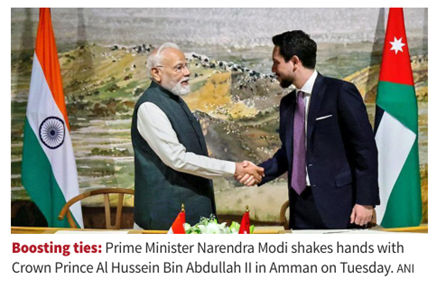
- Speaking at the India-Jordan Business Forum, Mr. Modi said King Abdullah II had shared his vision of developing railways and “next-generation infrastructure” in Jordan. “During our meeting yesterday, His Majesty also highlighted the infrastructure reconstruction needs in Syria. Indian and Jordanian companies can collaborate to address these requirements together,” he said.
- Mr. Modi — who was in Jordan earlier during for his ongoing three-nation tour covering Jordan, Ethiopia and Oman — met with King Abdullah II and expressed mutual determination to fight “terrorism, extremism and radicalisation”. The two dignitaries also discussed regional conflicts. “Prime Minister reaffirmed India’s support for efforts being made to achieve durable peace in the region,” the External Affairs Ministry said.
- A day after Mr. Modi reached Jordan, Mr. Jaishankar landed in the Israeli capital Tel Aviv where he was welcomed by the Foreign Minister Gideon Saar. Mr. Jaishankar condemned the terror attack in Bondi beach of Sydney, Australia, and said, “Where India and Israel are concerned, we are both countries who have a policy of zero tolerance towards terrorism.”
- “I also would like to listen to you about the regional situation. I want to say that India supports the Gaza peace plan (given by President Trump) and hopes that it will lead to a lasting and durable solution,” he said.
- Mr. Jaishankar’s visit has attracted attention as in its backdrop, the Israeli Knesset passed a law to stop the activities of the UN Relief and Works Agency for Palestine refugees that India has historically assisted.
- PM honoured with Ethiopia’s highest award
Context: Prime Minister Narendra Modi was conferred with Ethiopia’s highest award ‘The Great Honour Nishan of Ethiopia’ by his Ethiopian counterpart Abiy Ahmed Ali.
- The award was to honour Mr. Modi’s role in strengthening India-Ethiopia ties, the Ministry of External Affairs said.
- India and Ethiopia also elevated their ties to a strategic partnership, after the leaders discussed issues of bilateral interest.
- Govt. introduces Bill to replace MGNREGA amid loud protests
Context: A new Bill — referred to as VB-G RAM G — was introduced in Parliament, proposing major changes to the Mahatma Gandhi National Rural Employment Guarantee Act (MGNREGA) framework. The Bill triggered strong protests from Opposition parties, leading to MPs marching from the Lok Sabha chamber to Mahatma Gandhi’s statue within the Parliament premises, demanding that the Bill be referred to a parliamentary committee for detailed scrutiny.
Government’s Position
Bill aims to:
- Fully develop villages
- Establish balance between agriculture and labour
- Align rural governance with Gandhian philosophy
- Described the Bill as being in the spirit of “Ram Rajya”, suggesting moral governance, self-reliant villages, and social harmony.
Constitutional and Policy Issues Involved
- Article 21 (Right to life with dignity): Employment security is linked to livelihood.
- Directive Principles of State Policy:
Article 38 – social justice
Article 39 – right to livelihood
- Federalism: Reduced funding and centralisation weaken State autonomy.
- Decentralisation: Gram Panchayats’ role may be undermined.
Significance of MGNREGA
- World’s largest rights-based employment programme
Provides:
Guaranteed 100 days of wage employment
Social security during agrarian distress
Acts as:
Automatic stabiliser during economic downturns
Tool for poverty alleviation and asset creation
Conclusion
- The controversy around the VB-G RAM G Bill reflects a broader debate on:
- Rights-based welfare vs budget-controlled schemes
- Centralisation vs decentralisation
- Symbolic invocation of Gandhian ideals vs constitutional guarantees
While the government presents the Bill as aligned with Gandhian philosophy and rural development goals, the Opposition views it as a dilution of MGNREGA’s core principles, potentially harming rural livelihoods, federal balance, and constitutional values.
- ‘Conscious’ decision to separate funding from regulator, say officials on higher education Bill
Context: The Union government’s decision to take away funding powers from the regulatory authority and create separate regulatory, accreditation, and standards councils for higher education institutions under the proposed Viksit Bharat Shiksha Adhishthan Bill, 2025, was a ‘conscious’ move in keeping with the National Education Policy, 2020 suggestion to minimise conflicts of interest.
- They said that this is why the Bill has segregated the three roles of regulation, accreditation, and standards-setting. However, the officials said the grant-disbursal function currently being exercised by the University Grants Commission (UGC) is proposed to be performed by the Ministry of Education.
- Without providing details, Education Ministry officials said that under the proposed law, the mechanism that will be used to disburse grants to Central universities “will be similar to or better than the existing mechanisms”. They added that institutional performance on regulatory compliance will continue to be a “major factor” in deciding the quantum of funds to be distributed, but not the only one, citing the need for a “holistic view” while giving grants.
- The VBSA Bill, introduced in the Lok Sabha on Monday amid objections from the Opposition, proposes an overhaul of India’s higher education regulatory framework, replacing the UGC, the All India Council for Technical Education (AICTE), and the National Council for Teacher Education (NCTE), with a single apex commission — the VBSA, which will coordinate between a regulatory, an accreditation, and a standards councils, operating “autonomously”. Most notably, it takes away grant-disbursal power from the regulatory authority, a power that UGC exercises in the current system.
- A coalition of teachers’ and students’ associations and unions from across the country have raised objections, among others, about the proposition to take away funding power from the regulatory authority, noting that leaving it in the direct control of the Education Ministry would risk grants being subject to “political influence”.
- Education Ministry officials explained that even though the NEP 2020 had suggested a separate Council for disbursing grants that the UGC currently disburses to Central universities, “it was a conscious decision that this is not going to be possible” because of the multiplicity of “sources and funnels” through which higher education institutes across the country receive funding.
- As soon as the government introduced the Bill in the Lok Sabha on Monday, it proposed that the Bill be sent for deliberation to a 31-member joint committee of Parliament.
- Officials said the government hopes to engage in an intense discussion over the Bill’s provisions and is encouraging suggestions to be submitted to the panel.
- Rajya Sabha clears additional funds for fertilizer subsidy
- The Rajya Sabha, cleared the first batch of Supplementary Demands for Grants that authorises the Union government to additionally spend ₹41,455 crore in 2025-26. This includes over ₹ 18,000 crore towards fertilizer subsidy.
- The gross additional expenditure in the Supplementary Demands for Grants is ₹1.32 lakh crore, in which ₹90,812.17 crore is savings by various Ministries.
- The Supplementary Demands for Grants also has allocation of ₹9,500 crore to the Petroleum Ministry to compensate oil marketing companies for under-recoveries and ₹1,304 crore for additional expenditure by the Department of Higher Education.
- Rashtrapati Bhavan displays portraits of all 21 Param Vir Chakra awardees
Context: Portraits of all 21 Param Vir Chakra awardees are now on display at the Rashtrapati Bhavan, replacing the previously displayed portraits of 96 British Aide-de-Camps (ADCs).
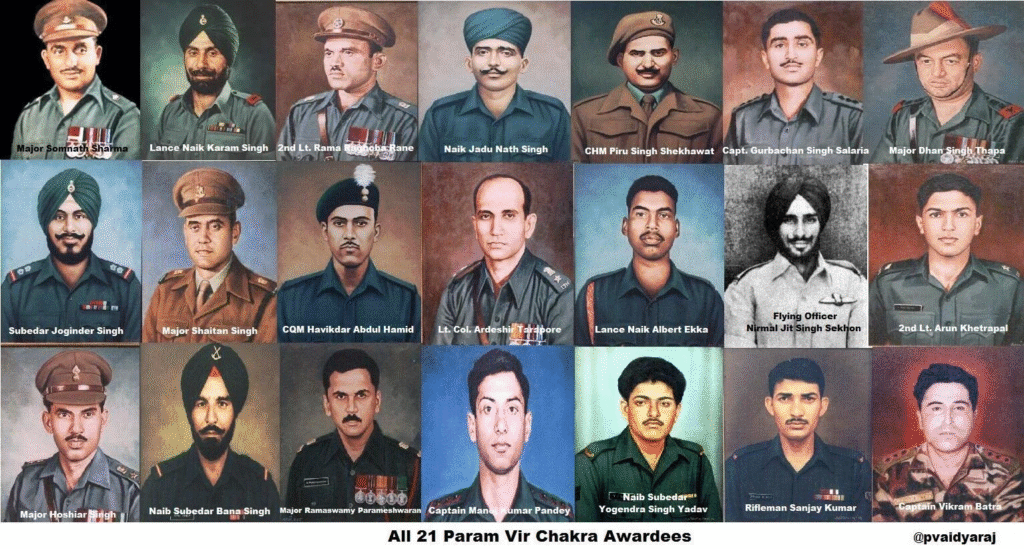

- The Param Vir Chakra is India’s highest military honour, awarded for displaying the most exceptional acts of valour, courage, and self-sacrifice during war.
- The initiative aims to honour the memory of soldiers who had laid down their lives in the service of the nation. President Droupadi Murmu inaugurated the ‘Param Vir Dirgha’ at the Rashtrapati Bhavan, on the occasion of Vijay Divas.
- “The move will assist in educating visitors about our national heroes who displayed dauntless resolve and unconquerable spirit in defending our nation. The initiative to display portraits of Indian national heroes marks a step toward shedding the colonial mindset and embracing, with pride, the richness of India’s culture, heritage, and timeless traditions,’’ a release issued by the Rashtrapati Bhavan said.
- The government had been working to restore pride in India’s “sanatan values”, with prominent changes including the renaming of the Rajpath to Kartavya Path, a senior Central government official said.
- Similarly, the Indian Navy’s ensign has shed the Saint George’s Cross, adopting instead a design featuring the National Flag and a Navy blue-gold octagon dedicated to Chhatrapati Shivaji Maharaj. The 2022 Republic Day Beating Retreat ceremony, part of the ‘Azadi ka Amrit Mahotsav’, embraced Indian instruments, including the sitar, santoor, and tabla.
Decolonial renaming
- Across India, including on the Andaman and Nicobar Islands, colonial nomenclature has been replaced, the official said.
- In 2018, Ross Island was renamed Netaji Subhash Chandra Bose Dweep, Neil Island became Shaheed Dweep, and Havelock Island was renamed Swaraj Dweep.
- In 2024, the capital of the Union Territory, Port Blair, was renamed Sri Vijaya Puram, and 21 islands were named after Param Vir Chakra awardees. The Rashtrapati Bhavan’s Mughal Garden was renamed Amrit Udyan.
- “Through various initiatives, the Centre is dismantling colonial legacies,’’ the official said.
- Indian Army receives final batch of Apache helicopters
Context: The Indian Army received the final batch of three AH-64E Apache attack helicopters, completing its six-unit fleet at the 451 Army Aviation Squadron based in Jodhpur, Rajasthan. The helicopters landed at the Air Force Station, Hindon, in Ghaziabad before being inducted into the service.

- The Apaches were contracted in February 2020 under a $600-million deal with the United States. The first batch of three helicopters was delivered earlier this year, and the arrival of the final batch will ensure full operationalisation of the Army’s dedicated Apache squadron.
- The six advanced attack helicopters will be stationed at Jodhpur. The squadron was raised in March last year to cater specifically to operational requirements on the western front.
- The deliveries come against the backdrop of a telephonic conversation between Defence Minister Rajnath Singh and U.S. Defence Secretary Pete Hegseth in July this year, during which both sides reviewed ongoing and upcoming initiatives to strengthen bilateral defence cooperation.
- During the talks, the United States had assured India of delivering the first batch of three Apaches within two weeks and the remaining three by November this year. The first batch was delivered after a delay of nearly 15 months from the original delivery schedule of May 2024, primarily due to global supply chain disruptions.
- The AH-64E Apache is regarded as the world’s most advanced multi-role combat helicopter.
- Rupee breaches 91 level, turns weakest Asian currency in ’25
Context: With India’s growth strong and inflation contained, policymakers may be ‘comfortable’ allowing some depreciation, currency experts opined.
- The rupee breached one more psychological mark by depreciating beyond 91 to 91.14 on the spot market against the U.S. dollar during intraday trade, making it one of the weakest major currencies globally this year and the weakest in Asia in 2025.
- But it gained a bit during the day to close at 90.93 as compared with it’s previous close of 90.78, down nearly 16 paise, a fresh all time low.
- Anindya Banerjee, Head Currency and Commodity Research, Kotak Securities, said the pressure on the currency is being driven by three key factors: sentiment, capital flows, and the global macro backdrop.
- “The uncertainty around the pending India-U.S. trade deal and the broader trade-war environment is weighing on markets. From a flows perspective, foreign portfolio investors have pulled out close to $2.7 billion in the first two weeks of December alone, already among the largest monthly outflows this year, with the month still unfinished,” he said.
- He said globally rising U.S. bond yields and expectations of a Bank of Japan rate hike have triggered an unwinding of the yen carry trade.
- “This has led to risk aversion across equities, credit, crypto, and some commodities, adding speculative pressure on emerging-market currencies, including the rupee,” he added. Stating that the rupee may head towards 92, he said, RBI’s relatively limited intervention so far appeared deliberate.
- “With India’s growth strong and inflation contained, policymakers may be comfortable allowing some currency depreciation, especially in a global trade-war environment where a weaker currency can support export competitiveness,” he said.
- “And on a day when the rupee has reached 91, I think it is important to also flag that we have been expecting [it] for a while, but not wide depreciation. And there are strategic and tactical decisions involved in the rupee,” said Neelkanth Mishra, Chief Economist of Axis Bank, Head of Global Research at Axis Capital, and part time member at the Prime Minister’s Economic Advisory Council (PMEAC).
- “I think the RBI is letting the currency move around a bit. It’s not a bad idea. We will have to see at what level they [would say] in the three-to-six-month basis, more than this volatility is not allowed. I think the mistake was in pegging it [rupee to $] at 83. Those past sins are still haunting us,” he emphasised.
- In a note, Finrex Treasury Advisors said the rupee made a new lifetime low as dollar buying continued with news that U.S. President Donald Trump had not agreed to the new proposals as he wanted agri and its products to be included in the proposal which India had not agreed to.
- Lok Sabha passesBill on 100%FDI in insurance
Context: The Bill also empowers IRDAI to disgorge wrongful gains from insurers and intermediaries.
- The Lok Sabha passed an all important Bill that proposes to raise foreign direct investment (FDI) in insurance sector from 74% to 100% besides a clutch of other amendments to insurance laws amid protests from the opposition.
- Finance Minister Nirmala Sitharaman, in her reply to the discussion, said allowing 100% FDI would pave the way for further capital infusion, better technology as well as better insurance products. It would ease the process for global companies to foray into the Indian insurance market without domestic partners, she said, adding forming a joint venture is a mammoth task.
- All Indian laws will apply to the companies. They will be regulated like other insurance entities, she said, seeking to allay apprehensions around changes the Bill is proposing to the Insurance Act, 1938; the Life Insurance Corporation Act, 1956; and the Insurance Regulatory and Development Authority Act, 1999.
- The FDI limit for insurance companies was raised from 26% to 49% in 2015 and from 49% to 74% in 2021. On the amendment reducing net owned fund requirement for foreign reinsurance branches from ₹5,000 crore to ₹1,000 crore, she said the move would invite more reinsurers to the country for creating greater risk capacities and create level playing field for FRBs in domestic tariff area as opposed to IFSC.
- Stating that government’s priority is to strengthen the public sector insurance companies, she said ₹17,450 crore was infused in three public sector general insurance companies to strengthen their capital base. Listing of LIC, GIC Re and New India Assurance was also a step in the direction of boosting public insurers.
- The Bill also empowers insurance regulator IRDAI to disgorge wrongful gains from insurers and intermediaries. As part of proposal to rationalise penalties to be imposed by IRDAI, the maximum limit of penalty on insurance intermediaries like in the case of insurers is to be increased from ₹1 crore to ₹10 crore to “act as a deterrent and encourage legal and regulatory compliance.”
- Terming the Bill a landmark reform, General Insurance Council Chairman and Bajaj General Insurance MD and CEO Tapan Singhel said by strengthening policyholder protection, improving transparency and empowering the regulator, the Bill builds trust at the core of the insurance system.
- Sugar production shows an increase
Context: Sugar production from October 1, 2025 to December 15 saw a 28% increase compared with the same period in 2024.
- As per Indian Sugar and Bioenergy Manufacturers Association, sugar production touched 78.25 lakh tonne in the first 75 days of the current sugar marketing season as against 61.28 lakh tonne last year.
- Sugar production is up in Uttar Pradesh, Maharashtra, and Karnataka. However, the current ex-mill sugar price has fallen to ₹3,600 to ₹3,660 a quintal in Maharashtra.
- The prices have dropped in all the major sugar producing States, the ISMA said. Meanwhile, ISMA Director General Deepak Ballani told The Hindu it was suggested the Centre raise ethanol blending from the present 20%, to 22% and thereafter to 25% in a ‘phased manner.’
- B. Sairam named chief of Coal India
- State-owned miner Coal India appointed B. Sairam as their new chairman and managing director.
- He would succeed Sanoj Kumar Jha, also the Additional Secretary at the Ministry of Coal, who held interim charge of the State-owned miner following the superannuation of P. M. Prasad October-end.
- Prior to his latest appointment at the Maharatna, Mr. Sairam served as the CMD of Northern Coalfield Ltd.
- He also served as the director (technical) at Coal India’s subsidiary Central Coalfield Ltd.
Coal output rises
- Meanwhile, overall coal production in India rose 2.06% in November when assessed with the comparable period last year, although it fell slightly short of the stipulated target for the month, according to provisional data from the Coal Ministry.
- Power generated in November declined about 5.8% compared with the previous month, owing to moderate climatic conditions reducing demand for appliances.
- Production in November this year stood at 92.68 million tonne (MT) compared with 90.81 MT in the same period last year.
A butterfly is the face of COP17 to be held next year in YerevanThe Erivan Anomalous Blue inhabits calcareous grasslands in Armenia, but the host plant of the species is still not known : DTE
Armenia has unveiled the logo for the 17th Conference of the Parties (COP17) to the Convention on Biological Diversity. At its centre is Polyommatus eriwanensis, a blue butterfly found only in and around Yerevan. The emblem appears alongside the slogan “Taking action for nature”, signalling the conference’s focus on moving from commitments to implementation. COP17, scheduled for October 2026, will host the first global review of how countries are implementing the Kunming Montreal Global Biodiversity Framework. The framework has 23 targets, from protecting habitats to reforming subsidies that harm biodiversity. The logo uses 23 blended colours, reflecting the idea that progress on one target depends on action across all. The Erivan Anomalous Blue is more than a visual element. Endemic species like this are highly sensitive to environmental changes. Their populations respond quickly to habitat loss, climate shifts, and changes in plant availability. Scientists often use butterflies as indicators of ecosystem health. By featuring this species, Armenia links global biodiversity goals to a local, tangible example. The species inhabits calcareous grasslands in Armenia but the host plant of the species is still not known. The species is not included in the Global and European Red Lists.“Armenia’s vision for COP17 is a beautiful one. It aims to inspire us all to see that transformation is possible, that nature is worth protecting, that implementation is happening and that we all have an important and active role to play,” said Astrid Schomaker, the Executive Secretary of the Convention on Biological Diversity, at the unveiling event held on the sidelines of the seventh session of the United Nations Environment Assembly that concluded recently in Kenya.
The choice builds on a precedent from COP16 in Colombia. That conference featured the Inirida flower, endemic to the Guaviare region. It highlighted a unique ecological zone and showed that conference logos can reflect specific ecosystems while addressing international conservation priorities. Earlier COP logos have included animals, plants, landscapes, and symbolic forms. Some reflected the host country’s environments; others represented broader environmental ideas. Over time, logos have shifted from generic nature to imagery and habitats with ecological or political relevance. Together, they show how biodiversity discussions have matured: from awareness raising to accountability. The COP17 butterfly represents this evolution. It reminds participants that biodiversity targets are not abstract numbers. Implementation depends on governments, civil society, local authorities, and communities. The survival of small, local species reflects the success of global frameworks. By choosing a species that exists close to people’s daily lives, the logo also illustrates the connection between human activity and ecosystem health. Conservation depends on action at all levels. The butterfly presence highlights that every effort, large or small, contributes to the wider goal of protecting biodiversity.