Wed. Apr 1st, 2026

April 2026

KAS Current Affairs

KAS Current Affairs: Current Affairs is the living pulse of the KPSC syllabus. It is not a standalone subject to be memorized in isolation; rather, it is a dynamic thread that weaves together History, Economy, Polity, and Ethics across both the Preliminary and Main stages. In the context of the upcoming examinations, transitioning from simply “reading the news” to “studying the syllabus through the news” is the critical shift that separates a serious aspirant from a casual reader.

The “Syllabus-First” Philosophy
By following a current affairs pattern strictly mapped to the KPSC syllabus, you ensure that every hour spent reading the newspaper is an hour spent building your exam rank.

Coming Soon…

ಕೆಎಎಸ್ ಪ್ರಚಲಿತ ವಿದ್ಯಮಾನಗಳು

ಕೆ.ಎ.ಎಸ್ ಪ್ರಚಲಿತ ವಿದ್ಯಮಾನಗಳು: ಪ್ರಚಲಿತ ವಿದ್ಯಮಾನಗಳು ಕೆ.ಪಿ.ಎಸ್.ಸಿ ಪಠ್ಯಕ್ರಮದ ‘ಜೀವಂತ ನಾಡಿಮಿಡಿತ’ವಿದ್ದಂತೆ. ಇದು ಕೇವಲ ಪ್ರತ್ಯೇಕವಾಗಿ ನೆನಪಿಡಬೇಕಾದ ವಿಷಯವಲ್ಲ; ಬದಲಿಗೆ ಪೂರ್ವಭಾವಿ ಮತ್ತು ಮುಖ್ಯ ಪರೀಕ್ಷೆಗಳೆರಡರಲ್ಲೂ ಇತಿಹಾಸ, ಅರ್ಥಶಾಸ್ತ್ರ, ರಾಜ್ಯಶಾಸ್ತ್ರ ಮತ್ತು ನೀತಿಶಾಸ್ತ್ರವನ್ನು ಒಂದಕ್ಕೊಂದು ಬೆಸೆಯುವ ಒಂದು ಚಲನಶೀಲ ಕೊಂಡಿಯಾಗಿದೆ. ಮುಂಬರುವ ಪರೀಕ್ಷೆಗಳ ಸಂದರ್ಭದಲ್ಲಿ, ಕೇವಲ “ಸುದ್ದಿ ಓದುವುದರಿಂದ” “ಸುದ್ದಿಯ ಮೂಲಕ ಪಠ್ಯಕ್ರಮವನ್ನು ಅಭ್ಯಾಸ ಮಾಡುವುದು” ಎಂಬ ಹಂತಕ್ಕೆ ಬದಲಾಗುವುದು ಒಬ್ಬ ಗಂಭೀರ ಅಭ್ಯರ್ಥಿಯನ್ನು ಸಾಮಾನ್ಯ ಓದುಗನಿಂದ ಪ್ರತ್ಯೇಕಿಸುವ ಪ್ರಮುಖ ಬದಲಾವಣೆಯಾಗಿದೆ.

“ಪಠ್ಯಕ್ರಮಕ್ಕೆ ಮೊದಲ ಆದ್ಯತೆ” ಎಂಬ ತತ್ವ
ಕೆ.ಪಿ.ಎಸ್.ಸಿ ಪಠ್ಯಕ್ರಮಕ್ಕೆ ಕಟ್ಟುನಿಟ್ಟಾಗಿ ಹೊಂದಿಕೆಯಾಗುವ ಪ್ರಚಲಿತ ವಿದ್ಯಮಾನಗಳ ಮಾದರಿಯನ್ನು ಅನುಸರಿಸುವ ಮೂಲಕ, ನೀವು ದಿನಪತ್ರಿಕೆ ಓದಲು ವ್ಯಯಿಸುವ ಪ್ರತಿ ಗಂಟೆಯೂ ನಿಮ್ಮ ಪರೀಕ್ಷೆಯ ಶ್ರೇಣಿಯನ್ನು (Rank) ಉತ್ತಮಪಡಿಸಲು ಪೂರಕವಾಗುತ್ತದೆ ಎಂಬುದನ್ನು ಖಚಿತಪಡಿಸಿಕೊಳ್ಳಬಹುದು.

Coming Soon…

KAS Current Affairs

KAS Current Affairs: Current Affairs is the living pulse of the KPSC syllabus. It is not a standalone subject to be memorized in isolation; rather, it is a dynamic thread that weaves together History, Economy, Polity, and Ethics across both the Preliminary and Main stages. In the context of the upcoming examinations, transitioning from simply “reading the news” to “studying the syllabus through the news” is the critical shift that separates a serious aspirant from a casual reader.

The “Syllabus-First” Philosophy
By following a current affairs pattern strictly mapped to the KPSC syllabus, you ensure that every hour spent reading the newspaper is an hour spent building your exam rank.

Preliminary Examination

Paper-I: Current Events of National and International Importance

Telangana passes Bill to protect gig workers
Context: In a decisive move to protect the rapidly expanding gig workforce, the Telangana Assembly on Monday passed The Telangana Platform Based Gig Workers (Registration, Social Security and Welfare) Bill, 2026, giving platform-based workers a clear social security framework and statutory safeguards for the first time.

  • The government had crafted the legislation after extensive consultations with workers and companies, Labour and Employment Minister G. Vivek Venkataswamy said. “If gig workers are not taken care of, penalties will be imposed on aggregators,” he said, adding that the government “firmly stands with the workers”.
  • The Bill establishes a Social Security and Welfare Board , with representation of women and persons with disabilities.
  • In a major structural shift, aggregators — including delivery, ride-hailing, and service apps — must contribute up to 2% of their transaction value to a State-managed welfare fund. The corpus will support insurance, pension, and maternity benefits.
  • The law also introduces a strong grievance redressal system to protect workers from sudden termination or payment stoppages.
  • For the first time, companies will be required to maintain full transparency in order allocation and payment calculations.

Paper-II: Current Events of State Importance and Important Government Schemes and Programs

Peenya, Hennur among pockets emerging as heat islands; GBA plans cooling measures
Context: While Bengaluru is not classified as a heatwave-prone city, pockets in it — such as Peenya, Nagawara, Hennur, and HBR Layout — are emerging as “urban heat islands”, with temperatures up to 4 degrees Celsius higher than other parts of the city, according to a baseline study.

  • Urban heat islands occur when dense construction, asphalt roads, and reduced greenery trap heat during the day and release it at night, making these areas hotter than their surroundings.
  • The baseline study by the C40 Cities Climate Leadership Group, in which Greater Bengaluru Authority (GBA) corporations had also participated, shows that land-use changes are a key driver of the heat island effect. Industrial zones like Peenya, dominated by concrete and corrugated structures, and mixed-use corridors such as Nagawara-Hennur, with heavy construction and major transit intersections, re-radiate heat and remain warmer at night.

Interventions planned

  • To tackle this, city corporations — West and North, under which the mentioned areas fall — are developing a targeted heat action framework, combining immediate mitigation with a long-term “Heat and Health” protocol.
  • Measures include reflective “cool roof” interventions for public buildings (such as painting hospitals and schools white), expansion of tree cover, and restoration of water bodies to reintroduce natural cooling.
  • West Corporation Commissioner K.V. Rajendra said the corporation will begin with the rollout of cool roofing across all primary health centres (PHCs).
  • GBA officials say that marginalised communities, like labourers and frontline workers, operating within heat hotspots face disproportionate risks
  • In neighbourhoods such as Peenya, Hennur, and Nagawara, identified as Bengaluru’s emerging heat hotspots in a baseline study by the C40 Cities Climate Leadership Group, the impact of rising temperatures is most visible in the daily routines of those who work outdoors.
  • Nearly 44% of the city’s workforce is engaged in outdoor occupations, and for them, these pockets translate into prolonged exposure to heat with no scope for relief during the day, according to surveys referenced by the Greater Bengaluru Authority’s (GBA) corporations, which are now planning targeted cooling measures in these areas.

Most vulnerable

  • Field insights and reports cited by officials, including those by Hasiru Dala, an organisation working with informal labourers, show that over 73% of waste workers continue to toil during peak heat hours, with 92% reporting that the heat directly affects them. This is a trend that extends to construction labourers, traffic personnel, and street vendors. Workers report fatigue, dehydration, reduced productivity, and heat-related health stress, as daily-wage and location-dependent livelihoods leave little room to pause work or move to better conditions.
  • Officials said their assessment also drew on data from the National Crime Records Bureau and the State Health Department, which show that in India, 730 deaths due to heat or sunstroke were reported in 2022, 374 in 2021, and 530 in 2020. A study by the Centre for Study of Science, Technology and Policy, which mapped a Heatwave Health Risk Index for Karnataka, categorises Bengaluru as a moderate-risk city, driven by factors such as declining green cover and high population density. However, the study’s Exposure Index places the city in a “high exposure” category, highlighting the concentration of people, livelihoods, and infrastructure at risk, specifically flagging outdoor workers as particularly vulnerable to heat stress.
  • Marginalised communities and frontline workers operating within heat hotspots face disproportionate risks, GBA officials said. In one documented case from a food processing unit in Nayandahalli, located near an aluminium-smelting facility, workers reported that trapped heat combined with polluted exhaust created extreme indoor conditions, leading to breathing difficulty, dehydration, and fatigue during peak summer afternoons.

Disproportionate risk

  • “After noon, it gets unbearable — especially in recent years. Though there’s a park nearby, it gets closed early. Sometimes we manage by keeping cold rags over the head, but that does not help for long. We can’t leave the spot because we will lose our customers,” Naseer Giyas, a vegetable seller in Nagawara, said.
  • Construction workers describe a similar strain, where heat combined with dust worsens physical exhaustion and health risks. Many pointed out that summer months often see higher construction activity as dry conditions make processes like cementing and curing easier, leaving them exposed to peak heat for longer hours.
  • Rakesh Shenoy, a traffic personnel, said that there have been talks for a long time about providing drinking water and shade near junctions, but it has barely translated into action on the ground. “If properly implemented, it will make a big difference, because we stand for long, continuous shifts without proper breaks,” he said.

Gaps in preparedness

  • Officials acknowledged key gaps in the city’s preparedness, noting that the Bengaluru Climate Action Plan lacks statutory enforcement powers, while funding for heat mitigation is spread across multiple departments. At the operational level, infrastructure such as cooling shelters and emergency water distribution remains sparse, and informal workers continue to lack dedicated cooling or rest spaces.
  • Officials added that the plans focus on immediate measures to protect vulnerable populations, while the long-term strategy aims to build a responsive heat management system for the city.

Main Examination

Paper-I: Essays

Essay – 1: Topic of International/National Importance

Democracy is about fair voice, and not just raw numbers. In the Indian context, federal stability matters as much as electoral arithmetic – Discuss.

Essay-2: Topic of State importance/Local Importance

“In the wake of the global energy crisis and environmental pollution, to what extent has Karnataka’s Electric Vehicle (EV) policy been successful in steering the state towards sustainable transport? Critically examine.”

Paper-II: General Studies 1

Manufacturing, capital goods lift IIP growth to 5.2% in Feb.
Context: Growth in India’s industrial activity accelerated marginally to 5.2% in February, driven by a quickening of growth in the manufacturing and capital goods sectors.

  • The data on the Index of Industrial Production for February, released by the Ministry of Statistics and Programme Implementation, shows that the final growth for January was also upgraded to 5.1% from the provisional 4.8% stated as part of last month’s data release.
  • Within the Index, growth in the manufacturing sector accelerated to 6% in February, from 5.3% in the previous month. This was also considerably faster than the 2.8% in growth in February last year. The mining and quarrying sector, on the other hand, saw growth slowing to a four-month low of 3.1% in February 2026, down from 4.3% in January. This was, however, faster than the 1.6% seen in February 2025.
  • Growth in the electricity sector, too, slowed to 2.3% in February 2026 from 5.1% in January.
  • “The growth is investment led, with basic metals, automobiles, machinery, and double digit gains in capital goods and infrastructure/construction goods pointing to a capex and infrastructure driven upcycle,”.
  • Notably, growth in the capital goods sector accelerated to a nine-month high of 12.5% in February 2026 from 4.1% in the previous month. This performance on the back of a relatively strong performance of 8.1% in February of last year.
  • Consumer demand, however, seems to have slumped, according to the data. The consumer durables sector contracted 2.1% in February 2026, the sector’s worst performance in 27 months. The consumer non-durables sector, too, contracted 0.6%, the second consecutive month of contraction.

Weightage of Eight Core Industries in India
The “Core Industries” comprise nearly 40.27% of the total weight of items included in the Index of Industrial Production (IIP).

Sl. No.Core Industry SectorWeightage (in %)
1Refinery Products28.04% (Highest)
2Electricity19.85%
3Steel17.92%
4Coal10.33%
5Crude Oil8.98%
6Natural Gas6.88%
7Cement5.37%
8Fertilizers2.63% (Lowest)
TotalCombined Weight of 8 Core Industries40.27%

Base Year: The current weightage is calculated based on the 2011-12 base year.
IIP Connection: Since these eight industries have a 40.27% share in the Index of Industrial Production, any fluctuations here significantly impact India’s overall industrial growth data.
Sectoral Weightage in IIP (Broad Categories)
If you look at the entire IIP (100%), it is divided into three main sectors:
1.Manufacturing: 77.63% (Highest Share)
2.Mining: 14.37%
3.Electricity: 7.99%
Note: While “Electricity” is a core industry, in the broader IIP classification, it is treated as a separate sector alongside Manufacturing and Mining.

Govt. retains interest rates on small savings schemes

  • The Union government on Monday left interest rates unchanged for various small savings schemes, including PPF and NSC, for the eighth straight quarter, beginning April 1, 2026.
  • As per a Finance Ministry notification, the Sukanya Samriddhi Scheme will attract an interest rate of 8.2%, while the rate on a three-year term deposit remains at 7.1%.
  • The interest rates for Public Provident Fund (PPF), National Savings Certificate (NSC) and post office savings deposit schemes have been retained at 7.1%, 7.7% and 4%, respectively.
  • The government last changed the interest rate on some schemes in the fourth quarter of the financial year 2023-24.

IRDAI approves India AS framework for insurers

  • IRDAI has approved amendments mandating insurers to prepare and present financial statements in accordance with applicable Indian Accounting Standards effective April 1, 2026.
  • The implementation of Ind AS will be applicable to all categories of insurers – life, general, stand alone health insurers and reinsurers. The amendment sets out the regulatory framework governing the recognition, measurement, presentation and disclosure of financial statements under Ind AS. Introduction of Ind AS aims to enhance consistency, transparency and comparability in financial reporting across the insurance sector, in alignment with globally accepted standards, IRDAI said, announcing approval for the Insurance Regulatory and Development Authority of India (Actuarial, Finance and Investment Functions of Insurers) (Amendment) Regulations, 2026.

Sitharaman defends IBC citing higher recoveries, turnarounds
Context: Finance Minister Nirmala Sitharaman on Monday defended the Insolvency and Bankruptcy Code (IBC) in Parliament, citing the high level of realisations from distressed assets, recovery for creditors, and turnaround of companies that have emerged from the resolution process.

  • Replying to the debate on the Insolvency and Bankruptcy (Amendment) Bill 2026, Ms. Sitharaman said the point of the IBC was not debt recovery, but the rescue of viable businesses and addressing their financial stress.
  • “The IBC is a framework for rescuing viable businesses and resolving financial stress while preserving the enterprise value,” Ms. Sitharaman said. “It was never intended to be a debt-recovery tool. Recovery values are a by-product,” she added.
  • She said, the IBC process is market-driven and recoveries reflect the underlying asset quality and commercial viability of the distressed enterprise. “The IBC actually realises 94.95% of the fair value of the company at the time of admission,” she said.
  • The Lok Sabha passed the Bill to amend the insolvency law to provide for strict timelines, an out-of-court settlement option and enable the framework for cross-border insolvency processes.

April-February fiscal deficit at 80% of FY 26 target
Context: India’s fiscal deficit in April-February was ₹12.5 trillion ($132 billion) or 80.4% of the estimate for the financial year ending March 31, government data showed.

  • Net tax receipts stood at ₹21.5 trillion, an increase from ₹20.2 trillion collected in the same period a year ago.

NHAI on track to secure asset monetisationof ₹30,000 cr.
Context: The National Highways Authority of India (NHAI) said it is on track to meet the Centre’s budgeted target of ₹30,000 crore for asset monetisation in the current financial year.

  • The NHAI said it has already mobilised ₹28,307 crore through a mix of Public and Private Infrastructure Investment Trust (InvIT) and the Toll-Operate-Transfer (TOT) model.
  • Bids for TOT Bundle-19 have been received and are currently under technical evaluation, NHAI said.
  • Last financial year, NHAI monetised assets for a total of ₹28,724 crore.

Paper-III: General Studies 2

Iranian Parliament mulls possible exit from nuclear treaty
Context: Iran’s Parliament is reviewing a possible exit from the Nuclear Non-Proliferation Treaty (NPT), Foreign Ministry spokesperson Esmail Baghaei said on Monday, while insisting that Tehran has not and will not seek nuclear weapons.

  • Iran says its nuclear programme is for peaceful purpose and that as a signatory of the NPT it has the right to peaceful nuclear enrichment.

The Nuclear Non-Proliferation Treaty (NPT) is a landmark international treaty whose objective is to prevent the spread of nuclear weapons and weapons technology, to promote cooperation in the peaceful uses of nuclear energy, and to further the goal of achieving nuclear disarmament.
Opened for signature in 1968 and entering into force in 1970, it represents the only binding commitment in a multilateral treaty to the goal of disarmament by the nuclear-weapon states.

The Three Pillars of the NPT
The treaty is generally interpreted as a “grand bargain” between the Nuclear-Weapon States (NWS) and the Non-Nuclear-Weapon States (NNWS) based on three central pillars:

  1. Non-Proliferation
    Nuclear-Weapon States (NWS): Defined as those that manufactured and exploded a nuclear weapon or other nuclear explosive device prior to January 1, 1967 (USA, Russia, UK, France, and China). They agree not to transfer nuclear weapons to any recipient.
    Non-Nuclear-Weapon States (NNWS): Agree not to receive, manufacture, or otherwise acquire nuclear weapons. They must also accept International Atomic Energy Agency (IAEA) safeguards to verify that their nuclear activities remain peaceful.
  2. Disarmament
    Under Article VI, all parties undertake to pursue negotiations in good faith on effective measures relating to the cessation of the nuclear arms race and to nuclear disarmament.
    This is often a point of contention, as NNWS frequently argue that the NWS have not made sufficient progress toward total elimination of their arsenals.
  3. Peaceful Use of Nuclear Energy
    The treaty recognizes the “inalienable right” of all parties to develop research, production, and use of nuclear energy for peaceful purposes (such as medicine, agriculture, and power generation) without discrimination.

Membership and Universalization
The NPT has the widest adherence of any arms control agreement, with 191 states parties. However, its “universality” faces challenges:
Non-Signatories: India, Israel, and Pakistan have never signed the treaty. South Sudan is also a non-signatory.
Withdrawal: North Korea joined the NPT but announced its withdrawal in 2003, subsequently conducting nuclear tests.

India’s Position: India has consistently refused to sign the NPT, viewing it as discriminatory. India argues that the treaty creates a “nuclear haves” and “nuclear have-nots” divide by imposing restrictions on non-nuclear states while failing to mandate a concrete, time-bound plan for disarmament by the five recognized nuclear powers.

Challenges and Current Context
As we look at the global security landscape in 2026, the NPT faces several modern pressures:
Modernization of Arsenals: Many NWS are currently upgrading their nuclear delivery systems, which critics argue contradicts the spirit of Article VI.
Review Conferences: Held every five years, these conferences are intended to assess the treaty’s implementation. Recent sessions have struggled to reach a consensus Final Document due to geopolitical tensions.

TPNW: The Treaty on the Prohibition of Nuclear Weapons (TPNW), which entered into force in 2021, was born out of frustration with the perceived slow pace of disarmament under the NPT. While many NNWS support it, nuclear-armed states and NATO members generally do not.

Key Terminology
IAEA (International Atomic Energy Agency): The “nuclear watchdog” of the UN, responsible for verifying that states comply with their NPT obligations.
Additional Protocol: A legal document granting the IAEA expanded rights of access to information and locations in a state to provide assurances regarding both declared and undeclared nuclear activities.

Paper-IV: General Studies 3

Centre eyes new regulation to cover social media users
Context: It plans to amend IT Rules and allow I&B Ministry to send takedown notices to individual users for posts; Internet Freedom Foundation calls it ‘massive expansion of unconstitutional censorship’.

  • The Union government is planning to allow the Ministry of Information and Broadcasting (I&B) to send takedown notices to individual users for their social media posts. Under the IT Rules, 2021, the Ministry could issue such notices only to online news platforms.
  • In addition, any advisories to social media platforms by the Ministry of Electronics and Information Technology would, if not complied with, affect the firms’ so-called “safe harbour”, allowing them to be held liable in court for users’ content.
  • These changes have been put forth in a draft amendment on Monday to the Information Technology (Intermediary Guidelines and Digital Media Ethics Code) Rules, 2021, which were amended as recently as February.
  • In an explanatory memorandum to the proposed amendment, the IT Ministry said that the addition of individual user posts was a “[c]larification of applicability” of those rules to “news and current affairs content hosted by non-publisher users”.
  • In a statement, Internet Freedom Foundation (IFF), an Indian digital rights advocacy organisation, decried the proposal as a “massive expansion of unconstitutional censorship and regulatory power”.
  • The Ministry said these “amendments are clarificatory and procedural in nature and are intended to improve legal certainty, strengthen enforceability of Ministry directions, and ensure effective oversight of intermediary-hosted content, particularly news and current affairs.”
  • IFF pushed back on that claim, pointing to a key change in the proposal – an inter-departmental committee (IDC) to hear appeals against complaint outcomes, which broadened its mandate. “The original Rule 14(2) required the IDC to hear “complaints regarding violation or contravention of the Code of Ethics.” “The amended version removes this requirement entirely.The IDC now hears: (a) grievances arising from decisions at Level I or II; or (b) “matters” referred to by the Ministry.”
  • The government uses Section 79 of the IT Act, under which the IT Rules were notified, to warn social media platforms that content under a takedown notice, if retained, would lead to the loss of their safe harbour. Since February’s amendment abruptly changed takedown timelines to retain safe harbour to two-three hours from 24-36 hours, Meta has been taking down more posts and accounts under such notices. Blocking orders that are more legally binding are issued under Section 69A.
  • IFF accused the Centre of trying to sidestep orders by the Madras and Bombay High Courts, which have stayed certain parts of the IT Rules. “The cumulative effect of the amendments to Rules 8 and 14 is to reconstruct the oversight machinery that the Bombay and Madras High Courts found constitutionally suspect, in a form designed to evade the interim orders,” IFF said.

Several notices

  • The government has been increasingly issuing broad takedown orders in the past few weeks against posts and accounts that are anti-establishment, and ones that mocked Prime Minister Narendra Modi. Asked about the recent spurt in takedowns, IT Minister Ashwini Vaishnaw said that the Centre was targeting “AI-generated deepfakes” and “fake news”.

Paper-V: General Studies 4

On the implications of euthanasia
Context:
The Supreme Court reaffirmed the right to die with dignity under Article 21, allowing withdrawal of life support and emphasising patient autonomy; it shows a shift towards dignity and relief from suffering, while raising concerns about misuse and social inequality.

  • The recent judgment by the Supreme Court in the Harish Rana v. Union of India (2026) case has raised questions regarding the ethical, legal, and social implications (ELSI) of passive euthanasia.
  • Euthanasia is related to the right to die with dignity, which was recognised by the Supreme Court in Common Cause v. Union of India (2018). The court held that the right to die with dignity is inseparable from the right to receive quality palliative care. Hence, in the Harish Rana case, the court, for the first time, allowed the withdrawal of the applicant’s Clinically Assisted Nutrition and Hydration (CANH).
  • The court had held in the Common Cause case that the right to die with dignity is an integral part of the right to life under Article 21 of the Constitution. Allowing passive euthanasia and recognising the Advance Medical Directives (living wills) for terminally ill patients to refuse life-prolonging treatment was laid down in Aruna Shanbaug v. Union of India (2011). Following this, in Common Cause v. Union of India (2023), the court streamlined the process of passive euthanasia, making its implementation easier.
  • In the new guidelines, the court changed the requirement for two medical boards, a hospital board and a district-level board, refining it to make the process smoother, and mandatory immediate judicial oversight in every case was removed. While addressing advance directives (living wills), the court emphasised patient autonomy, allowing individuals to refuse life-sustaining treatment and die naturally with dignity.
  • Considering the above, a few questions arise regarding euthanasia and its relevance in India. First, whether granting passive euthanasia is ethical. It is logically perceived that birth and death are natural processes; hence, nature should decide when a person dies and how the body responds to illness. In this context, any interference with the rules of nature may be considered unethical.
  • However, it is also a fact that life is the period between birth and death, and it is spent in a society where dignity is of utmost importance. Life, therefore, can be viewed as more sociological than biological. Both the birth and the death should be dignified. In this context, the right to die with dignity assumes greater significance.

Ethical aspects of euthanasia

  • The ethical principles enshrined in this act of granting passive euthanasia further clarify this issue. The primary and probably the most significant aspect is the principle of autonomy, which grants the patient — or, in cases of terminal illness, their next of kin — the right to make decisions. Second is the principle of beneficence, which is related to the patient’s benefit, which the doctors treating the patient should consider. Third is the principle of non-maleficence, which suggests that the decision to allow passive euthanasia should not cause harm. Finally, the principle of justice must be protected to ensure that no injustice is done to the patient.
  • Apart from these principles, we may look at the decision from the viewpoint of the Theory of Double Effect proposed by St. Thomas Aquinas. According to this theory, every action creates two effects, and the one that is less harmful or beneficial should be considered ethical. In the case of passive euthanasia, the action — withdrawal of life support, or CANH in the Harish Rana case — leads to two effects. First, the death of the patient, and second, relief from suffering. If the decision is taken without malice, the act can be considered ethical as the patient was relieved of his pain.

Social implications

  • The right to die with dignity or passive euthanasia in India reflects a progressive but cautious approach, mainly due to a transition in societal values. This transition is from rigid moral traditions to a more compassionate, rights-based approach. While it promotes dignity, autonomy, and relief from suffering, it also raises concerns about misuse, ethical conflicts, and social inequality. There has also been a transition from the social attitude of protecting life at any cost to the quality of life being more important than its length.
  • Another major implication is economic in nature, as long-term life-support treatment without any hope of recovery would put the family under severe economic stress, especially in the middle- and lower-income groups. In this context, the right to die with dignity appears to be justified.
  • Further, social implications may include its possible misuse and especially vulnerable people like the elderly, disabled and poor may face coercion. This may create a situation where the decision may be driven by financial constraints, social neglect, and family pressure. Hence, critics may point out that it would amount to disguised abandonment.
  • The court has taken utmost care while delivering the judgment and stated that “passive euthanasia is an obsolete and incorrect term, and should not be used either in common usage or legal writing and discussions”. It unnecessarily confuses the legal position on the issue, as the debate cannot be neatly divided into ‘acts’ and ‘omissions’. Further, the court also held that the patient is not abandoned by withdrawing or withholding medical treatment. Palliative and end-of-life care must continue for these patients.

Source: The Hindu

ಕೆಎಎಸ್ ಪ್ರಚಲಿತ ವಿದ್ಯಮಾನಗಳು

ಕೆ.ಎ.ಎಸ್ ಪ್ರಚಲಿತ ವಿದ್ಯಮಾನಗಳು: ಪ್ರಚಲಿತ ವಿದ್ಯಮಾನಗಳು ಕೆ.ಪಿ.ಎಸ್.ಸಿ ಪಠ್ಯಕ್ರಮದ ‘ಜೀವಂತ ನಾಡಿಮಿಡಿತ’ವಿದ್ದಂತೆ. ಇದು ಕೇವಲ ಪ್ರತ್ಯೇಕವಾಗಿ ನೆನಪಿಡಬೇಕಾದ ವಿಷಯವಲ್ಲ; ಬದಲಿಗೆ ಪೂರ್ವಭಾವಿ ಮತ್ತು ಮುಖ್ಯ ಪರೀಕ್ಷೆಗಳೆರಡರಲ್ಲೂ ಇತಿಹಾಸ, ಅರ್ಥಶಾಸ್ತ್ರ, ರಾಜ್ಯಶಾಸ್ತ್ರ ಮತ್ತು ನೀತಿಶಾಸ್ತ್ರವನ್ನು ಒಂದಕ್ಕೊಂದು ಬೆಸೆಯುವ ಒಂದು ಚಲನಶೀಲ ಕೊಂಡಿಯಾಗಿದೆ. ಮುಂಬರುವ ಪರೀಕ್ಷೆಗಳ ಸಂದರ್ಭದಲ್ಲಿ, ಕೇವಲ “ಸುದ್ದಿ ಓದುವುದರಿಂದ” “ಸುದ್ದಿಯ ಮೂಲಕ ಪಠ್ಯಕ್ರಮವನ್ನು ಅಭ್ಯಾಸ ಮಾಡುವುದು” ಎಂಬ ಹಂತಕ್ಕೆ ಬದಲಾಗುವುದು ಒಬ್ಬ ಗಂಭೀರ ಅಭ್ಯರ್ಥಿಯನ್ನು ಸಾಮಾನ್ಯ ಓದುಗನಿಂದ ಪ್ರತ್ಯೇಕಿಸುವ ಪ್ರಮುಖ ಬದಲಾವಣೆಯಾಗಿದೆ.

“ಪಠ್ಯಕ್ರಮಕ್ಕೆ ಮೊದಲ ಆದ್ಯತೆ” ಎಂಬ ತತ್ವ
ಕೆ.ಪಿ.ಎಸ್.ಸಿ ಪಠ್ಯಕ್ರಮಕ್ಕೆ ಕಟ್ಟುನಿಟ್ಟಾಗಿ ಹೊಂದಿಕೆಯಾಗುವ ಪ್ರಚಲಿತ ವಿದ್ಯಮಾನಗಳ ಮಾದರಿಯನ್ನು ಅನುಸರಿಸುವ ಮೂಲಕ, ನೀವು ದಿನಪತ್ರಿಕೆ ಓದಲು ವ್ಯಯಿಸುವ ಪ್ರತಿ ಗಂಟೆಯೂ ನಿಮ್ಮ ಪರೀಕ್ಷೆಯ ಶ್ರೇಣಿಯನ್ನು (Rank) ಉತ್ತಮಪಡಿಸಲು ಪೂರಕವಾಗುತ್ತದೆ ಎಂಬುದನ್ನು ಖಚಿತಪಡಿಸಿಕೊಳ್ಳಬಹುದು.

ಪೂರ್ವಭಾವಿ ಪರೀಕ್ಷೆ

ಪತ್ರಿಕೆ-I: ರಾಷ್ಟ್ರೀಯ ಮತ್ತು ಅಂತರರಾಷ್ಟ್ರೀಯ ಮಹತ್ವದ ಪ್ರಚಲಿತ ವಿದ್ಯಮಾನಗಳು

ವಿಶ್ವ ವುಶು: ಭಾರತಕ್ಕೆ 3 ಸ್ವರ್ಣ
ಸಂದರ್ಭ: ಭಾರತದ ಅಥೀಟ್ಗಳು ಇಲ್ಲಿ ನಡೆಯುತ್ತಿರುವ 10ನೇ ವಿಶ್ವ ಜೂನಿಯರ್ ವುಶು ಚಾಂಪಿಯನ್ಷಿಪ್ನಲ್ಲಿ ಮೂರು ಚಿನ್ನ ಸೇರಿ 10 ಪದಕಗಳನ್ನು ಗೆದ್ದು ಐತಿಹಾಸಿಕ ಸಾಧನೆ ಮಾಡಿದರು.

  • ಸ್ಯಾಂಡಾ (ಕುಸ್ತಿ) ಸ್ಪರ್ಧೆಯಲ್ಲಿ ಪಾರಮ್ಯ ಸಾಧಿಸಿದ ಭಾರತದ ಅಥೀಟ್ ಗಳು ಮೂರು ಚಿನ್ನದ ಪದಕ ಬಾಚಿದರು. ಉಪೇಂದ್ರೆ ತೌಗಮ್ (ಬಾಲಕರ 45 ಕೆ.ಜಿ.), ನೊಂಗಮ್ಮೆಥಮ್ ಪಮ್‌ಹೀಬಾ (ಜೂನಿಯರ್ ಬಾಲಕರ 52 ಕೆ.ಜಿ.) ಹಾಗೂ ಲಾಯ್ಕಂಗ್‌ಬಮ್ ವಿಕ್ಟರ್ (ಯುವ ಬಾಲಕರು 52 ಕೆ.ಜಿ.) ಸೋಮವಾರ ಸ್ವರ್ಣಕ್ಕೆ ಮುತ್ತಿಕ್ಕಿದರು.
  • ಬಾಲಕರ 48 ಕೆ ಜಿ. ವಿಭಾಗದಲ್ಲಿ ಯುವರಾಜ್ ಬೆಳ್ಳಿ ಜಯಿಸಿದರು. ಗೌತಮ್ ಮಂಕಾಸ್ (ಜೂನಿಯರ್ ಬಾಲಕರ 48 ಕೆ.ಜಿ.) ಹಾಗೂ ಅನು (ಯುವ ಬಾಲಕಿಯರು 48 ಕೆ.ಜಿ.) ಅವರು ಭಾನುವಾರ ಕಂಚು ಜಯಿಸಿದ್ದರು.
  • ಟೌಲೊ (ಕಲಾತ್ಮಕ) ಸ್ಪರ್ಧೆಗಳಲ್ಲಿ ಕೊಂಥ್ಜಮ್ ದೇವಿಕರಣಿ ದೇವಿ ಅವರು ತಲಾ ಒಂದು ಬೆಳ್ಳಿ ಹಾಗೂ ಕಂಚಿನ ಪದಕ ಗೆದ್ದರು. ರಾಜಕುಮಾರಿ ಲಾನ್‌ಚೆನ್ನಿ ಚಾನು ಕಂಚಿನ ಪದಕಕ್ಕೆ ಕೊರಳೊಡ್ಡಿದರು.

ವುಶು (Wushu) ಎಂಬುದು ಚೀನಾದ ಸಾಂಪ್ರದಾಯಿಕ ಸಮರ ಕಲೆಗಳ (Martial Arts) ಒಂದು ಆಧುನಿಕ ರೂಪವಾಗಿದೆ. ಇದು ಕೇವಲ ಕ್ರೀಡೆಯಲ್ಲದೆ, ಆತ್ಮರಕ್ಷಣೆ ಮತ್ತು ದೈಹಿಕ ಶಿಸ್ತಿನ ಸಮನ್ವಯವಾಗಿದೆ.
೧. ವುಶು ಎಂದರೇನು?
‘ವುಶು’ ಎಂಬ ಪದವು ಎರಡು ಚೀನೀ ಪದಗಳಿಂದ ಬಂದಿದೆ: ‘Wu’ (ಮಿಲಿಟರಿ/ಸಮರ) ಮತ್ತು ‘Shu’ (ಕಲೆ). ಇದನ್ನು ಸಾಮಾನ್ಯವಾಗಿ ಎರಡು ವಿಭಾಗಗಳಲ್ಲಿ ಸ್ಪರ್ಧಿಸಲಾಗುತ್ತದೆ:
ತಾವೊಲು (Taolu): ಇದು ಕತ್ತಿವರಸೆ, ಲಾಠಿ ಅಥವಾ ಬರಿಗೈ ಮೂಲಕ ಮಾಡುವ ಕಲಾತ್ಮಕ ಚಲನೆಗಳನ್ನು ಒಳಗೊಂಡಿರುತ್ತದೆ. ಇದು ಜಿಮ್ನಾಸ್ಟಿಕ್ಸ್‌ನಂತೆ ಪ್ರದರ್ಶನ ಆಧಾರಿತವಾಗಿರುತ್ತದೆ.
ಸಂದಾ (Sanda): ಇದು ಪೂರ್ಣ-ಸಂಪರ್ಕದ (Full-contact) ಹೋರಾಟವಾಗಿದೆ. ಇದರಲ್ಲಿ ಬಾಕ್ಸಿಂಗ್, ಕಿಕ್-ಬಾಕ್ಸಿಂಗ್ ಮತ್ತು ಕುಸ್ತಿಯ ಅಂಶಗಳಿರುತ್ತವೆ.

೨. ವಿಶ್ವ ವುಶು ಚಾಂಪಿಯನ್‌ಶಿಪ್ (World Wushu Championships – WWC)
ಇದು ಅಂತರಾಷ್ಟ್ರೀಯ ವುಶು ಫೆಡರೇಶನ್ (IWUF) ಆಯೋಜಿಸುವ ಅತ್ಯುನ್ನತ ಮಟ್ಟದ ಜಾಗತಿಕ ಸ್ಪರ್ಧೆಯಾಗಿದೆ.
ಆರಂಭ: ಮೊದಲ ವಿಶ್ವ ಚಾಂಪಿಯನ್‌ಶಿಪ್ 1991 ರಲ್ಲಿ ಬೀಜಿಂಗ್‌ನಲ್ಲಿ ನಡೆಯಿತು.
ಆವರ್ತನ: ಇದು ಪ್ರತಿ ಎರಡು ವರ್ಷಕ್ಕೊಮ್ಮೆ ನಡೆಯುತ್ತದೆ.
ಪ್ರಾಮುಖ್ಯತೆ: ಇದು ವಿಶ್ವದಾದ್ಯಂತ ಇರುವ ಅತ್ಯುತ್ತಮ ವುಶು ಕ್ರೀಡಾಪಟುಗಳನ್ನು ಒಂದೆಡೆ ಸೇರಿಸುತ್ತದೆ.

೩. ಭಾರತ ಮತ್ತು ವುಶು
ಇತ್ತೀಚಿನ ವರ್ಷಗಳಲ್ಲಿ ಭಾರತವು ವಿಶ್ವ ವುಶು ವೇದಿಕೆಯಲ್ಲಿ ಗಮನಾರ್ಹ ಸಾಧನೆ ಮಾಡುತ್ತಿದೆ:
ರೋಶಿಬಿನಾ ದೇವಿ (Roshibina Devi): ಇವರು ಏಷ್ಯನ್ ಗೇಮ್ಸ್ ಮತ್ತು ವಿಶ್ವ ಚಾಂಪಿಯನ್‌ಶಿಪ್‌ಗಳಲ್ಲಿ ಪದಕ ಗೆದ್ದು ಭಾರತದ ಹೆಮ್ಮೆಯಾಗಿದ್ದಾರೆ.
ಪೂಜಾ ಕಾದಿಯನ್ (Pooja Kadian): 2017ರಲ್ಲಿ ವಿಶ್ವ ವುಶು ಚಾಂಪಿಯನ್‌ಶಿಪ್‌ನಲ್ಲಿ ಚಿನ್ನದ ಪದಕ ಗೆದ್ದ ಮೊದಲ ಭಾರತೀಯ ಮಹಿಳೆ ಎಂಬ ಇತಿಹಾಸ ಸೃಷ್ಟಿಸಿದರು.
ಸಂತೋಷ್ ಕುಮಾರ್ ಮತ್ತು ಸೂರ್ಯ ಭಾನು ಪ್ರತಾಪ್ ಸಿಂಗ್: ಇವರು ಸಹ ಅಂತರಾಷ್ಟ್ರೀಯ ಮಟ್ಟದಲ್ಲಿ ಪದಕ ವಿಜೇತರಾಗಿದ್ದಾರೆ.


ಪತ್ರಿಕೆ-II: ರಾಜ್ಯದ ಪ್ರಾಮುಖ್ಯತೆಯ ಪ್ರಸ್ತುತ ಘಟನೆಗಳು ಮತ್ತು ರಾಜ್ಯ ಸರ್ಕಾರದ ಪ್ರಮುಖ ಯೋಜನೆಗಳು

ಜನಸಂಖ್ಯಾಶಾಸ್ತ್ರ: ನಾಳೆಯಿಂದ ಜನಗಣತಿ
ಸಂದರ್ಭ: ಕರ್ನಾಟಕದಲ್ಲಿ ಏಪ್ರಿಲ್ 1ರಿಂದ ಸ್ವಯಂ ಗಣತಿಯೊಂದಿಗೆ ‘ಜನಗಣತಿ-2027’ ಆರಂಭವಾಗಲಿದೆ. ಏಪ್ರಿಲ್ 16ರಿಂದ ಒಂದು ತಿಂಗಳು ‘ಮನೆಗಳ ಪಟ್ಟಿ ತಯಾರಿಕೆ ಮತ್ತು ವಸತಿ ಗಣತಿ’ ನಡೆಯಲಿದೆ.

  • ಕೇಂದ್ರ ಗೃಹ ಸಚಿವಾಲಯ 2027ರ ಜನಗಣತಿಯನ್ನು ಎರಡು ಹಂತಗಳಲ್ಲಿ ನಡೆಸಲು ಉದ್ದೇಶಿಸಿದ್ದು. ಮೊದಲ ಹಂತದಲ್ಲಿ ಮನೆಪಟ್ಟಿ ಮತ್ತು ಮನೆ ಗಣತಿಯನ್ನು ಏಪ್ರಿಲ್ 1ರಿಂದ 15ರವರೆಗೆ ವೆಬ್ ಪೋರ್ಟಲ್ (https://se.census.gov.in) ಮೂಲಕ ಸ್ವಯಂ-ಗಣತಿಗೆ ಅವಕಾಶ ಕಲ್ಪಿಸಿರುತ್ತದೆ.ಮನೆಯ ಯಾವುದೇ ಒಬ್ಬ ಸದಸ್ಯ ಸುಮಾರು 15ರಿಂದ 20 ನಿಮಿಷಗಳಲ್ಲಿ ಸ್ವಯಂ-ಗಣತಿ ಮಾಡಿ, ಮನೆಯ ವಿವರಗಳನ್ನು ಒದಗಿಸಬಹುದು ಮತ್ತು ಮೊಬೈಲ್/ಇಮೇಲ್‌ನಲ್ಲಿ ‘ಸ್ವಯಂ-ಗಣತಿ ಐಡಿ’ಯನ್ನು ಪಡೆಯ ಬಹುದಾಗಿರುತ್ತದೆ. ಸ್ವಯಂ ಗಣತಿ ಪ್ರಕ್ರಿಯೆಗಾಗಿ ನಿಗದಿಪಡಿಸಿರುವ ಅವಧಿಯಲ್ಲಿ ನಾಗರಿಕರು ತಮ್ಮ ಮಾಹಿತಿಯನ್ನು ದಾಖಲಿಸಲು ಅವಕಾಶವಿದ್ದು, ಇದರಿಂದ ಜನಗಣತಿ ಕಾರ್ಯದಲ್ಲಿ ಪಾರದರ್ಶಕತೆ, ವೇಗ ಮತ್ತು ನಿಖರತೆ ಹೆಚ್ಚಲಿದೆ.
  • ಜನಗಣತಿಯ ಎರಡನೇ ಹಂತ ಏಪ್ರಿಲ್ 16ರಿಂದ ಮೇ 15ರವರೆಗೆ ನಡೆಯಲಿದ್ದು, ಗಣತಿದಾರರು ಮನೆ-ಮನೆಗೆ ಭೇಟಿ ನೀಡಿ ಮನೆಪಟ್ಟಿ ಮತ್ತು ಮನೆ ಗಣತಿ ಮಾಹಿತಿಯನ್ನು ಸಂಗ್ರಹಿಸಲಿದ್ದಾರೆ ಗಣತಿ ದಾರರು ಮನೆಗೆ ಭೇಟಿ ನೀಡಿದಾಗ, ದೃಢೀಕರಿಸಲು ಮತ್ತು ಸ್ವಯಂ-ಗಣತಿ ದತ್ತಾಂಶದ ಅಂತಿಮ ಸಲ್ಲಿಕೆಗಾಗಿ ಸ್ವಯಂ-ಗಣತಿ ಐಡಿಯನ್ನು ಗಣತಿದಾರರೊಂದಿಗೆ ಹಂಚಿಕೊಳ್ಳಬೇಕಾಗಿರುತ್ತದೆ.
  • ‘ಮನೆಗಳ ಪಟ್ಟಿ ತಯಾರಿಕೆ ಮತ್ತು ವಸತಿ ಗಣತಿ’ಯು ಜನಗಣತಿಯ ಮೊದಲ ಹಂತವಾಗಿದ್ದು, ದೇಶದಾದ್ಯಂತ ಏಪ್ರಿಲ್ 1ರಿಂದ ಸೆಪ್ಟೆಂಬರ್ 30ರವರೆಗೆ ನಡೆಸಲಾಗುವುದು. ಈ ಸಮಯದಲ್ಲಿ ಮನೆಗಳ ಸ್ಥಿತಿಗತಿಗಳು, ಆಸ್ತಿಗಳು ಮತ್ತು ಮನೆಗಳ ಸೌಕರ್ಯಗಳಿಗೆ ಸಂಬಂಧಿಸಿದ ವಿವರಗಳನ್ನು ಕಲೆ ಹಾಕಲಾಗುತ್ತದೆ.
  • ಕರ್ನಾಟಕದೊಂದಿಗೆ ಇತರ ಏಳು ರಾಜ್ಯಗಳು ಮತ್ತು ಕೇಂದ್ರಾಡಳಿತ ಪ್ರದೇಶಗಳಲ್ಲಿ ಈ ಪ್ರಕ್ರಿಯೆ ಆರಂಭವಾಗಲಿದೆ ಕರ್ನಾಟಕದಲ್ಲಿ ಏಪ್ರಿಲ್ 1ರಿಂದ 15ರ ವರೆಗೆ ಸ್ವಯಂ ಗಣತಿ ಜರುಗಲಿದೆ. ಮನೆ-ಮನೆಗೆ ತೆರಳಿ ಮಾಹಿತಿ ಕಲೆ ಹಾಕುವ ಪ್ರಕ್ರಿಯೆ ಏಪ್ರಿಲ್ 16ರಂದು ಪ್ರಾರಂಭವಾಗಿ ಮೇ 15ರಂದು ಕೊನೆಗೊಳ್ಳಲಿದೆ.
  • ಸ್ವಯಂ ಎಣಿಕೆ ಪ್ರಕ್ರಿಯೆಯ ಸಂದರ್ಭದಲ್ಲಿ ವ್ಯಕ್ತಿಯು ಪೋರ್ಟಲ್‌ನಲ್ಲಿ ತಮ್ಮ ಮನೆಯ ವಿವರಗಳನ್ನು ಭರ್ತಿ ಮಾಡಬೇಕು. ಬಳಿಕ ಸ್ವಯಂ ಗಣತಿಯ ಸಂಖ್ಯೆ ಲಭ್ಯವಾಗುತ್ತದೆ. ಈ ಸಂಖ್ಯೆಯನ್ನು ಗಣತಿದಾರರಿಗೆ ಕ್ಷೇತ್ರ ಭೇಟಿಯ ಸಂದರ್ಭದಲ್ಲಿ ನೀಡಬೇಕು ಮತ್ತು ಸ್ವಯಂ ಎಣಿಕೆಯ ದತ್ತಾಂಶಗಳನ್ನು ದೃಢೀಕರಿಸಿದ ನಂತರ ಗಣತಿದಾರರು ಇದನ್ನು ಮೂಲ ದತ್ತಾಂಶದಲ್ಲಿ ಸೇರಿಸುತ್ತಾರೆ.
  • ಪಶ್ಚಿಮ ಬಂಗಾಳ ಹೊರತುಪಡಿಸಿ, ಚುನಾವಣೆ ನಡೆಯಲಿರುವ ರಾಜ್ಯಗಳ ಗಣತಿ ವೇಳಾಪಟ್ಟಿಯನ್ನು ಸಹ ಪ್ರಕಟಿಸಲಾಗಿದೆ. ಪುದುಚೇರಿಯಲ್ಲಿ ಮೇ 17ರಿಂದ ಸ್ವಯಂ ಎಣಿಕೆ ಮತ್ತು ಜೂನ್ 1ರಿಂದ ಮನೆ ಮನೆಗೆ ತೆರಳಿ ಎಣಿಕೆ ನಡೆಯಲಿದೆ. ಕೇರಳದಲ್ಲಿ ಕ್ರಮವಾಗಿ ಜೂನ್ 16 ಮತ್ತು ಜುಲೈ 1ರಂದು ಗಣತಿ ನಡೆಯಲಿದೆ ತಮಿಳುನಾಡಿನಲ್ಲಿ ಕ್ರಮವಾಗಿ ಜುಲೈ 17 ಮತ್ತು ಆಗಸ್ಟ್ 1 ರಂದು ಹಾಗೂ ಅಸ್ಸಾಂನಲ್ಲಿ ಆಗಸ್ಟ್ 2 ಮತ್ತು ಆಗಸ್ಟ್ 17 ರಂದು ಗಣತಿ ಜರುಗಲಿದೆ ಸ್ವಯಂ ಗಣತಿ ಆರಂಭವಾಗುವ (ಆಗಸ್ಟ್ 17ರಿಂದ) ಮತ್ತು ಮನೆ ಮನೆ ಎಣಿಕೆ ಪ್ರಕ್ರಿಯೆ (ಸೆಪ್ಟೆಂಬರ್ 1ರಿಂದ 30) ಪೂರ್ಣಗೊಳಿಸುವ ಕೊನೆಯ ರಾಜ್ಯ ಮಣಿಪುರವಾಗಲಿದೆ.
  • ಮುಂದಿನ ವರ್ಷದ ಫೆಬ್ರುವರಿಯಲ್ಲಿ ಎರಡನೇ ಹಂತದ ಗಣತಿ ನಡೆಯಲಿದೆ. ಆಗ ಜನಸಂಖ್ಯೆ ಎಣಿಕೆ ಮಾಡಲಾಗುತ್ತದೆ. ಆಗ ಪ್ರತಿಯೊಂದು ಮನೆಯ ಪ್ರತಿ ವ್ಯಕ್ತಿಯ ಜಾತಿ, ಸಾಮಾಜಿಕ-ಆರ್ಥಿಕ ಸಾಮಾಜಿಕ ಮತ್ತು ಇತರ ವಿವರ ಸಂಗ್ರಹಿಸಲಾಗುತ್ತದೆ.
  • ಜನಗಣತಿ ಮಾಹಿತಿಯ ಆಧಾರದ ಮೇಲೆ ಭವಿಷ್ಯದ ನಗರ ಯೋಜನೆ, ಮೂಲಸೌಕರ್ಯ ಅಭಿವೃದ್ಧಿ ಹಾಗೂಸಾರ್ವಜನಿಕ ಕಲ್ಯಾಣ ಕಾರ್ಯಕ್ರಮ ಗಳನ್ನು ರೂಪಿಸಲಾಗುತ್ತದೆ.

ಮುಖ್ಯ ಪರೀಕ್ಷೆ

ಪತ್ರಿಕೆ-I: ಪ್ರಬಂಧಗಳು

ಪ್ರಬಂಧ-1: ರಾಷ್ಟ್ರೀಯ ಮತ್ತು ಅಂತರರಾಷ್ಟ್ರೀಯ ಮಹತ್ವದ ವಿಷಯ

“ಪ್ರಜಾಪ್ರಭುತ್ವ ಎನ್ನುವುದು ಕೇವಲ ಅಂಕಿಅಂಶಗಳ ಆಟವಲ್ಲ, ಅದು ಸಮಾನ ಧ್ವನಿಯ ಹಕ್ಕು. ಭಾರತದ ಸಂದರ್ಭದಲ್ಲಿ, ಚುನಾವಣಾ ಗಣಿತಕ್ಕಿಂತ ಒಕ್ಕೂಟ ವ್ಯವಸ್ಥೆಯ ಸ್ಥಿರತೆಯು ಹೆಚ್ಚು ಮುಖ್ಯವಾಗಿದೆ – ಚರ್ಚಿಸಿ.”

ಪ್ರಬಂಧ-2: ರಾಜ್ಯ ಮಹತ್ವ/ ಸ್ಥಳೀಯ ಮಹತ್ವ ವಿಷಯ

“ಜಾಗತಿಕ ಇಂಧನ ಬಿಕ್ಕಟ್ಟು ಮತ್ತು ಪರಿಸರ ಮಾಲಿನ್ಯದ ಹಿನ್ನೆಲೆಯಲ್ಲಿ, ಕರ್ನಾಟಕದ ಎಲೆಕ್ಟ್ರಿಕ್ ವಾಹನ (EV) ನೀತಿಯು ರಾಜ್ಯವನ್ನು ಸುಸ್ಥಿರ ಸಾರಿಗೆಯತ್ತ ಕೊಂಡೊಯ್ಯುವಲ್ಲಿ ಎಷ್ಟು ಯಶಸ್ವಿಯಾಗಿದೆ? ವಿಮರ್ಶಿಸಿ.”

ಪತ್ರಿಕೆ-II: ಸಾಮಾನ್ಯ ಅಧ್ಯಯನ-1

ಸಾರ್ವಜನಿಕ ವಿತರಣೆ ವ್ಯವಸ್ಥೆಯ (ಪಿಡಿಎಸ್): ಸೀಮೆಎಣ್ಣೆ ವಿತರಣೆಗೆ ಮುಂದಾದ ಕೇಂದ್ರ
ಸಂದರ್ಭ: ಇಂಧನ ಪೂರೈಕೆಯಲ್ಲಿ ಉಂಟಾಗಿರುವ ವ್ಯತ್ಯಯ ದಿಂದ ತೊಂದರೆ ಅನುಭವಿಸುತ್ತಿರುವ ಗ್ರಾಹಕರಿಗೆ ಅನುಕೂಲ ಕಲ್ಪಿಸಲು ಸಾರ್ವಜನಿಕ ವಿತರಣಾ ವ್ಯವಸ್ಥೆಯಡಿ ಗೃಹ ಬಳಕೆ ಉದ್ದೇಶಗಳಿಗಾಗಿ ತಾತ್ಕಾಲಿಕವಾಗಿ ಸೀಮೆಎಣ್ಣೆ ವಿತರಣೆಗೆ ಕೇಂದ್ರ ಪೆಟ್ರೋಲಿಯಂ ಮತ್ತು ನೈಸರ್ಗಿಕ ಅನಿಲ ಸಚಿವಾಲಯ ಮುಂದಾಗಿದೆ.

  • ‘ಸೀಮೆಎಣ್ಣೆ ಮುಕ್ತ’ ಎಂದು ಘೋಷಿಸಿರುವ ರಾಜ್ಯಗಳೂ ಸೇರಿದಂತೆ 21 ರಾಜ್ಯಗಳು ಮತ್ತು ಕೇಂದ್ರಾಡಳಿತ ಪ್ರದೇಶಗಳಿಗೆ ಸಾರ್ವಜನಿಕ ವಿತರಣೆ ವ್ಯವಸ್ಥೆಯ (ಪಿಡಿಎಸ್) ಅಡಿಯಲ್ಲಿ ತಾತ್ಕಾಲಿಕವಾಗಿ ಸೀಮೆಎಣ್ಣೆ ಹಂಚಿಕೆ ಮಾಡಲಾಗುವುದು ಎಲ್‌ಪಿಜಿ ಮೇಲಿನ ಒತ್ತಡವನ್ನು ಕಡಿಮೆ ಮಾಡಲು ಮನೆಗಳಲ್ಲಿ ಅಡುಗೆ ಮಾಡಲು ಮತ್ತು ದೀಪದ ಅಗತ್ಯಗಳನ್ನು ಪೂರೈಸಿಕೊಳ್ಳಲು ಇದು ನೆರವಾಗಲಿದೆ.
  • ಅಧಿಸೂಚನೆ ಪ್ರಕಾರ, ಪ್ರತಿ ಜಿಲ್ಲೆಗೆ ಗೊತ್ತುಪಡಿಸಿದ ಎರಡು ಸರ್ಕಾರಿ ಸ್ವಾಮ್ಯದ ತೈಲ ಮಾರುಕಟ್ಟೆ ಕಂಪನಿಗಳ ಮಾಲೀಕತ್ವದ ಸೇವಾ ಕೇಂದ್ರಗಳು 5 ಸಾವಿರ ಲೀಟರ್‌ವರೆಗೆ ಸೀಮೆಎಣ್ಣೆ ದಾಸ್ತಾನು ಮಾಡಿಕೊಳ್ಳಲು ಅನುಮತಿ ನೀಡಲಾಗಿದೆ.
  • ಈ ಆದೇಶವು ತಕ್ಷಣದಿಂದಲೇ ಜಾರಿಗೆ ಬರಟ್ಟಿದ್ದು. ಮುಂದಿನ 60 ದಿನದವರೆಗೆ ಅಥವಾ ಮುಂದಿನ ಆದೇಶದವರೆಗೆ ಜಾರಿಯಲ್ಲಿ ಇರಲಿದೆ.
  • ಭಾರತವು ತನ್ನ ಆಡುಗೆ ಅನಿಲದ ಅಗತ್ಯದ ಪೈಕಿ ಶೇ 60ರಷ್ಟನ್ನು ಆಮದು ಮಾಡಿಕೊಳ್ಳುತ್ತದೆ ಇದರಲ್ಲಿ ಶೇ 90ರಷ್ಟು ಕೊಲ್ಲಿ ರಾಷ್ಟ್ರಗಳಿಂದ ಬರುತ್ತದೆ ಸಂಘರ್ಷದಿಂದ ಪೂರೈಕೆಗೆ ಸಮಸ್ಯೆಯಾಗಿದ್ದು ಹೋಟೆಲ್ ಮತ್ತು ರೆಸ್ಟೋರೆಂಟ್ಗಳಂತಹ ವಾಣಿಜ್ಯ ಬಳಕೆದಾರರಿಗೆ ಅನಿಲ ಪೂರೈಕೆಯಲ್ಲಿ ಕಡಿತ ಉಂಟಾಗಿದೆ.
  • ಲಭ್ಯವಿರುವ ಎಲ್‌ಪಿಜಿಯಲ್ಲಿ ಗೃಹ ಬಳಕೆಗೆ ಆದ್ಯತೆ ನೀಡಲಾಗಿದ್ದರೂ ಸೀಮಿತ ದಾಸ್ತಾನಿನ ಆತಂಕದಿಂದ ಜನರು ಭೀತಿಗೊಂಡು ಖರೀದಿಸಲು ಮುಂದಾಗಿದ್ದಾರೆ ಎಲ್‌ಪಿಜಿ ಮೇಲಿನ ಒತ್ತಡ ಕಡಿಮೆ ಮಾಡಲು ಇದೀಗ ಸೀಮೆ ಎಣ್ಣೆ ವಿತರಣೆಗೆ ಸರ್ಕಾರ ಮುಂದಾಗಿದೆ.

ಹಣಕಾಸು ಮತ್ತು ಕಾರ್ಪೊರೇಟ್ ವ್ಯವಹಾರ: ಸಂಹಿತೆಯಲ್ಲಿ 12 ತಿದ್ದುಪಡಿ: ಆಡಳಿತ ಸುಧಾರಣೆಗೆ ಸಹಕಾರಿ: ದಿವಾಳಿತನ ಮಸೂದೆಗೆ ಲೋಕಸಭೆ ಒಪ್ಪಿಗೆ
ಸಂದರ್ಭ: ದಿವಾಳಿತನ ಮತ್ತು ದಿವಾಳಿತನ ಸಂಹಿತೆ ತಿದ್ದುಪಡಿ ಮಸೂದೆಗೆ ಲೋಕಸಭೆ ಸೋಮವಾರ ಒಪ್ಪಿಗೆ ನೀಡಿದೆ.

  • ಹಣಕಾಸು ಮತ್ತು ಕಾರ್ಪೊರೇಟ್ ವ್ಯವಹಾರಗಳ ಸಚಿವೆ ಅವರು ಲೋಕಸಭೆಯಲ್ಲಿ ಈ ಮಸೂದೆಯನ್ನು ಮಂಡಿಸಿದರು.
  • 2016ರಲ್ಲಿ ಜಾರಿಗೊಂಡಿದ್ದ ದಿವಾಳಿತನ ಮತ್ತು ದಿವಾಳಿತನ ಸಂಹಿತೆಗೆ (ಐಬಿಸಿ) 12 ತಿದ್ದುಪಡಿಗಳನ್ನು ಮಾಡಲಾಗುತ್ತಿದೆ. ಇದು ಪಾಲುದಾರರ ಮೌಲ್ಯವನ್ನು ಗರಿಷ್ಠಗೊಳಿಸಲು ಮತ್ತು ಆಡಳಿತ ಪ್ರಕ್ರಿಯೆಯನ್ನು ಸುಧಾರಿಸಲು ಸಹಾಯ ಮಾಡಲಿದೆ.
  • ತಿದ್ದುಪಡಿಗಳು ಅಸ್ತಿತ್ವ ದಲ್ಲಿರುವ ದಿವಾಳಿತನ ಚೌಕಟ್ಟನ್ನು ಬಲಪಡಿಸಲು, ಎದುರಾಗುವ ಸವಾಲುಗಳನ್ನು ಪರಿಹರಿಸಲು ಹಾಗೂ ವಿಕಸನಗೊಳ್ಳುತ್ತಿರುವ ಜಾಗತಿಕ ರೂಢಿಗಳನ್ನು ಅಳವಡಿಸಲು ಯತ್ನಿಸುತ್ತವೆ.
  • ದೇಶದ ಬ್ಯಾಂಕಿಂಗ್ ಕ್ಷೇತ್ರದ ಆರೋಗ್ಯ ಸುಧಾರಿಸುವಲ್ಲಿ ಈ ಕಾಯ್ದೆಯು ನಿರ್ಣಾಯಕ ಪಾತ್ರ ವಹಿಸಲಿದೆ.
  • ದಿವಾಳಿತನ ಮತ್ತು ದಿವಾಳಿತನ ಸಂಹಿತೆ (ತಿದ್ದುಪಡಿ) ಮಸೂದೆ-2025 ಅನ್ನು ಲೋಕಸಭೆಯು ಅಂಗೀಕರಿಸಿದೆ.
  • ಐಬಿಸಿ ತಿದ್ದುಪಡಿ ಮಾಡಲು ಸರ್ಕಾರವು 2025ರ ಆಗಸ್ಟ್ 12ರಂದು ಲೋಕಸಭೆಯಲ್ಲಿ ಮಸೂದೆಯನ್ನು ಮಂಡಿಸಿತ್ತು.
  • ದಿವಾಳಿತನ ಪರಿಹಾರ ಅರ್ಜಿಗಳನ್ನು ವಿಲೇವಾರಿಗೊಳಿಸಲು ತೆಗೆದುಕೊಳ್ಳುವ ಸಮಯವನ್ನು ಕಡಿಮೆ ಮಾಡುವ ನಿಬಂಧನೆಗಳು ಒಳಗೊಂಡಂತೆ ಹಲವು ಬದಲಾವಣೆಗಳನ್ನು ಮಸೂದೆಯಲ್ಲಿ ಪ್ರಸ್ತಾಪಿಸಲಾಗಿತ್ತು.
  • ಈ ಮಸೂದೆಯನ್ನು ಲೋಕಸಭೆಯ ಪರಿಶೀಲನಾ ಸಮಿತಿಗೆ ಸ್ಥಳುಹಿಸಲಾಗಿತ್ತು ಸಮಿತಿಯು 2025ರ ಡಿಸೆಂಬರ್‌ನಲ್ಲಿ ತನ್ನ ವರದಿ ಸಲ್ಲಿಸಿತ್ತು. ಸಮಿತಿಯ ಎಲ್ಲ ಶಿಫಾರಸುಗಳನ್ನು ಅಂಗೀಕರಿಸಲಾಗಿದೆ.

ದಿವಾಳಿತನ ಮತ್ತು ದಿವಾಳಿತನ ಸಂಹಿತೆ (Insolvency and Bankruptcy Code – IBC), 2016ರಲ್ಲಿ ಜಾರಿಗೆ ಬಂದ ಈ ಕಾಯಿದೆಯು ಭಾರತದ ಆರ್ಥಿಕ ಸುಧಾರಣೆಯಲ್ಲಿ ಒಂದು ಮಹತ್ವದ ಮೈಲಿಗಲ್ಲು.

೧. ಸಂಹಿತೆಯ ಮುಖ್ಯ ಉದ್ದೇಶ
IBC ಜಾರಿಗೆ ಬರುವ ಮೊದಲು, ಸಾಲ ಮರುಪಾವತಿ ಮಾಡದ ಕಂಪನಿಗಳ ವಿರುದ್ಧ ಕ್ರಮ ಕೈಗೊಳ್ಳಲು ಅನೇಕ ಹಳೆಯ ಕಾಯಿದೆಗಳಿದ್ದವು (ಉದಾ: SICA, SARFAESI). ಇವುಗಳಿಂದಾಗಿ ಪ್ರಕ್ರಿಯೆಗಳು ವಿಳಂಬವಾಗುತ್ತಿದ್ದವು. IBC ಈ ಕೆಳಗಿನ ಗುರಿಗಳನ್ನು ಹೊಂದಿದೆ:
ಸಮಯ ಮಿತಿ: ಸಾಲದ ಸುಳಿಯಲ್ಲಿರುವ ಕಂಪನಿಗಳ ಸಮಸ್ಯೆಯನ್ನು ನಿಗದಿತ ಸಮಯದಲ್ಲಿ (ಗರಿಷ್ಠ 330 ದಿನಗಳು) ಪರಿಹರಿಸುವುದು.
ವ್ಯಾಪಾರ ಸುಲಭೀಕರಣ (Ease of Doing Business): ವಿಫಲವಾದ ಕಂಪನಿಗಳಿಂದ ಬಂಡವಾಳವನ್ನು ಮುಕ್ತಗೊಳಿಸಿ ಆರ್ಥಿಕತೆಯನ್ನು ಚುರುಕುಗೊಳಿಸುವುದು.
ಹೂಡಿಕೆದಾರರ ರಕ್ಷಣೆ: ಸಾಲ ನೀಡಿದ ಬ್ಯಾಂಕುಗಳು ಮತ್ತು ಇತರ ಸಂಸ್ಥೆಗಳ ಹಿತಾಸಕ್ತಿ ಕಾಪಾಡುವುದು.

೨. ಪ್ರಮುಖ ತಿದ್ದುಪಡಿಗಳು (IBC Amendment Bills)
ಕಾಲಕಾಲಕ್ಕೆ ಸರ್ಕಾರವು ವ್ಯವಸ್ಥೆಯಲ್ಲಿನ ಲೋಪದೋಷಗಳನ್ನು ಸರಿಪಡಿಸಲು ತಿದ್ದುಪಡಿಗಳನ್ನು ತಂದಿದೆ. ಇತ್ತೀಚಿನ ಪ್ರಮುಖ ಬದಲಾವಣೆಗಳು ಇಲ್ಲಿವೆ:
ಅ) ಪ್ರಿ-ಪ್ಯಾಕೇಜ್ಡ್ ದಿವಾಳಿತನ ಪರಿಹಾರ ಪ್ರಕ್ರಿಯೆ (Pre-packaged Insolvency Resolution – PPIRP)
ಇದು ವಿಶೇಷವಾಗಿ ಸೂಕ್ಷ್ಮ, ಸಣ್ಣ ಮತ್ತು ಮಧ್ಯಮ ಕೈಗಾರಿಕೆಗಳಿಗೆ (MSMEs) ಸಹಾಯ ಮಾಡುತ್ತದೆ.
ಇಲ್ಲಿ ಕಂಪನಿಯು ದಿವಾಳಿಯಾದಾಗ, ಕೋರ್ಟ್‌ಗೆ ಹೋಗುವ ಮೊದಲೇ ಸಾಲಗಾರರು ಮತ್ತು ಮಾಲೀಕರು ಒಪ್ಪಂದಕ್ಕೆ ಬರಲು ಅವಕಾಶವಿರುತ್ತದೆ. ಇದರಿಂದ ಸಮಯ ಮತ್ತು ಹಣ ಉಳಿತಾಯವಾಗುತ್ತದೆ.

ಆ) ಮನೆ ಖರೀದಿದಾರರ ಹಕ್ಕುಗಳು (Homebuyers’ Rights)
ತಿದ್ದುಪಡಿಯ ಮೂಲಕ ಮನೆ ಖರೀದಿದಾರರನ್ನು ‘ಹಣಕಾಸು ಸಾಲಗಾರರು’ (Financial Creditors) ಎಂದು ಪರಿಗಣಿಸಲಾಗಿದೆ. ಅಂದರೆ, ಬಿಲ್ಡರ್ ಕಂಪನಿ ದಿವಾಳಿಯಾದರೆ, ಬ್ಯಾಂಕುಗಳಂತೆಯೇ ಮನೆ ಖರೀದಿದಾರರಿಗೂ ಸಮಾನ ಹಕ್ಕುಗಳು ಸಿಗುತ್ತವೆ.

ಇ) ಗಡಿಯಾಚೆಗಿನ ದಿವಾಳಿತನ (Cross-border Insolvency)
ಭಾರತೀಯ ಕಂಪನಿಗಳು ವಿದೇಶದಲ್ಲಿ ಆಸ್ತಿ ಹೊಂದಿದ್ದರೆ ಅಥವಾ ವಿದೇಶಿ ಕಂಪನಿಗಳು ಭಾರತದಲ್ಲಿ ಸಾಲ ಬಾಕಿ ಇರಿಸಿದ್ದರೆ, ಅಂತಹ ಪ್ರಕರಣಗಳನ್ನು ನಿರ್ವಹಿಸಲು ಹೊಸ ನಿಯಮಗಳನ್ನು ತರಲಾಗುತ್ತಿದೆ.

೩. IBC ಕಾರ್ಯನಿರ್ವಹಿಸುವ ಸಂಸ್ಥೆಗಳು
ಈ ಸಂಹಿತೆಯನ್ನು ಜಾರಿಗೊಳಿಸಲು ನಾಲ್ಕು ಪ್ರಮುಖ ಪಿಲ್ಲರ್‌ಗಳಿವೆ:
Insolvency Professionals (IPs): ದಿವಾಳಿಯಾದ ಕಂಪನಿಯ ಆಡಳಿತವನ್ನು ತಾತ್ಕಾಲಿಕವಾಗಿ ನೋಡಿಕೊಳ್ಳುವ ವೃತ್ತಿಪರರು.
Insolvency Agencies: ಇವರು ಈ ವೃತ್ತಿಪರರನ್ನು (IPs) ನೋಂದಾಯಿಸುತ್ತಾರೆ ಮತ್ತು ನಿಯಂತ್ರಿಸುತ್ತಾರೆ.
Information Utilities (IU): ಸಾಲ ಮತ್ತು ಮರುಪಾವತಿಯ ಬಗ್ಗೆ ಡಿಜಿಟಲ್ ಮಾಹಿತಿಯನ್ನು ಸಂಗ್ರಹಿಸುವ ಕೇಂದ್ರಗಳು.
IBBI (Insolvency and Bankruptcy Board of India): ಈ ಇಡೀ ವ್ಯವಸ್ಥೆಯನ್ನು ನಿಯಂತ್ರಿಸುವ ಉನ್ನತ ಸಂಸ್ಥೆ.

೪. ನ್ಯಾಯಾಂಗ ವ್ಯವಸ್ಥೆ (Adjudicating Authority)
ದಿವಾಳಿತನ ಪ್ರಕರಣಗಳ ವಿಚಾರಣೆ ಎರಡು ಪ್ರತ್ಯೇಕ ವೇದಿಕೆಗಳಲ್ಲಿ ನಡೆಯುತ್ತದೆ:
NCLT (National Company Law Tribunal): ಕಂಪನಿಗಳು ಮತ್ತು ಎಲ್‌ಎಲ್‌ಪಿಗಳಿಗೆ (LLP).
DRT (Debt Recovery Tribunal): ವ್ಯಕ್ತಿಗಳು ಮತ್ತು ಪಾಲುದಾರಿಕೆ ಸಂಸ್ಥೆಗಳಿಗೆ.

೫. ಸವಾಲುಗಳು
ನ್ಯಾಯಾಲಯಗಳಲ್ಲಿನ ವಿಳಂಬ: ನಿಗದಿತ ಸಮಯದಲ್ಲಿ ಪ್ರಕರಣಗಳು ಮುಗಿಯುತ್ತಿಲ್ಲ.
ಕಡಿಮೆ ರಿಕವರಿ ದರ: ಸಾಲ ನೀಡಿದವರಿಗೆ ಸಿಗುತ್ತಿರುವ ಹಣದ ಪ್ರಮಾಣ (Recovery Rate) ನಿರೀಕ್ಷೆಗಿಂತ ಕಡಿಮೆಯಿದೆ.
ಸಿಬ್ಬಂದಿ ಕೊರತೆ: NCLT ಗಳಲ್ಲಿ ನ್ಯಾಯಾಧೀಶರ ಕೊರತೆ ಇರುವುದು ಪ್ರಕ್ರಿಯೆಯನ್ನು ನಿಧಾನಗೊಳಿಸುತ್ತಿದೆ.೫. ಸವಾಲುಗಳು
ನ್ಯಾಯಾಲಯಗಳಲ್ಲಿನ ವಿಳಂಬ: ನಿಗದಿತ ಸಮಯದಲ್ಲಿ ಪ್ರಕರಣಗಳು ಮುಗಿಯುತ್ತಿಲ್ಲ.
ಕಡಿಮೆ ರಿಕವರಿ ದರ: ಸಾಲ ನೀಡಿದವರಿಗೆ ಸಿಗುತ್ತಿರುವ ಹಣದ ಪ್ರಮಾಣ (Recovery Rate) ನಿರೀಕ್ಷೆಗಿಂತ ಕಡಿಮೆಯಿದೆ.
ಸಿಬ್ಬಂದಿ ಕೊರತೆ: NCLT ಗಳಲ್ಲಿ ನ್ಯಾಯಾಧೀಶರ ಕೊರತೆ ಇರುವುದು ಪ್ರಕ್ರಿಯೆಯನ್ನು ನಿಧಾನಗೊಳಿಸುತ್ತಿದೆ.

1949ರ ಬ್ಯಾಂಕಿಂಗ್ ನಿಯಂತ್ರಣ ಕಾಯ್ದೆ: ಬಡ್ಡಿ ಆದಾಯಕ್ಕೂ ಟಿಡಿಎಸ್ ಕಡಿತ
ಸಂದರ್ಭ: 1949ರ ಬ್ಯಾಂಕಿಂಗ್ ನಿಯಂತ್ರಣ ಕಾಯ್ದೆಯಲ್ಲಿನ ‘ಬ್ಯಾಂಕಿಂಗ್ ಕಂಪನಿ’ ವ್ಯಾಖ್ಯಾನದ ವ್ಯಾಪ್ತಿಯಲ್ಲಿ ಬರುವ ಎಲ್ಲ ಹಣಕಾಸು ಸಂಸ್ಥೆಗಳು (50,000ಕ್ಕಿಂತ ಹೆಚ್ಚಿನ ಮೊತ್ತದ ಬಡ್ಡಿ ವರಮಾನದ ಮೇಲೆ ಇನ್ನು ಮೂಲದಲ್ಲೇ ತೆರಿಗೆ ಕಡಿತ (ಟಿಡಿಎಸ್) ಮಾಡಲಿವೆ ಎಂದು ಆದಾಯ ತೆರಿಗೆ ಇಲಾಖೆ ತಿಳಿಸಿದೆ.

  • ಬ್ಯಾಂಕ್ ಅಥವಾ ಅಂಚೆ ಕಚೇರಿ ಠೇವಣಿಗಳಿಂದ ಬರುವ ಬಡ್ಡಿ ಆದಾಯವು ಆರ್ಥಿಕ ವರ್ಷವೊಂದರಲ್ಲಿ ಸಾಮಾನ್ಯ ನಾಗರಿಕರಿಗೆ ₹50,000 ಮತ್ತು ಹಿರಿಯ ನಾಗರಿಕರಿಗೆ ₹1 ಲಕ್ಷದ ಮಿತಿ ಮೀರಿದರೆ ಅದರಿಂದ ಟಿಡಿಎಸ್ ಕಡಿತಗೊಳಿಸಲಾಗುವುದು. 2025ರ ಆದಾಯ ತೆರಿಗೆ ಕಾಯ್ದೆಯ ಅಡಿಯಲ್ಲಿ ಈ ಕ್ರಮ ಕೈಗೊಳ್ಳಲಾಗುತ್ತಿದೆ ಎಂದು ಇಲಾಖೆ ‘ಎಕ್ಸ್’ಪೋಸ್ಟ್‌ನಲ್ಲಿ ಮಾಹಿತಿ ನೀಡಿದೆ.

ಮೂಲದಲ್ಲೇ ತೆರಿಗೆ ಕಡಿತ (Tax Deducted at Source – TDS) ಎಂಬುದು ಭಾರತೀಯ ಆದಾಯ ತೆರಿಗೆ ವ್ಯವಸ್ಥೆಯ ಒಂದು ಪ್ರಮುಖ ಭಾಗವಾಗಿದೆ. “ಗಳಿಸಿದಾಗ ಪಾವತಿಸು” (Pay as you earn) ಎಂಬ ತತ್ವದ ಮೇಲೆ ಇದು ಕಾರ್ಯನಿರ್ವಹಿಸುತ್ತದೆ.

೧. ಟಿಡಿಎಸ್ (TDS) ಎಂದರೇನು?
ಒಬ್ಬ ವ್ಯಕ್ತಿ ಅಥವಾ ಸಂಸ್ಥೆಯು (Deductor) ಮತ್ತೊಬ್ಬರಿಗೆ ಹಣವನ್ನು ಪಾವತಿಸುವಾಗ, ಆ ಮೊತ್ತದಲ್ಲಿ ನಿರ್ದಿಷ್ಟ ಪ್ರಮಾಣದ ತೆರಿಗೆಯನ್ನು ಮೊದಲೇ ಕಡಿತಗೊಳಿಸಿ ಉಳಿದ ಹಣವನ್ನು ನೀಡಲಾಗುತ್ತದೆ. ಹೀಗೆ ಕಡಿತಗೊಳಿಸಿದ ಮೊತ್ತವನ್ನು ಪಾವತಿದಾರರು ಸರ್ಕಾರದ ಪರವಾಗಿ ಆದಾಯ ತೆರಿಗೆ ಇಲಾಖೆಗೆ ಜಮಾ ಮಾಡುತ್ತಾರೆ.

೨. ಟಿಡಿಎಸ್ ಯಾವುದಕ್ಕೆ ಅನ್ವಯಿಸುತ್ತದೆ?
ಆದಾಯ ತೆರಿಗೆ ಕಾಯಿದೆಯಡಿ ವಿವಿಧ ರೀತಿಯ ಪಾವತಿಗಳಿಗೆ ಟಿಡಿಎಸ್ ಅನ್ವಯಿಸುತ್ತದೆ:
ವೇತನ (Salary): ಉದ್ಯೋಗದಾತರು ಸಂಬಳ ನೀಡುವಾಗ.
ಬಡ್ಡಿ (Interest): ಬ್ಯಾಂಕ್ ಠೇವಣಿ ಅಥವಾ ಇತರ ಹೂಡಿಕೆಗಳ ಮೇಲಿನ ಬಡ್ಡಿ.
ಬಾಡಿಗೆ (Rent): ಒಂದು ನಿರ್ದಿಷ್ಟ ಮಿತಿಗಿಂತ ಹೆಚ್ಚಿನ ಮನೆ ಅಥವಾ ಭೂಮಿಯ ಬಾಡಿಗೆ.
ವೃತ್ತಿಪರ ಶುಲ್ಕ (Professional Fees): ಸಲಹೆಗಾರರು, ವಕೀಲರು ಅಥವಾ ತಾಂತ್ರಿಕ ಸೇವೆಗಳಿಗೆ ನೀಡುವ ಶುಲ್ಕ.
ಗುತ್ತಿಗೆ ಪಾವತಿ (Contract Payments): ಸಿವಿಲ್ ಅಥವಾ ಇತರ ಗುತ್ತಿಗೆದಾರರಿಗೆ ನೀಡುವ ಹಣ.
ಕಮಿಷನ್ ಅಥವಾ ಬ್ರೋಕರೇಜ್ (Commission).
ಗಿಗ್ ಎಕಾನಮಿ (Gig Economy): ಇತ್ತೀಚಿನ ದಿನಗಳಲ್ಲಿ ಇ-ಕಾಮರ್ಸ್ ಪ್ಲಾಟ್‌ಫಾರ್ಮ್‌ಗಳ ಮೂಲಕ ನಡೆಯುವ ಪಾವತಿಗಳಿಗೂ ಇದು ಅನ್ವಯಿಸುತ್ತಿದೆ.

೩. ಟಿಡಿಎಸ್ ಕೆಲಸ ಮಾಡುವ ವಿಧಾನ
ಕಡಿತ (Deduction): ಪಾವತಿದಾರರು (ಉದಾಹರಣೆಗೆ ಬ್ಯಾಂಕ್ ಅಥವಾ ಕಂಪನಿ) ಹಣ ನೀಡುವಾಗಲೇ ತೆರಿಗೆ ಕಡಿತ ಮಾಡುತ್ತಾರೆ.
ಠೇವಣಿ (Deposit): ಕಡಿತಗೊಳಿಸಿದ ತೆರಿಗೆಯನ್ನು ಪ್ರತಿ ತಿಂಗಳು ಸರ್ಕಾರಕ್ಕೆ ಜಮಾ ಮಾಡಬೇಕು.
ರಿಟರ್ನ್ ಸಲ್ಲಿಕೆ (TDS Return): ಕಡಿತ ಮಾಡಿದವರು ಪ್ರತಿ ತ್ರೈಮಾಸಿಕಕ್ಕೊಮ್ಮೆ ಯಾರಿಂದ ಎಷ್ಟು ತೆರಿಗೆ ಕಡಿತ ಮಾಡಲಾಗಿದೆ ಎಂಬ ವಿವರವನ್ನು ಸರ್ಕಾರಕ್ಕೆ ಸಲ್ಲಿಸುತ್ತಾರೆ.
ಟಿಡಿಎಸ್ ಪ್ರಮಾಣಪತ್ರ (Form 16/16A): ತೆರಿಗೆ ಕಡಿತ ಮಾಡಿದ ನಂತರ, ಪಾವತಿದಾರರು ನಿಮಗೆ ‘ಫಾರ್ಮ್ 16’ ಅಥವಾ ‘ಫಾರ್ಮ್ 16A’ ನೀಡುತ್ತಾರೆ. ಇದು ನೀವು ತೆರಿಗೆ ಪಾವತಿಸಿದ್ದೀರಿ ಎಂಬುದಕ್ಕೆ ಸಾಕ್ಷಿ.

೪. ಪ್ರಮುಖ ಅಂಶಗಳು
PAN ಕಾರ್ಡ್ ಅನಿವಾರ್ಯ: ನಿಮ್ಮ ಪ್ಯಾನ್ (PAN) ವಿವರಗಳನ್ನು ಪಾವತಿದಾರರಿಗೆ ನೀಡದಿದ್ದರೆ, ಹೆಚ್ಚಿನ ದರದಲ್ಲಿ (ಸಾಮಾನ್ಯವಾಗಿ 20%) ಟಿಡಿಎಸ್ ಕಡಿತಗೊಳಿಸಲಾಗುತ್ತದೆ.
Form 15G/15H: ನಿಮ್ಮ ಒಟ್ಟು ಆದಾಯವು ತೆರಿಗೆ ಮಿತಿಗಿಂತ ಕಡಿಮೆ ಇದ್ದರೆ, ಬ್ಯಾಂಕ್ ಬಡ್ಡಿಯಲ್ಲಿ ಟಿಡಿಎಸ್ ಕಡಿತ ಮಾಡದಂತೆ ತಡೆಯಲು ಈ ಫಾರ್ಮ್‌ಗಳನ್ನು ಸಲ್ಲಿಸಬಹುದು.
Form 26AS: ನಿಮ್ಮ ಹೆಸರಿನಲ್ಲಿ ಎಷ್ಟು ಟಿಡಿಎಸ್ ಕಡಿತವಾಗಿದೆ ಮತ್ತು ಸರ್ಕಾರಕ್ಕೆ ಜಮೆಯಾಗಿದೆ ಎಂಬುದನ್ನು ನಿಮ್ಮ ಆದಾಯ ತೆರಿಗೆ ಪೋರ್ಟಲ್‌ನಲ್ಲಿರುವ ‘Form 26AS’ ಮೂಲಕ ಪರಿಶೀಲಿಸಬಹುದು.

೫. ಪ್ರಯೋಜನಗಳು
ಸರ್ಕಾರಕ್ಕೆ: ವರ್ಷವಿಡೀ ನಿಯಮಿತವಾಗಿ ತೆರಿಗೆ ಸಂಗ್ರಹವಾಗುತ್ತದೆ ಮತ್ತು ತೆರಿಗೆ ವಂಚನೆಯನ್ನು ತಡೆಯಬಹುದು.
ತೆರಿಗೆದಾರರಿಗೆ: ವರ್ಷದ ಕೊನೆಯಲ್ಲಿ ಒಂದೇ ಬಾರಿಗೆ ದೊಡ್ಡ ಮೊತ್ತದ ತೆರಿಗೆ ಪಾವತಿಸುವ ಹೊರೆ ತಪ್ಪುತ್ತದೆ.

ಪ್ರತಿ ವರ್ಷದ ಬಜೆಟ್‌ನಲ್ಲಿ ಟಿಡಿಎಸ್ ದರಗಳು ಮತ್ತು ಮಿತಿಗಳಲ್ಲಿ ಬದಲಾವಣೆಗಳಾಗಬಹುದು. 2026-27ರ ಆರ್ಥಿಕ ವರ್ಷದ ಇತ್ತೀಚಿನ ನಿಯಮಗಳ ಪ್ರಕಾರ, ಡಿಜಿಟಲ್ ಪಾವತಿಗಳು ಮತ್ತು ಹೊಸ ಆರ್ಥಿಕ ಚಟುವಟಿಕೆಗಳ ಮೇಲೆಯೂ ಟಿಡಿಎಸ್ ವ್ಯಾಪ್ತಿಯನ್ನು ವಿಸ್ತರಿಸಲಾಗುತ್ತಿದೆ.

ವಿತ್ತೀಯ ಕೊರತೆ ₹12.52 ಲಕ್ಷ ಕೋಟಿ
ಸಂದರ್ಭ: ಪ್ರಸಕ್ತ ಆರ್ಥಿಕ ವರ್ಷದ ಏಪ್ರಿಲ್ನಿಂದ ಫೆಬ್ರುವರಿ ವರೆಗೆ ಕೇಂದ್ರ ಸರ್ಕಾರದ ವರ ಮಾನ ಮತ್ತು ವೆಚ್ಚದ ನಡುವಿನ ಅಂತರ ವಾದ ವಿತ್ತೀಯ ಕೊರತೆಯು ಇಡೀ ವರ್ಷದ ಗುರಿಯ ಶೇ 80.4ರಷ್ಟಾಗಿದೆ. ಹಣಕಾಸಿನ ಮೌಲ್ಯದ ಲೆಕ್ಕದಲ್ಲಿ ಇದು ₹12.52 ಲಕ್ಷ ಕೋಟಿಯಾಗಿದೆ.

  • 2024-25ರ ಆರ್ಥಿಕ ವರ್ಷದ ಇದೇ ಅವಧಿಯಲ್ಲಿ ವಿತ್ತೀಯ ಕೊರತೆಯು ಶೇ85.8ರಷ್ಟಿತ್ತು ಎಂದು ಬಿಡುಗಡೆ ಆಗಿರುವ ಲೆಕ್ಕಪತ್ರಗಳಮಹಾನಿಯಂತ್ರಕರ ವರದಿ ತಿಳಿಸಿದೆ.
  • ಏಪ್ರಿಲ್‌ನಿಂದ ಫೆಬ್ರುವರಿ ವರೆಗೆ ಸರ್ಕಾರವು ₹27.91 ಲಕ್ಷ ಕೋಟಿ ವರಮಾನ ಸ್ವೀಕರಿಸಿದೆ. ಇದೇ ಅವಧಿಯಲ್ಲಿ ಸರ್ಕಾರದ ಒಟ್ಟು ವೆಚ್ಚವು ₹40.44 ಲಕ್ಷ ಕೋಟಿಯಾಗಿದೆ ಎಂದು ತಿಳಿಸಿದೆ.

ವಿತ್ತೀಯ ಕೊರತೆ (Fiscal Deficit) ಎನ್ನುವುದು ಒಂದು ದೇಶದ ಹಣಕಾಸಿನ ಆರೋಗ್ಯವನ್ನು ಅಳೆಯುವ ಪ್ರಮುಖ ಸೂಚಕವಾಗಿದೆ. ಸರಳವಾಗಿ ಹೇಳುವುದಾದರೆ, ಸರ್ಕಾರದ ಒಟ್ಟು ಆದಾಯಕ್ಕಿಂತ ಅದರ ಒಟ್ಟು ವೆಚ್ಚ ಹೆಚ್ಚಾದಾಗ ಉಂಟಾಗುವ ವ್ಯತ್ಯಾಸವೇ ವಿತ್ತೀಯ ಕೊರತೆ.
೧. ವಿತ್ತೀಯ ಕೊರತೆ ಎಂದರೇನು? (ಅರ್ಥ)
ಸರ್ಕಾರವು ಸಾಲವನ್ನು ಹೊರತುಪಡಿಸಿ ಪಡೆಯುವ ಒಟ್ಟು ಆದಾಯಕ್ಕಿಂತ (Total Receipts), ಅದು ಮಾಡುವ ಒಟ್ಟು ವೆಚ್ಚ (Total Expenditure) ಹೆಚ್ಚಾದಾಗ ವಿತ್ತೀಯ ಕೊರತೆ ಉಂಟಾಗುತ್ತದೆ.
ಸೂತ್ರ: ವಿತ್ತೀಯ ಕೊರತೆ = ಒಟ್ಟು ವೆಚ್ಚ – (ಕಂದಾಯ ಆದಾಯ + ಸಾಲವಲ್ಲದ ಬಂಡವಾಳ ಆದಾಯ)
(ಗಮನಿಸಿ: ಸಾಲವಲ್ಲದ ಬಂಡವಾಳ ಆದಾಯ ಎಂದರೆ ಸಾಲ ವಸೂಲಾತಿ ಮತ್ತು ಸರ್ಕಾರಿ ಸಂಸ್ಥೆಗಳ ಮಾರಾಟದಿಂದ ಬರುವ ಹಣ).

೨. ಸರ್ಕಾರ ಈ ಕೊರತೆಯನ್ನು ಹೇಗೆ ತುಂಬುತ್ತದೆ?
ವಿತ್ತೀಯ ಕೊರತೆಯನ್ನು ನೀಗಿಸಲು ಸರ್ಕಾರವು ಮುಖ್ಯವಾಗಿ ಸಾಲ (Borrowing) ಮಾಡುತ್ತದೆ. ಈ ಸಾಲವನ್ನು ಎರಡು ಮೂಲಗಳಿಂದ ಪಡೆಯಬಹುದು:
ಆಂತರಿಕ ಮೂಲ: ಭಾರತೀಯ ರಿಸರ್ವ್ ಬ್ಯಾಂಕ್ (RBI), ವಾಣಿಜ್ಯ ಬ್ಯಾಂಕುಗಳು ಅಥವಾ ಸಾರ್ವಜನಿಕರಿಂದ ಬಾಂಡ್‌ಗಳ ಮೂಲಕ.
ಬಾಹ್ಯ ಮೂಲ: ವಿಶ್ವ ಬ್ಯಾಂಕ್ (World Bank), ಅಂತರಾಷ್ಟ್ರೀಯ ಹಣಕಾಸು ನಿಧಿ (IMF) ಅಥವಾ ಇತರ ದೇಶಗಳಿಂದ.

೩. ವಿತ್ತೀಯ ಕೊರತೆ ಹೆಚ್ಚಾದರೆ ಏನಾಗುತ್ತದೆ?
ಒಂದು ಮಿತಿಯಲ್ಲಿ ವಿತ್ತೀಯ ಕೊರತೆ ಇರುವುದು ಅಭಿವೃದ್ಧಿಗೆ ಪೂರಕ (ರಸ್ತೆ, ಶಾಲೆ, ಆಸ್ಪತ್ರೆ ನಿರ್ಮಾಣಕ್ಕಾಗಿ ವೆಚ್ಚ ಮಾಡಿದರೆ). ಆದರೆ ಅದು ಅತಿಯಾದರೆ ಈ ಕೆಳಗಿನ ಸಮಸ್ಯೆಗಳು ಎದುರಾಗುತ್ತವೆ:
ಹಣದುಬ್ಬರ (Inflation): ಮಾರುಕಟ್ಟೆಯಲ್ಲಿ ಹಣದ ಹರಿವು ಹೆಚ್ಚಾಗಿ ವಸ್ತುಗಳ ಬೆಲೆ ಏರಿಕೆಯಾಗಬಹುದು.
ಸಾಲದ ಹೊರೆ: ಭವಿಷ್ಯದ ಪೀಳಿಗೆಯ ಮೇಲೆ ಹೆಚ್ಚಿನ ಸಾಲ ಮತ್ತು ಬಡ್ಡಿಯ ಹೊರೆ ಬೀಳುತ್ತದೆ.
ಖಾಸಗಿ ಹೂಡಿಕೆಗೆ ಅಡ್ಡಿ (Crowding Out Effect): ಸರ್ಕಾರವೇ ಬ್ಯಾಂಕುಗಳಿಂದ ಹೆಚ್ಚಿನ ಸಾಲ ಪಡೆದರೆ, ಖಾಸಗಿ ಉದ್ಯಮಿಗಳಿಗೆ ಸಾಲ ಸಿಗುವುದು ದುಬಾರಿಯಾಗುತ್ತದೆ.

೪. FRBM ಕಾಯಿದೆ (Fiscal Responsibility and Budget Management Act)
ಸರ್ಕಾರದ ವಿತ್ತೀಯ ಶಿಸ್ತನ್ನು ಕಾಪಾಡಲು 2003ರಲ್ಲಿ ಈ ಕಾಯಿದೆಯನ್ನು ತರಲಾಯಿತು.
ಇದರ ಉದ್ದೇಶ ವಿತ್ತೀಯ ಕೊರತೆಯನ್ನು ಜಿಡಿಪಿಯ (GDP) ಶೇ. 3ಕ್ಕೆ ಸೀಮಿತಗೊಳಿಸುವುದಾಗಿದೆ.
ಕರ್ನಾಟಕ ಸರ್ಕಾರವು ಸಹ ತನ್ನದೇ ಆದ ‘ಕರ್ನಾಟಕ ವಿತ್ತೀಯ ಹೊಣೆಗಾರಿಕೆ ಕಾಯಿದೆ’ (Karnataka Fiscal Responsibility Act) ಅನ್ನು ಅಳವಡಿಸಿಕೊಂಡಿದ್ದು, ರಾಜ್ಯದ ವಿತ್ತೀಯ ಕೊರತೆಯನ್ನು ನಿಯಂತ್ರಣದಲ್ಲಿಡಲು ಪ್ರಯತ್ನಿಸುತ್ತದೆ.

೫. ಪ್ರಸ್ತುತ ಸಂದರ್ಭ (2026-27)
ಇತ್ತೀಚಿನ ಕರ್ನಾಟಕ ಬಜೆಟ್‌ನಲ್ಲಿ, ಸರ್ಕಾರವು ವಿವಿಧ ಗ್ಯಾರಂಟಿ ಯೋಜನೆಗಳು ಮತ್ತು ಮೂಲಸೌಕರ್ಯ ಅಭಿವೃದ್ಧಿಯ ನಡುವೆ ಸಮತೋಲನ ಕಾಯ್ದುಕೊಳ್ಳಲು ಶ್ರಮಿಸುತ್ತಿದೆ. ಬಜೆಟ್‌ನಲ್ಲಿ ವಿತ್ತೀಯ ಕೊರತೆಯು ರಾಜ್ಯದ ಒಟ್ಟು ಆಂತರಿಕ ಉತ್ಪನ್ನದ (GSDP) ನಿಗದಿತ ಮಿತಿಯೊಳಗೆ (ಸಾಮಾನ್ಯವಾಗಿ ಶೇ. 3) ಇದೆಯೇ ಎಂಬುದು ಆರ್ಥಿಕ ವಿಶ್ಲೇಷಣೆಯ ಪ್ರಮುಖ ಭಾಗವಾಗಿರುತ್ತದೆ.

ಸಂಕ್ಷಿಪ್ತವಾಗಿ: ವಿತ್ತೀಯ ಕೊರತೆಯು ಸರ್ಕಾರವು ತನ್ನ ವೆಚ್ಚವನ್ನು ಭರಿಸಲು ಆ ವರ್ಷ ಎಷ್ಟು ಸಾಲ ಮಾಡಬೇಕಾಗುತ್ತದೆ ಎಂಬುದನ್ನು ತೋರಿಸುತ್ತದೆ.

ಕೈಗಾರಿಕಾ ಉತ್ಪಾದನೆ ಏರಿಕೆ
ಸಂದರ್ಭ: ದೇಶದ ಕೈಗಾರಿಕಾ ಉತ್ಪಾದನೆಯ ಬೆಳವಣಿಗೆಯು (ಐಐಪಿ) ಫೆಬ್ರುವರಿ ತಿಂಗಳಿನಲ್ಲಿ ಏರಿಕೆಯಾಗಿದ್ದು, ಶೇ 5.2ರಷ್ಟು ದಾಖಲಾಗಿದೆ ಎಂದು ರಾಷ್ಟ್ರೀಯ ಸಾಂಖ್ಯಿಕ ಕಚೇರಿ ಅಂಕಿ-ಅಂಶಗಳು ತಿಳಿಸಿವೆ.

  • ಕಳೆದ ವರ್ಷದ ಫೆಬ್ರುವರಿಯಲ್ಲಿ ಕೈಗಾರಿಕಾ ಉತ್ಪಾದನೆಯ ಪ್ರಗತಿ ಶೇ 2.7ರಷ್ಟಿತ್ತು ತಯಾರಿಕಾ ವಲಯದ ಉತ್ಪಾದನೆಯಲ್ಲಿನ ಹೆಚ್ಚಳವು ಬೆಳವಣಿಗೆಗೆ ಕಾರಣ ಎಂದು ತಿಳಿಸಿದೆ.
  • ಕಳೆದ ವರ್ಷದ ಫೆಬ್ರುವರಿಯಲ್ಲಿ ತಯಾರಿಕಾ ವಲಯದ ಉತ್ಪಾದನೆ ಶೇ 2.8ರಷ್ಟಿತ್ತು. ಅದು ಈ ಫೆಬ್ರುವರಿಯಲ್ಲಿ ಶೇ 6ಕ್ಕೆ ಏರಿಕೆಯಾಗಿದೆ. ಗಣಿಗಾರಿಕೆ ವಲಯದ ಉತ್ಪಾದನೆ ಶೇ 1.6ರಿಂದ ಶೇ 3.1ಕ್ಕೆ ಹೆಚ್ಚಳವಾಗಿದೆ.
  • 2025-26ರ ಆರ್ಥಿಕ ವರ್ಷದ ಏಪ್ರಿಲ್‌ನಿಂದ ಫೆಬ್ರುವರಿವರೆಗೆ ದೇಶದ ಕೈಗಾರಿಕಾ ಉತ್ಪಾದನಾ ಬೆಳವಣಿಗೆ ಶೇ 4. 1ರಷ್ಟಾಗಿದೆ.

ಕೈಗಾರಿಕಾ ಉತ್ಪಾದನೆ (Industrial Production) ಒಂದು ದೇಶ ಅಥವಾ ರಾಜ್ಯದ ಆರ್ಥಿಕ ಪ್ರಗತಿಯನ್ನು ಅಳೆಯುವ ಪ್ರಮುಖ ಮಾನದಂಡವಾಗಿದೆ.
೧. ಕೈಗಾರಿಕಾ ಉತ್ಪಾದನಾ ಸೂಚ್ಯಂಕ (IIP – Index of Industrial Production)
ಕೈಗಾರಿಕಾ ವಲಯದ ಬೆಳವಣಿಗೆಯನ್ನು ಅಳೆಯಲು IIP ಅನ್ನು ಬಳಸಲಾಗುತ್ತದೆ. ಇದು ಒಂದು ನಿರ್ದಿಷ್ಟ ಅವಧಿಯಲ್ಲಿ ಕೈಗಾರಿಕಾ ಉತ್ಪನ್ನಗಳ ಉತ್ಪಾದನೆಯ ಪ್ರಮಾಣದಲ್ಲಾಗುವ ಬದಲಾವಣೆಯನ್ನು ತೋರಿಸುತ್ತದೆ.
ಬಿಡುಗಡೆ ಮಾಡುವವರು: ಕೇಂದ್ರ ಸಾಂಖ್ಯಿಕ ಕಚೇರಿ (NSO), ಸಾಂಖ್ಯಿಕ ಮತ್ತು ಕಾರ್ಯಕ್ರಮ ಅನುಷ್ಠಾನ ಸಚಿವಾಲಯ.
ಆಧಾರ ವರ್ಷ (Base Year): ಪ್ರಸ್ತುತ 2011-12 ಅನ್ನು ಆಧಾರ ವರ್ಷವಾಗಿ ಬಳಸಲಾಗುತ್ತಿದೆ.

ಪ್ರಮುಖ ವಲಯಗಳು: IIP ಯಲ್ಲಿ ಮೂರು ಮುಖ್ಯ ವಲಯಗಳಿವೆ:
ಗಣಿಗಾರಿಕೆ (Mining)
ತಯಾರಿಕೆ (Manufacturing) – ಇದು ಅತಿ ಹೆಚ್ಚು ತೂಕವನ್ನು (Weightage) ಹೊಂದಿದೆ.
ವಿದ್ಯುತ್ (Electricity)

೨. ಎಂಟು ಪ್ರಮುಖ ಕೈಗಾರಿಕೆಗಳು (Eight Core Industries)
ಭಾರತದ ಒಟ್ಟು ಕೈಗಾರಿಕಾ ಉತ್ಪಾದನೆಯ ಸುಮಾರು ೪೦.೨೭% ಭಾಗವನ್ನು ಈ ಎಂಟು ವಲಯಗಳು ಪ್ರತಿನಿಧಿಸುತ್ತವೆ:

ಕ್ರಮ ಸಂಖ್ಯೆಕೈಗಾರಿಕಾ ವಲಯ (Core Industry)ತೂಕದ ಶೇಕಡಾವಾರು (Weightage in %)
1ಪೆಟ್ರೋಲಿಯಂ ಸಂಸ್ಕರಣಾ ಉತ್ಪನ್ನಗಳು (Refinery Products)28.04% (ಅತಿ ಹೆಚ್ಚು)
2ವಿದ್ಯುತ್ (Electricity)19.85%
3ಉಕ್ಕು (Steel)17.92%
4ಕಲ್ಲಿದ್ದಲು (Coal)10.33%
5ಕಚ್ಚಾ ತೈಲ (Crude Oil)8.98%
6ನೈಸರ್ಗಿಕ ಅನಿಲ (Natural Gas)6.88%
7ಸಿಮೆಂಟ್ (Cement)5.37%
8ರಸಗೊಬ್ಬರ (Fertilizers)2.63% (ಅತಿ ಕಡಿಮೆ)
ಒಟ್ಟುಎಂಟು ಪ್ರಮುಖ ಕೈಗಾರಿಕೆಗಳ ಒಟ್ಟು ಪಾಲು40.27%

ಪಶ್ಚಿಮ ಏಷ್ಯಾದಲ್ಲಿ ಬಿಕ್ಕಟ್ಟು; ಭಾರತದ ಆರ್ಥಿಕತೆಗೆ ಪೆಟ್ಟು?
ಸಂದರ್ಭ: ಪಶ್ಚಿಮ ಏಷ್ಯಾದಲ್ಲಿ ತಿಂಗಳಿಂದ ನಡೆಯುತ್ತಿರುವ ಯುದ್ಧದಿಂದ ಭಾರತದ ಹಲವು ವಲಯಗಳ ಮೇಲೆ ಪರಿಣಾಮ ಉಂಟಾಗುತ್ತಿದೆ. ಪೆಟ್ರೋಲ್ ಪಂಪ್‌ಗಳಲ್ಲಿ ಉದ್ದದ ಸಾಲುಗಳು, ಎಲ್‌ಪಿಜಿ ವಿತರಕರ ಕಚೇರಿಗಳಿಗೆ ಆತಂಕದ ಕರೆಗಳು, ವಾಣಿಜ್ಯ ಸಿಲಿಂಡರ್ಗಗಳ ಕೊರತೆ, ಬಾಗಿಲು ಮುಚ್ಚಿದ ರೆಸ್ಟೋರೆಂಟ್‌ಗಳು… ಕಳೆದ ಕೆಲವು ವಾರಗಳಿಂದ ಕರ್ನಾಟಕ, ತೆಲಂಗಾಣ, ಗುಜರಾತ್, ಉತ್ತರ ಪ್ರದೇಶ, ಜಮ್ಮು-ಕಾಶ್ಮೀರ ಸೇರಿನಂತೆ ದೇಶದ ಹಲವೆಡೆ ಈ ದೃಶ್ಯಗಳು ಕಂಡುಬರುತ್ತಿವೆ.
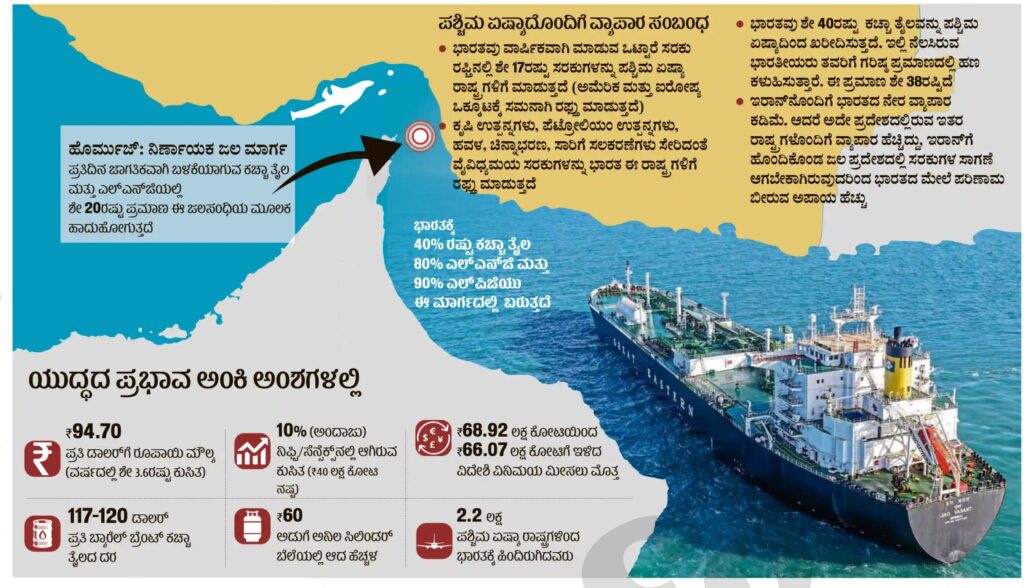
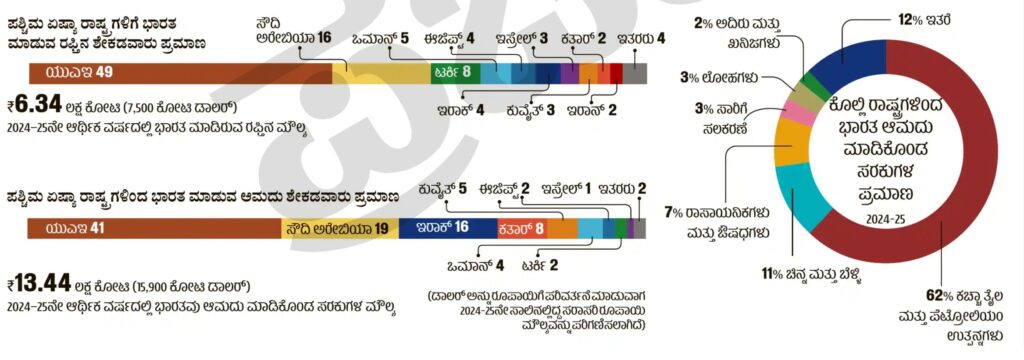
  • ಭಾರತವು ಇರಾನ್‌ನಿಂದ ತೈಲ ರಫ್ತು ಮಾಡಿಕೊಳ್ಳುವುದನ್ನು 2019ರಲ್ಲೇ ಬಹುತೇಕ ನಿಲ್ಲಿಸಿದೆ. ಆದರೆ, ದೇಶಕ್ಕೆ ಆಮದಾಗುವ ಶೇ 40ರಷ್ಟು ಕಚ್ಚಾ ತೈಲ, ಶೇ 80ರಷ್ಟು ದ್ರವೀಕೃತ ನೈಸರ್ಗಿಕ ಅನಿಲ (ಎಲ್‌ಎನ್‌ಜಿ) ಮತ್ತು ಶೇ 90ರಷ್ಟು ಅಡುಗೆ ಅನಿಲ (ಎಲ್‌ಪಿಜಿ) ಸಾಗಣೆಯಾಗುವುದು ಇರಾನ್ ಮತ್ತು ಒಮಾನ್ ನಡುವಿನ ಹೊರ್ಮುಜ್ ಜಲಸಂಧಿ ಮೂಲಕ ದೇಶದ ಇಂಧನ ಮತ್ತು ಎಲ್‌ಪಿಜಿ ಅಗತ್ಯಗಳಿಗಾಗಿ ಹೆಚ್ಚಿನ ಪಾಲು ಆಮದನ್ನೇ ಅವಲಂಬಿಸಿರುವ ಭಾರತದಲ್ಲಿ ಇರಾನ್ ಯುದ್ಧವು ಹಲವು ರೀತಿಯ ಬಿಕ್ಕಟ್ಟುಗಳನ್ನು ಸೃಷ್ಟಿಸಿದೆ.
  • ಯುದ್ಧ ಆರಂಭವಾದ ನಂತರ ಜಾಗತಿಕ ಮಟ್ಟದಲ್ಲಿ ಕಚ್ಚಾ ತೈಲದ ದರ ಶೇ 75ರಷ್ಟು ಹೆಚ್ಚಳವಾಗಿದೆ. ಜಗತ್ತಿನ ಹಲವು ದೇಶಗಳಲ್ಲಿ ಇಂಧನ ಮತ್ತು ಎಲ್‌ಪಿಜಿ ದರ ಹೆಚ್ಚಿಸಲಾಗಿದೆ. ಅಮರಿಕ, ಕೆನಡಾ ಸೇರಿದಂತ ಉತ್ತರ ಅಮೆರಿಕದಲ್ಲಿ ಶೇ 30, ಆತ್ಮೀಯ ಏಷ್ಯಾದಲ್ಲಿ ಶೇ 30ರಿಂದ ಶೇ 50, ಯುರೋಪ್‌ನಲ್ಲಿ ಶೇ 20, ಆಫ್ರಿಕಾದ ರಾಷ್ಟ್ರಗಳಲ್ಲಿ ಶೇ 50ರಷ್ಟು ದರ ಹೆಚ್ಚಳವಾಗಿದೆ. ಭಾರತದಲ್ಲಿ ಅಡುಗೆ ಅನಿಲ, ಕೈಗಾರಿಕಾ ಡೀಸೆಲ್ ಮತ್ತು ಪ್ರೀಮಿಯಂ ಪೆಟ್ರೋಲ್ ದರಗಳಲ್ಲಿ ಹೆಚ್ಚಳವಾಗಿದೆ. ಆದರೆ, ಸಾಮಾನ್ಯ ಪೆಟ್ರೋಲ್, ಡೀಸೆಲ್ ದರ ಹೆಚ್ಚಳವಾಗಿಲ್ಲ ಇದರಿಂದ ಇಂಧನ ಕಂಪನಿಗಳಿಗೆ ಲೀಟರ್ ಪೆಟ್ರೋಲ್‌ಗೆ ₹24 ಮತ್ತು ಲೀಟರ್ ಡೀಸೆಲ್‌ಗೆ ₹30 ನಷ್ಟ ಉಂಟಾಗುತ್ತಿದ್ದು, ಕಂಪನಿಗಳಿಗೆ ದಿನಕ್ಕೆ ₹2,400 ಕೋಟಿ ನಷ್ಟವಾಗುತ್ತಿದೆ.
  • ಇಂಧನ ಕಂಪನಿಗಳ ನಷ್ಟವನ್ನು ಕಡಿಮೆ ಮಾಡಲು ಕೇಂದ್ರವು ಪೆಟ್ರೋಲ್ ಮತ್ತು ಡೀಸೆಲ್ ಮೇಲಿನ ಎಕ್ಸೆಸ್ ಸುಂಕದಲ್ಲಿ ಲೀಟ‌ರ್ಗೆಗೆ ₹10 ಕಡಿಮೆ ಮಾಡಿದೆ. ಜತೆಗೆ ಹಲವು ರೀತಿಯ ಹೆಚ್ಚುವರಿ ಎಕ್ಸೆಸ್ ಸುಂಕವನ್ನೂ ಕಡಿತಗೊಳಿಸಿದೆ ಇದರಿಂದ ಕೇಂದ್ರಕ್ಕೆ 15 ದಿನಕ್ಕೆ ಅಂದಾಜು ₹7,000 ಕೋಟಿ ಆದಾಯ ನಷ್ಟವಾಗಲಿದೆ ಇದರಿಂದಾಗಿ 2026-27ರಲ್ಲಿ ₹1 ಲಕ್ಷ ಕೋಟಿಯಿಂದ 12 ಲಕ್ಷ ಕೋಟಿವರೆಗೆ ನಷ್ಟವಾಗಲಿದೆ.
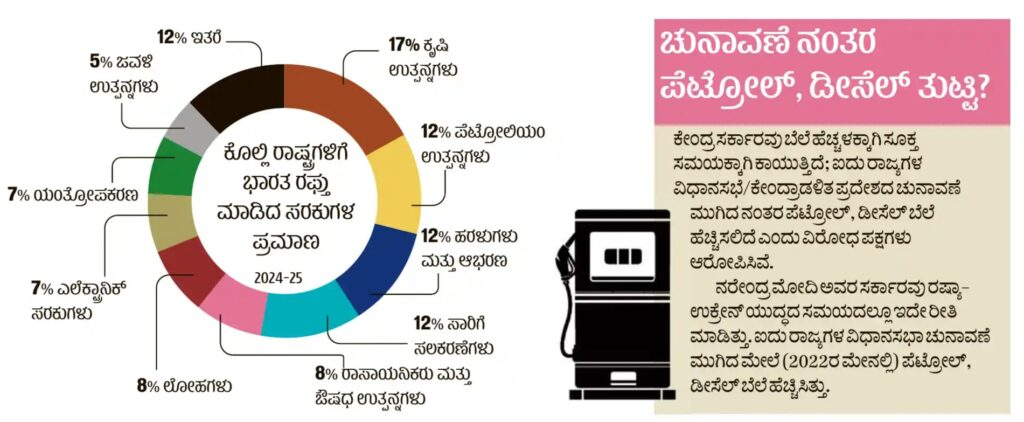
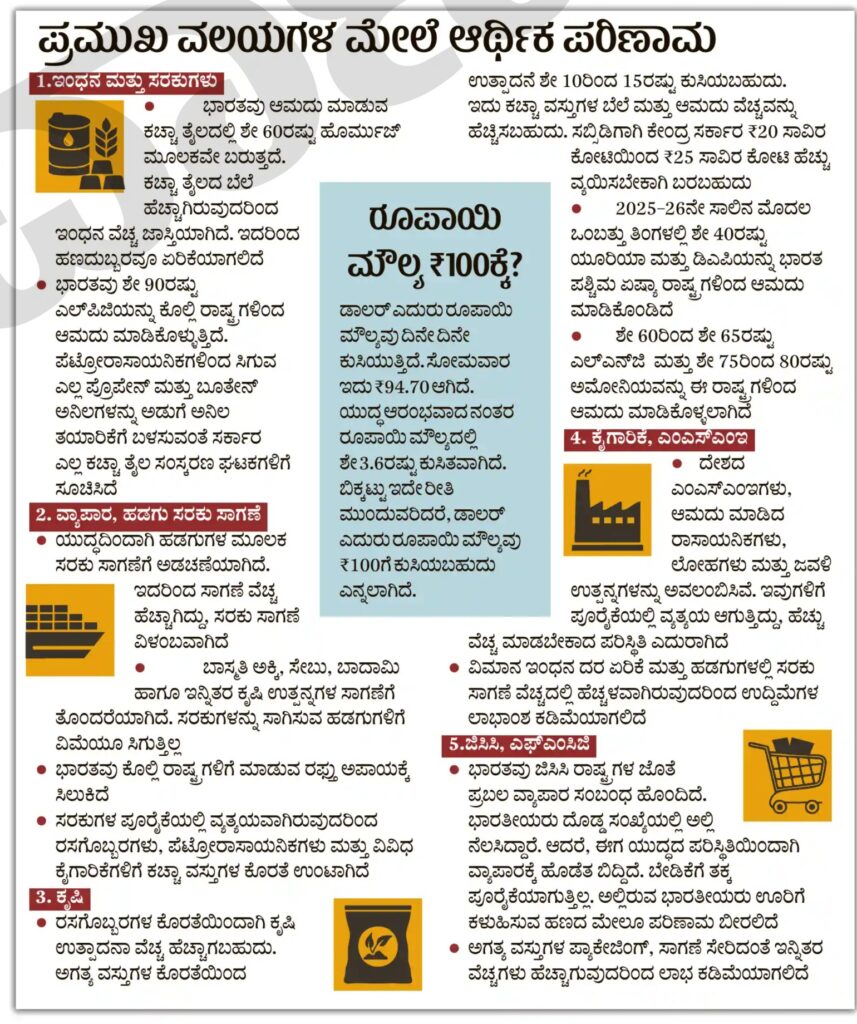
  • ವ್ಯಾಪಕ ಪರಿಣಾಮ: ಪಶ್ಚಿಮ ಏಷ್ಯಾ ಬಿಕ್ಕಟ್ಟು ಪೆಟ್ರೋಲ್, ಡೀಸೆಲ್ ದರಗಳ ಆಚೆಗೂ ಭಾರತದ ಮೇಲೆ ಗಂಭೀರ ಪರಿಣಾಮ ಉಂಟುಮಾಡುವ ಸಂಭವವಿದೆ. ಕಚ್ಚಾ ಪದಾರ್ಥಗಳಿಗಾಗಿ ಕೊಲ್ಲಿ ರಾಷ್ಟ್ರಗಳನ್ನು ಅವಲಂಬಿಸಿರುವ ಸಿಮೆಂಟ್, ರಸಗೊಬ್ಬರ, ಔಷಧಿ ಇತ್ಯಾದಿ ಕೈಗಾರಿಕೆಗಳ ಮೇಲೆ ವ್ಯತಿರಿಕ್ತ ಪರಿಣಾಮ ಉಂಟಾಗಲಿದೆ. ಜತೆಗೆ, ದೇಶದ ಆರ್ಥಿಕತೆಯ ಪ್ರಮುಖ ಸೂಚಕಗಳಾದ ಜಿಡಿಪಿ, ಹಣದುಬ್ಬರ, ವಿತ್ತೀಯ ಕೊರತೆ ಮತ್ತು ವ್ಯಾಪಾರ ಕೊರತೆ ಅಂತರ ಹೆಚ್ಚಳಕ್ಕೆ ಕಾರಣವಾಗುತ್ತದೆ ಎಂದು ವಿಶ್ಲೇಷಿಸಲಾಗಿದೆ. ತೆರಿಗೆ ಆದಾಯದಲ್ಲಿ ಇಳಿಮುಖವಾಗುವುದು, ಹೆಚ್ಚು ಸಬ್ಸಿಡಿ-ವಿನಾಯ್ತಿ ನೀಡುವುದು ಬಂಡವಾಳ ವೆಚ್ಚದ ಮೇಲೆ ಪರಿಣಾಮ ಬೀರಲಿದ್ದು ಇದು ದೇಶದ ಬೆಳವಣಿಗೆಯ ಮೇಲೆ ಮಧ್ಯಮ ಅವಧಿ ಮತ್ತು ದೀರ್ಘಾವಧಿಯ ಪರಿಣಾಮಗಳನ್ನು ಉಂಟುಮಾಡಲಿದೆ ಎನ್ನುವ ಆತಂಕ ವ್ಯಕ್ತವಾಗಿದೆ.
  • ಜಿಡಿಪಿ ಕುಸಿತ: ಭಾರತೀಯ ರಿಸರ್ವ್ ಬ್ಯಾಂಕ್ (ಆರ್‌ಬಿಐ) 2026ರ ಎಪ್ರಿಲ್-ಜೂನ್ ತ್ರೈಮಾಸಿಕಕ್ಕೆ ಶೇ 6.9ರಷ್ಟು ಮತ್ತು ಜುಲೈ-ಸೆಪ್ಟೆಂಬರ್ ತ್ರೈಮಾಸಿಕಕ್ಕೆ ಶೇ 7ರಷ್ಟು ಜಿಡಿಪಿ ಬೆಳವಣಿಗೆ ದರವನ್ನು ಅಂದಾಜಿಸಿತ್ತು. ಕಚ್ಚಾ ತೈಲದ ದರ ಬ್ಯಾರಲ್‌ಗೆ 70 ಡಾಲರ್ ಆಧಾರದಲ್ಲಿ ಈ ಅಂದಾಜು ಮಾಡಲಾಗಿದೆ. ಆದರೆ, ಯುದ್ಧದಿಂದ ಕಚ್ಚಾ ತೈಲದ ದರ ಹೆಚ್ಚಾಗಿದೆ. ಕಚ್ಚಾ ತೈಲವು ಬ್ಯಾರಲ್‌ಗೆ 10 ಡಾಲರ್ಗೆಗೆ ಹೆಚ್ಚಾದರೆ, ಅದು ಆರ್ಥಿಕ ಬೆಳವಣಿಗೆಯನ್ನು 10 ಮೂಲಾಂಕಗಳನ್ನು ಕಡಿಮೆ ಮಾಡುತ್ತದೆ. ಬ್ಯಾರಲ್‌ಗೆ 120 ಡಾಲರ್ ಇದ್ದರೆ ಜಿಡಿಪಿ ಬೆಳವಣಿಗೆಯು ಶೇ 6.2ಕ್ಕೆ ಕುಸಿಯುತ್ತದೆ ಎಂದು ವಿಶ್ಲೇಷಿಸಲಾಗಿದೆ. ಆರ್ಥಿಕ ಸಹಕಾರ ಮತ್ತು ಅಭಿವೃದ್ಧಿ ಸಂಸ್ಥೆ (ಒಇಸಿಡಿ) ಪ್ರಕಾರ, 2026-27ರಲ್ಲಿ ಭಾರತದ ಆರ್ಥಿಕ ಬೆಳವಣಿಗೆ ದರವು ಶೇ 6.1ಕ್ಕೆ ಕುಸಿಯಲಿದೆ. ಗೋಲ್ಡ್‌ಮನ್ ಸ್ಯಾಕ್ಸ್ ಶೇ 5.9ರ ಬೆಳವಣಿಗೆ ದರವನ್ನು ಅಂದಾಜಿಸಿದೆ.
  • ಹಣದುಬ್ಬರ ಏರಿಕೆ: ಇಂದನ ಬೆಲೆ ಹೆಚ್ಚಳ ಮಾಡಿದರೆ, ಅದು ಬಹುತೇಕ ಸರಕುಗಳು, ಗ್ರಾಹಕ ಉತ್ಪನ್ನಗಳು ಮತ್ತು ಸೇವೆಗಳ ದರ ಹೆಚ್ಚಳಕ್ಕೆ ಕಾರಣವಾಗುತ್ತದೆ. ವಿದ್ಯುತ್ ಉತ್ಪಾದನೆ, ರಾಸಾಯನಿಕಗಳು, ಪ್ಲಾಸ್ಟಿಕ್, ಸಿಂಥೆಟಿಕ್ ವಸ್ತುಗಳ ಉತ್ಪಾದನೆ ಮತ್ತು ಬೆಲೆಗಳ ಮೇಲೂ ಇದು ಪರಿಣಾಮ ಬೀರಲಿದೆ. ಇಂಧನ ದರ ಹೆಚ್ಚಳ ಮತ್ತು ಉತ್ಪನ್ನಗಳ ಬೆಲೆ ಹೆಚ್ಚಳವು ಹಲವು ಸರಕು/ಸೇವೆಗಳ ಬೇಡಿಕೆಯನ್ನು ಕಡಿಮೆ ಮಾಡಲಿದ್ದು, ಅದು ಆರ್ಥಿಕತೆಯ ಮೇಲೆ ವ್ಯತಿರಿಕ್ತ ಪರಿಣಾಮ ಉಂಟುಮಾಡಲಿದೆ.
  • ಹಣದುಬ್ಬರ ಕಳೆದೊಂದು ವರ್ಷದಲ್ಲಿ ಇಳಿಮುಖವಾಗುತ್ತಾ ಸಾಗಿತ್ತು ಆದರೆ, ಗ್ರಾಹಕ ಬೆಲೆ ಸೂಚ್ಯಂಕ (ಸಿಪಿಐ) ಆಧಾರಿತ ಚಿಲ್ಲರೆ ಹಣದುಬ್ಬರವು 10 ತಿಂಗಳಲ್ಲಿಯೇ ಅತಿಹಚ್ಚು (ಶೇ 3.21ರಷ್ಟು) ಏರಿಕೆ ಕಂಡಿದೆ. ಸಗಟು ಹಣದುಬ್ಬರವು 11 ತಿಂಗಳಲ್ಲಿಯೇ ಅತಿ ಹೆಚ್ಚು (ಶೇ 2 13) ಏರಿಕೆ ಕಂಡಿದೆ ಆಹಾರ ಪದಾರ್ಥಗಳು ಮತ್ತು ಇಂಧನ ಬೆಲೆಗಳು ಇತ್ತೀಚೆಗೆ ಹಣದುಬ್ಬರವನ್ನು ನಿಯಂತ್ರಣದಲ್ಲಿಟ್ಟಿದ್ದವು. ಆದರೆ, ಮುಂದಿನ ದಿನಗಳಲ್ಲಿ ಪರಿಸ್ಥಿತಿ ವ್ಯತಿರಿಕ್ತವಾಗಲಿದೆ ಎಂದು ತಜ್ಞರು ಅಂದಾಜಿಸಿದ್ದಾರೆ ಅರ್ನ್ಸ್‌ ಆ್ಯಂಡ್ ಯಂಗ್ ಪ್ರಕಾರ, ಪಶ್ಚಿಮ ಏಷ್ಯಾದ ಬಿಕ್ಕಟ್ಟು ಆರ್ಥಿಕ ವರ್ಷದ ಉದ್ದಕ್ಕೂ ವಿಸ್ತರಿಸಿದರೆ, ಭಾರತದ ಜಿಡಿಪಿ ಶೇ 6ಕ್ಕೆ ಕುಸಿಯಲಿದ್ದು, ಸಿಪಿಐ ಹಣದುಬ್ಬರ ಶೇ5.5ಕ್ಕೆ ಏರಲಿದೆ.

ಪತ್ರಿಕೆ-III: ಸಾಮಾನ್ಯ ಅಧ್ಯಯನ-2

ಪತ್ರಿಕೆ-IV: ಸಾಮಾನ್ಯ ಅಧ್ಯಯನ-3

ಪತ್ರಿಕೆ-V: ಸಾಮಾನ್ಯ ಅಧ್ಯಯನ-4