‘Govt. favourable to declaring Tulu as official language’
Context: The State government is in favour of declaring Tulu as Karnataka’s second official language and said a decision would be taken after studying the models adopted by West Bengal and Andhra Pradesh, Kannada and Culture Minister Shivaraj Tangadagi informed the Legislative Assembly.
Replying to a question by Congress member Ashok Rai, the Minister said an official team had visited West Bengal and Andhra Pradesh to study the second official language models followed in those States. However, the team is yet to submit its report.
Once received, a meeting will be convened with Chief Minister Siddaramaiah to take a decision, he said. Andhra Pradesh has declared Urdu as its second official language, he added. Members cutting across party lines from Dakshina Kannada and Udupi districts urged the government to declare Tulu as the second official language of the State.
Pointing out that Tulu academies have been established and universities are offering courses in the language, Mr. Rai, who represents Puttur, said the State should accord official status to Tulu. Intervening, Speaker U.T. Khader also supported the demand and said the government should seriously consider the proposal.
Mr. Rai said Tulu has a history of over 3,000 years, has its own script, and is included in Google Translate. He added that the language is being researched by foreign universities.
The previous BJP government in 2023 had constituted a committee headed by educationist Mohan Alva, which recommended that Tulu could be declared the State’s second official language under Article 345 of the Constitution. The committee had also suggested forming a panel to study the practices followed by other States.
BJP member D. Vedavyasa Kamath demanded an early decision on declaring Tulu as an official language.
The House witnessed lighter moments when Mr. Khader and other members from the region interacted in Tulu for a brief while. “I don’t know what abuse Mr. Kamath showered upon me in Tulu,” Mr. Tangadagi remarked.
Responding, Mr. Khader said, “Don’t worry. When Tulu people express praise or abuse, it is with love and affection.”
Immediately, Deputy Speaker Rudrappa Manappa Lamani demanded the official language status to the Lambani language.
ಈ ಕುರಿತು ಜತೆ ಮಾತನಾಡಿದ ಶಾಲಾ ಶಿಕ್ಷಣ ಮತ್ತು ಸಾಕ್ಷರತಾ ಸಚಿವ ಮಧು ಬಂಗಾರಪ್ಪ, ‘ಎಲ್ಲ ರಾಜ್ಯಗಳು ಖಾಸಗಿ ಶಾಲೆಗಳಲ್ಲಿ ಶೇಕಡ 25ರಷ್ಟು ಸೀಟುಗಳನ್ನು ಅರ್ಟಿಇ ಕೋಟಾ ಮೂಲಕ ತುಂಬುವುದನ್ನು ಪರಿಣಾಮಕಾರಿಯಾಗಿ ಜಾರಿಗೆ ತರಬೇಕೆಂದು ಸುಪ್ರೀಂ ಕೋರ್ಟ್ ತೀರ್ಪು ನೀಡಿದೆ. ಈ ವಿಷಯವನ್ನು ಮುಖ್ಯ ಮಂತ್ರಿ ಸಿದ್ದರಾಮಯ್ಯ ಅವರ ಗಮನಕ್ಕೆ ತರಲಾಗುವುದು’ ಎಂದು ಹೇಳಿದರು.
ಆದರೆ, ‘ಈ ತಿದ್ದುಪಡಿಗಳನ್ನು ಹಿಂಪಡೆಯುವುದರಿಂದ ಆರ್ಥಿಕವಾಗಿ ಉಂಟಾಗುವ ಪರಿಣಾಮಗಳು, ಹಣಕಾಸು ಇಲಾಖೆ ಅಭಿಪ್ರಾಯ ಮತ್ತು ತೀರ್ಮಾನವೂ ಮಹತ್ವದ್ದಾಗಿರುತ್ತದೆ. ಖಾಸಗಿ ಶಾಲೆಗಳಲ್ಲಿ ಶೇ 25 ಸೀಟು ಗಳನ್ನು ಆರ್ಟಿಇ ಕೋಟಾದಡಿ ಭರ್ತಿ ಮಾಡಿದರೆ, ಶುಲ್ಕ ಮರು ಪಾವತಿಗಾಗಿ ಸುಮಾರು ₹500 ಕೋಟಿ ಅಗತ್ಯವಿದೆ’ ಎಂದು ಸಚಿವರು ವಿವರಿಸಿದರು.
ಆರ್ಟಿಇ ಕಾಯ್ದೆಯ ನಿಯಮ 4ಕ್ಕೆ ತರಲಾದ ಹಿಂಪಡೆಯುವುದಕ್ಕೆ ತಿದ್ದುಪಡಿಗಳನ್ನು ತಮಗೆ ವೈಯಕ್ತಿಕವಾಗಿಯಾವುದೇ ಆಕ್ಷೇಪ ಇಲ್ಲ’ ಎಂದು ಅವರು ಸ್ಪಷ್ಟಪಡಿಸಿದರು.
ಆರ್ಟಿಇ ಕಾಯ್ದೆಯನ್ನು ಜಾರಿಗೆ ತಂದ ಮೊದಲ ರಾಜ್ಯ ಕರ್ನಾಟಕ ವಾಗಿದೆ. ಆದರೆ, 2019ರಲ್ಲಿ ನಿಯಮ 4ಕ್ಕೆ ತಿದ್ದುಪಡಿ ಮಾಡಿ, ಸಮೀಪದಲ್ಲೇ (1 ಕಿಲೋ ಮೀಟರ್ ಒಳಗೆ) ಸರ್ಕಾರಿ ಅಥವಾ ಅನುದಾನಿತ ಶಾಲೆಗಳಿದ್ದರೆ ಖಾಸಗಿ ಶಾಲೆಗಳಲ್ಲಿ ಪ್ರವೇಶ ನೀಡುವುದಕ್ಕೆ ವಿನಾಯಿತಿ ನೀಡಿತ್ತು. ಸರ್ಕಾರಿ ಶಾಲೆಗಳಲ್ಲಿ ಪ್ರವೇಶ ಹೆಚ್ಚಿಸಲು ಈ ಕ್ರಮ ಕೈಗೊಳ್ಳಲಾಗಿದೆ ಎಂದು ಸರ್ಕಾರವು ಆಗ ಸಮರ್ಥಿಸಿಕೊಂಡಿತ್ತು.
ಈ ತಿದ್ದುಪಡಿಯೊಂದಿಗೆ, ರಾಜ್ಯ ಸರ್ಕಾರವು ಸರ್ಕಾರಿ ಮತ್ತು ಅನುದಾನಿತ ಶಾಲೆಗಳಲ್ಲಿ ಪ್ರವೇಶಕ್ಕೆ ಆದ್ಯತೆ ನೀಡಿತು. ಇದರಿಂದ ಆರ್ಟಾ ಆಡಿ ಪ್ರವೇಶಕ್ಕೆ ಬೇಡಿಕೆ ಕುಸಿದು, ಶೇ 90 ಸೀಟುಗಳು ಖಾಲಿ ಉಳಿದಿವೆ. 2016-17ನೇ ಸಾಲಿನಲ್ಲಿ ವಿವಿಧ ತಾಂತ್ರಿಕ ಸಮಸ್ಯೆಗಳ ಕಾರಣದಿಂದ ಆರ್ಟಿಇ ಅಡಿ ಪ್ರವೇಶ ಗಳು ಕಡಿಮೆಯಾಗಿದ್ದವು. ಪೋಷಕರು ನಕಲಿ ಪ್ರಮಾಣ ಪತ್ರ ಸಲ್ಲಿಸಿದ್ದು ಪ್ರಮುಖ ಕಾರಣಗಳಲ್ಲಿ ಒಂದಾಗಿತ್ತು.
86 ಸಾವಿರಕ್ಕೂ ಹೆಚ್ಚು ಅರ್ಜಿಗಳಲ್ಲಿ 34 ಸಾವಿರ ಅರ್ಜಿಗಳು ಅನರ್ಹ ಜಾತಿ/ಆದಾಯ ಪ್ರಮಾಣ ಪತ್ರಗಳ ಕಾರಣ ದಿಂದ ತಿರಸ್ಕೃತಗೊಂಡವು. ಹಾಗೆಯೇ. 24 ಸಾವಿರಕ್ಕೂ ಹೆಚ್ಚು ಅರ್ಜಿಗಳನ್ನು ಅನರ್ಹ ಆಧಾರ್/ಮತದಾರರ ಗುರುತಿನ ಚೀಟಿಗಳ ಕಾರಣದಿಂದ ನಿರಾಕರಿಸಲಾಗಿತ್ತು.
ಸುಪ್ರೀಂಕೋರ್ಟ್ಏನುಹೇಳಿದೆ?
2009ರ ಆರ್ಟಿಇ ಕಾಯ್ದೆಯಡಿ ಖಾಸಗಿ ಅನುದಾನರಹಿತ ಅಲ್ಪಸಂಖ್ಯಾತವಲ್ಲದ ಶಾಲೆಗಳಲ್ಲಿ ಆರ್ಥಿಕವಾಗಿ ಹಿಂದುಳಿದ ವರ್ಗದ ಮಕ್ಕಳಿಗೆ ಶೇ25ರಷ್ಟು ಸೀಟುಗಳು ನೀಡುವುದನ್ನು ರಾಜ್ಯಗಳು ಕಟ್ಟುನಿಟ್ಟಾಗಿ ಜಾರಿಗೆ ತರಬೇಕು ಎಂದು ಜನವರಿ 14ರಂದು ಸುಪ್ರೀಂ ಕೋರ್ಟ್ ನಿರ್ದೇಶನ ನೀಡಿತು.
ಇದನ್ನು ‘ರಾಷ್ಟ್ರೀಯ ಮಿಷನ್’ ಎಂದು ಹೇಳಿರುವ ನ್ಯಾಯಾಲಯ, ಈ ಕೋಟಾದಡಿ ಸೀಟುಗಳನ್ನು ಭರ್ತಿ ಮಾಡುವುದನ್ನು ಖಚಿತಪಡಿಸಲು ರಾಜ್ಯಗಳು ನಿಯಮಗಳನ್ನು ರೂಪಿಸಬೇಕು ಎಂದು ಆದೇಶಿಸಿತು.
Context: The four Labour Codes aim to promote formalisation of employment and improve ease of doing business; gap in coverage of benefits is a major challenge.
India’s Labour Codes came into force in November 2025, marking the most significant labour law reform since Independence. By consolidating 29 central laws into four Codes, the reform aims to simplify compliance, universalise minimum wages, expand social protection, and modernise workplace regulation. Policy debates often portray the Codes as a balancing act between labour flexibility and worker protection.
Prior to the consolidation, India’s labour regime was fragmented across multiple Central and State laws governing wages, industrial relations, social security, and working conditions. With labour on the Concurrent List, this resulted in uneven enforcement and wide inter-State variation. Crucially, most protections applied only to the formal sector, leaving informal, contract, and casual workers, who form the bulk of the workforce, outside the scope of regulation. Against this backdrop, the government introduced four Labour Codes between 2019 and 2020.
In 2024, India’s median age was under 30, compared to around 40 in China and 50 in Japan. With nearly half the population still young, understanding how these changes affect youth employment is critical.
Despite its demographic advantage, India faces a pronounced youth employment crisis. According to the Periodic Labour Force Survey (PLFS) 2023-24, labour force participation among those aged 15-29 stood at 46.5%, far below the 76.4% observed among those aged 30-59. Youth unemployment is 10.2%, compared to less than 1% for older adults.
Gender disparities further widen these gaps. Only 28.8% of young women participate in the labour force, compared to 63.5% of young men. In urban areas, unemployment among young women reached 20.1%.
Across all PLFS rounds, young workers are more likely than adults to be unpaid family workers within self-employment. They are disproportionately concentrated in informal employment. In 2023-24, nearly 90% of young workers were informally employed. Even within regular salaried jobs, 60.5% of young regular workers lacked social security, compared to 50.5% among workers above 30.
Contractual insecurity is also higher among youth. In 2023-24, 66.1% of young regular workers had no written contract, versus 53.6% for older ones. Only 16.5% of young workers had long-term contracts exceeding three years, compared to 35.4% among adults.
Young workers are also overrepresented in platform-based gig work. A NITI Aayog estimate suggests that 77 lakh workers were engaged in the gig economy in 2020-21, a figure projected to rise to 2.35 crore by 2029-30.
Against this backdrop, the new Labour Codes aim to promote formalisation while improving the ease of doing business. The introduction of a statutory national floor wage could raise earnings for young workers clustered in low-paid, entry-level jobs. If firms increasingly rely on fixed-term contracts, the Codes mandate parity in wages and benefits with permanent workers.
The requirement of appointment letters for all workers and guaranteed wage payments, even during leave, strengthens baseline employment security. The Code on Social Security extends welfare schemes covering health, maternity, disability, education, and skill development to unorganised workers. Gig and platform workers are explicitly recognised in national law, with provisions for registration from age 16 and the creation of National and State Social Security Boards. Unlike the earlier Unorganised Workers’ Social Security Act (2008), which had limited impact, the new Code offers clearer institutional mechanisms.
Labour market transparency is also enhanced through mandatory vacancy reporting to career centres. The Industrial Relations Code further affects youth employment by reducing hiring frictions through a higher retrenchment threshold. It provides legal clarity for contract labour and fixed-term employment categories dominated by young workers while extending benefits such as leave, health cover, social security, and gratuity to fixed-term employees after just one year of service.
However, several challenges remain. Many provisions for unorganised and gig workers mirror those under the 2008 Act, including a size-based definition of enterprises with fewer than 10 workers. PLFS 2023-24 shows that 42.7% of young workers lack written contracts, and nearly one-fifth of them work in enterprises with more than 10 workers, leaving significant gaps in coverage. Discretionary language in provisions for gig workers and weak statistical definitions of digital platform employment complicate coverage, especially given widespread multiple job-holding. Despite the Second National Commission on Labour having urged the government as early as 2002 to modernise labour protections in response to technological change and evolving work arrangements, two decades later, policy follow-through and statistical innovation have been slow.
These gaps point to an urgent need for stronger labour data systems and proactive worker registration. Identifying gig and platform workers in national surveys, instead of subsuming them under broad self-employment categories, would strengthen policy design and protection.
Context: According to the notification, the Labour Minister will be the ex-officio president of the board.
The Karnataka government on Tuesday issued a notification constituting the Karnataka Platform-Based Gig Workers’ Welfare Development Board under the Karnataka Platform-Based Gig Workers’ (Social Security and Welfare Development) Act, 2025.
According to the notification, the Labour Minister will be the ex-officio president of the board. Senior officials from the Labour Department, the Department of Information Technology and the Commercial Taxes Department have been included as ex-officio members. The Chief Executive Officer of the board will function as the member-secretary.
The board includes four representatives of gig workers from unions representing food delivery and app-based transport workers, and four representatives from aggregator platforms. Representatives from Porter, Zomato, Uber and Amazon have been named as aggregator members. The committee also includes labour unions, including United Food Delivery Partners Union, the Indian Federation of App Based Transport Workers, All India Trader Union Congress (AITUC), and Ola Uber Drivers and Owners’ Association.
The constitution of the board follows the State government’s decision to move ahead with the implementation of welfare measures for gig workers through a dedicated statutory body. Now, both aggregator platforms and gig workers will be required to register with the board.
Aggregators will have 45 days to complete their registration and furnish details of all gig workers engaged through their platforms. Each registered gig worker will be issued a unique identification number, which will be used by the board to disburse social security benefits. The welfare fund will comprise the welfare fee collected from aggregators, contributions made by gig workers, and grants provided by the State and Central governments.
The State has decided to levy a welfare fee of 1% to 1.5%, with a cap, on aggregator platforms, with the rate varying across sectors and business models. Labour Minister Santosh Lad had said the levy was kept low initially to ensure a steady welfare fund for gig workers without placing an immediate financial burden on platforms.
Officials had also said that once contributions begin to flow into the welfare fund, the board will assess whether the collections are sufficient to extend social security benefits to gig workers. The welfare fee may be revised, up to a maximum of 5%, if the funds are found to be inadequate.
Context: European wines, luxury cars to become cheaper as negotiations, launched in 2007, conclude.
Modi calls it historic pact, while Ursula says it will reduce strategic dependence amid global turmoil.
Officials say document will undergo legal scrubbing before it can be ratified by European Parliament
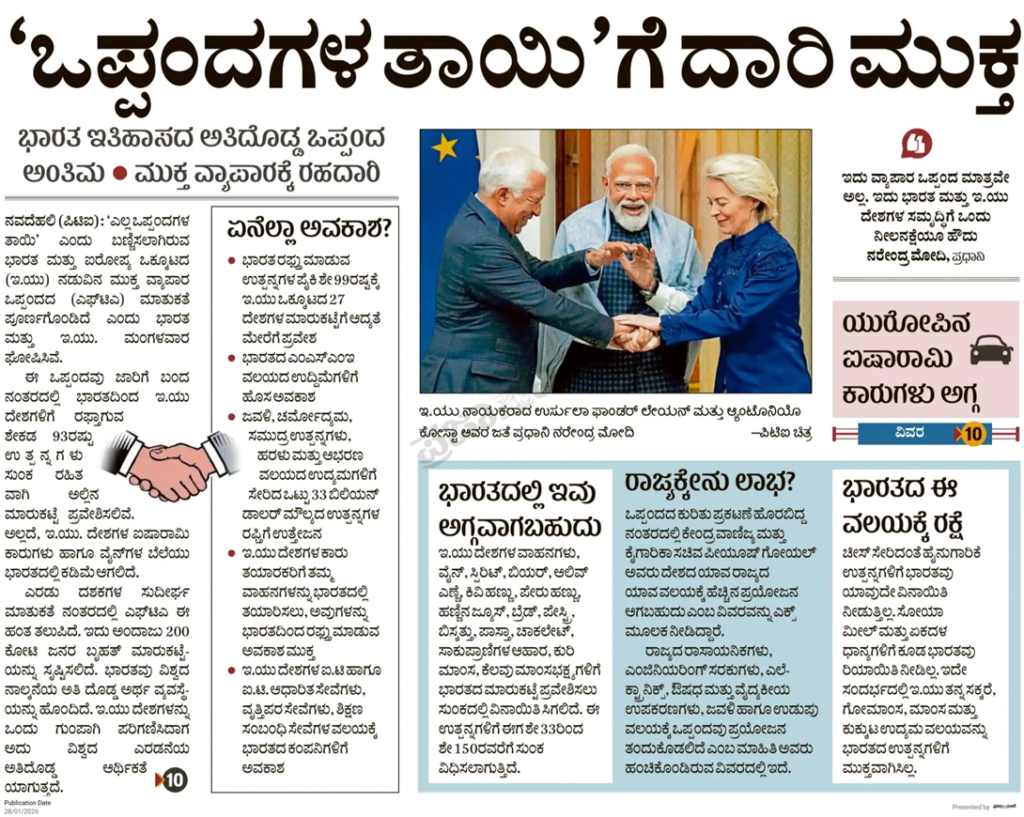
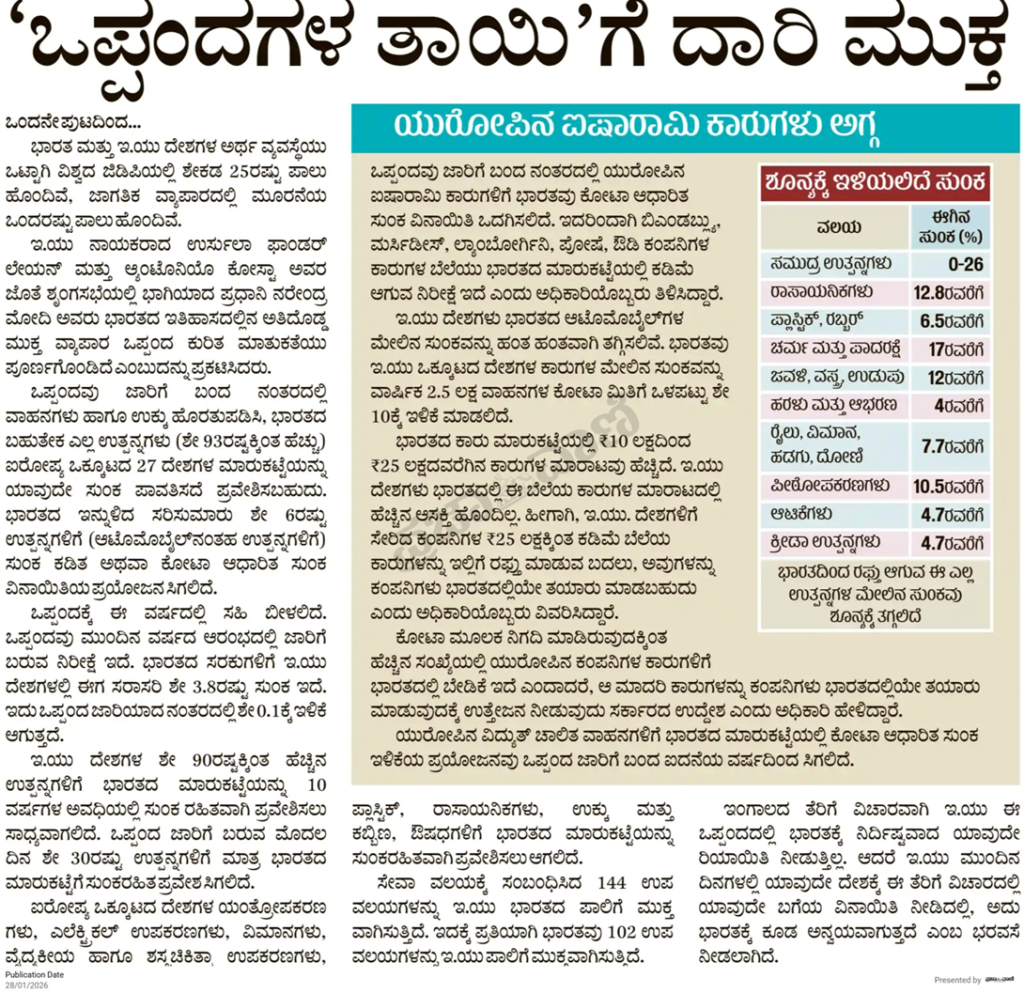
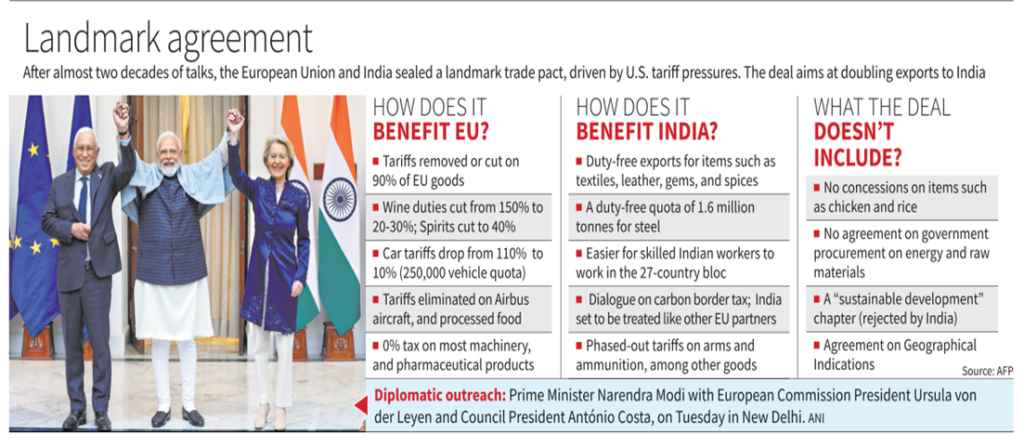
After almost two decades of negotiation, India and the European Union (EU) finalised a free trade agreement (FTA) on Tuesday billed as the “mother of all deals”, that will see the EU drop tariffs on 99.5% of Indian exports to the 27-nation bloc.
India has given tariff concessions on 97.5% of imports from the EU, with European wines and luxury cars set to become less expensive here as a result.
Beyond the economics, both sides stressed the geopolitical significance of a deal between two economies that together account for a third of global trade in the shadow of uncertainty sparked by the U.S. tariff regime.
Prime Minister Narendra Modi declared that the partnership would “strengthen stability” at a time of global turmoil, while European Commission President Ursula von der Leyen said it would reduce strategic dependency at a time when global trade is increasingly fractious.
“We have delivered the mother of all deals,” she said. “Two giants who choose partnership, in a true win-win fashion. A strong message that cooperation is the best answer to global challenges.”
‘Largest-ever FTA’
Noting that this is India’s largest-ever FTA, Mr. Modi said: “This historic agreement will facilitate access to the European market for our farmers and small industries, create new opportunities in manufacturing, and strengthen cooperation in our services sectors.”
Both sides, however, made sure to exclude their respective sensitive sectors. India’s strategic agricultural and dairy sectors remain protected, while the EU will maintain its current tariffs on beef, sugar, rice, chicken meat, milk powder, honey, bananas, soft wheat, garlic, and ethanol.
India-EU FTA talks were first launched in 2007. Following several hiccups and pauses, they were resumed in 2022 with both sides agreeing to exclude issues on which agreement had been elusive.
According to Commerce Ministry officials, the language in the document will first be cleaned up over the next 10 to 15 days, following which it will undergo “legal scrubbing”. It will then have to be translated and sent to all 27 EU member states, before it can be ratified by the European Parliament.
“We do hope that we should be able to celebrate the entry into force of this agreement within calendar 2026 itself,” said Union Minister Piyush Goyal.
According to the Commerce Ministry, India has gained tariff reductions across 97% of tariff lines, covering 99.5% of trade value. Of this, 90.7% of India’s exports will see duties eliminated entirely on the first day of the deal’s implementation, including labour-intensive sectors such as textiles, apparel, leather, footwear, tea, coffee, spices, sports goods, toys, gems and jewellery, and certain marine products, amongst others.
Another 2.9% of India’s exports will see duty elimination over three to five years.
This would include certain marine products, processed food items, and arms and ammunition. Over and above this, 6% of India’s exports will see tariff reductions including certain poultry products, preserved vegetables, bakery products, amongst others.
“Key labour-intensive sectors comprising more than ₹2.87 lakh crore [$33 billion] of exports that are currently subjected to import duty between 4% to 26% in the EU and are crucial for employment generation, will enter zero duty from entry into force of the FTA and thus gain enhanced competitiveness in the EU market,” the Ministry said in a release.
In particular, of the sectors that India primarily exports to the EU, the following will see duties eliminated entirely: marine products (current duties of up to 26%), chemicals (12.8% currently), plastic and rubber items (6.5%), leather footwear (17%), textiles and apparel (12% each), base metals (10%), gems and jewellery (4%), furniture and allied consumer goods (10.5%), and toys and sports goods (4.7%).
On services, the EU has agreed to commitments across 144 services sub sectors, including IT/ITeS, professional services, education, and other business services.
What India has conceded
Overall, India is offering duty elimination and reductions on 92.1% of the tariff lines, which comprises 97.5% of the EU exports to India. Within this, 49.6% of the tariff lines will see an immediate duty elimination once the agreement comes into effect.
Another 39.5% of the tariff lines will be subject to a phased elimination of tariffs over five, seven, and 10 years. An additional 3% of products will see phased tariff reductions.
“Imports of EU’s high technology goods are expected to diversify India’s import sources, thereby reducing input costs for businesses, benefit consumers and will create opportunities for Indian businesses to integrate into global supply chains,” the statement added.
Notably for the EU, the following European sectors will see duty-free access to the Indian markets: machinery and electrical equipment, aircraft and spacecraft, optical, medical and surgical equipment, plastics, precious stones and metals, chemicals, motor vehicles, iron and steel, pharmaceuticals, and various agricultural products.
On services, India has agreed to open up 102 sub sectors covering EU priorities such as professional, business, telecommunications, maritime, financial, and environmental services.
It has been learnt that negotiations over a few sectors such as automobiles and wine had caused some problems, but the two sides agreed to quota based systems that were satisfactory to both sides.
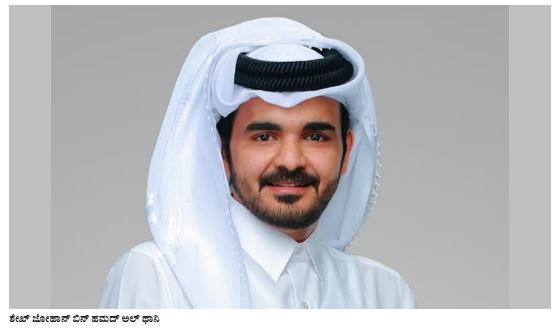
• ಹಮದ್ ಅಲ್ ಥಾನಿ ಅವರು ಏಷ್ಯಾ ಒಲಿಂಪಿಕ್ (ಏಒಸಿ) ಅಧ್ಯಕ್ಷರಾಗಿ ಅವಿರೋಧವಾಗಿ ಆಯ್ಕೆಯಾದರು. ಅವರು 2028ರವರೆಗೆ ಈ ಸ್ಥಾನದಲ್ಲಿರಲಿದ್ದಾರೆ. • ಜೋಹಾನ್ ಅವರು ಕತಾರ್ ಒಲಿಂಪಿಕ್ ಸಮಿತಿಯ ಅಧ್ಯಕ್ಷರಾಗಿದ್ದು, ರಾಷ್ಟ್ರೀಯ ಒಲಿಂಪಿಕ್ ಸಂಸ್ಥೆಗಳ ಜಾಗತಿಕ ಸಮಿತಿಯ ಹಿರಿಯ ಉಪಾಧ್ಯಕ್ಷರಾಗಿಯೂ ಕಾರ್ಯನಿರ್ವಹಿಸುತ್ತಿದ್ದಾರೆ. • 2036ರ ಒಲಿಂಪಿಕ್ ಕ್ರೀಡಾಕೂಟಕ್ಕೆ ಆತಿಥ್ಯ ವಹಿಸಲು ಭಾರತ ಹಾಗೂ ಕತಾರ್ ಭಾರಿ ಕಸರತ್ತು ನಡೆಸುತ್ತಿವೆ. ಹೀಗಾಗಿ, ಜೋಹಾನ್ ಅವರ ಆಯ್ಕೆಯು ಕತಾರ್ಗೆ ಪೂರಕವಾಗಬಹುದು ಎನ್ನಲಾಗಿದೆ.
ಅವರ ದೃಷ್ಟಿಕೋನ “Together for Asia” ಎಂಬ ಘೋಷಣೆಯಡಿ ಏಷ್ಯಾದ ಕ್ರೀಡಾ ಏಕತೆ ಮತ್ತು ಅಭಿವೃದ್ಧಿಗೆ ಬದ್ಧತೆ. ಯುವ ಕ್ರೀಡಾಪಟುಗಳಿಗೆ ವೇದಿಕೆ: ಏಷ್ಯಾದ ಯುವಕರಿಗೆ ಜಾಗತಿಕ ಮಟ್ಟದಲ್ಲಿ ಸಾಧನೆ ಮಾಡಲು ಅವಕಾಶ.
ಮಹತ್ವ ಕತಾರ್ ಈಗಾಗಲೇ 2036 ಒಲಿಂಪಿಕ್ ಕ್ರೀಡಾಕೂಟವನ್ನು ಆತಿಥ್ಯ ನೀಡಲು ಪ್ರಯತ್ನಿಸುತ್ತಿದೆ. ಏಷ್ಯಾದ ಕ್ರೀಡಾ ಸಂಸ್ಥೆಗಳಲ್ಲಿ ಕತಾರ್ನ ನಾಯಕತ್ವ ಬಲವಾಗುತ್ತಿದೆ. ಒಲಿಂಪಿಕ್ ಮೌಲ್ಯಗಳನ್ನು (Citius, Altius, Fortius – ವೇಗವಾಗಿ, ಎತ್ತರವಾಗಿ, ಬಲವಾಗಿ) ಏಷ್ಯಾದಲ್ಲಿ ಹರಡುವುದು.
ಏಷ್ಯಾ ಒಲಿಂಪಿಕ್ ಕೌನ್ಸಿಲ್ (Olympic Council of Asia – OCA) ಏಷ್ಯಾದ ಕ್ರೀಡಾ ಚಟುವಟಿಕೆಗಳನ್ನು ನಿರ್ವಹಿಸುವ ಪ್ರಮುಖ ಅಂತರರಾಷ್ಟ್ರೀಯ ಸಂಸ್ಥೆ. ಇದು 45 ಏಷ್ಯನ್ ರಾಷ್ಟ್ರಗಳ ರಾಷ್ಟ್ರೀಯ ಒಲಿಂಪಿಕ್ ಸಮಿತಿಗಳನ್ನು ಸದಸ್ಯರಾಗಿ ಹೊಂದಿದ್ದು, ಏಷ್ಯನ್ ಗೇಮ್ಸ್, ಏಷ್ಯನ್ ಇಂಡೋರ್ ಗೇಮ್ಸ್, ಏಷ್ಯನ್ ಬೀಚ್ ಗೇಮ್ಸ್ ಮುಂತಾದ ಬಹು-ಕ್ರೀಡಾ ಕೂಟಗಳನ್ನು ಆಯೋಜಿಸುತ್ತದೆ. ಸ್ಥಾಪನೆ: 16 ನವೆಂಬರ್ 1982
ಪ್ರಕಾರ: ಏಷ್ಯಾದ ಕ್ರೀಡಾ ಫೆಡರೇಶನ್
ಮುಖ್ಯ ಕಚೇರಿ: ಕುವೈಟ್ ಸಿಟಿ, ಕುವೈಟ್
ಸದಸ್ಯತ್ವ: 45 ರಾಷ್ಟ್ರೀಯ ಒಲಿಂಪಿಕ್ ಸಮಿತಿಗಳು (NOCs)
ಅಧಿಕೃತ ಭಾಷೆ: ಇಂಗ್ಲಿಷ್
ಮೋಟೋ: Ever Onward (ಎಂದಿಗೂ ಮುಂದಕ್ಕೆ)
ಪ್ರಮುಖ ಕಾರ್ಯಗಳು ಏಷ್ಯನ್ ಗೇಮ್ಸ್ ಆಯೋಜನೆ: ಪ್ರತಿ ನಾಲ್ಕು ವರ್ಷಕ್ಕೊಮ್ಮೆ ನಡೆಯುವ ಏಷ್ಯಾದ ಅತಿ ದೊಡ್ಡ ಬಹು-ಕ್ರೀಡಾ ಕೂಟ.
ಇತರ ಕ್ರೀಡಾಕೂಟಗಳು: ಏಷ್ಯನ್ ಇಂಡೋರ್ ಗೇಮ್ಸ್, ಏಷ್ಯನ್ ಬೀಚ್ ಗೇಮ್ಸ್, ಏಷ್ಯನ್ ಯುವ ಗೇಮ್ಸ್, ಏಷ್ಯನ್ ವಿಂಟರ್ ಗೇಮ್ಸ್.
ಕ್ರೀಡಾ ಅಭಿವೃದ್ಧಿ: ಏಷ್ಯಾದಲ್ಲಿ ಕ್ರೀಡಾ ಮೂಲಸೌಕರ್ಯ, ತರಬೇತಿ, ಮತ್ತು ಯುವ ಕ್ರೀಡಾಪಟುಗಳ ಉತ್ತೇಜನ.
ಸಂಸ್ಕೃತಿ ಮತ್ತು ಶಿಕ್ಷಣ: ಕ್ರೀಡೆಗಳ ಮೂಲಕ ಏಕತೆ, ಶಾಂತಿ ಮತ್ತು ಪರಸ್ಪರ ಅರ್ಥೈಸಿಕೊಳ್ಳುವಿಕೆಯನ್ನು ಉತ್ತೇಜಿಸುವುದು.
ಅಧ್ಯಕ್ಷರು ಮತ್ತು ನಾಯಕತ್ವ ಪ್ರಸ್ತುತ ಅಧ್ಯಕ್ಷ (2026): ಕತಾರ್ನ ಶೇಖ್ ಜೋಆನ್ ಬಿನ್ ಹಮದ್ ಅಲ್ ಥಾನಿ (2026ರಲ್ಲಿ ತಾಶ್ಕೆಂಟ್ನಲ್ಲಿ ನಡೆದ 46ನೇ ಸಾಮಾನ್ಯ ಸಭೆಯಲ್ಲಿ ಆಯ್ಕೆ)
ಹಿಂದಿನ ಅಧ್ಯಕ್ಷರು: ರಂದೀರ್ ಸಿಂಗ್ (ಭಾರತ, ಕಾರ್ಯನಿರ್ವಹಣಾ ಅಧ್ಯಕ್ಷ), ತಲಾಲ್ ಫಹದ್ ಅಲ್-ಅಹ್ಮದ್ ಅಲ್-ಸಬಾಹ್ (ಕುವೈಟ್) ಮುಂತಾದವರು.
ಭಾರತವು ಏಷ್ಯಾ ಒಲಿಂಪಿಕ್ ಕೌನ್ಸಿಲ್ (OCA) ನಲ್ಲಿ ಪ್ರಮುಖ ಪಾತ್ರ ವಹಿಸಿದೆ – 2024ರಲ್ಲಿ ರಾಜಾ ರಂದೀರ್ ಸಿಂಗ್ ಅವರನ್ನು ಅಧ್ಯಕ್ಷರಾಗಿ ಆಯ್ಕೆ ಮಾಡಲಾಗಿದ್ದು, ಅವರು OCA ಇತಿಹಾಸದಲ್ಲಿ ಮೊದಲ ಭಾರತೀಯ ಅಧ್ಯಕ್ಷರಾಗಿದ್ದರು. ಅವರ ಆರೋಗ್ಯ ಸಮಸ್ಯೆಯಿಂದಾಗಿ 2026ರಲ್ಲಿ ಕತಾರ್ನ ಶೇಖ್ ಜೋಆನ್ ಬಿನ್ ಹಮದ್ ಅಲ್ ಥಾನಿ ಅವರನ್ನು ಹೊಸ ಅಧ್ಯಕ್ಷರಾಗಿ ಆಯ್ಕೆ ಮಾಡಲಾಯಿತು.
OCAಯಲ್ಲಿ ಭಾರತದ ಪಾತ್ರ
1.ನಾಯಕತ್ವ ರಾಜಾ ರಂದೀರ್ ಸಿಂಗ್ – ಮಾಜಿ ಶೂಟರ್ ಹಾಗೂ ಹಿರಿಯ ಕ್ರೀಡಾ ಆಡಳಿತಗಾರ.
2024ರಲ್ಲಿ ನವದೆಹಲಿಯಲ್ಲಿ ನಡೆದ 44ನೇ ಸಾಮಾನ್ಯ ಸಭೆಯಲ್ಲಿ ಏಕಮತದಿಂದ OCA ಅಧ್ಯಕ್ಷರಾಗಿ ಆಯ್ಕೆ.
ಅವರು OCA ಇತಿಹಾಸದಲ್ಲಿ ಮೊದಲ ಭಾರತೀಯ ಅಧ್ಯಕ್ಷರು.
ಅವರ ಅವಧಿ 2024–2028ರ ವರೆಗೆ ನಿಗದಿಯಾಗಿತ್ತು, ಆದರೆ ಆರೋಗ್ಯ ಸಮಸ್ಯೆಯಿಂದ 2026ರಲ್ಲಿ ರಾಜೀನಾಮೆ ನೀಡಿದರು.
2.ಭಾರತದ ಕೊಡುಗೆ ಆತಿಥ್ಯ: 2024ರ ಸಾಮಾನ್ಯ ಸಭೆಯನ್ನು ನವದೆಹಲಿಯಲ್ಲಿ ಆಯೋಜಿಸಿ, OCAಯಲ್ಲಿ ಭಾರತದ ಪ್ರಭಾವವನ್ನು ತೋರಿಸಿತು.
ಕ್ರೀಡಾ ಅಭಿವೃದ್ಧಿ: ಭಾರತವು ಏಷ್ಯನ್ ಗೇಮ್ಸ್, ಏಷ್ಯನ್ ಯುವ ಗೇಮ್ಸ್ ಮುಂತಾದ ಕೂಟಗಳಲ್ಲಿ ನಿರಂತರವಾಗಿ ಭಾಗವಹಿಸಿ ಪದಕಗಳನ್ನು ಗೆದ್ದಿದೆ.
ಅಂತರರಾಷ್ಟ್ರೀಯ ಪ್ರತಿನಿಧಿತ್ವ: ರಂದೀರ್ ಸಿಂಗ್ 2001–2014ರ ನಡುವೆ IOC ಸದಸ್ಯರಾಗಿದ್ದರು, ಇದರಿಂದ ಭಾರತವು ಜಾಗತಿಕ ಒಲಿಂಪಿಕ್ ರಾಜಕೀಯದಲ್ಲಿ ಪ್ರಭಾವ ಸಾಧಿಸಿತು.
3.ಪ್ರಸ್ತುತ ಸ್ಥಿತಿ 2026ರಲ್ಲಿ ತಾಶ್ಕೆಂಟ್ನಲ್ಲಿ ನಡೆದ 46ನೇ ಸಾಮಾನ್ಯ ಸಭೆಯಲ್ಲಿ ಶೇಖ್ ಜೋಆನ್ ಬಿನ್ ಹಮದ್ ಅಲ್ ಥಾನಿ (ಕತಾರ್) ಅವರನ್ನು ಹೊಸ ಅಧ್ಯಕ್ಷರಾಗಿ ಆಯ್ಕೆ ಮಾಡಲಾಯಿತು.
ಅವರು ರಂದೀರ್ ಸಿಂಗ್ ಅವರ ಅವಧಿಯನ್ನು ಪೂರ್ಣಗೊಳಿಸಲಿದ್ದಾರೆ (2028ರವರೆಗೆ).
ಸಂದರ್ಭ: ಅಪರಾಧಿಯೊಬ್ಬರಿಗೆ ಸಾಯುವವರೆಗೂ ಜೈಲು ಶಿಕ್ಷೆ ವಿಧಿಸುವ ಅಧಿಕಾರ ಹೈಕೋರ್ಟ್ ಮತ್ತು ಸುಪ್ರೀಂ ಕೋರ್ಟ್ಗಳಿಗೆ ಮಾತ್ರವೇ ಇದೆ’ ಎಂದು ಹೈಕೋರ್ಟ್ ಪ್ರಕರಣವೊಂದರಲ್ಲಿ ಸ್ಪಷ್ಟಪಡಿಸಿದೆ. • ಮೂರೂವರೆ ವರ್ಷದ ಮಗುವನ್ನು ಕೊಲೆ ಮಾಡಿದ್ದ ಪ್ರಕರಣದ ಅಪರಾಧಿ ರುದ್ರೇಶ್ ಅಲಿಯಾಸ್ ರುದ್ರಯ್ಯ (28), ‘ನನಗೆ ಸಾಯುವವರೆಗಿನ ಜೀವಿತಾವಧಿ ಜೈಲು ಶಿಕ್ಷೆ ವಿಧಿಸಿರುವ ಶಿವಮೊಗ್ಗದ 5ನೇ ಹೆಚ್ಚುವರಿ ಜಿಲ್ಲಾ ಮತ್ತು ಸೆಷನ್ಸ್ ನ್ಯಾಯಾಲಯದ ಆದೇಶ ರದ್ದುಪಡಿಸಬೇಕು’ ಎಂದು ಕೋರಿ ಹೈಕೋರ್ಟ್ ಗೆ ಕ್ರಿಮಿನಲ್ ಮೇಲ್ಮನವಿ ಸಲ್ಲಿಸಿದ್ದರು. • ಈ ಮೇಲ್ಮನವಿಯನ್ನು ಭಾಗಶಃ ಪುರಸ್ಕರಿಸಿರುವ ರುದ್ರೇಶ್ಗೆ ನ್ಯಾಯಪೀಠ, ಸಾಯುವವರೆಗೆ ಜೀವಿತಾವಧಿ ಶಿಕ್ಷೆ ವಿಧಿಸಿರುವ ಸೆಷನ್ಸ್ ಕೋರ್ಟ್ ಆದೇಶದಲ್ಲಿ ಮಾರ್ಪಾಡು ಮಾಡಿದೆ. ಸಾಯುವವರೆಗಿನ ಜೈಲು ಶಿಕ್ಷೆ ಬದಲಾಗಿ ಜೀವಾವಧಿ ಶಿಕ್ಷೆ ವಿಧಿಸಿ ಆದೇಶಿಸಿದೆ. • “ಸಾಯುವವರೆಗೆ ಜೈಲು ಶಿಕ್ಷೆ ವಿಧಿಸುವ ಅಧಿಕಾರವನ್ನು ಸಾಂವಿಧಾನಿಕ ನ್ಯಾಯಾಲಯಗಳಾದ ಹೈಕೋರ್ಟ್ ಮತ್ತು ಸುಪ್ರೀಂ ಕೋರ್ಟ್ಗಳು ಮಾತ್ರವೇ ಹೊಂದಿವೆ. ಈ ಅಧಿಕಾರ ಸೆಷನ್ ಕೋರ್ಟ್ಗೆ ಇಲ್ಲ’ ಎಂದು ನ್ಯಾಯಪೀಠ ಸ್ಪಷ್ಟಪಡಿಸಿದೆ. ಮೇಲ್ಮನವಿದಾರರ ಪರ ಹೈಕೋರ್ಟ್ ವಕೀಲ ಎಸ್.ಸುನಿಲ್ ಕುಮಾರ್ ವಾದ ಮಂಡಿಸಿದ್ದರು. • ಜೀವಾವಧಿ ಶಿಕ್ಷೆಯಾದರೆ 14 ವರ್ಷ ಜೈಲು ಶಿಕ್ಷೆ ಪೂರೈಸಿದ ನಂತರ ಸನ್ನಡತೆ ಆಧಾರದಲ್ಲಿ ಸರ್ಕಾರಕ್ಕೆ, ಕೈದಿಯನ್ನು ಬಿಡುಗಡೆ ಮಾಡುವ ಅಧಿಕಾರ ಅವಕಾಶವಿರುತ್ತದೆ.
ಪ್ರಕರಣವೇನು?: ಶಿವಮೊಗ್ಗ ಜಿಲ್ಲೆಯ • ಹೊಸಮನೆ ಗ್ರಾಮದ ನಿವಾಸಿ ರುದ್ರೇಶ್, ಹೊಸನಗರದ ಮಠವೊಂದರಲ್ಲಿ ಕೆಲಸ ಮಾಡುತ್ತಿದ್ದರು. ಕೊಲೆಗೀಡಾದ ಮಗುವಿನ ತಾಯಿ (ಪ್ರಕರಣದ ದೂರುದಾರೆ) ಮಠದ ಭಕ್ತಿಯಾಗಿದ್ದರು. ನಿಯಮಿತವಾಗಿ ಮಠಕ್ಕೆ ಭೇಟಿ ನೀಡುತ್ತಿದ್ದರು. ಮಠದ ವ್ಯವಹಾರಗಳಲ್ಲಿ ರುದ್ರೇಶ್ಗೆ ದೂರುದಾರೆ మత్తు ಆಕೆಯ ತಾಯಿ ಸಲಹೆ ನೀಡುತ್ತಿದ್ದರು. ಇದೇ ವಿಚಾರವಾಗಿ ದೂರುದಾರೆಯ ಬಗ್ಗೆ ರುದ್ರೇಶ್ ದ್ವೇಷ ಬೆಳೆಸಿಕೊಂಡಿದ್ದರು. • 2017ರ ಏಪ್ರಿಲ್ 10ರಂದು ಮಠದ ಕಾರ್ಯಕ್ರಮವೊಂದರಲ್ಲಿ ದೂರುದಾರೆ ತನ್ನ ಮೂರೂವರೆ ವರ್ಷದ ಗಂಡುಮಗು ಮತ್ತು ಕುಟುಂಬದ ಸದಸ್ಯರೊಂದಿಗೆ ಭಾಗಿಯಾಗಿದ್ದರು. ಅಂದು ಮಠದಲ್ಲೇ ಊಟ ಮಾಡಿ ಮಲಗಿದ್ದರು. ಬೆಳಿಗ್ಗೆ 5.30ಕ್ಕೆ ಎಚ್ಚರಗೊಂಡಾಗ ಮಗು ಪಕ್ಕದಲ್ಲಿ ಇರಲಿಲ್ಲ. ನಂತರ ಆ ಮಗು ಶವವಾಗಿ ಪತ್ತೆಯಾಗಿತ್ತು. ರಾತ್ರಿ ಈ ಕುರಿತು ಹೊಸನಗರ ಠಾಣಾ ಪೊಲೀಸರು ತನಿಖೆ ನಡೆಸಿದಾಗ, ಮಗುವನ್ನು ರುದ್ರೇಶ್ ಅಪಹರಿಸಿ ಕೊಲೆ ಮಾಡಿದ್ದಕೃತ್ಯ ಬಯಲಾಗಿತ್ತು. • ಕೊಲೆ ಮತ್ತು ಅಪಹರಣ ಆರೋಪದಡಿ ರುದ್ರೇಶ್ ಅವರನ್ನು 2017ರ ನವೆಂಬರ್ 27ರಂದು ದೋಷಿ ಎಂದು ತೀರ್ಮಾನಿಸಿದ್ದ ಸೆಷನ್ಸ್ ನ್ಯಾಯಾಲಯ ಸಾಯುವವರೆಗೂ ಅಂದರೆ ಜೀವಿತಾವಧಿ ಶಿಕ್ಷೆ ವಿಧಿಸಿ ಆದೇಶಿಸಿತ್ತು.
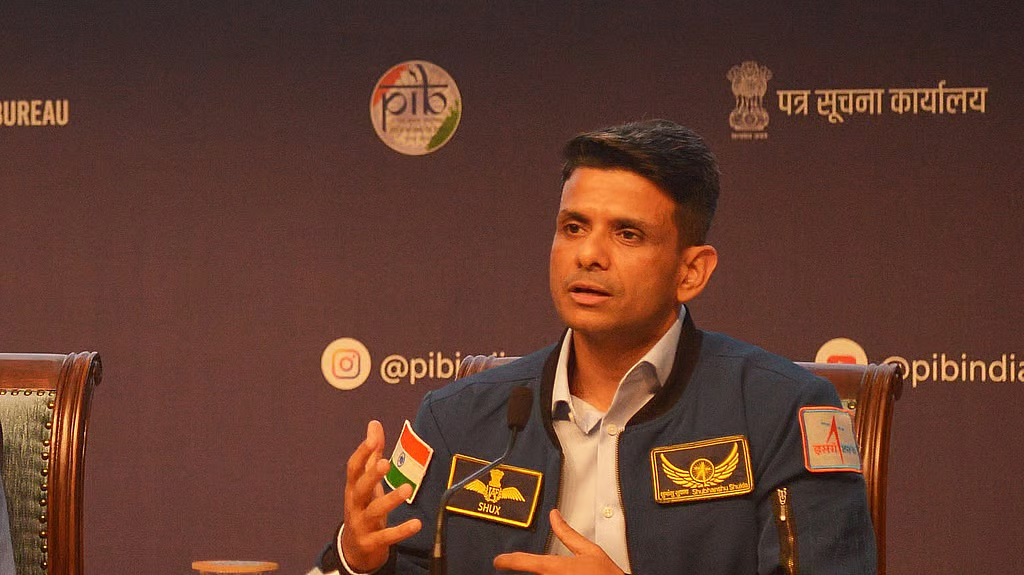
ಸಂದರ್ಭ: ರಾಷ್ಟ್ರಪತಿ ಬ್ರೌಪದಿ ಮುರ್ಮು ಅವರು ಗ್ರೂಪ್ ಕ್ಯಾಪ್ಟನ್, ಗಗನಯಾನಿ ಶುಭಾಂಶು ಶುಕ್ಲಾ ಅವರಿಗೆ ಅಶೋಕ ಚಕ್ರ’ ಪ್ರದಾನ ಮಾಡಿದರು. • ಅಂತರರಾಷ್ಟ್ರೀಯ ಬಾಹ್ಯಾಕಾಶ ನಿಲ್ದಾಣಕ್ಕೆ (ಐಎಸ್ಎಸ್) ಭೇಟಿ ನೀಡಿದ ಮೊದಲ ಭಾರತೀಯ ಎಂಬ ಹೆಗ್ಗಳಿಕೆಗೆ ಪಾತ್ರರಾಗುವ ಮೂಲಕ ಇತಿಹಾಸ ಸೃಷ್ಟಿಸಿದ ಶುಭಾಂತು ಶುಕ್ಲಾ ಅವರಿಗೆ ಕರ್ತವ್ಯ ಪಥದಲ್ಲಿ ನಡೆದ ಗಣರಾಜ್ಯೋತ್ಸವ ಕಾರ್ಯಕ್ರಮದಲ್ಲಿ ದೇಶದ ಅತ್ಯುನ್ನತ ಶಾಂತಿಕಾಲದ ಶೌರ್ಯ ಪ್ರಶಸ್ತಿ ನೀಡಿ ಗೌರವಿಸಿದರು.
👨🚀 ಶುಭಾಂಶು ಶುಕ್ಲಾ: ಸಾಧನೆಯ ವಿವರ ಪದವಿ: ಗ್ರೂಪ್ ಕ್ಯಾಪ್ಟನ್, ಭಾರತೀಯ ವಾಯುಪಡೆ
ಸಾಧನೆ: 2025ರಲ್ಲಿ Axiom-4 ಮಿಷನ್ ಮೂಲಕ ಅಂತರರಾಷ್ಟ್ರೀಯ ಬಾಹ್ಯಾಕಾಶ ನಿಲ್ದಾಣ (ISS) ಗೆ ಭೇಟಿ ನೀಡಿದ ಮೊದಲ ಭಾರತೀಯ.
ಅನುಭವ: 2,000+ ಗಂಟೆಗಳ ಹಾರಾಟ ಅನುಭವ; Su-30 MKI, MiG-21, Jaguar, Hawk ಮುಂತಾದ ವಿಮಾನಗಳಲ್ಲಿ ಸೇವೆ.
ಇತಿಹಾಸ: ರಾಕೇಶ್ ಶರ್ಮಾ ನಂತರ ಬಾಹ್ಯಾಕಾಶಕ್ಕೆ ಹೋದ ಎರಡನೇ ಭಾರತೀಯ, ಆದರೆ ISS ಗೆ ಹೋದ ಮೊದಲ ವ್ಯಕ್ತಿ.
🛰️ Axiom-4 ಮಿಷನ್ ಸಹಭಾಗಿತ್ವ: ISRO ಮತ್ತು Axiom Space
ಅವಧಿ: 18 ದಿನಗಳ ಬಾಹ್ಯಾಕಾಶ ಯಾನ
ಉದ್ದೇಶ: ವಿಜ್ಞಾನ, ತಂತ್ರಜ್ಞಾನ, ಮತ್ತು ಬಾಹ್ಯಾಕಾಶ ಸಂಶೋಧನೆಗೆ ಭಾರತೀಯ ಸೇನೆಯ ಕೊಡುಗೆ.
ಪ್ರಭಾವ: ಬಾಹ್ಯಾಕಾಶ ಕ್ಷೇತ್ರದಲ್ಲಿ ಭಾರತದ ತಂತ್ರಜ್ಞಾನ ಸಾಮರ್ಥ್ಯವನ್ನು ಜಾಗತಿಕ ಮಟ್ಟದಲ್ಲಿ ತೋರಿಸಿದ ಸಾಧನೆ.
ಅಶೋಕ ಚಕ್ರವು ಭಾರತದ ಶಾಂತಿಕಾಲದ ಅತ್ಯುನ್ನತ ಶೌರ್ಯ ಪ್ರಶಸ್ತಿ. 1952ರಲ್ಲಿ ಸ್ಥಾಪಿಸಲ್ಪಟ್ಟ ಈ ಪ್ರಶಸ್ತಿ, ಯುದ್ಧಭೂಮಿಯ ಹೊರಗೆ ತೋರಿದ ಅಸಾಧಾರಣ ಧೈರ್ಯ, ಶೌರ್ಯ ಅಥವಾ ತ್ಯಾಗಕ್ಕಾಗಿ ನೀಡಲಾಗುತ್ತದೆ. ಇದು ಯುದ್ಧಕಾಲದ ಪರಮ ವೀರ ಚಕ್ರಕ್ಕೆ ಸಮಾನಮಾನ. 2026ರವರೆಗೆ ಒಟ್ಟು 87 ಜನರಿಗೆ ಈ ಪ್ರಶಸ್ತಿ ನೀಡಲಾಗಿದೆ, ಅದರಲ್ಲಿ 68 ಜನರಿಗೆ ಮರಣೋತ್ತರವಾಗಿ ಪ್ರದಾನವಾಗಿದೆ. ಇತ್ತೀಚಿನ ಪ್ರಶಸ್ತಿ ವಿಜೇತರು ಭಾರತೀಯ ವಾಯುಪಡೆಯ ಗ್ರೂಪ್ ಕ್ಯಾಪ್ಟನ್ ಶುಭಾಂಶು ಶುಕ್ಲಾ, ಅವರು ಅಂತರರಾಷ್ಟ್ರೀಯ ಬಾಹ್ಯಾಕಾಶ ನಿಲ್ದಾಣಕ್ಕೆ (ISS) ಹೋದ ಮೊದಲ ಭಾರತೀಯರಾಗಿದ್ದಾರೆ.
ಅಶೋಕ ಚಕ್ರ: ಪ್ರಮುಖ ಮಾಹಿತಿ ಸ್ಥಾಪನೆ: 1952
ಪ್ರದಾನ ಮಾಡುವವರು: ಭಾರತದ ರಾಷ್ಟ್ರಪತಿ
ಪ್ರಕಾರ: ಶಾಂತಿಕಾಲದ ಶೌರ್ಯ ಪ್ರಶಸ್ತಿ
ಅರ್ಹತೆ: ಸೇನಾ ಸಿಬ್ಬಂದಿ, ಪೊಲೀಸ್, ಅರೆಸೇನಾ ಪಡೆ, ನಾಗರಿಕರು
ಪ್ರಶಸ್ತಿ ಚಿಹ್ನೆ: 24 ಅರೆಗಳ ಅಶೋಕ ಚಕ್ರದ ಚಿನ್ನದ ಪದಕ
ರಿಬ್ಬನ್: ಹಸಿರು ಬಣ್ಣ, ಮಧ್ಯದಲ್ಲಿ ಕೇಸರಿ ಪಟ್ಟೆ
ಪ್ರಾರಂಭಿಕ ಪ್ರಶಸ್ತಿ ವಿಜೇತರು (1952) ಹವೀಲ್ದಾರ್ ಬಚ್ಚಿತ್ತರ್ ಸಿಂಗ್ †
ನಾಯಕ್ ನರಬಹಾದೂರ್ ಠಾಪಾ
ಪ್ರಮುಖ ಪ್ರಶಸ್ತಿ ವಿಜೇತರು ಮೇಜರ್ ಸಾಂದೀಪ್ ಉಣ್ಣಿಕೃಷ್ಣನ್ (2009) – 26/11 ಮುಂಬೈ ದಾಳಿಯಲ್ಲಿ ಶೌರ್ಯ.
ಹವೀಲ್ದಾರ್ ಗಜೇಂದ್ರ ಸಿಂಗ್ (2009) – NSG ಕಮಾಂಡೋ, 26/11 ದಾಳಿಯಲ್ಲಿ ತ್ಯಾಗ.
ತುಕಾರಾಮ ಓಂಬಲೆ (2009) – ಮುಂಬೈ ಪೊಲೀಸ್, ಅಜ್ಮಲ್ ಕಸಬ್ ಬಂಧನದ ವೇಳೆ ತ್ಯಾಗ.
ಮೇಜರ್ ಮೊಹಿತ್ ಶರ್ಮಾ (2009) – ಕೌಂಟರ್-ಟೆರರ್ ಆಪರೇಷನ್.
ನೀರ್ಜಾ ಭನೋಟ್ (1987) – ಪ್ಯಾನ್-ಏಮ್ ವಿಮಾನ ಹೈಜಾಕ್ ಸಂದರ್ಭದಲ್ಲಿ ಪ್ರಯಾಣಿಕರ ಜೀವ ಉಳಿಸಿದ ಧೈರ್ಯ.
ಕರ್ಣಲ್ ಜೋಜನ್ ಥಾಮಸ್ (2009) – ಉಗ್ರರ ವಿರುದ್ಧ ಕಾರ್ಯಾಚರಣೆ.
ಮೇಜರ್ ಶಶಿಧರ್ (2015) – ಕಾಶ್ಮೀರದಲ್ಲಿ ಉಗ್ರರ ವಿರುದ್ಧ ಕಾರ್ಯಾಚರಣೆ.
ಗ್ರೂಪ್ ಕ್ಯಾಪ್ಟನ್ ಶುಭಾಂಶು ಶುಕ್ಲಾ (2026) – ISS ಬಾಹ್ಯಾಕಾಶ ಮಿಷನ್ ಸಾಧನೆ.
ಒಟ್ಟು ಪ್ರಶಸ್ತಿ ವಿವರ ಒಟ್ಟು ಪ್ರಶಸ್ತಿ ವಿಜೇತರು: 87
ಮರಣೋತ್ತರ ಪ್ರಶಸ್ತಿ: 68
ಇತ್ತೀಚಿನ ಪ್ರಶಸ್ತಿ: 2026 – ಗ್ರೂಪ್ ಕ್ಯಾಪ್ಟನ್ ಶುಭಾಂಶು ಶುಕ್ಲಾ
ಮಹತ್ವ ಅಶೋಕ ಚಕ್ರವು ಶಾಂತಿಕಾಲದ ಪರಮ ವೀರ ಚಕ್ರ.
ಇದು ಅತ್ಯುನ್ನತ ಧೈರ್ಯ ಮತ್ತು ತ್ಯಾಗದ ಸಂಕೇತ.
ಸೇನಾ ಸಿಬ್ಬಂದಿ ಮಾತ್ರವಲ್ಲದೆ ಪೊಲೀಸ್ ಮತ್ತು ನಾಗರಿಕರು ಕೂಡ ಈ ಪ್ರಶಸ್ತಿಗೆ ಅರ್ಹರಾಗುತ್ತಾರೆ.
ಅಶೋಕ ಚಕ್ರ ಪ್ರಶಸ್ತಿ ವಿಜೇತರ ಸಂಪೂರ್ಣ ಪಟ್ಟಿ (1952 – 2026)
ಕ್ರ.ಸಂ
ವರ್ಷ
ಪುರಸ್ಕೃತರು
ಸೇವೆ / ರಾಜ್ಯ
1
1952
ಹವಿಲ್ದಾರ್ ಬಚಿತ್ತರ್ ಸಿಂಗ್ †
ಭೂಸೇನೆ (ಪಂಜಾಬ್)
2
1952
ನಾಯಕ್ ನರಬಹಾದ್ದೂರ್ ಥಾಪ †
ಭೂಸೇನೆ (ಹಿಮಾಚಲ ಪ್ರದೇಶ)
3
1953
ಫ್ಲೈಟ್ ಲೆಫ್ಟಿನೆಂಟ್ ಸುಹಾಸ್ ಬಿಸ್ವಾಸ್
ವಾಯುಪಡೆ (ಪಶ್ಚಿಮ ಬಂಗಾಳ)
4
1955
ಡಿ.ಕೆ. ಜಾತರ್ †
ಸಿವಿಲಿಯನ್ (ಏರ್ ಇಂಡಿಯಾ ಪೈಲಟ್)
5
1956
ಲ್ಯಾನ್ಸ್ ನಾಯಕ್ ಸುಂದರ್ ಸಿಂಗ್
ಭೂಸೇನೆ (ಜಮ್ಮು ಮತ್ತು ಕಾಶ್ಮೀರ)
6
1957
ಲೆಫ್ಟಿನೆಂಟ್ ಕರ್ನಲ್ ಜೆ.ಆರ್. ಚಿತ್ರೀಸ್ †
ಭೂಸೇನೆ (ಮಹಾರಾಷ್ಟ್ರ)
7
1957
ಹವಿಲ್ದಾರ್ ಜೋಗಿಂದರ್ ಸಿಂಗ್ †
ಭೂಸೇನೆ (ಹರಿಯಾಣ)
8
1957
ಸೆಕೆಂಡ್ ಲೆಫ್ಟಿನೆಂಟ್ ಪಿ.ಎಂ. ರಾಮನ್ †
ಭೂಸೇನೆ (ತಮಿಳುನಾಡು)
9
1958
ಕ್ಯಾಪ್ಟನ್ ಎರಿಕ್ ಜೇಮ್ಸ್ ಟಕ್ಕರ್ †
ಭೂಸೇನೆ (ಮಹಾರಾಷ್ಟ್ರ)
10
1962
ಸುಬೇದಾರ್ ಮೇಜರ್ ಖಡ್ಗ ಬಹದ್ದೂರ್ ಲಿಂಬು †
ಭೂಸೇನೆ (ನಾಗಾಲ್ಯಾಂಡ್)
11
1962
ಕ್ಯಾಪ್ಟನ್ ಮನ್ ಬಹದ್ದೂರ್ ರಾಯ್
ಭೂಸೇನೆ
12
1965
ಚಮನ್ ಲಾಲ್ †
ಸಿವಿಲಿಯನ್ (ಅಗ್ನಿಶಾಮಕ ದಳ)
13
1965
ಲಜ್ಜಾ ರಾಮ್ †
ಸಿವಿಲಿಯನ್
14
1965
ಪುರುಷೋತ್ತಮ್ †
ಸಿವಿಲಿಯನ್
15
1965
ತೇಜ್ ಸಿಂಗ್ †
ಸಿವಿಲಿಯನ್
16
1967
ಶಂಕರ್ ಲಾಲ್ ಶ್ರೀವಾಸ್ತವ †
ಪೊಲೀಸ್ (ಮಧ್ಯಪ್ರದೇಶ)
17
1968
ಧನ್ಪತ್ ಸಿಂಗ್
ಸಿವಿಲಿಯನ್
18
1968
ಗೋವಿಂದ್ ಸಿಂಗ್
ಸಿವಿಲಿಯನ್
19
1968
ಹುಕುಮ್ ಸಿಂಗ್
ಸಿವಿಲಿಯನ್
20
1968
ಲಖನ್ ಸಿಂಗ್
ಸಿವಿಲಿಯನ್
21
1968
ತಖತ್ ಸಿಂಗ್ †
ಸಿವಿಲಿಯನ್
22
1969
ಕ್ಯಾಪ್ಟನ್ ಜಸ್ ರಾಮ್ ಸಿಂಗ್
ಭೂಸೇನೆ (ಉತ್ತರ ಪ್ರದೇಶ)
23
1971
ಬೈಜನಾಥ್ ಸಿಂಗ್ †
ಸಿವಿಲಿಯನ್
24
1972
ಭೂರೆ ಲಾಲ್
ಪೊಲೀಸ್ (ಮಧ್ಯಪ್ರದೇಶ)
25
1972
ಕ್ಯಾಪ್ಟನ್ ಉಮ್ಮದ್ ಸಿಂಗ್ ಮಹ್ರಾ †
ಭೂಸೇನೆ (ಉತ್ತರಾಖಂಡ)
26
1974
ನೈಬ್ ಸುಬೇದಾರ್ ಗುರ್ನಾಮ್ ಸಿಂಗ್ †
ಭೂಸೇನೆ (ಪಂಜಾಬ್)
27
1974
ಮುನ್ನಿ ಲಾಲ್ †
ಸಿವಿಲಿಯನ್
28
1981
ಸೆಕೆಂಡ್ ಲೆಫ್ಟಿನೆಂಟ್ ಸಿ.ಎ. ಪಿತವಾಲಾ
ಭೂಸೇನೆ (ಗುಜರಾತ್)
29
1984
ಯೂರಿ ಮಾಲಿಶೇವ್
ಗಗನಯಾತ್ರಿ (ರಷ್ಯಾ/USSR)
30
1984
ಗೆನ್ನಡಿ ಸ್ಟ್ರೆಕಾಲೋವ್
ಗಗನಯಾತ್ರಿ (ರಷ್ಯಾ/USSR)
31
1985
ನಾಯಕ್ ಭವಾನಿ ದತ್ ಜೋಷಿ †
ಭೂಸೇನೆ (ಉತ್ತರಾಖಂಡ)
32
1985
ಮೇಜರ್ ಭೂಕಾಂತ್ ಮಿಶ್ರಾ †
ಭೂಸೇನೆ (ಉತ್ತರ ಪ್ರದೇಶ)
33
1985
ಲ್ಯಾನ್ಸ್ ಹವಿಲ್ದಾರ್ ಛೇರಿಂಗ್ ಮುಟುಪ್
ಭೂಸೇನೆ (ಲಡಾಖ್)
34
1985
ಕ್ಯಾಪ್ಟನ್ ಜಸ್ಬೀರ್ ಸಿಂಗ್ ರೈನಾ
ಭೂಸೇನೆ (ಜಮ್ಮು ಮತ್ತು ಕಾಶ್ಮೀರ)
35
1985
ನಾಯಕ್ ನಿರ್ಭಯ್ ಸಿಂಗ್ ಸಿಸೋಡಿಯಾ †
ಭೂಸೇನೆ (ಹರಿಯಾಣ)
36
1985
ವಿಂಗ್ ಕಮಾಂಡರ್ ರಾಕೇಶ್ ಶರ್ಮಾ
ವಾಯುಪಡೆ (ಮೊದಲ ಭಾರತೀಯ ಗಗನಯಾತ್ರಿ)
37
1985
ಲೆಫ್ಟಿನೆಂಟ್ ರಾಮ್ ಪ್ರಕಾಶ್ ರೂಪೇರಿಯಾ †
ಭೂಸೇನೆ (ಹರಿಯಾಣ)
38
1986
ವಿಜಯ್ ಜಗೀರ್ದಾರ್ †
ಸಿವಿಲಿಯನ್
39
1987
ನೀರ್ಜಾ ಭಾನೋಟ್ †
ಸಿವಿಲಿಯನ್ (ವಿಮಾನ ಸಿಬ್ಬಂದಿ – ಚಂಡೀಗಢ)
40
1991
ರಣಧೀರ್ ಪ್ರಸಾದ್ ವರ್ಮ †
ಪೊಲೀಸ್ (ಬಿಹಾರ – IPS)
41
1992
ಮೇಜರ್ ಸಂದೀಪ್ ಸಂಖ್ಲಾ †
ಭೂಸೇನೆ (ಹಿಮಾಚಲ ಪ್ರದೇಶ)
42
1993
ಸೆಕೆಂಡ್ ಲೆಫ್ಟಿನೆಂಟ್ ರಾಕೇಶ್ ಸಿಂಗ್ ಮಲ್ಹಾನ್ †
ಭೂಸೇನೆ (ಹರಿಯಾಣ)
43
1994
ಕರ್ನಲ್ ಎನ್. ಜೆ. ನಾಯರ್ †
ಭೂಸೇನೆ (ಕೇರಳ)
44
1995
ಲೆಫ್ಟಿನೆಂಟ್ ಕರ್ನಲ್ ಎಚ್. ಯು. ಸಿಂಗ್ ಗೌರ್ †
ಭೂಸೇನೆ (ಉತ್ತರ ಪ್ರದೇಶ)
45
1995
ಮೇಜರ್ ರಾಜೀವ್ ಕುಮಾರ್ ಜೂನ್ †
ಭೂಸೇನೆ (ಹರಿಯಾಣ)
46
1995
ಸುಬೇದಾರ್ ಸುಜ್ಜನ್ ಸಿಂಗ್ ಯಾದವ್ †
ಭೂಸೇನೆ (ಹರಿಯಾಣ)
47
1996
ಕ್ಯಾಪ್ಟನ್ ಅರುಣ್ ಸಿಂಗ್ ಜಸ್ರೋಟಿಯಾ †
ಭೂಸೇನೆ (ಜಮ್ಮು ಮತ್ತು ಕಾಶ್ಮೀರ)
48
1997
ಸೆಕೆಂಡ್ ಲೆಫ್ಟಿನೆಂಟ್ ಪುನೀತ್ ನಾಥ್ ದತ್ †
ಭೂಸೇನೆ (ದೆಹಲಿ)
49
1997
ಲೆಫ್ಟಿನೆಂಟ್ ಕರ್ನಲ್ ಶಾಂತಿ ಸ್ವರೂಪ್ ರಾಣಾ †
ಭೂಸೇನೆ (ಹಿಮಾಚಲ ಪ್ರದೇಶ)
50
2000
ಮೇಜರ್ ಸುಧೀರ್ ಕುಮಾರ್ ವಾಲಿಯಾ †
ಭೂಸೇನೆ (ಹಿಮಾಚಲ ಪ್ರದೇಶ)
51
2001
ಜಗದೀಶ್ ಪ್ರಸಾದ್ ಯಾದವ್ †
ಸಿವಿಲಿಯನ್ (ಸಂಸತ್ ಭವನ ದಾಳಿ)
52
2001
ಮಾತ್ಬರ್ ಸಿಂಗ್ ನೇಗಿ †
ಸಿವಿಲಿಯನ್ (ಸಂಸತ್ ಭವನ ದಾಳಿ)
53
2001
ಕಮಲೇಶ್ ಕುಮಾರಿ ಯಾದವ್ †
ಪೊಲೀಸ್ (CRPF – ಸಂಸತ್ ಭವನ ದಾಳಿ)
54
2002
ಸುಬೇದಾರ್ ಸುರಿಂದರ್ ಸಿಂಗ್ †
ಭೂಸೇನೆ (ಪಂಜಾಬ್)
55
2002
ನಾಯಕ್ ರಂಬೀರ್ ಸಿಂಗ್ ತೋಮರ್ †
ಭೂಸೇನೆ (ಮಧ್ಯಪ್ರದೇಶ)
56
2003
ಸುಬೇದಾರ್ ಮೇಜರ್ ಸುರೇಶ್ ಚಂದ್ ಯಾದವ್ †
ಭೂಸೇನೆ (NSG – ಅಕ್ಷರಧಾಮ ದಾಳಿ)
57
2004
ಪ್ಯಾರಾಟ್ರೂಪರ್ ಸಂಜೋಗ್ ಛತ್ರಿ †
ಭೂಸೇನೆ (ಸಿಕ್ಕಿಂ)
58
2004
ಲೆಫ್ಟಿನೆಂಟ್ ತ್ರಿವೇಣಿ ಸಿಂಗ್ †
ಭೂಸೇನೆ (ಜಮ್ಮು ಮತ್ತು ಕಾಶ್ಮೀರ)
59
2007
ನೈಬ್ ಸುಬೇದಾರ್ ಚುನ್ನಿ ಲಾಲ್ †
ಭೂಸೇನೆ (ಜಮ್ಮು ಮತ್ತು ಕಾಶ್ಮೀರ)
60
2007
ಕ್ಯಾಪ್ಟನ್ ಆರ್. ಎನ್. ಹರ್ಷನ್ †
ಭೂಸೇನೆ (ಕೇರಳ)
61
2007
ಕರ್ನಲ್ ವಸಂತ್ ವೇಣುಗೋಪಾಲ್ †
ಭೂಸೇನೆ (ಕರ್ನಾಟಕ)
62
2008
ಮೇಜರ್ ದಿನೇಶ್ ರಘು ರಾಮನ್ †
ಭೂಸೇನೆ (ಹರಿಯಾಣ)
63
2009
ಅಶೋಕ್ ಕಾಮ್ಟೆ †
ಪೊಲೀಸ್ (ಮಹಾರಾಷ್ಟ್ರ – 26/11)
64
2009
ಹವಿಲ್ದಾರ್ ಬಹದ್ದೂರ್ ಸಿಂಗ್ ಬೋಹ್ರಾ †
ಭೂಸೇನೆ (ಉತ್ತರಾಖಂಡ)
65
2009
ಹವಿಲ್ದಾರ್ ಗಜೇಂದ್ರ ಸಿಂಗ್ ಬಿಸ್ತ್ †
ಭೂಸೇನೆ (NSG – 26/11)
66
2009
ಹೇಮಂತ್ ಕರ್ಕರೆ †
ಪೊಲೀಸ್ (ಮಹಾರಾಷ್ಟ್ರ – 26/11)
67
2009
ಕರ್ನಲ್ ಜೋಜಾನ್ ಥಾಮಸ್ †
ಭೂಸೇನೆ (ಕೇರಳ)
68
2009
ಇನ್ಸ್ಪೆಕ್ಟರ್ ಮೋಹನ್ ಚಂದ್ ಶರ್ಮಾ †
ಪೊಲೀಸ್ (ದೆಹಲಿ – ಬಾಟ್ಲಾ ಹೌಸ್)
69
2009
ಪ್ರಮೋದ್ ಕುಮಾರ್ ಶತಪತಿ †
ಪೊಲೀಸ್ (ಒಡಿಶಾ)
70
2009
ಆರ್. ಪಿ. ಡೈನೆಗೊದ್ †
ಪೊಲೀಸ್ (ಮೇಘಾಲಯ)
71
2009
ಮೇಜರ್ ಸಂದೀಪ್ ಉನ್ನಿಕೃಷ್ಣನ್ †
ಭೂಸೇನೆ (NSG – 26/11)
72
2009
ತುಕಾರಾಂ ಓಂಬ್ಳೆ †
ಪೊಲೀಸ್ (ಮಹಾರಾಷ್ಟ್ರ – 26/11)
73
2009
ವಿಜಯ್ ಸಾಲಸ್ಕರ್ †
ಪೊಲೀಸ್ (ಮಹಾರಾಷ್ಟ್ರ – 26/11)
74
2010
ಮೇಜರ್ ಡಿ. ಶ್ರೀರಾಮ್ ಕುಮಾರ್
ಭೂಸೇನೆ (ತಮಿಳುನಾಡು)
75
2010
ಮೇಜರ್ ಮೋಹಿತ್ ಶರ್ಮಾ †
ಭೂಸೇನೆ (ಹರಿಯಾಣ)
76
2010
ಹವಿಲ್ದಾರ್ ರಾಜೇಶ್ ಕುಮಾರ್ †
ಭೂಸೇನೆ (ಹರಿಯಾಣ)
77
2011
ಮೇಜರ್ ಲೈಶ್ರಾಮ್ ಜ್ಯೋತಿನ್ ಸಿಂಗ್ †
ಭೂಸೇನೆ (ಮಣಿಪುರ)
78
2012
ಲೆಫ್ಟಿನೆಂಟ್ ನವದೀಪ್ ಸಿಂಗ್ †
ಭೂಸೇನೆ (ಪಂಜಾಬ್)
79
2014
ಕೆ. ಪ್ರಸಾದ್ ಬಾಬು †
ಪೊಲೀಸ್ (ಆಂಧ್ರಪ್ರದೇಶ – ಗ್ರೇಹೌಂಡ್ಸ್)
80
2014
ಮೇಜರ್ ಮುಕುಂದ್ ವರದರಾಜನ್ †
ಭೂಸೇನೆ (ತಮಿಳುನಾಡು)
81
2014
ನಾಯಕ್ ನೀರಜ್ ಕುಮಾರ್ ಸಿಂಗ್ †
ಭೂಸೇನೆ (ಉತ್ತರ ಪ್ರದೇಶ)
82
2016
ಹವಿಲ್ದಾರ್ ಹಂಗ್ಪನ್ ದಾದಾ †
ಭೂಸೇನೆ (ಅರುಣಾಚಲ ಪ್ರದೇಶ)
83
2017
ಲಫ್ಟಿನೆಂಟ್ ಕರ್ನಲ್ ಮೋಹನ್ ನಾಥ್ ಗೋಸಾಮಿ †
ಭೂಸೇನೆ (ಉತ್ತರಾಖಂಡ)
84
2018
ಜ್ಯೋತಿ ಪ್ರಕಾಶ್ ನಿರಾಲ †
ವಾಯುಪಡೆ (ಗರುಡ್ ಕಮಾಂಡೋ – ಬಿಹಾರ)
85
2019
ಲ್ಯಾನ್ಸ್ ನಾಯಕ್ ನಜೀರ್ ಅಹ್ಮದ್ ವಾನಿ †
ಭೂಸೇನೆ (ಜಮ್ಮು ಮತ್ತು ಕಾಶ್ಮೀರ)
86
2021
ಎಎಸ್ಐ ಬಾಬು ರಾಮ್ †
ಪೊಲೀಸ್ (ಜಮ್ಮು ಮತ್ತು ಕಾಶ್ಮೀರ)
87
2026
ಗ್ರೂಪ್ ಕ್ಯಾಪ್ಟನ್ ಶುಭಾಂಶು ಶುಕ್ಲಾ
ವಾಯುಪಡೆ (ಉತ್ತರ ಪ್ರದೇಶ – ISS ಮಿಷನ್)
ಗಮನಿಸಿ: † ಗುರುತು ಮರಣೋತ್ತರ (Posthumous) ಪ್ರಶಸ್ತಿಯನ್ನು ಸೂಚಿಸುತ್ತದೆ.
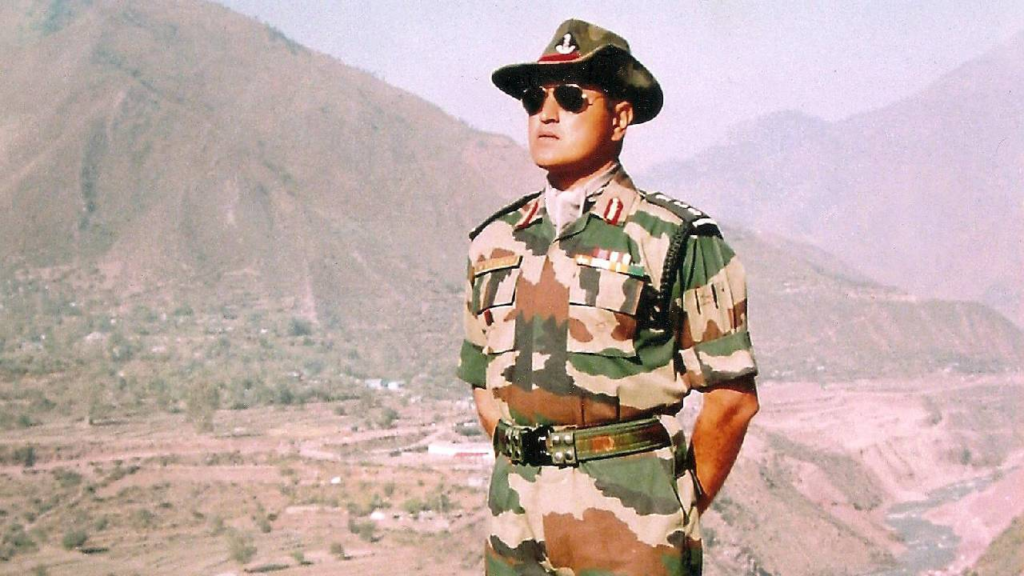
ಕರ್ನಾಟಕದ ಹೆಮ್ಮೆಯ ವೀರಪುತ್ರ ಕರ್ನಲ್ ವಸಂತ್ ವೇಣುಗೋಪಾಲ್
ರುಕ್ಮಿಣಿ ವಸಂತ್ ಅವರ ತಂದೆ ಕರ್ನಲ್ ವಸಂತ್ ವೇಣುಗೋಪಾಲ್
ಕರ್ನಲ್ ವಸಂತ್ ವೇಣುಗೋಪಾಲ್ ಅವರು ಶಾಂತಿಕಾಲದ ಅತ್ಯುನ್ನತ ಶೌರ್ಯ ಪ್ರಶಸ್ತಿಯಾದ ‘ಅಶೋಕ ಚಕ್ರ’ ಪಡೆದ ಮೊದಲ ಕನ್ನಡಿಗ.ರುಕ್ಮಿಣಿ ವಸಂತ್ ಅವರ ತಂದೆ ಕರ್ನಲ್ ವಸಂತ್ ವೇಣುಗೋಪಾಲ್
ವೀರಗಾಥೆಯ ಮುಖ್ಯಾಂಶಗಳು:
ಜನನ: 25 ಮಾರ್ಚ್ 1967, ಬೆಂಗಳೂರು (ಮೂಲತಃ ಬೆಳಗಾವಿ ಜಿಲ್ಲೆಯವರು).
ತುಕಡಿ: 9ನೇ ಬೆಟಾಲಿಯನ್, ಮರಾಠ ಲೈಟ್ ಇನ್ಫೆಂಟ್ರಿ (9 MARATHA LI).
ವೀರ ಮರಣ: 31 ಜುಲೈ 2007.
ಶೌರ್ಯದ ಹಿನ್ನೆಲೆ:
2007ರಲ್ಲಿ ಜಮ್ಮು ಮತ್ತು ಕಾಶ್ಮೀರದ ಉರಿ (Uri) ಸೆಕ್ಟರ್ನಲ್ಲಿ ಭಯೋತ್ಪಾದಕರು ಗಡಿ ನುಸುಳಲು ಪ್ರಯತ್ನಿಸುತ್ತಿದ್ದಾಗ, ಕರ್ನಲ್ ವಸಂತ್ ಅವರು ತಮ್ಮ ತಂಡವನ್ನು ಮುನ್ನಡೆಸಿದರು. ಶತ್ರುಗಳ ಗುಂಡಿನ ದಾಳಿಗೆ ಎದೆಯೊಡ್ಡಿ ಹೋರಾಡಿದ ಅವರು, ತೀವ್ರವಾಗಿ ಗಾಯಗೊಂಡಿದ್ದರೂ ಸಹ ಎದೆಗುಂದದೆ ಎಂಟು ಮಂದಿ ಉಗ್ರರನ್ನು ಹೊಡೆದುರುಳಿಸುವಲ್ಲಿ ಪ್ರಮುಖ ಪಾತ್ರ ವಹಿಸಿದರು. ದೇಶಕ್ಕಾಗಿ ಹೋರಾಡುತ್ತಾ ರಣರಂಗದಲ್ಲೇ ವೀರಮರಣವನ್ನಪ್ಪಿದರು.
ಪ್ರಮುಖ ಸಾಧನೆಗಳು:
ಅವರ ಅಪ್ರತಿಮ ಧೈರ್ಯ ಮತ್ತು ನಾಯಕತ್ವಕ್ಕಾಗಿ ಭಾರತ ಸರ್ಕಾರವು 2007ರಲ್ಲಿ (ಮರಣೋತ್ತರವಾಗಿ) ಅಶೋಕ ಚಕ್ರ ನೀಡಿ ಗೌರವಿಸಿತು.
ಅವರ ಪತ್ನಿ ಸುಭಾಷಿಣಿ ವಸಂತ್ ಅವರು ದೇಶಕ್ಕಾಗಿ ಪ್ರಾಣತ್ಯಾಗ ಮಾಡಿದ ವೀರ ಯೋಧರ ಕುಟುಂಬಗಳಿಗೆ ನೆರವಾಗಲು ‘ವಸಂತ ರತ್ನ ಫೌಂಡೇಶನ್’ ಎಂಬ ಸಂಸ್ಥೆಯನ್ನು ನಡೆಸುತ್ತಿದ್ದಾರೆ.
“ನಾನು ಅಸುನೀಗಿದರೆ ಚಿಂತಿಸಬೇಡಿ, ನಾನು ದೇಶಕ್ಕಾಗಿ ಪ್ರಾಣ ನೀಡುತ್ತಿರುವುದಕ್ಕೆ ಹೆಮ್ಮೆ ಪಡಿ” ಎಂಬುದು ಅವರು ತಮ್ಮ ಕುಟುಂಬಕ್ಕೆ ಬರೆದ ಪತ್ರದ ಸಾಲುಗಳಾಗಿದ್ದವು.