Fri. Feb 6th, 2026

2025

Current Affairs: 16th & 17th October 2025

  • Trade deficit widens 93% in Sept. as services slump

Context:  month. However, the data shows that for the first half of the financial year — April to September 2025, the trade deficit shrank by 2.3%.

  • Data released by the Ministry of Commerce and Industry on Wednesday showed that India’s total exports stood at $67.2 billion in September 2025, up 0.8% over September 2024.
  • Total imports, on the other hand, grew 11.3% to $83.8 billion over the same period.
  • As a result, the trade deficit in September nearly doubled to $16.6 billion, compared to $8.6 billion in September 2024.

Goods exports grow

  • Notably, the relatively poor performance of the export sector was due to lower exports of services and not goods. India’s goods exports grew 6.7% to $36.4 billion in September 2025 despite that being the first full month of 50% tariffs imposed by the U.S. on imports from India.
  • Services, which have so far bolstered India’s export performance, saw exports shrinking 5.5% in September 2025 to $30.8 billion.
  • However, while the data shows that India’s exports to the U.S. are indeed 13.4% higher in the cumulative April-September 2025 period than in the same period last year, they have been declining steadily over the last few months. That is, where India’s exports to the U.S. stood at $8.8 billion in May 2025, they were valued at $5.5 billion in September 2025.
  • “It is heartening to know that in this turbulence, our merchandise exports have kept up,” Commerce Secretary Rajesh Agrawal said in a press briefing. “That means our industry has been resilient and they have been able to withstand the turbulence by retaining their supply chains and business. They might be taking on some of the costs on themselves,” Mr. Agrawal added.
  • He also sought to downplay the increase in the trade deficit in September, saying that international trade does not always follow the same pattern from year to year.
  • “On a cumulative basis, we are still doing better than last year,” Mr. Agrawal said. “That means the part of the exports that are not facing tariffs are growing well, but also the part of the exports that do face the tariffs are also growing. The exports have not come down.”
  • Looking at the first half of the financial year, the data shows that total exports grew 4.45% in the April-September 2025 period to $413.3 billion. Total imports grew at a relatively slower 3.55% to $472.8 billion over the same period. As a result, the trade deficit during the first half of the financial year shrank by 2.3%.
  • Night light data from 2013 and 2023 reveals limited urban growth in Bihar

Context: A comparison of night light data from 2013 and 2023 shows that most Assembly constituencies in Bihar continue to remain predominantly rural. Only a few constituencies have shown significant growth in nighttime luminosity, primarily in Patna, which was already among the more urbanised parts of the State.

  • Nighttime illumination can serve as a useful proxy for gauging human activity and electricity usage in an area. A higher concentration of night lights often reflects not just street or vehicular lighting, but also ongoing economic activities such as construction or roadwork. Together, these patterns of brightness offer a visual measure of urban growth and development.
  • This method is used to classify constituencies in a State as rural, semi-rural, semi-urban, or urban. This approach is adopted due to the absence of up-to-date official data on the subject, and as administrative boundaries vary from political boundaries.
  • Delhi HC seeks responseon vacancies in National Commission for Minorities

Context: The Delhi High Court on Wednesday sought a response from the Union government on long-pending vacancies in the National Commission for Minorities (NCM).

  • A Division Bench of Chief Justice Devendra Kumar Upadhyaya and Justice Tushar Rao Gedela, while hearing a PIL plea filed by Mujahid Nafees, who claimed to be the convener of the Minority Coordination Committee working on the welfare of minorities across India, pointed out that the commission cannot remain headless for so long.
  • Granting time to the Central government’s counsel to obtain instructions in the matter, the court said the petition was raising a very important issue.
  • “Do not wait for the next date of hearing. Please ensure that things start moving,” the court said. The petition stated that the posts of chairperson, vice-chairperson and members of the NCM have been vacant since April, the month Iqbal Singh Lalpura completed his term as chairman.
  • The National Commission for Minorities which works under the Ministry of Minority Affairs and has quasi-judicial powers, should have seven members, including the Chairperson, and the Vice-Chairperson.
  • The National Commission of Minorities Act, 1992 mandates the appointment of one member from each of the six minority communities — Muslim, Christian, Sikh, Buddhist, Parsi, and Jain.
  • “There is a complete and systematic incapacitation of the National Commission for Minorities due to the Centre’s failure to appoint its head and members ,” the plea states.
  • The petition added that the government’s inaction is further aggravated by the fact that it is in direct contravention of the spirit and letter of a prior order from the High Court where it had expressed its dissatisfaction with such delays.
  • China files WTO complaint on India’s EV, battery subsidies

Context: China has filed a complaint against India in the World Trade Organization (WTO) over New Delhi’s subsidies for electric vehicles (EVs) and batteries.

  • Commerce Secretary said that the Ministry will look into the detailed submissions made by China.

Similar applications

  • Confirming the move, an official said that China had also filed similar applications against Turkiye, Canada and the EU.n“They have sought consultations with India,” the official said.
  • Seeking consultation is the first step of the dispute settlement process as per WTO rules.
  • If the consultations requested with India do not result in a satisfactory solution, the EU can request the WTO set up a panel in the case to rule on the issue raised.
  • China is the second-largest trading partner of India. In the last fiscal, India’s exports to China contracted 14.5% to $14.25 billion against $16.66 billion in 2023-24.
  • The imports, however, rose by 11.52% in 2024-25 to $113.45 billion against $101.73 billion in 2023-24.
  • India’s trade deficit with China had widened to $99.2 billion during the year 2024-25.
  • Russia backs AMCA, offers to make Su-57 jets in India

Context: Russia reaffirmed its commitment to deepen defence cooperation with India with its Ambassador Denis Alipov expressing his country’s readiness to support India’s Advanced Medium Combat Aircraft (AMCA) programme through “local production” of the Su-57 fifth-generation fighter jet.

  • The move underscores the long-standing strategic partnership between the two nations, which has evolved far beyond a traditional buyer-seller relationship into one of joint development, co-production, and full technology sharing. He also said that both sides are exploring collaborations in next-generation technologies.
  • The announcement comes amid growing speculation about the future of the India-Russia oil trade, following U.S. President Donald Trump’s claim that India would soon halt such purchases.
  • However, the Ambassador said that “Russian energy remains the most cost-effective option on the global market”.
  • On the defence ties with India, he said: “For over six decades, Russia has been a trusted defence partner and a key contributor to India’s military modernisation, with nearly 70% of India’s defence equipment of Russian origin, and a testament to its effectiveness has (been) demonstrated by Operation Sindoor. The partnership has produced several landmark achievements, most notably the joint production of the BrahMos supersonic cruise missile, which is now being upgraded to a hypersonic version.”
  • Mr. Alipov said that both sides are exploring collaborations in next-generation technologies, including anti-drone systems, advanced radar solutions, and precision strike capabilities.
  • Trump and MEA at odds over Russian oil imports

Context: Trump claims Modi gave commitment to stop buying oil from Russia ‘soon’; Ministry denies the leaders discussed the issue, but says govt. is ‘broad-basing’ and ‘diversifying’ its energy sources.  

  • India and the United States continued to differ publicly over Russian oil as U.S. President Donald Trump said he had been assured by Prime Minister Narendra Modi that India will stop buying oil from Russia, while the Ministry of External Affairs maintained the two leaders had not spoken about the issue.
  • However, the MEA said that India was “broad-basing” and “diversifying” its sources of energy according to market needs, and did not specifically deny the claim that it was reducing its intake.

Bone of contention

  • The subject of Russian oil, which has led to the U.S. imposing penalty tariffs on India, is also believed to be holding up trade talks between the two countries. While the government has consistently denied it would bow to pressure, data analysed by The Hindu showed that oil public sector undertakings have dropped their Russian imports by as much as 45% between June and September this year, even though Russia remains India’s biggest supplier overall.
  • “I am not aware of any conversation yesterday between the two leaders,” MEA spokesperson Randhir Jaiswal told reporters here on Thursday, also clarifying that a call between Mr. Modi and Mr. Trump last Thursday had only dealt with the Gaza peace plan and India-U.S. trade issues.
  • Mr. Trump had said he was confident that India would end its oil imports “soon” but not “immediately”.
  • Farmers of rain-fed areas to get input subsidy of 17,000 per ha

Context: As farmers incurred crop loss on 12.82 lakh hectares on account of excess rainfall during the south-west monsoon in the State, the Karnataka Cabinet has fixed the input subsidy to farmers of rain-fed area crops at 17,000 per hectare, 25,500 per hectare for crops in irrigated land, and 31,000 per hectare for perennial crops.

  • The input subsidy would be given for a maximum of up to two hectares. The input subsidy fixed by the government was higher than the amount fixed under NDRF norms.
  • A sum of ₹1,090 crore would be additional burden to the government, Minister for Law and Parliamentary Affairs Minister after a Cabinet meeting.
  • He said the Cabinet cancelled the necessity of securing occupancy certificates (OC) by owners of residential houses constructed on 1,200 sqft in municipalities. However, the owners must construct houses as per the plan approved by the authorities.

Cricket stadium

  • It has cleared a ₹2,350 crore for construction of a cricket stadium at Suryanagara of Anekal taluk of Bengaluru Rural district. However, the final clearance would be given after obtaining detailed project report, he said. The stadium would be developed on 75 acres.
  • A sum of ₹54.92 crore was approved for purchase of necessary equipment for commencement of a super-speciality 100-bed hospital in Vijayapura. It also approved ₹100 crore each for developing NIMHANS-like hospitals in Kalaburagi and Mysuru medical colleges.
  • The Cabinet approved ₹650 crore for treating sewage in Vrishabhavati River Valley and treated water would be used for filling tanks in Bengaluru Urban and Rural and Chickballapur districts.
  • The Cabinet decided to cancel the necessity of passing the Kannada language test by probationary officers after the recruitment. Since candidates have to pass a 150-mark Kannada language test during the recruitment, it was decided to scrap the test after the recruitment.
  • FSSAI says only WHO-approved products can be labelled as ORS

Context: A Hyderabad-based paediatrician’s long-standing fight against sugar-rich beverages falsely marketed as oral rehydration solutions (ORS) has resulted in a major regulatory change. The Food Safety and Standards Authority of India (FSSAI) has issued an order stating that no food brand may use the term ‘Oral Rehydration Salts’ or ‘ORS’ on its products unless the formulation adheres strictly to the standards recommended by the World Health Organisation.

  • The directive, issued mandates the immediate withdrawal of all previous permissions granted to food business operators for using ‘ORS’ in conjunction with their brand names.
  • Specifically, it rescinds two earlier orders, dated July 14, 2022, and February 2, 2024, that had allowed the use of ‘ORS’ as part of a trademark with a prefix or suffix, provided the label included a disclaimer stating, “The product is not an ORS formula as recommended by WHO.”
  • FSSAI issued a detailed clarification reaffirming that the use of ‘ORS’ in any food product’s name, whether fruit-based, non-carbonated, or ready-to-drink, violates the Food Safety and Standards Act, 2006, and related regulations. The regulator stated that such labelling ‘misleads consumers by way of false, deceptive, ambiguous, and erroneous names or label declarations,’ and therefore contravenes multiple provisions under the Act.
  • This regulatory intervention stems from a persistent legal campaign by paediatrician Sivaranjani Santosh, who began questioning deceptive marketing practices nearly a decade ago.
  • ‘Studying space weather mustbe a major activity for humans’

Context: The PUNCH Space Mission, launched by the National Aeronautics and Space Administration (NASA) earlier this year to observe the ‘young solar wind,’ is “making the invisible, visible,” Craig Edward DeForest, Principal Investigator of the mission, has said.

  • “We are making the solar wind visible,” Dr. DeForest said on Wednesday evening, while giving a public lecture on ‘Imaging Almost Nothing At All…With the PUNCH Space Mission of NASA’ in Thiruvananthapuram. The lecture was jointly organised by the Indian Institute of Space Science and Technology (IIST), the Christ University Nodal Office and the local chapter of the Breakthrough Science Society.
  • PUNCH, short for ‘Polarimeter to Unify the Corona and Heliosphere,’ is attempting to understand the corona (the Sun’s outermost atmosphere) and the solar wind as “a single system,” according to Dr. DeForest, who is also Director of the Department of Solar and Heliospheric Physics, Southwest Research Institute, Boulder, Colorado.
  • Studying and forecasting space weather should be important activities for humans, Dr. DeForest said. He points out that they provide a way to “protect ourselves.” Solar events such as the solar wind and coronal mass ejections can have impacts across the solar system.

Solar maximum

  • The sun is now in a time of solar maximum, a period of high activity. In five years or so it will be much quieter, he said. “We cannot predict when an ejection will happen, but we can predict that ejections will happen over an interval of time,” he said.
  • Google’s new AI finds promising approach for cancer treatment

Context: Opening a portal to a new approach to drug discovery, Google unveiled a family of artificial intelligence tools that proposed a drug combination for detecting cancer that human experts did not know about, which seemed effective in laboratory conditions.

  • This is a rare instance of AI being used in the process of scientific discovery to design practical drug candidates.
  • The Cell2Sentence-Scale 27B (C2S-Scale) is a 27-billion-parameter foundation model designed to understand the language of individual cells. “This announcement marks a milestone for AI in science,” Shekoofeh Azizi and Brian Perozzi, staff scientists at Google DeepMind and Google Research, respectively, said in a blogpost, adding, “C2S-Scale generated a novel hypothesis about cancer cellular behaviour and we have since confirmed its prediction with experimental validation in living cells. This discovery reveals a promising new pathway for developing therapies to fight cancer.”
  • Their research paper, with the scientific details, was made available for public scrutiny at bioRxiv, a repository of pre-prints.
  • The problem that researchers set out to solve was how to detect an emerging tumour when the immune system itself was unaware of it. A strategy was to force such nascent tumours to display immune-triggering signals through a process called antigen presentation.
  • The C2S-Scale 27B model was given a task: find a drug that boosts immune signals only if low levels of interferon are present. Interferons are proteins produced by the body and act as frontline defenders against infections and tumours.
  • This is a situation that exists when a tumour is likely secretly growing while avoiding the body’s natural threat detection system. Small AI, or Large Language Models were unable to learn this. By exposing the 27-billion parameter model to two large data sets — real-world patient samples with tumour-immune interactions plus low-level interferon signalling and cell-line data with no immune context — the scientists trod upon insight.
  • They first simulated the effect of over 4,000 drugs and noted how many of them worked in situations where interferon levels were low even as the tumours grew. Out of the many drug candidates highlighted by the model, a fraction (10%-30%) of drug hits are already known in prior literature, while the remaining drugs were “surprising hits with no prior known link”. The model zeroed in on a chemical drug called silmitasertib that only seemed to boost the immune system when it suspected a tumour.
  • “With more pre-clinical and clinical tests, this discovery may reveal a promising new pathway for developing therapies to fight cancer,” Sundar Pichai, CEO, Google and Alphabet, posted on X on Thursday.
  • Indian iron and steel exporters face the highest CBAM levy

Context: Indian exporters of iron and steel to EU may have to pay about €301 million (approximately 3,000 crore) in Carbon Border Adjustment Mechanism (CBAM) fees, the highest among all countries exporting similar products to the EU, an analysis by European non-profit think-tank Sandberg has found.

  • CBAM is a levy that European importers must pay if they buy products from countries whose production emits more carbon dioxide per tonne than equivalent goods manufactured within the EU.
  • An online calculator developed by Sandberg, made public, estimates that Russia will face the next highest CBAM charges (€240 million), followed by Ukraine (€198 million) and China (€194 million).
  • The analysis further indicates that India’s total CBAM liability, covering exports of aluminium and cement in addition to iron and steel, stands at about €330 million, or roughly 1.05% of the value of all traded goods. However, the study also suggests that Indian exporters could earn higher revenues, estimated at €510 million, if they shift to cleaner technologies, resulting in a net cost reduction of around €180 million.
  • India has consistently opposed the CBAM, with industry bodies describing it as a “non-tariff barrier”.
  • Commerce Minister Piyush Goyal said in July that if the EU implemented the CBAM, India would “retaliate with taxes of its own.”
  • India in active talks for trade pact with U.S., EU, Oman: Goyal

Context: India has implemented a number of free trade agreements with developed nations and is in active dialogue for such pacts with nations including the U.S., Oman, and the EU, Commerce and Industry Minister Piyush Goyal said.

  • India has implemented trade pacts with Australia, the UAE and EFTA bloc. It has also signed an agreement with the U.K.
  • “We have done free trade agreements (FTAs) with many developed countries in the last three years… We are in active dialogue with the U.S., EU, Chile, Peru, New Zealand, and Oman,” the Minister told reporters here.
  • “It clearly shows that India is the favoured and preferred destination both for investment and for bilateral trade,” he added.

Pact with Brazil

  • Mr. Goyal also said with Brazil also, he has discussed expanding preferential trade agreement from its current level so that “we can” in the future penetrate the South American market in a bigger way.
  • The Indian official team is in Washington now to hold trade talks with U.S. counterparts. The team will be there till October 17. In February, leaders of India and the U.S. asked officials to negotiate a Bilateral Trade Agreement. They fixed a deadline to conclude the first tranche of the pact by the fall (October-November) of 2025.
ಪ್ರಚಲಿತ ವಿದ್ಯಮಾನಗಳು: 15ನೇ ಅಕ್ಟೋಬರ್ 2025

  • ಜಾತಿವಾರು ಸಮೀಕ್ಷೆಯಲ್ಲಿಕಲ್ಯಾಣ 6 ಜಿಲ್ಲೆ ಹಿಂದೆ

ಸಂದರ್ಭ: ಸಾಮಾಜಿಕ ಮತ್ತು ಶೈಕ್ಷಣಿಕ ಸಮೀಕ್ಷೆಯ ಮಾಹಿತಿ ಸಂಗ್ರಹದಲ್ಲಿ ಕಲ್ಯಾಣ ಕರ್ನಾಟಕದ 6 ಜಿಲ್ಲೆಗಳು ಹಿಂದೆ ಬಿದ್ದಿವೆ.

  • ರಾಜ್ಯದಲ್ಲಿ 1.48 ಕೋಟಿ ಕುಟುಂಬಗಳ ಸುಮಾರು 6.14 ಕೋಟಿ ಜನಸಂಖ್ಯೆಯನ್ನು ಸಮೀಕ್ಷೆಗೆ ಒಳಪಡಿಸುವುದು ಗುರಿ. ಅಕ್ಟೋಬರ್ 13ರ ಸಂಜೆ 6.30ರ ವೇಳೆಗೆ ಸಮೀಕ್ಷೆ ಯಲ್ಲಿ 4.92 ಕೋಟಿ ಜನರ ಮಾಹಿತಿ ಯನ್ನು ಕ್ರೋಡೀಕರಣ ಮಾಡಿ ಶೇ 80.15ರಷ್ಟು ಪೂರ್ಣಗೊಳಿಸಲಾಗಿದೆ.
  • ಕೊಪ್ಪಳ ಹೊರತುಪಡಿಸಿ ‘ಕಲ್ಯಾಣ’ದ ಉಳಿದ ಆರು ಜಿಲ್ಲೆಗಳು ಕೊನೆಯಲ್ಲಿರುವ 10 ಜಿಲ್ಲೆಗಳಲ್ಲಿ ಸ್ಥಾನ ಪಡೆದಿವೆ. ಅದರಲ್ಲಿ ಕೊಡಗು, ಚಿಕ್ಕಬಳ್ಳಾಪುರ, ಮೈಸೂರು ಹಾಗೂ ವಿಜಯಪುರ ಜಿಲ್ಲೆಗಳೂ ಇವೆ.
  • ಯಾದಗಿರಿ ಜಿಲ್ಲೆಯಲ್ಲಿ ಶೇ 69.37ರಷ್ಟು ಪ್ರಗತಿಯಾ ಗಿದ್ದು, ರಾಜ್ಯದಲ್ಲೇ ಕೊನೆಯ ಸ್ಥಾನದಲ್ಲಿದೆ. ಜನಸಂಖ್ಯೆ ಮಾಹಿತಿ ಸಂಗ್ರಹದಲ್ಲಿ ಚಿಕ್ಕಮಗಳೂರು (ಶೇ 91.32), ತುಮಕೂರು (90.03), ಮಂಡ್ಯ (90) ಮೊದಲ ಮೂರು ಸ್ಥಾನಗಳಲ್ಲಿವೆ. ಹಾವೇರಿ (89.87), ದಾವಣಗೆರೆ (87), ಬೆಂಗಳೂರು ದಕ್ಷಿಣ (87.35), ಹಾಸನ (86), ಶಿವಮೊಗ್ಗ (86), ಚಿತ್ರದುರ್ಗ (86.11), ಉಡುಪಿ (85.11) ಅಗ್ರ 10 ಸ್ಥಾನಗಳಲ್ಲಿವೆ.
  • ಕಲ್ಯಾಣ ಕರ್ನಾಟಕದ ಏಳು ಜಿಲ್ಲೆಗಳಲ್ಲಿ 1.44 ಕೋಟಿ ಜನರನ್ನು ಸಮೀಕ್ಷೆಗೆ ಒಳಪಡಿಸುವ ಗುರಿ ಇತ್ತು. ಈವರೆಗೆ 1.07 ಕೋಟಿ ಜನರ ಮಾಹಿತಿ ಸಂಗ್ರಹಿಸಲಾಗಿದೆ. ಕೊಪ್ಪಳ (ಶೇ 82.27) ರಾಜ್ಯದಲ್ಲಿ 14ನೇ ಸ್ಥಾನದಲ್ಲಿದೆ. ಉಳಿದಂತೆ ಬೀದರ್ 25, ರಾಯಚೂರು 26, ಬಳ್ಳಾರಿ 27, ಕಲಬುರಗಿ 28ನೇ ಸ್ಥಾನದಲ್ಲಿವೆ.
  • ‘ಕೆಲ ಕುಟುಂಬಗಳು ಹಳೇ, ಹೊಸ ಪಡಿತರ ಚೀಟಿ ಹೊಂದಿವೆ. ಹೊಸ ಪಡಿತರ ಚೀಟಿ ಅನ್ವಯ ಕುಟುಂಬದ ಸದಸ್ಯರ ಹೆಸರು ಸೇರ್ಪಡೆ ಮಾಡಿದ್ದರೂ ಹಳೇ ಪಡಿತರ ಚೀಟಿಯಲ್ಲಿನ ಹೆಸರುಗಳು ಸಮೀಕ್ಷೆಯ ಉಳಿಕೆ ಪಟ್ಟಿಯಲ್ಲಿ ಕಾಣಿಸಿಕೊಳ್ಳು ತ್ತಿವೆ’ ಇದೂ ಹಿನ್ನಡೆಗೆ ಕಾರಣ’ ಎನ್ನುತ್ತಾರೆ ಡಿಡಿಪಿಐ ಚನ್ನಬಸಪ್ಪ ಮುಧೋಳ.
  • ಕೆಮ್ಮಿನ ಕಲುಷಿತ ಸಿರಪ್‌: ಡಬ್ಲ್ಯುಎಚ್ ಎಚ್ಚರಿಕೆ

ಸಂದರ್ಭ: ಭಾರತದಲ್ಲಿ ಮಾರಾಟವಾದ ಕಳಪೆ ಗುಣಮಟ್ಟದ ಕೆಮ್ಮಿನ ಸಿರಪ್ಕುರಿತು ವಿಶ್ವ ಆರೋಗ್ಯ ಸಂಸ್ಥೆ (ಡಬ್ಲ್ಯುಎಚ್) ಎಚ್ಚರಿಕೆ ನೀಡಿದೆ.

  • ಕೋಲ್ಡ್ರಿಫ್, ರೆಸ್ಪಿಫ್ರೆಶ್ ಟಿಆರ್‌, ಮತ್ತು ರಿಲೈಫ್‌ ಕಂಪನಿಗಳ ಕೆಮ್ಮಿನ ಕಲುಷಿತ ಸಿರಪ್‌ಗಳು ವಿಶ್ವದಾದ್ಯಂತ ಎಲ್ಲಿ ಪತ್ತೆಯಾದರೂ ತಕ್ಷಣ ತಿಳಿಸುವಂತೆ ಸೂಚಿಸಿದೆ.
  • ಮಧ್ಯಪ್ರದೇಶ ಮತ್ತು ರಾಜಸ್ಥಾನ ದಲ್ಲಿ ಇಂಥ ಸಿರಪ್ ಸೇವಿಸಿ 5 ವರ್ಷ ದೊಳಗಿನ 22 ಮಕ್ಕಳು ಮೃತಪಟ್ಟಿರುವು ದನ್ನು ಗಂಭೀರವಾಗಿ ಪರಿಗಣಿಸಿರುವ ಡಬ್ಲ್ಯುಎಚ್‌ಒ, ವಿಶ್ವದಾದ್ಯಂತ ಈ ಎಚ್ಚರಿಕೆ ರವಾನಿಸಿದೆ.
  • ‘ರಾಷ್ಟ್ರೀಯ ನಿಯಂತ್ರಣ ಪ್ರಾಧಿಕಾರದ ಅಧಿಕಾರಿಗಳು (ಎನ್‌ಆರ್‌ಎ) ತಮ್ಮ ದೇಶದಲ್ಲಿ ಕೆಮ್ಮಿನ ಕಳಪೆ ಸಿರಪ್‌ ಮಾರಾಟ ಆಗುತ್ತಿಲ್ಲ ಎನ್ನುವುದನ್ನು ಪರಿಶೀಲಿಸಿ ಖಚಿತಪಡಿಸಿಕೊಳ್ಳಬೇಕು. ಎಲ್ಲಾದರೂ ಕಂಡುಬಂದರೆ ತಕ್ಷಣವೇ ಕ್ರಮ ವಹಿಸಬೇಕು’ ಎಂದು ಡಬ್ಲ್ಯುಎಚ್‌ಒ ಹೇಳಿದೆ. 
  • ಕೆಮ್ಮಿನ ಕಳಪೆ ಸಿರಪ್‌ ಮಾರಾಟ ಮತ್ತು ಇಂತಹ ಸಿರಪ್‌ ಸೇವೆನೆಯಿಂದ ಮಕ್ಕಳಲ್ಲಿ ಅಡ್ಡ ಪರಿಣಾಮಗಳು ಕಂಡುಬಂದರೆ ವೈದ್ಯರು, ಆರೋಗ್ಯ ಕಾರ್ಯಕರ್ತರು ಅದನ್ನು ತಕ್ಷಣ ರಾಷ್ಟ್ರೀಯ ಔಷಧ ವಿಜಿಲೆನ್ಸ್‌ ಕೇಂದ್ರ ಮತ್ತು ರಾಷ್ಟ್ರೀಯ ನಿಯಂತ್ರಣ ಪ್ರಾಧಿಕಾರದ ಗಮನಕ್ಕೆ ತರಬೇಕು ಎಂದು ಕಟ್ಟುನಿಟ್ಟಿನ ಸೂಚನೆ ನೀಡಿದೆ.
  • ಕೆಮ್ಮಿನ ಕಳಪೆ ಸಿರಪ್‌ ಪೂರೈಕೆ ಜಾಲದ ಮೇಲೆ ಕಣ್ಗಾವಲು ಇರಿಸುವಂತೆ ಮತ್ತು ಇಂತಹ ಕಳಪೆ ಉತ್ಪನ್ನದಿಂದ ಭಾದಿತವಾಗಿರುವ ಪ್ರದೇಶ ಗಳಲ್ಲಿ ಅತೀವ ಶ್ರದ್ಧೆ ವಹಿಸುವಂತೆಯೂ ವಿಶ್ವ ಆರೋಗ್ಯ ಸಂಸ್ಥೆ ಭಾರತಕ್ಕೆ ಸೂಚಿಸಿದೆ.

ಸಿರಪ್‌ನಲ್ಲಿ ‘ಡಿಇಜಿ’ ವಿಷ

  • ಭಾರತದಲ್ಲಿ ಸ್ರೇಸನ್‌ ಫಾರ್ಮಾಸ್ಯುಟಿಕಲ್ಸ್‌, ರೆಡ್‌ನೆಕ್ಸ್‌ ಮತ್ತು ಶೇಪ್‌ ಫಾರ್ಮಾ ತಯಾರಿಸಿದ ಕೆಮ್ಮಿನ ಸಿರಪ್‌ಗಳಲ್ಲಿ ಡಿ– ಎಥಿಲೀನ್ ಗ್ಲೈಕಾಲ್ (ಡಿಇಜಿ) ಎಂಬ ವಿಷಕಾರಿ ಅಂಶ  ಇದೆ ಎಂದು ಕೇಂದ್ರ ಔಷಧ ಗುಣಮಟ್ಟ ನಿಯಂತ್ರಣಾ ಸಂಸ್ಥೆ (ಸಿಡಿಎಸ್‌ಸಿಒ) ವಿಶ್ವ ಆರೋಗ್ಯ ಸಂಸ್ಥೆಗೆ ಅಕ್ಟೋಬರ್‌ 8ರಂದು ಸಲ್ಲಿಸಿದ ವರದಿಯಲ್ಲಿ ಹೇಳಿತ್ತು.
  • ಡಬ್ಲ್ಯುಎಚ್‌ಒ ಕೂಡ ಇದನ್ನು ದೃಢಪಡಿಸಿತ್ತು. ಇದರ ಬೆನ್ನಲ್ಲೇ, ಈ ಸಿರಪ್‌ಗಳ ತಯಾರಿಕೆ ಮತ್ತು ಮಾರಾಟವನ್ನು ನಿಷೇಧಿಸಲಾಗಿತ್ತು. ಈ ಸಿರಪ್‌ಗಳನ್ನು ಭಾರತದಿಂದ ಬೇರೆಲ್ಲಿಗೂ ರಫ್ತು ಮಾಡುತ್ತಿಲ್ಲ ಎಂದು ಸಿಡಿಎಸ್‌ಸಿಒ ಹೇಳಿದೆ.
  • ರಾಬ್ಸನ್‌: ಅಣುರಚನೆಯ ಚಂದಕ್ಕೆ ಸಂದ ನೊಬೆಲ್

ಸಂದರ್ಭ:2025ನೇ ಸಾಲಿನ ರಸಾಯನವಿಜ್ಞಾನದ ನೊಬೆಲ್ ಲಭಿಸಿದ್ದು ಸುಸುಮು ಕಿಟಾಗವಾ, ರಿಚರ್ಡ್ ರಾಬ್ಸನ್ ಮತ್ತು ಓಮರ್ ಯಾಘಿ ಅವರಿಗೆ; ಬೇರೆ ಬೇರೆ ಹಿನ್ನೆಲೆಯ ಮೂವರು ರಸಾಯನವಿಜ್ಞಾನಿಗಳನ್ನು ಒಂದೆಡೆ ಸೇರಿಸಿದ್ದು ಲೋಹಸಾವಯವ ಚೌಕಟ್ಟುಗಳು!

  • ‘ಲೋಹ-ಸಾವಯವ ಚೌಕಟ್ಟು’ಗಳು ಎಂಬ ಈ ಅಪರಿಮಿತ ಅನ್ವಯಿಕೆಗಳನ್ನುಳ್ಳ ರಚನೆ ತಯಾರಾಗಲು ನಾಂದಿ ಹಾಡಿದ್ದು ರಾಬ್ಸನ್. ಇಂಗ್ಲೆಂಡ್‌ನಲ್ಲಿ 1937ರ ಜೂನ್ 4ರಂದು ಜನಿಸಿದ ಇವರು ತಮ್ಮ ಪ್ರಾಥಮಿಕ ಶಿಕ್ಷಣವನ್ನು ಇಂಗ್ಲೆಂಡಿನಲ್ಲೇ ಮುಗಿಸಿ, ಆಕ್ಸ್‌ಫರ್ಡ್ ವಿಶ್ವವಿದ್ಯಾಲಯದಲ್ಲಿ ಉನ್ನತ ಶಿಕ್ಷಣವನ್ನು ಮುಂದುವರೆಸಿದರು; ಕ್ಯಾಲ್ ಟೆಕ್ ಮತ್ತು ಸ್ಟಾನ್ಫರ್ಡ್ ವಿಶ್ವವಿದ್ಯಾಲಯಗಳಲ್ಲಿ ತಮ್ಮ ಪೋಸ್ಟ್ ಡಾಕ್ಟರಲ್ ಸಂಶೋಧನೆಗಳನ್ನು ನಡೆಸಿ, ನಂತರ ಮೆಲ್ಬೋರ್ನ್ ವಿಶ್ವವಿದ್ಯಾಲಯದಲ್ಲಿ ಪ್ರಾಧ್ಯಾಪಕರಾಗಿ ವೃತ್ತಿಯನ್ನು ಪ್ರಾರಂಭಿಸಿ, ಅಲ್ಲಿಯೇ, ತಮ್ಮ ನಿವೃತ್ತಿಯವರೆಗೂ ಕಾರ್ಯನಿರ್ವಹಿಸಿದರು.
  • ರಸಾಯನವಿಜ್ಞಾನದ ವಿದ್ಯಾರ್ಥಿಗಳಿಗೆ ‘ಬಾಲ್ ಅಂಡ್ ಸ್ಟಿಕ್ ಮಾಡೆಲ್’ ಗೊತ್ತೇ ಇರುತ್ತದೆ; ರಾಸಾಯನಿಕ ಸಂಯುಕ್ತ ಪದಾರ್ಥಗಳ 3-ಆಯಾಮದ ರಚನೆಯನ್ನು ಅರ್ಥೈಸಿಕೊಳ್ಳಲು ಪುಟಾಣಿ ಚೆಂಡುಗಳು ಮತ್ತು ಕಡ್ಡಿಗಳನ್ನು ಬಳಸಿ ಮಾದರಿಗಳನ್ನು ತಯಾರಿಸಬಹುದು. ರಾಸಾಯನಿಕ ಬಂಧವನ್ನು, ಅಣುವಿನ ಜೋಡಣೆಯನ್ನು ಸರಳವಾಗಿ ತಿಳಿದುಕೊಳ್ಳುವುದಕ್ಕೆ ಈ ಮಾದರಿ ಅತ್ಯಂತ ಸಹಾಯಕ. ಮೊದಲ ಬಾರಿಗೆ 1883ರಲ್ಲಿ ಆಗಸ್ಟ್ ಹಾಫ್ಮನ್ ಎಂಬ ಜರ್ಮನ್ ವಿಜ್ಞಾನಿ ಉಲನ್ ಉಂಡೆಗಳು ಮತ್ತು ಕ್ರೋಷಕಡ್ಡಿಗಳನ್ನು ಬಳಸಿ ಆಣ್ವಿಕ ರಚನೆಯನ್ನು ಸರಳವಾಗಿ ಎಲ್ಲರಿಗೂ ಅರ್ಥಮಾಡಿಸಲು ಮೊದಲ ‘ಬಾಲ್ ಅಂಡ್ ಸ್ಟಿಕ್ ಮಾಡೆಲ್’ ತಯಾರಿಸಿದರು. ಮುಂದಿನ ದಿನಗಳಲ್ಲಿ ಮರದಲ್ಲಿ ಕೆತ್ತಿ, ಕೊರೆದು ತಯಾರಿಸುತ್ತಿದ್ದರು.
  • ರಿಚರ್ಡ್ ರಾಬ್ಸನ್ ಅವರು ತಮ್ಮ ರಸಾಯನವಿಜ್ಞಾನದ ಸಂಶೋಧಕರಿಗೊಂದು ಕಾರ್ಯಾಗಾರ ನಡೆಸುತ್ತಿದರು. ಅಲ್ಲಿ ಅವರೆಲ್ಲ ಮರದಲ್ಲಿ ಕೊರೆದು ತಯಾರಿಸುತ್ತಿದ್ದ ಗುಂಡುಗಳು ಮತ್ತು ಕಡ್ಡಿಗಳಿಗೆ ನಿರ್ದಿಷ್ಟವಾದ ರೂಪ, ಆಕಾರವಿರಬೇಕಾಗುತ್ತಿತ್ತು. ಆ ಗುಂಡುಗಳಲ್ಲಿ ಎಷ್ಟು ರಂಧ್ರಗಳಿರಬೇಕು ಎಂಬುದು ಅದು ಯಾವ ಅಣುವಿನ ಪ್ರತಿರೂಪ ಎಂಬುದರ ಮೇಲೆ ಆಧಾರಿತ. ಉದಾಹರಣೆಗೆ, ಅದು ಇಂಗಾಲವಾದರೆ ನಾಲ್ಕು ರಂಧ್ರ, ಆಮ್ಲಜನಕವಾದರೆ ಎರಡು ರಂಧ್ರ – ಹೀಗೆ! ಅಷ್ಟೇ ಅಲ್ಲದೆ, ಆ ರಂಧ್ರಗಳು ಯಾವ ಕೋನದಲ್ಲಿರಬೇಕು ಎಂಬುದು ಕೂಡ, ಆ ಪರಮಾಣುವು ಎಂತಹ ರಾಸಾಯನಿಕ ಬಂಧದಲ್ಲಿ ಪಾಲ್ಗೊಳ್ಳುತ್ತದೆ ಎಂಬುದರ ಮೇಲೆ ನಿರ್ಭರವಾಗುತ್ತದೆ. ಇಂತಹ ವಿವರಗಳನ್ನು ಗಮನಿಸುತ್ತಾ, ರಾಬ್ಸನ್ ಅವರಿಗೆ ಈ 3–ಡಿ ರಚನೆಗಳಲ್ಲಿರುವ ನಿಗಧಿತ ಅಂತರಗಳು ಗಮನ ಸೆಳೆದವು; ಒಂದಕ್ಕೊಂದು ಸೇರುತ್ತಾ ಈ ಲೋಹದ ಮತ್ತು ಇಂಗಾಲದ ಅಣುಗಳು ಉಂಟುಮಾಡುವ ಚೌಕಟ್ಟುಗಳಲ್ಲಿ, ನಿರ್ದಿಷ್ಟವಾಗಿಯೇ ಇರುವ ಕೋನ, ರಂಧ್ರ, ಜೋಡಣೆಯಂತಹ ವಿಷಯಗಳು ಅವರಲ್ಲಿ ಹೊಸ ಹೊಳಹನ್ನು ಹುಟ್ಟಿಸಿತ್ತು.
  • ಸುಮಾರು ಹತ್ತು ವರ್ಷಗಳು ಅದೇ ಯೋಚನೆಯಲ್ಲಿದ್ದ ರಾಬ್ಸನ್ ಅವರು, ಪ್ರತಿ ವರ್ಷದ ಕಾರ್ಯಾಗಾರದಲ್ಲೂ ಅದೇ ನಿಟ್ಟಿನಲ್ಲಿ ಯೋಚಿಸುತ್ತಿದ್ದರು. ಇಂತಹ ಚೌಕಟ್ಟುಗಳಲ್ಲಿ ಹೇಗೆ ಅನಿಲಗಳನ್ನು ಸೆರೆಹಿಡಿಯಬಹುದು, ವೇಗವರ್ಧಕಗಳನ್ನು ಹಿಡಿದಿಡಬಹುದು ಎಂಬಂತಹ ಯೋಚನೆಗಳು ಯೋಜನೆಗಳಾಗಿ ಬದಲಾದವು. ತಾಮ್ರದ ಅಣುಗಳೊಂದಿಗೆ ಸಾವಯವ ಆಣ್ವಿಕ ಗುಂಪುಗಳಾದ ‘ನೈಟ್ರೈಲ್’ಗಳನ್ನು ಸೇರಿಸಿದಾಗ, 3–ಆಯಾಮದ ರಚನೆ ಹೇಗಿರುತ್ತದೆಂಬ ಸಿದ್ಧಾಂತವನ್ನು ರಾಬ್ಸನ್ ಸೃಜಿಸಿದರು.
  • ಈ ಲೋಹ-ಸಾವಯವ ಉತ್ಪನ್ನದ ಭೌತಿಕ ರಚನೆಯ ಮಾದರಿಯನ್ನು ತಯಾರಿಸಿದಾಗ, ವಜ್ರವು ಇಂಗಾಲದ ಅಣುಗಳ ಜೋಡಣೆಯಿಂದ ಹೇಗೆ ರಚನೆಯಾಗಿರುತ್ತದೋ, ಅಂತಹದ್ದೇ ಸ್ಫಟಿಕದ ರೂಪ ತಯಾರಾಗುತ್ತದೆ ಎಂದು ಪ್ರತಿಪಾದಿಸಿದರು. ಆ ರಚನೆಯಲ್ಲಿ, ಅಣುಗಳು ಮತ್ತು ಬಂಧಗಳ ನಡುವೆ ಇರುವ ನಿರ್ದಿಷ್ಟ ರೂಪದ, ಆಕಾರದ, ಗಾತ್ರದ ಅಂತರಗಳಲ್ಲಿ ನಿರ್ದಿಷ್ಟ ಪರಮಾಣುಗಳನ್ನು, ಅಯಾನುಗಳನ್ನು, ಅಣುಗಳನ್ನು ಕೂರಿಸಬಹುದು ಎಂಬುದನ್ನು ವಿವರಿಸಿದರು. ಇದನ್ನು ಅವರು ಅನೇಕ ಕೋಣೆಗಳಿರುವ ಹೋಟೆಲ್ ಮಳಿಗೆಗೆ ಹೋಲಿಸಿದರು; ತಮಗೆ ಹೊಂದುವ ಕೋಣೆಗೆ ಸೂಕ್ತ ಅತಿಥಿ ಬಂದು ಹೋಗುವ ಹಾಗೆ, ವಿವಿಧ ಅಣುಗಳಿಗೆ ತಕ್ಕ ಹಾಗೆ ಚೌಕಟ್ಟಿನೊಳಗಿನ ಅಂತರಗಳನ್ನು ರಚಿಸಬಹುದು ಎಂಬುದನ್ನು ರಾಬ್ಸನ್ ಅವರ ಮಾದರಿಯು ವಿವರಿಸಿತು.
  • ಈ ಮೂಲಭೂತ ಕಲ್ಪನೆಯ ಮೇಲೆ ಮತ್ತಿಬ್ಬರು ರಸಾಯನ ವಿಜ್ಞಾನಿಗಳಾದ ಸುಸುಮು ಕಿಟಾಗವಾ ಮತ್ತು ಓಮರ್ ಯಾಘಿ ತಮ್ಮ ಪರಿಶ್ರಮ ಮತ್ತು ಪರಿಣಿತಿಯನ್ನು ಧಾರೆಯೆರೆದು, ರಾಬ್ಸನ್ ಅವರೊಂದಿಗೆ ನೊಬೆಲ್ ಪ್ರಶಸ್ತಿಗೆ ಭಾಜನರಾದರು.
  • ರಾಬ್ಸನ್ ಅವರು ನೊಬೆಲ್ ಪಡೆದ ಸುದ್ದಿ ತಿಳಿದ ನಂತರ, ಫೋನಿನಲ್ಲಿ ನೀಡಿದ ಸಂದರ್ಶನದಲ್ಲಿ ತಮ್ಮ ಸಂಶೋಧನೆಯ ಬಗ್ಗೆ ಹಂಚಿಕೊಳ್ಳುತ್ತಾ, ‘ತಾನೇನೂ ವಿಶೇಷವಾಗಿ ಮಾಡಿಲ್ಲ; ಯಾವುದೋ ಅಣುಗಳನ್ನು ಮಿಕ್ಸ್ ಮಾಡಿ, ಏನೋ ಒಂದನ್ನು ತಯಾರಿಸಿದೆ ಅಷ್ಟೇ’ ಎಂದು ವಿನಮ್ರರಾಗಿ ಹೇಳಿ ನಗೆಯಾಡಿದರು. ‘ಆದರೆ, ಎಲ್ಲಾ ಜವಾಬ್ದಾರಿಗಳನ್ನೂ ಮರೆತು ವಿಜ್ಞಾನದ ಬಗ್ಗೆ, ಸಂಶೋಧನೆಯ ಬಗ್ಗೆ ಒಂದು ಬಗೆಯ ಗೀಳಿದ್ದರೆ ಮಾತ್ರ ಇಂತಹದ್ದೇನಾದರೂ ಸಾಧ್ಯವಾಗುತ್ತದೆಯಷ್ಟೇ! ಹತ್ತು ವರ್ಷಗಳಿಂದಲೂ ಗುಂಗು ಹಿಡಿಸಿದ್ದ ಆಣ್ವಿಕ ರಚನೆಯ ನಡುವಿನ ಅಂತರಗಳು, ಹೀಗೆ ಮುಂದೆ ಅನೇಕ ಅದ್ಭುತ ಬೆಳವಣಿಗೆಗಳಿಗೆ ಕಾರಣವಾಗುತ್ತದೆ ಎಂಬ ಅಚಲ ನಂಬಿಕೆಯಿತ್ತು’ ಎಂದು ತಮ್ಮ ಮನದ ಮಾತನ್ನು ಹಂಚಿಕೊಂಡರು. ಮಾಡುವ ಕೆಲಸದಲ್ಲಿ ಸಂಪೂರ್ಣ ತೊಡಗಿಸಿಕೊಳ್ಳುವಿಕೆ ಮತ್ತು ಅಪರಿಮಿತ ಶ್ರದ್ಧೆ, ಅನನ್ಯ ಫಲಿತಾಂಶಗಳನ್ನು ನೀಡುತ್ತದೆ ಎಂಬುದನ್ನು ಮತ್ತೊಮ್ಮೆ ಸಾಬೀತು ಪಡಿಸಿದರು.
  • .. ನೀರಾವರಿ

ಸಂದರ್ಭ: ಇದು .. ಜಮಾನಾ. ಇದೀಗ ಕೃಷಿಕ್ಷೇತ್ರದಲ್ಲೂ .. ಬಳಕೆ ಶುರುವಾಗಿದ್ದು, ಇದೊಂದು ಕ್ರಾಂತಿಕಾರಕ ಹೆಜ್ಜೆ ಎನ್ನಬಹುದು.

  • ಮೈಸೂರಿನ ಮೊಬಿಟೆಕ್‌ ಸಂಸ್ಥೆ ಅಭಿವೃದ್ಧಿ ಪಡಿಸಿರುವ ‘ಎ.ಐ. ಆಧಾರಿತ ನೀರಾವರಿ ಹಾಗೂ ಗೊಬ್ಬರ ಯಾಂತ್ರಿಕೃತ ವ್ಯವಸ್ಥೆ’ ತಂತ್ರಜ್ಞಾನ ಈಗ ಕೃಷಿಕ್ಷೇತ್ರವನ್ನು ಮತ್ತಷ್ಟು ಸ್ಮಾರ್ಟ್‌ ಆಗಿಸುತ್ತಿದೆ.
  • ರೈತರು ತಮ್ಮ ಜಮೀನಿನಲ್ಲಿ ಈ ತಂತ್ರಜ್ಞಾನ ಅಳವಡಿಸಿದರೆ ತಮ್ಮ ಬೆಳೆಗಳಿಗೆ ಎಷ್ಟು ನೀರು ಕೊಡಬೇಕು, ಯಾವ ಬೆಳೆಗೆ ಎಷ್ಟು ಗೊಬ್ಬರ ನೀಡಬೇಕು, ಹವಾಮಾನ ಹೇಗಿದೆ, ಮಣ್ಣಿನ ತೇವಾಂಶ ಹೇಗಿದೆ, – ಎಂಬಿತ್ಯಾದಿ ಮಾಹಿತಿಗಳನ್ನು ‘ಡಿಕಾನ್‌ಎಜ್‌’ ಮೊಬೈಲ್‌ ಆ‍್ಯಪ್‌ ಮೂಲಕ ರೈತರಿಗೆ ತಲುಪುತ್ತದೆ.
  • ಕೃಷಿಭೂಮಿಗೆ ನೀರುಣಿಸಲು ಬಳಸುವ ಪಂಪ್‌ಸೆಟ್‌ಗಳಿಗೆ ರೈತರು ವಿದ್ಯುತ್‌ಚ್ಛಕ್ತಿಯ ಮೊರೆ ಹೋಗುವುದು ಸಾಮಾನ್ಯ. ಆದರೆ, ಲೋಡ್‌ಶೆಡ್ಡಿಂಗ್‌, ಸಿಂಗಲ್‌ ಫೇಸ್‌ನಂತಹ ಹಲವಾರು ಕಾರಣಗಳಿಂದ ಯಾವಾಗ ವಿದ್ಯುತ್‌ ಬರುತ್ತದೆ, ಯಾವಾಗ ಹೋಗುತ್ತದೆ ಎಂಬುದು ರೈತರಿಗೆ ಗೊತ್ತೇ ಆಗುವುದಿಲ್ಲ. ವೊಲ್ಟೇಜ್‌ ಹೆಚ್ಚು ಕಡಿಮೆಯಿಂದ ಮೋಟಾರ್‌ ಪಂಪ್‌ಸೆಟ್‌ಗಳು ಸುಟ್ಟುಹೋಗುವ ಸಾಧ್ಯತೆಗಳೂ ಹೆಚ್ಚಿರುತ್ತವೆ. ಸುಟ್ಟ ಪಂಪ್‌ಸೆಟ್‌ಗಳನ್ನು ಸರಿಪಡಿಸಿ, ಮತ್ತೆ ಅವನ್ನು ಅಳವಡಿಸಲು ರೈತರಿಗೆ ಸಾಕಷ್ಟು ಸಮಯ ಬೇಕಾಗುತ್ತದೆ; ಜೊತೆಗೆ ಸಾಕಷ್ಟು ಹಣವನ್ನೂ ವ್ಯಯಿಸಬೇಕಾಗುತ್ತದೆ. ಇದರಿಂದ ತೋಟ, ಗದ್ದೆಗಳ ಕೆಲಸಗಳಿಗೂ ಸಮಸ್ಯೆ ಉಂಟಾಗುತ್ತದೆ. ಆದರೆ, ಎ.ಐ. ಆಧಾರಿತ ತಂತ್ರಜ್ಞಾನ ಇದಕ್ಕೆಲ್ಲ ಪರಿಹಾರ ಎನಿಸಿದೆ.‌
  • ರೈತರು ತಮ್ಮ ಮನೆಯಲ್ಲಿಯೇ ಕುಳಿತು ಅಥವಾ ಯಾವುದೇ ಸ್ಥಳದಿಂದಲಾದರೂ ತಮ್ಮ ತೋಟ ಅಥವಾ ಹೊಲಗಳಿಗೆ ವಿದ್ಯುತ್‌ ಚಾಲಿತ ಪಂಪ್‌ಸೆಟ್‌ ಮೋಟಾರನ್ನು ಮೊಬೈಲ್‌ ಮೂಲಕ ನಿಯಂತ್ರಿಸಬಹುದು. ಕರೆಂಟ್‌ ಯಾವಾಗ ಬರುತ್ತೆ, ಯಾವಾಗ ಹೋಗುತ್ತದೆ ಎಂಬುದನ್ನು ತಿಳಿಯಬಹುದು. ಇದರಿಂದ ರಾತ್ರಿ ಹೊತ್ತು ಬೆಳೆಗಳಿಗೆ ನೀರುಣಿಸಲು ಜಮೀನಿಗೆ ಹೋಗುವುದು ತಪ್ಪುತ್ತದೆ.
  • ಎಲ್ಲ ರೀತಿಯ ಅಳತೆಯ ತೋಟ ಮತ್ತು ಗದ್ದೆಗಳಿಗೆ ಉಪಯುಕ್ತವಾಗಿದ್ದು, ಒಂದು ಮೊಬೈಲ್‌ ಸಿಮ್ ಕಾರ್ಡ್‌ನಿಂದ ಹಲವು ತೋಟಗಳನ್ನು ನಿಯಂತ್ರಿಸಬಹುದು. ಸೋಲಾರ್‌ ಆಧಾರಿತ ಕಾರ್ಯನಿರ್ವಹಣೆ ಸೌರಫಲಕದೊಂದಿಗೆ 24 ಗಂಟೆ ಕಾರ್ಯ ನಿರ್ವಹಿಸಲಿದೆ. ಅಷ್ಟೇ ಅಲ್ಲದೆ ಸದೃಢ ಬ್ಯಾಟರಿ ನೆರವು, ಮೋಡ ಕವಿದ ವಾತಾವರಣದಲ್ಲೂ 24 ಗಂಟೆ ಕೆಲಸ ಮಾಡುವ ಸಾಮರ್ಥ್ಯವನ್ನು ಹೊಂದಿದೆ.

ಕಾರ್ಯವಿಧಾನ ಹೇಗೆ ?

  • ಮೋಟಾರ್‌ ಪಂಪ್‌ಸೆಟ್‌ ಸ್ಟಾರ್ಟರ್‌ ಬೋರ್ಡ್‌ನಲ್ಲಿ ‘ಡಿಒಲ್‌ ಸ್ಟಾರ್ಟರ್‌’ (ಮೇನ್‌ ಕಂಟ್ರೊಲರ್‌) ಇರುತ್ತದೆ. ಇದನ್ನು ಕಂಟ್ರೋಲ್‌ ಮಾಡಲು ಎಂಸಿಯು (ಮೋಟಾರ್‌ ಕಂಟ್ರೋಲ್‌ ಯುನಿಟ್‌) ಹಾಗೂ ಎಂಎಸ್‌ಯು (ಮೋಟಾರ್‌ ಸ್ಟಾರ್ಟರ್‌ ಯೂನಿಟ್‌) ಬರುತ್ತದೆ. ಇವೆರಡು ಡಿವೈಸ್‌ಗಳನ್ನು ವೈಯರ್‌ಲೆಸ್‌ ಮೂಲಕ ಮೇನ್‌ ಮಾಸ್ಟರ್‌ ಕಂಟ್ರೋಲರ್‌ ಡಿಕ್ಯಾನ್‌ ಏಜ್‌ಗೆ ಕನೆಕ್ಟ್‌ ಮಾಡಲಾಗಿರುತ್ತದೆ.
  • ಮೇನ್‌ ಕಂಟ್ರೋಲ್‌ ಬೋರ್ಡ್‌ನಲ್ಲಿ ಆಟೋ ಬ್ಯಾಕ್‌ವರ್ಡ್‌ (ಎಬಿಡಬ್ಲು) ಎನ್ನುವ ಡಿವೈಸ್‌ ಕೂಡ ಇರುತ್ತದೆ. ಇದು ನೀರಿನ ಹಾಗೂ ಗೊಬ್ಬರದ ಫಿಲ್ಡರ್‌ ಕ್ಲೀನ್‌ ಮಾಡಲು ಸಹಾಯ ಮಾಡುತ್ತದೆ. ವಾಟರ್‌ ಲೆವೆಲ್‌ ಕಂಟ್ರೊಲ್‌ ಯುನಿಟ್‌ ಅಳವಡಿಸಲಾಗುತ್ತದೆ.
  • ಹವಾಮಾನ ಮಾಹಿತಿ ಯುನಿಟ್‌ ರೈತರಿಗೆ ತಮ್ಮ ಜಮೀನಿನ ಮಣ್ಣಿನಲ್ಲಿರುವ ತೇವಾಂಶದ ಕುರಿತು ಮಾಹಿತಿಯನ್ನು ನೀಡುತ್ತದೆ. ಈ ಎಲ್ಲಾ ಡಿವೈಸ್‌ಗಳು ಸೌರ ವಿದ್ಯುತ್ತನ್ನು ಬಳಸುವುದರಿಂದ ದಿನದ 24 ಗಂಟೆಯೂ ವಿದ್ಯುತ್‌ ಸಹಾಯವಿಲ್ಲದೆ ಕಾರ್ಯನಿರ್ವಹಿಸುತ್ತವೆ.
  • ಈ ಎಲ್ಲಾ ಡಿವೈಸ್‌ಗಳು ಕಾರ್ಯನಿರ್ವಹಿಸಲು ಕೇವಲ ಒಂದು ಸಿಮ್‌ ಕಾರ್ಡ್‌ ಮಾತ್ರ ಸಾಕು. ಈ ಸಿಮ್‌ ಕಾರ್ಡ್‌ ಅಳವಡಿಸಿದರೆ ಸಾಕು, ರೈತರಿಗೆ ಪ್ರತಿ ದಿನ ತಮ್ಮ ಬೆಳೆಗಳು, ಅದಕ್ಕೆ ಬೇಕಾಗುವ ನೀರು, ಗೊಬ್ಬರದ ಮಾಹಿತಿಗಳು ಅವರನ್ನು ತಲುಪುತ್ತದೆ. ಮೊಬಿಟೆಕ್‌ ಸಂಸ್ಥೆ ಅಭಿವೃದ್ಧಿ ಪಡಿಸಿರುವ ಮೊಬೈಲ್‌ ಆ್ಯಪ್‌ ಮೂಲಕವೂ ಮಾಹಿತಿ ಪಡೆಯಬಹುದಾಗಿದೆ.
  • ಗಾಜಾದಲ್ಲಿ ಹೊಸ ಬೆಳಕು?

ಒಂದು ಕಡೆ ಕಣ್ಣೀರು. ಮತ್ತೊಂದು ಕಡೆ ಹರ್ಷೋದ್ಗಾರ. ಕೆಲವರಂತೂ ಮಾತೇ ಹೊರಡದೇ ಗದ್ಗದಿತ ರಾಗಿದ್ದರು. ಇನ್ನೆಂದಿಗೂ ಮುಖ ಕಾಣಲು ಸಾಧ್ಯವಿಲ್ಲ ಎಂದು ಕೊಂಡಿದ್ದಂಥವರು, ಜೀವಂತ ಇರಲಾರರು ಎಂದುಕೊಂಡಿದ್ದ ಪ್ರೀತಿಪಾತ್ರರು ಎದುರಿಗೆ ಬಂದು ನಿಂತ ಗಳಿಗೆ ಅದು. ಯಾವುದು ಅಸಾಧ್ಯ ಎಂದು ಭಾವಿಸಲಾಗಿತ್ತೋ, ಅದು ಸಾಧ್ಯವಾಗಿದ್ದ ಕ್ಷಣ…

ಎರಡು ವರ್ಷಗಳ ಯುದ್ಧದಿಂದ ಜರ್ಜರಿತವಾಗಿರುವ ಗಾಜಾ ಪಟ್ಟಿಯಲ್ಲಿ ಈಗ ಮನ ಕಲುಕುವ ದೃಶ್ಯಗಳು ಕಾಣುತ್ತಿವೆ. ಅಮೆರಿಕ ಮತ್ತು ಇತರ ದೇಶಗಳ ಪ್ರಯತ್ನದಿಂದ ಶಾಂತಿ ಒಪ್ಪಂದ ಏರ್ಪಟ್ಟಿದ್ದು, ಒಪ್ಪಂದಕ್ಕೆ ಅಮೆರಿಕದೊಂದಿಗೆ ಈಜಿಪ್ಟ್, ಕತಾರ್, ಟರ್ಕಿ ದೇಶಗಳೂ ಸಾಕ್ಷಿದಾರರಾಗಿ ಸಹಿ ಹಾಕಿವೆ. ಸೋಮವಾರ, ಹಮಾಸ್ ತನ್ನ ವಶದಲ್ಲಿದ್ದ 20 ಇಸ್ರೇಲಿಗರನ್ನು ಬಿಡುಗಡೆ ಮಾಡಿದ್ದರೆ, ಇಸ್ರೇಲ್ 2,000 ಕೈದಿಗಳು ಮತ್ತು ತಾನು ವಶಕ್ಕೆ ಪಡೆದಿದ್ದ ಪ್ಯಾಲೆಸ್ಟೀನ್‌ನ 1,700 ಮಂದಿಯನ್ನು ಬಿಡುಗಡೆ ಮಾಡಿದೆ.

ಈ ವರ್ಷದ ನೊಬೆಲ್ ಶಾಂತಿ ಪ್ರಶಸ್ತಿಗೆ ತಾನು ಅರ್ಹ ವ್ಯಕ್ತಿ ಎಂದು ಸ್ವಯಂ ಪ್ರತಿಪಾದಿಸಿಕೊಂಡಿದ್ದ ಅಮೆರಿಕ ಅಧ್ಯಕ್ಷ ಡೊನಾಲ್ಡ್ ಟ್ರಂಪ್ ಈ ಶಾಂತಿ ಒಪ್ಪಂದದಲ್ಲಿ ಮುಖ್ಯ ಪಾತ್ರ ವಹಿಸಿದ್ದು ಗಮನಾರ್ಹ. ಆದರೆ, ಗಾಜಾ ಪಟ್ಟಿಯಲ್ಲಿ ಸಂಪೂರ್ಣ ಶಾಂತಿ ಸ್ಥಾಪನೆ, ಮರು ನಿರ್ಮಾಣ ಸುಲಭದ ಕೆಲಸವಲ್ಲ. ಅದು ಬಹು ದೊಡ್ಡ ಸವಾಲು. ಅಂತರರಾಷ್ಟ್ರೀಯ ಸಮುದಾಯದ ಆಶಯದಂತೆ ಅಲ್ಲಿ ಪೂರ್ಣ ಪ್ರಮಾಣದಲ್ಲಿ ಶಾಂತಿ ನೆಲಸುವಂತೆ ಮಾಡಲು ಅವರು ಇದುವರೆಗೆ ವಹಿಸಿದ ಪಾತ್ರಕ್ಕಿಂತಲೂ ಹೆಚ್ಚಿನ ಶ್ರಮವನ್ನು ಮುಂದಿನ ದಿನಗಳಲ್ಲಿ ಹಾಕಬೇಕಿದೆ ಎಂದು ಅಂತರರಾಷ್ಟ್ರೀಯ ಮಾಧ್ಯಮಗಳು ವಿಶ್ಲೇಷಿಸಿವೆ.

ಯಾಕೆಂದರೆ, ಈ ಹಿಂದೆಯೂ ಇಸ್ರೇಲ್‌ ಮತ್ತು ಹಮಾಸ್‌ ನಡುವೆ ಕದನ ವಿರಾಮ ಘೋಷಿಸಲು ಪ್ರಯತ್ನಗಳು ನಡೆದಿದ್ದವು. ಆದರೆ, ಇಸ್ರೇಲ್‌ ಇದಕ್ಕೆ ಪೂರಕವಾಗಿ ನಡೆದುಕೊಂಡಿರಲಿಲ್ಲ. ಇಸ್ರೇಲ್‌ ಪ್ರಧಾನಿ ಬೆಂಜಮಿನ್‌ ನೆತನ್ಯಾಹು ಅವರ ಕೆಲವು ನಿರ್ಧಾರಗಳು ಶಾಂತಿ ಪ್ರಕ್ರಿಯೆಗೆ ತಡೆ ಒಡ್ಡಿದ ನಿದರ್ಶನಗಳುಂಟು.

ಮಾತು ಬದಲಿಸುವರೇ ನೆತನ್ಯಾಹು?: ನೆತನ್ಯಾಹು ಅವರೊಂದಿಗೆ ವ್ಯವಹರಿಸುವುದು ಅಷ್ಟು ಸುಲಭವಲ್ಲ. ಅಮೆರಿಕದ ಹಿಂದಿನ ಅಧ್ಯಕ್ಷರಾದ ಬಿಲ್ ಕ್ಲಿಂಟನ್ ಮತ್ತು ಜೋ ಬೈಡನ್ ಅವರಿಗೂ ಇದರ ಅನುಭವ ಆಗಿದೆ. ಅಮೆರಿಕದ ಸಲಹೆಯನ್ನೂ ಮೀರಿ ಹಲವು ಬಾರಿ ಗಾಜಾ ಪಟ್ಟಿಯ ಮೇಲೆ ಸೇನಾ ದಾಳಿ ನಡೆಸುವ ಮೂಲಕ ಟ್ರಂಪ್ ಅವರ ಆಡಳಿತಕ್ಕೂ ನೆತನ್ಯಾಹು ಹಲವು ಸಂದರ್ಭಗಳಲ್ಲಿ ತಲೆನೋವು ತಂದಿದ್ದರು.

ಆದರೆ, ಈ ಬಾರಿ ಟ್ರಂಪ್ ಬಿಗಿ ಪಟ್ಟು ಹಿಡಿದು ನೆತನ್ಯಾಹು ಅವರನ್ನು ಕದನ ವಿರಾಮಕ್ಕೆ ಒಪ್ಪಿಸಿದ್ದಾರೆ. ತಮ್ಮ ಮಿತ್ರ ಪಕ್ಷಗಳ ವಿರೋಧದ ನಡುವೆಯೂ ನೆತನ್ಯಾಹು ಅವರು ಒಲ್ಲದ ಮನಸ್ಸಿನಿಂದಲೇ ಕದನವಿರಾಮಕ್ಕೆ ಒಪ್ಪಿಕೊಂಡಿದ್ದಾರೆ ಎನ್ನಲಾಗುತ್ತಿದೆ. ಅದೇ ರೀತಿಯಲ್ಲಿ ಇತ್ತ,  ಒತ್ತೆಯಾಳುಗಳ ಬಿಡುಗಡೆಗೆ ಹಮಾಸ್ ಅನ್ನು ಒಪ್ಪಿಸುವಂತೆ ಪಶ್ಚಿಮ ಏಷ್ಯಾದ ರಾಷ್ಟ್ರಗಳ ಮುಖಂಡರ ಮೇಲೆ ಟ್ರಂಪ್ ಒತ್ತಡ ಹಾಕಿದ್ದರು. ಟ್ರಂಪ್ ಅವರ ಪ್ರಯತ್ನ ಫಲಿಸಿ, ಒಪ್ಪಂದ ಏರ್ಪಟ್ಟಿದೆ. ಆದರೆ, ಮುಂದಿನ ದಾರಿ ಇಷ್ಟು ಸುಲಭವಿಲ್ಲ ಎನ್ನಲಾಗುತ್ತಿದೆ.

ಟ್ರಂಪ್ ಉಸ್ತುವಾರಿಯಲ್ಲಿ ರೂಪು ತಳೆದಿರುವ ಒಪ್ಪಂದದ 20 ಅಂಶಗಳಲ್ಲಿ ಕೆಲವು ವಿಚಾರಗಳ ಬಗ್ಗೆ ಹಮಾಸ್ ಮತ್ತು ಇಸ್ರೇಲ್ ಭಿನ್ನಮತ ವ್ಯಕ್ತಪಡಿಸಿವೆ. ಜತೆಗೆ, ಇಸ್ರೇಲ್‌ನಲ್ಲಿ ಮುಂದಿನ ವರ್ಷ ಸಾರ್ವತ್ರಿಕ ಚುನಾವಣೆ ನಡೆಯಲಿದ್ದು, ತಮ್ಮ ಬಲಪಂಥೀಯ ಮಿತ್ರರನ್ನು ಉಳಿಸಿಕೊಳ್ಳಲು, ವಿರೋಧಿಗಳನ್ನು ಅಧಿಕಾರದಿಂದ ದೂರವಿಡಲು ನೆತನ್ಯಾಹು ಕದನ ವಿರಾಮ ಕುರಿತ ತಮ್ಮ ನಿಲುವಿನಲ್ಲಿ ಬದಲಾವಣೆ ಮಾಡಿಕೊಳ್ಳುವ ಸಾಧ್ಯತೆಯೂ ಇದೆ. 

ಟ್ರಂಪ್ ರೂಪಿಸಿರುವ ಶಾಂತಿ ಸೂತ್ರದ ಸಾಮರ್ಥ್ಯವೇ ಅದರ ದೌರ್ಬಲ್ಯವೂ ಆಗಿದೆ ಎಂದು ವಿಶ್ಲೇಷಿಸಲಾಗುತ್ತಿದೆ. ಒಪ್ಪಂದದಲ್ಲಿ ಅನೇಕ ಅಂಶಗಳನ್ನು ವಿವರವಾಗಿ ನಮೂದಿಸಿಲ್ಲ. ವಾಸ್ತವವಾಗಿ, ಅದರಲ್ಲಿನ ಅಸ್ಪಷ್ಟತೆಯೇ ಎರಡೂ ಗುಂಪುಗಳು ಕದನ ವಿರಾಮಕ್ಕೆ ಸಮ್ಮತಿಸಲು ಕಾರಣವಾಗಿದೆ. ಟ್ರಂಪ್ ಒಪ್ಪಂದದ ಬಗ್ಗೆ ಅತ್ಯುತ್ಸಾಹ ತೋರುತ್ತಿದ್ದಾರೆ. ಪಶ್ಚಿಮ ಏಷ್ಯಾದಲ್ಲಿ ಶಾಂತಿ ನೆಲೆಸಿದೆ ಎಂದೂ, ಇದು ಚಾರಿತ್ರಿಕ ಎಂದೂ ಪ್ರತಿಪಾದಿಸುತ್ತಿದ್ದಾರೆ. ಆದರೆ, ಶಾಂತಿ ಮಾತುಕತೆಯ ಮುಖ್ಯ ಭಾಗ ಈಗಷ್ಟೇ ಆರಂಭವಾಗಿದೆ ಎಂದು ಪರಿಣತರು ಹೇಳುತ್ತಿದ್ದಾರೆ. ಇಂತಹ ಸನ್ನಿವೇಶದಲ್ಲಿ ಗಾಜಾ ಜನರ ಶಾಂತಿಯ ಕನಸು ನನಸಾಗುವುದೇ ಇಲ್ಲಾ, ಕನಸಾಗಿಯೇ ಉಳಿಯುವುದೇ ಎನ್ನುವುದು ಪ್ರಶ್ನೆಯಾಗಿಯೇ ಉಳಿದಿದೆ.

ಆಧಾರ: ರಾಯಿಟರ್ಸ್, ಬಿಬಿಸಿ, ಟೈಮ್ ಮ್ಯಾಗಜಿನ್, ಸಂಘರ್ಷದ ಕುರಿತ ಬ್ರೌನ್‌ ವಿವಿ ವರದಿ

ಮರುನಿರ್ಮಾಣದ ಸವಾಲು

ಗಾಜಾವನ್ನು ಮರುನಿರ್ಮಿಸುವುದು ಒಂದು ಸವಾಲಾಗಿದೆ. ಸಂಘರ್ಷದಿಂದ ಗಾಜಾ ಪಟ್ಟಿಯಲ್ಲಿ ಶೇ 10ರಷ್ಟು ಮಂದಿ ಸತ್ತಿದ್ದರೆ, ಶೇ 90ರಷ್ಟು ಮಂದಿ ನಿರ್ವಸಿತರಾಗಿದ್ದಾರೆ. ಈ ಪ್ರದೇಶದ ಶೇ 80ರಷ್ಟು ಕಟ್ಟಡಗಳು ಹಾನಿಗೊಳಗಾಗಿವೆ. ಶೇ 95ರಷ್ಟು ಆಸ್ಪತ್ರೆಗಳು, ಶೇ 90ರಷ್ಟು ಶಾಲೆಗಳು ಹಾನಿಗೊಳಗಾಗಿವೆ. ಗಾಜಾ ನಗರದಲ್ಲಿ ಹಾನಿಯ ಪ್ರಮಾಣ ಶೇ 92ರಷ್ಟು ಎನ್ನಲಾಗಿದೆ. ವಿಶ್ವಸಂಸ್ಥೆ ಯು ಪರಿಹಾರ ಕಾರ್ಯಗಳನ್ನು ನಡೆಸುತ್ತಿದೆ. ವಿಶ್ವ ಆರೋಗ್ಯ ಸಂಸ್ಥೆಯು ಸಂತ್ರಸ್ತರಿಗೆ ವೈದ್ಯಕೀಯ ನೆರವು ನೀಡುವ ತನ್ನ ಚಟುವಟಿಕೆಗಳನ್ನು ತೀವ್ರಗೊಳಿಸಿದೆ. 

ಈ ಪ್ರದೇಶದಲ್ಲಿ ಕನಿಷ್ಠ 5.5 ಕೋಟಿ ಟನ್‌ಗಳಷ್ಟು ಅವಶೇಷಗಳನ್ನು ತೆರವುಗೊಳಿಸಬೇಕಿದೆ. ಅವಶೇಷಗಳಡಿ ಶವಗಳು ಸಿಗುತ್ತಿದ್ದು, ಅವುಗಳನ್ನು ಪತ್ತೆ ಹಚ್ಚುವುದು, ಸಂಬಂಧಪಟ್ಟವರನ್ನು ಹುಡುಕಿ ಹಸ್ತಾಂತರಿಸುವುದು ಪ್ರಯಾಸದ ಕೆಲಸವಾಗಿದೆ. ಗಾಜಾ ವನ್ನು ವಾಸಯೋಗ್ಯ ಪ್ರದೇಶವನ್ನಾಗಿ ರೂಪಿಸಲು 7,000 ಕೋಟಿ ಡಾಲರ್ (₹6.21 ಲಕ್ಷ ಕೋಟಿ) ಅಗತ್ಯವಿದೆ ಎಂದು ವಿಶ್ವಸಂಸ್ಥೆ, ಐರೋಪ್ಯ ಒಕ್ಕೂಟ ಮತ್ತು ವಿಶ್ವಬ್ಯಾಂಕ್ ಅಂದಾಜಿಸಿವೆ.

ಇಸ್ರೇಲ್‌ ಮತ್ತು ಹಮಾಸ್‌ ನಡುವೆ ಕದನ ವಿರಾಮ ಒಪ್ಪಂದ ಏರ್ಪಡುತ್ತಿದ್ದಂತೆಯೇ ಪ್ಯಾಲೆಸ್ಟೀನ್‌ಗೆ ರಾಷ್ಟ್ರದ ಸ್ಥಾನಮಾನ ನೀಡುವ ಬಗ್ಗೆ ಚರ್ಚೆ ಆರಂಭವಾಗಿದೆ. ಅಮೆರಿಕವನ್ನು ಬಿಟ್ಟು ಇತರೆ ಪಶ್ಚಿಮದ ರಾಷ್ಟ್ರಗಳು ಕೂಡ ಪ್ಯಾಲೆಸ್ಟೀನ್‌ ಅನ್ನು ರಾಷ್ಟ್ರವಾಗಿ ಘೋಷಿಸುವುದಕ್ಕೆ ಬೆಂಬಲ ಸೂಚಿಸಿವೆ. ವಿಶ್ವಸಂಸ್ಥೆಯ 193 ಸದಸ್ಯ ರಾಷ್ಟ್ರಗಳ ಪೈಕಿ 157 ದೇಶಗಳು ಪ್ಯಾಲೆಸ್ಟೀನ್‌ ಅನ್ನು ‘ಸಾರ್ವಭೌಮ ರಾಷ್ಟ್ರ’ ಎಂದು ಪರಿಗಣಿಸಿವೆ. ವಿಶ್ವಸಂಸ್ಥೆಯ ಸದಸ್ಯತ್ವ ಪಡೆಯಲು ಪ್ಯಾಲೆಸ್ಟೀನ್‌ ದಶಕಗಳಿಂದ ಯತ್ನಿಸುತ್ತಿದೆಯಾದರೂ, ಅಮೆರಿಕ ಈ ನಿರ್ಣಯವನ್ನು ವಿರೋಧಿಸುತ್ತಿರುವುದರಿಂದ ಪ್ಯಾಲೆಸ್ಟೀನ್‌ ಈಗಲೂ ವಿಶ್ವಸಂಸ್ಥೆಯಲ್ಲಿ ಸದಸ್ಯಯೇತರ ವೀಕ್ಷಕ ರಾಷ್ಟ್ರವಾಗಿಯೇ ಇದೆ. 

ಈಗ ಇಸ್ರೇಲ್‌ ಮತ್ತು ಹಮಾಸ್‌ ನಡುವೆ ಏರ್ಪಟ್ಟಿರುವ 20 ಅಂಶಗಳ ಕದನವಿರಾಮ ಒಪ್ಪಂದದಲ್ಲಿ ಪ್ರತ್ಯೇಕ ರಾಷ್ಟ್ರದ ಸ್ಥಾನಮಾನ ನೀಡುವ ಬಗ್ಗೆ ಸ್ಪಷ್ಟವಾಗಿ ಉಲ್ಲೇಖ ಮಾಡಿಲ್ಲ. ಆದರೆ, 19ನೇ ಅಂಶದಲ್ಲಿ ಇದರ ಬಗ್ಗೆ ಪ್ರಸ್ತಾಪವಿದೆ.   

ಗಾಜಾದ ಮರು ಅಭಿವೃದ್ಧಿ ಮತ್ತು ಪ್ಯಾಲೆಸ್ಟೀನ್ ಪ್ರಾಧಿಕಾರದ (ಪಿಎ) ಸುಧಾರಣಾ ಕಾರ್ಯಕ್ರಮಗಳು ಯೋಜಿಸಿದಂತೆಯೇ ಪೂರ್ಣವಾದಾಗ, ಜನರ ಬಯಕೆಯಂತೆ ಪ್ಯಾಲೆಸ್ಟೀನಿಯನ್ನರ ದೃಢ ಸಂಕಲ್ಪ ಮತ್ತು ರಾಷ್ಟ್ರದ ಸ್ಥಾನಮಾನ ಹೊಂದುವ ವಿಶ್ವಾಸಾರ್ಹ ಸನ್ನಿವೇಶಗಳು ನಿರ್ಮಾಣವಾಗಲಿವೆ ಎಂದು ಒಪ್ಪಂದದ 19ನೇ ಅಂಶ ಹೇಳುತ್ತದೆ. 

‍ಶಾಂತಿಯುತ ಮತ್ತು ಸಮೃದ್ಧ ಸಹಬಾಳ್ವೆಗಾಗಿ ರಾಜಕೀಯ ವ್ಯವಸ್ಥೆಯೊಂದನ್ನು ರೂಪಿಸುವುದಕ್ಕಾಗಿ ಇಸ್ರೇಲ್‌ ಮತ್ತು ಪ್ಯಾಲೆಸ್ಟೀನಿಯನ್ನರ ನಡುವೆ ಮಾತುಕತೆ ನಡೆಯುವಂತೆ ಅಮೆರಿಕ ನೋಡಿಕೊಳ್ಳಲಿದೆ ಎಂದು ಒಪ್ಪಂದದ 20ನೇ ಅಂಶದಲ್ಲಿ ಹೇಳಲಾಗಿದೆ. 

ಇಸ್ರೇಲ್‌ ವಿರೋಧ: ಪ್ಯಾಲೆಸ್ಟೀನ್‌ಗೆ ರಾಷ್ಟ್ರದ ಸ್ಥಾನಮಾನ ನೀಡುವುದಕ್ಕೆ ಇಸ್ರೇಲ್‌ ಮೊದಲಿನಿಂದಲೂ ವಿರೋಧ ವ್ಯಕ್ತಪಡಿಸುತ್ತಲೇ ಬಂದಿದೆ. ಪೂರ್ವ ಜೆರುಸಲೇಂ, ವೆಸ್ಟ್‌ಬ್ಯಾಂಕ್‌ ಮತ್ತು ಗಾಜಾ ತನಗೆ ಸೇರಿದ್ದು ಎಂಬುದು ಪ್ಯಾಲೆಸ್ಟೀನ್‌ನ ವಾದ. ಆದರೆ, ಇದನ್ನು ಇಸ್ರೇಲ್‌ ಒಪ್ಪುತ್ತಿಲ್ಲ. ಹಾಲಿ ಪ್ರಧಾನಿ ಬೆಂಜಮಿನ್‌ ನೆತನ್ಯಾಹು ಈ ಹಿಂದೆ ಪ್ರಧಾನಿಯಾಗಿದ್ದಾಗಲೂ ಪ್ಯಾಲೆಸ್ಟೀನ್‌ ಪ್ರತ್ಯೇಕ ರಾಷ್ಟ್ರ ಸ್ಥಾನಮಾನ ನೀಡುವುದನ್ನು ವಿರೋಧಿಸುತ್ತಲೇ ಬಂದಿದ್ದಾರೆ. 

ಮಧ್ಯಂತರ ಸರ್ಕಾರ 

2007ರಿಂದ ಗಾಜಾವನ್ನು ತನ್ನ ಹಿಡಿತದಲ್ಲಿ ಇಟ್ಟುಕೊಂಡಿರುವ ಹಮಾಸ್‌ ಬಂಡುಕೋರ ಸಂಘಟನೆಯು ಶಾಂತಿ ಒಪ್ಪಂದಕ್ಕೆ ಸಮ್ಮತಿ ಸೂಚಿಸಿದ್ದರೂ, ಗಾಜಾದ ನಿಯಂತ್ರಣವನ್ನು ಬಿಟ್ಟುಕೊಡಲು ಅದಕ್ಕೆ ಮನಸ್ಸಿಲ್ಲ ಎಂದು ಹೇಳಲಾಗುತ್ತಿದೆ. 

ಗಾಜಾ ಪಟ್ಟಿಯನ್ನು ಭಯೋತ್ಪಾದನೆ ಮುಕ್ತ ವಲಯವನ್ನಾಗಿ ಮಾಡಲಾಗುವುದು; ಅದು ನೆರೆ ರಾಷ್ಟ್ರಗಳಿಗೆ ಇನ್ನು ಮುಂದೆ ಬೆದರಿಕೆ ಒಡ್ಡದು ಎಂಬುದು 20 ಅಂಶಗಳ ಒಪ್ಪಂದದ ಮೊದಲ ಅಂಶ. ಬಂಡುಕೋರರು ಶಸ್ತ್ರ ತ್ಯಜಿಸಬೇಕು. ಅಂತಹವರಿಗೆ ಕ್ಷಮಾದಾನ ನೀಡಲಾಗುವುದು ಎಂದೂ ಒಪ್ಪಂದದಲ್ಲಿ ಹೇಳಲಾಗಿದೆ. 

ಗಾಜಾದಲ್ಲಿ ತಾತ್ಕಾಲಿಕವಾಗಿ ಮಧ್ಯಂತರ ಸರ್ಕಾರ ರಚನೆಯಾಗಲಿದ್ದು, ರಾಜಕೀಯಯೇತರ ವ್ಯಕ್ತಿಗಳಿಂದ ಕೂಡಿದ ಪ್ಯಾಲೆಸ್ಟೀನ್‌ ಸಮಿತಿಯು ಗಾಜಾಪಟ್ಟಿ ಆಡಳಿತ ನಿರ್ವಹಿಸಲಿದೆ. ಪ್ಯಾಲೆಸ್ಟೀನ್‌ ಮತ್ತು ಅಂತರರಾಷ್ಟ್ರೀಯ ತಜ್ಞರು ಈ ಸಮಿತಿಯಲ್ಲಿರಲಿದ್ದಾರೆ.  ಡೊನಾಲ್ಡ್‌ ಟ್ರಂಪ್‌ ಅಧ್ಯಕ್ಷತೆಯ ‘ಶಾಂತಿ ಸ್ಥಾಪನಾ ಮಂಡಳಿ’ಯು ಮಧ್ಯಂತರ ಸರ್ಕಾರದ ಮೇಲ್ವಿಚಾರಣೆ ಮಾಡಲಿದೆ ಎಂದು ಒಪ್ಪಂದ ಹೇಳಿದೆ.

  • ಕಾಡಾನೆ ಸಂಖ್ಯೆಯಲ್ಲಿ ಶೇ18ರಷ್ಟು ಇಳಿಕೆ

ಸಂದರ್ಭ: ದೇಶದಲ್ಲಿ ಕಾಡಾನೆಗಳ ಸಂಖ್ಯೆ ಪ್ರಸ್ತುತ 22,446 ಇದ್ದು, ಇವುಗಳ ಸಂಖ್ಯೆಯಲ್ಲಿ ಶೇಕಡ 18ರಷ್ಟು ಇಳಿಕೆ ಕಂಡುಬಂದಿದೆ. ದೇಶದಲ್ಲಿ ಮೊಟ್ಟಮೊದಲ ಬಾರಿಗೆ ನಡೆಸಿದ ಡಿಎನ್ ಆಧಾರಿತ ಗಣತಿಯಿಂದ ಅಂಶ ತಿಳಿದುಬಂದಿದೆ ಎಂದು ಅಧಿಕಾರಿಗಳು ತಿಳಿಸಿದ್ದಾರೆ.

  • ಕೇಂದ್ರ ಸರ್ಕಾರ ಮಂಗಳವಾರ ಬಿಡುಗಡೆ ಮಾಡಿರುವ, ‘ಅಖಿಲ ಭಾರತ ಸಮಕಾಲಿಕ ಆನೆ ಗಣತಿ’ (ಎಸ್‌ಎಐಇಇ)–2025ರ ವರದಿಯಲ್ಲಿ ಈ ಮಾಹಿತಿ ಇದೆ. 2021ರಲ್ಲಿ ಈ ಗಣತಿ ನಡೆದಿತ್ತು.
  • 2017ರಲ್ಲಿ ಕಾಡಾನೆಗಳ ಸಂಖ್ಯೆ 27,312 ಇತ್ತು. ಸದ್ಯ, ದೇಶದಲ್ಲಿ ಕಾಡಾನೆಗಳ ಸಂಖ್ಯೆ ಸರಾಸರಿ 22,446 ಇದೆ ಎಂದು ಈ ವರದಿಯಲ್ಲಿ ಉಲ್ಲೇಖಿಸಲಾಗಿದೆ.
  • ‘ಪ್ರತಿ ಸಲ ವಾಡಿಕೆಯಂತೆ ನಡೆಯುವ ಗಣತಿ ಹಾಗೂ ಡಿಎನ್‌ಎ ಆಧಾರಿತ ಗಣತಿಗೆ ಬಳಸುವ ವಿಧಾನಗಳು ಬೇರೆ. ಹೀಗಾಗಿ ಈ ಎರಡೂ ವಿಧಾನಗಳನ್ನು ಹೋಲಿಕೆ ಮಾಡಬಾರದು’ ಎಂದು ಅಧಿಕಾರಿಗಳು ಎಚ್ಚರಿಸಿದ್ದಾರೆ.

Current Affairs: 15th October 2025

  • Dashboard to keep track of govt. litigation launched

Context: The Department of Legal Affairs, Ministry of Law and Justice, inaugurated the “Live Cases” dashboard under the Legal Information Management and Briefing System (LIMBS), designed to provide real-time data visualisation of court cases and offer an overview of upcoming hearings.

  • Union Minister Arjun Ram Meghwal inaugurated the dashboard, describing it as “a significant step towards enhancing transparency, accountability, and efficiency in government litigation management.”
  • According to official data, the portal currently tracks 7,23,123 live cases from 53 ministries and departments.
  • India to train border security force of Mongolia, says Modi

Context: India will start a new programme to help in capacity building for the border security force of Mongolia, Prime Minister Narendra Modi said.

  • Welcoming visiting Mongolian President Khurelsukh Ukhnaa, Mr. Modi highlighted common Buddhist bonds between Mongolia and India. He announced that holy relics of two of Lord Buddha’s leading disciples would travel to Mongolia next year. He also said that India would start issuing free e-visas for Mongolian citizens.
  • “Our defence and security cooperation is also steadily strengthening. We have launched several new initiatives, from training programmes to the appointment of a Defence Attaché at the Embassy. India will also launch a new capacity-building programme for Mongolia’s border security forces,” Mr. Modi said.
  • Explaining the announcement, senior officials of the Ministry of External Affairs said India and Mongolia already had joint defence exercises, saying, “They are interested and they see a lot of benefits of training with us.”
  • Mr. Modi highlighted common Buddhist links between India and Mongolia and said, “I am happy to announce that next year, the holy relics of two great disciples of Lord Buddha — Sariputra and Maudgalyayana — will be sent from India to Mongolia.”
  • The two sides signed 10 MoUs covering areas such as immigration, cooperation, humanitarian aid, geology and mineral resources, and yoga.
  • Get advertisements pre-certified, EC tells parties ahead of polls

Context: Ahead of the Bihar Assembly election, the Election Commission (EC) on Tuesday directed political parties to get advertisements pre-certified, and asked candidates to inform it about their “authentic” social media accounts while filing nominations.

  • The election will be held in two phases on November 6 and 11, followed by counting of votes on November 14.
  • In a statement, the EC said it had issued orders on October 9, requiring every registered, national and state political party, and every candidate to apply to the Media Certification and Monitoring Committee for pre-certification of all political advertisements on electronic media, including social media, before publication.
  • The statement said such committees had been constituted at the district and State levels for pre-certification of political advertisements under the prescribed guidelines and no political advertisements were to be released to any Internet-based media or websites, including social media websites, by political parties or candidates without pre-certification by the respective committee.
  • These panels shall keep a strict vigilance on suspected cases of paid news in the media and take suitable action.
  • The poll panel said that bulk SMS and audio messages during the 48-hour “silence period”, which starts before the conclusion of voting, is prohibited.
  • “Further, given the penetration of social media in the electoral landscape, candidates have also been instructed to share the details of their authentic social media accounts at the time of filing nomination,” it said.
  • Political parties should also submit a statement of expenditure incurred on campaigning through Internet, including social media websites, to the EC within 75 days of the completion of the election.
  • India calls for swift action on climate measures at Pre-COP

Context: Environment Minister Bhupendra Yadav emphasised the need to “implement” climate measures, in a series of meetings in Brasilia, Brazil, on Monday in the build-up to the 30th edition of the Conference of Parties (COP) in the city of Belem, beginning November 10.

  • “We must now focus on implementing ambitious climate measures and, above all, addressing the most pressing challenge: the urgent lack of resources for developing countries to deliver adaptation and mitigation,” he said. The Minister stressed that the time for continuous reviews without action has passed. “Dialogue is important, but action is imperative.”
  • These meetings called ‘Pre-COP’ meetings are an annual feature ahead of the main meeting and usually involve participation by a small group of senior delegates representing their countries, to iron out differences, find common bridging points to improve the chances of a successful outcome at the COP meeting.
  • Mr. Yadav acknowledged the successful conclusion of the first Global Stock Take (GST), a five-yearly process established by the Paris Agreement to assess the world’s collective progress on climate action.
  • He said that the GST is designed to strengthen ambition by performing three essential roles — enabling Parties (member countries) to evaluate collective progress, identify remaining gaps, and guide enhanced actions both domestically and globally.
  • The Minister also met Mr. Simon Stiell, Executive Secretary, United Nations Framework Convention on Climate Change (UNFCCC).
  • WHO issues product alert on three contaminated oral liquid medicines

Context: The World Health Organization (WHO) has issued a medical product alert on three liquid medicines identified in India as contaminated and reported to it on October 8.

  • They have been identified to be of specific batches of Coldrif, Respifresh TR and ReLife, manufactured by Sresan Pharmaceutical, Rednex Pharmaceuticals, and Shape Pharma, respectively.
  • The UN agency said Indian regulatory authorities had been advised to consider targeted market surveillance, with particular attention to informal and unregulated supply chains where products might circulate undetected.
  • They should carefully evaluate the risks associated with any oral liquid medicines originating from the same manufacturing sites — particularly those produced since December 2024.
  • “The CDSCO [Central Drugs Standard Control Organisation] has informed WHO that none of the contaminated medicines have been exported from India and there is currently no evidence of illegal export,” it said adding that the affected products contained active ingredients commonly used to relieve symptoms of the common cold, flu, or cough.

Substandard product

  • The WHO said the products were considered substandard as they failed to meet quality standards and specifications. On October 8, the CDSCO reported presence of diethylene glycol in at least three oral liquid medicines. Diethylene glycol is toxic to humans when consumed and can prove fatal.
  • “WHO continues to collaborate closely with Indian health authorities to monitor the situation, identify the source of the contamination and mitigate any potential public health risks,” it said.
  • The agency warned that the contaminated products posed significant risks to patients and could cause life-threatening illness.
  • Defence Minister calls for reformed multilateralism upholding global order

Context: Some nations are violating or undermining global rules while others seek to impose their own, Defence Minister Rajnath Singh said, asserting that India stands firm in upholding the international rules-based order even as it pushes for reform of outdated multilateral structures to meet contemporary challenges.

  • Addressing senior military leaders of the United Nations Troop Contributing Countries (UNTCC) at the inaugural session of the Chiefs’ Conclave under way at the Manekshaw Centre in New Delhi from October 14 to 16, and being hosted by India for the first time, the Defence Minister highlighted a “4C formula” — consultation, cooperation, coordination, and capacity-building — as a guiding principle for UN peacekeeping. The approach was essential to tackle emerging challenges, and ensuring sustainable global peace, he said.
  • Urging technologically advanced and financially capable nations to enhance their contributions through troops, logistics, technology, and specialised capacities, the Minister said innovations such as secure communications, surveillance systems, and unmanned platforms could make missions safer and more effective.
  • “Meeting the emerging challenges demands more than bravery; it requires adaptability and innovation on the part of troop-contributing countries,” Mr. Singh said.
  • Mr. Singh leader reaffirmed India’s steadfast support to UN peacekeeping, noting that nearly 2,90,000 Indian personnel had served in over 50 missions across the world, from the Congo and Korea to South Sudan and Lebanon. “India is ready to contribute troops, share expertise, and support reforms that make peacekeeping more effective and accountable,” he said.
  • In his welcome address, Chief of the Army Staff General Upendra Dwivedi highlighted India’s long-standing contributions to UN peacekeeping.
  • Google to invest $15 billionin AI data centre at Vizag

Context: This would be the tech giant’s largest AI hub ever outside the United States; Bharti Airtel, AdaniConneX to help build the ‘gigawatt-scale’ compute capacity data centre.

  • In a yet another boost to Andhra Pradesh’s digital ambitions, tech giant Google announced Tuesday that it would be investing approximately $15 billion over the next five years to develop a ‘gigawatt-scale’ compute capacity data centre focussed on artificial intelligence (AI) in Vishakhapatnam.
  • The MoU was signed in the presence of AP Chief Minister N. Chandrababu Naidu, Union Finance Minister Nirmala Sitharaman, Union IT and Railways Minister Ashwini Vaishnaw, Andhra Pradesh IT Minister Nara Lokesh, and Google Cloud CEO Thomas Kurian, and senior officials. Mr. Kurian informed this would be the largest AI hub the California-based tech company would be building outside the U.S.
  • The tech giant would be partnering with telecom services provider Bharti Airtel and data centre services provider AdaniConneX to help build the data centre. The AI hub would look to provide high-performance and low-latency services that businesses require to scale their AI-powered suites.
  • Additionally, Google’s AI hub investment would also look to create a connectivity hub in Vishakhapatnam seeking to bring multiple international sea cables to land in the Port City. This would be further connected with the tech-giant’s two million miles of existing terrestrial and subsea cables, thus, enhancing connectivity. “We see this hub not just serving India but from India serving Asia and other parts of the world,” Mr. Kurian stated.
  • Welcoming the announcement as “historic”, Mr. Naidu emphasised in a larger context, “AI is key to addressing some of our most pressing challenges, from agriculture and manufacturing to healthcare and finance. It will transform critical sectors, bring far-reaching benefits to our people, enhance governance, empower businesses and improve lives.”
  • Ms. Sitharaman hailed the collaboration as a milestone in India’s digital evolution. “The establishment of an AI Data Centre and subsea cable landing station in Visakhapatnam is a major stride toward our national growth vision,” she said.

‘Explore Andamans’

  • Mr. Vaishnaw suggested that Google explore the Andaman region to lay their undersea subsea cables. “It is a very strategic location, and Singapore today is all choked. Why can’t we make Andaman as the next global hub for data transfer,” he said, assuring the Union Government’s support. He emphasised the region could help reach Southeast Asia, Australia and a “large part of the world which is today looking at totally new capacity”.
  • He sought to know if the facility could be used for developing employment potential and talent to cater to AI services which were emerging as a “major new category of the digital economy”.
  • IMF forecasts India to grow 6.6% in 2025, cuts projection for next year

Context: The International Monetary Fund (IMF), in its October outlook, increased India’s growth projections by 20 basis points to 6.6% for 2025 whilst projecting a decline of the same intensity to 6.2% in 2026.

  • The Washington-headquartered financial institution predicted that global growth would edge upwards by 20 basis points to 3.2% this year, with the outlook for 2026 unchanged at 3.1%.
  • Elaborating the rationale for the upward revision for India, IMF attributed it to a carry-over effect from a “strong” first quarter, which helped New Delhi “more than offset” the impact of U.S. President Donald Trump-induced tariff regime since July.
  • India’s GDP in June-end had peaked to a five-quarter high of 7.8%, driven primarily by sectors such as manufacturing, services and construction.
  • The downward revision for 2026, thus, considers a fading of the momentum from the first quarter.
  • IMF attributed the slowdown in global growth to headwinds from “uncertainty and protectionism”.
  • The IMF, however, stated that the impact of the tariff was “smaller than originally announced [anticipated]”.
  • Saudi Arabia to boost ties with India in textile sector

Context: A high-level Saudi Arabia delegation led by Vice-Minister for Industry and Mineral Resources Khalil ibn Salamah met Union Textiles Secretary Neelam Shami Rao in New Delhi to advance bilateral cooperation in the textile sector.

  • India was the second-largest supplier ($517.5 million) to Saudi’s textile and apparel sector in 2024 capturing 11.2% share of textile and apparel imports.
  • At the meeting, there was mutual recognition of Saudi’s strength in petrochemical-based industries and India’s expanding capabilities in Man-Made Fibre and technical textiles.

ಪ್ರಚಲಿತ ವಿದ್ಯಮಾನಗಳು: 14ನೇ ಅಕ್ಟೋಬರ್ 2025

  • 20 ಒತ್ತೆಯಾಳು ಬಿಡುಗಡೆ: ಪ್ಯಾಲೆಸ್ಟೀನ್ಕೈದಿಗಳ ಬಿಡುಗಡೆ ಮಾಡಿದ ಇಸ್ರೇಲ್

ಸಂದರ್ಭ: ಗಾಜಾದಲ್ಲಿ ಒತ್ತೆಯಾಳು ಗಳಾಗಿದ್ದ ಕೊನೆಯ 20 ಮಂದಿಯನ್ನು ಕದನ ವಿರಾಮ ಒಪ್ಪಂದದ ಭಾಗವಾಗಿ ಹಮಾಸ್ಬಿಡುಗಡೆ ಮಾಡಿದೆ.

  • ಮೊದಲ ಹಂತದ ಒತ್ತೆಯಾಳುಗಳ ಹಸ್ತಾಂತರ ಪ್ರಕ್ರಿಯೆ ಪೂರ್ಣಗೊಂಡಿತು ಎಂಬ ಸುದ್ದಿ ಇಸ್ರೇಲ್ ಮಾಧ್ಯಮಗಳಲ್ಲಿ ಪ್ರಸಾರವಾಗುತ್ತಿದ್ದಂತೆಯೇ ‘ಹೋಸ್ಟೇಜಸ್‌ ಸ್ಕ್ವೇರ್‌’ನಲ್ಲಿ ಸೇರಿದ್ದ ಕುಟುಂಬಸ್ಥರು ಆನಂದಬಾಷ್ಪ ಸುರಿಸಿದರು. ಒತ್ತೆಯಾಳುಗಳು ತಮ್ಮ ಕುಟುಂಬ ಮತ್ತು ಮನೆಯನ್ನು ಸೇರುವ ಫೋಟೊವನ್ನು ಇಸ್ರೇಲ್‌ ಬಿಡುಗಡೆ ಮಾಡಿದೆ.
  • ಪ್ಯಾಲೆಸ್ಟೀನ್‌ ಕೈದಿಗಳ ಬಿಡುಗಡೆ: ಇನ್ನೊಂದೆಡೆ, ಇಸ್ರೇಲ್‌ ಜೈಲುಗಳಲ್ಲಿದ್ದ ಪ್ಯಾಲೆಸ್ಟೀನ್‌ ಕೈದಿಗಳನ್ನು ಹೊತ್ತ ಬಸ್‌ಗಳು ವೆಸ್ಟ್‌ಬ್ಯಾಂಕ್‌ನ ರಾಮಲ್ಲಾಹ್‌ ಮತ್ತು ಗಾಜಾಪಟ್ಟಿಗೆ ಬಂದಿವೆ ಎಂದು ಹಮಾಸ್‌ನ ಕೈದಿಗಳ ಕಚೇರಿಯು ತಿಳಿಸಿದೆ.
  • ಹಮಾಸ್‌ ತನ್ನ ಬಳಿ ಒತ್ತೆಯಾಳಾಗಿ ಇರಿಸಿಕೊಂಡಿದ್ದ ಜನರನ್ನು ಬಿಡುಗಡೆ ಮಾಡಿದ ನಂತರ ಇಸ್ರೇಲ್‌ 1,900ಕ್ಕೂ ಹೆಚ್ಚು ಕೈದಿಗಳನ್ನು ಬಿಡುಗಡೆ ಮಾಡಿದೆ.
  • ಶಾಂತಿಸ್ಥಾಪನೆಗೆ ಕಾರ್ಯೋನ್ಮುಖರಾಗಿ: ‘ಯುದ್ಧಭೂಮಿಯಲ್ಲಿ ಸಾಧಿಸುವುದಕ್ಕೆ ಏನೂ ಇಲ್ಲ, ಪಶ್ಚಿಮ ಏಷ್ಯಾದಲ್ಲಿ ಶಾಂತಿ ಸ್ಥಾಪನೆಗೆ ಕಾರ್ಯೋನ್ಮುಖರಾಗಿ’ ಎಂದು ಅಮೆರಿಕ ಅಧ್ಯಕ್ಷ ಡೊನಾಲ್ಡ್‌ ಟ್ರಂಪ್‌ ಅವರು ಇಸ್ರೇಲ್‌ ಸಂಸದರಿಗೆ ಕರೆ ನೀಡಿದರು.
  • ‘ಇಸ್ರೇಲ್‌ ಶಸ್ತ್ರ ಬಳಸಿ ಪಡೆಯಬೇಕಾಗಿದ್ದನ್ನು ನಮ್ಮ ನೆರವಿನಿಂದ ಪಡೆದುಕೊಂಡಿದೆ’ ಎಂದು ಹೇಳಿದರು. ಸಂಘರ್ಷದಿಂದ ನಲುಗಿರುವ ಗಾಜಾವನ್ನು ಮರುಸ್ಥಾಪಿಸುವುದಾಗಿ ಭರವಸೆ ನೀಡಿದರು. ಭಯೋತ್ಪಾದನೆ ಮತ್ತು ಹಿಂಸಾಚಾರದ ಪಥವನ್ನು ಬದಲಿಸುವಂತೆ ಪ್ಯಾಲೆಸ್ಟೀನಿಯನ್ನರನ್ನು ಒತ್ತಾಯಿಸಿದರು.
  • ಒತ್ತೆಯಾಳುಗಳ ಕುಟುಂಬಗಳನ್ನು ಟ್ರಂಪ್‌ ಅವರು ಇಸ್ರೇಲ್‌ನಲ್ಲಿ ಭೇಟಿ ಮಾಡಲಿದ್ದಾರೆ. ಬಳಿಕ ಅವರು ಅವರು ಈಜಿಪ್ಟ್‌ಗೆ ಭೇಟಿ ನೀಡಲಿದ್ದಾರೆ ಎಂದು ಶ್ವೇತಭವನವು ಮಾಹಿತಿ ನೀಡಿದೆ.
  • 303 ಗ್ರಾಮ ಜಿಬಿಎ ಯೋಜನಾ ಪ್ರದೇಶ

ಸಂದರ್ಭ: ಗ್ರೇಟರ್ಬೆಂಗಳೂರು ಪ್ರಾಧಿಕಾರದ (ಜಿಬಿಎ) ವ್ಯಾಪ್ತಿಯಲ್ಲಿ ಬೆಂಗಳೂರು ಅಭಿವೃದ್ಧಿ ಪ್ರಾಧಿಕಾರಕ್ಕೆ (ಬಿಡಿಎ) ನಗರ ಯೋಜನೆಯ ಜವಾಬ್ದಾರಿಯಿಂದ ಮುಕ್ತಗೊಳಿಸ ಲಾಗಿದೆ.

  • ‘ಗ್ರೇಟರ್‌ ಬೆಂಗಳೂರು ಪ್ರದೇಶ’ವನ್ನು (ಹಿಂದಿನ ಬಿಬಿಎಂಪಿ)  ‘ಗ್ರೇಟರ್‌ ಬೆಂಗಳೂರು ಸ್ಥಳೀಯ ಯೋಜನಾ ಪ್ರದೇಶ’ವೆಂದು ಘೋಷಿಸ ಲಾಗಿದ್ದು, ನಗರ ಯೋಜನೆಯ ಸಂಪೂರ್ಣ ಜವಾಬ್ದಾರಿಯನ್ನು ಜಿಬಿಎಗೆ ವಹಿಸಲಾಗಿದೆ.
  • ಕರ್ನಾಟಕ ನಗರ ಮತ್ತು ಗ್ರಾಮಾಂತರ ಯೋಜನಾ ಕಾಯ್ದೆ– 1961 ರಂತೆ ‘ಗ್ರೇಟರ್‌ ಬೆಂಗಳೂರು ಸ್ಥಳೀಯ ಯೋಜನಾ ಪ್ರದೇಶ’ವನ್ನು ಅಕ್ಟೋಬರ್‌ 10ರಂದು ಘೋಷಿಸಿ ನಗರಾಭಿವೃದ್ಧಿ ಇಲಾಖೆ ಆದೇಶ ಹೊರಡಿಸಿದೆ.
  • ಬಿಡಿಎ ಹಾಗೂ ಸರ್ಕಾರದಿಂದ ಈ ಹಿಂದಿನ ಎಲ್ಲ ನಿಯಮಗಳು, ಆದೇಶಗಳು, ನಿರ್ದೇಶನಗಳು, ಅನುಮೋದನೆ/ ಮಂಜೂರಾತಿಗಳು ಮುಂದುವರಿಯಲಿವೆ. ‘ಗ್ರೇಟರ್‌ ಬೆಂಗಳೂರು ಸ್ಥಳೀಯ ಯೋಜನಾ ಪ್ರದೇಶ’ದ ಮಹಾಯೋಜನೆ ಅನು ಮೋದನೆ ಆಗುವವರೆಗೂ ಪರಿಷ್ಕೃತ ಮಾಸ್ಟರ್‌ ಪ್ಲಾನ್‌ (ಆರ್‌ಎಂಪಿ–2015) ಮತ್ತು ವಲಯ ನಿಯಮಾವಳಿಗಳನ್ನು ಅನುಸರಿಸಬೇಕು ಎಂದು ಹೇಳಲಾಗಿದೆ.
  • ಬಿಡಿಎಯಿಂದ ನಗರ ಯೋಜನೆ ಜವಾಬ್ದಾರಿಯನ್ನು ಜಿಬಿಎಗೆ ವಹಿಸ ಬೇಕೆಂಬ ನಿರ್ಣಯ ಜಿಬಿಎ ಮೊದಲ ಸಭೆಯಲ್ಲಿ ಅಂಗೀಕರಿಸಲಾಗಿತ್ತು. ಆ ಪ್ರಕಾರ ಅಧಿಸೂಚನೆ ಹೊರಡಿಸಲಾಗಿದೆ.
  • ಜಿಬಿಎ ‘ಯೋಜನಾ ಪ್ರಾಧಿಕಾರ’ವೂ ಆಗಿದ್ದು, ತನ್ನ ವ್ಯಾಪ್ತಿಯಲ್ಲಿನ ವಸತಿ ಬಡಾವಣೆಗಳು, ಕೈಗಾರಿಕಾ ಬಡಾವಣೆ ಗಳನ್ನು ಅನುಮೋದಿಸುವ ಅಧಿಕಾರ ವನ್ನು ಹೊಂದಿದೆ. ಅಲ್ಲದೆ ನಗರದ ಮಾಸ್ಟರ್‌ ಪ್ಲಾನ್‌ ತಯಾರಿಸುವ ಜವಾಬ್ದಾರಿಯನ್ನು ಹೊಂದಿದ್ದು, ಅದನ್ನು ನಗರ ಪಾಲಿಕೆಗಳು ಕಟ್ಟುನಿಟ್ಟಾಗಿ ಅನುಸರಿಸುವಂತೆ ಮೇಲ್ವಿಚಾರಣೆ ಮಾಡಲಿದೆ.
  • ಜಿಬಿಎ ರೂಪಿಸುವ ಮಾಸ್ಟರ್‌ ಪ್ಲಾನ್‌ನಂತೆಯೇ, ಕರ್ನಾಟಕ ಕೈಗಾರಿಕಾ ಪ್ರದೇಶ ಅಭಿವೃದ್ಧಿ ಮಂಡಳಿ (ಕೆಐಎಡಿಬಿ) ತನ್ನ ವ್ಯಾಪ್ತಿಯ ಕೈಗಾರಿಕಾ ಬಡಾವಣೆ ಹಾಗೂ ಕಟ್ಟಡಗಳ ನಕ್ಷೆಯನ್ನು ಅನುಮೋದಿಸಬೇಕಾಗುತ್ತದೆ.
  • ಯೋಜನಾ ಪ್ರಾಧಿಕಾರವಾಗಿರುವ ಜಿಬಿಎ ತನ್ನ ವಾರ್ಷಿಕ ವರದಿ, ಲೆಕ್ಕ ತಪಾಸಣಾ ವರದಿ, ಆಯವ್ಯಯವನ್ನು ಪ್ರತಿ ಹಣಕಾಸು ವರ್ಷದ ಅಂತ್ಯಕ್ಕೆ ಸರ್ಕಾರಕ್ಕೆ ಸಲ್ಲಿಸಬೇಕು. ಸ್ಥಳೀಯ ಯೋಜನಾ ಪ್ರಕ್ರಿಯೆಗಳನ್ನು ನಿರ್ವಹಿಸಲು ಜಿಬಿಎ ಮುಖ್ಯ ಆಯುಕ್ತರು ಅಧಿಕಾರಿಗಳ ಸಮಿತಿಯನ್ನು ರಚಿಸಲಿದ್ದಾರೆ. ಈಗಾಗಲೇ ಜಿಬಿಎಯಲ್ಲಿ ನಗರ ಯೋಜನೆ ಅಧಿಕಾರಿಗಳಿದ್ದು, ಅವರನ್ನು ಒಳಗೊಂಡ ಸಮಿತಿ ಕಾರ್ಯನಿರ್ವಹಿಸಲಿದೆ.

ಬಿಎಂಐಸಿಎಪಿಎ ಸೇರಿಲ್ಲ

  • ‘ಗ್ರೇಟರ್‌ ಬೆಂಗಳೂರು ಸ್ಥಳೀಯ ಯೋಜನಾ ಪ್ರದೇಶ’ದಲ್ಲಿ ಬೆಂಗಳೂರು– ಮೈಸೂರು ಇನ್‌ಫ್ರಾಸ್ಟ್ರಕ್ಚರ್‌ ಕಾರಿಡಾರ್‌ನ ಸ್ಥಳೀಯ ಯೋಜನಾ ಪ್ರದೇಶವನ್ನು (ಬಿಎಂಐಸಿಎಪಿಎ) ಸೇರಿಸಿಲ್ಲ. ಹೀಗಾಗಿ, 719.29 ಚದರ ಕಿ.ಮೀ ವ್ಯಾಪ್ತಿಯ ಜಿಬಿಎ ಪ್ರದೇಶದಲ್ಲಿ, 683 ಚದರ ಕಿ.ಮೀ ಮಾತ್ರ ಈಗ ‘ಗ್ರೇಟರ್‌ ಬೆಂಗಳೂರು ಸ್ಥಳೀಯ ಯೋಜನಾ ಪ್ರದೇಶ’ವಾಗಿದೆ. ನೈಸ್‌ನೊಂದಿಗೆ ಭೂ ವ್ಯಾಜ್ಯ ಇರುವುದರಿಂದ ಈ ಪ್ರದೇಶವನ್ನು ಸದ್ಯಕ್ಕೆ ಸೇರಿಸಿಲ್ಲವಾದರೂ, ಮುಂದಿನ ದಿನಗಳಲ್ಲಿ ಸೇರಿಸಲಾಗುತ್ತದೆ ಎಂದು ನಗರ ಯೋಜನೆ ವಿಭಾಗದ ಅಧಿಕಾರಿಗಳು ತಿಳಿಸಿದರು.
  • ಕ್ವಾಂಟಮ್ಆರ್ಥಿಕ ರಾಜ್ಯವಾಗಿ ಅಭಿವೃದ್ಧಿ

ಸಂದರ್ಭ: 2035 ವೇಳೆಗೆ ಕರ್ನಾಟಕವನ್ನು 20 ಶತಕೋಟಿ ಡಾಲರ್ಮೊತ್ತದ ವಹಿವಾಟಿನಕ್ವಾಂಟಮ್ಆರ್ಥಿಕ ರಾಜ್ಯವಾಗಿ ಅಭಿವೃದ್ಧಿಪಡಿಸಲಾಗುವುದು. ಅಲ್ಲದೇ, ಬೆಂಗಳೂರು ನಗರದಲ್ಲಿ ಕ್ಯೂಸಿಟಿ (ಕ್ವಾಂಟಮ್ಸಿಟಿ) ಸ್ಥಾಪಿಸಲು ಭೂಮಿ ನಿಗದಿಪಡಿಸಲಾಗಿದೆ ಎಂದು ವಿಜ್ಞಾನತಂತ್ರಜ್ಞಾನ ಸಚಿವ ಎನ್‌.ಎಸ್ಬೋಸರಾಜು ಹೇಳಿದ್ದಾರೆ.

  • ಸ್ವಿಟ್ಜರ್ಲೆಂಡ್‌ನ ಜಿನಿವಾದ ಬಯೋಟೆಕ್‌ ಕ್ಯಾಂಪಸ್‌ನಲ್ಲಿ ಆಯೋಜಿಸ ಲಾಗಿದ್ದ ‘ಸ್ವಿಸ್‌ನೆಕ್ಟ್ಸ್ ಕ್ವಾಂಟಮ್‌ ಸಮಿಟ್‌’ನಲ್ಲಿ ಭಾಗವಹಿಸಿ ಅವರು ಮಾತನಾಡಿದರು.
  • ಕ್ವಾಂಟಮ್‌ ಕ್ಷೇತ್ರದಲ್ಲಿ ಸಹಭಾಗಿತ್ವ, ಸಂಶೋಧನೆ ಹಾಗೂ ಆವಿಷ್ಕಾರಕ್ಕೆ ವಿಪುಲ ಅವಕಾಶಗಳಿದ್ದು, ಸಹಭಾಗಿತ್ವದ ಸಂಶೋಧನೆಗೆ ಕರ್ನಾಟಕ ರಾಜ್ಯ ಸರ್ಕಾರದ ಜೊತೆ ಕೈಜೋಡಿಸುವಂತೆ ಭೋಸರಾಜು ಸಲಹೆ ನೀಡಿದರು.
  • ಭಾರತ ಸರ್ಕಾರ ಸುಮಾರು ₹6,000 ಕೋಟಿ ವೆಚ್ಚದಲ್ಲಿ ರಾಷ್ಟ್ರೀಯ ಕ್ವಾಂಟಮ್‌ ಮಿಷನ್‌ ಆರಂಭಿಸಿದೆ. ಈ ಮಿಷನ್ ನಾವೀನ್ಯ, ಕೌಶಲ ಮತ್ತು ಸ್ಟಾರ್ಟ್‌ ಅಪ್ ಬೆಂಬಲದ ಮೂಲಕ 50ರಿಂದ 1000 ಕ್ಯೂ ಬಿಟ್‌ ಕ್ವಾಂಟಮ್‌ ಕಂಪ್ಯೂಟರ್‌ಗಳನ್ನು ಅಭಿವೃದ್ಧಿಪಡಿಸುವುದು, ಸುರಕ್ಷಿತ ಕ್ವಾಂಟಮ್ ಸಂವಹನ ಜಾಲಗಳನ್ನು ನಿರ್ಮಿಸುವುದು ಮತ್ತು ಕಂಪ್ಯೂಟಿಂಗ್‌, ಸಂವಹನ, ಸಂವೇದನೆ ಮತ್ತು ಸಾಮಗ್ರಿಗಳಿಗಾಗಿ ರಾಷ್ಟ್ರೀಯ ಕೇಂದ್ರಗಳನ್ನು ಸ್ಥಾಪಿಸುವ ಗುರಿಯನ್ನು ಹೊಂದಿದೆ. ಕರ್ನಾಟಕ ಈ ರಾಷ್ಟ್ರಿಯ ದೃಷ್ಟಿಕೋನವನ್ನು ಅಳವಡಿಸಿಕೊಂಡಿ ರುವ ಪ್ರಮುಖ ರಾಜ್ಯವಾಗಿ ಹೊರ ಹೊಮ್ಮಿದೆ ಎಂದರು.
  • ಇದೇ ಸಂದರ್ಭದಲ್ಲಿ ಬೋಸರಾಜು ಅವರು ಕ್ಯೂ–ಸಿಟಿ ಫೇಸ್‌ ಒನ್‌ನ ಪರಿಕಲ್ಪನೆಯ ವಿಡಿಯೊವನ್ನು ಅನಾವರಣಗೊಳಿಸಿದರು.
  • ಸಂಬಂಧ ವೃದ್ಧಿಗೆ ರೂಪುರೇಷೆ’: ಕೆನಡಾ ವಿದೇಶಾಂಗ ಸಚಿವೆ ಅನಿತಾ ಜತೆಗೆ ಸಚಿವ ಜೈಶಂಕರ್ಮಾತುಕತೆ

ಸಂದರ್ಭ: ‘ಭಾರತ ಮತ್ತು ಕೆನಡಾ ನಡುವಿನ ಸಂಬಂಧ, ಒಪ್ಪಂದ ಬಲಪಡಿಸಲು ಉಭಯ ರಾಷ್ಟ್ರಗಳು ಮಹತ್ವಾಕಾಂಕ್ಷೆಯ ರೂಪುರೇಷೆಗಳನ್ನು ಸಿದ್ಧಪಡಿಸಿವೆ ಎಂದು ವಿದೇಶಾಂಗ ವ್ಯವಹಾರಗಳ ಸಚಿವ ಎಸ್.ಜೈಶಂಕರ್ಹೇಳಿದ್ದಾರೆ.

  • ಭಾರತ ಪ್ರವಾಸ ಕೈಗೊಂಡಿರುವ ಕೆನಡಾ ವಿದೇಶಾಂಗ ಸಚಿವೆ ಅನಿತಾ ಆನಂದ್‌ ಅವರ ಜತೆಗೆ ವ್ಯಾಪಾರ, ಹೂಡಿಕೆ, ಗಣಿ, ಇಂಧನ ಸೇರಿ ವಿವಿಧ ಕ್ಷೇತ್ರಗಳಿಗೆ ಸಂಬಂಧಿಸಿದಂತೆ ಮಾತುಕತೆ ನಡೆಸಿದ ಬಳಿಕ ಆ ಬಗ್ಗೆ ಮಾಧ್ಯಮಗಳಿಗೆ ಜೈಶಂಕರ್‌ ಮಾಹಿತಿ ನೀಡಿದ್ದಾರೆ.
  • ‘ಕಳೆದ ಕೆಲವು ತಿಂಗಳಲ್ಲಿ ಭಾರತ ಮತ್ತು ಕೆನಡಾ ಸಂಬಂಧವು ವೃದ್ಧಿ ಸುತ್ತಿದ್ದು, ಇದನ್ನು ಮತ್ತಷ್ಟು ಬಲಗೊಳಿಸು ವುದಕ್ಕೆ ಅಗತ್ಯ ಕಾರ್ಯವಿಧಾನಗಳನ್ನು ಮರು ರೂಪಿಸಲು ನಾವು ಕೆಲಸ ಮಾಡುತ್ತಿದ್ದೇವೆ’ ಎಂದು ತಿಳಿಸಿದರು.
  • ಅಲ್ಲದೇ, ಕೃಷಿ, ವಿಜ್ಞಾನ, ಕೃತಕ ಬುದ್ಧಿಮತ್ತೆ ಕ್ಷೇತ್ರಗಳಲ್ಲೂ ಸಹಕಾರ ಹೆಚ್ಚಿಸುವ ನಿಟ್ಟಿನಲ್ಲಿ ಮಾತುಕತೆ ನಡೆದಿದೆ ಎಂದಿದ್ದಾರೆ.
  • .1ರಿಂದಡಿಜಿಟಲ್ ಜೀವಿತ ಪ್ರಮಾಣಪತ್ರಅಭಿಯಾನ

ಸಂದರ್ಭ: ಕೇಂದ್ರ ಸರ್ಕಾರವು ಪಿಂಚಣಿದಾರರಿಗಾಗಿ ನವೆಂಬರ್ 1ರಿಂದ 30ರವರೆಗೆ ದೇಶದಾದ್ಯಂತಡಿಜಿಟಲ್ ಜೀವಿತ ಪ್ರಮಾಣಪತ್ರ (ಡಿಎಲ್ಸಿ) ಅಭಿಯಾನವನ್ನು ಆಯೋಜಿಸಿದೆ.

  • ‘ಪಿಂಚಣಿ ವಿತರಿಸುವ 19 ಬ್ಯಾಂಕ್‌ಗಳು ಮತ್ತು ವಿವಿಧ ಇಲಾಖೆಗಳ ಸಹಯೋಗದಲ್ಲಿ 2,000 ಜಿಲ್ಲೆಗಳು ಮತ್ತು ಉಪ–ವಿಭಾಗ ಕಚೇರಿ ವ್ಯಾಪ್ತಿಯಲ್ಲಿ ಅಭಿಯಾನ ನಡೆಯಲಿದೆ’ ಎಂದು ಅಧಿಕೃತ ಪ್ರಕಟಣೆ ತಿಳಿಸಿದೆ.
  • ದೇಶದ ಮೂಲೆ ಮೂಲೆಗಳಲ್ಲಿರುವ ಪಿಂಚಣಿದಾರರನ್ನು ತಲುಪಿ ಡಿಜಿಟಲ್ ಜೀವಿತ ಪ್ರಮಾಣಪತ್ರ ಬಗ್ಗೆ ಮಾಹಿತಿ ನೀಡುವ ಉದ್ದೇಶದಿಂದ ಪಿಂಚಣಿ ಇಲಾಖೆಯು ಆಯೋಜಿಸುತ್ತಿರುವ ನಾಲ್ಕನೇ ಅಭಿಯಾನ ಇದಾಗಿದೆ.
  • 1.8 ಲಕ್ಷ ಪೋಸ್ಟ್‌ಮ್ಯಾನ್‌ಗಳು ಮತ್ತು ಗ್ರಾಮೀಣ ಡಾಕ್‌ ಸೇವಕರು(ಜಿಡಿಎಸ್‌) ಎಲ್ಲ ವಿಧದ ಪಿಂಚಣಿದಾರರ ಮನೆ ಬಾಗಿಲಿಗೆ ತೆರಳಿ ಡಿಎಲ್‌ಸಿ ಸೇವೆಗಳ ಬಗ್ಗೆ ತಿಳಿಸಲಿದ್ದಾರೆ.
  • ಪಿಂಚಣಿದಾರರು ತಮ್ಮ ಪಿಂಚಣಿಯನ್ನು ಮುಂದುವರಿಸಲು ಪ್ರತಿವರ್ಷ ನವೆಂಬರ್ ತಿಂಗಳಿನಲ್ಲಿ ‘ಜೀವಿತ ಪ್ರಮಾಣಪತ್ರ’ವನ್ನು ಸಲ್ಲಿಸುವುದು ಕಡ್ಡಾಯವಾಗಿರುತ್ತದೆ.
  • ವ್ಯಾಪಾರ ಮಾತುಕತೆ ಅಮೆರಿಕಕ್ಕೆ ಭಾರತದ ತಂಡ

 ಸಂದರ್ಭ: ವ್ಯಾಪಾರ ಒಪ್ಪಂದ ಕುರಿತ ಮಾತುಕತೆಗಾಗಿ ಭಾರತದ ಹಿರಿಯ ಅಧಿಕಾರಿಗಳ ತಂಡವು ಅಮೆರಿಕಕ್ಕೆ ಇದೇ ವಾರ ಭೇಟಿ ನೀಡಲಿದೆ.

  • ಉಭಯ ದೇಶಗಳ ನಾಯಕರು ಪ್ರಸ್ತಾವಿತ ದ್ವಿಪಕ್ಷೀಯ ವ್ಯಾಪಾರ ಒಪ್ಪಂದದ ಕುರಿತು ಮಾತುಕತೆ ನಡೆಸುವಂತೆ ಅಧಿಕಾರಿಗಳಿಗೆ ಈ ವರ್ಷದ ಫೆಬ್ರುವರಿಯಲ್ಲಿ ನಿರ್ದೇಶನ ನೀಡಿದ್ದರು.
  • ಅಕ್ಟೋಬರ್‌–ನವೆಂಬರ್‌ ವೇಳೆಗೆ ಒಪ್ಪಂದದ ಮೊದಲ ಹಂತದ ಮಾತುಕತೆ ಮುಕ್ತಾಯಗೊಳಿಸುವ ಆಲೋಚನೆ ಅಧಿಕಾರಿಗಳಿಗೆ ಇದೆ.
  • ಇದುವರೆಗೆ ಐದು ಸುತ್ತಿನ ಮಾತುಕತೆಗಳು ನಡೆದಿವೆ. ಈ ವಾರದಲ್ಲಿ ಭಾರತದ ತಂಡವು ಅಮೆರಿಕಕ್ಕೆ ಭೇಟಿ ನೀಡಲಿದೆ ಎಂದು ಹಿರಿಯ ಅಧಿಕಾರಿಯೊಬ್ಬರು ತಿಳಿಸಿದ್ದಾರೆ.
  • ಕೇಂದ್ರ ವಾಣಿಜ್ಯ ಸಚಿವ ಪೀಯೂಷ್ ಗೋಯಲ್‌ ನೇತೃತ್ವದ ಅಧಿಕಾರಿಗಳ ನಿಯೋಗ ವ್ಯಾಪಾರ ಒಪ್ಪಂದದ ಮಾತುಕತೆಗಾಗಿ ನ್ಯೂಯಾರ್ಕ್‌ಗೆ ಕಳೆದ ತಿಂಗಳು ಭೇಟಿ ನೀಡಿತ್ತು.
  • ಈಗ ಭಾರತದಿಂದ ಆಮದಾಗುವ ಸರಕುಗಳ ಮೇಲೆ ಅಮೆರಿಕವು ಶೇ 50ರಷ್ಟು ಸುಂಕ ವಿಧಿಸುತ್ತಿದೆ. ಇಂಥ ಸಂದರ್ಭದಲ್ಲಿ, ಈ ಮಾತುಕತೆ ಮುಖ್ಯವಾಗಿದೆ ಎನ್ನಲಾಗಿದೆ.
  • ಈಗ ಭಾರತ ಮತ್ತು ಅಮೆರಿಕ ನಡುವಿನ ದ್ವಿಪಕ್ಷೀಯ ವ್ಯಾಪಾರ ಮೌಲ್ಯ ₹16.93 ಲಕ್ಷ ಕೋಟಿಯಾಗಿದೆ. 2030ರ ವೇಳೆಗೆ ಇದನ್ನು ₹44.33 ಲಕ್ಷ ಕೋಟಿಗೆ ಹೆಚ್ಚಿಸುವ ಗುರಿಯನ್ನು ಒಪ್ಪಂದವು ಹೊಂದಿದೆ ಎಂದು ತಿಳಿಸಿದ್ದಾರೆ.
  • ಚಿಲ್ಲರೆ ಹಣದುಬ್ಬರ ಇಳಿಕೆ

ಸಂದರ್ಭ: ಸೆಪ್ಟೆಂಬರ್ತಿಂಗಳಲ್ಲಿ ಚಿಲ್ಲರೆ ಹಣದುಬ್ಬರ ಪ್ರಮಾಣವು ಎಂಟು ವರ್ಷಗಳ ಕನಿಷ್ಠ ಮಟ್ಟವಾದ ಶೇಕಡ 1.54ಕ್ಕೆ ಇಳಿಕೆ ಕಂಡಿದೆ. ತರಕಾರಿಗಳು, ಹಣ್ಣು ಮತ್ತು ದ್ವಿದಳ ಧಾನ್ಯಗಳ ಬೆಲೆಯಲ್ಲಿನ ಇಳಿಕೆಯು ಹಣದುಬ್ಬರ ಪ್ರಮಾಣ ಕಡಿಮೆ ಆಗಲು ಕಾರಣವಾಗಿದೆ.

  • ಗ್ರಾಹಕ ಬೆಲೆ ಸೂಚ್ಯಂಕ ಆಧಾರಿತ ಹಣದುಬ್ಬರ ಪ್ರಮಾಣವು ಆಗಸ್ಟ್‌ನಲ್ಲಿ ಶೇ 2.07ರಷ್ಟು ಇತ್ತು. ಇದು ಕಳೆದ ಸೆಪ್ಟೆಂಬರ್‌ನಲ್ಲಿ ಶೇ 5.49ರಷ್ಟಿತ್ತು. 2017ರ ಜೂನ್‌ನಲ್ಲಿ ಹಣದುಬ್ಬರ ಪ್ರಮಾಣ ಶೇ 1.47 ರಷ್ಟಾಗಿತ್ತು. ಅದಾದ ನಂತರದ ಕನಿಷ್ಠ ಮಟ್ಟವು ಈ ಸೆಪ್ಟೆಂಬರ್‌ನಲ್ಲಿ ದಾಖಲಾಗಿದೆ.
  • ಈ ವರ್ಷದಲ್ಲಿ ಚಿಲ್ಲರೆ ಹಣದುಬ್ಬರ ಪ್ರಮಾಣವು ಶೇ 2ಕ್ಕಿಂತ ಕೆಳಗಿನ ಮಟ್ಟಕ್ಕೆ ಬಂದಿರುವುದು ಇದು ಎರಡನೆಯ ಬಾರಿ. ಚಿಲ್ಲರೆ ಹಣದುಬ್ಬರ ಪ್ರಮಾಣವನ್ನು ಶೇ 2ರಿಂದ ಶೇ 6ರ ಒಳಗೆ ನಿಯಂತ್ರಿಸುವ ಹೊಣೆಯು ಆರ್‌ಬಿಐ ಮೇಲಿದೆ.
  • ಗ್ರಾಮೀಣ ಪ್ರದೇಶಗಳಲ್ಲಿ ಹಣದುಬ್ಬರ ಪ್ರಮಾಣ ಶೇ 1.07ರಷ್ಟು, ನಗರ ಪ್ರದೇಶಗಳಲ್ಲಿ ಇದು ಶೇ 2.04ರಷ್ಟು ಆಗಿದೆ ಎಂದು ರಾಷ್ಟ್ರೀಯ ಸಾಂಖ್ಯಿಕ ಕಚೇರಿ (ಎನ್ಎಸ್‌ಒ) ನೀಡಿರುವ ಅಂಕಿ–ಅಂಶಗಳು ಹೇಳುತ್ತಿವೆ.
  • ಕೇರಳದಲ್ಲಿ ಅತಿಹೆಚ್ಚು ಪ್ರಮಾಣದಲ್ಲಿ ಹಣದುಬ್ಬರ (ಶೇ 9.05ರಷ್ಟು) ದಾಖ ಲಾಗಿದೆ. ಉತ್ತರ ಪ್ರದೇಶದಲ್ಲಿ ಶೇ (–)0.61ರಷ್ಟು ಹಣದುಬ್ಬರ ದಾಖಲಾಗಿದ್ದು, ಇದು ಅತ್ಯಂತ ಕನಿಷ್ಠ ಪ್ರಮಾಣ.
  • ಡಿಸೆಂಬರ್‌ನಲ್ಲಿ ಹಣಕಾಸು ನೀತಿ ಸಮಿತಿಯ ಸಭೆಯು ನಡೆಯಲಿದ್ದು, ಅಲ್ಲಿ ರೆಪೊ ದರವನ್ನು ಶೇ 0.25ರಷ್ಟು ಕಡಿಮೆ ಮಾಡುವ ತೀರ್ಮಾನ ಕೈಗೊಳ್ಳುವ ಸಾಧ್ಯತೆ ಇದೆ ಎಂದು ಐಸಿಆರ್‌ಎ ಸಂಸ್ಥೆಯ ಮುಖ್ಯ ಅರ್ಥಶಾಸ್ತ್ರಜ್ಞೆ ಅದಿತಿ ನಾಯರ್ ಹೇಳಿದ್ದಾರೆ.
  • ಮೂವರಿಗೆ ಅರ್ಥಶಾಸ್ತ್ರದ ನೊಬೆಲ್

ಸಂದರ್ಭ: ಅಮೆರಿಕದ ನಾರ್ತ್ವೆಸ್ಟರ್ನ್ ವಿಶ್ವವಿದ್ಯಾಲಯದ ಜೋಯೆಲ್ ಮೊಕೀರ್, ಕಾಲೇಜ್ ಡಿ ಫ್ರಾನ್ಸ್ಮತ್ತು ಲಂಡನ್ ಸ್ಕೂಲ್ ಆಫ್ ಎಕನಾಮಿಕ್ಸ್ ಫಿಲಿಪ್ ಅಘಿಯಾನ್ ಮತ್ತು ಅಮೆರಿಕದ ಬ್ರೌನ್ ವಿಶ್ವವಿದ್ಯಾಲಯದ ಪೀಟರ್ ಹೊವಿಟ್ ಅವರುನೊಬೆಲ್ ಅರ್ಥಶಾಸ್ತ್ರ ಪ್ರಶಸ್ತಿಗೆ ಆಯ್ಕೆಯಾಗಿದ್ದಾರೆ.

  • ‘ನಾವೀನ್ಯದೊಂದಿಗೆ ಆರ್ಥಿಕ ಬೆಳವಣಿಗೆ’ಗೆ ನೀಡಿದ ಕೊಡುಗೆಯನ್ನು ಪರಿಗಣಿಸಿ ನೊಬೆಲ್‌ ಪುರಸ್ಕಾರಕ್ಕೆ ಆಯ್ಕೆ ಮಾಡಲಾಗಿದೆ ಎಂದು ನೊಬೆಲ್‌ ಸಮಿತಿಯು ತಿಳಿಸಿದೆ.
  • ಈವರೆಗೆ 96 ಮಂದಿಗೆ 56 ಬಾರಿ ಅರ್ಥಶಾಸ್ತ್ರದ ನೊಬೆಲ್‌ ನೀಡಲಾಗಿದೆ. ಈ ಪೈಕಿ ಮೂವರು ಮಾತ್ರ ಮಹಿಳೆಯರು. ಈ ಪ್ರಶಸ್ತಿಯನ್ನು ಡಿಸೆಂಬರ್‌ 10ರಂದು ಪ್ರದಾನ ಮಾಡಲಾಗುತ್ತದೆ.
  • ವೈದ್ಯವಿಜ್ಞಾನ ಮತ್ತು ಭೌತವಿಜ್ಞಾನ, ರಾಸಾಯನ ವಿಜ್ಞಾನ, ಸಾಹಿತ್ಯ ಮತ್ತು ಶಾಂತಿ ಕ್ಷೇತ್ರದ ನೊಬೆಲ್‌ ಪುರಸ್ಕಾರವನ್ನು ಈಗಾಗಲೇ ಘೋಷಿಸಲಾಗಿದೆ.
  • ಒಲಿಂಪಿಕ್ಸ್ ಪದಕ ವಿಜೇತರ ಪುರಸ್ಕರಿಸಿದ ಐಒಎ

ಸಂದರ್ಭ: ಜಾವೆಲಿನ್ ತಾರೆ ನೀರಜ್ ಚೋಪ್ರಾ ಮತ್ತು ಶೂಟರ್ಮನು ಭಾಕರ್ ಸೇರಿದಂತೆ ಪ್ಯಾರಿಸ್ಒಲಿಪಿಕ್ಸ್ನಲ್ಲಿ ಪದಕಗಳನ್ನು ಗೆದ್ದ ಭಾರತದ ಕ್ರೀಡಾಪಟುಗಳಿಗೆ ಭಾರತ ಒಲಿಂಪಿಕ್ಸಂಸ್ಥೆ ನಡೆದ ಸಮಾರಂಭದಲ್ಲಿ ನಗದು ಬಹುಮಾನ ನೀಡಿ ಪುರಸ್ಕರಿಸಿತು.

  • ಜಾವೆಲಿನ್‌ನಲ್ಲಿ ಬೆಳ್ಳಿ ಗೆದ್ದಿದ್ದ ಚೋಪ್ರಾ ಅವರು ದೇಶದಿಂದ ಹೊರಗಿದ್ದ ಕಾರಣ ಅವರ ಪರವಾಗಿ ಭಾರತ ಅಥ್ಲೆಟಿಕ್‌ ಫೆಡರೇಷನ್ ಅಧಿಕಾರಿಯೊಬ್ಬರು ₹75 ಲಕ್ಷ ಮೊತ್ತದ ಚೆಕ್‌ ಅನ್ನು ಕ್ರೀಡಾ ಸಚಿವ ಮನ್ಸುಖ್ ಮಾಂಡವೀಯ ಅವರಿಂದ ಸ್ವೀಕರಿಸಿದರು.
  • ಚೋಪ್ರಾ ಅವರ ಅಂದಿನ ಕೋಚ್‌ ಆಗಿದ್ದ ಜರ್ಮನಿಯ ಬಾರ್ತೊನೀಝ್ ಅವರಿಗೆ ₹20 ಲಕ್ಷ ಬಹುಮಾನ ನೀಡಲಾಯಿತು. ಚೋಪ್ರಾ ಅವರು ಪ್ರಸ್ತುತ ಝೆಕ್‌ ಗಣರಾಜ್ಯದ ಯಾನ್‌ ಜೆಲೆಜ್ನಿ ಅವರಿಂದ ತರಬೇತಿ ಪಡೆಯುತ್ತಿದ್ದಾರೆ.
  • ಮನು ಭಾಕರ್ ಅವರು 10 ಮೀ. ಏರ್‌ ಪಿಸ್ತೂಲ್ ವಿಭಾಗದಲ್ಲಿ ಗೆದ್ದ ವೈಯಕ್ತಿಕ ಕಂಚಿನ ಪದಕಕ್ಕೆ ₹50 ಲಕ್ಷ ಬಹುಮಾನ ಪಡೆದರು. 10 ಮೀ. ಮಿಶ್ರ ಪಿಸ್ತೂಲ್ ವಿಭಾಗದಲ್ಲಿ ಗೆದ್ದ ಕಂಚಿನ ಪದಕಕ್ಕಾಗಿ ಸರಬ್ಜೋತ್ ಸಿಂಗ್ ಜೊತೆ ₹50 ಲಕ್ಷ ಹಂಚಿಕೊಂಡರು. ಮನು ಅವರ ಕೋಚ್‌ ಜಸ್ಪಾಲ್‌ ರಾಣಾ ಅವರಿಗೆ ₹10 ಲಕ್ಷ ನೀಡಿ ಗೌರವಿಸಲಾಯಿತು. ಮಿಶ್ರ ತಂಡ ವಿಭಾಗದಲ್ಲಿ ಅವರು ₹15 ಲಕ್ಷ ಮೊತ್ತವನ್ನು ಅಭಿಷೇಕ್ ರಾಣಾ (ಸರಬ್ಜೋತ್ ಅವರ ಕೋಚ್‌) ಜೊತೆ ಹಂಚಿಕೊಂಡರು.
  • 57 ಕೆ.ಜಿ. ಫ್ರೀಸ್ಟೈಲ್‌ನಲ್ಲಿ ಕಂಚಿನ ಪದಕ ಗೆದ್ದ ಕುಸ್ತಿಪಟು ಅಮನ್ ಸೆಹ್ರಾವತ್ ಅವರು  ₹50 ಲಕ್ಷ ಬಹುಮಾನ ಪಡೆದರು. ತಮ್ಮ ಕೋಚ್‌ ಅಲಿ ಶಬನೋವ್‌ ಪರವಾಗಿ ಅಮನ್ ₹15 ಲಕ್ಷ ಮೊತ್ತ ಸ್ವೀಕರಿಸಿದರು.
  • 50 ಮೀ. ರೈಫಲ್‌ 3 ಪೊಷಿಷನ್ಸ್‌ ನಲ್ಲಿ ಕಂಚಿನ ಪದಕ ಗೆದ್ದ ಶೂಟರ್‌ ಸ್ವಪ್ನಿಲ್ ಕುಸಳೆ ಅವರು ₹50 ಲಕ್ಷ ಬಹುಮಾನ ಪಡೆದರು. ಅವರ ಕೋಚ್‌ ದೀಪಾಲಿ ದೇಶಪಾಂಡೆ ಅವರಿಗೆ ₹15 ಲಕ್ಷ ನೀಡಿ ಪುರಸ್ಕರಿಸಲಾಯಿತು.
  • ಕಂಚಿನ ಪದಕ ಗೆದ್ದ ಪುರುಷರ ಹಾಕಿ ತಂಡದ ಸದಸ್ಯರಿಗೆ ತಲಾ ₹10 ಲಕ್ಷ ಬಹುಮಾನ ನೀಡಲಾಯಿತು. ಕೋಚ್‌ ಕ್ರೇಗ್‌ ಫುಲ್ಟನ್‌ ಅವರಿಗೆ ₹20 ಲಕ್ಷ ನೀಡಲಾಯಿತು.
  • ಮಾಂಡವೀಯ ಜೊತೆ ಪಿ.ಟಿ.ಉಷಾ ಅವರೂ ಪದಕ ವಿಜೇತರನ್ನು ಗೌರವಿಸಿದರು. ಒಲಿಂಪಿಕ್ ಸಂಸ್ಥೆಯ ಬಹುತೇಕ ಕಾರ್ಯಕಾರಿ ಸಮಿತಿ ಸದಸ್ಯರು ಹಾಜರಿದ್ದರು.

Current Affairs: 14th October 2025

  • Gaza declaration inked as Hamas sets hostages free

Context: Trump, leaders of Egypt, Qatar and Turkiye sign document meant to cement the ceasefire; Hamas releases last of the 20 surviving hostages and Israel hands over 1,968 mostly Palestinian prisoners.

  • U.S. President Donald Trump hailed a “tremendous day for the Middle East [West Asia]” as he and regional leaders signed a declaration on Monday meant to cement a ceasefire in Gaza, hours after Israel and Hamas exchanged hostages and prisoners.
  • Mr. Trump sat down at a resort in Sharm el-Sheikh with more than two dozen world leaders to discuss the deal. The U.S. President along with leaders of Egypt, Qatar and Turkiye signed the declaration as guarantors to the Gaza deal.
  • “The document is going to spell out rules and regulations and lots of other things,” Mr. Trump said before signing, repeating twice that “it’s going to hold up.”
  • As part of Mr. Trump’s plan to end the Gaza war, Hamas freed the last 20 surviving hostages it held after two years of captivity in Gaza. In exchange, Israel released 1,968 mostly Palestinian prisoners held in its jails.
  • Under the ceasefire agreement, Hamas is also due to return the bodies of 27 hostages who died or were killed in captivity, as well as the remains of a soldier killed in 2014 during a previous Gaza conflict.
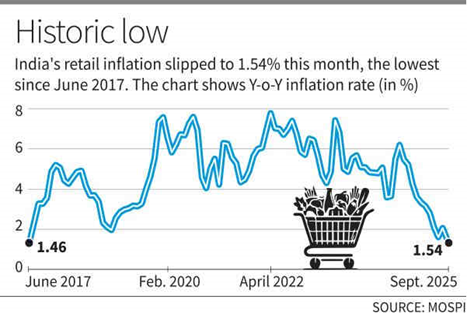
  • Retail inflation eases to 8-year low of 1.54%

Context: Retail inflation fell to a more than eight-year-low of 1.54% in September on falling food and fuel prices, official data showed. This is once again below the Reserve Bank of India’s lower comfort bound of 2%.

  • Inflation, as measured by the Consumer Price Index released by the Ministry of Statistics and Programme Implementation, was last lower in June 2017, when it stood at 1.46%.
  • Inflation had fallen below the RBI’s lower comfort limit in July 2025, before rising marginally to 2.1% in August.
  • The food and beverages grouping saw a contraction of 1.4% in September, compared with a growth of 0.05% in August and 8.4% inflation in September last year. “Looking ahead, food inflation is likely to stay benign supported by a favourable base and good monsoon,” Rajani Sinha, chief economist at CareEdge Ratings, said.
  • “That said, risks remain from the late withdrawal of the monsoon and heavy rain in certain regions, which could risk crop damage.”
  • In addition, Ms. Sinha said that persistently high double-digit inflation in edible oils warrants close monitoring, given weak sowing trends, import dependence, and elevated global edible oil prices.
  • Inflation in the oil and fats category stood at 18.3% in September, the 11th consecutive month of double-digit inflation in the sub-grouping.
  • Inflation in the fuel and light category came in at 1.98% in September, down from 2.3% in August. Save for one month, inflation in this category has been easing since April.
  • “The moderation in food and fuel prices has provided much-needed relief to households and improved purchasing power,” Rajeev Juneja, president of the PHDCCI, said.
  • Inflation in the clothing and footwear category was 2.28% in September, marginally lower than the 2.33% seen in August 2025 and the 2.7% in September last year. This is the fifth consecutive month of slowing inflation in this category.
  • Inflation in the pan, tobacco and other intoxicants category, however, quickened to 2.7% in September from 2.5% in August. Similarly, the housing sector also saw inflation quickening to 4% in September from 3.1% in the previous month.
  • Economists say that the low inflation figures, with the RBI’s Monetary Policy Committee revising downwards its inflation forecast for the year for the fourth time in a row, raises hopes of a rate cut again in December.
  • ‘India’s rare earth elements strategy should align with global shifts’

Context: India’s rare earth elements strategy should align with global supply chain shifts and geopolitical pressures, aiming to reduce dependency on dominant players like China, said Abhishek Bhatia, Managing Director & Partner at Boston Consulting Group (BGC).

Steady growth

  • The country’s rare earth elements market is set to grow steadily, driven mainly by the rising demand for magnets used in green technologies, he said, while elaborating on a ​topic ‘Critical minerals – Global Scenario and ​Strategy for India’, at the Critical Mineral Summit organised by Foundation of Science Innovation and Development at Indian Institute of Science.
  • The rare earth elements market is expected to grow at over 6% CAGR until 2040, with magnet applications growing even faster at 8 to 9% CAGR.
  • According to him, magnets account for just 35% of rare earth element volume but generate over 80% ​of total industry value, highlighting their economic importance. “This growth is fuelled by demand from electric vehicles, offshore wind power, robotics, and consumer electronics, all relying on permanent magnets,”.
  • India invites Carney for AI summit, both sides agree to restart trade talks

Context: India and Canada agree to restore ties against the backdrop of talks held between External Affairs Minister S. Jaishankar and Canadian counterpart Anita Anand; the two countries also begin discussions on SMR nuclear-powered reactors.

  • India and Canada agreed on a series of measures to restore relations, including relaunching the energy dialogue, after talks between External Affairs Minister S. Jaishankar and Canadian Foreign Minister Anita Anand.
  • Sources said the delegations discussed an invitation for Canadian Prime Minister Mark Carney to visit India in February next year for the Artificial Intelligence (AI) Summit. While Mr. Carney has not yet accepted the invitation, a senior official from the Canadian Prime Minister’s Office was present during the meetings, indicating the visit to India was being considered seriously.

Areas of interest    

  • Among the major announcements, both sides agreed to begin at the earliest, their ministerial-level discussions on bilateral trade and investments, besides re-establishing the Canada-India Ministerial Energy Dialogue for cooperation on renewables and critical minerals, relaunching the Joint Science and Technology Cooperation Committee, and encouraging Canadian AI companies and researchers to participate in India’s AI Impact Summit from February 19 to 20, 2026.
  • India and Canada have also begun preliminary talks on SMR (Small Modular Technology) nuclear-powered reactors and other cooperation in civil nuclear energy.
  • The focus on a number of issues that have been put on the back-burner since 2023, when Canada accused Indian “government agents” of being involved in the killing of a Khalistani activist in Canada, was an attempt, said officials on both sides, to not allow the security issues between the two countries to overshadow all other areas of cooperation.

On repair mode

  • Since Mr. Carney and Prime Minister Narendra Modi met in June this year, Delhi and Ottawa have intensified talks on repairing relations, and held security level talks separately when Canadian National Security and Intelligence Advisor Catherine Drouin met with National Security Advisor Ajit Doval in Delhi in September.
  • “Building on the momentum of Prime Minister Carney’s meeting with PM Modi this summer at the G7 Summit, Canada and India are elevating the relationship between our countries, while maintaining our law enforcement and security dialogue and expanding our economic relationship,“ Ms. Anand said in a statement.
  • The officials said that although Mr. Carney and Mr. Modi had agreed during their meeting to restart trade talks for a Comprehensive Economic Partnership Agreement (CEPA), they may now abandon the previous effort, and start from scratch.
  • “Our discussions focused on exploring areas of cooperation in the field of energy, technology, and food security. Also, reiterated India’s readiness to reinvigorate mutually beneficial trade, investment, and economic ties based on trust and respect,” Mr. Goyal posted, without speaking specifically about the CEPA.
  • Number of births declines; deaths rise slightly: report

Context: The Vital Statistics of India, based on the Civil Registration System report for 2023, shows 86.6 lakh deaths were registered that year, recording a marginal increase from the 86.5 lakh in 2022.

  • India registered 2.52 crore births in 2023, around 2.32 lakh fewer than in 2022, the Vital Statistics of India based on the Civil Registration System (CRS) report for the year 2023 shows.
  • The report, compiled by the Registrar-General of India (RGI) and released on Monday, stated that 86.6 lakh deaths were registered in 2023, a marginal increase from 86.5 lakh deaths in 2022.
  • The report shows that there was no major spike in deaths in 2022 and 2023, despite the COVID-19 dashboard maintained by the Health Ministry showing that the total number of pandemic-induced deaths stood at 5,33,665 as on May 5.
  • However, there was a significant rise in deaths in 2021, the second-year of COVID-19 lockdown, which recorded an excess of 21 lakh deaths from the 2020 count.
  • There were 81.2 lakh deaths in 2020 and 102.2 lakh in 2021.
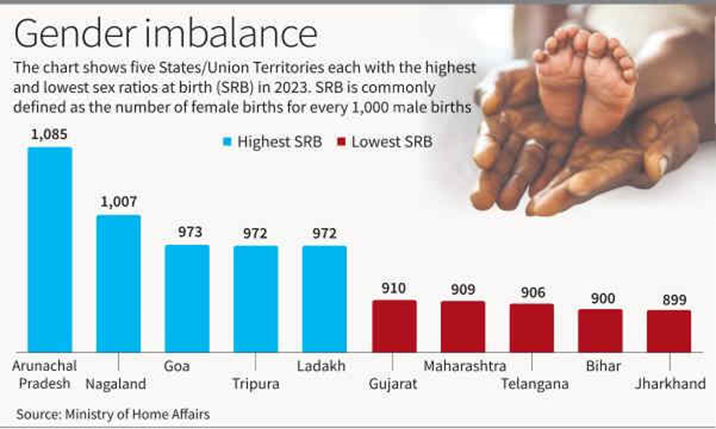
  • The report also said that Jharkhand recorded the lowest sex ratio at birth at 899, followed by Bihar at 900, Telangana at 906, Maharashtra at 909, Gujarat at 910, Haryana at 911 and Mizoram at 911. Since 2020, Bihar has been recording the lowest sex ratio, which is defined as the number of females born per 1,000 males.

Sex ratio count

  • The highest sex ratio was reported by Arunachal Pradesh at 1,085, followed by Nagaland at 1,007, Goa at 973, Ladakh and Tripura at 972, and Kerala at 967.
  • The share of institutional births in total registered births is 74.7 % in 2023. However, the report did not include information from Sikkim. Overall registration of births for the year 2023 stood at 98.4%.

Statewise data

  • The report said that 11 States/Union Territories achieved more than 90% registration of births within the prescribed time limit of 21 days.
  • These States are Gujarat, Puducherry, Chandigarh, Dadra and Nagar Haveli and Daman & Diu, Tamil Nadu, Lakshadweep, Andaman and Nicobar Islands, Haryana, Himachal Pradesh, Goa and Punjab. Five States — Odisha, Mizoram, Maharashtra, Chhattisgarh and Andhra Pradesh — reported 80-90% registration, while in 14 States — Assam, Delhi, Madhya Pradesh, Tripura, Telangana, Kerala, Karnataka, Bihar, Rajasthan, Jammu & Kashmir, Jharkhand, West Bengal, Meghalaya and Uttar Pradesh — the registration stood at 50-80%.
  • Hike in PF pension under consideration of Cabinet: Minister

Context: Union Labour Minister Mansukh Mandaviya told a meeting of the Central Board of Trustees (CBT) of the Employees Provident Fund Organisation (EPFO) here that the Cabinet was actively considering increasing the minimum PF pension.

  • Though the issue was not on the agenda, trade union members in the CBT said during the discussions that the minimum PF pension should be revised from the present ₹1,000 a month. “The Minister did not rule it out and said the Cabinet is actively considering the proposal,” a CBT member after the meeting.
  • The meeting also discussed the issue of delay in distributing higher pension as per the Supreme Court order. Some CBT members argued that the EPFO must withdraw the guidelines framed on the matter, and said that new guidelines should be implemented in tune with the top court order. “The response was not positive,” another member said.
  • The Labour Ministry, in a release, said the meeting took a number of path-breaking decisions, including simplification and liberalisation of the EPF partial withdrawal provisions.
  • “To enhance ease of living of EPF members, CBT decided to simplify the partial withdrawal provisions of EPF Scheme by merging 13 complex provisions into a single, streamlined rule categorised into three types namely, Essential Needs (illness, education, marriage), Housing Needs, and Special Circumstances. Now, members will be able to withdraw up to 100% of the eligible balance in the Provident Fund, including employee and employer share,” the Ministry said.
  • Withdrawal limits have been liberalised — education withdrawals will be allowed up to 10 times and marriage up to five times (from existing limit of a total of three partial withdrawals for marriage and education in all). “Requirement of minimum service has been uniformly reduced to only 12 months for all partial withdrawals,” it added.
  • Uttarakhand eases UCC rules for people from Nepal, Bhutan
  • The Uttarakhand government on Monday approved a crucial amendment to the Uniform Civil Code (UCC), bringing relief to citizens of Nepali and Bhutanese origin who are living in the State and do not have an Aadhaar card as identity proof to register their marriage.
  • Sources stated that the State has allowed people from Nepal, Bhutan and even Tibet to register their marriage using a certificate from the Foreign Registration Officer. The official added that the aim was to give respite to people of Nepal, Bhutan, and Tibet, who share historic and cultural ties with the State.
  • Achieving Centre’s rooftop solar targets to remain a challenge: study

Context: Despite a near four-fold increase in applications between March 2024 and July 2025, only 13.1% of the targeted 1 crore solar rooftop installations, under the PM Surya Ghar Yojana (PMSGY), has been achieved, and just 14.1% of the allocated 65,700 crore in subsidies released till July 2025, a report said.

  • “In this scenario, the FY2027 target [of 1 crore installations] continues to be viewed as a considerable challenge,” said the report on the performance of the scheme, jointly published by the Institute for Energy Economics and Financial Analysis (IEEFA) and JMK Research and Analytics.
  • Reasons included tardy approval processes, which could stretch anywhere from 45 to 120 days, stemming largely from “meter shortages, lack of coordination between consumers, installers, and DISCOMs, and procedural inefficiencies at the utility level,” it noted.
  • The PMSGY is a Centre-led endeavour to encourage more homes to install rooftop solar connections. The government provides capital upfront via loans.
  • As of July 2025, the period until which the report tracked progress, the PMSGY had received 57.9 lakh applications for residential rooftop solar installations. The scheme has facilitated the installation of 4,946 MW of rooftop solar capacity till July 2025 across various States and Union Territories, indicating “robust on-ground execution”, the report said.
  • Subsidy disbursements have crossed ₹9,281 crore ($1.05 billion), benefiting over 16 lakh households. As of July 2025, the 4.9 GW of installations added under the PMSGY accounted for approximately 44.5% of the country’s total residential rooftop capacity.
  • The PM solar scheme only incentivises solar installations, whose component parts are entirely manufactured in India. Called “DCR-compliant modules”, they are on average costlier by 12/watt over imported variants. “These higher prices are making larger residential installations less economically attractive,” the report said.
  • “Establishing clear, time-bound rooftop solar capacity targets at the State level is essential for creating a coherent vision,” said Vibhuti Garg, Director, IEEFA-South Asia, and a contributing author, in a statement.
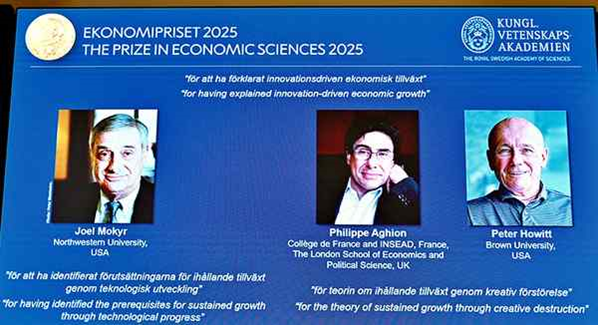
  • Mokyr, Aghion and Howitt win Nobel economics prize

Context: Winners are professors in U.S., French and British universities; prize worth $1.2 mn highlights work on innovation-driven economic growth.

  • Joel Mokyr, Philippe Aghion and Peter Howitt won the 2025 Nobel economics prize for “having explained innovation-driven economic growth”, the Royal Swedish Academy of Sciences.
  • The prestigious award, formally known as the Sveriges Riksbank Prize in Economic Sciences in Memory of Alfred Nobel, is the final prize to be given out this year and is worth 11 million Swedish Kronor ($1.2 million).
  • “The laureates have taught us that sustained growth cannot be taken for granted,” the prize-awarding body said in a statement. Economic stagnation, not growth, has been the norm for most of human history. Their work shows that we must be aware of, and counteract, threats to continued growth.”
  • Mr. Mokyr is a professor at Northwestern University, in Evanston in the United States, while Mr. Aghion is professor at the College de France and INSEAD, in Paris, and at the London School of Economics and Political Science, in Britain. Mr. Howitt is a professor at Brown University, in Providence in the United States. Mr. Mokyr was awarded half the prize with the other half being shared between Aghion and Howitt.
  • “Joel Mokyr used historical observations to identify the factors necessary for sustained growth based on technological innovations,” John Hassler, member of the Nobel Committee, said.

Creative destruction

  • “Philippe Aghion and Peter Howitt produced a mathematical model of creative destruction, an endless process in which new and better products replace the old.”
  • The awards for medicine, physics, chemistry, peace and literature were announced last week.
  • Those prizes were established in the will of Swedish dynamite inventor and businessman Alfred Nobel and have been handed out since 1901, with a few interruptions mostly due to the world wars.
  • The economics prize was established much later, being given out first in 1969 when it was won by Norway’s Ragnar Frisch and Jan Tinbergen from the Netherlands for work in dynamic economic modelling. Tinbergen’s brother Nikolaas also won a prize, taking home Medicine in 1973.
  • While few economists are household names, relatively well-known winners include former U.S. Federal Reserve chairman Ben Bernanke, and Paul Krugman and Milton Friedman. Last year’s economics award went to U.S.-based academics Simon Johnson, James Robinson and Daron Acemoglu for research that explored the relationship between colonisation and the establishment of public institutions to explain why some countries have been mired in poverty for decades.
  • Snow leopards are the world’s least genetically diverse big cat

Context: A new Stanford-based study explains the implications of this phenomenon for the future of the elusive feline; researchers used whole-genome sequencing data for 37 snow leopards and concluded that the low genetic diversity is likely due to a persistently small population size.

  • The snow leopard, the agile “ghost of the mountains” that inhabits the rugged ranges of 12 Asian countries, including India, has the lowest genetic diversity of any big cat species in the world, even lower than that of the dwindling cheetah.
  • A new study led by researchers at Stanford University, published in Proceedings of the National Academy of Sciences (PNAS) on October 7, explained the implications of this phenomenon.
  • The researchers used whole-genome sequencing data for 37 snow leopards and concluded that the low genetic diversity is, however, “likely due to a persistently small population size throughout their evolutionary history rather than recent inbreeding.”

‘Purging’ of mutations

  • This means that “mutations that could potentially cause health issues in snow leopards have been removed from the population over many generations,” lead author Katie Solari, a research scientist in biology at Stanford, told The Hindu.
  • The PNAS paper added, “We found snow leopards to have the lowest heterozygosity of any big cat species, with heterozygosity for every snow leopard sample included in this study falling lower than that observed in any other big cat.” This included cheetahs, “which have long been considered the archetype of low heterozygosity in big cats.”
  • The good news is that snow leopards, compared to several Panthera species, have a significantly lower highly deleterious homozygous load — genes inherited from the mother and father that have fewer instances of duplicated copies of potentially harmful mutations that are connected with health issues.
  • This, the authors said, suggests effective “purging” of bad mutations during their evolutionary history at small population sizes.
  • “If a negative trait surfaced, those individuals died before reproducing, or their progeny were less successful. This purging, facilitated by historic inbreeding, allowed the snow leopard population to remain relatively healthy even at their small numbers,” an article in the Stanford Report read.
  • In fact, “the inbreeding coefficient of snow leopards is significantly higher than other big cats and was even significantly lower than the Asian leopard and puma, indicating that the lower genetic diversity observed in snow leopards is not explained by higher inbreeding,” per the research paper.
  • The very low genetic diversity and small population sizes mean they may not be able to adapt well to future anthropogenic challenges.

Critical to Asia’s mountains

  • The wild feline indeed faces a long list of threats today: climate change, habitat loss, decreased availability of primary prey (mountain ungulates such as the Siberian ibex), retaliatory killings for livestock predation, and poaching for their skin. All this while climate change in Asia’s high mountains threatens their future. Despite this, snow leopards, which were first listed as ‘endangered,’ were controversially downlisted to ‘vulnerable’ in 2017, as they did not meet certain criteria for population size.
  • There are no more than 4,500 to 7,500 individuals, each critical to the Asian mountain ecosystem “that offers immense ecosystem services — acting as an important source of carbon storage and providing water to almost two billion people.”
  • Hearteningly, however, the international community has worked for decades to establish a sustainable zoo population: in 2008, there were 445 snow leopards across 205 institutions globally, the paper read.
  • The snow leopard, distinguished by an unusually long tail, which acts as a rudder to help it keep its balance as it traverses its rough terrain, happens to be the least genetically studied of all big cat species. There is, however, evidence of continuous habitat connectivity across at least 75 km in Pakistan and around 1,000 km in Mongolia, and the animal is known to cross long distances between mountain ranges, according to the study.

‘Very poorly studied’

  • As for India, a pioneering survey last year estimated that 718 snow leopards exist in the wild: 477 in Ladakh, 124 in Uttarakhand, 51 in Himachal Pradesh, 36 in Arunachal Pradesh, 21 in Sikkim, and nine in Jammu and Kashmir. The Indian snow leopard accounts for 10-15 percent of the global population.
  • “Of the 12 countries with wild snow leopards, India has the highest numbers after China and Mongolia. That makes India one of the most important countries for the conservation of this species,” Kulbhushansingh Suryawanshi, with the India programme of the Snow Leopard Trust at the Nature Conservation Foundation (NCF), Mysore.
  • He added that the genetic diversity of leopards in India “is very poorly studied … We need to sample across the high mountains to understand the genetic diversity of snow leopards in India.”
  • “India’s Project Snow Leopard, dedicated to the conservation of snow leopards, and NGOs such as the NCF, have been working on snow leopard conservation for 27 years. Local community members from snow leopard habitats such as Ladakh, Jammu and Kashmir, Himachal Pradesh, Uttarakhand, Sikkim, and Arunachal are key partners in the conservation of snow leopards,” said Dr. Suryawanshi.
  • But the snow leopard in India is threatened by land use change and climate change, he said.
  • “Almost the entire snow leopard habitat in India is within 50-100 km of the international border. Large-scale infrastructure is changing the face of this region. Climate change-induced warming and floods are impacting the wildlife of this landscape, including the snow leopards, to a large extent.”

Maintaining integrity

  • Dr. Suryawanshi, who is a co-author of the paper, said the main challenge of studying snow leopards is in “getting the samples.” Bureaucratic hurdles in getting permissions to study snow leopards generally slow down research, he said.
  • “In addition, the timelines of funding and permissions often do not match. The Stanford study collaborated with researchers around the world, and only then were they able to put together enough samples to make an assessment of the genetic diversity of snow leopards. We need to collect a similar number of samples from within India to understand the genetic diversity of snow leopards in the country.”
  • On the future fate of snow leopards of the fragile high-elevation landscape of the Himalayas, “we need to treat these landscapes and the people that live here with respect,” said Dr. Suryawanshi. “The effects of rampant large infrastructure projects are clearly visible in the scale of destruction in the recurrent floods that occur every monsoon.”
  • Maintaining the integrity of the snow leopard’s habitat is crucial for the long-term conservation of this charismatic species of the Himalaya, Dr. Suryawanshi added.
  • Arctic seals, birds in new ‘red list’of endangered species: IUCN

Context: Arctic seals and birds are coming under increasing threat, mainly due to climate change and human activity, according to an updated list of endangered species released by the world’s top conservation body.

  • The International Union for Conservation of Nature (IUCN) said habitat loss driven by logging and agricultural expansion is a threat to birds. At the same time, seals were at risk mostly due to global warming and human activities, including maritime traffic.
  • The IUCN said it was changing the status of the hooded seal from vulnerable to endangered while bearded and harp seals are now classified as near threatened.
  • “This timely global update highlights the ever increasing impact human activity is having on nature and the climate and the devastating effects this has,” its director general Grethel Aguilar told reporters at its World Conservation Congress in Abu Dhabi.
  • The IUCN red list now includes “172,620 species of which 48,646 are threatened with extinction,” it said in a statement.
  • Global warming is destroying the natural habitat of animals including seals that live in the cold parts of the world. Maritime traffic, mining and oil extraction, industrial fishing and hunting are among other risks to the species.
  • “Global warming is occurring four times faster in the Arctic than in other regions, which is drastically reducing the extent and duration of sea ice cover,” the IUCN said.
  • “Ice-dependent seals are a key food source for other animals,” it added.
  • They “play a central role in the food web, consuming fish and invertebrates and recycling nutrients” and are one of the “keystone species” of their ecosystem.
  • Kit Kovacs, a scientist at the Norwegian Polar Institute, raised the alarm about the Svalbard archipelago, halfway between Norway and the North Pole.
  • “When I lived on the archipelago, just a couple of decades ago, we had five months of sea ice cover in areas that are now winter ice-free. It is really hard to express just how rapidly the Arctic is changing,” she said.
  • The IUCN said its red list of birds is the fruit of nine years of work by “thousands of experts”.
  • “Overall, 61% of bird species have declining populations — an estimate that has increased from 44 percent in 2016,” the IUCN said.
  • It studied thousands of bird species worldwide and found that “1,256 (or 11.5%) of the 11,185 species assessed are globally threatened”.
  • This year’s update focused on regions where the destruction of tropical forest poses a growing threat to birds. In Madagascar, 14 species were newly classified as near threatened and three others were labelled vulnerable. In West Africa, five more bird species were found to be near threatened in addition to one more in Central America.
  • The report also mentioned a positive development. The green turtle is no longer endangered, it said, citing “decades of sustained conservation action” that saw its population recover by 28% since the 1970s.
  • Nicolas Pilcher, the Executive Director of the Marine Research Foundation, said this success should spur action not complacency.
  • “Just because we have reached this great step in conservation isn’t a reason to sit back and then become complacent,” he said.

ಪ್ರಚಲಿತ ವಿದ್ಯಮಾನಗಳು: 13ನೇ ಅಕ್ಟೋಬರ್ 2025

  • ನವಲಗುಂದ ಧುರಿ; ತಯಾರಕರ ಕೊರತೆ

ಸಂದರ್ಭ: ಶತಮಾನಗಳ ಇತಿಹಾಸವುಳ್ಳ ಮತ್ತು ಭೌಗೋಳಿಕ ಮಾನ್ಯತೆ (ಜಿಐ) ಪಡೆದಿರುವ ಧಾರವಾಡ ಜಿಲ್ಲೆ ನವಲಗುಂದದ ಧುರಿಗಳ (ಜಮಖಾನ) ತಯಾರಿಕೆಗೆ ತಯಾರಕರ ಕೊರತೆ ಕಾಡುತ್ತಿದೆ.

  • ನವಲಗುಂದದ ಕರ್ನಾಟಕ ಕರಕುಶಲ ಅಭಿವೃದ್ಧಿ ನಿಗಮದ (ಕಾವೇರಿ ಎಂಪೋರಿಯಂ) ಘಟಕದಲ್ಲಷ್ಟೇ ಸದ್ಯ ಜಮಖಾನಗಳ ಉತ್ಪಾದನೆ ಆಗುತ್ತಿದೆ. ಇವುಗಳ ತಯಾರಿಕೆ ಮಾಡುವವರ ಸಂಖ್ಯೆ 17ಕ್ಕೆ ಇಳಿದಿದೆ.
  • ‘ಪಾರಂಪರಿಕ ನೇಯ್ಗೆ ಕಲೆಯನ್ನು ಮಕ್ತುಲ್‌ ಸಾಬ್‌ ಜಮಖಾನ್ದಾರ್‌ ಅವರು ನಮಗೆ ಕಲಿಸಿದರು. ನಾನು ತರಬೇತಿ ಪಡೆದಾಗ 150ಕ್ಕೂ ಹೆಚ್ಚು ಮಂದಿ ಕಾರ್ಮಿಕರು ತಯಾರಿಸುತ್ತಿದ್ದರು. ಕ್ರಮೇಣ ಅವರ ಸಂಖ್ಯೆ ಕುಸಿಯುತೊಡಗಿತು’ ಎಂದ ನವಲಗುಂದ ನೇಕಾರರ ಸಂಘದ ಅಧ್ಯಕ್ಷೆ.
  • ‘ಜಮಖಾನ ತಯಾರಿಸುವವರಿಗೆ ಸರ್ಕಾರದಿಂದ ವಿಶೇಷ ನೆರವು ಇಲ್ಲ. ಜಮಖಾನ ಮಾರಾಟದಿಂದ ತಿಂಗಳಿಗೆ ₹2 ಲಕ್ಷದವರೆಗೆ ಆದಾಯಗಳಿಸುವ ಸಾಧ್ಯತೆ ಇದ್ದರೂ, ತಯಾರಕರ ಕೊರತೆಯಿಂದ ಅದು ಸಾಧ್ಯವಾಗುತ್ತಿಲ್ಲ. ಒಂದೊಂದು ಜಮಖಾನ ದರ ₹ 1 ಸಾವಿರದಿಂದ ₹ 10 ಸಾವಿರದವರೆಗೆ ಇರುತ್ತದೆ. ಸದ್ಯ ತಿಂಗಳಿಗೆ 100 ರಿಂದ 200 ಜಮಖಾನ ತಯಾರಿಸಲಾಗುತ್ತಿದೆ’.

ಪರಂಪರೆಯೂ ಕಾರಣ

  • ‘ಜಮಖಾನ ತಯಾರಿಕೆ, ಮಾರಾಟದ ಹೊಣೆಯನ್ನು ಸರ್ಕಾರ ವಹಿಸಿಕೊಂಡಿದೆ. ಹೊಸದಾಗಿ ತರಬೇತಿ ಪಡೆದವರು ಆ ಕೆಲಸ ಮುಂದುವರಿಸುವುದಿಲ್ಲ. ಮುಖ್ಯವಾಗಿ ಕೌಶಲ ಗೊತ್ತಿರುವವರು ಮನೆಯ ಹೆಣ್ಣುಮಕ್ಕಳಿಗೆ ಕಲಿಸುವುದಿಲ್ಲ. ಹೊಸ ಪೀಳಿಗೆಗೆ ಈ ಬಗ್ಗೆ ಆಸಕ್ತಿ ಇಲ್ಲ. ತಯಾರಕರ ಸಂಖ್ಯೆ ಕುಸಿಯಲು ಇದೂ ಕಾರಣ’ ಎಂದು ಕೈಮಗ್ಗ ಹಾಗೂ ಜವಳಿ ಇಲಾಖೆಯ ಅಧಿಕಾರಿಯೊಬ್ಬರು ತಿಳಿಸಿದರು.
  • ಗುತ್ತಿಗೆದಾರರಿಗಾಗಿ ವಿದ್ಯುತ್ಪಂಪ್ಡ್ಸ್ಟೋರೇಜ್ಯೋಜನೆ

ಸಂದರ್ಭ: ಗುತ್ತಿದಾರರಿಗೆ ಅನುಕೂಲ ಮಾಡಿಕೊಡಲೆಂದೇ  ಶರಾವತಿ ಮತ್ತು ವಾರಾಹಿ ಪಂಪ್ಡ್ಸ್ಟೋರೇಜ್ಯೋಜನೆಗಳನ್ನು ರೂಪಿಸಲಾಗಿದೆ ಎಂದು ಪರಿಸರ ಹೋರಾಟಗಾರ ಅಖಿಲೇಶ್ಚಿಪ್ಲಿ ಆರೋಪಿಸಿದರು.

  • ಕೇಂದ್ರ ಅರಣ್ಯ, ಪರಿಸರ ಮತ್ತು ವನ್ಯಜೀವಿ ಸಚಿವಾಯಲದಿಂದ ಅನುಮತಿ ಸಿಕ್ಕಿಲ್ಲ. ಈ ಅನುಮತಿಗಾಗಿ ರಾಜ್ಯ ಸರ್ಕಾರವು ಈ ವರ್ಷದ ಜನವರಿಯಲ್ಲಿ ಕೇಂದ್ರ ಸರ್ಕಾರಕ್ಕೆ ಪತ್ರ ಬರೆದಿದೆ. ಆದರೆ, 2024ರಲ್ಲಿಯೇ ಆಂಧ್ರಪ್ರದೇಶದ ‘ಮೇಘಾ ಎಂಜಿನಿಯರಿಂಗ್ ವರ್ಕ್ಸ್‌’ ಎಂಬ ಕಂಪನಿಗೆ ಟೆಂಡರ್‌ ಆಗಿದೆ ಎಂದು ಹೇಳಿದರು.
  • ಬ್ಯಾಟರಿ ಸ್ಟೋರೇಜ್‌ ಎನರ್ಜಿ ಸಿಸ್ಟಂ ಮೂಲಕ ಎಲ್ಲಿ ಬೇಕಾದರೂ ವಿದ್ಯುತ್‌ ಸ್ಟೋರೇಜ್‌ ಮಾಡಲು ಅವಕಾಶವಿದೆ. ಆದರೂ ಪಶ್ಚಿಮ ಘಟ್ಟದ ಸಂರಕ್ಷಿತ ಪ್ರದೇಶದಲ್ಲಿ ಶರಾವತಿ ಮತ್ತು ವಾರಾಹಿ ಪಂಪ್ಡ್‌ ಸ್ಟೋರೇಜ್‌ ಯೋಜನೆಗಳನ್ನು ಅನುಷ್ಠಾನ ಮಾಡಲು ಸರ್ಕಾರ ಹೊರಟಿದೆ ಎಂದು ಬೇಸರ ವ್ಯಕ್ತಪಡಿಸಿದರು.
  • ಗುಂಡಿಬೈಲು, ಹೆನ್ನಿ, ಹಿರೇಹೆನ್ನಿ ಮುಂತಾದ ಪ್ರದೇಶಗಳಲ್ಲಿ 350ಕ್ಕೂ ಅಧಿಕ ಕುಟುಂಬಗಳು ಯಾವುದೇ ಹಕ್ಕುಪತ್ರ ಇಲ್ಲದೇ ಬಹಳ ವರ್ಷಗಳಿಂದ ಬದುಕುತ್ತಿವೆ. ಈ ಪಂಪ್ಡ್‌ ಸ್ಟೋರೇಜ್‌ ಯೋಜನೆಯಡಿ ಈ ಕುಟುಂಬಗಳನ್ನು ಕೂಡ ಒಕ್ಕಲೆಬ್ಬಿಸಲಾಗುತ್ತದೆ. ಆದರೆ, ಹಕ್ಕುಪತ್ರ ಇಲ್ಲದೇ ಇರುವುದರಿಂದ ಇವರಿಗೆ ಯಾವುದೇ ಪರಿಹಾರ ಸಿಗುವುದಿಲ್ಲ ಎಂದು ಹೇಳಿದರು.
  • 1,800 ಟನ್‌ ಸ್ಫೋಟಕಗಳನ್ನು ಬಳಸಿ ಇಲ್ಲಿ ಸುರಂಗಗಳನ್ನು ನಿರ್ಮಿಸಲಾಗುತ್ತಿದೆ. ಗುರುತ್ವಾಕರ್ಷಣೆಗೆ ವಿರುದ್ಧವಾಗಿ ನೀರನ್ನು ಮೇಲಕ್ಕೆ ಹರಿಸಬೇಕಿರುವುದರಿಂದ ಉತ್ಪಾದನೆಗಿಂತ ಶೇ 25ರಷ್ಟು ಅಧಿಕ ವಿದ್ಯುತ್‌ ಇಲ್ಲಿ ವ್ಯಯವಾಗಲಿದೆ ಎಂದು ವಿವರಿಸಿದರು.
  • ಪರಿಸರವಾದಿ ಶಂಕರ್‌ ಶರ್ಮ ಮಾತನಾಡಿ, ‘ಈ ಯೋಜನೆ ಕುರಿತು ತಯಾರಿಸಿದ ವಿಸ್ತೃತ ಯೋಜನಾ ವರದಿಯು ಹಸಿ ಸುಳ್ಳುಗಳಿಂದ ಕೂಡಿದೆ. ಮಾಡಲೇಬೇಕಾದ ಯೋಜನೆ ಎಂದು ಎಲ್ಲಿಯೂ ಹೇಳಿಲ್ಲ. ಈ ಯೋಜನೆಗಾಗಿ 400 ಎಕರೆ ಕಾಡು ಕಡಿಯಬೇಕಾಗುತ್ತದೆ ಎಂಬುದನ್ನು ಹೇಳಿದ್ದಾರೆ. ವಿನಾಶದ ಅಂಚಿನಲ್ಲಿರುವ ಸಿಂಹಬಾಲದ ಸಿಂಗಲೀಕ ಸಹಿತ ಅನೇಕ ಜೀವಜಂತುಗಳು ನಾಶವಾಗಲಿವೆ. ಹಾಗಾಗಿ ಈ ಯೋಜನೆಯನ್ನು ಕೈಬಿಡಬೇಕು ಎಂದು ಆಗ್ರಹಿಸಿದರು. ಪರಿಸರ ಹೋರಾಟಗಾರ ಜೋಸೆಫ್‌ ಹೂವರ್‌ ಉಪಸ್ಥಿತರಿದ್ದರು.
  • ತಾಲಿಬಾನ್: ಪಾಕ್ಗೆ ದೂರ ಭಾರತಕ್ಕೆ ಇನ್ನಷ್ಟು ಹತ್ತಿರ
  • ದೇಶದಲ್ಲಿ ಲಕ್ಷಕ್ಕೂ ಅಧಿಕ ಏಕೋಪಾಧ್ಯಾಯ ಶಾಲೆಗಳು

ಸಂದರ್ಭ: ದೇಶದಲ್ಲಿ ಏಕೋಪಾಧ್ಯಾಯ ಶಾಲೆಗಳ ಸಂಖ್ಯೆ ಒಂದು ಲಕ್ಷಕ್ಕೂ ಅಧಿಕ. ಇಂಥ ಶಾಲೆಗಳಲ್ಲಿ 33 ಲಕ್ಷಕ್ಕೂ ಹೆಚ್ಚು ವಿದ್ಯಾರ್ಥಿಗಳು ಕಲಿಯುತ್ತಿದ್ದಾರೆ.

  • ಆಂಧ್ರಪ್ರದೇಶದಲ್ಲಿ ಇಂಥ ಶಾಲೆಗಳ ಸಂಖ್ಯೆ ಹೆಚ್ಚು ಇದ್ದು, ಮೊದಲ ಸ್ಥಾನದಲ್ಲಿದೆ. ನಂತರದ ಸ್ಥಾನಗಳಲ್ಲಿ ಉತ್ತರ ಪ್ರದೇಶ, ಜಾರ್ಖಂಡ್, ಮಹಾರಾಷ್ಟ್ರ, ಕರ್ನಾಟಕ ಹಾಗೂ ಲಕ್ಷದ್ವೀಪ ಇವೆ. ಶಿಕ್ಷಣ ಸಚಿವಾಲಯವು ಬಿಡುಗಡೆ ಮಾಡಿರುವ 2024–25ನೇ ಶೈಕ್ಷಣಿಕ ವರ್ಷಕ್ಕೆ ಸಂಬಂಧಿಸಿದ ದತ್ತಾಂಶದಲ್ಲಿ ಈ ಮಾಹಿತಿ ಇದೆ.
  • ಏಕೋಪಾಧ್ಯಾಯ ಶಾಲೆಗಳಲ್ಲಿ ಪ್ರವೇಶ ಪಡೆಯುವ ವಿದ್ಯಾರ್ಥಿಗಳ ಸಂಖ್ಯೆಯ ದೃಷ್ಟಿಯಿಂದ ನೋಡಿದಾಗ, ಉತ್ತರ ಪ್ರದೇಶ ಅಗ್ರ ಸ್ಥಾನದಲ್ಲಿದ್ದು, ನಂತರದ ಸ್ಥಾನಗಳಲ್ಲಿ ಜಾರ್ಖಂಡ್, ಪಶ್ಚಿಮ ಬಂಗಾಳ ಹಾಗೂ ಮಧ್ಯಪ್ರದೇಶ ಇವೆ ಎಂದು ಸಚಿವಾಲಯ ತಿಳಿಸಿದೆ.
  • ಡೀಪ್ಫೇಕ್‌, . ನಿಯಂತ್ರಣಕ್ಕೆ ಕಾನೂನು ಅಗತ್ಯ: ನ್ಯಾ. ನಾಗರತ್ನ

ಸಂದರ್ಭ: ಡೀಪ್ಫೇಕ್ಮತ್ತು . ಮೂಲಕ ಮಕ್ಕಳ ಮೇಲೆ ನಡೆಯಬಹುದಾದ ದೌರ್ಜನ್ಯ ಗಳ ನಿಗ್ರಹಕ್ಕೆ ಸೂಕ್ತ ಕ್ರಮ ಕೈಗೊಳ್ಳುವುದು ಅತ್ಯಗತ್ಯ ವಾಗಿದೆ ಎಂದು ಸುಪ್ರೀಂ ಕೋರ್ಟ್ನ್ಯಾಯಮೂರ್ತಿ ಬಿ.ವಿ ನಾಗರತ್ನ ಅವರು ಹೇಳಿದರು.

  • ಕಾರ್ಯಕ್ರಮವೊಂದರಲ್ಲಿ ಮಾತ ನಾಡಿದ ಅವರು, ‘ಸೂಕ್ತ ಮುನ್ನೆಚ್ಚ ರಿಕೆಯ ಮೂಲಕ ನಾವು ದೌರ್ಜನ್ಯ ಮತ್ತು ಮಕ್ಕಳ ಕಳ್ಳಸಾಗಾಣಿಕೆಯನ್ನು ತಡೆಯಲು ಸಾಧ್ಯವಿದೆ’ ಎಂದು ತಿಳಿಸಿದರು.
  • ‘ವಿಕಾಸಗೊಳ್ಳುತ್ತಿರುವ ಹೊಸ ತಂತ್ರಜ್ಞಾನಗಳು ಉಂಟು ಮಾಡುತ್ತಿರುವ ಅಪಾಯಗಳು ಜಗತ್ತಿಗೆ ತೂಗುಗತ್ತಿ ಯಂತಾಗಿವೆ. ಮಕ್ಕಳ ಮೇಲಿನ ದೌರ್ಜನ್ಯಕ್ಕೆ ಸಂಬಂಧಿಸಿದ ವಿಚಾರ ಗಳ ಮೇಲೆ ನಿಗಾ ಇಡಲು ಮತ್ತು ಆನ್‌ಲೈನ್‌ ವೇದಿಕೆಗಳಲ್ಲಿ ವಯಸ್ಸಿನ ಮಿತಿ ಹೇರಲು ಕಾನೂನು ರೂಪಿಸಬೇಕು’ ಎಂದರು.
  • ‘ಎಐ ಮತ್ತು ಇತರ ತಂತ್ರಜ್ಞಾನಗಳು ಹೆಣ್ಣುಮಕ್ಕಳ ಮೇಲೆ ಹೇಗೆ ಪರಿಣಾಮ ಬೀರುತ್ತದೆ ಮತ್ತು ಅವುಗಳನ್ನು ಹೇಗೆ ನಿಗ್ರಹಿಸಬಹುದು ಎಂಬುವುದರ ಕುರಿತು ಅಧ್ಯಯನಕ್ಕೆ ‘ಹೆಣ್ಣುಮಕ್ಕಳ ವಿರುದ್ಧದ ಎ.ಐ ಸೈಬರ್‌ ಅಪರಾಧಗಳ ನಿಗ್ರಹ ಸಲಹಾ ಸಮಿತಿ’ ರಚನೆಯ ಸಾಧ್ಯತೆಯನ್ನು ಸುಪ್ರೀಂ ಕೋರ್ಟ್‌ ಪರಿಗಣಿಸಬಹುದು’ ಎಂದು ತಿಳಿಸಿದರು.
  • ನೆರವು ಸಾಮಗ್ರಿ: ಗಾಜಾ ಪ್ರವೇಶಕ್ಕೆ ಸಿದ್ಧತೆ

ಸಂದರ್ಭ: ಗಾಜಾ ಪಟ್ಟಿಯೊಳಗೆ ಹೆಚ್ಚಿನ ನೆರವು ಸಾಮಗ್ರಿಗಳನ್ನು ಕೊಂಡೊಯ್ಯುವ ಸಿದ್ಧತೆಗಳು ಭಾನುವಾರ ಆರಂಭಗೊಂಡಿವೆ. ‘ಭಾನುವಾರದಿಂದ ಪ್ರತಿ ದಿನವು ನೆರವು ಸಾಮಗ್ರಿಗಳನ್ನು ಹೊತ್ತ 600 ಟ್ರಕ್ಗಳು ಗಾಜಾ ಪ್ರವೇಶಿಸಲಿವೆ ಎಂದು ಇಸ್ರೇಲ್ಹೇಳಿದೆ.

  • ಕದನ ವಿರಾಮದ ಒಪ್ಪಂದದಂತೆ ಸಕಲ ಸಿದ್ಧತೆ ನಡೆಯುತ್ತಿದೆ. ‘ನಾವು ಸುಮಾರು 400 ಟ್ರಕ್‌ಗಳನ್ನು ಕಳುಹಿಸುತ್ತಿದ್ದೇವೆ’ ಎಂದು ಈಜಿಪ್ಟ್‌ ಹೇಳಿದೆ. ಆದರೆ, ಇಸ್ರೇಲ್‌ ಸೇನೆಯ ಪರಿಶೀಲನೆ ಬಳಿಕವೇ ಎಲ್ಲ ಟ್ರಕ್‌ಗಳು ಗಾಜಾ ಪ್ರವೇಶಿಸಲಿವೆ.
  • ಇಸ್ರೇಲ್‌ ನೆರವು ಕೇಂದ್ರ ಧ್ವಂಸ: ವಿಶ್ವಸಂಸ್ಥೆಯ ನೆರವು ಕಾರ್ಯಾಚರಣೆಯನ್ನು ಸ್ಥಗಿತಗೊಳಿಸಿ ಇಸ್ರೇಲ್‌ ತನ್ನದೇ ನೆರವು ಕೇಂದ್ರಗಳನ್ನು ಸ್ಥಾಪಿಸಿತ್ತು. ಇದಕ್ಕೆ ಅಮೆರಿಕದ ಬೆಂಬಲವೂ ಇತ್ತು. ಇವುಗಳನ್ನು ‘ಗಾಜಾ ಮಾನವೀಯ ನೆರವು ಫೌಂಡೇಶನ್‌’ ನಿರ್ವಹಿಸುತ್ತಿತ್ತು.ಗಾಜಾ ಪಟ್ಟಿಯ ವಿವಿಧೆಡೆ ಸ್ಥಾಪಿಸಲಾಗಿದ್ದ ಈ ಕೇಂದ್ರಗಳನ್ನು ಜನರು ಕಿತ್ತುಹಾಕುತ್ತಿದ್ದಾರೆ. ಈ ಕೇಂದ್ರಕ್ಕೆ ಬರುವ ಜನರನ್ನು ನಿಯಂತ್ರಿಸುವ ಸಲುವಾಗಿ ಅಳವಡಿಸಲಾಗಿದ್ದ ಬೇಲಿಗಳನ್ನೂ ಕಿತ್ತೆಸೆದಿದ್ದಾರೆ.
  • ‘ನೆರವು ಕಾರ್ಯಗಳಲ್ಲಿ ಹಮಾಸ್‌ ಮಧ್ಯ ಪ್ರವೇಶಿಸುತ್ತಿತ್ತು, ಇದನ್ನು ತಡೆಯಲು ಇಂಥ ಕೇಂದ್ರಗಳನ್ನು ತೆರೆಯಲಾಗಿತ್ತು. ಇವುಗಳು ಉತ್ತಮ ಕೆಲಸ ಮಾಡಿವೆ’ ಎಂದು ಇಸ್ರೇಲ್‌ ಮತ್ತು ಅಮೆರಿಕ ಹೊಗಳಿವೆ. ಈ ಕೇಂದ್ರದ ಮುಂದೆ ಆಹಾರಕ್ಕಾಗಿ ನಿಂತಿದ್ದ ನೂರಾರು ಜನರನ್ನು ಇಸ್ರೇಲ್‌ ಸೇನೆ ಹತ್ಯೆ ಮಾಡಿತ್ತು.

ಇಸ್ರೇಲ್‌ಗೆ ಟ್ರಂಪ್‌ ಭೇಟಿ

  • ಕದನ ವಿರಾಮ ಒಪ್ಪಂದಕ್ಕೆ ಬರುವಂತೆ ಇಸ್ರೇಲ್‌ ಮತ್ತು ಹಮಾಸ್‌ ಸಂಘಟನೆಯನ್ನು ಒತ್ತಾಯಿಸಿದ್ದ ಅಮೆರಿಕ ಅಧ್ಯಕ್ಷ ಡೊನಾಲ್ಡ್‌ ಟ್ರಂಪ್‌ ಅವರು ಸೋಮವಾರ ಇಸ್ರೇಲ್‌ಗೆ ಭೇಟಿ ನೀಡಲಿದ್ದಾರೆ. ಒತ್ತೆಯಾಳುಗಳ ಕುಟುಂಬಗಳನ್ನು ಅವರು ಇಸ್ರೇಲ್‌ ಸಂಸತ್ತಿನಲ್ಲಿ ಭೇಟಿ ಮಾಡಲಿದ್ದಾರೆ. ಶ್ವೇತಭವನವು ಬಿಡುಗಡೆ ಮಾಡಿದ ಅಧ್ಯಕ್ಷರ ಕಾರ್ಯಕ್ರಮ  ಪಟ್ಟಿಯಲ್ಲಿ ಈ ಮಾಹಿತಿ ಇದೆ.
  • ಇಸ್ರೇಲ್‌ ಬಳಿಕ ಟ್ರಂಪ್‌ ಅವರು ಈಜಿಪ್ಟ್‌ಗೆ ಭೇಟಿ ನೀಡಲಿದ್ದಾರೆ. ಪ್ರಾದೇಶಿಕ ಹಾಗೂ ಅಂತರರಾಷ್ಟ್ರೀಯ ನಾಯಕರು ಪಾಲ್ಗೊಳ್ಳುವ ‘ಶಾಂತಿ ಶೃಂಗಸಭೆ’ಯಲ್ಲಿ ಟ್ರಂಪ್‌ ಸೋಮವಾರ ಭಾಗವಹಿಸಲಿದ್ದಾರೆ ಎಂದು ಈಜಿಪ್ಟ್‌ ಅಧ್ಯಕ್ಷ ಅಬ್ದುಲ್‌ ಫತ್ತಾಹ್‌ ಅಲ್‌ ಸೀಸಿ ಕಚೇರಿ ಮಾಹಿತಿ ನೀಡಿದೆ.

Current Affairs: 13th October 2025

  • Ready for talks with Pak., but options open: Muttaqi

Context: Taliban say 58 Pakistani soldiers killed in operations by Afghan forces across Durand Line; Foreign Minister says women journalists left out of Friday’s press meet in Delhi due to a ‘technical error’.

  • Afghanistan is open to dialogue and diplomacy for a peaceful resolution of its conflict with Pakistan, but if the efforts do not succeed, it has “other means”, the acting Foreign Minister of the Taliban administration, Amir Khan Muttaqi, said here in response to the border clashes between the two countries.
  • “There are some special groups in Pakistan that are trying to disturb our relation. After they initiated hostile activities last week, we responded to defend our territory, and after that, our friends Saudi Arabia and Qatar intervened. Our doors are open for dialogue, but if Pakistan does not take this opportunity, then we have other means,” he said.
  • Pakistan carried out airstrikes against targets in Kabul and in response, the Afghan Defence Forces conducted operations across the Durand Line in which 58 Pakistani soldiers were killed, said Zabiullah Mujahid, spokesperson of the Taliban administration.
  • Mr. Mujahid accused Pakistan of sheltering IS fighters from multiple countries in West Asia, and said Pakistan-based IS elements were behind the attacks in Russia and Iran.
  • Pakistan had claimed that Thursday’s airstrikes in Kabul eliminated leader of the Tehreek-e-Taliban Pakistan (TTP) Mufti Noor Wali Mehsood, a claim that was denied by sources in the TTP.
  • Pakistan has been claiming that TTP is drawing support from the Afghan Taliban administration and is using Afghan territory to launch attacks against it. Responding to the accusations, Mr. Muttaqi said the real problem is Pakistan’s inability in maintaining law and order along the Durand Line and the forced expulsion of the Afghan refugees from Pakistan.
  • “There are no terror groups inside Afghanistan. We have removed them all over the last four years. Pakistan, which carried out attacks deep inside Afghanistan, is unable to stop attacks that are taking place deep inside its own territory. They should look into their internal failures,” said Mr. Muttaqi, urging Pakistan to control the law and order situation along the Durand Line.
  • Faced with multiple questions on the condition of women in Taliban-ruled Afghanistan, Mr. Muttaqi said, “Afghanistan has Islamic rule. In Islam, everyone’s rights are protected, be it men or women. Everyone has rights.
  • ‘Mane Manege Police’

Context: Enumerators of the Social and Educational Survey and the police are visiting houses in Bengaluru these days, for different purposes.

  • While enumerators are conducting the survey, asking multiple questions, the police have launched a unique initiative called ‘Mane Manege Police’ (police to every home) in an attempt to build stronger ties with communities and make policing more approachable.
  • The police have been collecting information about the number of people residing in the house, their names, and their phone numbers.
  • The exercise is aimed at building trust between the police and the community within all police station limits.
  • State to appoint three Information Commissioners soon

Context: The State government has reportedly finalised the names of three candidates for filling vacancies in the Karnataka Information Commission.

  • A meeting chaired by Chief Minister Siddaramaiah is said to have finalised the names of former IAS officer Richard Vincent D’Souza, journalist Venkat Singh, and former journalist and currently officer on special duty to Legislative Council Chairman Basavaraj Horatti, Mahesh Valvekar.
  • State government is expected to issue a notification on the appointment of the three information commissioners.
  • Chief Information Commissioner Ashit Mohan Prasad is expected to retire on October 31.
  • India sends Minister to Egypt for Gaza summit

Context: India will send Minister of State for External Affairs Kirtivardhan Singh to represent the country at the Peace Summit on Gaza in Sharm el-Sheikh to be co-hosted by Egypt and the United States.

  • Prime Minister Narendra Modi was among more than 20 world leaders invited over the weekend to attend the summit, which will be co-hosted by Egyptian President Abdel Fattah el-Sisi and U.S. President Donald Trump, to discuss the ceasefire deal between Israel and Hamas, brokered mainly by negotiators from the U.S., Egypt, and Qatar.

Egypt’s FM to visit Delhi

  • Mr. Singh left for Cairo and will travel to Sharm el-Sheikh, the officials said. Mr. Modi is, however, expected to meet Egyptian Foreign Minister Badr Abdelatty later this week, who is travelling to Delhi to hold the India-Egypt Strategic Dialogue.
  • According to sources, Mr. Abdelatty’s visit is part of the Sisi-Modi Strategic Partnership Agreement signed in January 2023, and this is his first visit to India since taking over in 2024.
  • Mr. Abdelatty is also expected to brief the government on the plans for the reconstruction of Gaza.
  • Although Egypt is not a member of the India-Middle East-Europe Economic Corridor (IMEC), it has been keen to discuss alternative route alignments through Sharm el-Sheikh with India, given the security issues with Israel’s Haifa port, where the current alignment lies.

Finalise truce deal

  • “The summit seeks to help restore regional stability and alleviate the suffering of the Palestinian people in Gaza, in line with U.S. President Donald Trump’s vision for peace in the region,” it added.
  • Mr. Modi had welcomed the Gaza ceasefire agreement last week.
  • Email accounts of 12 lakh Central govt. employees now run on Zoho’s platform

Context: Over the past one year, all 12 lakh email addresses of Union government employees, including those of the Prime Minister’s Office (PMO), have migrated from a National Informatics Centre-based system to a platform developed by Zoho,. Zoho is a multinational firm based in Tamil Nadu.

  • A senior official said Zoho’s suite had also been activated to ensure that government employees did not use open source applications to create text files, spreadsheets and presentations.
  • Though the suite was available earlier, not many employees were using it.
  • “It was found that many government employees were using open source tools, which could compromise security of files, and it was decided to make them aware of, and display, the suite’s features prominently on the internal mail platform,” the official said. On October 3, the Union Education Ministry issued an order to its officials to use the Zoho suite “in alignment with the Government of India’s broader vision of transforming the nation from a service economy into a product nation, and in pursuit of building a self-reliant ecosystem in technology, hardware, and software solutions”.
  • It said the Zoho Office Suite was already incorporated in the NIC mail system and “by embracing Zoho’s indigenous office productivity tools, we take a bold step in the Swadeshi movement, empowering India to lead with home-grown innovation, strengthen digital sovereignty, and secure our data for a self-reliant future.”
  • Another official added that the domain name of the emails remained the same — nic.in or gov.in — but the host storing and processing the data has changed from NIC to Zoho. The private firm was awarded the contract in 2023 for seven years, the official added.
  • The NIC, established in 1976 under the Ministry of Electronics and Information Technology, is the technology partner of the Union government and provides technology-driven solutions to it and the State governments.
  • Environment Minister heads to Brazil for key pre-COP talks

Context: Union Environment Minister Bhupender Yadav will attend the pre-COP meeting in Brasília on October 13 and 14 as India steps up preparations for the UN climate summit COP30, which will be held in Belém, Brazil, in November.

  • The two-day pre-COP brings together environment ministers, senior negotiators and observers to narrow differences on politically sensitive topics and try to build ministerial consensus ahead of the UN climate conference.
  • India plans to submit two important documents ahead of or at COP30: an updated Nationally Determined Contribution (NDC) extending commitments to 2035 and India’s first national adaptation plan (NAP).
  • Natural farming gains traction in Himachal

Context: The hill State’s flagship Prakritik Kheti Khushhal Kisan Yojana and MSPs have helped farmers to steadily shift away from chemical-based agriculture toward sustainable, non-chemical practices.

  • Amid a national push for natural farming, farmers in Himachal Pradesh are gradually adopting chemical-free agricultural practices. Supported by State policies aligned with sustainable farming, the hill State is witnessing a quiet transformation that seeks to balance farmer welfare with environmental conservation.
  • Sunil Kumar, 42, a farmer from Balakrupi village in Kangra district, expressed satisfaction after receiving a payment of ₹2.25 lakh for 25 quintals of turmeric this year. “Earlier, I used to sell naturally grown raw turmeric at ₹60 a kilogram locally. This time, the State government procured it at ₹90 a kg,” he said.
  • Natural farming has not only improved soil and plant health on my farm, but has also helped me reap better yields and profits than chemical-based farming,” he added. Mr. Kumar shifted to non-chemical natural farming three years ago after receiving training under the State government’s flagship Prakritik Kheti Khushhal Kisan Yojana (PK3Y).
  • Launched seven years ago, PK3Y promotes non-chemical farming practices. So far, 3.06 lakh farmers have been trained under the scheme, and 2.22 lakh farmers are practising it partially or fully on 38,437 hectares across the State. Over two lakh farmers are certified under CETARA–NF (Certified Evaluation Tool for Agriculture Resource Analysis), a self-assessment tool devised under PK3Y to certify natural farming practitioners.
  • Rishu Kumari, 37, a master trainer and natural farmer from Jamanabad village in Kangra district, said she sold 10 quintals of naturally grown wheat to a government agency at ₹60 a kg compared with ₹22 a kg in the local market earlier. Ms. Kumari and other women farmers now plan to increase the area under wheat cultivation.
  • “The farmers are far more independent now with natural farming, as it has reduced our dependence on the market. We can produce all inputs on our farms,” she said.
  • The State government has been promoting natural farming by introducing a minimum support price (MSP) for naturally grown crops such as maize (40 a kg), wheat (60 a kg), and raw turmeric (90 a kg) under PK3Y.
  • “With the government now supporting us through MSP, it will build up a market for such crops. Until now, natural and chemically grown produce were treated alike for pricing in local mandis,” said Ramesh Chand, a farmer from Mandi district.
  • Chief Minister Sukhvinder Singh Sukhu said, “We want people to take up natural farming as it is sustainable. It is not only healthy for farmers, who often fell ill due to chemical sprays, but also environmentally friendly and yields chemical-free, nutrition-rich crops.”
  • Diane Keaton, Oscar winner, star of Annie Hall, Godfather, dead

Context: Actress Diane Keaton, known for her Oscar-winning performance in 1977’s Annie Hall and her role in The Godfather films, has died at age 79.

  • Keaton was a frequent collaborator of director Woody Allen, portraying the titular character in Annie Hall, the charming girlfriend of Allen’s comic Alvy Singer.
  • The film also garnered Oscars for best picture, best director and best original screenplay, cementing Keaton’s place as one of the industry’s top actresses and an offbeat style icon as well.
  • The actress made her mark co-starring in eight Allen movies, from Play It Again, Sam (1972) to Manhattan (1979) and Manhattan Murder Mystery (1993).
  • In The Godfather films, she played Kay Adams, the girlfriend and eventual wife of Al Pacino’s Michael Corleone.

ಪ್ರಚಲಿತ ವಿದ್ಯಮಾನಗಳು: 12ನೇ ಅಕ್ಟೋಬರ್ 2025

ಭಾರತದ ರಫ್ತುದಾರರಿಗೆ ಲಾಭ?
ಸಂದರ್ಭ: ನವೆಂಬರ್‌ 1ರಿಂದ ಜಾರಿಗೆ ಬರುವಂತೆ ಚೀನಾದ ಸರಕುಗಳ ಆಮದಿನ ಮೇಲೆ ಅಮೆರಿಕ ಹೆಚ್ಚುವರಿಯಾಗಿ ಶೇ 100ರಷ್ಟು ಸುಂಕ ವಿಧಿಸಿದೆ. ಇದೀಗ ಒಟ್ಟು ಸುಂಕ ಶೇ 130ರಷ್ಟಾಗಿದೆ. ಪ್ರಸ್ತುತ ಭಾರತದ ಸರಕುಗಳ ಆಮದಿನ ಮೇಲೆ ಅಮೆರಿಕ ಶೇ 50ರಷ್ಟು ಸುಂಕ ವಿಧಿಸುತ್ತಿದೆ.
  • ‘ಚೀನಾದ ಮೇಲೆ ಅಮೆರಿಕ ವಿಧಿಸಿರುವ ಅಧಿಕ ಸುಂಕದಿಂದ ಭಾರತದ ಸರಕುಗಳಿಗೆ ಬೇಡಿಕೆ ಬರಲಿದೆ. ಈ ಸಮರದಿಂದ ನಾವು ಗಳಿಕೆ ಕಾಣುವ ನಿರೀಕ್ಷೆ ಇದೆ.
  • ಕಳೆದ ಆರ್ಥಿಕ ವರ್ಷದಲ್ಲಿ ಅಮೆರಿಕಕ್ಕೆ ಭಾರತದಿಂದ ₹7.62 ಲಕ್ಷ ಕೋಟಿಯಷ್ಟು ಮೌಲ್ಯದ ಸರಕುಗಳು ರಫ್ತಾಗಿದ್ದವು.
  • ಈ ಸುಂಕ ಹೆಚ್ಚಳದ ಪರಿಣಾಮ ಚೀನಾದ ಸರಕುಗಳ ಬೆಲೆಯು ಅಮೆರಿಕದಲ್ಲಿ ಹೆಚ್ಚಳವಾಗಲಿದೆ. ಇದರಿಂದ ಸ್ಪರ್ಧಾತ್ಮಕತೆ ಕಡಿಮೆ ಆಗಲಿದೆ ಎಂದು ಹೇಳಿದ್ದಾರೆ.
  • ಅಮೆರಿಕ ಮತ್ತು ಚೀನಾದ ನಡುವೆ ನಡೆಯುತ್ತಿರುವ ವ್ಯಾಪಾರ ಸಮರವು, ಜಾಗತಿಕ ಮಾರುಕಟ್ಟೆಗಳಲ್ಲಿ ವಿದ್ಯುತ್‌ ಚಾಲಿತ ವಾಹನ, ಪವನ ವಿದ್ಯುತ್‌ ಉತ್ಪಾದನಾ ಯಂತ್ರ, ಸೆಮಿಕಂಡಕ್ಟರ್‌ನ ಬಿಡಿ ಭಾಗಗಳ ಬೆಲೆ ಹೆಚ್ಚಳ ಮಾಡಲಿದೆ ಎಂದು ಗ್ಲೋಬಲ್ ಟ್ರೇಡ್ ರಿಸರ್ಚ್‌ ಇನಿಷಿಯೇಟಿವ್ (ಜಿಟಿಆರ್‌ಐ) ಹೇಳಿದೆ.
  • ಚೀನಾದ ಎಲೆಕ್ಟ್ರಾನಿಕ್ಸ್‌, ಜವಳಿ, ಪಾದರಕ್ಷೆ, ಸೌರ ಫಲಕಗಳನ್ನು ಅಮೆರಿಕ ಹೆಚ್ಚಾಗಿ ಅವಲಂಬಿಸಿದೆ ಎಂದು ಹೇಳಿದೆ.
  • ಸತತ ನಾಲ್ಕು ಆರ್ಥಿಕ ವರ್ಷದಿಂದ ಅಮೆರಿಕವು ಭಾರತದ ಅತಿದೊಡ್ಡ ವ್ಯಾಪಾರ ಪಾಲುದಾರ ರಾಷ್ಟ್ರವಾಗಿ ಉಳಿದಿದೆ. 2024–25ರಲ್ಲಿ ದ್ವಿಪಕ್ಷೀಯ ವ್ಯಾಪಾರ ಮೌಲ್ಯ ₹11.69 ಲಕ್ಷ ಕೋಟಿಯಾಗಿದೆ. ದೇಶದ ಒಟ್ಟು ಸರಕುಗಳ ರಫ್ತಿನಲ್ಲಿ ಅಮೆರಿಕದ ಪಾಲು ಶೇ 18ರಷ್ಟಿದೆ. ಆಮದು ಶೇ 6ರಷ್ಟಿದೆ.

ಎರಡು ಕೃಷಿ ಯೋಜನೆಗಳಿಗೆ ಚಾಲನೆ
ಸಂದರ್ಭ: ಒಟ್ಟು ₹35,440 ಕೋಟಿ ಮೊತ್ತದ ಎರಡು ಕೃಷಿ ಯೋಜನೆಗಳಿಗೆ ಪ್ರಧಾನಿ ನರೇಂದ್ರ ಮೋದಿ ಅವರು ಚಾಲನೆ ನೀಡಿದರು. ದ್ವಿದಳ ಧಾನ್ಯಗಳ ಉತ್ಪಾದನೆಯಲ್ಲಿ ಸ್ವಾವಲಂಬನೆ ಸಾಧಿಸುವ ಉದ್ದೇಶದ ಒಂದು ಯೋಜನೆ ಕೂಡ ಇದರಲ್ಲಿ ಸೇರಿದೆ.
  • ಆಮದು ಮೇಲಿನ ಅವಲಂಬನೆ ಕಡಿಮೆ ಮಾಡಲು ಹಾಗೂ ಜಾಗತಿಕ ಬೇಡಿಕೆಗೆ ಸ್ಪಂದಿಸಲು ರೈತರು ಉತ್ಪಾದಕತೆಯನ್ನು ಹೆಚ್ಚಿಸಬೇಕು.
  • ಪ್ರಧಾನಿಯವರು ಚಾಲನೆ ನೀಡಿದ ಎರಡೂ ಯೋಜನೆಗಳಿಗೆ ಕೇಂದ್ರ ಸಂಪುಟವು ಈಗಾಗಲೇ ಅನುಮೋದನೆ ನೀಡಿದ್ದು, ಮುಂಬರುವ ಹಿಂಗಾರು ಬಿತ್ತನೆ ಅವಧಿಯಿಂದ 2030–31ರವರೆಗೆ ಇವು ಜಾರಿಯಲ್ಲಿ ಇರಲಿವೆ. ಈ ಯೋಜನೆಗಳು ದೇಶದ ಲಕ್ಷಾಂತರ ಮಂದಿ ರೈತರ ಹಣೆಬರಹವನ್ನು ಬದಲಿಸಲಿವೆ.
ಯೋಜನೆಗಳು
₹24 ಸಾವಿರ ಕೋಟಿ ಗಾತ್ರದ ‘ಪ್ರಧಾನ ಮಂತ್ರಿ ಧನ ಧಾನ್ಯ ಕೃಷಿ ಯೋಜನೆ’
₹11,400 ಕೋಟಿ ಗಾತ್ರದ ‘ದ್ವಿದಳ ಧಾನ್ಯಗಳಲ್ಲಿ ಆತ್ಮ ನಿರ್ಭರತೆಯ ಯೋಜನೆ’

ಮೂಲಗಳು: ಪ್ರ.ವಾ

Current Affairs: 12th October 2025

Trump envoy meets PM, raising hopes of a thaw
Ambassador-designate meets with Jaishankar, Doval, and Misri; discussions cover defence, trade, technology, and cooperation on critical minerals; strains in ties stem from tariffs, visa restrictions

The intensity of the meetings with India’s foreign policy leadership is an indicator of the U.S. government’s eagerness to get India-U.S. relations back on the rails after months of strain over the 50% tariffs on Indian goods, visa crackdowns, U.S. pressure over ending India’s Russian oil imports, and differences over the narrative on Operation Sindoor. However, Mr. Modi and Mr. Trump have had two telephone calls in the past month, which have raised hopes they can repair the rupture in ties.

In particular, any move by India to reduce its intake of Russian Ural will be watched closely, with the import level having dipped already despite larger discounts being offered in recent weeks.

Mr. Modi’s praise of Mr. Trump’s Gaza peace proposal and tweets in seven different languages are believed to be aimed at addressing Mr. Trump’s obvious annoyance that India did not join other countries in endorsing him for the Nobel Peace Prize and has denied that the U.S. had any role in ending the Operation Sindoor conflict with Pakistan.

“Discussed the India-U.S. relationship and its global significance,” Mr. Jaishankar posted on social media after the meeting with Mr. Gor, wishing him for his new responsibility in Delhi. According to the Ministry of External Affairs Spokesperson, Mr. Gor and Mr. Misri had a “productive exchange on the India-U.S. Comprehensive Global Strategic Partnership and its shared priorities”.

Mr. Gor is accompanied by Deputy Secretary for Management and Resources Michael J. Rigas, arriving days after the U.S. Senate confirmed his appointment as the U.S. Ambassador to India. His visit is unusual, as according to normal protocol, he would arrive in Delhi, and conduct meetings only after he has presented his credentials to President Droupadi Murmu.

However, the timing of the meeting, just weeks before the ASEAN summit, as well as the unorthodox manner of U.S. diplomacy are seen as reasons for the sudden visit. In particular, Mr. Gor is believed to have conveyed the urgency of finalising the India-U.S. trade agreement at the earliest, before the leaders meet.

According to a U.S. State Department release, Mr. Gor was to be in India from October 9 to 14. However, he attended the Indian Embassy Deepavali party in Washington on October 10 before arriving in Delhi on Saturday for the meetings. According to sources, Mr. Gor will stay on for the next few days for meetings inside the U.S. embassy as well as with other stakeholders in Delhi. He is expected to return at a later date to present his credentials and take charge of the U.S. embassy in Delhi as well as his role in the region.

India-Afghan ties will grow in the coming days: Taliban Minister
India-Afghanistan relations have a bright future, said visiting Afghan Taliban administration’s Foreign Minister Amir Khan Muttaqi on Saturday.

Mr. Muttaqi, the first top-level Taliban leader to be hosted by the famed seminary, Darul Uloom in Deoband, was honoured by the Rector of the Darul Uloom, Maulana Mufti Abul Qasim Nomani.

Mr. Muttaqi described Darul Uloom of Deoband as his group’s “alma mater”.

“God willing, India-Afghanistan relations will advance a lot in the coming days. I am thankful for such a grand welcome and the affection shown by the people of the region and by the students and teachers of Darul Uloom. I am hoping that we will exchange more visits with India in the coming days. My discussion in Delhi was also very good. India-Afghanistan relations will have a bright future and we are about to send our diplomats to Delhi,” said Mr. Muttaqi, following his meeting with the students and teachers at the seminary.

Mr. Muttaqi is on a six-day visit to India.
At the packed venue at Deoband, Mr. Muttaqi took the microphone and said, “Deoband hamara madar-e-ilmi hei (Deoband is our alma mater)”, indicating the role that the tradition of Deoband’s Darul Uloom has played in strengthening the Taliban movement during the years of occupation of Afghanistan under the Soviet era in the 1980s and the U.S.-led NATO in the 21st century.

Darul Uloom Deoband had been the inspiration behind the seminary of Darul Uloom Haqqania in Khyber Pakhtunkhwa in Pakistan. The seminary, started by Abdul Haq, a teacher in Darul Uloom Deoband, was one of the main centres of the Taliban movement during the Soviet occupation of Afghanistan when the Mujahideen fighters fought Soviet troops on Afghan soil. The tradition then spread across the Af-Pak frontiers.

Mr. Muttaqi met External Affairs Minister S. Jaishankar on Thursday and raised the case of Afghan prisoners in Indian jails, and discussed intensifying Indian humanitarian aid to Afghanistan. Following Mr. Jaishankar’s assurance on Friday, the Indian technical mission in Kabul handed over a substantial consignment of humanitarian assistance to the Taliban administration in Kabul on Saturday. The consignment will be sent to the earthquake-hit eastern Afghanistan’s Kunar.

Mr. Muttaqi prayed with a large number of students and teachers and read a Hadith (Prophet’s teachings) alongside the congregation. The special honour bestowed on him at Deoband qualifies him to be a teacher at the seminary.

Grow export-oriented crops, Modi tells farmers
Launching the Dhan Dhaanya Krishi Yojana and the Pulses Self-Reliance Mission, the Prime Minister calls for reducing the dependence on imports and focusing on export-oriented crops
The reforms in Goods and Services Taxes (GST) have resulted in double the savings for rural households and lowered costs on both daily-use items and farming tools, Prime Minister Narendra Modi said here on Saturday while launching two schemes — the Dhan Dhaanya Krishi Yojana and the Pulses Self-Reliance Mission — for the agriculture sector. He asked farmers to not only work towards self-sufficiency but also target the global market by growing export-oriented crops that can reduce imports and boost India’s agricultural exports.

Beyond flour, rice

The Prime Minister said the Pulse Self-Reliance Mission is also a mission to empower future generations. He asked farmers to think beyond flour and rice. “While flour and rice can satisfy hunger, adequate nutrition requires more, and we need to plan for that. Protein is crucial for India’s nutrition today, especially for vegetarians. Protein is one of the things we need. It is equally important for our children, for their physical development as well as mental development,” he said, adding that pulses are the way to go.

“Today, the country imports pulses in large quantities from other countries. And therefore, the Pulse Self-Reliance Mission is crucial,” he said. The scheme is worth more than ₹11,000 crore. The target is to increase the cultivation of pulses by 35 lakh hectares. “This will directly benefit about two crore pulse farmers of the country,” Mr. Modi said.

He said Indian farmers will have to focus on crops that become popular in the world markets. “We have to reduce imports and should not lag when it comes to exports. The PM Dhan Dhanya Krishi Yojana and the Pulse Self-Reliance Mission would play a major role in this,” he said.

Tractor sales

Maintaining that the Centre’s effort is to reduce the expenses of every farmer and provide them with more profits, he said that following the GST reforms, the news coming from the market showed that farmers are buying tractors in large numbers during the festive season. “Because tractors have become even cheaper. When the Congress government was in power, everything was expensive for the farmers. Just look at tractors; the Congress government used to charge a tax of ₹ 70,000 on a tractor. After the new GST reforms, the same tractor has become cheaper by about ₹ 40,000,” he said.

India, EU may close trade deal this year
Following the 14th round of negotiations in Brussels, officials optimistic about finalising pact; while bilateral trade reached €120 billion in 2014, challenges remain over tariffs, sustainability, and carbon regulations; another round of talks is expected to be held in New Delhi in November
Indian and European Union officials remained confident that a trade deal between the two sides could be concluded by the end of the year, as the 14th round of negotiations drew to a close on Friday in Brussels.

“I can’t imagine a scenario where we’re not close to or have not concluded the FTA at the end of the year,” an EU official, who did not want to be named, told The Hindu.

Rajesh Agrawal, who has thus far led the negotiations with the U.S. and taken over as Commerce Secretary on October 1, was in Brussels this week, and left the city on Friday evening. The Hindu understands that with Mr. Agrawal’s appointment as Commerce Secretary, the Ministry’s Darpan Jain will lead India’s negotiations with the U.S., with Mr. Agrawal still having a very hands-on role in those talks.

The Indian negotiating team for the EU is led by L. Satya Srinivas. Another round of talks is expected in New Delhi in November but discussions will continue in the interregnum.

Bilateral trade in goods in 2024 stood at €120 billion ($139 billion) but difficulties remain and both sides complain of tariff and non-tariff barriers. Challenging areas have included services, agricultural and dairy sectors, pharma, automobiles, and wines and spirits. The sides have decided to set aside the most sensitive areas from the negotiations.

Political mandate

While officials are under a political mandate set by Prime Minister Narendra Modi and European Commission President Ursula von der Leyen in February this year to conclude an agreement by the end of 2025, some of these tough issues remain, including “trade and sustainable development”.

India has for long objected to the EU’s Carbon Border Adjustment Mechanism (CBAM). The tax, which seeks to price emissions released during the production of goods, including imports, is due to come into full effect on January 1, after a two-year transition period.

Commerce and Industry Minister Piyush Goyal has repeatedly said that India will retaliate if its products are subject to the mechanism. Mr. Goyal had warned, in a speech in New York at the end of September, that the CBAM “trap” could isolate Europe and cause inflation there. The government has also objected to bundling climate action with trade.

The issues around the CBAM and sustainability were very much still under discussion as of Friday afternoon, The Hindu learned from a source with direct knowledge of the negotiations.

The EU would need to adjust its approach on trade and sustainable development so the outcome is “something India can live with”, Chief Negotiator Christophe Kiener had told the European Parliament’s trade committee on September 25, saying a chapter on trade and sustainable development will still, however, be needed. Mr. Kiener had also said that while the sides had not made progress in the 13th round in New Delhi, they had improved their understanding of each other. Towards the end of such negotiations “things are bound to be difficult”, Mr. Kiener had said.

For the EU, India’s Quality Control Orders (QCOs) are among the oft-cited difficulties.

India’s Ambassador in Brussels, Saurabh Kumar, is optimistic about the trade talks.

“It is not a single point or one particular aspect that has overarching weight. Trade negotiations by definition are not easy and there are difficulties, but both sides are committed to it [the FTA] and determined to complete it,” Mr. Kumar told The Hindu, adding, “There is a strong political directive to complete discussions by December.”

Mr. Goyal is expected in Brussels at the end of the month.

IMEC ‘Sherpa’ meet

Brussels has been busy this week, with more than just trade. The Global Gateway Forum (the bloc’s strategy for investment in other jurisdictions) was also held this week along with a steering meeting (i.e., a ‘Sherpa’ meeting) for the India-Middle East-Europe Economic Corridor (IMEC). Deputy National Security Adviser Pavan Kapoor, who represented India at the meeting, participated virtually.

With a ceasefire kicking off between Israel and Gaza and the possibility of less fighting in the future, Brussels is keen on the project that was announced at the G-20 Summit in New Delhi in September 2023.

Key corridor

The corridor, when built, will provide transport, fibre optic and energy routes from India to Europe via West Asia.

“We are very keen on it, and the Indians are very keen on it, as are others. And we have these various investments we’re making to support legs of it. The key thing is the Middle East being sorted out,” the EU official said, adding that Washington’s attention to the issue was still necessary.

“We need the oomph of the Americans as well,” the official said.

Asked if there was any specific limiting factor to operationalise the IMEC project, Mr. Kumar said the countries involved in the project were now identifying their responsibilities.

“There is no limiting factor. The countries involved are trying to organise themselves as to how they are to move ahead and who looks after which aspect,” he said.

Centre asks States to adopt digital payments in schools
The Ministry of Education has written to States and Union Territories to adopt Unified Payments Interface (UPI), mobile payments, and Net banking for school-related financial transactions, the Centre said in a statement on Saturday. The Department of of School Education and Literacy sent this letter as part of its efforts to promote “Ease of living and schooling”. The Ministry cited “multiple advantages” of transitioning from cash to digital transactions, including convenience and transparency, the statement said. The government said the shift to digital payments would be an “important stride” in the government’s broader goal of digital transformation.

Overcoming U.S. tariffs, the U.P. way
Uttar Pradesh has introduced a range of financial schemes under the new Export Promotion Policy 2025–30 to support exporters impacted by tariffs and to strengthen their presence in new markets such as Europe and Asia; these schemes provide wider and more practical assistance than before
Uttar Pradesh has stepped up efforts to diversify its exports amid the challenge of the 50% U.S. tariffs that came into effect from August 27 this year. Our State’s key industries- carpets, leather, textiles, and handicrafts, form an important part of India’s $86.5 billion exports to the United States. We see this challenge as an opportunity to build a stronger and more resilient export base for Uttar Pradesh.

As Uttar Pradesh’s Minister for Export Promotion, I want to assure that the State is adopting a comprehensive and multi-pronged approach to support our exporters. Through initiatives like One District One Product (ODOP), we have been extending financial assistance and providing artisans and small businesses with the skills and tools to meet international standards, while also strengthening global connectivity so that our products can access newer markets. Also, at this crucial juncture, the Government of Uttar Pradesh has rolled out the Export Promotion Policy 2025–30, a landmark initiative that expands the scope of assistance and introduces new incentives, ensuring that our businesses are better equipped to withstand tariff pressures, diversify into alternative markets, and seize emerging opportunities across the world.

The recent U.S. tariffs have created difficulties for several export sectors of Uttar Pradesh. Leather factories have reduced production due to lower orders from the U.S., while Bhadohi’s carpet industry — contributing nearly 60% of India’s carpet exports to the U.S. — now faces about a 35% cost disadvantage compared with competitors such as Vietnam, which may affect employment. Gems, jewellery, and textiles are also likely to see an impact, with industry estimates suggesting a possible decline of over $4 billion.

These tariffs add to existing challenges such as higher shipping costs due to distance from ports, the need for greater skilling support for artisans to meet global standards, and U.P.’s current share of about 4.89% in India’s total exports (2024-25). While the situation is challenging, I want to assure our exporters and stakeholders that we are addressing these issues with practical and timely solutions.

Financial aid

Uttar Pradesh has introduced a range of financial schemes under the new Export Promotion Policy 2025–30 to support exporters impacted by tariffs and to strengthen their presence in new markets such as Europe and Asia. These schemes provide wider and more practical assistance than before, ensuring that both large and small exporters can compete globally.

Through the enhanced Marketing Development Assistance (MDA), exporters now get reimbursements at the rate of 75% across categories, with a cap of up to ₹25 lakh per exporter per year, including support for participation in international, domestic, and virtual trade fairs, as well as reimbursement for stall costs, airfare, publicity, certifications, and sending product samples. This will help our exporters showcase their products widely, build international networks, and diversify beyond the U.S. market.

Logistics support

As a landlocked State, U.P.’s exporters face higher transport costs to reach seaports. To ease this burden, the new policy provides 30% freight assistance up to ₹30 lakh per exporter annually, including air freight support up to ₹10 lakh. Special incentives have also been introduced for small exporters using LCL shipments, so they too can access global markets competitively. These steps will reduce logistics costs and help our exporters overcome the landlocked disadvantage.

To strengthen our exporters in the face of global challenges, the policy provides 30% reimbursement of ECGC premiums up to ₹5 lakh annually, a one-time 75% support on e-commerce onboarding fees capped at ₹3 lakh, and 75% reimbursement of postage charges through Dak Ghar Niryat Kendras up to ₹1 lakh per year. These measures reduce risks, cut costs, and open new global channels for Uttar Pradesh’s exporters.

To drive expansion and new investments, the policy introduces performance-linked rewards of 1% on year-on-year incremental export growth, up to ₹20 lakh annually per exporter. Further, new export-oriented projects will be supported with a capital subsidy of 40% of project cost, capped at ₹10 crore. These measures encourage both scaling of existing enterprises and the setting up of fresh, export-led industries in Uttar Pradesh.

Empowering artisans

Launched in 2018, the One District One Product (ODOP) scheme has become a strong driver of growth by promoting the unique products of all 75 districts of Uttar Pradesh—be it Banarasi sarees or Moradabad brassware.

Through skilling and provision of modern tools, the scheme ensures that our artisans produce quality goods aligned with international standards. In FY 2024-25 alone, 1,829 projects worth ₹1.06 crore were approved under ODOP. This initiative is not only enhancing production standards but also helping our artisans tap into emerging markets like Southeast Asia, Europe etc. Complementing this, the new U.P. MSME Audyogik Aasthan Prabandhan Policy offers further relief to the MSME sector. Nearly 700 acres are being developed as MSME parks, with land allotment to be facilitated through the GeM portal at a reserve price of ₹2,500 per sq. metre in central U.P. and ₹2,000 per sq. metre in the Bundelkhand region.

Building connections

The government under Chief Minister Yogi Adityanath, with the guidance of Prime Minister Narendra Modi, is committed to creating world-class infrastructure that makes exports seamless and cost-effective. Uttar Pradesh today has four international airports and nine domestic airports, with the upcoming Jewar airport poised to be a game-changer. Once operational, it will have an initial cargo capacity of 1 lakh tonnes.

At the same time, platforms like the Uttar Pradesh International Trade Show (UPITS) are strengthening our exporters’ linkages with global buyers.

$1-trillion goal

Through financial assistance, the ODOP initiative, improved connectivity, and focused skilling of artisans, we are strengthening the backbone of our export ecosystem. The recently launched U.P. Export Promotion Policy 2025–30, along with dedicated policies for footwear, leather, non-leather, and MSMEs, is attracting foreign investment and giving industries confidence to expand. These efforts not only create jobs and boost foreign exchange earnings but also pave way for U.P.’s $1 trillion economy vision.

Why did MOFs pioneers win the chemistry Nobel?
How are metal-organic frameworks being put to use across different applications? Why are they significant?
An MOF called CALF-20 can efficiently capture carbon dioxide from factory exhaust and is already being tested in industrial plants
For centuries, chemistry’s main terrain was to craft ever more complex molecules but it soon became clear to scientists that they were all confined to their own boundaries. The Nobel Prize in Chemistry 2025 honours three scientists who expanded that horizon. Susumu Kitagawa, Richard Robson, and Omar Yaghi have been feted for developing metal-organic frameworks (MOFs), little molecular scaffolds with vast internal spaces where other atoms and molecules can move, react or stay.

What is an MOF?

MOFs are crystalline structures in which metal ions serve as nodes and organic molecules as connectors. The resulting structure can have enormous internal surface areas — thousands of square metres per gram — and their pores can be customised to attract or hold specific molecules. By carefully choosing the building blocks, researchers can control the size and shape of the cavities and the chemical environment within. MOFs are thus among the most versatile materials ever created.

What did Robson and Kitagawa achieve?

In the 1970s, Richard Robson at the University of Melbourne was preparing ball-and-stick models to show students how atoms connect. He realised that the positions of the holes drilled into each atom contained all the information needed to determine the molecule’s shape. If that logic worked for small molecules, he wondered if it could be scaled up.

A decade later, Robson combined copper ions, which like to bond in a tetrahedral arrangement, with an organic molecule bearing four arms ending in nitrile groups. To everyone’s surprise, instead of a messy tangle, the components self-assembled into a diamond-like crystal. This lattice wasn’t dense like a diamond but full of empty cavities, each capable of hosting other molecules. Robson predicted that such “frameworks” could be tailored to trap ions, catalyse reactions, and sieve molecules by size.

However, Robson’s early crystals were fragile. Susumu Kitagawa in Japan made them stable and functional. Guided by his philosophy of finding “usefulness in the useless”, Kitagawa pursued porous materials even when they seemed too delicate to matter. In 1997, he used cobalt, nickel or zinc ions linked by a bridging molecule called 4,4’-bipyridine to build a true three-dimensional MOF. When the material was dried and refilled, gases such as methane, nitrogen, and oxygen could flow in and out without damaging the structure.

Kitagawa also recognised that MOFs could be soft rather than rigid, with flexible molecular joints allowing them to expand, contract or bend around depending on temperature, pressure, and the molecules inside.

What was Yaghi’s contribution?

Omar Yaghi in the U.S. gave MOFs their structural strength and reproducibility. Having grown up in modest circumstances in Jordan, Yaghi was fascinated by chemistry’s ability to create new forms of order. At Arizona State University in the 1990s, he sought a way to build extended materials by design, not by chance, using metal ions as joints and organic molecules as struts. In 1995, he made the first two-dimensional frameworks linked by cobalt or copper ions that could host other molecules without collapsing. Four years later, he achieved a landmark with MOF-5, a robust three-dimensional lattice made from zinc ions and benzene-dicarboxylate linkers. MOF-5 was strong and, notably, just a few grams had an internal surface area comparable to a football field. It was also intact when heated to 300°C and emptied of all ‘guest’ molecules.

By the early 2000s, his team had built entire families of MOFs with the same underlying geometry but different pore sizes and functions.

Why are MOFs important?

Chemists can easily make use of them for different applications. An MOF called CALF-20 can efficiently capture carbon dioxide from factory exhaust and is already being tested in industrial plants. MOF-303 can harvest drinking water from arid desert air by absorbing vapour at night and releasing it in sunlight. UiO-67 can remove persistent forever chemicals (PFAS) from water. MIL-101 and ZIF-8 can speed up the breakdown of pollutants and recover rare-earth metals from wastewater.

In the energy sector, NU-1501 and MOF-177 can store hydrogen or methane safely at moderate pressure, a crucial step toward clean-fuel vehicles. Others serve as containers for toxic gases in semiconductor manufacturing and as drug-delivery capsules that release medicines in response to biological cues.

How is the immune system kept in check?
What did the three Medicine Nobel awardees discover and why is it important? How do regulatory T cells function? How does their work on regulatory T cells lay the ground for a new field of research leading to new treatments for cancer and autoimmune diseases?
The Nobel Prize season for 2025 began with the announcement of the Physiology or Medicine Prize on October 6. The three awardees — U.S.-based researchers, Mary E. Brunkow and Fred Ramsdell, and Japan’s Shimon Sakaguchi — were chosen for their “discoveries concerning peripheral immune tolerance.” Their discovery enabled a fundamental understanding of how the immune system works — how it is regulated and kept in check. This has led to the evolution of several new potential treatment options, currently being tested, including for cancer.

What does their discovery mean?

Unless the body’s immune system is kept in check, it can attack its own organs. In that case, why do most people not develop autoimmune conditions where the body turns on itself? U.S. and Japanese scientists, working independently, arrived at an explanation for how the immune system is kept in check. It is for their work in making discoveries concerning what prevents the immune system from attacking the body that the Nobel was awarded. The laureates identified the immune system’s regulatory T cells which perform the precise task of preventing immune cells from launching an attack on the body.

Literally every day the immune system, a formidable army, is on guard, battling pathogens that try to invade the body. The question here is how do these cells “know what they should attack and what they should defend”, as the Nobel Committee pointed out. “Their discoveries have been decisive for our understanding of how the immune system functions and why we do not all develop serious autoimmune diseases,” said Olle Kämpe, chair of the Nobel Committee.

What are regulatory T cells?

The story goes back to Sakaguchi when he was working at the Aichi Cancer Centre Research Institute, Japan, some four decades ago. All T cells have special proteins called T-cell receptors on their surface. These receptors can be likened to a type of sensor. Using them, T cells can scan other cells to discover whether the body is under attack. There are a vast number of T cells with different receptors that can detect invaders, including new viruses. But they also have receptors that can attach to human tissues. But then, intuitively, is there a switch mechanism that warns the T cells off body cells?

In the 1980s, scientists realised that when T cells mature in the thymus, a small gland located in the upper chest behind the breastbone and in front of the heart that plays a crucial role in the immune system, they are taught to recognise and eliminate the body’s own proteins in a process called central tolerance. By the time Sakaguchi began his research into trying to understand this mechanism, his colleagues had already reportedly performed an experiment on newborn mice. They hypothesised that the mice would develop fewer T cells and have a weaker immune system if they removed the thymus. Instead, the immune system went into overdrive and ran amok, with the little mice developing several autoimmune conditions. This experiment might not have satisfied its primary goal, but in it was the idea for a Nobel that would come about 30 years later. Sakaguchi took off from where the experiment stopped. He injected these mice with T cells and it appeared that the T cells could protect the mice from autoimmune diseases.

Veering off from the current scientific wisdom of the time, Sakaguchi was convinced that the immune system must have some form of security guard — one that calms down T cells and keeps them in check; in this case, protecting the mice from the autoimmune condition. It took him over a decade, but in 1995, he presented to the world, a new class of T cells to the world, those that carried an extra protein called CD25 on their surface. This was called the regulatory T cell. But other researchers were not convinced yet of this idea.

It would take a second act, and efforts from Brunkow and Ramsdell, to concretely prove the experiment. A new set of mice, being studied since the Manhattan Project in fact, stood up to the occasion. In this instance, half of all the male mice were sickly and died in a few weeks, while the females thrived. It turned out the male’s organs were being attacked by T cells that destroyed the tissues. The Nobel-winning pair, who were then working at a biotech company Celltech Chiroscience in the U.S., realised that the mice could provide important clues in their work. After years of study, at an age when molecular biology was at best infantile, with a great deal of patience, they narrowed down on the faulty, mutant gene and named it Foxp3. They finally had an explanation for why a specific mouse strain was particularly vulnerable to autoimmune diseases. They also showed that mutations in the human equivalent of this gene cause a serious autoimmune disease, IPEX.

Two years later, Sakaguchi and others could prove, this time, convincingly, that the Foxp3 gene controls the development of the regulatory T cells, being able to prevent other T cells from mistakenly attacking the body’s own tissue, in a process that is called peripheral immune tolerance. Regulatory T cells also ensure that the immune system calms down after it has attacked invaders, answering Sakaguchi’s initial question.

What are the specific uses in medicine?

While specific therapies are yet to hit the market, over 200 studies involving regulatory T cells are currently in progress, said Thomas Perlmann, secretary-general of the Nobel Assembly, while making the announcement of the prize on October 6. These stand testimony to the potential slew of new treatment modalities to address various conditions.

This includes work on cancer — dismantling the regulatory T cells so that the immune system can access the tumours and set to work on them; and on autoimmune disorders where researchers are trying to promote the growth of more regulatory T cells, inside the body, but also outside of it, in order to make sure that the immune system does not attack its own body.

It is also believed that this research will have far-reaching implications for organ transplantation by regulating organ acceptance. Clinical studies are afoot to test many of these pathbreaking treatment modalities.

What is macroscopic quantum tunnelling?
What did the three physics Nobel laureates conduct research on? How will their findings open the door to emerging technologies used to collect information? What can a circuit with a Josephson junction mimic? How will it help superconducting quantum processors?
Particles can sometimes cross barriers they don’t have the energy to climb, like boring through a mountain instead of scaling it first, as per quantum mechanics. This process, called tunnelling, is common in nuclear and atomic physics. The 2025 physics Nobel Prize laureates John Clarke, Michel Devoret, and John Martinis showed that such behaviour can occur not only in subatomic particles but also in an electrical circuit made of superconductors.

What is a Josephson junction?

The fundamental unit of the award-winning experiments the trio conducted is a device called a Josephson junction. Here, two superconductors are separated by a very thin insulator. The trio wanted to know if a parameter of the circuit as a whole, in this case the junction’s phase difference, could behave like a single quantum particle. They came away from their experiments with a resounding ‘yes’, by observing both macroscopic quantum mechanical tunnelling and discrete energy levels in the circuit. In a superconductor, many electrons pair up and move without resistance. In a Josephson junction, the phase difference between the two superconductors measures how out of step the collective quantum wave of paired electrons is on one side compared with the other. This phase’s value controls how easily the pairs can cross the insulating barrier. When this phase becomes trapped in an ‘energy valley’, quantum mechanics allows it to tunnel through to the other side, producing a small but measurable voltage across the junction.

When the scientists sent a current through the Josephson junction, they found that if it was small enough, the flow of paired electrons was stalled by the insulator and the circuit produced no voltage. In classical physics, this state would never change: the electrons’ flow would remain blocked. But in the quantum world, the current has a small chance of suddenly tunnelling through the insulator and flowing freely on the other side, creating that voltage.

Why was the circuit fragile?

In the early 1980s, several groups searched for this tunnelling by varying the current and recording the value at which the junction produced a voltage. If the electron pairs were simply escaping to the other side due to thermal fluctuations — akin to being heated enough to jump across the mountain — cooling the device ought to steadily increase the amount of current required to produce a voltage. On the other hand, if the electron pairs were tunnelling through, the rate of crossing over would eventually stop changing with temperature. Simple though the setup was, the challenge was in keeping stray microwave radiation from affecting the circuit and producing data consistent with the temperature-independent behaviour. So the experimenters needed to reduce and characterise environmental noise with great care.

The team led by Clarke, working with Devoret and Martinis, solved this problem by redesigning their setup so stray signals couldn’t interfere. They used special filters and shielding to block unwanted microwaves and kept every part of the experiment extremely cold and stable. Then they sent in faint yet precisely tuned microwave pulses to gently test how the circuit responded, allowing them to measure its electrical properties accurately. When they finally cooled the system to very low temperatures, they saw that its behaviour matched the exact patterns predicted by quantum tunnelling theory.

How did the circuit show quantum effects?

The researchers also wanted to find out if the circuit’s trapped state behaved like a quantum system with distinct energy steps — a hallmark of a quantum state — instead of a smooth range. They shone microwaves of different frequencies onto the junction while adjusting the current. When the frequency exactly matched the gap between two allowed energy levels, the circuit suddenly escaped more easily from its trapped state. The higher the level, the faster this escape happened. These patterns showed that the circuit’s overall state could only receive or emit fixed packets of energy, which is also how a single particle following the rules of quantum mechanics would behave. In short, the circuit as a whole behaved like a quantum particle.

Put together, the results revealed two facts. First, a macroscopic electrical circuit — one that you could see with the naked eye — could display quantum behaviour when sufficiently isolated from its environment. Second, a relevant macroscopic variable in that circuit could be understood using the standard tools of quantum mechanics. These experiments also pointed to a practical path for controlling and ‘reading’ macroscopic quantum states — in this case using a bias current, weak microwaves, and sufficient protections to shield from external radiation — one that gave the field a template to make reliable quantum measurements in solid-state devices. Subsequent work extended these ideas, developing superconducting qubits, embedding them in microwave resonators, and improving their coherence.

What are the applications of this work?

The technological applications flow from the same physics. A circuit with a Josephson junction can be made to mimic the quantised energy levels of an atom; microwaves could drive the circuit to jump between these energy levels; and carefully coupling the circuit to a resonator could allow an operator to measure changes in the circuit without disturbing it. This architecture, known as circuit quantum electrodynamics, is the foundation of many of today’s superconducting quantum processors (The resonator is like an echo chamber for microwaves. When the circuit is coupled to a resonator, the two can exchange energy in a controlled way, allowing scientists to measure the circuit’s state indirectly by observing changes in the resonator’s behaviour).

Superconducting circuits that exploit macroscopic quantum effects are central to several emerging technologies. They are quantum amplifiers that boost extremely weak signals without adding noise — a useful ability in diagnostics as much as searches for dark matter. They are used to measure current and voltage with extraordinary precision. They can be microwave-to-optical converters that link quantum processors to fibre-optic networks. They are components in quantum simulators used to model complex materials or even chemical reactions atom by atom.

ಪ್ರಚಲಿತ ವಿದ್ಯಮಾನಗಳು: 11ನೇ ಅಕ್ಟೋಬರ್ 2025

  • ಲಕ್ಕವಳ್ಳಿ ಜಲಾಶಯಕ್ಕೆ ಹರಿಯಲಿದ್ದಾಳೆ ತುಂಗೆ

ಸಂದರ್ಭ: ಭದ್ರಾ ಮೇಲ್ದಂಡೆ ಯೋಜನೆ ಅಡಿ ಗಾಜನೂರಿನ ತುಂಗಾ ಜಲಾಶಯದಿಂದ ನಾಲೆಯ ಮೂಲಕ ಲಕ್ಕವಳ್ಳಿಯ ಭದ್ರಾ ಜಲಾಶಯಕ್ಕೆ 17.4 ಟಿಎಂಸಿ ಅಡಿ ನೀರು ಹರಿಸುವ ಯೋಜನೆಯ ಕಾಮಗಾರಿ ಅಂತಿಮ ಹಂತ ತಲುಪಿದೆ. ಬೇಸಿಗೆಯಲ್ಲಿ ಪ್ರಾಯೋಗಿಕವಾಗಿ ನೀರು ಹರಿಸಲು (ಟ್ರಯಲ್ರನ್) ವಿಶ್ವೇಶ್ವರಯ್ಯ ಜಲ ನಿಗಮ (ವಿಜೆಎನ್ಎಲ್‌) ಸಿದ್ಧತೆ ನಡೆಸಿದೆ.

  • ಚಿಕ್ಕಮಗಳೂರು ಜಿಲ್ಲೆಯ ಎನ್‌.ಆರ್.ಪುರ ತಾಲ್ಲೂಕಿನ ಮುತ್ತಿನಕೊಪ್ಪ ಬಳಿ ತುಂಗಾ ಜಲಾಶಯದ ಹಿನ್ನೀರನ್ನು ಆರಂಭದಲ್ಲಿ ಗುರುತ್ವ ಬಲ, ನಂತರ ಪಂಪ್‌ ಮಾಡಿ ನಾಲೆಗೆ ಹರಿಸಿ, ಅಲ್ಲಿಂದ 11.2 ಕಿ.ಮೀ. ಅಂತರದ ನೆಲಗದ್ದೆಗೆ ಕೊಂಡೊಯ್ದು, ಗುರುತ್ವ ಕಾಲುವೆಯ ಮೂಲಕ ಭದ್ರಾ ಜಲಾಶಯಕ್ಕೆ ಹರಿಸಲಾಗುತ್ತದೆ. ಇದಕ್ಕಾಗಿ ಕೆ.ಕಣಬೂರು, ಸಾತಕುಳಿ ಬಳಿ ಪಂಪ್‌ಹೌಸ್‌ ನಿರ್ಮಿಸಲಾಗಿದೆ.
  • ‘ಕಣಬೂರು ಪಂಪ್‌ಹೌಸ್ ಪೂರ್ಣಗೊಂಡಿದೆ. ಸಾತಕುಳಿಯಲ್ಲಿ ಕಾಮಗಾರಿ ಅಂತಿಮ ಹಂತದಲ್ಲಿದೆ. ಪಂಪ್ ಅಳವಡಿಕೆ, ವಿದ್ಯುತ್‌ ಟವರ್‌ ಹಾಕುವ ಕೆಲಸವೂ ಮುಗಿದಿದೆ. ಈಗ ಪಂಪ್‌ಹೌಸ್‌ಗಳಿಗೆ ವಿದ್ಯುತ್ ಸಂಪರ್ಕ ಕಲ್ಪಿಸಲು ಅರಣ್ಯ ಇಲಾಖೆಯಿಂದ ಅನುಮತಿ ಹಾಗೂ ರೈಸಿಂಗ್‌ ಲೈನ್‌ನಲ್ಲಿ ಒಂದು ಪೈಪ್‌ ಅಳವಡಿಕೆ ಕಾರ್ಯ ಮಾತ್ರ ಬಾಕಿ ಉಳಿದಿದೆ.
  • 15 ವರ್ಷಗಳ ಅವಧಿ: ಪ್ರತಿ ವರ್ಷ ಜೂನ್‌ನಿಂದ ಅಕ್ಟೋಬರ್‌ವರೆಗೆ ತುಂಗಾ ಹಿನ್ನೀರಿನಿಂದ ಭದ್ರಾ ಜಲಾಶಯಕ್ಕೆ ನೀರು ಹರಿಸುವ ಯೋಜನೆ, ₹ 324 ಕೋಟಿ ವೆಚ್ಚದ ಈ ಕಾಮಗಾರಿಗೆ 2008ರಲ್ಲಿ ಟೆಂಡರ್ ಕರೆಯಲಾಗಿತ್ತು. 2010ರಲ್ಲಿ ಕೆಲಸ ಆರಂಭವಾಗಿದೆ. ನಿಗದಿಯಂತೆ 2011ರಲ್ಲೇ ಕೆಲಸ ಮುಗಿಯಬೇಕಿತ್ತು. ಅರಣ್ಯ ಪ್ರದೇಶದಲ್ಲಿ ಕಾಮಗಾರಿಗೆ ಅನುಮತಿ, ಹಣ ಬಿಡುಗಡೆಗೆ ವಿಳಂಬದ ಕಾರಣ ಆಗಲಿಲ್ಲ. ಜೂನ್‌ 2020ರ ನಂತರ ಕಾಮಗಾರಿ ವೇಗ ಪಡೆದಿದ್ದು, ಈಗ 15 ವರ್ಷಗಳ ನಂತರ ಯೋಜನೆ ಅಂತಿಮ ಹಂತ ತಲುಪಿದೆ.
  • ಭದ್ರಾ ಮೇಲ್ದಂಡೆ ಯೋಜನೆ ಜಾರಿ ಭಾಗವಾಗಿ 2019ರಿಂದ ಚಿತ್ರದುರ್ಗ ಜಿಲ್ಲೆಯ ವಾಣಿವಿಲಾಸ ಸಾಗರಕ್ಕೆ ಭದ್ರಾ ಜಲಾಶಯದಿಂದ ಬೇಸಿಗೆಯಲ್ಲಿ ಮೂರು ಟಿಎಂಸಿ ಅಡಿ ನೀರು ಹರಿಸಲಾಗುತ್ತಿದೆ.

ತುಂಗೆಯ ಪಾಲೇ ಅಧಿಕ!

  • ಭದ್ರಾ ಮೇಲ್ದಂಡೆ ಯೋಜನೆಯಡಿ ಚಿತ್ರದುರ್ಗ, ದಾವಣಗೆರೆ, ಚಿಕ್ಕಮಗಳೂರು, ತುಮಕೂರು ಜಿಲ್ಲೆಗಳ ಬಯಲು ಸೀಮೆಯ 2,25,515 ಹೆಕ್ಟೇರ್‌ ಪ್ರದೇಶಕ್ಕೆ ಕಾಲುವೆ, ಕೆರೆ ಹಾಗೂ ಹನಿ ನೀರಾವರಿ ಮೂಲಕ 29.9 ಟಿಎಂಸಿ ಅಡಿ ನೀರು ಹರಿಸಲಾಗುತ್ತದೆ.
  • ಅದಕ್ಕೆ ಭದ್ರಾ ನದಿಯಿಂದ 12.5 ಟಿಎಂಸಿ ಅಡಿ ಹಾಗೂ ತುಂಗಾದಿಂದ 17.4 ಟಿಎಂಸಿ ಅಡಿ ನೀರು ಹಂಚಿಕೆ ಮಾಡಲಾಗಿದೆ. ಹೆಸರು ಭದ್ರಾ ಮೇಲ್ದಂಡೆ ಆದರೂ ಯೋಜನೆಗೆ ತುಂಗಾ ನದಿಯ ನೀರಿನ ಪಾಲು ಹೆಚ್ಚಿದೆ.
  • ಎತ್ತಿನಹೊಳೆಗೆ 432 ಎಕರೆ ಅರಣ್ಯ ಬಳಕೆ

ಸಂದರ್ಭ:ಬಯಲುಸೀಮೆ ಜಿಲ್ಲೆಗಳಿಗೆ ಕುಡಿಯುವ ನೀರು ಪೂರೈಸುವ ಎತ್ತಿನಹೊಳೆ ಯೋಜನೆಗೆ ಹಾಸನ ಹಾಗೂ ತುಮಕೂರು ಜಿಲ್ಲೆಗಳ 432 ಎಕರೆ ಅರಣ್ಯ ಬಳಕೆಗೆ ತಾತ್ವಿಕ ಅನುಮೋದನೆ ನೀಡುವಂತೆ ಕೋರಿ ಕರ್ನಾಟಕ ಸರ್ಕಾರವು ಕೇಂದ್ರ ಅರಣ್ಯ ಸಚಿವಾಲಯಕ್ಕೆ ಮತ್ತೆ ಪ್ರಸ್ತಾವ ಸಲ್ಲಿಸಿದೆ.

  • ಹಾಸನ, ತುಮಕೂರು ಜಿಲ್ಲೆಗಳಲ್ಲಿ ಗುರುತ್ವಾಕರ್ಷಣೆ ಕಾಲುವೆ ನಿರ್ಮಿಸಲು ತುಮಕೂರಿನ ಬೆಣ್ಣೆಹಳ್ಳದ ಕಾವಲ್, ಕಂಚಿಗಾನಹಳ್ಳಿ ಹಾಗೂ ಹಾಸನದ ಐದಹಳ್ಳಿ ಕಾವಲ್‌, ಕುಮರಿಹಳ್ಳಿ ಗ್ರಾಮದ ಅರಣ್ಯ ಭೂಮಿ ಬಳಸಲು ಒಪ್ಪಿಗೆ ಕೊಡಬೇಕು ಎಂದು ಅರಣ್ಯ ಇಲಾಖೆಯ ಹೆಚ್ಚುವರಿ ಮುಖ್ಯ ಕಾರ್ಯದರ್ಶಿ ಅವರು ಅರಣ್ಯ ಸಚಿವಾಲಯದ ಕಾರ್ಯದರ್ಶಿಗೆ ಅಕ್ಟೋಬರ್‌ 8ರಂದು ಪ್ರಸ್ತಾವ ಸಲ್ಲಿಸಿದ್ದಾರೆ.
  • 432 ಎಕರೆ ಅರಣ್ಯ ಬಳಕೆಗೆ ಒಪ್ಪಿಗೆ ಕೋರಿ ರಾಜ್ಯ ಸರ್ಕಾರ ಈ ಹಿಂದೆ ಪ್ರಸ್ತಾವ ಸಲ್ಲಿಸಿತ್ತು. ಯೋಜನೆಯ ಅನುಷ್ಠಾನದ ಸಂದರ್ಭದಲ್ಲಿ ವ್ಯಾಪಕ ಪ್ರಮಾಣದಲ್ಲಿ ನಿಯಮ ಉಲ್ಲಂಘನೆ ಆಗಿದೆ ಎಂಬ ಕಾರಣ ನೀಡಿ ಕೇಂದ್ರ ಅರಣ್ಯ ಸಲಹಾ ಸಮಿತಿ ಅನುಮೋದನೆ ಕೊಟ್ಟಿರಲಿಲ್ಲ. ನಿಯಮ ಉಲ್ಲಂಘಿಸಿದ ಅಧಿಕಾರಿಗಳ ವಿರುದ್ಧ ಶಿಸ್ತುಕ್ರಮ ಕೈಗೊಳ್ಳಬೇಕು ಹಾಗೂ ದಂಡ ವಿಧಿಸಬೇಕು ಎಂದು ತಾಕೀತು ಮಾಡಿತ್ತು. ಇದರಿಂದಾಗಿ, ಎತ್ತಿನಹೊಳೆ ಕಾಮಗಾರಿ ಸ್ಥಗಿತವಾಗಿತ್ತು.
  • ಆ ಬಳಿಕ ಹಾಸನ ಹಾಗೂ ತುಮಕೂರು ಜಿಲ್ಲೆಗಳ ಡಿಸಿಎಫ್‌ಗಳು ಸೆಪ್ಟೆಂಬರ್‌ನಲ್ಲಿ ಯೋಜನಾ ಸ್ಥಳ ಪರಿಶೀಲನೆ ನಡೆಸಿ ವರದಿ ಸಲ್ಲಿಸಿದ್ದರು. ‘ನಿಯಮ ಉಲ್ಲಂಘಿಸಿದವರ ವಿರುದ್ಧ 2019ರಲ್ಲೇ ಎಫ್‌ಐಆರ್ ದಾಖಲಿಸಲಾಗಿದೆ. ಬಯಲುಸೀಮೆ ಜಿಲ್ಲೆಗಳ ನೀರಿನ ದಾಹ ಇಂಗಿಸಲು ಈ ಯೋಜನೆ ಅಗತ್ಯ‘ ಎಂದು ಶಿಫಾರಸು ಮಾಡಿದ್ದರು.
  • ‘ತುಮಕೂರು ಜಿಲ್ಲೆಯ ಮಾರಶೆಟ್ಟಿಹಳ್ಳಿ ಮೀಸಲು ಅರಣ್ಯದಲ್ಲಿ ಕಾಲುವೆ ನಿರ್ಮಿಸಲಾಗುತ್ತಿದೆ. ಇದರಿಂದ ಕಾಡಿಗೆ ಭಾರಿ ಹಾನಿಯಾಗುತ್ತದೆ. ಇದನ್ನು ತಪ್ಪಿಸಲು ನೆಲದಡಿ ಕಾಲುವೆ ನಿರ್ಮಿಸಬೇಕು‘ ಎಂದು ಸಲಹಾ ಸಮಿತಿ ಸೂಚಿಸಿತ್ತು.
  • ‘ಕಾಲುವೆ ನಿರ್ಮಾಣಕ್ಕಾಗಿ 7,500 ಮರಗಳನ್ನು ಕಡಿಯಲು ಉದ್ದೇಶಿಸಲಾಗಿತ್ತು. ಇದೀಗ, ಈ ಭಾಗದಲ್ಲಿ ಕಾಲುವೆಯ ವಿನ್ಯಾಸ ಬದಲಿಸಲಾಗಿದೆ. 4,043 ಮರಗಳನ್ನಷ್ಟೇ ಕಡಿಯಲಾಗುತ್ತದೆ‘ ಎಂದು ತುಮಕೂರು ಡಿಸಿಎಫ್‌ ತಮ್ಮ ವರದಿಯಲ್ಲಿ ತಿಳಿಸಿದ್ದರು. ‘ಈ ಅರಣ್ಯದಲ್ಲಿ ಭೂಗತ ಕಾಲುವೆ ನಿರ್ಮಾಣ ಕಾರ್ಯಸಾಧುವಲ್ಲ. ಇದರಿಂದಾಗಿ, ಭೂಕುಸಿತದಂತಹ ಸಮಸ್ಯೆಗಳು ಸೃಷ್ಟಿಯಾಗಬಹುದು. ವಿನ್ಯಾಸ ಬದಲಿಸಿದ್ದರಿಂದ ರಾಜ್ಯ ಸರ್ಕಾರಕ್ಕೆ ₹170 ಕೋಟಿ ಹೆಚ್ಚುವರಿ ಹೊರೆ ಆಗಲಿದೆ‘ ಎಂದು ಜಲಸಂಪನ್ಮೂಲ ಇಲಾಖೆಯ ಅಧಿಕಾರಿಗಳು ಪ್ರತಿಕ್ರಿಯಿಸಿದ್ದಾರೆ.
  • ‘ಕಂದಾಯ ದಾಖಲೆಗಳ ಆಧಾರದಲ್ಲಿ ರೈತರ ಸ್ವಾಧೀನದಲ್ಲಿದ್ದ ಜಾಗಗಳಲ್ಲಿ ಕಾಲುವೆ ನಿರ್ಮಾಣ ಕಾಮಗಾರಿ ನಡೆಸಲಾಗಿತ್ತು. ಈ ಪ್ರದೇಶವು ಅರಣ್ಯ ಭೂಮಿ ಎಂಬುದು ಜಲಸಂಪನ್ಮೂಲ ಇಲಾಖೆ ಅಧಿಕಾರಿಗಳಿಗೆ ಗೊತ್ತಿರಲಿಲ್ಲ. ಇದು ಉದ್ದೇಶಪೂರ್ವಕ ಉಲ್ಲಂಘನೆ ಅಲ್ಲ. ಇದಕ್ಕಾಗಿ ಯಾವುದೇ ವ್ಯಕ್ತಿ ಅಥವಾ ಇಲಾಖೆಯನ್ನು ಹೊಣೆಗಾರರನ್ನಾಗಿ ಮಾಡಬಾರದು‘ ಎಂದು ಎಸಿಎಸ್‌ ಅವರು ಪ್ರಸ್ತಾವದಲ್ಲಿ ವಿನಂತಿಸಿದ್ದಾರೆ.
  • . ಕಂಪನಿಗಳ ಗುರುತಿಸಲು ₹100 ಕೋಟಿ

ಸಂದರ್ಭ: ‘ದೇಶದಲ್ಲಿನ ಕೃತಕ ಬುದ್ಧಿಮತ್ತೆ (.) ತಂತ್ರಜ್ಞಾನದ ಅಗ್ರ 50 ಕಂಪನಿಗಳನ್ನು ಗುರುತಿಸಲು ರಾಜ್ಯ ಸರ್ಕಾರವು ₹100 ಕೋಟಿ ನಿಧಿಯನ್ನು ಆರಂಭಿಸಲಿದೆ ಎಂದು ಮಾಹಿತಿ ತಂತ್ರಜ್ಞಾನ ಸಚಿವ ಪ್ರಿಯಾಂಕ್ ಖರ್ಗೆ ಹೇಳಿದರು.

  • ಕರ್ನಾಟಕ ಇಂದು ಇತರೆ ರಾಜ್ಯಗ ಳೊಂದಿಗೆ ಸ್ಪರ್ಧಿಸುತ್ತಿಲ್ಲ; ನಾವೀನ್ಯ, ಕೌಶಲ ಮತ್ತು ರಾಜಕೀಯ ಇಚ್ಛಾಶಕ್ತಿಯ ಮೂಲಕ ಜಾಗತಿಕ ಪರಿಹಾರಗಳನ್ನು ರೂಪಿಸಲು ನಾವು ನಮ್ಮೊಂದಿಗೆ ಸ್ಪರ್ಧಿಸುತ್ತಿದ್ದೇವೆ.
  • ಕೃಷಿ ತಂತ್ರಜ್ಞಾನದಿಂದ ಬಾಹ್ಯಾಕಾಶದವರೆಗೆ ಪ್ರಗತಿಯನ್ನು ಸಾಧಿಸುವ ಮೂಲಕ ಕರ್ನಾಟಕವು ವಿಶ್ವದ ಅತ್ಯಂತ ನಾವೀನ್ಯ ಕೇಂದ್ರಗಳಲ್ಲಿ ಒಂದಾಗಿ ವಿಕಸನಗೊಂಡಿದೆ. ಕರ್ನಾಟಕ ಕೇವಲ ಹೂಡಿಕೆ ತಾಣವಲ್ಲ, ಜಾಗತಿಕ ಜ್ಞಾನ, ಕೌಶಲದ ಕೇಂದ್ರ. ಮಂಗಳೂರು, ಮೈಸೂರು, ಹುಬ್ಬಳ್ಳಿ-ಧಾರವಾಡ ಮತ್ತು ಬೆಳಗಾವಿಯಾದ್ಯಂತ ನಾವೀನ್ಯತೆ ಕ್ಲಸ್ಟರ್‌ ಗಳನ್ನು ನಿರ್ಮಿಸಲು ₹1,000 ಕೋಟಿ ಹೂಡಿಕೆ ಮಾಡುತ್ತಿದ್ದೇವೆ. ಪ್ರಗತಿಯ ಪ್ರಯೋಜನ ಪ್ರತಿ ಪ್ರದೇಶವನ್ನು ತಲುಪು ವಂತೆ ನೋಡಿಕೊಳ್ಳುತ್ತೇವೆ ಎಂ ದರು.
  • ಫಿಲಿಪ್ಪೀನ್ಸ್ನಲ್ಲಿ ಪ್ರಬಲ ಭೂಕಂಪ: ಐವರ ಸಾವು

ಸಂದರ್ಭ: ಫಿಲಿಪ್ಪೀನ್ಸ್ ದಕ್ಷಿಣ ಭಾಗದಲ್ಲಿ ಶುಕ್ರವಾರ ಬೆಳಗ್ಗೆ ಪ್ರಬಲ ಭೂಕಂಪ ಸಂಭವಿಸಿ ಕನಿಷ್ಠ ಐವರು ಸಾವಿಗೀಡಾಗಿದ್ದಾರೆ. ರಿಕ್ಟರ್ಮಾಪಕದಲ್ಲಿ ಭೂಕಂಪನದ ತೀವ್ರತೆ 7.4ರಷ್ಟು ದಾಖಲಾಗಿತ್ತು.

  • ಭೂಮಿ ಕಂಪಿಸಿದ್ದರಿಂದ ಹಲವೆಡೆ ಭೂಕುಸಿತ ಉಂಟಾಗಿದೆ. ಆಸ್ಪತ್ರೆ, ಶಾಲೆಗಳು ಸೇರಿ ಹಲವು ಕಟ್ಟಡಗಳಿಗೆ ಹಾನಿಯಾಗಿದೆ. ಸುನಾಮಿ ಮುನ್ನೆಚ್ಚರಿಕೆ ಹಿನ್ನೆಲೆಯಲ್ಲಿ ಕರಾವಳಿ ತೀರದ ಜನರನ್ನು ಸುರಕ್ಷಿತ ಜಾಗಕ್ಕೆ ಸ್ಥಳಾಂತರ ಮಾಡಲಾಗಿದೆ.
  • ಮನಾಯ್‌ ನಗರ ಪೂರ್ವದ ಸಮುದ್ರದಲ್ಲಿ 43 ಕಿ.ಮೀ. ದೂರದಲ್ಲಿ ಕಂಪನ ಕೇಂದ್ರ ದಾಖಲಾಗಿದ್ದು, ಡಾವೋ ನಗರದಲ್ಲಿ ಹೆಚ್ಚು ಹಾನಿಯಾಗಿದೆ ಎಂದು ಅಧ್ಯಕ್ಷ ಫೆರ್ಡಿನಾಂಡ್ ಮಾರ್ಕಸ್ ಜೂನಿಯರ್‌ ತಿಳಿಸಿದ್ದಾರೆ.
  • ಚಾರಿತ್ರಿಕ ಕಂಚು ಜಯಿಸಿದ ಭಾರತ

ಸಂದರ್ಭ: ಆತಿಥೇಯ ಭಾರತ ತಂಡವು ವಿಶ್ವಜೂನಿಯರ್ ಬ್ಯಾಡ್ಮಿಂಟನ್ಮಿಶ್ರ ತಂಡ ಚಾಂಪಿಯನ್ಷಿಪ್ ಸೆಮಿಫೈನಲ್ನಲ್ಲಿ ಶುಕ್ರವಾರ ಹಾಲಿ ಚಾಂಪಿಯನ್ಇಂಡೊನೇಷ್ಯಾ ವಿರುದ್ಧ ಸೋತ ನಂತರ ಚಾರಿತ್ರಿಕ ಕಂಚಿನ ಪದಕದೊಂದಿಗೆ ಅಭಿಯಾನ ಮುಗಿಸಿತು.

  • ಭಾರತ ತಂಡವು ಕ್ವಾರ್ಟರ್‌ ಫೈನಲ್‌ನಲ್ಲಿ ಮಾಜಿ ಚಾಂಪಿಯನ್ ದಕ್ಷಿಣ ಕೊರಿಯಾ ತಂಡವನ್ನು ಮಣಿಸಿ ಮಿಶ್ರ ತಂಡ ಸ್ಪರ್ಧೆಯಲ್ಲಿ ಐತಿಹಾಸಿಕ ಮೊದಲ ಪದಕ ಖಚಿತ ಪಡಿಸಿಕೊಂಡಿತ್ತು. ನಾಲ್ಕರ ಘಟ್ಟದ ಪಂದ್ಯದಲ್ಲಿ 35-45, 21-45ರಿಂದ ಪ್ರಬಲ ಇಂಡೊನೇಷ್ಯಾ ತಂಡಕ್ಕೆ ಮಣಿಯಿತು.
  • ಮತ್ತೊಂದು ಸೆಮಿಫೈನಲ್‌ನಲ್ಲಿ 14 ಬಾರಿಯ ಚಾಂಪಿಯನ್ ಚೀನಾ ಮತ್ತು ಜಪಾನ್ ಸೆಣಸಲಿದ್ದು, ವಿಜೇತ ತಂಡವನ್ನು ಇಂಡೊ ನೇಷ್ಯಾ ಫೈನಲ್‌ನಲ್ಲಿ ಎದುರಿಸಲಿದೆ.
  • ಪ್ಯಾರಾ ಪವರ್ಲಿಫ್ಟಿಂಗ್‌: ವಿನಯ್ಗೆ ಚಿನ್ನ

ಸಂದರ್ಭ: ಭಾರತದ ವಿನಯ್ಅವರು ಇಲ್ಲಿ ನಡೆಯುತ್ತಿರುವ ವಿಶ್ವ ಪ್ಯಾರಾ ಪವರ್ಲಿಫ್ಟಿಂಗ್ಚಾಂಪಿಯನ್ಷಿಪ್ನಲ್ಲಿ ಚಿನ್ನದ ಪದಕ ಗೆದ್ದುಕೊಂಡರು.

  • ಜೂನಿಯರ್‌ ಪುರುಷರ 72 ಕೆ.ಜಿ. ವಿಭಾಗದಲ್ಲಿ ಕಣಕ್ಕಿಳಿದಿದ್ದ ಅವರು, ಎರಡನೇ ಯತ್ನದಲ್ಲಿ 142 ಕೆ.ಜಿ. ಭಾರ ಎತ್ತುವುದರೊಂದಿಗೆ ಸ್ವರ್ಣಕ್ಕೆ ಕೊರಳೊಡ್ಡಿದರು. ಉತ್ತರಪ್ರದೇಶದ ಗೋರಖಪುರದ ವಿನಯ್,  ಮೊದಲ ಯತ್ನದಲ್ಲಿ 137 ಕೆ.ಜಿ. ಭಾರ ಎತ್ತಿದ್ದರು. ಮೂರನೇ ಯತ್ನದಲ್ಲಿ 147 ಕೆ.ಜಿ. ಎತ್ತಿದರಾದರೂ, ರೆಫ್ರಿಗಳು ಅದನ್ನು ಅಸಿಂಧುಗೊಳಿಸಿದರು.
  • ಪೋಲೆಂಡ್‌ನ ಮಿಕೊಲಾಜ್‌ ಕೊಸುಬಿನ್‌ಸ್ಕಿ (141 ಕೆ.ಜಿ.) ಬೆಳ್ಳಿ ಗೆದ್ದರೆ, ಈಕ್ವೆಡಾರ್‌ನ ಸೆಬಾಸ್ಟಿಯನ್‌ ಎಫ್‌ (137 ಕೆ.ಜಿ.) ಅವರು ಕಂಚಿನ ಪದಕ ತಮ್ಮದಾಗಿಸಿಕೊಂಡರು.
  • ವಿನಯ್‌ ಅವರು 2024ರ ಪ್ಯಾರಾ ಪವರ್‌ಲಿಫ್ಟಿಂಗ್‌ ವಿಶ್ವಕಪ್‌ನಲ್ಲಿ ಜೂನಿಯರ್‌ ವಿಭಾಗದ 59 ಕೆ.ಜಿ. ಸ್ಪರ್ಧೆಯಲ್ಲಿ ಚಿನ್ನದ ಪದಕ ಜಯಿಸಿದ್ದರು.
  • ಹಸಿರು ಪಟಾಕಿಗಷ್ಟೇ ಅವಕಾಶ

ಸಂದರ್ಭ: ರಾಜ್ಯದಾದ್ಯಂತಪರಿಸರಸ್ನೇಹಿ ದೀಪಾವಳಿ ಆಚರಣೆಗೆ ಕರ್ನಾಟಕ ರಾಜ್ಯ ಮಾಲಿನ್ಯ ನಿಯಂತ್ರಣ ಮಂಡಳಿ ಸೂಚಿಸಿದ್ದು, ಹಸಿರು ಪಟಾಕಿಗಳಿಗೆ ಮಾತ್ರ ಅವಕಾಶ ನೀಡಬೇಕು ಎಂದು ಜಿಲ್ಲಾಧಿಕಾರಿಗಳು, ಪೊಲೀಸರಿಗೆ ತಾಕೀತು ಮಾಡಿದೆ.

  • ನಿಷೇಧಿಸಿರುವ ಪಟಾಕಿಗಳನ್ನು ಮಾರಾಟ ಮಾಡುವವರು, ದಾಸ್ತಾನು ಹೊಂದಿರುವವರ ವಿರುದ್ಧ ಪರಿಸರ ಕಾಯ್ದೆಯಡಿ ಕಟ್ಟುನಿಟ್ಟಿನ ಕ್ರಮ ಕೈಗೊಳ್ಳಬೇಕು ಎಂದು ತಿಳಿಸಲಾಗಿದೆ. ಅಲ್ಲದೆ, ಶಬ್ದ ಮಾಲಿನ್ಯವನ್ನು ನಿಯಂತ್ರಿಸಲು 2004ರಲ್ಲಿ ಪ್ರತಿ ಜಿಲ್ಲೆಯಲ್ಲೂ ಸ್ಥಾಪನೆಯಾಗಿರುವ ‘ಜಿಲ್ಲಾ ಪರಿಸರ ಸಂರಕ್ಷಣೆ ಪ್ರಾಧಿಕಾರ’ಕ್ಕೆ ಜವಾಬ್ದಾರಿ ವಹಿಸಲಾಗಿದೆ.
  • ರಾಸಾಯನಿಕ ಹೊಂದಿರುವ ಪಟಾಕಿಗಳ ಬಳಕೆಯಿಂದ ವಾತಾವರಣದಲ್ಲಿ ರಾಸಾಯನಿಕ ಬಿಡುಗಡೆಯಾಗಿ ವಾಯು ಮಾಲಿನ್ಯ ವಾಗುತ್ತದೆ. ಪಟಾಕಿಗಳನ್ನು ಅಸುರಕ್ಷಿತ ಸ್ಥಳಗಳಲ್ಲಿ ಸಂಗ್ರಹಿಸಿ, ಅವುಗಳು ಸ್ಫೋಟಗೊಂಡು ಅನೇಕ ಜನರ ಪ್ರಾಣಹಾನಿ/ ಆರೋಗ್ಯಕ್ಕೆ ತೊಂದರೆಯಾಗಿದೆ. ಹಬ್ಬದ ಸಮಯದ ವಾಯು ಮಾದರಿಗಳಲ್ಲಿ ವಾಯು ಮಾಲಿನ್ಯ ವಿಪರೀತವಾಗಿರುವುದು ಕಂಡುಬಂದಿದೆ. ಇದನ್ನೆಲ್ಲ ಗಮನಿಸಿ ಸುಪ್ರೀಂ ಕೋರ್ಟ್‌ ಮಾಲಿನ್ಯ ತಡೆಗಟ್ಟಲು ತೀರ್ಪು ನೀಡಿರುತ್ತದೆ. ಅದರಂತೆ, ಸರ್ಕಾರವೂ ಮಾರ್ಗಸೂಚಿಗಳನ್ನು ಹೊರಡಿಸಿದ್ದು, ಅವುಗಳನ್ನು ಪರಿಣಾಮ ಕಾರಿಯಾಗಿ ವಿವಿಧ ಇಲಾಖೆಗಳು, ಪ್ರಾಧಿಕಾರಗಳು ಜಾರಿಗೆ ತರಬೇಕು ಎಂದು ಸುತ್ತೋಲೆಯಲ್ಲಿ ವಿವರಿಸಲಾಗಿದೆ.
  • ಆಯುಷ್ಮಾನ್‌’ಗೆ ಎಪಿಎಲ್ ಕುಟುಂಬ ನಿರಾಸಕ್ತಿ

ಸಂದರ್ಭ: ಸರ್ಕಾರಿ ಆಸ್ಪತ್ರೆಗಳಿಂದ ಶಿಫಾರಸು, ಚಿಕಿತ್ಸಾ ವೆಚ್ಚದಲ್ಲಿ ಶೇ 30 ರಷ್ಟು ಮಾತ್ರ ಹಣ ಪಾವತಿ ಸೇರಿ ವಿವಿಧ ಕಾರಣಗಳಿಂದ ರಾಜ್ಯದಲ್ಲಿಆಯುಷ್ಮಾನ್ ಭಾರತ್ಆರೋಗ್ಯ ಕರ್ನಾಟಕ (ಎಬಿಎಆರ್ಕೆ) ಯೋಜನೆಯಡಿ ಚಿಕಿತ್ಸೆ ಪಡೆಯಲು ಎಪಿಎಲ್ ಕುಟುಂಬದ ಸದಸ್ಯರು ನಿರಾಸಕ್ತಿ ತೋರಿದ್ದಾರೆ. ಈವರೆಗೆ ಯೋಜನೆಯಡಿ ಚಿಕಿತ್ಸೆ ಪಡೆದವರಲ್ಲಿ ಶೇ 4ರಷ್ಟು ಮಂದಿ ಮಾತ್ರ ಎಪಿಎಲ್ ಕುಟುಂಬದ ಫಲಾನುಭವಿಗಳಾಗಿದ್ದಾರೆ.

  • ಯೋಜನೆಯಡಿ ಚಿಕಿತ್ಸೆಗೆ ಇರುವ ತೊಡಕುಗಳೇ ನಿರಾಸಕ್ತಿಗೆ ಕಾರಣವಾಗಿವೆ. ಎಪಿಎಲ್ ಕುಟುಂಬದ ಸದಸ್ಯರಿಗೆ ಚಿಕಿತ್ಸಾ ವೆಚ್ಚದಲ್ಲಿ ಶೇ 30ರಷ್ಟು ಹಣವನ್ನು ಮಾತ್ರ ಪಾವತಿಸಲಾಗುತ್ತಿದೆ. ಇದರ ಪ್ರಯೋಜನ ಪಡೆಯಬೇಕಾದರೆ ಫಲಾನುಭವಿಗಳು ಮೊದಲು ಸರ್ಕಾರಿ ಆಸ್ಪತ್ರೆಗೆ ದಾಖಲಾಗಬೇಕು. ಅಲ್ಲಿ ಚಿಕಿತ್ಸೆ ಲಭ್ಯವಿಲ್ಲದಿದ್ದಲ್ಲಿ ಬೇರೆ ಆಸ್ಪತ್ರೆಗೆ ಶಿಫಾರಸು ಆಧಾರದಲ್ಲಿ ತೆರಳಿ ಚಿಕಿತ್ಸೆ ಪಡೆದುಕೊಳ್ಳಬೇಕು. ಇದರಿಂದ ಚಿಕಿತ್ಸೆ ವಿಳಂಬವಾಗುವ ಜತೆಗೆ ರೋಗಿಯ ಸ್ಥಿತಿ ಮತ್ತಷ್ಟು ಹದಗೆಡಲಿದೆ. ಆದ್ದರಿಂದ ಯೋಜನೆಯಡಿ ದೊರೆಯುತ್ತಿದ್ದ ಅಲ್ಪ ನೆರವಿಗೆ ಎಪಿಎಲ್ ಕುಟುಂಬಸ್ಥರು ಆಸಕ್ತಿ ತೋರುತ್ತಿಲ್ಲ.
  • ವೆಚ್ಚ ₹10 ಸಾವಿರ ಕೋಟಿ: ಎಪಿಎಲ್ ಬಳಕೆ ₹120 ಕೋಟಿ

ಸಂದರ್ಭ:ಆಯುಷ್ಮಾನ್ ಭಾರತ್ಆರೋಗ್ಯ ಕರ್ನಾಟಕ ಯೋಜನೆಯನ್ನು ಸುವರ್ಣ ಆರೋಗ್ಯ ಸುರಕ್ಷಾ ಟ್ರಸ್ಟ್ ನಿರ್ವಹಣೆ ಮಾಡುತ್ತಿದ್ದು, 1,650 ಚಿಕಿತ್ಸಾ ಪ್ಯಾಕೇಜ್ಗಳು ಒಳಗೊಂಡಿವೆ. ಯೋಜನೆಯಡಿ ಈವರೆಗೆ ಚಿಕಿತ್ಸೆಗೆ ಒಟ್ಟು ₹ 10,885 ಕೋಟಿ ವೆಚ್ಚ ಮಾಡಲಾಗಿದೆ. ಚಿಕಿತ್ಸಾ ಮೊತ್ತದಲ್ಲಿ ₹ 10,764 ಕೋಟಿಯನ್ನು ಬಿಪಿಎಲ್ ಕುಟುಂಬದ ಸದಸ್ಯರ ಚಿಕಿತ್ಸೆಗೆ ಬಳಿಸಿದರೆ, ₹ 120 ಕೋಟಿ ಮಾತ್ರ ಎಪಿಎಲ್ ಕುಟುಂಬದ ಸದಸ್ಯರಿಗೆ ಚಿಕಿತ್ಸೆ ಸಂಬಂಧಿಸಿದಂತೆ ಟ್ರಸ್ಟ್ಭರಿಸಿದೆ.

  • ಬೆನ್ನುಹುರಿ ವಿರೂಪಕ್ಕೆ ಸಂಬಂಧಿಸಿದ ಚಿಕಿತ್ಸೆ, ಗಿಲ್ಲೈನ್-ಬರ‍್ರೆ ಸಿಂಡ್ರೋಮ್ (ಜಿಬಿಎಸ್) ಕಾಯಿಲೆಗೆ ನೀಡುವ ‘ಇಂಟ್ರಾವೀನಸ್‌ ಇಮ್ಯುನೋಗ್ಲೋಬಿನ್’ (ಐವಿಐಜಿ) ಥೆರಪಿಯಂತಹ ಚಿಕಿತ್ಸೆಗಳನ್ನು ಯೋಜನೆಯಡಿ ಇತ್ತೀಚೆಗೆ ಸೇರ್ಪಡೆ ಮಾಡಲಾಗಿದೆ. ಯೋಜನೆಯಡಿ ಸರ್ಕಾರಿ ಆಸ್ಪತ್ರೆಗಳಿಗೂ ಚಿಕಿತ್ಸೆಗೆ ಅನುಸಾರ ಸುವರ್ಣ ಆರೋಗ್ಯ ಸುರಕ್ಷಾ ಟ್ರಸ್ಟ್ ಹಣ ಬಿಡುಗಡೆ ಮಾಡುತ್ತಿದೆ. ಈ ಹಣವನ್ನು ಆಸ್ಪತ್ರೆಗಳ ಅಭಿವೃದ್ಧಿ ಹಾಗೂ ವೈದ್ಯರು, ವೈದ್ಯಕೀಯ ಸಿಬ್ಬಂದಿಗೆ ಪ್ರೋತ್ಸಾಹ ಧನ ಒದಗಿಸಲು ಬಳಸಿಕೊಳ್ಳಲಾಗುತ್ತಿದೆ.
  • ಈವರೆಗೆ ಚಿಕಿತ್ಸೆ ಒದಗಿಸಲಾದ 1.30 ಕೋಟಿ ಪ್ರಕರಣಗಳಲ್ಲಿ 1.25 ಕೋಟಿ ಪ್ರಕರಣಗಳು ಬಿಪಿಎಲ್‌ ಕುಟುಂಬದ ಸದಸ್ಯರಾದರೆ, 4.94 ಲಕ್ಷ ಪ್ರಕರಣ ಗಳಲ್ಲಿ ಮಾತ್ರ ಚಿಕಿತ್ಸೆ ಪಡೆದವರು ಎಪಿಎಲ್ ಕುಟುಂಬದವರಾಗಿದ್ದಾರೆ.
  • ಆಯುಷ್ಮಾನ್ಭಾರತ್ಆರೋಗ್ಯ ಕರ್ನಾಟಕಯೋಜನೆ‌ 2018ರಲ್ಲಿ ಆರಂಭವಾಗಿದೆ. ಯೋಜನೆಯಡಿಬಿಪಿಎಲ್ ಕುಟುಂಬದವರಿಗೆ ವರ್ಷಕ್ಕೆ ₹5 ಲಕ್ಷದವರೆಗೆ ಆರೋಗ್ಯ ವಿಮೆಗೆ ಅವಕಾಶವಿದೆ. ರಾಜ್ಯದಲ್ಲಿ ಒಂದು ಕೋಟಿಗೂ ಅಧಿಕ ಕುಟುಂಬಗಳು ಬಿಪಿಎಲ್ ಕಾರ್ಡ್ ಹೊಂದಿದ್ದು, ಅವುಆಯುಷ್ಮಾನ್ಭಾರತ್ಯೋಜನೆ ಅಡಿ ಬರಲಿವೆ. 20 ಲಕ್ಷಕ್ಕೂ ಅಧಿಕ ಎಪಿಎಲ್ ಕುಟುಂಬಗಳನ್ನುಆರೋಗ್ಯ ಕರ್ನಾಟಕಯೋಜನೆಯಡಿ ಸೇರ್ಪಡೆ ಮಾಡಲಾಗಿದೆ. ಎಪಿಎಲ್ಕುಟುಂಬದ ಸದಸ್ಯರಿಗೆ ಗರಿಷ್ಠ ₹1.50 ಲಕ್ಷ ಚಿಕಿತ್ಸಾ ವೆಚ್ಚ ನಿಗದಿ ಮಾಡಿದ್ದು, ಶೇ 30ರಷ್ಟು ಹಣವನ್ನು ಪಾವತಿಸಲಾಗುತ್ತದೆ.
  • ಶಿಫಾರಸು ಅಡ್ಡಿ: ಯೋಜನೆಯಡಿ 171 ತುರ್ತು ಚಿಕಿತ್ಸೆಗಳನ್ನು ಸೇರ್ಪಡೆ ಮಾಡಲಾಗಿದೆ. ರಸ್ತೆ ಅಪಘಾತ ಸೇರಿ ವಿವಿಧ ತುರ್ತು ಸಂದರ್ಭದಲ್ಲಿ ಮಾತ್ರ ನೋಂದಾಯಿತ ಖಾಸಗಿ ಆಸ್ಪತ್ರೆಗೂ ನೇರವಾಗಿ ದಾಖಲಾಗಬಹುದಾಗಿದೆ. ಉಳಿದ ಪ್ರಕರಣಗಳಲ್ಲಿ ಸರ್ಕಾರಿ ಆಸ್ಪತ್ರೆಗಳ ಶಿಫಾರಸು ಅಗತ್ಯ. ಅದೇ ಸಹಕಾರ ಇಲಾಖೆ ಅನುಷ್ಠಾನ ಮಾಡಿರುವ ಯಶಸ್ವಿನಿ ಯೋಜನೆಯಲ್ಲಿ ನೋಂದಾಯಿತ ಸದಸ್ಯರು ನೇರವಾಗಿ ಸರ್ಕಾರಿ ಅಥವಾ ಖಾಸಗಿ ಆಸ್ಪತ್ರೆಗೆ ಹೋಗಿ ಚಿಕಿತ್ಸೆ ಪಡೆದುಕೊಳ್ಳಬಹುದಾಗಿದೆ. ಈ ಕಾರಣದಿಂದ ಎಪಿಎಲ್ ಕುಟುಂಬದ ಸದಸ್ಯರು ‘ಆಯುಷ್ಮಾನ್  ಭಾರತ್-ಆರೋಗ್ಯ ಕರ್ನಾಟಕ’ ಯೋಜನೆಯಡಿ ಚಿಕಿತ್ಸೆಗೆ ಅಷ್ಟಾಗಿ ಆಸಕ್ತಿ ತೋರುತ್ತಿಲ್ಲ.
  • ‘ಯೋಜನೆ ಬಗ್ಗೆ ಜನರಿಗೆ ಜಾಗೃತಿ ಮೂಡಿಸಲಾಗುತ್ತಿದೆ. ಉಚಿತವಾಗಿ ನೀಡುವ ಕಾರ್ಡ್ ಹೊಂದಿರದಿದ್ದರೂ ಪಡಿತರ ಚೀಟಿ ಇದ್ದಲ್ಲಿ ಯೋಜನೆಯಡಿ ಚಿಕಿತ್ಸೆ ನೀಡಲಾಗುತ್ತಿದೆ’ ಎಂದು ರಾಜ್ಯದಲ್ಲಿ ಯೋಜನೆ ಅನುಷ್ಠಾನ ಮಾಡುತ್ತಿರುವ ಸುವರ್ಣ ಆರೋಗ್ಯ ಸುರಕ್ಷಾ ಟ್ರಸ್ಟ್‌ನ ಅಧಿಕಾರಿಯೊಬ್ಬರು ತಿಳಿಸಿದರು.
  • ಮಾರಿಯಾಗೆ ನೊಬೆಲ್ ಶಾಂತಿ ಪುರಸ್ಕಾರ

ಸಂದರ್ಭ: ಓಸ್ಲೊ: ವೆನೆಜುವೆಲಾದ ವಿರೋಧಪಕ್ಷದ ನಾಯಕಿ ಮತ್ತು ಪ್ರಜಾಪ್ರಭುತ್ವ ಪರ ಹೋರಾಟಗಾರ್ತಿ ಮಾರಿಯಾ ಕೊರಿನಾ ಮಚಾದೊ ಅವರಿಗೆ ಪ್ರಸಕ್ತ ಸಾಲಿನ ನೊಬೆಲ್ ಶಾಂತಿ ಪುರಸ್ಕಾರ ಒಲಿದಿದೆ.

  • ‘ವೆನೆಜುವೆಲಾದ ಜನರ ಪ್ರಜಾ ಸತ್ತಾತ್ಮಕ ಹಕ್ಕುಗಳನ್ನು ಪ್ರಚುರ ಪಡಿಸಲು ಮತ್ತು ಸರ್ವಾಧಿಕಾರದಿಂದ ಪ್ರಜಾಪ್ರಭುತ್ವದೆಡೆಗೆ ಶಾಂತಿಯುತವಾಗಿ ದೇಶವನ್ನು ಕೊಂಡೊಯ್ಯಲು ನಡೆಸಿದ ಹೋರಾಟಗಳಿಗಾಗಿ ಮಾರಿಯಾ ಅವರಿಗೆ ನೊಬೆಲ್ ಶಾಂತಿ ಪುರಸ್ಕಾರ ನೀಡಲಾಗುತ್ತಿದೆ’ ಎಂದು ನಾರ್ವೆಯ ನೊಬೆಲ್ ಸಮಿತಿಯ ಅಧ್ಯಕ್ಷ ಜಾರ್ಗೆನ್‌ ವಾಟ್ನೆ ಫ್ರಿಡ್‌ನೆಸ್‌ ಅವರು ಹೇಳಿದ್ದಾರೆ.
  • ‘ನಿರಂಕುಶ ಆಡಳಿತದಿಂದಾಗಿ ಮಾನವೀಯತೆಯ ಅಧಃಪತನ ಮತ್ತು ಆರ್ಥಿಕ ಬಿಕ್ಕಟ್ಟನ್ನು ಎದುರಿಸುತ್ತಿರುವ ವೆನೆಜುವೆಲಾದಲ್ಲಿ ಸಮರ್ಥ ವಿರೋಧ ಪಕ್ಷವಾಗಿ ಮಾರಿಯಾ ಕಾರ್ಯನಿರ್ವಹಿ ಸಿದ್ದಾರೆ. ಜೀವ ಬೆದರಿಕೆಗಳು ಇದ್ದರೂ ದೇಶಕ್ಕಾಗಿ ದೃಢವಾಗಿ ನಿಂತಿದ್ದಾರೆ. ದೌರ್ಜನ್ಯದ ವಿರುದ್ಧ ನಾಗರಿಕರು ತೋರುವ ಧೈರ್ಯಕ್ಕೆ ಅವರು ಅದ್ಭುತ ಉದಾಹರಣೆಯಾಗಿದ್ದಾರೆ’ ಎಂದು ಫ್ರಿಡ್‌ನೆಸ್‌ ಹೇಳಿದ್ದಾರೆ.
  • ಪ್ರಶಸ್ತಿಯು ಚಿನ್ನದ ಪದಕ, ಪ್ರಶಸ್ತಿಪತ್ರ ಹಾಗೂ 1.2 ಮಿಲಿಯನ್‌ ಡಾಲರ್ (ಅಂದಾಜು ₹10 ಕೋಟಿ) ಒಳಗೊಂಡಿದ್ದು, ಓಸ್ಲೊದಲ್ಲಿ ಡಿಸೆಂಬರ್ 10ರಂದು ಪ್ರದಾನ ಮಾಡಲಾಗುತ್ತದೆ.
  • ತಮಗೆ ನೊಬೆಲ್‌ ಪ್ರಶಸ್ತಿ ಲಭಿಸಿದ್ದಕ್ಕೆ ಪ್ರತಿಕ್ರಿಯಿಸಿರುವ ಅವರು, ‘ನಾನು ಇದಕ್ಕೆ ಅರ್ಹಳಲ್ಲ. ನಮ್ಮ ದೇಶದ ಜನರಿಗೆ ಸಂದ ಗೌರವವಿದು’ ಎಂದಿದ್ದಾರೆ.
  • ಕಳೆದ ಒಂದು ವರ್ಷದಿಂದ ಮಾರಿಯಾ ಅವರು ಅಜ್ಞಾತವಾಸ ದಲ್ಲಿದ್ದರು. ‘ಪ್ರಜಾಪ್ರಭುತ್ವ ಮತ್ತು ಪ್ರಜಾ ಪ್ರಭುತ್ವಕ್ಕಾಗಿ ಒಬ್ಬ ಮಹಿಳೆ ಹಾಗೂ ದೇಶದ ಜನರು ನಡೆಸುತ್ತಿರುವ ನಿರಂತರ ಹೋರಾಟ ಗುರುತಿಸಿ ನೀಡಿರುವ ಪ್ರಶಸ್ತಿ ಇದು’ ಎಂದು ವಿರೋಧ ಪಕ್ಷದ ನಾಯಕ ಎಡ್ಮಂಡೊ ಗೊನ್ಜಾಲೇಜ್ ಉರುಟಿಯಾ ಹೇಳಿದ್ದಾರೆ.
  • ಕಳೆದ ವರ್ಷ ಮಾರಿಯಾ ಅವರು ಐರೋಪ್ಯ ಒಕ್ಕೂಟದ ಮಾನವ ಹಕ್ಕುಗಳ ಸಂಘಟನೆ ನೀಡುವ ‘ಸಖರೋವ್‌ ಪ್ರಶಸ್ತಿ’ಗೆ ಭಾಜನರಾಗಿ ದ್ದಾರೆ. ಕೌನ್ಸಿಲ್‌ ಆಫ್‌ ಯುರೋಪ್ ನೀಡುವ  ‘ವಕ್ಲಾವ್ ಹ್ಯಾವೆಲ್‌’ ಪ್ರಶಸ್ತಿಯೂ ಅವರಿಗೆ ಸಂದಿದೆ.

  • ವನ್ಯಜೀವಿ ಸಂರಕ್ಷಣಾ ಕಾಯ್ದೆಗೆ ತಿದ್ದುಪಡಿ: ಪಿಣರಾಯಿ

ಸಂದರ್ಭ: ‘ಕೇಂದ್ರದ ವನ್ಯಜೀವಿ ಸಂರಕ್ಷಣಾ ಕಾಯ್ದೆ1972ಕ್ಕೆ ತಿದ್ದುಪಡಿ ತರುವ ಮಸೂದೆಯನ್ನು ಅಂಗೀಕರಿಸಿದ ಮೊದಲ ರಾಜ್ಯ ಕೇರಳ ಎಂದು ಮುಖ್ಯಮಂತ್ರಿ ಪಿಣರಾಯಿ ವಿಜಯನ್ ಹೇಳಿದ್ದಾರೆ.

  • ರಾಜ್ಯದಲ್ಲಿ ಹೆಚ್ಚುತ್ತಿರುವ ಮಾನವ- ವನ್ಯಮೃಗ ಸಂಘರ್ಷವನ್ನು ಕಡಿಮೆ ಮಾಡುವ ಉದ್ದೇಶವನ್ನು ಹೊಂದಿರುವ ‘ಕೇರಳ ವನ್ಯಜೀವಿ ಸಂರಕ್ಷಣಾ ತಿದ್ದುಪಡಿ ಮಸೂದೆ’ಯನ್ನು ಕೇರಳ ವಿಧಾನಸಭೆಯು ಅಂಗೀಕರಿಸಿದೆ.
  • ‘ಈ ಮಸೂದೆಯು ಹೆಚ್ಚುತ್ತಿರುವ ಮಾನವ-ಪ್ರಾಣಿ ಸಂಘರ್ಷಕ್ಕೆ ಪರಿಹಾರ ಕಂಡುಕೊಳ್ಳುವ ಮತ್ತು ಅರಣ್ಯದ ಅಂಚಿನಲ್ಲಿ ವಾಸಿಸುತ್ತಿರುವ ಜನರಿಗೆ ನ್ಯಾಯವನ್ನು ಖಾತರಿಪಡಿ ಸುವ ನಿಟ್ಟಿನಲ್ಲಿ ಇಟ್ಟಂತಹ ಪ್ರಮುಖ ಹೆಜ್ಜೆಯಾಗಿದೆ’ ಎಂದು ಮುಖ್ಯಮಂತ್ರಿ ಅವರು ‘ಎಕ್ಸ್‌’ನಲ್ಲಿ ಪೋಸ್ಟ್‌ ಮಾಡಿದ್ದಾರೆ.
  • ‘ಈ ತಿದ್ದುಪಡಿಯು ಮಾನವ ಜೀವ ಮತ್ತು ವನ್ಯಜೀವಿ ಎರಡನ್ನೂ ಸಂರಕ್ಷಿಸಲು ಕೇರಳ ಸರ್ಕಾರ ಹೊಂದಿರುವ ಬದ್ಧತೆಯನ್ನು ಪುನರು ಚ್ಚರಿಸುತ್ತದೆ. ಜನರು ಮತ್ತು ಪ್ರಕೃತಿಯ ನಡುವೆ ಸಾಮರಸ್ಯವನ್ನು ಬೆಳೆಸುತ್ತದೆ’ ಎಂದು ತಿಳಿಸಿದ್ದಾರೆ.
  • ‘ವನ್ಯಜೀವಿ ಸಂರಕ್ಷಣಾ ಕಾಯ್ದೆ– 1972ಕ್ಕೆ ತಿದ್ದುಪಡಿ ತರುವಂತೆ ಕೇಂದ್ರ ಸರ್ಕಾರಕ್ಕೆ ಹಲವು ಬಾರಿ ಮನವಿ ಮಾಡಿದರೂ ಯಾವುದೇ ಪ್ರಯೋಜನವಾಗದ ಕಾರಣ ಕಾಯ್ದೆಗೆ ನಮ್ಮದೇ ಆದ ತಿದ್ದುಪಡಿ ತರಲು ಮುಂದಾಗಿದ್ದೇವೆ’ ಎಂದು ಅರಣ್ಯ ಸಚಿವ ಎ.ಕೆ.ಶಶೀಂದ್ರನ್‌ ವಿಧಾನಸಭೆಗೆ ತಿಳಿಸಿದ್ದರು.
  • ‘ಮಸೂದೆಯನ್ನು ರಾಜ್ಯಪಾಲ ರಿಗೆ ಕಳುಹಿಸಲಾಗುವುದು. ಇದು ಕೇಂದ್ರದ ಕಾಯ್ದೆ ಆಗಿರುವುದರಿಂದ ರಾಜ್ಯಪಾಲರು ಅದನ್ನು ರಾಷ್ಟ್ರಪತಿಗೆ ಕಳುಹಿಸುವರು’ ಎಂದು ಅಧಿಕೃತ ಮೂಲಗಳು ತಿಳಿಸಿವೆ.
  • ಜಮ್ಮುಕಾಶ್ಮೀರಕ್ಕೆ ರಾಜ್ಯ ಸ್ಥಾನಮಾನ ಪ್ರತಿಕ್ರಿಯೆಗೆ 4 ವಾರಗಳ ಗಡುವು

ಸಂದರ್ಭ: ಜಮ್ಮು ಮತ್ತು ಕಾಶ್ಮೀರಕ್ಕೆ ರಾಜ್ಯದ ಸ್ಥಾನಮಾನ ನೀಡುವಂತೆ ಕೋರಿ ಸಲ್ಲಿಕೆಯಾಗಿರುವ ಅರ್ಜಿಗಳ ಕುರಿತು ಪ್ರತಿಕ್ರಿಯೆ ನೀಡಲು ಸುಪ್ರೀಂ ಕೋರ್ಟ್ಕೇಂದ್ರ ಸರ್ಕಾರಕ್ಕೆ ನಾಲ್ಕು ವಾರಗಳ ಗಡುವು ನೀಡಿದೆ.

  • ಜಮ್ಮು– ಕಾಶ್ಮೀರಕ್ಕೆ ಶೀಘ್ರದಲ್ಲಿ ರಾಜ್ಯದ ಸ್ಥಾನಮಾನ ನೀಡಲು ಸೂಚಿಸುವಂತೆ ಕೋರಿ ಶಿಕ್ಷಣ ತಜ್ಞ ಝಹೂರ್‌ ಅಹಮದ್‌ ಭಟ್‌ ಮತ್ತು ಸಾಮಾಜಿಕ ಕಾರ್ಯಕರ್ತ ಅಹಮದ್‌ ಮಲ್ಲಿಕ್ ಸಲ್ಲಿಸಿದ್ದ ಅರ್ಜಿ ಸೇರಿದಂತೆ ಈ ಕುರಿತಾದ ಹಲವು ಅರ್ಜಿಗಳನ್ನು ಮುಖ್ಯ ನ್ಯಾಯಮೂರ್ತಿ ಬಿ.ಆರ್‌. ಗವಾಯಿ ಮತ್ತು ನ್ಯಾಯಮೂರ್ತಿ ಕೆ. ವಿನೋದ್‌ ಚಂದ್ರನ್‌ ಅವರ ಪೀಠವು ವಿಚಾರಣೆ ನಡೆಸುತ್ತಿದೆ.
  • ‘ಇದೊಂದು ವಿಭಿನ್ನ ಸಮಸ್ಯೆ ಹಾಗಾಗಿ ಸಮಗ್ರ ಅವಲೋಕನ ಅತ್ಯಗತ್ಯವಾಗಿದೆ. ಈ ಬಗ್ಗೆ ಚರ್ಚೆ ನಡೆಸಲಾಗುತ್ತಿದೆ’ ಎಂದು ಸರ್ಕಾರದ ಪರ ಹಾಜರಿದ್ದ ಸಾಲಿಸಿಟರ್‌ ಜನರಲ್ ತುಷಾರ್‌ ಮೆಹ್ತಾ ಅವರು ನ್ಯಾಯಾಲಯಕ್ಕೆ ತಿಳಿಸಿದರು.
  • ಸಂವಿಧಾನದ 37ನೇ ವಿಧಿಯಡಿ ಜಮ್ಮುಕಾಶ್ಮೀರಕ್ಕೆ ನೀಡಲಾಗಿದ್ದ ವಿಶೇಷ ಸ್ಥಾನಮಾನವನ್ನು ರದ್ದು ಗೊಳಿಸಿರುವ ಕೇಂದ್ರ ಸರ್ಕಾರದ ನಿರ್ಧಾರವನ್ನು ಸುಪ್ರೀಂ ಕೋರ್ಟ್‌ 2023 ಡಿ. 11ರಂದು ಎತ್ತಿ ಹಿಡಿದಿತ್ತು. ಆದರೆ, ಕೇಂದ್ರಾಡಳಿತ ಪ್ರದೇಶಗಳಲ್ಲಿ 2024 ಸೆಪ್ಟೆಂಬರ್ಒಳಗಾಗಿ ವಿಧಾನಸಭಾ ಚುನಾವಣೆ ನಡೆಸಬೇಕು ಮತ್ತು ಶೀಘ್ರದಲ್ಲಿ ರಾಜ್ಯದ ಸ್ಥಾನಮಾನ ನೀಡಬೇಕು ಎಂದು ಕೇಂದ್ರ ಸರ್ಕಾರಕ್ಕೆ ನಿರ್ದೇಶನ ನೀಡಿತ್ತು.
  • ಚಂದ್ರನೆಂಬ ಚೆನ್ನಿಗನ ನೋಡೋಣ ಬನ್ನಿ

ಸಂದರ್ಭ: ಹುಣ್ಣಿಮೆಯ ಬೆಳದಿಂಗಳಿನ ಬೆಳಕಿಗೆ ಸಾಟಿಯಿಲ್ಲ. ಅದರಲ್ಲೂ ಶರತ್ಕಾಲದ ಆಶ್ವಯುಜ ಆಕಾಶ ಭವ್ಯವಾಗಿರುತ್ತದೆ. ಬಿಳಿಯಾಗಿ ತೇಲುವ ತಿಳಿ ಮೋಡಗಳ ಮಧ್ಯೆ ಬೆಳ್ಳಂ ಬೆಳದಿಂಗಳ ಚಂದ್ರಮ ನೋಡಲು ಮತ್ತಷ್ಟು ಆಕರ್ಷಕ. ಸುಂದರ ಅನುಭವವನ್ನು ನಮಗೆ ದಕ್ಕಿಸಿಕೊಡುವ ವರ್ಷದಸೂಪರ್ಮೂನ್ ಸರದಿ ಈಗಾಗಲೇ ಪ್ರಾರಂಭವಾಗಿದೆ. ಇದೇ 7ರಂದುಸೂಪರ್ ದರ್ಶನಕ್ಕೆ ಚಂದ್ರಮ ನಾಂದಿ ಹಾಡಿದ್ದಾನೆ. ಇನ್ನುಳಿದ ಸರದಿ ನವೆಂಬರ್ 5 ಹಾಗೂ ಡಿಸೆಂಬರ್‌ 4ರದು. ಅಂದಿನ ಹುಣ್ಣಿಮೆಗಳು ಸಹ ಸೂಪರ್ಮೂನ್ಗಳೇ ಆಗಿರುತ್ತವೆ.

  • ಭೂಮಿ ಹಾಗೂ ಚಂದ್ರನ ನಡುವಿನ ಸರಾಸರಿ ದೂರ 3.84 ಲಕ್ಷ ಕಿ.ಮೀ. ಸೂಪರ್‌ಮೂನ್‌ ದಿನಗಳಲ್ಲಿ ಈ ದೂರ ಸುಮಾರು 3.61 ಲಕ್ಷ ಕಿ.ಮೀ. ಆಗುತ್ತದೆ. ಅಂದರೆ, ಚಂದ್ರನು ಅಂದು ಭೂಮಿಗೆ ಸುಮಾರು 23 ಸಾವಿರ ಕಿ.ಮೀ.ನಷ್ಟು ಸಮೀಪಕ್ಕೆ ಬರುತ್ತಾನೆ. ಹೀಗಾಗಿ, ಸುಮಾರು 18 ಅಂಶಗಳಷ್ಟು ದೊಡ್ಡದಾಗಿ ಕಾಣಿಸುತ್ತಾನೆ. ಸಹಜವಾಗಿಯೇ ಅಂದು ಬೆಳದಿಂಗಳೂ ಹೆಚ್ಚು.
  • ಶರತ್ಕಾಲದ ಸೂಪರ್‌ಮೂನ್‌ನ ಈ ಬೆಳದಿಂಗಳನ್ನು ಖುದ್ದಾಗಿ ಅನುಭವಿಸಿಯೇ ತೀರಬೇಕು. ತೇಲುವ ಮಂಜುಗಡ್ಡೆಗಳಂತಹ ಬಿಳಿ, ಹಳದಿ ವರ್ತುಲದ ಹ್ಯಾಲೊ ಕೂಡಾ ಅಲ್ಲಲ್ಲಿ ಕಾಣಸಿಗಬಹುದು. ಪ್ರಕೃತಿಯ ಈ ವೈಭವವನ್ನು ಆರಾಧಿಸಿ, ಆಸ್ವಾದಿಸಿ.