December 2025
ಸಂತಾಲಿ ಭಾಷೆಯಲ್ಲಿ ಭಾರತದ ಸಂವಿಧಾನ (Indian Constitution in Santhali Language)
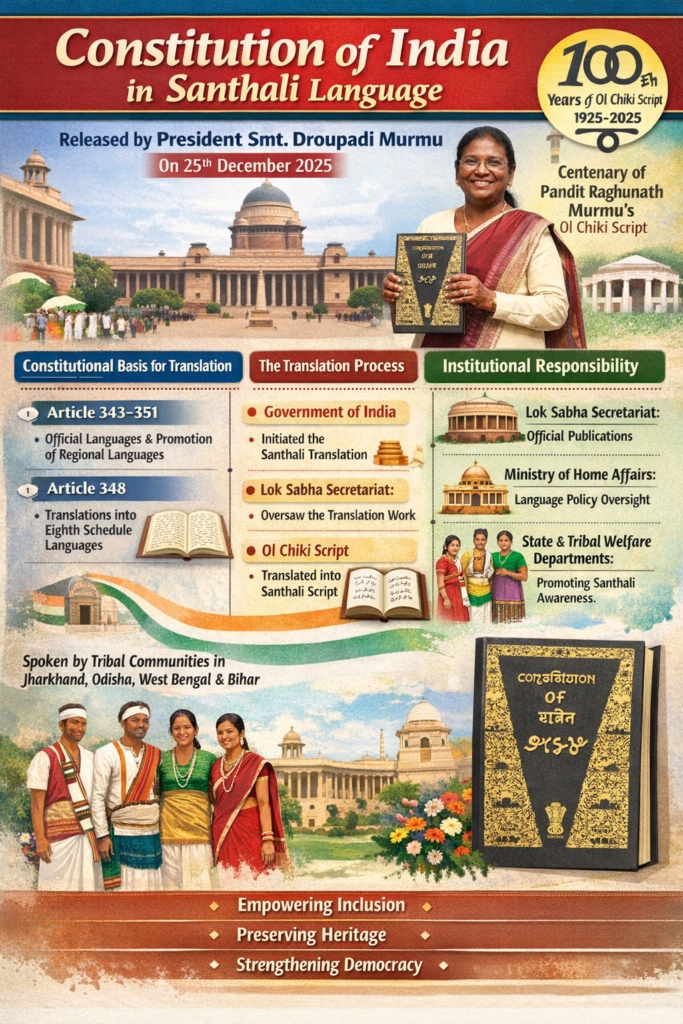
ರಾಷ್ಟ್ರಪತಿ ದೌಪದಿ ಮುರ್ಮು ಅವರು ಸಂತಾಲಿ ಭಾಷೆಯಲ್ಲಿ ಭಾರತ ಸಂವಿಧಾನವನ್ನು ಬಿಡುಗಡೆ ಮಾಡಿದರು.
‘ಭಾರತೀಯ ಸಂವಿಧಾನವು ಸಂತಾಲಿ ಭಾಷೆಯಲ್ಲಿ ಲಭ್ಯವಿರುವುದು ಸಂತಾಲಿ ಜನರಿಗೆ ಹೆಮ್ಮೆ ಮತ್ತು ಸಂತೋಷದ ವಿಷಯವಾಗಿದೆ. ಇದನ್ನು ಒಲ್ ಚಿಕಿ ಲಿಪಿಯಲ್ಲಿ ಬರೆಯಲಾಗಿದೆ. ಅವರ ಭಾಷೆಯಲ್ಲಿ ಸಂವಿಧಾನವನ್ನು ಓದಲು ಮತ್ತು ಅರ್ಥ ಮಾಡಿಕೊಳ್ಳಲು ಸಾಧ್ಯವಾಗುತ್ತದೆ’ ಎಂದು ಬ್ರೌಪದಿ ಮುರ್ಮು ಅವರು ಹೇಳಿದರು.
ಒಲ್ ಚಿಕಿ ಲಿಪಿಯ ಶತಮಾನೋತ್ಸವದ ಸಂದರ್ಭದಲ್ಲಿ ಸಂವಿಧಾನವನ್ನು ಈ ಲಿಪಿಯಲ್ಲಿ ಹೊರತಂದಿರುವುದಕ್ಕೆ ಕೇಂದ್ರ ಕಾನೂನು ಸಚಿವ ಅವರನ್ನು ಮುರ್ಮು ಶ್ಲಾಘಿಸಿದರು.
ಸಂತಾಲಿ ಭಾಷೆಯನ್ನು 2003ರಲ್ಲಿ, 92ನೇ ಸಂವಿಧಾನಾತ್ಮಕ ತಿದ್ದುಪಡಿ ಕಾಯ್ದೆಯ ಮೂಲಕ ಭಾರತದ ಸಂವಿಧಾನದ ಎಂಟನೇ ಅನುಸೂಚಿಗೆ ಸೇರಿಸಲಾಯಿತು.
2003ರ 92ನೇ ಸಂವಿಧಾನ ತಿದ್ದುಪಡಿ ಕಾಯ್ದೆಯ ಮೂಲಕ ಸಂವಿಧಾನದ ಎಂಟನೇ ಅನುಸೂಚಿಯಲ್ಲಿ ಸೇರಿಸಲಾದ ಸಂತಾಲಿ ಭಾಷೆ, ಭಾರತದ ಅತ್ಯಂತ ಪ್ರಾಚೀನ ಜೀವಂತ ಭಾಷೆಗಳಲ್ಲೊಂದು ಆಗಿದೆ.
ಜಾರ್ಖಂಡ್, ಒಡಿಶಾ, ಪಶ್ಚಿಮ ಬಂಗಾಳ ಮತ್ತು ಬಿಹಾರ ರಾಜ್ಯಗಳಲ್ಲಿ ಗಣನೀಯ ಸಂಖ್ಯೆಯ ಆದಿವಾಸಿ ಜನರು ಈ ಭಾಷೆಯನ್ನು ಮಾತನಾಡುತ್ತಾರೆ.
1950: ಆರಂಭದಲ್ಲಿ 14 ಭಾಷೆಗಳು
1967: ಸಿಂಧಿ ಸೇರಿಕೆ
1992: ಕೊಂಕಣಿ, ಮಣಿಪುರಿ, ನೇಪಾಳಿ
2004: ಬೋಡೋ, ಡೋಗ್ರಿ, ಮೈಥಿಲಿ, ಸಂಥಾಲಿ
➡️ ಒಟ್ಟು 22 ಭಾಷೆಗಳು
| ಮೂಲ ಭಾಷೆಗಳು (1950) | ನಂತರ ಸೇರಿಸಲಾದವು |
|---|---|
| ಅಸ್ಸಾಮಿ, ಬೆಂಗಾಲಿ, ಗುಜರಾತಿ, ಹಿಂದಿ, ಕನ್ನಡ, ಕಾಶ್ಮೀರಿ, ಮಲಯಾಳಂ, ಮರಾಠಿ, ಒಡಿಯಾ, ಪಂಜಾಬಿ, ಸಂಸ್ಕೃತ, ತಮಿಳು, ತೆಲುಗು, ಉರ್ದು | ಸಿಂಧಿ (1967), ಕೊಂಕಣಿ (1992), ಮಣಿಪುರಿ (1992), ನೇಪಾಳಿ (1992), ಬೋಡೋ (2004), ಡೋಗ್ರಿ (2004), ಮೈಥಿಲಿ (2004), ಸಂತಾಲಿ (2004) |
🇮🇳 ಭಾರತೀಯ ಸಂವಿಧಾನದ 8ನೇ ಪಟ್ಟಿ – 22 ಅಧಿಕೃತ ಭಾಷೆಗಳು
| ಕ್ರಮ ಸಂಖ್ಯೆ | ಭಾಷೆ | ಪ್ರಧಾನವಾಗಿ ಮಾತನಾಡುವ ರಾಜ್ಯಗಳು/ಪ್ರದೇಶಗಳು | ಮಾನ್ಯತೆ ಪಡೆದ ವರ್ಷ |
|---|---|---|---|
| 1 | ಅಸ್ಸಾಮೀಸ್ | ಅಸ್ಸಾಂ | 1950 |
| 2 | ಬಂಗಾಳಿ | ಪಶ್ಚಿಮ ಬಂಗಾಳ, ತ್ರಿಪುರ | 1950 |
| 3 | ಗುಜರಾತಿ | ಗುಜರಾತ್ | 1950 |
| 4 | ಹಿಂದಿ | ಉತ್ತರ ಭಾರತದ ರಾಜ್ಯಗಳು | 1950 |
| 5 | ಕನ್ನಡ | ಕರ್ನಾಟಕ | 1950 |
| 6 | ಕಾಶ್ಮೀರಿ | ಜಮ್ಮು ಮತ್ತು ಕಾಶ್ಮೀರ | 1950 |
| 7 | ಮಲಯಾಳಂ | ಕೇರಳ, ಲಕ್ಷದ್ವೀಪ | 1950 |
| 8 | ಮರಾಠಿ | ಮಹಾರಾಷ್ಟ್ರ | 1950 |
| 9 | ಒಡಿಯಾ | ಒಡಿಶಾ | 1950 |
| 10 | ಪಂಜಾಬಿ | ಪಂಜಾಬ್ | 1950 |
| 11 | ಸಂಸ್ಕೃತ | ಭಾರತದಾದ್ಯಂತ (ಶಾಸ್ತ್ರೀಯ ಭಾಷೆ) | 1950 |
| 12 | ತಮಿಳು | ತಮಿಳುನಾಡು, ಪುದುಚೇರಿ | 1950 |
| 13 | ತೆಲುಗು | ಆಂಧ್ರಪ್ರದೇಶ, ತೆಲಂಗಾಣ | 1950 |
| 14 | ಉರ್ದು | ತೆಲಂಗಾಣ, ಉತ್ತರ ಪ್ರದೇಶ, ಜಮ್ಮು ಮತ್ತು ಕಾಶ್ಮೀರ | 1950 |
| 15 | ಸಿಂಧಿ | ಗುಜರಾತ್, ರಾಜಸ್ಥಾನ, ಮಹಾರಾಷ್ಟ್ರ | 1967 |
| 16 | ಕೊಂಕಣಿ | ಗೋವಾ, ಕರ್ನಾಟಕ, ಮಹಾರಾಷ್ಟ್ರ | 1992 |
| 17 | ಮಣಿಪುರಿ | ಮಣಿಪುರ | 1992 |
| 18 | ನೇಪಾಳಿ | ಸಿಕ್ಕಿಂ, ಪಶ್ಚಿಮ ಬಂಗಾಳ (ಡಾರ್ಜಿಲಿಂಗ್) | 1992 |
| 19 | ಬೋಡೋ | ಅಸ್ಸಾಂ | 2004 |
| 20 | ಡೋಗ್ರಿ | ಜಮ್ಮು ಮತ್ತು ಕಾಶ್ಮೀರ, ಹಿಮಾಚಲ ಪ್ರದೇಶ | 2004 |
| 21 | ಮೈಥಿಲಿ | ಬಿಹಾರ, ಜಾರ್ಖಂಡ್ | 2004 |
| 22 | ಸಂಥಾಲಿ | ಜಾರ್ಖಂಡ್, ಒಡಿಶಾ, ಪಶ್ಚಿಮ ಬಂಗಾಳ | 2004 |
Source: Prajavani, Gemini AI
FSSAI bars food firms from terming herbal infusions „tea‟
The Food Safety and Standards Authority of India (FSSAI) has issued a stern warning to food business operators against using the word „tea‟ for herbal infusions and plantbased blends not derived from Camellia sinensis, terming it a case of misbranding and misleading practices under the law.
The directive comes after the regulator found several food business operators (FBOs) marketing products, such as „herbal tea‟ and „flower tea‟, none of which are obtained from the Camellia sinensis plant. According to FSSAI regulations, the term „tea‟ can only be used on packaging and labelling if the beverage is derived from Camellia sinensis.
Source: The Hindu
Constitution of India released in Santhali language
Context: Constitution of India in the Santhali language.
The Santhali language is spoken by a significant number of tribal people in Jharkhand, Odisha, West Bengal, and Bihar.
The President said it is a matter of pride for all the Santhali people that the Constitution of India is now available in their language, written in the Ol Chiki script.
Army relaxes social media policy,allows „passive participation‟
Context: After years of stringent restrictions on social media use, the Indian Army has revised its policy to allow “passive participation” by its personnel on select platforms, while maintaining strict safeguards to protect operational security.
According to an Army Headquarters order accessed by, personnel are now permitted to access platforms such as Instagram and X solely for viewing and monitoring content.
Any form of active engagement, including posting, commenting, sharing, reacting or sending messages, remains strictly prohibited.
The revised guidelines, issued by the Army Headquarters through the Directorate General of Military Intelligence (DGMI), have come into effect immediately.
As part of the update, Instagram has been formally included in the list of restricteduse social media platforms.
The policy allows access to applications such as Instagram only for “purposes of viewing and monitoring”. “No comments or views will be communicated on Instagram,” the order stated, reiterating the Army‟s emphasis on protecting sensitive information.
The guidelines further permit limited use of communication platforms such as Skype, Telegram, WhatsApp and Signal, but only for the exchange of unclassified information of a general nature. Such communication is allowed exclusively with known individuals, with the responsibility of verifying the recipient resting entirely with the user.
For platforms including YouTube, X, Quora and Instagram, only passive use to access information or gain knowledge has been authorised. Uploading user-generated content or engaging in any form of active participation remains prohibited. LinkedIn may be used only for professional purposes such as uploading résumés or seeking information related to prospective employers or employees.
The revised policy also advises personnel to avoid generic websites, portals offering cracked or pirated software, free movie platforms, torrent and VPN services, web proxies, anonymised websites, chat rooms and file-sharing platforms. It further cautions that cloud-based data storage services should be used only with extreme care.
In July 2020, amid heightened security concerns, the Indian Army had directed all officers and soldiers to delete their Facebook and Instagram accounts, along with 89 mobile applications, warning of strict action for non-compliance. The banned list included 59 applications with links to China, which were also prohibited by the Union government at the time.
Source: TH
Intel grid linked to NPR with details of 119 crore residents
Context: The National Intelligence Grid (NATGRID), a secure platform for the police and other investigating agencies to access government and private databases in real-time, has been linked to the National Population Register (NPR), which has the family-wise details of 119 crore residents in India, government officials have said.
The Union Home Ministry has been pushing for the enhanced use of NATGRID by the State police forces and Central law and security agencies for intelligence gathering and speedy investigation of criminal cases through indigenous and secure platforms.
An Organised Crime Network Database was being developed on NATGRID‟s IT platform to facilitate secure data-sharing between the National Investigation Agency (NIA) and the State AntiTerror Squads (ATS), upgraded NATGRID tools, particularly “Gandiva”, are supporting multi-source data collection and analysis.
NATGRID is, on an average, getting nearly 45,000 requests a month. The platform, accessible only to security agencies, became operational last year after being conceptualised in 2009 in the aftermath of the 26/11 Mumbai terror attacks.
The data for NPR, which stores information family wise, were first collected in 2010 with the first phase of the 2011 Census and was last updated in 2015 through doorto-door enumeration. It was to be updated further during the 2021 Census, which has been delayed by the COVID-19 pandemic.
When the Union Cabinet approved the proposal for conducting Census 2027 at a cost of ₹11,718 crore, there was no separate allocation for the NPR. Earlier on July 29, the government informed the Lok Sabha that no decision had been taken to update the NPR during the forthcoming Census exercise.
The NPR is the first step for the creation of a countrywide National Register of Citizens (NRC). “Gandiva”, the details of all family members of a suspect or a person of interest if available in NPR could be accessed through the platform. Gandiva can be used for facial recognition and entity resolution. “If the image of a suspect is available, it can be fed into Gandiva. If any photo identity document such as telecom KYC or vehicle registration or driving licence matches with the photo, Gandiva can provide the details, thereby saving time and resources of an investigator,”.
Source: TH
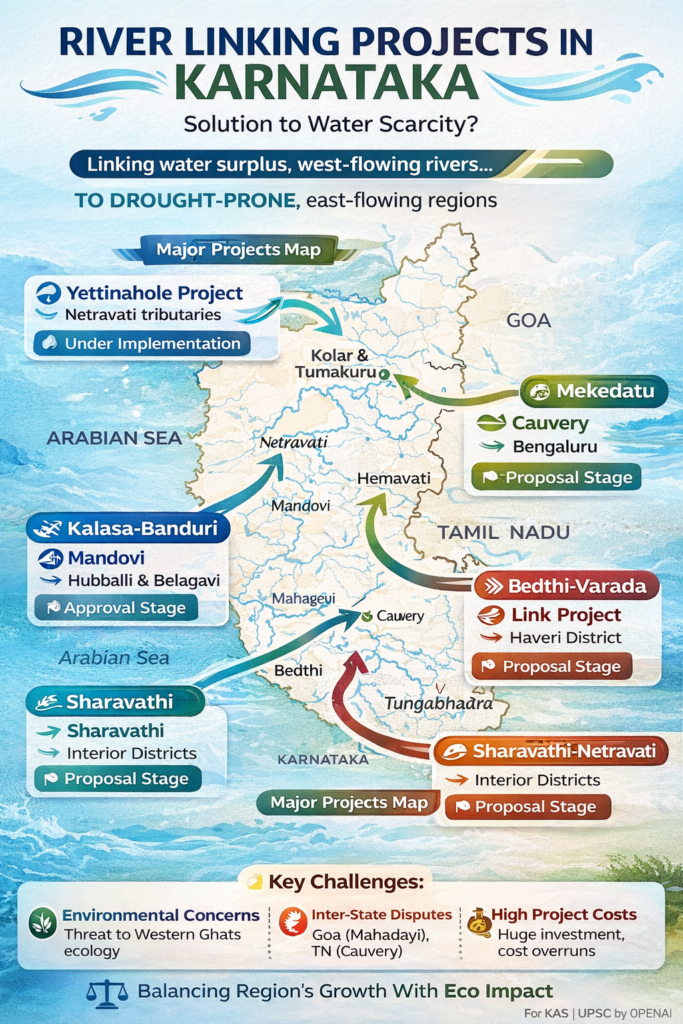
ಬೇಡ್ತಿ–ವರದಾ ನದಿ ಜೋಡಣೆಗೆ ಡಿಪಿಆರ್: ರಾಜ್ಯ ಒಪ್ಪಿಗೆ
ಕರ್ನಾಟಕದಲ್ಲಿ ಪರಿಸರಾಸಕ್ತರ ವ್ಯಾಪಕ ವಿರೋಧದ ನಡುವೆಯೂ ಬೇಡ್ತಿ–ವರದಾ ನದಿಗಳ ಜೋಡಣೆಗೆ ವಿಸ್ತೃತ ಯೋಜನಾ ವರದಿ (ಡಿಪಿಆರ್) ತಯಾರಿಸಲು ರಾಜ್ಯ ಸರ್ಕಾರ ಒಪ್ಪಿಗೆ ಸೂಚಿಸಿದೆ.
ಈ ಯೋಜನೆಗೆ ₹10 ಸಾವಿರ ಕೋಟಿ ವೆಚ್ಚ ಆಗಲಿದ್ದು, ಕೇಂದ್ರ ಸರ್ಕಾರ ₹9 ಸಾವಿರ ಕೋಟಿ ಭರಿಸಲಿದೆ.
ಈ ಯೋಜನೆಯು ಪಶ್ಚಿಮಕ್ಕೆ ಹರಿಯುವ ನದಿಗಳಿಂದ ರಾಜ್ಯದ ಪೂರ್ವ ಭಾಗದ ಬರ ಪೀಡಿತ ಭಾಗಗಳಿಗೆ ನೀರನ್ನು ಹರಿಸಲು ಸಹಾಯ ಮಾಡುತ್ತದೆ.
‘ಗೋದಾವರಿ–ಕಾವೇರಿ ನದಿಗಳ ಜೋಡಣೆ ಯೋಜನೆಯ ಮೊದಲ ಹಂತದಲ್ಲಿ 148 ಟಿಎಂಸಿ ಅಡಿ ನೀರನ್ನು ತಿರುಗಿಸಲು ಪ್ರಸ್ತಾಪಿಸಲಾಗಿದೆ. ಇದರಲ್ಲಿ ಕರ್ನಾಟಕಕ್ಕೆ ಕೇವಲ 15.90 ಟಿಎಂಸಿ ಅಡಿ ಹಂಚಿಕೆ ಮಾಡಲಾಗಿದೆ. ಇದಕ್ಕೆ ವ್ಯತಿರಿಕ್ತವಾಗಿ, ಇತರ ಫಲಾನುಭವಿ ರಾಜ್ಯಗಳಿಗೆ ನೀರಾವರಿ ಸೇರಿದಂತೆ ವಿವಿಧ ಉದ್ದೇಶಗಳಿಗೆ ಹೆಚ್ಚಿನ ಪ್ರಮಾಣದಲ್ಲಿ ಹಂಚಿಕೆ ಮಾಡಲಾಗಿದೆ. ಬೇಡ್ತಿ-ವರದಾ ನದಿ ಜೋಡಣೆ ಬಳಿಕವೂ ರಾಜ್ಯಕ್ಕೆ ಸಿಗುವುದು ಕೇವಲ 34.40 ಟಿಎಂಸಿ ಅಡಿಗೆ ಮಾತ್ರ. ನದಿ ಜೋಡಣೆ ಯೋಜನೆಯಲ್ಲಿ ನಮ್ಮ ರಾಜ್ಯಕ್ಕೆ ಕನಿಷ್ಠ 40-45 ಟಿಎಂಸಿ ಅಡಿ ನೀರನ್ನು ನೀಡಬೇಕು. ಗೋದಾವರಿ- ಕಾವೇರಿ ನದಿ ಜೋಡಣೆ ಯೋಜನೆಯಲ್ಲಿ ಹೆಚ್ಚುವರಿ 5 ಟಿಎಂಸಿ ಅಡಿ ನೀರನ್ನು ಭೀಮಾ ನದಿ ಪ್ರದೇಶಕ್ಕೆ ನೀಡಬೇಕು ಎಂದು ಕೇಂದ್ರ ಸರ್ಕಾರಕ್ಕೆ ಮನವಿ ಸಲ್ಲಿಸಲಾಗಿದೆ.
# **ಬೇಡ್ತಿ–ವರದಾ ನದಿ ಜೋಡಣೆ ಯೋಜನೆ**### ಪರಿಚಯ
ಕರ್ನಾಟಕ ರಾಜ್ಯವು ಜಲ ಸಂಪನ್ಮೂಲಗಳ ವಿತರಣೆಯಲ್ಲಿ ತೀವ್ರ ಪ್ರಾದೇಶಿಕ ಅಸಮಾನತೆಯನ್ನು ಅನುಭವಿಸುತ್ತಿರುವ ರಾಜ್ಯವಾಗಿದೆ. ಪಶ್ಚಿಮ ಘಟ್ಟ ಪ್ರದೇಶದಲ್ಲಿ ವರ್ಷಕ್ಕೆ **3,000 ರಿಂದ 5,000 ಮಿ.ಮೀ.ವರೆಗೆ ಹೆಚ್ಚಿನ ಮಳೆಯಾಗುತ್ತಿದರೂ**, ರಾಜ್ಯದ ಮಧ್ಯ ಮತ್ತು ಉತ್ತರ ಭಾಗಗಳು ಕೇವಲ **600–700 ಮಿ.ಮೀ. ಮಳೆಯನ್ನೇ** ಅವಲಂಬಿಸಿವೆ. ಈ ಅಸಮಾನತೆಯೇ ನಿರಂತರ ಬರ, ಕೃಷಿ ಅಸ್ಥಿರತೆ ಮತ್ತು ಭೂಗರ್ಭ ಜಲದ ಅತಿಯಾದ ಬಳಕೆಗೆ ಕಾರಣವಾಗಿದೆ.ಈ ಹಿನ್ನೆಲೆಗಳಲ್ಲಿ, ಪಶ್ಚಿಮ ದಿಕ್ಕಿನಲ್ಲಿ ಅರಬ್ಬೀ ಸಮುದ್ರಕ್ಕೆ ಹರಿಯುವ **ಬೇಡ್ತಿ (ಗಂಗಾವಳಿ) ನದಿಯ** ಮಳೆಗಾಲದ ಹೆಚ್ಚುವರಿ ನೀರನ್ನು, ಪೂರ್ವ ದಿಕ್ಕಿನಲ್ಲಿ ಹರಿಯುವ **ವರದಾ ನದಿಗೆ** ವರ್ಗಾಯಿಸುವ ಉದ್ದೇಶದ **ಬೇಡ್ತಿ–ವರದಾ ನದಿ ಜೋಡಣೆ ಯೋಜನೆ** ಪ್ರಸ್ತಾಪಿಸಲಾಗಿದೆ.
## ಯೋಜನೆಯ ಹಿನ್ನೆಲೆ ಮತ್ತು ಅಗತ್ಯತೆ
ಕರ್ನಾಟಕದಲ್ಲಿ ಲಭ್ಯವಿರುವ ಒಟ್ಟು ಮೇಲ್ಮೈ ನೀರಿನ ಸುಮಾರು **60% ಪಶ್ಚಿಮಕ್ಕೆ ಹರಿದು ಸಮುದ್ರ ಸೇರುತ್ತದೆ**, ಆದರೆ ರಾಜ್ಯದ **70%ಕ್ಕೂ ಹೆಚ್ಚು ಜನಸಂಖ್ಯೆ ಮತ್ತು ಕೃಷಿ ಚಟುವಟಿಕೆಗಳು ಪೂರ್ವ ದಿಕ್ಕಿನ ನದಿ ಕಣಿವೆಗಳಲ್ಲಿ** συγκ್ರಹಗೊಂಡಿವೆ.ಮಧ್ಯ ಮತ್ತು ಉತ್ತರ ಕರ್ನಾಟಕದಲ್ಲಿ ಕೃಷಿಯ **65% ಕ್ಕಿಂತ ಹೆಚ್ಚು ಭಾಗ ಮಳೆಯ ಮೇಲೆ ಅವಲಂಬಿತವಾಗಿದೆ**. ಹವಾಮಾನ ಬದಲಾವಣೆಯಿಂದಾಗಿ ಮಳೆಯ ಅಸಮತೋಲನ, ಕಡಿಮೆ ದಿನಗಳಲ್ಲಿ ಹೆಚ್ಚಿನ ಮಳೆ ಮತ್ತು ದೀರ್ಘ ಒಣಕಾಲಗಳು ಹೆಚ್ಚಾಗುತ್ತಿವೆ. ಇದರಿಂದ ಒಳನಾಡು ಪ್ರದೇಶಗಳ ಜಲ ಸಂಕಷ್ಟ ಮತ್ತಷ್ಟು ಗಂಭೀರವಾಗಿದೆ.ಈ ಪರಿಸ್ಥಿತಿಯಲ್ಲಿ, ಪಶ್ಚಿಮ ಘಟ್ಟದಲ್ಲಿ ಮಳೆಗಾಲದಲ್ಲಿ ಸಮುದ್ರಕ್ಕೆ ಹರಿದುಹೋಗುವ ಹೆಚ್ಚುವರಿ ನೀರನ್ನು ಒಳನಾಡಿಗೆ ವರ್ಗಾಯಿಸುವುದು ಸರ್ಕಾರದ ಪ್ರಮುಖ ತಂತ್ರವಾಗಿದೆ.
## ಭಾಗವಹಿಸುವ ನದಿಗಳ ವಿವರ###
🔹 ಬೇಡ್ತಿ ನದಿ (ಗಂಗಾವಳಿ)* ಉಗಮ: ಪಶ್ಚಿಮ ಘಟ್ಟ, ಉತ್ತರ ಕನ್ನಡ ಜಿಲ್ಲೆ* ಹರಿವು: ಪಶ್ಚಿಮ ದಿಕ್ಕಿನಲ್ಲಿ* ಅಂತ್ಯ: ಅರಬ್ಬೀ ಸಮುದ್ರ (ಅಂಕೋಲಾ ಸಮೀಪ)* ವಿಶೇಷತೆ: **ಮಾಗೋಡ್ ಜಲಪಾತ** – ಕರ್ನಾಟಕದ ಎರಡನೇ ಅತಿ ಎತ್ತರದ ಜಲಪಾತ* ಲಕ್ಷಣ: ಕಡಿಮೆ ಉದ್ದದ ನದಿಯಾದರೂ, ತೀವ್ರ ಇಳಿಜಾರಿನ ಕಾರಣ ಮಳೆಗಾಲದಲ್ಲಿ ಹೆಚ್ಚಿನ ವೇಗ ಮತ್ತು ನೀರಿನ ಹರಿವು
### 🔹 ವರದಾ ನದಿ* ಉಗಮ: ಪಶ್ಚಿಮ ಘಟ್ಟ, ಶಿವಮೊಗ್ಗ ಜಿಲ್ಲೆ* ಹರಿವು: ಪೂರ್ವ ದಿಕ್ಕಿನಲ್ಲಿ* ಸೇರ್ಪಡೆ: ಹಾವೇರಿ ಜಿಲ್ಲೆಯಲ್ಲಿ **ತುಂಗಭದ್ರಾ ನದಿಗೆ*** ನದಿ ವ್ಯವಸ್ಥೆ: ಕೃಷ್ಣಾ ನದಿ ಕಣಿವೆ* ಮಹತ್ವ: ತುಂಗಭದ್ರಾ–ಕೃಷ್ಣಾ ನೀರಾವರಿ ವ್ಯವಸ್ಥೆಗೆ ಪ್ರಮುಖ ಉಪನದಿ##
ಯೋಜನೆಯ ಪ್ರಮುಖ ಉದ್ದೇಶಗಳು*
ಮಧ್ಯ ಮತ್ತು ಉತ್ತರ ಕರ್ನಾಟಕದ ಬರಪೀಡಿತ ಜಿಲ್ಲೆಗಳಿಗೆ **ನೀರಾವರಿ ಸೌಲಭ್ಯ ವಿಸ್ತರಣೆ*** ಮಳೆಯ ಮೇಲಿನ ಅತಿಯಾದ ಅವಲಂಬನೆ ಕಡಿಮೆ ಮಾಡುವುದು* ಕೃಷಿ ಉತ್ಪಾದನೆ ಮತ್ತು ರೈತರ ಆದಾಯದಲ್ಲಿ ಸ್ಥಿರತೆ ಸಾಧಿಸುವುದು* ಭೂಗರ್ಭ ಜಲದ ದುರ್ಬಳಕೆಯನ್ನು ತಡೆಯುವುದು* ಪ್ರಾದೇಶಿಕ ಅಭಿವೃದ್ಧಿಯಲ್ಲಿ ಸಮತೋಲನ ಸಾಧಿಸುವುದು
## ತಾಂತ್ರಿಕ ಅಂಶಗಳು* ಬೇಡ್ತಿ ನದಿಯಿಂದ ಸುಮಾರು **18–19 TMC (242 MCM)** ನೀರನ್ನು ವರ್ಗಾಯಿಸುವ ಪ್ರಸ್ತಾವ* ಪಶ್ಚಿಮ ಘಟ್ಟವನ್ನು ದಾಟಲು **ಸುರಂಗಗಳು ಮತ್ತು ಎತ್ತುವ ನೀರಾವರಿ ವ್ಯವಸ್ಥೆಗಳು*** ಹೆಚ್ಚಿನ ವಿದ್ಯುತ್ ಬಳಕೆ ಮತ್ತು ಸುಧಾರಿತ ತಾಂತ್ರಿಕ ಮೂಲಸೌಕರ್ಯದ ಅಗತ್ಯ
## ಆಡಳಿತಾತ್ಮಕ ಮತ್ತು ನೀತಿಗತ ಪ್ರಗತಿ*
ಕರ್ನಾಟಕ ಸರ್ಕಾರವು ಯೋಜನೆಯ **ವಿಸ್ತೃತ ಯೋಜನಾ ವರದಿ (DPR) ತಯಾರಿಕೆಗೆ ಅನುಮೋದನೆ ನೀಡಿದೆ***
ಯೋಜನೆಯ ಅಂದಾಜು ವೆಚ್ಚ: **ಸುಮಾರು ₹10,000 ಕೋಟಿ (ಹಂತವಾರು ಹೆಚ್ಚಳ ಸಾಧ್ಯತೆ)*** ಹಣಕಾಸು ಮಾದರಿ: **90% ಕೇಂದ್ರ ಸರ್ಕಾರ ಮತ್ತು 10% ರಾಜ್ಯ ಸರ್ಕಾರ*** ಯೋಜನೆ **ರಾಷ್ಟ್ರೀಯ ಜಲ ಅಭಿವೃದ್ಧಿ ಪ್ರಾಧಿಕಾರದ (NWDA)** ಮಾರ್ಗಸೂಚಿಗಳ ಪ್ರಕಾರ ರೂಪುಗೊಳ್ಳುತ್ತಿದೆ##
ನಿರೀಕ್ಷಿತ ಲಾಭಗಳು*
ಹಾವೇರಿ, ಗದಗ, ಕೊಪ್ಪಳ ಸೇರಿದಂತೆ ಒಳನಾಡು ಜಿಲ್ಲೆಗಳಲ್ಲಿ **ನೀರಾವರಿ ವ್ಯಾಪ್ತಿ ವಿಸ್ತರಣೆ*** ಕೃಷಿ ಉತ್ಪಾದನೆಯಲ್ಲಿ ಸ್ಥಿರತೆ ಮತ್ತು ಬೆಳೆ ನಷ್ಟದ ಕಡಿತ* ರೈತರ ಆದಾಯ ಮತ್ತು ಗ್ರಾಮೀಣ ಜೀವನಮಟ್ಟದಲ್ಲಿ ಸುಧಾರಣೆ* ಹಂಗಾಮಿ ವಲಸೆ ಮತ್ತು ಬರ ಆಧಾರಿತ ಸಾಮಾಜಿಕ ಒತ್ತಡ ಕಡಿಮೆಯಾಗುವ ಸಾಧ್ಯತೆ
## ಪರಿಸರ ಮತ್ತು ಸಾಮಾಜಿಕ ಚಿಂತೆಗಳು* ಯೋಜನೆ **ಯುನೆಸ್ಕೋ ಮಾನ್ಯತೆ ಪಡೆದ ಪಶ್ಚಿಮ ಘಟ್ಟದ ಪರಿಸರ ಸಂವೇದನಾಶೀಲ ಪ್ರದೇಶದಲ್ಲಿ** ಅನುಷ್ಠಾನಗೊಳ್ಳುತ್ತಿರುವುದರಿಂದ ಪರಿಸರ ಚಿಂತೆಗಳು ಗಂಭೀರವಾಗಿವೆ* ಅರಣ್ಯ ನಾಶ, ಜೀವ ವೈವಿಧ್ಯಕ್ಕೆ ಅಪಾಯ ಮತ್ತು ವನ್ಯಜೀವಿ ವಾಸಸ್ಥಳಗಳ ಮೇಲೆ ಪರಿಣಾಮ* ಕರಾವಳಿ ಪ್ರದೇಶಗಳಲ್ಲಿ ನದಿ ಹರಿವಿನ ಕಡಿತದಿಂದ: * ಎಸ್ಟ್ಯುರಿ ಪರಿಸರ ವ್ಯವಸ್ಥೆ * ಮೀನುಗಾರಿಕೆ * ಭೂಗರ್ಭ ಜಲ ಮರುಪೂರಣೆ ಮೇಲೆ ಪರಿಣಾಮ ಬೀಳುವ ಸಾಧ್ಯತೆ* ಸ್ಥಳೀಯ ಸಮುದಾಯಗಳು ಮತ್ತು ಪರಿಸರ ತಜ್ಞರಿಂದ ವಿರೋಧ ವ್ಯಕ್ತವಾಗಿದೆ
## ಪ್ರಮುಖ ಸವಾಲುಗಳು*
ಪರಿಸರ, ಅರಣ್ಯ ಮತ್ತು ವನ್ಯಜೀವಿ ಅನುಮತಿಗಳ ಪಡೆಯುವಿಕೆ* ತಾಂತ್ರಿಕ ಜಟಿಲತೆಗಳು ಮತ್ತು ವೆಚ್ಚದ ಏರಿಕೆ* ನ್ಯಾಯಾಲಯದ ಮೊಕದ್ದಮೆಗಳು ಮತ್ತು ಅನುಷ್ಠಾನ ವಿಳಂಬದ ಸಾಧ್ಯತೆ
## ಮುಂದಿನ ದಾರಿ (Way Forward)*
ಸಮಗ್ರ ಮತ್ತು ಪಾರದರ್ಶಕ **ಪರಿಸರ ಪರಿಣಾಮ ಅಧ್ಯಯನ (EIA)*** ನದಿಗಳಲ್ಲಿ ಕನಿಷ್ಠ ಪರಿಸರ ಹರಿವನ್ನು ಕಡ್ಡಾಯವಾಗಿ ಕಾಪಾಡುವುದು* ದೊಡ್ಡ ಯೋಜನೆಗಳ ಜೊತೆಗೆ **ಸ್ಥಳೀಯ ಜಲ ಸಂರಕ್ಷಣಾ ಕ್ರಮಗಳಿಗೆ** ಒತ್ತು* ಸಾರ್ವಜನಿಕ ಸಲಹೆ, ವೈಜ್ಞಾನಿಕ ಅಧ್ಯಯನ ಮತ್ತು ಹಂತವಾರು ಅನುಷ್ಠಾನ
## ಉಪಸಂಹಾರ
**ಬೇಡ್ತಿ–ವರದಾ ನದಿ ಜೋಡಣೆ ಯೋಜನೆ** ಕರ್ನಾಟಕದ ಜಲ ಅಸಮಾನತೆಯನ್ನು ಕಡಿಮೆ ಮಾಡುವ ಮಹತ್ವದ ಪ್ರಯತ್ನವಾಗಿದೆ. ಆದರೆ ಇದು ಪಶ್ಚಿಮ ಘಟ್ಟದಂತಹ ಸೂಕ್ಷ್ಮ ಪರಿಸರ ವ್ಯವಸ್ಥೆಯಲ್ಲಿ ಅನುಷ್ಠಾನಗೊಳ್ಳುತ್ತಿರುವುದರಿಂದ, ಕೇವಲ ತಾಂತ್ರಿಕ ಪರಿಹಾರಗಳಿಗಿಂತಲೂ **ಪರಿಸರ ಸಂರಕ್ಷಣೆ, ಸಾಮಾಜಿಕ ನ್ಯಾಯ ಮತ್ತು ದೀರ್ಘಕಾಲೀನ ಜಲ ನಿರ್ವಹಣೆಯ ಸಮತೋಲನ** ಅತ್ಯಗತ್ಯವಾಗಿದೆ. ಸಮಗ್ರ ದೃಷ್ಟಿಕೋನ ಮತ್ತು ಜವಾಬ್ದಾರಿಯುತ ಅನುಷ್ಠಾನವೇ ಈ ಯೋಜನೆಯ ಯಶಸ್ಸನ್ನು ನಿರ್ಧರಿಸುತ್ತದೆ.
River Linking in Karnataka
Bedthi–Varada River Linking Project
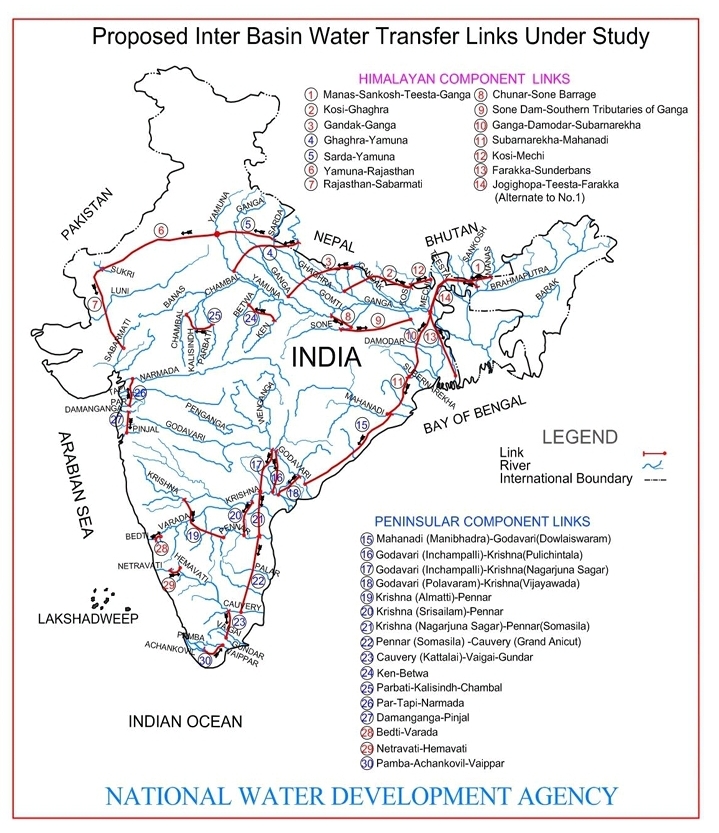
The Bedthi–Varada River Linking Project is one of Karnataka’s most significant proposed intra-state inter-basin water transfer schemes. It aims to address chronic water scarcity in central and northern Karnataka by diverting surplus flows from the west-flowing Bedthi (Gangavali) river to the east-flowing Varada river — a tributary of the Tungabhadra River in the Krishna basin.
Background: Water Scarcity and Interlinking Policy
Interlinking rivers has been part of India’s long-term strategy to redistribute water across water-short and water-rich regions. The National Perspective Plan envisaged multiple links, including several in Karnataka’s peninsular river systems. Among these, the Bedthi–Varada project stands out for its intra-state scope and potential to support irrigation and reduce drought stress.
Geographical Features of the Rivers
Bedthi (Gangavali) River
- Originates in the Western Ghats and flows westward into the Arabian Sea.
- Drains the Sirsi–Yellapura region of Uttara Kannada district.
- Known for Magod Falls, one of Karnataka’s highest waterfalls.
- Substantial monsoon flows often go unused due to steep terrain.
Varada River
- Begins in the Western Ghats and flows eastward through Shivamogga and Haveri districts.
- Joins the Tungabhadra River, which feeds into the Krishna basin.
- Supports agriculture in otherwise water-stress regions.
Project Design and Technical Details
According to feasibility studies and pre-feasibility reports:
- The project envisages diversion of surplus waters (around 242 MCM / ~18–18.5 TMC) from the Bedthi basin to the Varada basin.
- Conveyance includes tunnels and lifting systems to transfer the water across the Western Ghats into the Varada river.
- Two link components are proposed:
- Direct lift and tunnel route from Bedthi to Varada.
- Via storage at Dharma reservoir, then conveyed to Varada.
The NWDA has completed draft DPR work and submitted it to the Karnataka government for observations.
Political and Administrative Progress
Government Approval
- The Karnataka government has approved the preparation of the DPR for the Bedthi–Varada linking project, marking an important procedural milestone.
Official Statements
Deputy Chief Minister D.K. Shivakumar confirmed that:
- The state has given go-ahead for the DPR, estimated to cost around ₹10,000 crore.
- The Centre will bear 90% of the cost, while the State will contribute 10%.
- Karnataka has sought an allocation of 40–45 TMC from river linking projects to address wider water needs, including an additional request to release 5 TMC for the Bhima basin.
Water Allocation
- The Bedthi–Varada scheme has been allotted roughly 18.5 TMC for diversion under the overall interlinking effort.
Expected Benefits
The main motivations for the project include:
- Irrigation expansion in drought-prone districts like Gadag, Koppal, Raichur and parts of Haveri.
- Augmentation of water supply for agriculture and allied uses.
- Reduction of monsoon runoff losses into the sea in the Western Ghats.
- Potential socio-economic uplift in rain-shadow regions.
Local farmer associations and political leaders have repeatedly voiced support for expediting implementation.
Environmental and Technical Challenges
Despite its promise, the project has generated opposition and technical critique:
Ecology and Biodiversity
Environmental groups argue that diverting water from the ecologically sensitive Western Ghats could:
- Damage biodiversity hotspots.
- Affect downstream freshwater and estuarine ecosystems.
- Impact local communities reliant on riverine resources.
Technical Feasibility Concerns
Critics contend the project design:
- May not guarantee water delivery to intended areas.
- Risks large forest and agricultural land submergence due to dams/weirs.
- Needs more accurate water availability assessments and field-based studies.
Balancing Development and Sustainability
The Bedthi–Varada project exemplifies the development vs environment dilemma in India’s water governance:
- Water redistribution is crucial for drought-mitigation and agricultural sustainability.
- Yet large infrastructure must respect ecological limits, biodiversity and long-term environmental health.
Policy experts suggest that river links should be paired with demand-management solutions like watershed development, rainwater harvesting and aquifer recharge.
Conclusion
The Bedthi–Varada River Linking Project has advanced from concept to DPR approval phase, backed by political support and central funding patterns. While it holds strong potential to transform water availability for central Karnataka, its technical, ecological and socio-economic implications require thorough evaluation, transparent planning and community engagement.