November 2025
ಪ್ರಚಲಿತ ವಿದ್ಯಮಾನಗಳು: 15ನೇ ನವೆಂಬರ್ 2025
- ವಿಶ್ವ ರ್ಯಾಂಕಿಂಗ್: ಕ್ರೈಸ್ಟ್ ಸಾಧನೆ
ಸಂದರ್ಭ: ಕ್ವಾಕ್ವರೇಲ್ಲಿ ಸೈಮಂಡ್ಸ್ (ಕ್ಯೂಎಸ್) ಸಂಸ್ಥೆ ಕ್ಯೂಎಸ್ ಜಾಗತಿಕ ವಿಶ್ವವಿದ್ಯಾಲಯ ರ್ಯಾಂಕಿಂಗ್ ಪಟ್ಟಿ ಬಿಡುಗಡೆ ಮಾಡಿದೆ.
- ಕಳೆದ ಬಾರಿ 681–700ನೇ ಸ್ಥಾನದಲ್ಲಿದ್ದ ಕ್ರೈಸ್ಟ್ (ಡೀಮ್ಡ್ ಟು ಬಿ ಯುನಿವರ್ಸಿಟಿ) ವಿಶ್ವವಿದ್ಯಾಲಯವು ಈ ಬಾರಿ 537ನೇ ಶ್ರೇಯಾಂಕ ವನ್ನು ಪಡೆದಿದೆ. ದಕ್ಷಿಣ ಏಷ್ಯಾ ವಿಭಾಗದಲ್ಲಿಯೂ ವಿಶ್ವವಿದ್ಯಾಲಯವು ಉತ್ತಮ ಸ್ಥಾನ ಪಡೆದಿದ್ದು, 140ನೇ ಸ್ಥಾನ ಗಳಿಸಿದೆ.
- ಈ ವರ್ಷ ಏಷ್ಯಾದ ಪಟ್ಟಿಯಲ್ಲಿ 1,526 ವಿಶ್ವವಿದ್ಯಾಲಯಗಳಲ್ಲಿ ಕ್ರೈಸ್ಟ್ ವಿಶ್ವವಿದ್ಯಾಲಯವೂ ಸೇರಿದೆ. ಭಾರತದ 294 ಸಂಸ್ಥೆಗಳಲ್ಲಿ ಕ್ರೈಸ್ಟ್ ಕೂಡ ಒಂದಾಗಿದೆ ಎಂದು ವಿಶ್ವವಿದ್ಯಾಲಯದ ಕುಲಪತಿ ಜೋಸೆಫ್ ಸಿ.ಸಿ. ತಿಳಿಸಿದ್ದಾರೆ.
ಭಾರತದ ನಗರಗಳ ಜಲಸಂಕಷ್ಟ
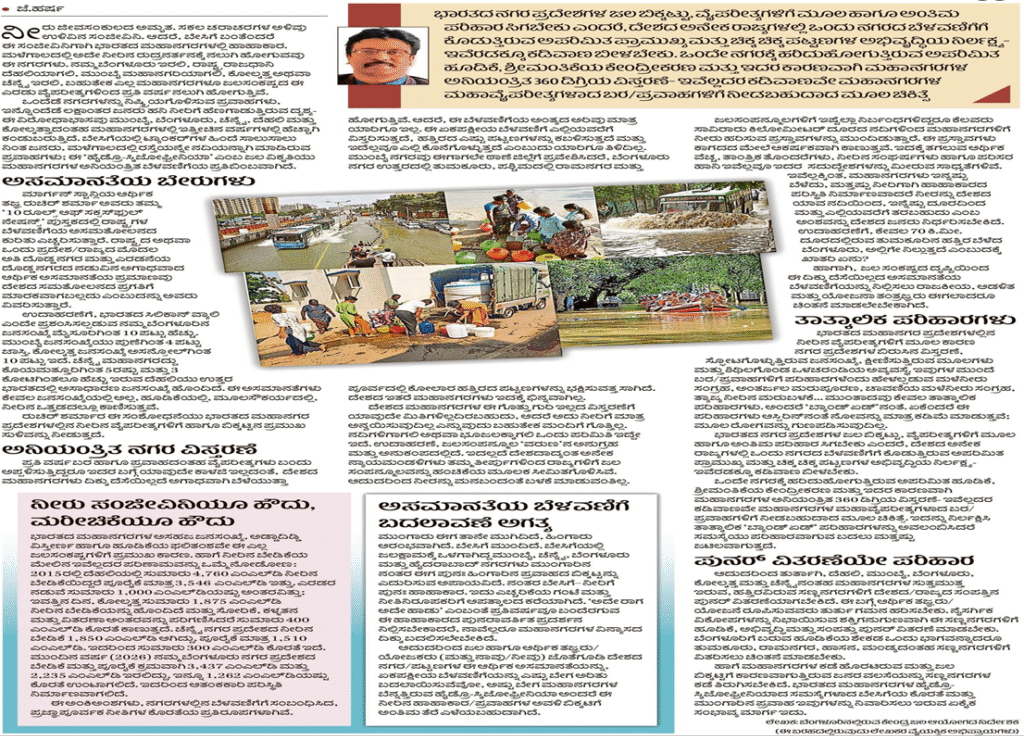
ನೀರು ಜೀವಸಂಕುಲದ ಅಮೃತ. ಸಕಲ ಚರಾಚರಗಳ ಅಳಿವು ಉಳಿವಿನ ಸಂಜೀವಿನಿ. ಆದರೆ, ಬೇಸಿಗೆ ಬಂತೆಂದರೆ ಈ ಸಂಜೀವಿನಿಗಾಗಿ ಭಾರತದ ಮಹಾನಗರಗಳಲ್ಲಿ ಹಾಹಾಕಾರ. ಮಳೆಗಾಲದಲ್ಲಿ ಅದೇ ನೀರಿನ ರುದ್ರನರ್ತನಕ್ಕೆ ನಲುಗಿ ಹೋಗುವವು ಈ ನಗರಗಳು. ನಮ್ಮ ಬೆಂಗಳೂರು ಇರಲಿ, ರಾಷ್ಟ್ರ ರಾಜಧಾನಿ ದೆಹಲಿಯಾಗಲಿ, ಮುಂಬೈ ಮಹಾನಗರಿಯಾಗಲಿ, ಕೋಲ್ಕತ್ತ ಅಥವಾ ಚೆನ್ನೈ ಇರಲಿ, ಬಹುತೇಕ ಎಲ್ಲ ಮಹಾನಗರಗಳೂ ಜಲಸಂಕಷ್ಟದ ಈ ಎರಡು ವೈಪರೀತ್ಯಗಳಿಂದ ಪ್ರತಿ ವರ್ಷ ನಲುಗಿ ಹೋಗುತ್ತಿವೆ.
ಒಂದೆಡೆ ನಗರಗಳನ್ನು ನಿಷ್ಕ್ರಿಯಗೊಳಿಸುವ ಪ್ರವಾಹಗಳು, ಇನ್ನೊಂದೆಡೆ ಲಕ್ಷಾಂತರ ಜನರು ಹನಿ ನೀರಿಗೆ ಹೆಣಗಾಡುತ್ತಿರುವ ದೃಶ್ಯ- ಈ ವಿರೋಧಾಭಾಸವು ಮುಂಬೈ, ಬೆಂಗಳೂರು, ಚೆನ್ನೈ, ದೆಹಲಿ ಮತ್ತು ಕೋಲ್ಕತ್ತಾದಂತಹ ಮಹಾನಗರಗಳಲ್ಲಿ ಇತ್ತೀಚಿನ ವರ್ಷಗಳಲ್ಲಿ ಹೆಚ್ಚಾಗಿ ಕಂಡುಬರುತ್ತಿದೆ. ಬೇಸಿಗೆಯಲ್ಲಿ ಟ್ಯಾಂಕರ್ಗಳ ಹಿಂದೆ ಸಾಲುಸಾಲು ನಿಂತ ಜನರು, ಮಳೆಗಾಲದಲ್ಲಿ ರಸ್ತೆಯನ್ನೇ ನದಿಯನ್ನಾಗಿ ಮಾಡಿರುವ ಪ್ರವಾಹಗಳು; ಈ ‘ಹೈಡ್ರೊ-ಸ್ಕಿಜೋಫ್ರೀನಿಯಾ’ ಎಂಬ ಜಲ ವಿಕೃತಿಯು ಮಹಾನಗರಗಳ ಅನಿಯಂತ್ರಿತ ಬೆಳವಣಿಗೆಯ ಪ್ರತಿಬಿಂಬವಾಗಿದೆ.
ಅಸಮಾನತೆಯ ಬೇರುಗಳು
ಮಾರ್ಗನ್ ಸ್ಟಾನ್ಲಿಯ ಆರ್ಥಿಕ ತಜ್ಞ ರುಚಿರ್ ಶರ್ಮಾ ಅವರು ತಮ್ಮ ‘10 ರೂಲ್ಸ್ ಆಫ್ ಸಕ್ಸಸ್ಫುಲ್ ನೇಷನ್ಸ್’ ಪುಸ್ತಕದಲ್ಲಿ ರಾಷ್ಟ್ರಗಳ ಬೆಳವಣಿಗೆಯ ಅಸಮತೋಲನದ ಕುರಿತು ಎಚ್ಚರಿಸುತ್ತಾರೆ. ರಾಷ್ಟ್ರದ ಅಥವಾ ಒಂದು ಪ್ರದೇಶ/ರಾಜ್ಯದ ಮೊದಲ ಅತಿ ದೊಡ್ಡ ನಗರ ಮತ್ತು ಎರಡನೆಯ ದೊಡ್ಡ ನಗರದ ನಡುವಿನ ಅಗಾಧವಾದ ಆರ್ಥಿಕ ಅಸಮಾನತೆಯ ಪ್ರಮಾಣವು ದೇಶದ ಸಮತೋಲನದ ಪ್ರಗತಿಗೆ ಮಾರಕವಾಗಬಲ್ಲದು ಎಂಬುದನ್ನು ಅವರು ವಿವರಿಸುತ್ತಾರೆ.
ಉದಾಹರಣೆಗೆ, ಭಾರತದ ಸಿಲಿಕಾನ್ ವ್ಯಾಲಿ ಎಂದೇ ಪ್ರಶಂಸಿಸಲ್ಪಡುವ ನಮ್ಮ ಬೆಂಗಳೂರಿನ ಜನಸಂಖ್ಯೆ ಮೈಸೂರಿಗಿಂತ 10 ಪಟ್ಟು ಹೆಚ್ಚು. ಮುಂಬೈ ಜನಸಂಖ್ಯೆಯು ಪುಣೆಗಿಂತ 4 ಪಟ್ಟು ಜಾಸ್ತಿ. ಕೋಲ್ಕತ್ತ ಜನಸಂಖ್ಯೆ ಅಸನ್ಸೋಲ್ಗಿಂತ 10 ಪಟ್ಟು ಇದೆ. ಚೆನ್ನೈ ಮಹಾನಗರದ್ದು ಕೊಯಮತ್ತೂರಿಗಿಂತ 5ರಷ್ಟು ಮತ್ತು 3 ಕೋಟಿಗಿಂತಲೂ ಹೆಚ್ಚು ಇರುವ ದೆಹಲಿಯು ಉತ್ತರ ಭಾರತದಲ್ಲಿ ಅಸಾಧಾರಣ ಜನಸಂಖ್ಯೆ ಹೊಂದಿದೆ. ಈ ಅಸಮಾನತೆಗಳು ಕೇವಲ ಜನಸಂಖ್ಯೆಯಲ್ಲಿ ಅಲ್ಲ, ಹೂಡಿಕೆಯಲ್ಲಿ, ಮೂಲಸೌಕರ್ಯದಲ್ಲಿ, ನೀರಿನ ಒತ್ತಡದಲ್ಲೂ ಕಾಣಿಸುತ್ತವೆ.
ರುಚಿರ್ ಶರ್ಮಾರ ಈ ಸಂಶೋಧನೆಯು ಭಾರತದ ಮಹಾನಗರ ಪ್ರದೇಶಗಳಲ್ಲಿನ ನೀರಿನ ವೈಪರೀತ್ಯಗಳಿಗೆ ಹಾಗೂ ಬಿಕ್ಕಟ್ಟಿನ ಪ್ರಮುಖ ಸುಳಿವನ್ನು ನೀಡುತ್ತದೆ.
ಅನಿಯಂತ್ರಿತ ನಗರ ವಿಸ್ತರಣೆ
ಪ್ರತಿ ವರ್ಷ ಬರ ಹಾಗೂ ಪ್ರವಾಹದಂತಹ ವೈಪರೀತ್ಯಗಳು ಬಂದು ಅಪ್ಪಳಿಸುತ್ತಿದ್ದರೂ ಇದರ ಬಗ್ಗೆ ಯಾವುದೇ ಕಾಳಜಿ ಇಲ್ಲದಂತೆ, ದೇಶದ ಮಹಾನಗರಗಳು ದಿಕ್ಕು ದೆಸೆಯಿಲ್ಲದೆ ಅಗಾಧವಾಗಿ ಬೆಳೆಯುತ್ತಾ ಹೋಗುತ್ತಿವೆ. ಆದರೆ, ಈ ಬೆಳವಣಿಗೆಯ ಅಂತ್ಯದ ಅರಿವು ಮಾತ್ರ ಯಾರಿಗೂ ಇಲ್ಲ. ಈ ಏಕಪಕ್ಷೀಯ ಬೆಳವಣಿಗೆ ಎಲ್ಲಿಯವರೆಗೆ ವಿಸ್ತರಿಸುತ್ತದೆ, ಹತ್ತಿರದ ಎಷ್ಟು ಪಟ್ಟಣಗಳನ್ನು ಕಬಳಿಸುತ್ತದೆ ಮತ್ತು ಇದೆಲ್ಲವೂ ಎಲ್ಲಿ ಕೊನೆಗೊಳ್ಳುತ್ತದೆ ಎಂಬುದು ಯಾರಿಗೂ ತಿಳಿದಿಲ್ಲ. ಮುಂಬೈ ನಗರವು ಈಗಾಗಲೇ ಠಾಣೆ ಜಿಲ್ಲೆಗೆ ಪ್ರವೇಶಿಸಿದರೆ, ಬೆಂಗಳೂರು ನಗರ ಉತ್ತರದಲ್ಲಿ ತುಮಕೂರು, ಪಶ್ಚಿಮದಲ್ಲಿ ರಾಮನಗರ ಮತ್ತು ಪೂರ್ವದಲ್ಲಿ ಕೋಲಾರ ಹತ್ತಿರದ ಪಟ್ಟಣಗಳನ್ನು ಭಕ್ಷಿಸುವತ್ತ ಸಾಗಿದೆ. ದೇಶದ ಇತರೆ ಮಹಾನಗರಗಳು ಇದಕ್ಕೆ ಭಿನ್ನವಾಗಿಲ್ಲ.
ದೇಶದ ಮಹಾನಗರಗಳ ಈ ಗೊತ್ತು ಗುರಿ ಇಲ್ಲದ ವಿಸ್ತರಣೆಗೆ ಯಾವುದೇ ಮಿತಿಗಳಿಲ್ಲದಿರಬಹುದು, ಆದರೆ ಅದು ನೀರಿಗೆ ಮಾತ್ರ ಅನ್ವಯಿಸುವುದಿಲ್ಲ ಎನ್ನುವುದು ಬಹುತೇಕ ಮಂದಿಗೆ ಗೊತ್ತಿಲ್ಲ. ನದಿಗಳಿಗಾಗಲಿ ಅಥವಾ ಭೂಜಲಕ್ಕಾಗಲಿ ಒಂದು ಪರಿಮಿತಿ ಇದ್ದೇ ಇದೆ. ಉದಾಹರಣೆ, ಜಲಸಂಪನ್ಮೂಲ ‘ವರುಣ’ನ ಅನುಗ್ರಹ ಮತ್ತು ಅನುಕಂಪದಲ್ಲಿದೆ. ಇದಲ್ಲದೆ ದೇಶದಾದ್ಯಂತ ಅನೇಕ ನ್ಯಾಯಮಂಡಳಿಗಳು ತಮ್ಮ ತೀರ್ಪುಗಳಿಂದ ರಾಜ್ಯಗಳಿಗೆ ಜಲ ಸಂಪನ್ಮೂಲವನ್ನು ಹಂಚಿಕೆಯ ಮೂಲಕ ಸೀಮಿತಗೊಳಿಸಿವೆ. ಆದುದರಿಂದ ನೀರನ್ನು ಮನಬಂದಂತೆ ಬಳಕೆ ಮಾಡುವಂತಿಲ್ಲ.
ಜಲಸಂಪನ್ಮೂಲಗಳಿಗೆ ಇಷ್ಟೆಲ್ಲಾ ನಿರ್ಬಂಧಗಳಿದ್ದರೂ ಕೆಲವರು ಸಾವಿರಾರು ಕಿಲೋಮೀಟರ್ ದೂರದ ನದಿಗಳಿಂದ ಮಹಾನಗರಗಳಿಗೆ ನೀರು ಹರಿಸುವ ಪ್ರಸ್ತಾವಗಳನ್ನು ಮುಂದಿಡುತ್ತಾರೆ. ಈ ಪ್ರಸ್ತಾವಗಳು ಕಾಗದದ ಮೇಲೆ ಆಕರ್ಷಕವಾಗಿ ಕಾಣುತ್ತವೆ. ಇದಕ್ಕೆ ತಗಲುವ ಆರ್ಥಿಕ ವೆಚ್ಚ, ತಾಂತ್ರಿಕ ತೊಂದರೆಗಳು, ನೀರಿನ ಸಂಘರ್ಷಗಳು ಹಾಗೂ ಪರಿಸರ ಹಾನಿ ಇವೆಲ್ಲವೂ ಇದರ ಸದುದ್ದೇಶಗಳನ್ನು ಮೀರುವ ಸಾಧ್ಯತೆಗಳಿವೆ. ಇವೆಲ್ಲಕ್ಕಿಂತ, ಮಹಾನಗರಗಳು ಇನ್ನಷ್ಟು ಬೆಳೆದು, ಮತ್ತಷ್ಟು ನೀರಿಗಾಗಿ ಹಾಹಾಕಾರದ ಪರಿಸ್ಥಿತಿ ನಿರ್ಮಾಣವಾದರೆ ನೀರನ್ನು ದೇಶದ ಯಾವ ನದಿಯಿಂದ, ಇನ್ನೆಷ್ಟು ದೂರದಿಂದ ಮತ್ತು ಎಲ್ಲಿಯವರೆಗೆ ತರಬಹುದು ಎಂಬ ಅಂಶವನ್ನು ದೇಶದ ಜನರು ನಿರ್ಧರಿಸಬೇಕಿದೆ. ಉದಾಹರಣೆಗೆ, ಕೇವಲ 70 ಕಿ.ಮೀ. ದೂರದಲ್ಲಿರುವ ತುಮಕೂರಿನ ಹತ್ತಿರ ಬೆಳೆದ ಬೆಂಗಳೂರು, ಅಲ್ಲಿಗೇ ನಿಲ್ಲುತ್ತದೆ ಎಂಬುದಕ್ಕೆ ಖಾತರಿ ಏನು?
ಹಾಗಾಗಿ, ಜಲ ಸಂಕಷ್ಟದ ದೃಷ್ಟಿಯಿಂದ ಈ ದಿಕ್ಕು ದೆಸೆಯಿಲ್ಲದ ಅಸಮಾನತೆಯ ಬೆಳವಣಿಗೆಯನ್ನು ನಿಲ್ಲಿಸಲು ರಾಜಕೀಯ, ಆಡಳಿತ ಮತ್ತು ಯೋಜನಾ ತಂತ್ರಜ್ಞರು ಈಗಲಾದರೂ ಚಿಂತನೆ ಮಾಡಲೇಬೇಕಾಗಿದೆ.
ತಾತ್ಕಾಲಿಕ ಪರಿಹಾರಗಳು
ಭಾರತದ ಮಹಾನಗರ ಪ್ರದೇಶಗಳಲ್ಲಿನ ನೀರಿನ ವೈಪರೀತ್ಯಗಳಿಗೆ ಮೂಲ ಕಾರಣ ನಗರ ಪ್ರದೇಶಗಳ ಬಿರುಸಿನ ವಿಸ್ತರಣೆ, ಸ್ಫೋಟಗೊಳ್ಳುತ್ತಿರುವ ಜನಸಂಖ್ಯೆ, ಕ್ಷೀಣಿಸುತ್ತಿರುವ ಮೂಲಗಳು ಮತ್ತು ಶಿಥಿಲಗೊಂಡ ಒಳಚರಂಡಿಯ ಅವ್ಯವಸ್ಥೆ. ಇವುಗಳ ಮುಂದೆ ಬರ/ಪ್ರವಾಹಗಳಿಗೆ ಪರಿಹಾರಗಳೆಂದು ಹೇಳಲ್ಪಡುವ ಮಳೆನೀರು ಸಂಗ್ರಹ, ಅಂತರ್ಜಲ ಮರುಪೂರಣ, ಚಾವಣಿಯ ಮಳೆನೀರು ಸಂಗ್ರಹ, ತ್ಯಾಜ್ಯ ನೀರಿನ ಮರುಬಳಕೆ… ಮುಂತಾದವು ಕೇವಲ ತಾತ್ಕಾಲಿಕ ಪರಿಹಾರಗಳು. ಅಂದರೆ ‘ಬ್ಯಾಂಡ್ ಏಡ್’ನಂತೆ. ಏಕೆಂದರೆ ಈ ಪರಿಹಾರಗಳು ಆಸ್ಪಿರಿನ್ನಂತೆ ನೋವನ್ನು ಮಾತ್ರ ಕಡಿಮೆ ಮಾಡುತ್ತವೆ; ಮೂಲ ರೋಗವನ್ನು ಗುಣಪಡಿಸುವುದಿಲ್ಲ.
ಭಾರತದ ನಗರ ಪ್ರದೇಶಗಳ ಜಲ ಬಿಕ್ಕಟ್ಟು, ವೈಪರೀತ್ಯಗಳಿಗೆ ಮೂಲ ಹಾಗೂ ಅಂತಿಮ ಪರಿಹಾರ ಸಿಗಬೇಕು ಎಂದರೆ, ದೇಶದ ಅನೇಕ ರಾಜ್ಯಗಳಲ್ಲಿ ಒಂದು ನಗರದ ಬೆಳವಣಿಗೆಗೆ ಕೊಡುತ್ತಿರುವ ಅಪರಿಮಿತ ಪ್ರಾಮುಖ್ಯ ಮತ್ತು ಚಿಕ್ಕ ಚಿಕ್ಕ ಪಟ್ಟಣಗಳ ಅಭಿವೃದ್ಧಿಯ ನಿರ್ಲಕ್ಷ್ಯ- ಇವೆರಡಕ್ಕೂ ಕಡಿವಾಣ ಬೀಳಬೇಕು.
ಒಂದೇ ನಗರಕ್ಕೆ ಹರಿದುಹೋಗುತ್ತಿರುವ ಅಪರಿಮಿತ ಹೂಡಿಕೆ, ಶ್ರೀಮಂತಿಕೆಯ ಕೇಂದ್ರೀಕರಣ ಮತ್ತು ಇದರ ಕಾರಣವಾಗಿ ಮಹಾನಗರಗಳ ಅನಿಯಂತ್ರಿತ 360 ಡಿಗ್ರಿಯ ವಿಸ್ತರಣೆ- ಇವೆಲ್ಲದರ ಕಡಿವಾಣವೇ ಮಹಾನಗರಗಳ ಮಹಾವೈಪರೀತ್ಯಗಳಾದ ಬರ/ಪ್ರವಾಹಗಳಿಗೆ ನೀಡಬಹುದಾದ ಮೂಲ ಚಿಕಿತ್ಸೆ. ಇದನ್ನು ನಿರ್ಲಕ್ಷಿಸಿ ತಾತ್ಕಾಲಿಕ ‘ಬ್ಯಾಂಡ್ ಏಡ್’ ಪರಿಹಾರಗಳನ್ನು ಅವಲಂಬಿಸಿದರೆ ಸಮಸ್ಯೆಯು ಪರಿಹಾರವಾಗುವ ಬದಲು ಮತ್ತಷ್ಟು ಜಟಿಲವಾಗುತ್ತದೆ.
ಪುನರ್ ವಿತರಣೆಯೇ ಪರಿಹಾರ
ಆದುದರಿಂದ ತುರ್ತಾಗಿ, ದೆಹಲಿ, ಮುಂಬೈ, ಬೆಂಗಳೂರು, ಕೋಲ್ಕತ್ತ ಮತ್ತು ಚೆನ್ನೈನಂತಹ ಮಹಾನಗರಗಳ ಸುತ್ತಮುತ್ತ ಇರುವ, ಹತ್ತಿರವಿರುವ ಸಣ್ಣ ನಗರಗಳಿಗೆ ದೇಶದ/ರಾಜ್ಯದ ಸಂಪತ್ತಿನ ಪುನರ್ ವಿತರಣೆಯಾಗಬೇಕಿದೆ. ಈ ಬಗ್ಗೆ ಆರ್ಥಿಕ ತಜ್ಞರು/ಯೋಜನೆ ರೂಪಿಸುವವರು ತುರ್ತು ಗಮನ ಹರಿಸಬೇಕು. ನೈಸರ್ಗಿಕ ವಿಕೋಪಗಳನ್ನು ನಿಭಾಯಿಸುವ ಶಕ್ತಿಗನುಗುಣವಾಗಿ ಈ ಸಣ್ಣ ನಗರಗಳಿಗೆ ಹೂಡಿಕೆ, ಅಭಿವೃದ್ಧಿ ಮತ್ತು ಸಂಪತ್ತು ಪುನರ್ ವಿತರಣೆ ಮಾಡಬೇಕು. ಬೆಂಗಳೂರಿಗೆ ಬರುವ ಹೂಡಿಕೆಯ ಶೇಕಡ ಒಂದು ಭಾಗವನ್ನಾದರೂ ತುಮಕೂರು, ರಾಮನಗರ, ಹಾಸನ, ಮಂಡ್ಯದಂತಹ ಸಣ್ಣ ನಗರಗಳಿಗೆ ವಿತರಿಸಲು ಚಿಂತನೆ ಮಾಡಬೇಕು.
ಹಾಗೆ ಮಹಾನಗರಗಳ ಕಡೆ ಹೊರಟಿರುವ ಮತ್ತು ಜಲ ಬಿಕ್ಕಟ್ಟಿಗೆ ಕಾರಣವಾಗುತ್ತಿರುವ ಜನರ ವಲಸೆಯನ್ನು ಸಣ್ಣ ನಗರಗಳ ಕಡೆ ತಿರುಗಿಸಬೇಕಿದೆ. ಭಾರತದ ಮಹಾನಗರಗಳ ಹೈಡ್ರೊ-ಸ್ಕಿಜೋಫ್ರೀನಿಯಾದ ಸಮಸ್ಯೆಗಳಾದ ಬೇಸಿಗೆಯ ಕೊರತೆ ಮತ್ತು ಮುಂಗಾರಿನ ಪ್ರವಾಹ ಇವುಗಳನ್ನು ನಿವಾರಿಸಲು ಇರುವ ಏಕೈಕ ಸಂಭಾವ್ಯ ಮಾರ್ಗ ಇದು.
ಲೇಖಕ: ಬೆಂಗಳೂರಿನಲ್ಲಿರುವ ಕೇಂದ್ರ ಜಲ ಆಯೋಗದ ನಿರ್ದೇಶಕ
(ಈ ಬರಹದಲ್ಲಿರುವುದು ಲೇಖಕರ ವೈಯಕ್ತಿಕ ಅಭಿಪ್ರಾಯಗಳು)
ನೀರು ಸಂಜೀವಿನಿಯೂ ಹೌದು, ಮರೀಚಿಕೆಯೂ ಹೌದು
ಭಾರತದ ಮಹಾನಗರಗಳ ಅಸಹಜ ಜನಸಂಖ್ಯೆ, ಅಡ್ಡಾದಿಡ್ಡಿ ವಿಸ್ತೀರ್ಣ ಹಾಗೂ ಹೂಡಿಕೆಯ ಫಲಿತಂಶವೇ ಈ ಎಲ್ಲ ಜಲಸಂಕಷ್ಟಗಳಿಗೆ ಪ್ರಮುಖ ಕಾರಣ. ಹಾಗೆ ನೀರಿನ ಬೇಡಿಕೆಯ ಮೇಲಿನ ಇವೆಲ್ಲದರ ಪರಿಣಾಮವನ್ನು ಒಮ್ಮೆ ನೋಡೋಣ: 2015ರಲ್ಲಿ ದೆಹಲಿಯಲ್ಲಿ ಸುಮಾರು 4,760 ಎಂಎಲ್ಡಿ ನೀರಿನ ಬೇಡಿಕೆಯಿದ್ದರೆ ಪೂರೈಕೆ ಮಾತ್ರ 3,546 ಎಂಎಲ್ಡಿ ಇತ್ತು. ಎರಡರ ನಡುವೆ ಸುಮಾರು 1,000 ಎಂಎಲ್ಡಿಯಷ್ಟು ಅಂತರವಿತ್ತು; ಇವತ್ತಿನ ದಿನ, ಕೋಲ್ಕತ್ತ ಸುಮಾರು 1,875 ಎಂಎಲ್ಡಿ ನೀರಿನ ಬೇಡಿಕೆಯನ್ನು ಹೊಂದಿದೆ ಮತ್ತು ಸೋರಿಕೆ, ಕಳ್ಳತನ ಮತ್ತು ವಿತರಣಾ ಅಂತರವನ್ನು ಪರಿಗಣಿಸಿದರೆ ಸುಮಾರು 400 ಎಂಎಲ್ಡಿ ಕೊರತೆ ಕಾಣುತ್ತದೆ. ಚೆನ್ನೈ ನಗರ ಪ್ರದೇಶದ ನೀರಿನ ಬೇಡಿಕೆ 1,850 ಎಂಎಲ್ಡಿ ಆಗಿದ್ದು, ಪೂರೈಕೆ ಮಾತ್ರ 1,510 ಎಂಎಲ್ಡಿ. ಇದರಿಂದ ಸುಮಾರು 300 ಎಂಎಲ್ಡಿ ಕೊರತೆ ಇದೆ. ಮುಂದಿನ ವರ್ಷ (2026) ನಮ್ಮ ಬೆಂಗಳೂರು ನಗರ ಪ್ರದೇಶದ ಬೇಡಿಕೆ ಮತ್ತು ಪೂರೈಕೆ ಕ್ರಮವಾಗಿ 3,437 ಎಂಎಲ್ಡಿ ಮತ್ತು 2,235 ಎಂಎಲ್ಡಿ ಇರಲಿದ್ದು, ಇನ್ನೂ 1,262 ಎಂಎಲ್ಡಿಯಷ್ಟು ಕೊರತೆ ಉಂಟಾಗಲಿದೆ. ಇದರಿಂದ ಆತಂಕಕಾರಿ ಪರಿಸ್ಥಿತಿ ನಿರ್ಮಾಣವಾಗಲಿದೆ.
ಈ ಅಂಕಿಅಂಶಗಳು, ನಗರಗಳಲ್ಲಿನ ಬೆಳವಣಿಗೆಗೆ ಸಂಬಂಧಿಸಿದ, ಪ್ರಜ್ಞಾಪೂರ್ವಕ ನೀತಿಗಳ ಕೊರತೆಯ ಪ್ರತಿರೂಪಗಳಾಗಿವೆ.
ಅಸಮಾನತೆಯ ಬೆಳವಣಿಗೆ ಬದಲಾವಣೆ ಅಗತ್ಯ
ಮುಂಗಾರು ಈಗ ತಾನೇ ಮುಗಿದಿದೆ, ಹಿಂಗಾರು ಆರಂಭವಾಗಿದೆ. ಬೇಸಿಗೆ ಮುಂದಿದೆ. ಬೇಸಿಗೆಯಲ್ಲಿ ಜಲಕ್ಷಾಮಕ್ಕೆ ಒಳಗಾಗಿದ್ದ ಮುಂಬೈ, ಚೆನ್ನೈ, ಬೆಂಗಳೂರು ಮತ್ತು ಹೈದರಾಬಾದ್ ನಗರಗಳು ಮುಂಗಾರಿನ ನಂತರ ಈಗ ಪುನಃ ಹಿಂಗಾರಿನ ಪ್ರವಾಹದ ಬಿಕ್ಕಟ್ಟನ್ನು ಎದುರಿಸುವ ಅಪಾಯವಿದೆ. ನಂತರ ಬೇಸಿಗೆ– ನೀರಿಗೆ ಪುನಃ ಹಾಹಾಕಾರ. ಇದು ಎಚ್ಚರಿಕೆಯ ಗಂಟೆ ಮತ್ತು ನೀತಿನಿರೂಪಕರಿಗೆ ಆಪತ್ಕಾಲದ ಕರೆಯಾಗಿದೆ. ‘ಅದೇ ರಾಗ ಅದೇ ಹಾಡು’ ಎಂಬಂತೆ ಪ್ರತಿವರ್ಷವೂ ಬಂದೆರಗುವ ಈ ಹಾಹಾಕಾರದ ಪುನರಾವರ್ತಿತ ಪ್ರದರ್ಶನ ನಿಲ್ಲಿಸಬೇಕಾದರೆ, ನಾವೆಲ್ಲರೂ ಮಹಾನಗರಗಳ ವಿನ್ಯಾಸದ ದಿಕ್ಕು ಬದಲಿಸಲೇಬೇಕಿದೆ.
ಆದುದರಿಂದ ಜಲ ಹಾಗೂ ಆರ್ಥಿಕ ತಜ್ಞರು/ಯೋಜಕರು (ಮತ್ತು ನಾವು/ನೀವು) ಜೊತೆಗೂಡಿ ದೇಶದ ನಗರ/ಪಟ್ಟಣಗಳ ಈ ಆರ್ಥಿಕ ಅಸಮಾನತೆಯನ್ನು, ಏಕಪಕ್ಷೀಯ ಬೆಳವಣಿಗೆಯನ್ನು ಎಷ್ಟು ಬೇಗ ಅರಿತು ಬದಲಾಯಿಸುವೆವೋ, ಅಷ್ಟು ಬೇಗ ಮಹಾನಗರಗಳ ಬೆನ್ನತ್ತಿರುವ ಹೈಡ್ರೊ-ಸ್ಕಿಜೋಫ್ರೀನಿಯಾ ಅಂದರೆ ಈ ನೀರಿನ ಹಾಹಾಕಾರ/ಪ್ರವಾಹಗಳ ಅವಳಿ ಬಿಕ್ಕಟಿಗೆ ಅಂತಿಮ ತೆರೆ ಎಳೆಯಬಹುದಾಗಿದೆ.
1.6 ಕೋಟಿ ಟನ್ ಅಡುಗೆ ಎಣ್ಣೆ ಆಮದು
ಸಂದರ್ಭ: 2024–25ರ ತೈಲ ಮಾರುಕಟ್ಟೆ ವರ್ಷದಲ್ಲಿ ₹1.61 ಲಕ್ಷ ಕೋಟಿ ಮೌಲ್ಯದ ಎಣ್ಣೆ ಆಮದು: ಎಸ್ಇಎ
- 2024–25ರ ತೈಲ ಮಾರುಕಟ್ಟೆ ವರ್ಷದಲ್ಲಿ (ನವೆಂಬರ್ನಿಂದ ಅಕ್ಟೋಬರ್) ದೇಶಕ್ಕೆ 1.6 ಕೋಟಿ ಟನ್ ಅಡುಗೆ ಎಣ್ಣೆ ಆಮದಾಗಿದೆ. ಇದು ಹಣಕಾಸಿನ ಮೌಲ್ಯದಲ್ಲಿ ₹1.61 ಲಕ್ಷ ಕೋಟಿಯಷ್ಟಾಗಿದೆ ಎಂದು ಭಾರತೀಯ ಎಣ್ಣೆ ಗಿರಣಿ ಮಾಲೀಕರ ಸಂಘ (ಎಸ್ಇಎ) ತಿಳಿಸಿದೆ.
- 2023–24ರ ತೈಲ ಮಾರುಕಟ್ಟೆ ವರ್ಷದಲ್ಲಿ 1.59 ಕೋಟಿ ಟನ್ ಅಡುಗೆ ಎಣ್ಣೆ ಆಮದಾಗಿತ್ತು. ಇದರ ಮೌಲ್ಯ ₹1.32 ಲಕ್ಷ ಕೋಟಿಯಷ್ಟಾಗಿತ್ತು. ಜಾಗತಿಕ ಮಾರುಕಟ್ಟೆಯಲ್ಲಿ ಅಡುಗೆ ಎಣ್ಣೆ ಬೆಲೆ ಹೆಚ್ಚಳವಾಗಿದೆ. ಇದರಿಂದ ಆಮದು ಮಾಡಿಕೊಂಡ ಅಡುಗೆ ಎಣ್ಣೆಯ ಬೆಲೆ, ಹಣಕಾಸಿನ ಮೌಲ್ಯದಲ್ಲಿ ಶೇ 22ರಷ್ಟು ಹೆಚ್ಚಳವಾಗಿದೆ ಎಂದು ತಿಳಿಸಿದೆ.
- ಪೂರೈಕೆ ಮತ್ತು ಬೇಡಿಕೆಯ ನಡುವಿನ ಅಂತರವನ್ನು ಕಡಿಮೆ ಮಾಡಲು, ಭಾರತವು 1990ರ ದಶಕದಿಂದಲೂ ಎಣ್ಣೆ ಆಮದು ಮಾಡಿಕೊಳ್ಳುತ್ತಿದೆ. ಆರಂಭಿಕ ಅವಧಿಯಲ್ಲಿ, ಆಮದು ಪ್ರಮಾಣವು ತುಂಬಾ ಕಡಿಮೆ ಇತ್ತು. ಆದರೆ, ಕಳೆದ 20 ವರ್ಷಗಳಲ್ಲಿ (2004-05ರಿಂದ 2024-25), ಆಮದು ಪ್ರಮಾಣವು 2 ಪಟ್ಟು ಹೆಚ್ಚಾಗಿದ್ದರೆ, ಆಮದು ವೆಚ್ಚವು ಸುಮಾರು 15 ಪಟ್ಟು ಏರಿಕೆಯಾಗಿದೆ ಎಂದು ತಿಳಿಸಿದೆ.
- 2022–23ರ ಮಾರುಕಟ್ಟೆ ವರ್ಷದಲ್ಲಿ 1.64 ಕೋಟಿ ಟನ್, 2021–22ರಲ್ಲಿ 1.40 ಕೋಟಿ ಟನ್ ಮತ್ತು 2020–21ರಲ್ಲಿ 1.31 ಕೋಟಿ ಟನ್ ಆಮದಾಗಿತ್ತು.
- 2024–25ರ ತೈಲ ಮಾರುಕಟ್ಟೆ ವರ್ಷದಲ್ಲಿ 17.37 ಲಕ್ಷ ಟನ್ ರಿಫೈನ್ಡ್ ಎಣ್ಣೆ ಆಮದಾಗಿದೆ. 2023–24ರ ಇದೇ ಅವಧಿಯಲ್ಲಿ 19.31 ಲಕ್ಷ ಟನ್ ಆಮದಾಗಿತ್ತು. 2015–16ರಲ್ಲಿ ಸೋಯಾಬಿನ್ ಎಣ್ಣೆ ಆಮದು 42.3 ಲಕ್ಷ ಟನ್ನಷ್ಟಿತ್ತು. ಅದು 2024–25ರ ವೇಳೆಗೆ 54.7 ಲಕ್ಷ ಟನ್ಗೆ ಏರಿಕೆಯಾಗಿದೆ. ತಾಳೆ ಎಣ್ಣೆ ಆಮದು 90 ಲಕ್ಷ ಟನ್ನಿಂದ 75.8 ಲಕ್ಷ ಟನ್ಗೆ ಇಳಿದಿದೆ ಎಂದು ತಿಳಿಸಿದೆ.
- ಭಾರತವು ಇಂಡೊನೇಷ್ಯಾ ಮತ್ತು ಮಲೇಷ್ಯಾದಿಂದ ತಾಳೆ ಎಣ್ಣೆ ಆಮದು ಮಾಡಿಕೊಳ್ಳುತ್ತದೆ. ಅರ್ಜೆಂಟೀನಾ ಮತ್ತು ಬ್ರೆಜಿಲ್ನಿಂದ ಸೋಯಾಬಿನ್ ಎಣ್ಣೆ ಆಮದಾಗುತ್ತದೆ.
- ಸಗಟು ಹಣದುಬ್ಬರ ಇಳಿಕೆ
ಸಂದರ್ಭ: ಜಿಎಸ್ಟಿ ಇಳಿಕೆಯಿಂದ ಸಗಟು ಬೆಲೆ ಸೂಚ್ಯಂಕ (ಡಬ್ಲ್ಯುಪಿಐ) ಆಧಾರಿತ ಹಣದುಬ್ಬರ ದರವು ಅಕ್ಟೋಬರ್ ತಿಂಗಳಿನಲ್ಲಿ ಶೇ (–) 1.21ಕ್ಕೆ ಇಳಿಕೆ ಆಗಿದೆ. ಇದು 27 ತಿಂಗಳದ ಕನಿಷ್ಠ ಮಟ್ಟವಾಗಿದೆ.
- ಕಳೆದ ವರ್ಷದ ಅಕ್ಟೋಬರ್ನಲ್ಲಿ ಶೇ 2.75ರಷ್ಟು ಸಗಟು ಹಣದುಬ್ಬರ ದಾಖಲಾಗಿತ್ತು. ಈ ವರ್ಷದ ಸೆಪ್ಟೆಂಬರ್ನಲ್ಲಿ ಶೇ 0.13ರಷ್ಟಿತ್ತು ಎಂದು ಸರ್ಕಾರದ ಅಂಕಿ–ಅಂಶಗಳು ತಿಳಿಸಿದೆ.
- ಆಹಾರ ಪದಾರ್ಥಗಳ ಬೆಲೆ ಇಳಿಕೆಯಾಗಿದೆ. ಕಚ್ಚಾ ಪೆಟ್ರೋಲಿಯಂ ಮತ್ತು ನೈಸರ್ಗಿಕ ಅನಿಲ ಸೇರಿ ಹಲವು ವಸ್ತುಗಳ ಬೆಲೆ ಕಡಿಮೆಯಾಗಿದೆ. ಇದರಿಂದ ಅಕ್ಟೋಬರ್ ತಿಂಗಳಿನಲ್ಲಿ ಹಣದುಬ್ಬರ ಪ್ರಮಾಣ ತಗ್ಗಿದೆ ಎಂದು ಕೇಂದ್ರ ಕೈಗಾರಿಕಾ ಸಚಿವಾಲಯ ತಿಳಿಸಿದೆ.
- ಆಹಾರ ಪದಾರ್ಥಗಳ ಬೆಲೆ ಶೇ 8.31ರಷ್ಟು ಇಳಿಕೆ ಆಗಿದೆ. ಈರುಳ್ಳಿ, ಆಲೂಗೆಡ್ಡೆ, ತರಕಾರಿಗಳು, ದ್ವಿದಳ ಧಾನ್ಯಗಳು ಬೆಲೆ ಸಹ ಕಡಿಮೆ ಆಗಿದೆ.
- ತಯಾರಿಕಾ ವಲಯದ ಉತ್ಪನ್ನಗಳ ಹಣದುಬ್ಬರ ಸೆಪ್ಟೆಂಬರ್ನಲ್ಲಿ ಶೇ 2.33ರಷ್ಟಿತ್ತು. ಅದು ಅಕ್ಟೋಬರ್ನಲ್ಲಿ ಶೇ 1.54ಕ್ಕೆ ಇಳಿದಿದೆ. ಇಂಧನ ಮತ್ತು ವಿದ್ಯುತ್ ಹಣದುಬ್ಬರ ಶೇ 2.58ರಿಂದ ಶೇ 2.55ಕ್ಕೆ ಇಳಿದಿದೆ.
- ಸೆಪ್ಟೆಂಬರ್ 22ರಿಂದ ಜಾರಿಗೆ ಬಂದ ಸರಕು ಮತ್ತು ಸೇವಾ ತೆರಿಗೆ (ಜಿಎಸ್ಟಿ) ಇಳಿಕೆಯಿಂದ ಸರಕುಗಳ ಬೆಲೆ ಕಡಿಮೆ ಆಯಿತು. ಇದು ಸಗಟು ಮತ್ತು ಚಿಲ್ಲರೆ ಹಣದುಬ್ಬರ ಇಳಿಕೆಗೆ ಪ್ರಮುಖ ಕಾರಣವಾಗಿದೆ. ಅಕ್ಟೋಬರ್ನಲ್ಲಿ ಚಿಲ್ಲರೆ ಹಣದುಬ್ಬರ ಶೇ 0.25ರಷ್ಟು ದಾಖಲಾಗಿದೆ. ಇದು ದಶಕದ ಕನಿಷ್ಠ ಮಟ್ಟವಾಗಿದೆ ಎಂದು ತಿಳಿಸಿದೆ.
- ಪಿಎಂ–ಕಿಸಾನ್ ನಿಧಿ ಬಿಡುಗಡೆ 19ರಂದು
ಸಂದರ್ಭ: ಪಿಎಂ–ಕಿಸಾನ್ ಯೋಜನೆಯ 21ನೇ ಕಂತನ್ನು ಪ್ರಧಾನಿ ನರೇಂದ್ರ ಮೋದಿ ಅವರು, ನವೆಂಬರ್ 19ರಂದು ಬಿಡುಗಡೆ ಮಾಡಲಿದ್ದಾರೆ.
- ಈ ಯೋಜನೆಯಡಿ ಪ್ರತಿ ಫಲಾನುಭವಿಗೆ ಪ್ರಧಾನ ಮಂತ್ರಿ ಕಿಸಾನ್ ಸಮ್ಮಾನ್ ನಿಧಿ (ಪಿಎಂ-ಕಿಸಾನ್) ಯೋಜನೆಯಡಿ ವಾರ್ಷಿಕ ₹6 ಸಾವಿರ ನೀಡಲಾಗುತ್ತದೆ. ಪ್ರತಿ ನಾಲ್ಕು ತಿಂಗಳಿಗೆ ಮೂರು ಬಾರಿ ರೈತರಿಗೆ ₹2 ಸಾವಿರವನ್ನು ನೇರವಾಗಿ ಅವರ ಬ್ಯಾಂಕ್ ಖಾತೆಗಳಿಗೆ ಜಮೆ ಮಾಡಲಾಗುತ್ತದೆ.
- ಭೂಮಿಗೆ ಮರಳಿದ ಚೀನಾದ ಗಗನಯಾನಿಗಳು
ಸಂದರ್ಭ: ಬೀಜಿಂಗ್, ಚೀನಾ (ಪಿಟಿಐ): ವ್ಯೋಮನೌಕೆಯು ಅಂತರಿಕ್ಷದ ಅವಶೇಷಗಳಿಗೆ ಡಿಕ್ಕಿ ಹೊಡೆದಿದ್ದರಿಂದ ಭೂಮಿಗೆ ಬರಲು ವಿಳಂಬವಾಗಿದ್ದ ಚೀನಾದ ಗಗನಯಾನಿಗಳು ಸುರಕ್ಷಿತವಾಗಿ ಬಂದಿಳಿದಿದ್ದಾರೆ.
- ‘ಶೆಂಝೌ-14 ಬಾಹ್ಯಾಕಾಶ ನೌಕೆಯ ಮೂಲಕ ಚೆನ್ ಡಾಂಗ್, ಚೆನ್ ಝೆಂಗುರಿ ಹಾಗೂ ವಾಂಗ್ ಜಿ ಅವರು ಉತ್ತರ ಚೀನಾದ ಡಾಂಗ್ಫೆಂಗ್ ನಿಲ್ದಾಣಕ್ಕೆ ಬಂದಿಳಿದರು’ ಎಂದು ಚೀನಾದ ಮಾನವಸಹಿತ ಬಾಹ್ಯಾಕಾಶ ಸಂಸ್ಥೆ (ಸಿಎಂಎಸ್ಎ) ತಿಳಿಸಿದೆ.
- ‘ನವೆಂಬರ್ 5ರಂದೇ ಈ ಮೂವರು ಗಗನಯಾನಿಗಳು ಭೂಮಿಗೆ ಮರಳಬೇಕಿತ್ತು. ಅಂತರಿಕ್ಷದಲ್ಲಿ ವ್ಯೋಮನೌಕೆಗೆ ಕೊನೆಯ ಹಂತದಲ್ಲಿ ಅವಶೇಷಗಳು ಡಿಕ್ಕಿ ಹೊಡೆದಿದದ್ದರಿಂದ ಸಣ್ಣದಾಗಿ ಬಿರುಕು ಕಾಣಿಸಿಕೊಂಡಿತ್ತು. ಹೀಗಾಗಿ, ಪ್ರಯಾಣವನ್ನು ಮುಂದೂಡಲಾಗಿತ್ತು. ನಂತರ ಅವುಗಳನ್ನು ಸರಿಪಡಿಸಿದ ನಂತರ, ಅವರು ವ್ಯೋಮನೌಕೆಯಲ್ಲಿ ಬಂದಿಳಿದರು’ ಎಂದು ಸಿಎಂಎಸ್ಎ ತನ್ನ ಪ್ರಕಟಣೆಯಲ್ಲಿ ವಿವರಿಸಿದೆ.
- 2011ರಲ್ಲಿ ಬಾಹ್ಯಾಕಾಶ ನಿಲ್ದಾಣ ನಿರ್ಮಾಣ ಮಾಡಿದ ಬಳಿಕ ಇದೇ ಮೊದಲ ಬಾರಿ ಈ ಸಮಸ್ಯೆ ತಲೆದೋರಿತ್ತು. ಈ ನಿಲ್ದಾಣದಲ್ಲಿ ಮೂವರು ಗಗನಯಾನಿಗಳಿಗೆ ಏಕಕಾಲಕ್ಕೆ ಉಳಿಯುವ ವ್ಯವಸ್ಥೆ ಮಾಡಲಾಗಿದೆ. ಪ್ರತಿ ಆರು ತಿಂಗಳಿಗೊಮ್ಮೆ ಬೇರೆ ಗಗನ ಯಾನಿಗಳನ್ನು ಚೀನಾವು ಅಲ್ಲಿಗೆ ಕಳುಹಿಸಿಕೊಡುತ್ತದೆ.
- ವಿಶ್ವ ಶೂಟಿಂಗ್: ಇಶಾಗೆ ಕಂಚಿನ ಪದಕ
ಸಂದರ್ಭ: ಭಾರತದ ಅನುಭವಿ ಶೂಟರ್ ಇಶಾ ಸಿಂಗ್ ಅವರು ಇಲ್ಲಿ ನಡೆಯುತ್ತಿರುವ ಐಎಸ್ಎಸ್ಎಫ್ ವಿಶ್ವ ಚಾಂಪಿಯನ್ಷಿಪ್ನ ಮಹಿಳೆಯರ 25 ಮೀ. ಸ್ಪೋರ್ಟ್ ಪಿಸ್ತೂಲ್ ಸ್ಪರ್ಧೆಯಲ್ಲಿ ಕಂಚಿನ ಪದಕ ಗೆದ್ದರು. ಆದರೆ, ಒಲಿಂಪಿಕ್ಸ್ ಅವಳಿ ಪದಕ ವಿಜೇತೆ ಮನು ಭಾಕರ್ ನಿರಾಸೆ ಮೂಡಿಸಿದರು.
- 26 ವರ್ಷದ ಇಶಾ ಅವರಿಗೆ ಇದು ವಿಶ್ವ ಚಾಂಪಿ ಯನ್ಷಿಪ್ನಲ್ಲಿ ಮೊದಲ ವೈಯಕ್ತಿಕ ಪದಕವಾಗಿದೆ. ಶುಕ್ರವಾರ ಫೈನಲ್ ಸ್ಪರ್ಧೆಯಲ್ಲಿ 30 ಅಂಕಗಳೊಂದಿಗೆ ಇಶಾ ಮೂರನೇ ಸ್ಥಾನ ಗಳಿಸಿದರು.
- ಹಾಲಿ ಒಲಿಂಪಿಕ್ ಚಾಂಪಿಯನ್, ಕೊರಿಯಾದ ಯಾಂಗ್ ಜಿಯಿನ್ (40 ಅಂಕ) ಚಿನ್ನದ ಸಾಧನೆ ಮಾಡಿದರೆ, ಚೀನಾದ ಯಾವೋ ಕಿಯಾನ್ಕ್ಸನ್ (38) ಬೆಳ್ಳಿ ಪದಕ ತಮ್ಮದಾಗಿಸಿಕೊಂಡರು. ಮನು ಐದನೇ ಸ್ಥಾನದೊಂದಿಗೆ ಅಭಿಯಾನ ಮುಗಿಸಿದರು.
- ಮೂರು ಚಿನ್ನ, ಐದು ಬೆಳ್ಳಿ ಮತ್ತು ನಾಲ್ಕು ಕಂಚಿನ ಪದಕ ಗೆದ್ದ ಭಾರತ ಪದಕ ಪಟ್ಟಿಯಲ್ಲಿ ಮೂರನೇ ಸ್ಥಾನದಲ್ಲಿದೆ.
- ಇಶಾ ಕರ್ನಾಟಕದ ಮೊದಲ ಮಹಿಳಾ ಗ್ರ್ಯಾಂಡ್ಮಾಸ್ಟರ್
ಸಂದರ್ಭ: ದಕ್ಷಿಣ ಕನ್ನಡ ಜಿಲ್ಲೆ ಬೆಳ್ತಂಗಡಿಯ ಇಶಾ ಶರ್ಮಾ ಅವರು ಕರ್ನಾಟಕದ ಮೊದಲ ಮಹಿಳಾ ಗ್ರ್ಯಾಂಡ್ಮಾಸ್ಟರ್ ಎಂಬ ಗೌರವಕ್ಕೆ ಪಾತ್ರರಾದರು. ಸರ್ಬಿಯಾದ ಸುಬೊಟಿಕಾದಲ್ಲಿ ನಡೆದ ಐಎಂ ಸರ್ಕಿಟ್ ಟೂರ್ನಿಯಲ್ಲಿ ಅವರು ಮೂರನೇ ಡಬ್ಲ್ಯುಜಿಎಂ ನಾರ್ಮ್ ಪಡೆದು ಅಗತ್ಯವಿದ್ದ ಅರ್ಹತೆ ಪೂರೈಸಿದರು.
- ಡಬ್ಲ್ಯುಜಿಎಂ ‘ಟೈಟಲ್’ ಪಡೆಯಲು ಆಟಗಾರ್ತಿಯೊಬ್ಬರು ಮೂರು ನಾರ್ಮ್ ಗಳ ಜೊತೆ 2300 ಫಿಡೆ ರೇಟಿಂಗ್ ಗಳಿಸ ಬೇಕಾಗುತ್ತದೆ. ಅವರು 2022ರ ಆಗಸ್ಟ್ನಲ್ಲೇ ಈ ರೇಟಿಂಗ್ ಪೂರೈಸಿದ್ದರು.
- 2022ರಲ್ಲಿ ಸ್ಲೊವಾಕಿಯಾದಲ್ಲಿ ಅವರು ಮೊದಲ ನಾರ್ಮ್ ಪಡೆದಿದ್ದರು. ಮರುವರ್ಷ ಮೊರಾಕೊದಲ್ಲಿ ಎರಡನೇ ಡಬ್ಲ್ಯುಜಿಎಂ ನಾರ್ಮ್ ಗಳಿಸಿದ್ದರು.
- 2019ರಲ್ಲಿ ಅವರು ಮಹಿಳಾ ಐಎಂ (ಡಬ್ಲ್ಯುಐಎಂ) ಆಗಿದ್ದರು. ಈ ಸಾಧನೆಗೆ ಪಾತ್ರರಾಗಿದ್ದ ರಾಜ್ಯದ ಮೊದಲಿಗರಾಗಿದ್ದರು.
- ‘ಇದಕ್ಕಾಗಿ ಐದು ವರ್ಷಗಳಿಂದ ಶ್ರಮ ಹಾಕಿದ್ದೆ. ಈಗ ಸಾಕಾರಗೊಂಡಿರುವುದು ಸಂತಸಕ್ಕಿಂತ ನಿರಾಳತೆ ನೀಡಿದೆ’ ಎಂದು ಇಶಾ ಸರ್ಬಿಯಾದಿಂದ ‘ಪ್ರಜಾವಾಣಿ’ಗೆ ಪ್ರತಿಕ್ರಿಯಿಸಿದರು.
- ಇಶಾ ಅವರು ಈ ವರ್ಷ ಚೆಸ್ ಆಟಗಾರ ಐಎಂ ಶರಣ್ ರಾವ್ ಅವರನ್ನು ವಿವಾಹವಾಗಿದ್ದಾರೆ. ಮಂಗಳೂರಿ ನಲ್ಲಿರುವ ಶರಣ್ ಅವರ ರಾವ್ ಚೆಸ್ ಅಕಾಡೆಮಿಯಲ್ಲಿ ಇಶಾ ಮುಖ್ಯ ಕೋಚ್ ಆಗಿದ್ದಾರೆ.
- ‘ಆಟಕ್ಕಿಂತಲೂ ಈಗ ತರಬೇತಿ ನೀಡುವತ್ತ ಹೆಚ್ಚಿನ ಗಮನ ನೀಡುತ್ತಿ ದ್ದೇನೆ’ ಎಂದೂ ಅವರು ಹೇಳಿದರು.
- ಏಷ್ಯನ್ ಆರ್ಚರಿ: ಅಂಕಿತಾ, ಧೀರಜ್ಗೆ ಚಿನ್ನದ ಪದಕ
ಸಂದರ್ಭ: ಭಾರತದ ಬಿಲ್ಗಾರರಾದ ಅಂಕಿತಾ ಭಕತ್ ಮತ್ತು ಧೀರಜ್ ಬೊಮ್ಮದೇವರ ಅವರು ಶುಕ್ರವಾರ ನಡೆದ ಏಷ್ಯನ್ ಆರ್ಚರಿ ಚಾಂಪಿಯನ್ಷಿಪ್ನ ರಿಕರ್ವ್ ವೈಯಕ್ತಿಕ ಸ್ಪರ್ಧೆಯಲ್ಲಿ ಚಿನ್ನದ ಸಾಧನೆ ಮಾಡಿದರು.
- 27 ವರ್ಷದ ಅಂಕಿತಾ ಮಹಿಳೆಯರ ವಿಭಾಗದ ಫೈನಲ್ನಲ್ಲಿ 7–3 ಅಂತರದಿಂದ ಪ್ಯಾರಿಸ್ ಒಲಿಂಪಿಕ್ಸ್ ಬೆಳ್ಳಿ ಪದಕ ವಿಜೇತೆ, ದಕ್ಷಿಣ ಕೊರಿಯಾದ ನಾಮ್ ಸುಹಿಯೋನ್ ಅವರಿಗೆ ಆಘಾತ ನೀಡಿದರು. ಪುರುಷರ ವಿಭಾಗದಲ್ಲಿ ಪ್ರಶಸ್ತಿ ಸುತ್ತಿನಲ್ಲಿ ಧೀರಜ್ 6–2ರಿಂದ ಸ್ವದೇಶದ ರಾಹುಲ್ ಅವರನ್ನು ಮಣಿಸಿದರು.
- ಅಂಕಿತಾ ಸೆಮಿಫೈನಲ್ನಲ್ಲಿ ಸ್ವದೇಶದ ಅನುಭವಿ ದೀಪಿಕಾ ಅವರನ್ನು ಸೋಲಿಸಿದ್ದರು. 5–5 ಅಂಕಗಳಿಂದ ಸಮಬಲ ಸಾಧಿಸಿದ ಬಳಿಕ ಶೂಟ್ ಆಫ್ನಲ್ಲೂ ಪಾಯಿಂಟ್ಸ್ (9) ಸಮನಾಯಿತು. ಆದರೆ, ಅಂಕಿತಾ ಅವರ ಬಾಣವು ಹೆಚ್ಚು ನಿಖರವಾಗಿದ್ದರಿಂದ ಅವರು ಫೈನಲ್ಗೆ ಮುನ್ನಡೆದರು.
- ಐದು ಬಾರಿಯ ಒಲಿಂಪಿಯನ್ ದೀಪಿಕಾ ಕುಮಾರಿ ಕಂಚಿನ ಪದಕ ಗೆದ್ದುಕೊಂಡರು. ಕಂಚಿನ ಪ್ಲೇ ಆಫ್ ಸುತ್ತಿನಲ್ಲಿ ಸ್ವದೇಶದ ಸಂಗೀತಾ ಅವರನ್ನು ಶೂಟ್ ಆಫ್ನಲ್ಲಿ (6–5) ಮಣಿಸಿದರು.
- ಸೆಮಿಫೈನಲ್ನಲ್ಲಿ ಮೊದಲ ಸೆಟ್ ಕಳೆದುಕೊಂಡಿದ್ದ ಧೀರಜ್ ನಂತರ ಲಯ ಕಂಡುಕೊಂಡು 6–2ರಿಂದ ಕೊರಿಯಾದ ಅನುಭವಿ ಆಟಗಾರ ಜಾಂಗ್ ಚೆಹ್ವಾನ್ ಅವರನ್ನು ಸೋಲಿಸಿದ್ದರು.
- ಭಾರತವು ಆರು ಚಿನ್ನ, ಮೂರು ಬೆಳ್ಳಿ ಮತ್ತು ಒಂದು ಕಂಚು ಸೇರಿ ಒಟ್ಟು 10 ಪದಕಗಳೊಂದಿಗೆ ಅಭಿಯಾನವನ್ನು ಮುಗಿಸಿತು.
UPSC/KPSC Current Affairs: 15th November 2025
- Government notifies Digital Personal Data Protection Act
Context: The Union government notified large parts of the Digital Personal Data Protection (DPDP) Act, 2023, addressing the need for a law to protect the data privacy of Indian citizens.
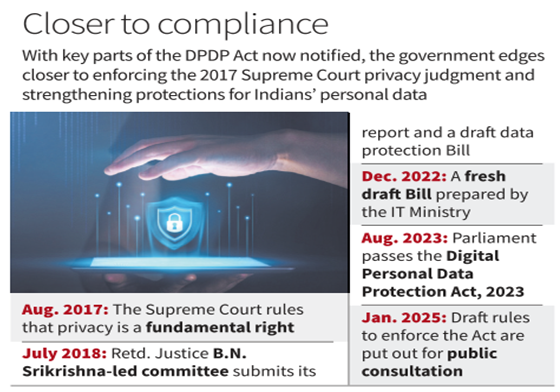
- The DPDP Rules, 2025 are also a significant step forward in compliance with the Supreme Court’s 2017 K.S. Puttaswamy v. Union of India judgment affirming the right to privacy.
- The law, passed in August 2023 in Parliament, requires firms to safeguard the digital data of Indian citizens, with exemptions for the “State and its instrumentalities”, and prescribes penalties for firms that breach these obligations.
- Meanwhile, transparency activists have said the law weakens the Right to Information Act, 2005 by removing the obligation of government bodies to provide “personal information” if the public interest outweighs a public official’s right to privacy.
- That amendment is in force. However, “data fiduciaries”, who collect and use personal data, will have until November 2026 to comply with some provisions, such as putting out the details of their designated Data Protection Officer. That same month, the Consent Manager framework, which allows firms to exercise data removal and amendment rights on behalf of “data principals” (users), will also come into force.
- It may take until May 2027 for large tech firms to be subject to the full force of the Act, which also provides for the constitution of the Data Protection Board of India (DPBI) by the Centre.
- Another notification — there were a total of four on Friday — sets the number of members in the DPBI at four. The board can hold inquiries in response to complaints and impose penalties in case of data breaches. The board’s members, who have not yet been chosen, will be appointed by the Ministry of Electronics and Information Technology (MeitY).
- The DPDP Act, 2023, has gone through three major drafts since 2017, with the first draft in 2018 imposing conditions like data localisation that were furiously resisted by technology firms. The latest version of the Act, which strips out many of the requirements of the original draft, has been relatively better received among large Indian and global tech firms, which as “significant data fiduciaries,” would face additional compliance requirements.
- Nasscom, which represents the main IT and technology firms, said in a statement issued through its Data Security Council of India (DSCI) initiative that it welcomed the Rules, but had problems with the Act that could not be solved by “subordinate legislation”, such as tight rules around parental consent and short disclosure deadlines for breaches.
- “On international data transfers, Nasscom-DSCI recognises the importance of developing mechanisms that support interoperability and facilitate co-operation with India’s key trading partners,” Nasscom said.
- Delhi-based digital rights advocacy Internet Freedom Foundation said the notified Rules “do not address key structural concerns repeatedly raised by civil society” and rued the fact that they “[defer] most core obligations and rights” by a year and a half. The Rules “provides statutory backing for enabling personal data collection by state agencies with scant oversight, thereby entrenching state control over personal data,” the IFF said.
- India is pursuing FTAs with multiple countries: Goyal
Context: Union Minister of Industries & Commerce Piyush Goyal said India was holding negotiations with the European Union, the U.S., Oman, New Zealand, Chile, Peru, and a host of other countries to facilitate the free flow of capital, goods and services.
- “These Free Trade Agreements (FTAs) are coming at a time when the world order is being rewritten and there has been tremendous volatility all around as a consequence. Indian industries should be resilient in this scenario in order to benefit all of humanity,” he observed.
- Delivering his inaugural address at the 30th CII Partnership Summit-2025 in Visakhapatnam on Friday, Mr. Goyal said India was like an oasis in the desert amid the churning that was taking place in the world, as it enjoyed the trust of many countries.
- “The adoption of technology is a must for prosperity, and that trust has to be built through righteousness, for which global trade ties are being fostered,” he said.
- CJI to deal with claim that HC judge approached NCLAT member on order
Context: The Supreme Court trained the spotlight on Chief Justice of India B.R. Gavai, saying the top judge “must have” acted on the anguish of a judicial member on the Chennai Bench of the National Company Law Appellate Tribunal (NCLAT) who chose to recuse after recording in an order that “one of the most revered members of the higher judiciary” approached him for a decision favouring one of the parties in a high-stakes case.
- A Bench of Justices Surya Kant and Joymalya Bagchi said the matter was of “vital public importance” and the “law must take its course”.
- The NCLAT’s Chennai Bench led by the judicial member in question, Justice Sharad Kumar Sharma, passed the order on August 13 in an appeal filed by A.S. Reddy, the suspended director of Hyderabad-based KLSR Infratech, which is facing corporate insolvency resolution proceedings under the Insolvency and Bankruptcy Code. Justice Sharma is a retired Uttarakhand High Court judge, who was appointed to the NCLAT.
- The Supreme Court Bench was hearing a petition filed by M/s. AS Met Corp Pvt Ltd, the operational creditor of KLSR Infratech and the first respondent in the case.
‘Interference by judge’
- “The judicial member has preserved the WhatsApp message he received and the number. The message came from the Chief Justice of a High Court… That is why the judicial member recused,” advocate Prashant Bhushan, representing M/s. AS Met Corp Pvt Ltd, alleged.
- “We believe the competent authority [Chief Justice of India] must have examined the available material and taken necessary steps as required. All these issues will be effectively dealt with by the Chief Justice of India on the administrative side,” the Bench headed by Justice Kant observed. Justice Kant is taking over as Chief Justice of India after the retirement of Justice Gavai on November 24.
- The court, passing orders on the judicial side, transferred the case from Chennai to the Principal Bench of the NCLAT based in New Delhi.
- Manipur tribal body seeks removal of ‘AnyKuki Tribes’ category
Context: The Thadou Inpi Manipur (TIM), the apex body of Manipur’s Thadou community, has urged the BJP to undo what it described as the damage caused by the National Democratic Alliance (NDA) in 2003 through the introduction of the “Any Kuki Tribes” (AKT) category in the State’s list of Scheduled Tribes.
- The TIM said the present NDA government must rectify the blunder made by the first BJP-led NDA government more than two decades ago, “to ensure fairness, national security, and the integrity of Manipur”.
- The organisation had earlier said foreigners, specifically those who cross over from Myanmar, have been using the “redundant” AKT category to be considered Scheduled Tribes in India.
- “A legislative action is needed in Parliament to delete the AKT category, introduced by the NDA government in 2003, from the Scheduled Tribe’s list of Manipur,” TIM’s joint general secretary Manggou Thadou said on Friday after members of the organisation submitted a memorandum to senior BJP leaders B.L. Santhosh and Sambit Patra in Imphal.
- The TIM team also sought the inclusion of Thadou representatives as legitimate stakeholders in any future dialogue, peace talks, or government-led negotiation platforms to ensure long-term peace and restore political stability in Manipur.
- It stated that Manipur deserved a democratically elected government after a prolonged period of President’s Rule, in effect since February 13.
- The TIM further asserted the distinct ethnic identity of the Thadou community. “Thadou is not Kuki, or underneath Kuki, or part of Kuki, but independent of Kuki,” it said.
- Gujarat’s Ambaji marble gets GI tag for its quality
Context: Marble from Ambaji, Gujarat’s prominent pilgrimage site and Shaktipeeth, has been awarded the Geographical Indication (GI) tag for its high-quality white stone, an official said.
- The Geographical Indications Registry under the Ministry of Commerce and Industry has granted the tag in the name of the Ambaji Marbles Quarry and Factory Association in Banaskantha district.
- A GI tag recognises products that possess unique qualities or characteristics linked to their geographical origin.
- Banaskantha District Collector Mihir Patel said that the Centre’s approval marks a proud moment for the region. “The Government of India has granted the prestigious GI tag to the pure white marble sourced from the sacred land of Ambaji. Along with its spiritual significance, Ambaji Shaktipeeth has now earned a distinguished place on the global map of the marble industry,” he said.
Used in religious sites
- Chief Minister Bhupendra Patel also welcomed the development on X, saying the recognition was a matter of “joy and pride for Gujarat”. He noted that Ambaji marble, known for its shine and beauty, has long been used in construction of religious sites.
- Ambaji-based marble industrialist Kiranbhai Trivedi said the recognition reflects the stone’s exceptional quality. He noted that Ambaji’s marble mines date back 1,200–1,500 years, around the time the Dilwara Jain Temple in Mount Abu was constructed.
- The enduring beauty of the temple, he said, is proof of the marble’s remarkable durability. “In comparison, even the stones of the Taj Mahal show ageing, but Ambaji marble has never lost its purity,” he remarked.
- Known for its strength and high calcium content, the marble has also been used in temple construction in the U.S., New Zealand and England, he said.
- India, Canada cement ties on trade, critical minerals, investment
Context: Both countries agreed to ‘identify and expand investment and trading opportunities in aerospace and dual-use capabilities partnerships’.
- India and Canada agreed to bolster long-term supply chain partnerships in critical minerals and expand investment and trade opportunities, the two countries said in a joint statement.
- The statement, issued, followed a visit to New Delhi by Maninder Sidhu, Canada’s Minister of Export Promotion, International Trade, and Economic Development, from November 11 to 14 at the invitation of Minister for Commerce and Industry Piyush Goyal.
- According to the statement, the two Ministers “agreed to encourage long-term supply chain partnerships in critical minerals and clean energy collaboration essential for energy transition, and new-age industrial expansion”.
- Mr. Goyal and Mr. Sidhu also agreed to “identify and expand investment and trading opportunities in aerospace and dual-use capabilities partnerships”.
- The engagement between the two countries has gained momentum again following the direction provided by the Prime Ministers of India and Canada during their bilateral meeting on the sidelines of the G7 meeting in Kananaskis, Canada.
Renewing momentum
- The foreign ministers of both countries had earlier issued a statement aimed at “renewing momentum towards a stronger partnership”, and which identified trade as the cornerstone of bilateral economic growth and resilience.
ಪ್ರಚಲಿತ ವಿದ್ಯಮಾನಗಳು: 14ನೇ ನವೆಂಬರ್ 2025
ಸಾಫ್ಟ್ವೇರ್ ರಫ್ತು: ಭಾರಿ ಏರಿಕೆ ಗುರಿ: ನಗರಗಳಲ್ಲಿ ಐಟಿ ಬೆಳವಣಿಗೆಗೆ ಒತ್ತು l ಮಾಹಿತಿ ತಂತ್ರಜ್ಞಾನ ನೀತಿಗೆ ಅಸ್ತು
ಸಂದರ್ಭ: ಕರ್ನಾಟಕದಿಂದ ಸಾಫ್ಟ್ವೇರ್ ರಫ್ತನ್ನು 2030 ವೇಳೆಗೆ ₹4.09 ಲಕ್ಷ ಕೋಟಿಯಿಂದ ₹11.5 ಲಕ್ಷ ಕೋಟಿಗೆ ಹೆಚ್ಚಿಸುವ ಗುರಿ ಹೊಂದಿದ ‘ಕರ್ನಾಟಕ ಮಾಹಿತಿ ತಂತ್ರಜ್ಞಾನ ನೀತಿ 2025–2030’ಕ್ಕೆ ಸಚಿವ ಸಂಪುಟ ಸಭೆ ಅನುಮೋದನೆ ನೀಡಿದೆ.
- ಬೆಂಗಳೂರಿನಾಚೆಗೆ ಮೈಸೂರು, ಮಂಗಳೂರು, ಹುಬ್ಬಳ್ಳಿ–ಧಾರವಾಡ, ಬೆಳಗಾವಿ, ತುಮಕೂರು, ಕಲಬುರಗಿ ಮತ್ತು ಶಿವಮೊಗ್ಗದಂತಹ ನಗರಗಳಲ್ಲಿ ಕೃತಕ ಬುದ್ಧಿಮತ್ತೆ ಹಾಗೂ ಇತರ ನೂತನ ತಂತ್ರಜ್ಞಾನ ಗಳ ಮೇಲೆ ಹೂಡಿಕೆಗೆ ಆದ್ಯತೆ ನೀಡುವ ಬಗ್ಗೆಯೂ ನೀತಿ ಪ್ರಸ್ತಾಪಿಸಿದೆ.
- ‘ರಾಜ್ಯದ ಆದಾಯ ಮೌಲ್ಯ ವರ್ಧನೆಗೆ ಐಟಿ ವಲಯದ ಕೊಡುಗೆಯನ್ನು ಶೇ 26ರಿಂದ ಶೇ 36ಕ್ಕೆ ಹೆಚ್ಚಿಸಲು ಗುರಿ ನಿಗದಿ ಮಾಡಲಾಗಿದೆ.
- ಜಾಗತಿಕ ತಂತ್ರಜ್ಞಾನ ಮಾರುಕಟ್ಟೆಗಳಲ್ಲಿ ಕರ್ನಾಟಕದ ನಾಯಕತ್ವ ಬಲಪಡಿಸುವುದು ಮತ್ತು ಕರ್ನಾಟಕದ ಬ್ರ್ಯಾಂಡ್ ಅನ್ನು ಕೃತಕ ಬುದ್ದಿಮತ್ತೆಯ ಸ್ಥಳೀಯ ತಾಣವಾಗಿ (ಎಐ–ನೇಟಿವ್) ಉನ್ನತೀಕರಿಸಲು ಅಗತ್ಯ ಯೋಜನೆ ರೂಪಿಸಲಾಗುವುದು.
ನೀತಿಯ ಮುಖ್ಯಾಂಶಗಳು
- ಕೃತಕ ಬುದ್ದಿಮತ್ತೆ, ಬ್ಲಾಕ್ಚೈನ್, ಕ್ವಾಂಟಮ್ ಕಂಪ್ಯೂಟಿಂಗ್, ಹಸಿರು ಐಟಿ ಮತ್ತು ಮುಂದುವರಿದ ಸೈಬರ್ ಭದ್ರತೆಗೆ ತಂತ್ರಜ್ಞಾನಕ್ಕೆ ಉತ್ತೇಜನ
- ಡಿಜಿಟಲ್ ಸಂಪರ್ಕ, ಹಸಿರು ಆವರಣಗಳು ಮತ್ತು ಗ್ರಾಮೀಣ–ನಗರ ಏಕೀಕರಣವನ್ನು ಉತ್ತೇಜಿಸಲು ಮೂಲಸೌಕರ್ಯ ಅಭಿವೃದ್ಧಿ
- ಸೈಬರ್ ಸುರಕ್ಷತೆ, ವಿಪತ್ತು ನಿರ್ವಹಣೆ ಮತ್ತು ವಿದ್ಯುತ್ ಭದ್ರತೆ ಮೂಲಕ ಬಲಿಷ್ಠ ಐಟಿ ಕಾರ್ಯಾಚರಣೆಗಳನ್ನು ಖಾತ್ರಿಪಡಿಸಲಾಗುವುದು
- ನಿಯಮಗಳನ್ನು ಸರಳಗೊಳಿಸಿ, ತಡೆ ರಹಿತ, ಪಾರದರ್ಶಕ ಮತ್ತು ಏಕಗವಾಕ್ಷಿ ಆಡಳಿತ ಸಕ್ರಿಯಗೊಳಿಸಲಾಗುವುದು
- ಕ್ನೋವರ್ಸ್ ಅಂದರೆ ಸಂಯೋಜಿತ ತಂತ್ರಜ್ಞಾನ ಆವರಣಗಳ ಸ್ಥಾಪನೆ ಮತ್ತು ಮುಂಬರುವ ಜಾಗತಿಕ ನಾವೀನ್ಯತಾ ಜಿಲ್ಲೆಗಳಲ್ಲಿ (ಜಿಐಡಿಗಳು) ಇವುಗಳ ಸ್ಥಾಪನೆ ಆಗಲಿದೆ.
- ರಾಜ್ಯವ್ಯಾಪಿ ಡಿಜಿಟಲ್ ಹಬ್ ಗ್ರಿಡ್ (ಎಸ್ಡಿಎಚ್ಜಿ), ಐಟಿ ಪಾರ್ಕ್ಗಳು, ಶ್ರೇಷ್ಠತೆಯ ಕೇಂದ್ರಗಳು, ನಾವೀನ್ಯತೆ ಕೇಂದ್ರಗಳು, ಸಂಶೋಧನೆ ಮತ್ತು ಅಭಿವೃದ್ಧಿ ಸೌಲಭ್ಯಗಳನ್ನು ಏಕೀಕರಿಸಲಾಗುವುದು.
- 1,000 ಮಧ್ಯಮ–ವೃತ್ತಿ ಜೀವನದ ಮಹಿಳಾ ತಂತ್ರಜ್ಞಾನ ವೃತ್ತಿಪರರಿಗೆ ತರಬೇತಿ ನೀಡಲು ಮೀಸಲಾದ ಮಹಿಳಾ ಗ್ಲೋಬಲ್ ಟೆಕ್ ಮಿಷನ್ಸ್ ಫೆಲೋಶಿಪ್ ಆರಂಭಿಸಲಾಗುವುದು
- ಬೆಂಗಳೂರಿನ ಹೊರಗೆ ಇರುವ ಕಂಪನಿಗಳಿಗೆ 16 ಬಗೆಯ ಪ್ರೋತ್ಸಾಹ.
ರಾಜ್ಯಕ್ಕೆ ‘ಸುಪ್ರೀಂ’ ಜಯ
ಸಂದರ್ಭ:ಕಾವೇರಿ ನದಿಗೆ ಅಡ್ಡಲಾಗಿ ಮೇಕೆದಾಟು ಸಮತೋಲನ ಜಲಾಶಯ ನಿರ್ಮಿಸುವ ಕರ್ನಾಟಕ ಸರ್ಕಾರದ ಯೋಜನೆ ವಿರುದ್ಧ ತಮಿಳುನಾಡು ಸರ್ಕಾರ ಸಲ್ಲಿಸಿದ್ದ ಅರ್ಜಿಗಳನ್ನು ಸುಪ್ರೀಂ ಕೋರ್ಟ್ ವಜಾಗೊಳಿಸಿದೆ. ಇದರಿಂದ, ತಮಿಳುನಾಡಿಗೆ ಭಾರಿ ಹಿನ್ನಡೆಯಾಗಿದೆ.
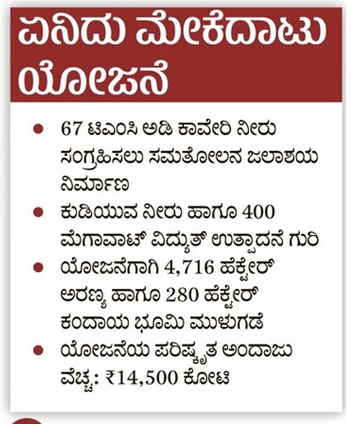
- ಪ್ರಕರಣದ ವಿಚಾರಣೆ ನಡೆಸಿದ ಮುಖ್ಯ ನ್ಯಾಯಮೂರ್ತಿ ಬಿ.ಆರ್.ಗವಾಯಿ, ನ್ಯಾಯಮೂರ್ತಿಗಳಾದ ಕೆ. ವಿನೋದ್ ಚಂದ್ರನ್ ಹಾಗೂ ಎನ್.ವಿ. ಅಂಜಾರಿಯಾ ಪೀಠವು, ‘ಮೇಕೆದಾಟು ಅಣೆಕಟ್ಟೆ ನಿರ್ಮಾಣಕ್ಕೆ ವಿಸ್ತೃತ ಯೋಜನಾ ವರದಿ (ಡಿಪಿಆರ್) ತಯಾರಿಸಲು ಮಾತ್ರ ಕೇಂದ್ರ ಜಲ ಆಯೋಗ (ಸಿಡಬ್ಲ್ಯುಸಿ) ಅನುಮತಿ ನೀಡಿದೆ.
- ತಮಿಳುನಾಡಿನ ಆಕ್ಷೇಪಣೆ ಗಳನ್ನು ತಜ್ಞರು ಪರಿಶೀಲಿಸಿದ ಬಳಿಕವೇ ಈ ಪ್ರಕ್ರಿಯೆ ನಡೆದಿದೆ. ಈ ಹಂತದಲ್ಲಿ ಇದನ್ನು ಪ್ರಶ್ನಿಸಿ ತಮಿಳುನಾಡು ಅರ್ಜಿ ಸಲ್ಲಿಸಿರುವುದು ಅವಧಿಪೂರ್ವ (ಪ್ರಿಮೆಚೂರ್)’ ಎಂದು ಅಭಿಪ್ರಾಯಪಟ್ಟಿದೆ.
- ‘ತಮಿಳುನಾಡಿನ ಆಕ್ಷೇಪಣೆಗಳನ್ನು ಹಾಗೂ ತಜ್ಞ ಸಂಸ್ಥೆಗಳು, ಕಾವೇರಿ ನೀರು ನಿಯಂತ್ರಣ ಸಮಿತಿ (ಸಿಡಬ್ಲ್ಯುಆರ್ಸಿ) ಮತ್ತು ಕಾವೇರಿ ನೀರು ನಿರ್ವಹಣ ಪ್ರಾಧಿಕಾರಗಳ (ಸಿಡಬ್ಲ್ಯುಎಂಎ) ಅಭಿಪ್ರಾಯಗಳನ್ನು ಪರಿಗಣಿಸಿದ ನಂತರವೇ ಆಯೋಗವು ಯೋಜನೆಗೆ ಅನುಮೋದನೆ ನೀಡಲಿದೆ’ ಎಂದು ಪೀಠ ತಿಳಿಸಿದೆ.
- ‘ನ್ಯಾಯಾಲಯ ಮತ್ತು ಪ್ರಾಧಿಕಾರಗಳ ನಿರ್ದೇಶನಗಳನ್ನು ಅನುಸರಿಸಿ ಕರ್ನಾಟಕ ರಾಜ್ಯವು ಕಾವೇರಿ ನೀರನ್ನು ಹರಿಸಲು ಬದ್ಧವಾಗಿರಬೇಕು. ಒಂದು ವೇಳೆ, ಈ ನ್ಯಾಯಾಲಯದ ನಿರ್ದೇಶನಗಳನ್ನು ಪಾಲಿಸಲು ಕರ್ನಾಟಕ ವಿಫಲವಾದರೆ, ನ್ಯಾಯಾಂಗ ನಿಂದನೆ ಎಸಗಿದ ಅಪಾಯ ಎದುರಿಸಲಿದೆ’ ಎಂದು ಪೀಠ ಎಚ್ಚರಿಸಿದೆ. ಆದಾಗ್ಯೂ, ‘ನ್ಯಾಯಾಲಯದ ಎಲ್ಲ ನಿರ್ದೇಶನಗಳನ್ನು ಪಾಲಿಸಲಾಗಿದೆ. ತಮಿಳುನಾಡು ಎತ್ತಿರುವ ಅನೇಕ ಪ್ರಶ್ನೆಗಳು ಅತಿಯಾದುದು’ ಎಂದು ಕರ್ನಾಟಕ ವಾದಿಸಿದೆ.
ಬಾಹ್ಯಾಕಾಶ: ‘ನಂ 1’ಗೆ ಜಿಗಿತದತ್ತ ನಡೆ
ಸಂದರ್ಭ: ಕರ್ನಾಟಕ ಬಾಹ್ಯಾಕಾಶ ತಂತ್ರಜ್ಞಾನ ನೀತಿ 2025–2030’ ನೀತಿಗೆ ಸಂಪುಟ ಸಭೆ ಒಪ್ಪಿಗೆ: ರಾಜ್ಯದಲ್ಲಿರುವ ಬಾಹ್ಯಾಕಾಶ ವಿಜ್ಞಾನ ಮತ್ತು ತಂತ್ರಜ್ಞಾನ ಪರಿಸರ ವ್ಯವಸ್ಥೆಯನ್ನು ಬಳಸಿಕೊಂಡು ಕರ್ನಾಟಕವನ್ನು ಬಾಹ್ಯಾಕಾಶ ತಂತ್ರಜ್ಞಾನದ ಜಾಗತಿಕ ತಾಣವಾಗಿ ಪರಿವರ್ತಿಸುವ ಉದ್ದೇಶದ ‘ಕರ್ನಾಟಕ ಬಾಹ್ಯಾಕಾಶ ತಂತ್ರಜ್ಞಾನ ನೀತಿ 2025–2030’ಕ್ಕೂ ಸಚಿವ ಸಂಪುಟ ಸಭೆ ಒಪ್ಪಿಗೆ ನೀಡಿದೆ.
- ಬಾಹ್ಯಾಕಾಶ ತಂತ್ರಜ್ಞಾನ ಕ್ಷೇತ್ರದಲ್ಲಿ ರಾಷ್ಟ್ರೀಯ ಮಾರುಕಟ್ಟೆ ಪಾಲಿನ ಶೇ 50 ಅನ್ನು ಹೊಂದುವ ಮೂಲಕ ಕರ್ನಾಟಕ ವನ್ನು ಭಾರತದಲ್ಲಿ ನಂಬರ್ 1 ತಾಣವಾಗಿ ಉಳಿಸಿಕೊಳ್ಳುವುದು ಮತ್ತು ಜಾಗತಿಕ ಮಾರುಕಟ್ಟೆ ಪಾಲಿನ ಶೇ 5 ಅನ್ನು ಹೊಂದುವ ಮೂಲಕ ಕರ್ನಾಟಕವನ್ನು ಬಾಹ್ಯಾಕಾಶ ತಂತ್ರಜ್ಞಾನದ ಜಾಗತಿಕ ತಾಣವಾಗಿಸುವುದು ಸರ್ಕಾರದ ಉದ್ದೇಶ.
- ಜಾಗತಿಕ ಮತ್ತು ದೇಶೀಯ ಬಾಹ್ಯಾಕಾಶ ವಲಯದಿಂದ ಉದ್ಯೋಗ ಪಡೆಯಬಹುದಾದ ಹೆಚ್ಚು ಕೌಶಲಪೂರ್ಣ ಕಾರ್ಯಪಡೆ ರೂಪಿಸು ವುದು, ಕರ್ನಾಟಕದಲ್ಲಿ ಬಾಹ್ಯಾಕಾಶ ತಂತ್ರಜ್ಞಾನ ಕ್ಷೇತ್ರಕ್ಕೆ ಸಂಬಂಧಿಸಿದ ಕೈಗಾ ರಿಕೆಗಳ ಒಟ್ಟುಗೂಡುವಿಕೆಗೆ ಪ್ರೇರಕ ಶಕ್ತಿ ಯಾಗಿ ಕಾರ್ಯ ನಿರ್ವಹಿಸಲು 50 ಸಾವಿರ ಯುವ ವೃತ್ತಿಪರರು, ವಿದ್ಯಾರ್ಥಿ ಗಳಿಗೆ ತರಬೇತಿ ನೀಡಿಕೌಶಲ ಅಭಿವೃದ್ಧಿಗೆ ಪ್ರೋತ್ಸಾಹ ನೀಡಲಾಗುವುದು.
ಸಂಘರ್ಷ ತಡೆ: 8 ಅಂಶಗಳ ಯೋಜನೆಗೆ ಅಸ್ತು: ಮಾನವ– ವನ್ಯಪ್ರಾಣಿ ಸಂಘರ್ಷ ತಪ್ಪಿಸಲು ಸಿಬ್ಬಂದಿ, ಅನುದಾನ: ಸಿ.ಎಂ
ಸಂದರ್ಭ: ‘ಮಾನವ– ವನ್ಯಪ್ರಾಣಿ ಸಂಘರ್ಷ ತಪ್ಪಿಸಲು ಡ್ರೋನ್ ಕ್ಯಾಮರಾ ಗಳ ನಿಗಾ ಹೆಚ್ಚಿಸಬೇಕು. ಕೃಪಾಕರ ಸೇನಾನಿ–ಸಂಜಯ್ ಗುಬ್ಬಿ ಸೇರಿದಂತೆ ತಜ್ಞರ ಜೊತೆ ಚರ್ಚಿಸಿ ವೈಜ್ಞಾನಿಕ ಮಾರ್ಗಗಳನ್ನು ರೂಪಿಸಬೇಕು’ ಎಂದು ಅರಣ್ಯ ಇಲಾಖೆಯ ಅಧಿಕಾರಿಗಳಿಗೆ ಮುಖ್ಯಮಂತ್ರಿ ಸಿದ್ದರಾಮಯ್ಯ ಸೂಚನೆ ನೀಡಿದರು.
- ರಾಜ್ಯ ಮಟ್ಟದ ಸಮಗ್ರ ಮಾನವ- ವನ್ಯಜೀವಿ ಸಂಘರ್ಷ ನಿರ್ವಹಣಾ ಕಾರ್ಯತಂತ್ರಗಳನ್ನು ರೂಪಿಸಲು ಹಾಗೂ ಮುನ್ನೆಚ್ಚರಿಕೆ ಕ್ರಮಗಳ ಕುರಿತು ಚರ್ಚಿಸಲು ಸಿದ್ದರಾಮಯ್ಯ ಅವರ ಅಧ್ಯಕ್ಷತೆಯಲ್ಲಿ ಸಭೆ ನಡೆಯಿತು.
- ‘ವಯಸ್ಸಾದ ಕಾರಣಕ್ಕೆ, ಯುವ ಹುಲಿಗಳ ದಾಳಿಯಿಂದ ಗಾಯಗೊಂಡ ಹಾಗೂ ಇತರೆ ಕಾರಣಗಳಿಂದ ಅರಣ್ಯ ಪ್ರದೇಶದಿಂದ ಹೊರಗೆ ಸಂಚರಿಸುತ್ತಿರುವ 15-20 ಹುಲಿಗಳನ್ನು ಡ್ರೋನ್ ಕ್ಯಾಮರಾ ನೆರವಿನಿಂದ ತಕ್ಷಣ ಹಿಡಿಯಲು ಕ್ರಮ ತೆಗೆದುಕೊಳ್ಳಬೇಕು. ಅದಕ್ಕೆ ಅಗತ್ಯವಾದ ಸಿಬ್ಬಂದಿ, ಅನುದಾನ ಸೇರಿ ಎಲ್ಲ ನೆರವು ನೀಡಲಾಗುವುದು’ ಎಂದು ಅವರು ಭರವಸೆ ನೀಡಿದರು.
- ‘ಈಗಾಗಲೇ ಎಂಟು ಕುಮ್ಕಿ ಆನೆಗಳನ್ನು ಕಾರ್ಯಾಚರಣೆಗೆ ಬಳಸಲಾಗುತ್ತಿದ್ದು ಅಗತ್ಯಕ್ಕೆ ತಕ್ಕಂತೆ ಸಿಬ್ಬಂದಿ ಮತ್ತು ಸ್ಕ್ವಾಡ್ಗಳ ಸಂಖ್ಯೆಯನ್ನು ಸಂಘರ್ಷ ಪೀಡಿತ ಅರಣ್ಯ ಪ್ರದೇಶದಲ್ಲಿ ಬಳಸಬೇಕು’ ಎಂದೂ ಅವರು ಸೂಚನೆ ನೀಡಿದರು.
- ಚಾಮರಾಜನಗರ, ಕೊಡಗು, ಹಾಸನ, ಮೈಸೂರು ಹಾಗೂ ರಾಮನಗರ ಜಿಲ್ಲೆಯಲ್ಲಿ ಅತಿ ಹೆಚ್ಚು ಮಾನವ ಪ್ರಾಣ ಹಾನಿ ಪ್ರಕರಣಗಳು ಸಂಭವಿಸಿವೆ. ಕಳೆದ ಮೂರು ವರ್ಷಗಳಿಗೆ ಹೋಲಿಸಿದರೆ 2024-25ರಲ್ಲಿ ಇಂತಹ ಪ್ರಕರಣ ಶೇ 30ರಷ್ಟು ಕಡಿಮೆಯಾಗಿದೆ.
- ವನ್ಯಜೀವಿಗಳು ಆಹಾರ ಹುಡುಕಿಕೊಂಡು ಕಾಡಿನಿಂದ ಹೊರಗೆ ಬರುವುದನ್ನು ನಿಗ್ರಹಿಸಬೇಕು. ಬೇಸಿಗೆ ಕಾಲದಲ್ಲಿ ವನ್ಯಜೀವಿ ಗಳಿಗೆ ಅರಣ್ಯದೊಳಗೆ ನೀರಿನ ವ್ಯವಸ್ಥೆ ಕಲ್ಪಿಸಬೇಕು. ಅರಣ್ಯದಲ್ಲಿ ವ್ಯಾಪಕವಾಗಿ ಹರಡುವ ಲಂಟಾನ ಕಳೆ ತೆಗೆಯಲು ಅಧಿಕಾರಿಗಳು ಕ್ರಮ ಕೈಗೊಳ್ಳಬೇಕು’ ಎಂದು ಮುಖ್ಯಮಂತ್ರಿ ಹೇಳಿದರು.
ಎಂಟು ಅಂಶಗಳು ಯಾವುವು?
l ಮಾನವ– ವನ್ಯಜೀವಿ ಸಂಘರ್ಷದ ಜಾಗ ಗುರುತಿಸಿ, ಯಾವ ಸ್ವರೂಪದ ಸಂಘರ್ಷವೆಂದು ಪಟ್ಟಿ ಮಾಡಬೇಕು
l ಸಂಘರ್ಷದ ತೀವ್ರತೆಯ ಆಧಾರದಲ್ಲಿ ಅಧಿಕಾರಿ, ಸಿಬ್ಬಂದಿಗಳನ್ನು ನಿಯೋಜಿಸಬೇಕು
l ಅರಣ್ಯದ ಅಂಚಿನ ಗ್ರಾಮಗಳಲ್ಲಿ ಗಸ್ತು ಹೆಚ್ಚಳ, ರಿಜಿಸ್ಟರ್ ನಿರ್ವಹಣೆ
l ಮಾನವ ವನ್ಯ ಜೀವಿ ಸಂಘರ್ಷ ಇರುವ ಗ್ರಾಮದಲ್ಲಿ ಹಿರಿಯ ಅಧಿಕಾರಿಗಳು ನಿಯಮಿತವಾಗಿ ವಾಸ್ತವ್ಯ ಮಾಡಬೇಕು
l ಅರಣ್ಯದಂಚಿನ ಸ್ಥಳೀಯರನ್ನು ಗುರುತಿಸಿ ‘ಅರಣ್ಯ ಮಿತ್ರ’ ಎಂದು ಪರಿಗಣಿಸಿ ಗಸ್ತು, ವನ್ಯಜೀವಿ, ಸೆರೆ, ಕಾರ್ಯಾಚರಣೆಗೆ ಬಳಸಿಕೊಳ್ಳಬೇಕು
l ವನ್ಯಜೀವಿಗಳು ಸಂಚರಿಸುವ ಕಾರ್ಯತಂತ್ರ ಸ್ಥಳಗಳಲ್ಲಿ 24X7 ವಾಹನ ಮತ್ತು ಅರಣ್ಯ ಸಿಬ್ಬಂದಿ ಲಭ್ಯವಾಗುವಂತೆ ಮಾಡಬೇಕು
l ವನ್ಯಜೀವಿ ಸೆರೆ, ವನ್ಯಜೀವಿ ದಾಳಿ ಮಾಡಿದಾಗ ಏನು ಮಾಡಬೇಕೆಂಬ ಬಗ್ಗೆ ಮಾಹಿತಿ ನೀಡಲು ಅಣಕು ಪ್ರದರ್ಶನ ಏರ್ಪಡಿಸಬೇಕು
l ಜಿಲ್ಲಾ ಮಟ್ಟದಲ್ಲಿ ಸಮನ್ವಯ, ಸಹಯೋಗ ಸಮಿತಿ, ತಾಲ್ಲೂಕು ಮಟ್ಟದಲ್ಲಿ ಉಪಸಮಿತಿ ರಚಿಸಬೇಕು
ವನ್ಯಪ್ರಾಣಿ ಹಾವಳಿ 200 ಜೀವಹಾನಿ
- ಕರ್ನಾಟಕದಲ್ಲಿ 6,395 ಆನೆಗಳಿದ್ದು, ಆನೆಗಳ ಸಂಖ್ಯೆಯಲ್ಲಿ ರಾಜ್ಯವು ದೇಶದಲ್ಲಿ ಮೊದಲ ಸ್ಥಾನದಲ್ಲಿದೆ. 563 ಹುಲಿಗಳಿದ್ದು, ದೇಶದಲ್ಲಿ ಎರಡನೇ ಸ್ಥಾನದಲ್ಲಿದೆ. 1,879 ಚಿರತೆಗಳಿದ್ದು ದೇಶದಲ್ಲಿ ಮೂರನೇ ಸ್ಥಾನದಲ್ಲಿದೆ.
- ರಾಜ್ಯದಲ್ಲಿ ವನ್ಯಪ್ರಾಣಿಗಳ ಹಾವಳಿಯಿಂದ 2022-23ರಲ್ಲಿ 57, 2023-24ರಲ್ಲಿ 65, 2024-25ರಲ್ಲಿ 46, 2025-26ರಲ್ಲಿ 32 ಮಾನವ ಜೀವಹಾನಿ ಸಂಭವಿಸಿದೆ.
ಗಣಿಗಾರಿಕೆಗೆ ‘ಸುಪ್ರೀಂ’ ನಿಷೇಧ: ರಾಷ್ಟ್ರೀಯ ಉದ್ಯಾನಗಳ 1 ಕಿ.ಮೀ. ವ್ಯಾಪ್ತಿಯಲ್ಲಿ ನಿರ್ಬಂಧ
ಸಂದರ್ಭ: ರಾಷ್ಟ್ರೀಯ ಉದ್ಯಾನಗಳು ಮತ್ತು ವನ್ಯಜೀವಿ ಅಭಯಾರಣ್ಯಗಳ ಒಂದು ಕಿ.ಮೀ. ವ್ಯಾಪ್ತಿಯಲ್ಲಿ ಗಣಿಗಾರಿಕೆ ಚಟುವಟಿಕೆ ನಡೆಸುವುದನ್ನು ಸುಪ್ರೀಂ ಕೋರ್ಟ್ ನಿಷೇಧಿಸಿದೆ.
- ‘ರಾಷ್ಟ್ರೀಯ ಉದ್ಯಾನಗಳು ಹಾಗೂ ಅಭಯಾರಣ್ಯಗಳ ಒಳಗೆ ಮತ್ತು ಅಂತಹ ಸಂರಕ್ಷಿತ ಪ್ರದೇಶಗಳ ಗಡಿಯಿಂದ ಒಂದು ಕಿ.ಮೀ. ವ್ಯಾಪ್ತಿಯಲ್ಲಿ ಗಣಿಗಾರಿಕೆಯನ್ನು ಅನುಮತಿಸಬಾರದು ಎಂದು ನಾವು ನಿರ್ದೇಶಿಸುತ್ತೇವೆ’ ಎಂಬುದಾಗಿ ಮುಖ್ಯ ನ್ಯಾಯಮೂರ್ತಿ ಬಿ.ಆರ್.ಗವಾಯಿ ಮತ್ತು ನ್ಯಾಯಮೂರ್ತಿಗಳಾದ ಕೆ.ವಿನೋದ ಚಂದ್ರನ್ ಅವರ ಪೀಠ ಹೇಳಿದೆ.
- ‘ಸಂರಕ್ಷಿತ ಪ್ರದೇಶದ ಒಂದು ಕಿ.ಮೀ ವ್ಯಾಪ್ತಿಯೊಳಗೆ ಗಣಿಗಾರಿಕೆ ಚಟುವಟಿಕೆಗಳು ವನ್ಯಜೀವಿಗಳಿಗೆ ಅಪಾಯಕಾರಿ ಎಂಬುದನ್ನು ಈ ನ್ಯಾಯಾಲಯ ಮನಗಂಡಿದೆ.
- ಈ ಹಿಂದೆ ಗೋವಾ ಫೌಂಡೇಶನ್ ಪ್ರಕರಣದಲ್ಲಿ, ಗೋವಾ ರಾಜ್ಯಕ್ಕೆ ಸಂಬಂಧಿಸಿದಂತೆ ಇದೇ ರೀತಿಯ ನಿರ್ದೇಶನಗಳನ್ನು ನೀಡಲಾಗಿದೆ. ಇದೀಗ ಇಡೀ ದೇಶಕ್ಕೆ ಅನ್ವಯವಾಗುವಂತೆ ಅಂತಹ ನಿರ್ದೇಶನ ನೀಡುತ್ತಿದ್ದೇವೆ’ ಎಂದಿತು.
- ಜಾರ್ಖಂಡ್ನ ಸಾರಂಡಾ ಅಭಯಾರಣ್ಯ ಮತ್ತು ಸಾಸಂಗದಾಬುರು ಅರಣ್ಯ ಪ್ರದೇಶ ಗಳನ್ನು ಮೀಸಲು ಅರಣ್ಯ ಪ್ರದೇಶವಾಗಿ ಘೋಷಿಸುವ ಅಧಿಸೂಚನೆಗೆ ಸಂಬಂಧಿಸಿದ ಅರ್ಜಿಗಳ ಕುರಿತು ಸುಪ್ರೀಂ ಕೋರ್ಟ್ ವಿಚಾರಣೆ ನಡೆಸುತ್ತಿದೆ. ಈ ಪ್ರದೇಶಗಳನ್ನು ವನ್ಯಜೀವಿ ಅಭಯಾರಣ್ಯವೆಂದು ಘೋಷಿಸುವಂತೆ ಸುಪ್ರೀಂ ಕೋರ್ಟ್, ಜಾರ್ಖಂಡ್ ಸರ್ಕಾರಕ್ಕೆ ನಿರ್ದೇಶನ ನೀಡಿದೆ.
- ಅರಣ್ಯ ಹಕ್ಕುಗಳ ಕಾಯ್ದೆಯಡಿ ಈ ಪ್ರದೇಶದ ಬುಡಕಟ್ಟು ಜನರು ಮತ್ತು ಅರಣ್ಯವಾಸಿಗಳ ಹಕ್ಕುಗಳನ್ನು ರಕ್ಷಿಸಬೇಕು ಎಂದು ಸ್ಪಷ್ಟಪಡಿಸಿದ ನ್ಯಾಯಾಲಯ, ಈ ಬಗ್ಗೆ ವ್ಯಾಪಕ ಪ್ರಚಾರ ನೀಡುವಂತೆ ಜಾರ್ಖಂಡ್ ಸರ್ಕಾರಕ್ಕೆ ಸೂಚಿಸಿದೆ.
‘ಬಡ್ಡಿ ದರ ಕಡಿಮೆ ಮಟ್ಟದಲ್ಲಿರಲಿ’
ಸಂದರ್ಭ: ಹಣಕಾಸಿನ ಒಳಗೊಳ್ಳುವಿಕೆಯನ್ನು ಹೆಚ್ಚಿಸಲು ಕಿರು ಹಣಕಾಸು ಸಂಸ್ಥೆಗಳು ತಮ್ಮ ಬಡ್ಡಿ ದರವನ್ನು ಕೈಗೆಟಕುವ ಮಟ್ಟದಲ್ಲಿ ಇರಿಸಬೇಕು ಎಂದು ಕೇಂದ್ರ ಹಣಕಾಸು ಸೇವೆಗಳ ಇಲಾಖೆಯ ಕಾರ್ಯದರ್ಶಿ ಹೇಳಿದ್ದಾರೆ.
- ‘ಕೆಲವು ಕಿರು ಹಣಕಾಸು ಸಂಸ್ಥೆಗಳು ಅಸಹನೀಯ ಮಟ್ಟದಲ್ಲಿ ಬಡ್ಡಿ ದರವನ್ನು ನಿಗದಿ ಮಾಡಿರುವುದನ್ನು ನಾನು ನೋಡಿದ್ದೇನೆ. ಇದಕ್ಕೆ ಕಾರಣ ಆ ಕಿರು ಹಣಕಾಸು ಸಂಸ್ಥೆಗಳಲ್ಲಿನ ಅಸಾಮರ್ಥ್ಯ’ ಅವರು ಕಾರ್ಯಕ್ರಮವೊಂದರಲ್ಲಿ ಹೇಳಿದ್ದಾರೆ.
- ಕಿರು ಹಣಕಾಸು ಸಂಸ್ಥೆಗಳು ವೆಚ್ಚಗಳಲ್ಲಿ ದಕ್ಷತೆಯನ್ನು, ಹೆಚ್ಚಿನ ಉತ್ಪಾದಕತೆಯನ್ನು ಸಾಧಿಸಲು ವಿಫಲವಾದ ಕಾರಣಕ್ಕೆ ಹೆಚ್ಚಿನ ಬಡ್ಡಿ ದರ ವಸೂಲಿ ಮಾಡುತ್ತಿರಬಹುದು ಎಂದು ಅವರು ಹೇಳಿದ್ದಾರೆ.
- ಸಂಸ್ಥೆಗಳು ವೆಚ್ಚಗಳಲ್ಲಿ ದಕ್ಷತೆಯನ್ನು ಸಾಧಿಸಬೇಕು, ಹೆಚ್ಚಿನ ಉತ್ಪಾದಕತೆ ಸಾಧಿಸಬೇಕು. ಅದರ ಮೂಲಕ ಸಾಲಗಾರರಿಗೆ ಕಡಿಮೆ ಬಡ್ಡಿ ದರಕ್ಕೆ ಸಾಲ ನೀಡುವಂತೆ ಆಗಬೇಕು ಎಂದು ಕಿವಿಮಾತು ಹೇಳಿದ್ದಾರೆ.
- ಹಣದ ಅಗತ್ಯ ತೀವ್ರವಾಗಿ ಇರುವವರು ಹೆಚ್ಚಿನ ಬಡ್ಡಿ ದರಕ್ಕೆ ಸಾಲ ಪಡೆಯಬಹುದು. ಆದರೆ ಅವರಿಗೆ ಆ ಸಾಲವನ್ನು ಮರುಪಾವತಿಸಲು ಆಗುವುದಿಲ್ಲ. ಇದರ ಪರಿಣಾಮವು ಹಣಕಾಸು ವ್ಯವಸ್ಥೆಯ ಮೇಲೆ ಆಗುತ್ತದೆ ಎಂದು ಅವರು ತಿಳಿಸಿದ್ದಾರೆ.
- ಕಿರು ಹಣಕಾಸು ಸಂಸ್ಥೆಗಳು ದೇಶದಲ್ಲಿ ಹಣಕಾಸಿನ ಒಳಗೊಳ್ಳುವಿಕೆಯನ್ನು ಸಾಧಿಸಲು ಬಹಳ ಮುಖ್ಯ. ಈ ಸಂಸ್ಥೆಗಳು ಮನೆಬಾಗಿಲಿಗೆ ತೆರಳಿ ಸಾಲ ನೀಡುವ ಕಾರಣದಿಂದಾಗಿ ಇವು ಮಹಿಳೆಯರ ಸಬಲೀಕರಣಕ್ಕೂ ಬಹಳ ಅಗತ್ಯ ಎಂದು ಅವರು ಹೇಳಿದ್ದಾರೆ.
- ‘ಹಣಕಾಸಿನ ಒಳಗೊಳ್ಳುವಿಕೆಯ ವ್ಯಾಪ್ತಿಗೆ ನಾವು ಇನ್ನೂ ಅಂದಾಜು 35 ಕೋಟಿಯಷ್ಟು ಯುವಕರನ್ನು ತರಬೇಕಿದೆ. ಸರ್ಕಾರ ರೂಪಿಸಿರುವ ಯೋಜನೆಗಳು ಹಲವಿದ್ದರೂ, ದೇಶದ ಜನಸಂಖ್ಯೆಯಲ್ಲಿ ದೊಡ್ಡ ವರ್ಗವೊಂದು ಹಣಕಾಸಿನ ಒಳಗೊಳ್ಳುವಿಕೆಯ ತೆಕ್ಕೆಗೆ ಬಂದಿಲ್ಲ. ಈ ಬಗ್ಗೆ ಕಿರು ಹಣಕಾಸು ಸಂಸ್ಥೆಗಳು ಆದ್ಯತೆ ನೀಡಬೇಕು’ ಎಂದು ಅವರು ಕರೆ ನೀಡಿದ್ದಾರೆ.
ಗ್ರಾಮೀಣ ಪ್ರದೇಶದವರಿಗೆ ಪ್ರತ್ಯೇಕ ಕ್ರೆಡಿಟ್ ಅಂಕ: ನಬಾರ್ಡ್
ಸಂದರ್ಭ: ನಬಾರ್ಡ್ ಅಧ್ಯಕ್ಷ ಶಾಜಿ ಕೆ.ವಿ., ‘ನಾವು ಸ್ವಸಹಾಯ ಸಂಘಗಳ ವ್ಯವಸ್ಥೆಯ ಡಿಜಿಟಲೀಕರಣದಲ್ಲಿ ತೊಡಗಿದ್ದೇವೆ. ಗ್ರಾಮೀಣ ಪ್ರದೇಶದವರಿಗಾಗಿ ಕ್ರೆಡಿಟ್ ಅಂಕ ವ್ಯವಸ್ಥೆಯನ್ನು ಅಭಿವೃದ್ಧಿಪಡಿಸುತ್ತಿದ್ದೇವೆ’ ಎಂದು ಹೇಳಿದ್ದಾರೆ.
- ‘ಕಡುಬಡವರ ಜೊತೆ ಕೆಲಸ ಮಾಡುತ್ತಿರುವ ಕೆಲವು ಕಿರು ಹಣಕಾಸು ಸಂಸ್ಥೆಗಳ ಜೊತೆ ಸೇರಿ ನಾವು ಗ್ರಾಮೀಣ ಪ್ರದೇಶದವರಿಗೆ ನೀಡುವ ಕ್ರೆಡಿಟ್ ಅಂಕದ ವಿಚಾರವಾಗಿ ಒಂದಿಷ್ಟು ಪ್ರಾಯೋಗಿಕ ಕೆಲಸ ಮಾಡುತ್ತಿದ್ದೇವೆ’ ಎಂದರು.
- ಕೇಂದ್ರದ 2025–26ನೇ ಸಾಲಿನ ಬಜೆಟ್ನಲ್ಲಿ ‘ಗ್ರಾಮೀಣ ಕ್ರೆಡಿಟ್ ಅಂಕ’ದ ಬಗ್ಗೆ ಪ್ರಸ್ತಾವ ಇದೆ. ಗ್ರಾಮೀಣ ಪ್ರದೇಶಗಳ ಜನರಿಗಾಗಿ ಹಾಗೂ ಸ್ವಸಹಾಯ ಸಂಘಗಳ ಸದಸ್ಯರಿಗಾಗಿ ಕ್ರೆಡಿಟ್ ಅಂಕಗಳ ಚೌಕಟ್ಟೊಂದನ್ನು ಸರ್ಕಾರಿ ಸ್ವಾಮ್ಯದ ಬ್ಯಾಂಕ್ಗಳ ಜೊತೆ ಸೇರಿ ಅಭಿವೃದ್ಧಿಪಡಿಸುವ ಘೋಷಣೆ ಇದು.
- ಈಗ ಚಾಲ್ತಿಯಲ್ಲಿರುವ ಕ್ರೆಡಿಟ್ ಅಂಕ ನೀಡುವ ವ್ಯವಸ್ಥೆಯು ಎಲ್ಲರಿಗೂ ಒಂದೇ ಬಗೆಯ ನಿಯಮ ಅನ್ವಯ ಮಾಡುತ್ತದೆ, ಅದು ಗ್ರಾಮೀಣ ಪ್ರದೇಶದವರ ಅಗತ್ಯಗಳನ್ನು ಗಮನದಲ್ಲಿ ಇಟ್ಟುಕೊಂಡಿಲ್ಲ.
- ಸ್ವಸಹಾಯ ಸಂಘಗಳ ಸದಸ್ಯರು ಹಾಗೂ ಗ್ರಾಮೀಣ ಪ್ರದೇಶದ ಜನರು ಸಾಲಕ್ಕೆ ಅರ್ಜಿ ಸಲ್ಲಿಸಿದಾಗ, ಅದರ ಬಗ್ಗೆ ಸೂಕ್ತವಾದ ತೀರ್ಮಾನ ತೆಗೆದುಕೊಳ್ಳಲು ಸಹಾಯ ಆಗುವಂತೆ ಗ್ರಾಮೀಣ ಕ್ರೆಡಿಟ್ ಅಂಕ ವ್ಯವಸ್ಥೆ ಯನ್ನು ರೂಪಿಸಲಾಗುತ್ತದೆ. ಆಗ ಸ್ವಸಹಾಯ ಸಂಘಗಳ ಸದಸ್ಯರಿಗೆ, ಗ್ರಾಮೀಣ ಪ್ರದೇಶದ ಜನರಿಗೆ, ರೈತರಿಗೆ, ದುರ್ಬಲ ವರ್ಗಗಳ ಜನರಿಗೆ ಹಣಕಾಸು ಸಂಸ್ಥೆಗಳಿಂದ ಸಾಲ ಸಿಗುವ ಪ್ರಕ್ರಿಯೆಯಲ್ಲಿ ಸುಧಾರಣೆ ಸಾಧ್ಯವಾಗುತ್ತದೆ ಎಂದು ನಿರೀಕ್ಷಿಸಲಾಗಿದೆ.
‘ಸಂಪುಟದ ನಿರ್ಧಾರದಿಂದ ರಫ್ತುದಾರರಿಗೆ ಅನುಕೂಲ’
ಸಂದರ್ಭ: ದೇಶದ ರಫ್ತು ವಲಯಕ್ಕೆ ಉತ್ತೇಜನ ನೀಡಲು ಕೇಂದ್ರ ಸರ್ಕಾರ ₹45 ಸಾವಿರ ಕೋಟಿ ವೆಚ್ಚದ ಎರಡು ಯೋಜನೆಗಳಿಗೆ ಅನುಮೋದನೆ ನೀಡಿರುವುದರಿಂದ ದೇಶದ ರಫ್ತು ವಲಯ ಸದೃಢಗೊಳ್ಳಲಿದೆ ಮತ್ತು ಜಾಗತಿಕ ಮಾರುಕಟ್ಟೆಯಲ್ಲಿ ದೇಶದ ರಫ್ತು ವಲಯದ ಸ್ಪರ್ಧಾತ್ಮಕತೆ ಹೆಚ್ಚಲಿದೆ ಎಂದು ರಫ್ತುದಾರರು ಹೇಳಿದ್ದಾರೆ.
- ರಫ್ತು ಉತ್ತೇಜನಾ ಮಿಷನ್ಗೆ ₹25,060 ಕೋಟಿ ಮತ್ತು ಸಾಲ ಖಾತರಿ ಯೋಜನೆಗೆ ₹20 ಸಾವಿರ ಕೋಟಿ ಮೊತ್ತ ವಿನಿಯೋಗಿಸಲು ಕೇಂದ್ರ ಸಚಿವ ಸಂಪುಟವು ಒಪ್ಪಿದೆ. ಈ ಯೋಜನೆಗಳಿಂದ ಉದ್ಯಮಗಳಿಗೆ ಸಾಲವು ಕೈಗೆಟಕುವಂತಾಗಲಿದೆ ಎಂದು ರಫ್ತುದಾರರು ತಿಳಿಸಿದ್ದಾರೆ.
- ‘ಸರ್ಕಾರದ ಈ ಕ್ರಮವು ಅತಿಸಣ್ಣ, ಸಣ್ಣ ಮತ್ತು ಮಧ್ಯಮ ಪ್ರಮಾಣದ ಉದ್ದಿಮೆಗಳು (ಎಂಎಸ್ಎಂಇ), ಮೊದಲ ಬಾರಿಗೆ ರಫ್ತು ಮಾಡುವವರ ಕೈ ಬಲಪಡಿಸುವ ಉದ್ದೇಶ ಹೊಂದಿದೆ’ ಎಂದು ಭಾರತೀಯ ಕೈಗಾರಿಕಾ ಒಕ್ಕೂಟದ (ಸಿಐಐ) ರಫ್ತು ವಿಭಾಗದ ರಾಷ್ಟ್ರೀಯ ಸಮಿತಿಯ ಅಧ್ಯಕ್ಷ ಹೇಳಿದ್ದಾರೆ.
- ‘ಕೇಂದ್ರ ಸರ್ಕಾರ ಈ ಯೋಜನೆಗಳಿಗೆ ಒಪ್ಪಿಗೆ ನೀಡಿರುವುದರಿಂದ ಉದ್ಯಮಗಳಿಗೆ ಹಣಕಾಸಿನ ನೆರವು ದೊರೆಯಲಿದೆ. ದೇಶದ ರಫ್ತು ವ್ಯವಸ್ಥೆ ಸದೃಢಗೊಳ್ಳಲಿದ್ದು, ಅಗಾಧ ಪ್ರಮಾಣದಲ್ಲಿ ಉದ್ಯೋಗ ಸೃಷ್ಟಿ ಆಗಲಿದೆ’ ಎಂದು ಸಿದ್ಧ ಉಡುಪು ರಫ್ತು ಉತ್ತೇಜನ ಮಂಡಳಿಯ (ಎಇಪಿಸಿ) ಉಪಾಧ್ಯಕ್ಷ ಹೇಳಿದ್ದಾರೆ.
ಜವಳಿ ಉತ್ಪನ್ನಗಳ ರಫ್ತು ಏರಿಕೆ
ಸಂದರ್ಭ: ಪ್ರಸಕ್ತ ಆರ್ಥಿಕ ವರ್ಷದ ಏಪ್ರಿಲ್ನಿಂದ ಸೆಪ್ಟೆಂಬರ್ವರೆಗೆ 111 ದೇಶಗಳಿಗೆ ಭಾರತದಿಂದ ಆಗಿರುವ ಜವಳಿ ಉತ್ಪನ್ನಗಳ ರಫ್ತು ಶೇ 10ರಷ್ಟು ಏರಿಕೆ ಆಗಿದೆ ಎಂದು ಕೇಂದ್ರ ಸರ್ಕಾರ ತಿಳಿಸಿದೆ.
- ಕಳೆದ ಆರ್ಥಿಕ ವರ್ಷದ ಮೊದಲ ಆರು ತಿಂಗಳಿನಲ್ಲಿ ದೇಶದ ಜವಳಿ ಉತ್ಪನ್ನಗಳ ರಫ್ತು ಹಣಕಾಸಿನ ಮೌಲ್ಯದಲ್ಲಿ ₹68,453 ಕೋಟಿಯಷ್ಟಾಗಿತ್ತು. ಈ ಬಾರಿ ಅದು ₹75,291 ಕೋಟಿಯಷ್ಟಾಗಿದೆ. ಜಾಗತಿಕ ಮಟ್ಟದಲ್ಲಿ ಉಂಟಾಗಿದ್ದ ಅನಿಶ್ಚಿತತೆ, ಸುಂಕ ಸಂಬಂಧಿತ ಸವಾಲುಗಳ ನಡುವೆಯೂ ದೇಶದ ಜವಳಿ ರಫ್ತು ಮೌಲ್ಯ ಹೆಚ್ಚಳವಾಗಿದೆ ಎಂದು ತಿಳಿಸಿದೆ.
- ಒಟ್ಟಾರೆ ದೇಶದ ಜವಳಿ ಉತ್ಪನ್ನಗಳು, ಸಿದ್ಧ ಉಡುಪುಗಳ ಜಾಗತಿಕ ರಫ್ತು ಪ್ರಮಾಣ ಕಳೆದ ಆರ್ಥಿಕ ವರ್ಷದ ಇದೇ ಅವಧಿಗೆ ಹೋಲಿಸಿದರೆ ಈ ಬಾರಿ ಶೇ 0.1ರಷ್ಟು ಏರಿಕೆಯಾಗಿದೆ ಎಂದು ಹೇಳಿದೆ.
- ಹಾಂಗ್ಕಾಂಗ್ಗೆ ದೇಶದ ರಫ್ತು ಶೇ 69ರಷ್ಟು ಹೆಚ್ಚಳವಾಗಿದೆ. ಈಜಿಪ್ಟ್, ಸೌದಿ ಅರೇಬಿಯಾ, ಯುಎಇ, ಬ್ರಿಟನ್, ಜಪಾನ್, ಜರ್ಮನಿ, ಸ್ಪೇನ್ ಮತ್ತು ಫ್ರಾನ್ಸ್ಗೆ ರಫ್ತು ಸಕಾರಾತ್ಮಕ ಬೆಳವಣಿಗೆ ದಾಖಲಿಸಿದೆ. ಜವಳಿ ಉತ್ಪನ್ನಗಳ ಒಟ್ಟು ರಫ್ತು ಶೇ 3.42ರಷ್ಟು ಮತ್ತು ಸೆಣಬು ಶೇ 5.56ರಷ್ಟು ಏರಿಕೆ ಆಗಿದೆ ಎಂದು ತಿಳಿಸಿದೆ.
ಓಪನ್ಎಐ-ಫೋನ್ಪೇ ಪಾಲುದಾರಿಕೆ
ಸಂದರ್ಭ: ದೇಶದ ಹಣಕಾಸು ತಂತ್ರಜ್ಞಾನ ಕಂಪನಿ ‘ಫೋನ್ಪೇ’ ತನ್ನ ಬಳಕೆದಾರರಿಗೆ ಚಾಟ್ಜಿಪಿಟಿ ಸೌಲಭ್ಯಗಳನ್ನು ಕಲ್ಪಿಸಲು ಅಮೆರಿಕದ ಕೃತಕ ಬುದ್ಧಿಮತ್ತೆ ತಂತ್ರಜ್ಞಾನ (ಎ.ಐ) ಕಂಪನಿ ಓಪನ್ಎಐ ಜೊತೆ ಪಾಲುದಾರಿಕೆ ಮಾಡಿಕೊಂಡಿದೆ.
- ಫೋನ್ಪೇ ಗ್ರಾಹಕರ ಆ್ಯಪ್ ಮತ್ತು ಫೋನ್ಪೇ ಬಿಸಿನೆಸ್ ಆ್ಯಪ್ ಮೂಲಕವೇ ‘ಚಾಟ್ಜಿಪಿಟಿ’ಯ ಆಧುನಿಕ ಎ.ಐ ಸೌಲಭ್ಯವನ್ನು ಬಳಕೆದಾರರು ಪಡೆದುಕೊಳ್ಳ ಬಹುದು ಎಂದು ಕಂಪನಿ ತಿಳಿಸಿದೆ.
- ಇದು ಬಳಕೆದಾರರಿಗೆ ಪ್ರವಾಸದ ಯೋಜನೆ ರೂಪಿಸುವುದರಿಂದ ಆರಂಭಿಸಿ ಶಾಪಿಂಗ್ ನಡೆಸುವುದರವರೆಗಿನ ದಿನನಿತ್ಯದ ಅಗತ್ಯಗಳಿಗೆ ಸಂಬಂಧಿಸಿದ ಎಲ್ಲ ಮಾಹಿತಿಯನ್ನು ಒದಗಿಸುತ್ತದೆ ಎಂದು ತಿಳಿಸಿದೆ.
ಸೆಸ್ ಪ್ರಸ್ತಾವ ಒಪ್ಪದ ಆರ್ಥಿಕ ಇಲಾಖೆ
ಸಂದರ್ಭ: ಅಸಂಘಟಿತ ಕಾರ್ಮಿಕರ ಕಲ್ಯಾಣಕ್ಕಾಗಿ ಪ್ರತಿ ಲೀಟರ್ ಪೆಟ್ರೋಲ್, ಡೀಸೆಲ್ ಮೇಲೆ ₹1 ಸೆಸ್ ವಿಧಿಸುವ ಕಾರ್ಮಿಕ ಇಲಾಖೆಯು ಆರ್ಥಿಕ ಇಲಾಖೆಗೆ ಪ್ರಸ್ತಾವ ಸಲ್ಲಿಸಿದೆ.
- ಆದರೆ, ಈ ಪ್ರಸ್ತಾವ ಅನುಷ್ಠಾನಕ್ಕೆ ಸೂಕ್ತವಾಗಿಲ್ಲ ಎಂದು ಹೇಳಿರುವ ಆರ್ಥಿಕ ಇಲಾಖೆ, ಪ್ರಸ್ತಾವವನ್ನು ತಿರಸ್ಕರಿಸಿದೆ.
- ‘ಅಸಂಘಟಿತ ವಲಯದಲ್ಲಿ ಸುಮಾರು 1.30 ಕೋಟಿ ಕಾರ್ಮಿಕರು ಇದ್ದಾರೆ. ಇಂತಹ ಕಾರ್ಮಿಕರ ಕಲ್ಯಾಣ ಹಾಗೂ ಅವರಿಗೆ ಉಚಿತ ಆರೋಗ್ಯ ಸೇವೆ ಒದಗಿಸಲು ದೊಡ್ಡ ಮೊತ್ತದ ಸಂಪನ್ಮೂಲದ ಅಗತ್ಯವಿದೆ. ಪೆಟ್ರೋಲ್, ಡೀಸೆಲ್ ಮತ್ತು ಎಥೆನಾಲ್ ಮೇಲೆ ಸೆಸ್ ವಿಧಿಸುವುದರಿಂದ ವಾರ್ಷಿಕ ಸುಮಾರು ₹2,120 ಕೋಟಿ ಸಂಗ್ರಹವಾಗುತ್ತದೆ. ಅಸಂಘಟಿತ ಕಾರ್ಮಿಕರ ಸಾಮಾಜಿಕ ಭದ್ರತಾ ಯೋಜನೆಗಳಾದ ಆರೋಗ್ಯ ಸೌಲಭ್ಯ, ಅಪಘಾತ ಪರಿಹಾರ, ಮಕ್ಕಳ ಶಿಕ್ಷಣಕ್ಕೆ ನೆರವು ನೀಡಲು ಬಳಸಲಾಗುವುದು’ ಎಂದು ಮುಖ್ಯಮಂತ್ರಿಗೆ ಸಲ್ಲಿಸಿದ ಪ್ರಸ್ತಾವದಲ್ಲಿ ಕಾರ್ಮಿಕ ಸಚಿವ ಸಂತೋಷ್ ಲಾಡ್ ವಿವರಿಸಿದ್ದಾರೆ.
- ‘ಅಸಂಘಟಿತ ವಲಯಕ್ಕೆ ಪ್ರತ್ಯೇಕ ಸೆಸ್ ಸಂಗ್ರಹಿಸಿದರೆ ಆರೋಗ್ಯ ಸೌಲಭ್ಯಕ್ಕೆ ₹1,772 ಕೋಟಿ ವಿನಿಯೋಗಿಸಲಾಗು ವುದು. ಉಳಿದ ಹಣವನ್ನು 62 ಲಕ್ಷ ಕಾರ್ಮಿಕ ಕುಟುಂಬಗಳ ಕಲ್ಯಾಣ ಕಾರ್ಯಗಳಿಗೆ ಬಳಸಲಾಗುವುದು. ಮೃತ ಕಾರ್ಮಿಕರ ಅಂತ್ಯ ಸಂಸ್ಕಾರಕ್ಕೂ ಹಣ ನೀಡಲಾಗುವುದು’ ಎಂದು ಲಾಡ್ ಹೇಳಿದ್ದಾರೆ.
‘ಕೈಗಾರಿಕಾ ಕಾರಿಡಾರ್ ಅಭಿವೃದ್ಧಿ’
ಸಂದರ್ಭ: ಕರ್ನಾಟಕದ ಒಂಬತ್ತು ಜಿಲ್ಲೆಗಳನ್ನು ಒಳಗೊಂಡ ರಾಷ್ಟ್ರೀಯ ಕೈಗಾರಿಕಾ ಕಾರಿಡಾರ್ ಅಭಿವೃದ್ಧಿ ಯೋಜನೆ ಅನುಷ್ಠಾನಗೊಳಿಸಬೇಕೆಂದು ಕೋರಿ ಕೇಂದ್ರದ ಬೃಹತ್ ಕೈಗಾರಿಕೆ ಮತ್ತು ಉಕ್ಕು ಸಚಿವ ಎಚ್.ಡಿ. ಕುಮಾರಸ್ವಾಮಿ ಅವರು ಕೇಂದ್ರದ ವಾಣಿಜ್ಯ ಮತ್ತು ಕೈಗಾರಿಕೆ ಸಚಿವ ಪೀಯೂಷ್ ಗೋಯಲ್ ಅವರೊಂದಿಗೆ ಚರ್ಚೆ ನಡೆಸಿದರು.
- ಮಂಡ್ಯ, ಮೈಸೂರು, ಚಾಮರಾಜನಗರ, ಕೋಲಾರ, ಹಾಸನ, ದಕ್ಷಿಣ ಕನ್ನಡ, ಹುಬ್ಬಳ್ಳಿ-ಧಾರವಾಡ, ರಾಯಚೂರು ಮತ್ತು ಬೀದರ್ ಜಿಲ್ಲೆಗಳನ್ನು ಒಳಗೊಂಡ ರಾಷ್ಟ್ರೀಯ ಕೈಗಾರಿಕಾ ಕಾರಿಡಾರ್ ಅಭಿವೃದ್ಧಿ ಯೋಜನೆ ಅನುಷ್ಠಾನ ಮಾಡಬೇಕೆಂದು ಕೋರಿದರು.
- ಪ್ರಾದೇಶಿಕ ಕೈಗಾರಿಕಾ ಬೆಳವಣಿಗೆ ಬಲಪಡಿಸಿ ಉತ್ತೇಜಿಸಲು, ಸಾಗಾಣಿಕೆಯ ಮೂಲಸೌಕರ್ಯ ಅಭಿವೃದ್ಧಿಪಡಿಸಲು ಹಾಗೂ ಕರ್ನಾಟಕದ ಉದ್ದಗಲಕ್ಕೂ ಬೃಹತ್ ಪ್ರಮಾಣದಲ್ಲಿ ಉದ್ಯೋಗಾವಕಾಶ ಸೃಷ್ಟಿಸಲು ಈ ಯೋಜನೆಯು ಬಹುದೊಡ್ಡ ಮಟ್ಟದಲ್ಲಿ ಕೊಡುಗೆ ನೀಡುತ್ತದೆ ಎಂಬ ಅಂಶವನ್ನು ಸಚಿವ ಗೋಯಲ್ ಅವರಿಗೆ ಮನವರಿಕೆ ಮಾಡಿಕೊಡಲಾಯಿತು. ನನ್ನ ಪ್ರಸ್ತಾವನೆಗೆ ಅವರು ಸಕಾರಾತ್ಮಕವಾಗಿ ಸ್ಪಂದಿಸಿದರು. ರಾಜ್ಯದ ಕೈಗಾರಿಕಾಭಿವೃದ್ಧಿಗೆ ಕೈಜೋಡಿಸುವುದಾಗಿ ಭರವಸೆ ನೀಡಿದರು ಎಂದು ಕುಮಾರಸ್ವಾಮಿ ಮಾಹಿತಿ ನೀಡಿದರು.
- ಈ ಯೋಜನೆ ಅನುಷ್ಠಾನಕ್ಕೆ ಬಂದರೆ ಸಾಗಾಣಿಕೆ ಸುಲಭ ವಾಗಿ ಕೈಗಾರಿಕಾಭಿವೃದ್ಧಿ ವೇಗಗತಿಯಲ್ಲಿ ಸಾಗುತ್ತದೆ. ಉದ್ದೇಶಿತ ಜಿಲ್ಲೆಗಳಲ್ಲಿ ಯೋಜನೆ ಬಂದರೆ ಇಡೀ ರಾಜ್ಯಕ್ಕೆ ಸಮಗ್ರವಾಗಿ ಅನುಕೂಲ ಆಗುತ್ತದೆ. ಮುಖ್ಯವಾಗಿ ಈ ಪ್ರದೇಶಗಳು ಸಾಮೂಹಿಕವಾಗಿ ದೊಡ್ಡ ಮಟ್ಟದಲ್ಲಿ ಕೈಗಾರಿಕಾ ಅಭಿವೃದ್ಧಿ ಕಾಣುವುದಲ್ಲದೆ, ಸಮತೋಲಿತ ಪ್ರಾದೇಶಿಕ ಬೆಳವಣಿಗೆಗೆ ಕಾಣಿಕೆ ನೀಡುತ್ತವೆ ಎಂದು ಕುಮಾರಸ್ವಾಮಿ ತಿಳಿಸಿದರು.
- ಭಾರತಕ್ಕೆ ಎಂಟು ಚೀತಾ ಹಸ್ತಾಂತರ
ಸಂದರ್ಭ: ಬೋಟ್ಸ್ವಾನಾ ಎಂಟು ಚೀತಾ ಗಳನ್ನು ಭಾರತಕ್ಕೆ ಹಸ್ತಾಂತರಿಸಲಾಯಿತು.
- ಬೋಟ್ಸ್ವಾನಾಕ್ಕೆ ಭೇಟಿ ನೀಡಿದ್ದ ಭಾರತದ ರಾಷ್ಟ್ರಪತಿ ದ್ರೌಪದಿ ಮುರ್ಮು ಅವರಿಗೆ ಈ ಚೀತಾಗಳನ್ನು ಅಲ್ಲಿನ ಅಧ್ಯಕ್ಷ ಡುಮಾ ಗಿಡೋನ್ ಬೋಕೊ ಹಸ್ತಾಂತರ ಮಾಡಿದರು.
- ಬೋಟ್ಸ್ವಾನಾಗೆ ಮುರ್ಮು ಅವರು ಮೂರು ದಿನಗಳ ಪ್ರವಾಸ ಕೈಗೊಂಡಿದ್ದರು. ಪ್ರವಾಸದ ಅಂತಿಮ ದಿನ ಮೊಕೊಲೋಡಿ ಮೀಸಲು ಅರಣ್ಯ ಪ್ರದೇಶದಲ್ಲಿ ಚೀತಾಗಳನ್ನು ಸಾಂಕೇತಿಕವಾಗಿ ಹಸ್ತಾಂತರಿಸಲಾಯಿತು.
- ಸಂರಕ್ಷಿತ ಅರಣ್ಯ ಪ್ರದೇಶವನ್ನು ಬೋಕೊ ಅವರ ಜೊತೆಗೂಡಿ ಮುರ್ಮು ಅವರು ಸಫಾರಿ ವಾಹನದಲ್ಲಿ ತೆರಳಿ ವೀಕ್ಷಿಸಿದರು. ಭಾರತ ಮತ್ತು ಬೋಟ್ಸ್ವಾನಾನ ವನ್ಯಜೀವಿ ಅಧಿಕಾರಿಗಳು ಹಸ್ತಾಂತರ ಪ್ರಕ್ರಿಯೆ ಬಗ್ಗೆ ವಿವರಿಸಿದರು.
- ಎಂಟು ಚೀತಾಗಳನ್ನು ಸದ್ಯ ಪ್ರತ್ಯೇಕವಾಗಿರಿಸಲಾಗಿದ್ದು, ಕೆಲವೇ ವಾರಗಳಲ್ಲಿ ಭಾರತಕ್ಕೆ ಸ್ಥಳಾಂತರಗೊಳ್ಳಲಿವೆ. ಎಂಟು ಚೀತಾಗಳಲ್ಲಿ ಮರಿಗಳೂ ಸೇರಿವೆ.
- ಅಮೆರಿಕನ್ನರಿಗೆ ತರಬೇತಿ ನೀಡಿ ವಾಪಸಾಗಬೇಕು: ಬೆಸೆಂಟ್
ಸಂದರ್ಭ: ‘ಕೌಶಲ ಹೊಂದಿರುವ ವಿದೇಶಿ ಉದ್ಯೋಗಿ ಗಳನ್ನು ಕರೆತರುವುದು ಹಾಗೂ ಅವರಿಂದ ಅಮೆರಿಕನ್ನರಿಗೆ ತರಬೇತಿ ಕೊಡಿಸುವುದು. ಆ ಬಳಿಕ ಅವರು ತಮ್ಮ ದೇಶಗಳಿಗೆ ಮರಳಬೇಕು. ಇದು ಎಚ್–1ಬಿ ವೀಸಾದ ಮುಖ್ಯ ಉದ್ದೇಶ’ ಎಂದು ಅಮೆರಿಕದ ಹಣಕಾಸು ಕಾರ್ಯದರ್ಶಿ ಸ್ಕಾಟ್ ಬೆಸೆಂಟ್ ಹೇಳಿದ್ದಾರೆ.
- ಫಾಕ್ಸ್ ನ್ಯೂಸ್ಗೆ ಸಂದರ್ಶನ ನೀಡಿರುವ ಅವರು, ‘ಅಧ್ಯಕ್ಷ ಡೊನಾಲ್ಡ್ ಟ್ರಂಪ್ ಅವರ ಉದ್ದೇಶವೂ ಇದೇ ಆಗಿದೆ’ ಎನ್ನುವ ಮೂಲಕ ಎಚ್–1ಬಿ ವೀಸಾ ಯೋಜನೆಯನ್ನು ಸಮರ್ಥಿಸಿ ಕೊಂಡಿದ್ದಾರೆ. ‘ವಿದೇಶಗಳಿಂದ ಬರುವ ಉದ್ಯೋಗಿಗಳು ಮೂರು, ಐದು ಇಲ್ಲವೇ ಏಳು ವರ್ಷ ಇಲ್ಲಿ ಕೆಲಸ ಮಾಡಬೇಕು. ಈ ಅವಧಿಯಲ್ಲಿ ಅವರು ಅಮೆರಿಕನ್ ಉದ್ಯೋಗಿಗಳಿಗೆ ತರಬೇತಿ ನೀಡಿ ತಮ್ಮ ದೇಶಗಳಿಗೆ ಹಿಂತಿರುಗಬೇಕು. ನಂತರ, ಅಮೆರಿಕದ ನೌಕರರೇ ಎಲ್ಲ ಕೆಲಸಗಳನ್ನು ನಿರ್ವಹಣೆ ಮಾಡುವಂತಾಗಬೇಕು ಎಂಬುದು ಟ್ರಂಪ್ ಅವರ ಉದ್ದೇಶವಾಗಿದೆ’ ಎಂದು ಸ್ಕಾಟ್ ಹೇಳಿದ್ದಾರೆ.
- ‘ಕೆಲವು ಕೆಲಸಗಳನ್ನು ನಿರ್ವಹಿಸ ಬಲ್ಲಂತಹ ಪ್ರತಿಭಾವಂತರು ಅಮೆರಿಕದಲ್ಲಿ ಇಲ್ಲ’ ಎಂಬ ಟ್ರಂಪ್ ಅವರ ಹೇಳಿಕೆ ಕುರಿತು ಪ್ರಶ್ನಿಸಿದಾಗ, ‘ಕಳೆದ 20–30 ವರ್ಷಗಳವರೆಗೆ ಕೆಲ ನಿರ್ದಿಷ್ಟ ಕೆಲಸಗಳನ್ನು ಇತರ ದೇಶಗಳ ನುರಿತ ಕೆಲಸಗಾರರಿಂದಲೇ ಮಾಡಿಸಲಾಗಿದೆ. ಈಗ, ನೀವು ರಾತ್ರೋರಾತ್ರಿ ಹಡಗು ನಿರ್ಮಾಣ ಕಲಿಯಬೇಕು ಎಂದು ಸ್ಥಳೀಯ ಉದ್ಯೋಗಿಗಳಿಗೆ ಸೂಚನೆ ನೀಡಲು ಸಾಧ್ಯವೇ?’ ಎಂದು ಅವರು ಉತ್ತರಿಸಿದ್ದಾರೆ.
- ಕ್ರಿಸ್ಟಿ ಸಮರ್ಥನೆ: ‘ಅಮೆರಿಕವು ಎಚ್–1ಬಿ ವೀಸಾ ಕಾರ್ಯಕ್ರಮವನ್ನು ಮುಂದುವರಿಸಲಿದೆ. ಈ ವೀಸಾ ಸೌಲಭ್ಯ ಪಡೆದು ಇಲ್ಲಿ ಬಂದವರು ಭಯೋತ್ಪಾದಕರನ್ನು ಹಾಗೂ ಅಮೆರಿಕ ದ್ವೇಷಿಸುವವರನ್ನು ಬೆಂಬಲಿಗರಾಗಿರಬಾರದು’ ಎಂದು ಆಂತರಿಕ ಭದ್ರತಾ ಇಲಾಖೆ ಕಾರ್ಯದರ್ಶಿ ಕ್ರಿಸ್ಟಿ ನೋಯಮ್ ಹೇಳಿದ್ದಾರೆ.
- ಮಿಂಚಿದ ಜ್ಯೋತಿ: ಭಾರತಕ್ಕೆ 3 ಚಿನ್ನ
ಸಂದರ್ಭ: ಅನುಭವಿ ಸ್ಪರ್ಧಿ ಜ್ಯೋತಿ ಸುರೇಖಾ ವೆನ್ನಂ ಮುಂಚೂಣಿ ಯಲ್ಲಿದ್ದ ಭಾರತ ಕಾಂಪೌಂಡ್ ಆರ್ಚರಿ ತಂಡ ಏಷ್ಯನ್ ಚಾಂಪಿಯನ್ಷಿಪ್ ನಲ್ಲಿ ಅಮೋಘ ಪ್ರದರ್ಶನ ನೀಡಿ ಮೂರು ಚಿನ್ನ ಮತ್ತು ಎರಡು ಬೆಳ್ಳಿ ಪದಕಗಳನ್ನು ಬಾಚಿಕೊಂಡಿತು.

- 29 ವರ್ಷ ವಯಸ್ಸಿನ ಜ್ಯೋತಿ ಅವರು ಕಾಂಪೌಂಡ್ ವಿಭಾಗದಲ್ಲಿ ವೈಯಕ್ತಿಕ ಚಿನ್ನ ಗೆದ್ದರಲ್ಲದೇ, ತಂಡ ವಿಭಾಗದಲ್ಲೂ ಚಿನ್ನ ಗೆಲ್ಲಲು ನೆರವಾದರು.
- ದೀಪ್ಶಿಕಾ, ಪ್ರತೀಕಾ ಪ್ರದೀಪ್ ಅವರ ಜೊತೆಗೂಡಿದ ಜ್ಯೋತಿ ತಂಡ ವಿಭಾಗದ ಫೈನಲ್ನಲ್ಲಿ 236–234 ರಿಂದ ದಕ್ಷಿಣ ಕೊರಿಯಾವನ್ನು (ಪಾರ್ಕ್ ಯೆರಿನ್, ಒಹ್ ಯೂಹ್ಯುನ್, ಜುಂಗ್ಯೂನ್ ಪಾರ್ಕ್) ಸೋಲಿಸಲು ನೆರವಾದರು.
- ಭಾರತೀಯ ಬಿಲ್ಗಾರ್ತಿಯರ ವ್ಯವಹಾರವಾಗಿದ್ದ ವೈಯಕ್ತಿಕ ಫೈನಲ್ನಲ್ಲಿ ಜ್ಯೋತಿ, 17 ವರ್ಷ ವಯಸ್ಸಿನ ಪ್ರತೀಕಾ ಅವರಿಂದ ಕಠಿಣ ಸವಾಲು ಎದುರಿಸಿದರೂ ಅಂತಿಮವಾಗಿ 147–145ರಲ್ಲಿ ಗೆದ್ದರು.
- ಕಾಂಪೌಂಡ್ ಮಿಶ್ರ ವಿಭಾಗದ ಫೈನಲ್ನಲ್ಲಿ ಅಭಿಷೇಕ್ ವರ್ಮಾ– ದೀಪಿಕಾ ಜೋಡಿ 153–151 ರಿಂದ ಬಾಂಗ್ಲಾದೇಶದ ಜೋಡಿಯನ್ನು ಸೋಲಿಸಿ ಭಾರತ ಮತ್ತೊಂದು ಚಿನ್ನ ತನ್ನದಾಗಿಸಿಕೊಂಡಿತು.
- ಕಾಂಪೌಂಡ್ ತಂಡ ವಿಭಾಗದ ಫೈನಲ್ನಲ್ಲಿ ಭಾರತ 229–230ರಲ್ಲಿ ಕಜಾಕಸ್ತಾನ ತಂಡಕ್ಕೆ ಸೋತು ಬೆಳ್ಳಿ ಪದಕ ಗಳಿಸಿತು. ಅಭಿಷೇಕ್ ವರ್ಮಾ, ಸಾಹಿಲ್ ರಾಜೇಶ್ ಜಾಧವ್, ಪ್ರಥಮೇಶ ಬಾಲಚಂದ್ರ ಫುಗೆ ತಂಡದಲ್ಲಿದ್ದರು.
- ಸ್ನೂಕರ್: ಅನುಪಮಾಗೆ ಕಿರೀಟ
ಸಂದರ್ಭ: ಭಾರತದ ಅನುಪಮಾ ರಾಮಚಂದ್ರನ್ ಅವರು ಗುರುವಾರ ನಡೆದ ವಿಶ್ವ ಸ್ನೂಕರ್ ಫೈನಲ್ನಲ್ಲಿ ಹಾಂಗ್ಕಾಂಗ್ನ ಎನ್ಜಿ ಆನ್ ಯಿ ಅವರನ್ನು ಸೋಲಿಸಿ ಪ್ರಶಸ್ತಿ ಯನ್ನು ಮುಡಿಗೇರಿಸಿಕೊಂಡರು.
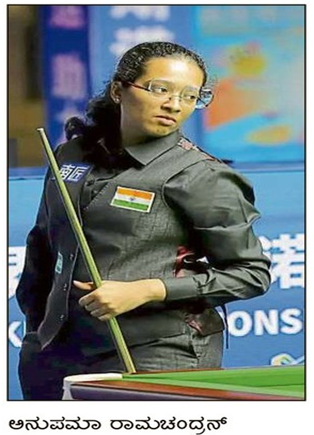
- ಚೆನ್ನೈನ 23 ವರ್ಷದ ಅನುಪಮಾ ಅವರು 3–2 (51-74, 65-41, 10-71, 78-20, 68-60) ಅಂತರದಿಂದ ಆನ್ ಯಿ ಅವರನ್ನು ಮಣಿಸಿ ಐಬಿಎಸ್ಎಫ್ ವಿಶ್ವ ಸ್ನೂಕರ್ ಕಿರೀಟವನ್ನು ಗೆದ್ದ ಭಾರತದ ಮೊದಲ ಮಹಿಳೆ ಎಂಬ ಹೆಗ್ಗಳಿಕೆಗೆ ಪಾತ್ರರಾದರು.
- ಕಳೆದ ವರ್ಷ ಏಷ್ಯನ್ ಸ್ನೂಕರ್ ಪ್ರಶಸ್ತಿಯನ್ನು ಗೆದ್ದಿದ್ದ ಅನುಪಮಾ ಇಲ್ಲಿ ಕೊನೆಯ ಹಂತದಲ್ಲಿ ಅದೃಷ್ಟಶಾಲಿ ಯಾಗಿ ಜಯ ಗಳಿಸಿದರು. ಮೂರು ಬಾರಿ ಚಾಂಪಿಯನ್ ಆನ್ ಯೀ ನಿರ್ಣಾಯಕ ಪಂದ್ಯದಲ್ಲಿ 60-61 ಅಂತರದಿಂದ ಎಡವಿದರು.
- ಸೆಮಿ ಫೈನಲ್ನಲ್ಲಿ ಅನುಪಮಾ 3–1ರಿಂದ ಸ್ವದೇಶದ ಕೀರ್ತನಾ ಪಾಂಡಿಯನ್ ಅವರನ್ನು ಮಣಿಸಿ ಪ್ರಶಸ್ತಿ ಸುತ್ತಿಗೆ ಮುನ್ನಡೆದಿದ್ದರು. ಆನ್ ಯಿ 3–0ಯಿಂದ ತಮ್ಮದೇ ದೇಶದ ಸೋ ಮನ್ ಯಾನ್ ಅವರನ್ನು ಸೋಲಿಸಿದ್ದರು.
UPSC/KPSC Current Affairs: 14th November 2025
- Mekedatu: ‘T.N. challenge is premature’
Context: The Supreme Court termed Tamil Nadu’s application challenging the proposed construction of a reservoir by Karnataka at Mekedatu across the inter-state river Cauvery as “premature” and refused to entertain it.
- The Supreme Court (November 13, 2025) termed Tamil Nadu’s application challenging the proposed construction of a reservoir by Karnataka at Mekedatu across the inter-state river Cauvery as “premature” and refused to entertain it.
- A Bench headed by Chief Justice of India B.R. Gavai said, Detailed Project Report (DPR) on the reservoir, submitted by Karnataka, was only being considered by the experts in the Cauvery Water Management Authority (CWMA) and Cauvery Water Regulation Committee (CWRC).
- The Central Water Commission (CWC) has already made it clear that any acceptance of the DPR would be given only after approvals from CWMA and CWRC.
- In case of approval of DPR, affected parties, including Tamil Nadu, would be free to take measures in accordance with the law.
- The apex court said, Karnataka, anyway, would be bound to release Cauvery water allotted to lower riparian Tamil Nadu and the Union Territory of Puducherry, which is downstream. The hearing before the three-judge Bench was based on an application moved by Tamil Nadu in the apex court seeking a direction to restrain the CWMA from deliberating the proposed reservoir project.
- The application has stated that the planning of the Mekedatu project with a capacity of 67.16 TMC ft. and generation of 400 MW project worth Rs. 9000 crore was in “gross violation” of the decision of the Cauvery Water Disputes Tribunal of February 5, 2007, which was affirmed by the Supreme Court itself on February 16, 2018.
- “The entire objective of the Tribunal’s final decision is to ensure that the pattern of the release of water to the downstream State to meet irrigation interests is not jeopardised,” Tamil Nadu, represented by senior advocate Mukul Rohatgi, argued.
- Senior advocate Shyam Divan, for Karnataka, would in no way impact the water allotted to Tamil Nadu. He said Tamil Nadu’s apprehensions were “completely misconceived”.
- But Tamil Nadu explained that the proposed reservoir would result in the impounding of the flows generated in the Cauvery river from the uncontrolled catchment of the Kabini sub-basin downstream of the Kabini reservoir, the catchment of Cauvery river downstream of KRS dam, uncontrolled flows from Shimsha, Arkavathy and Suvarnavathy sub-basins and various other small streams, which are the sources to ensure 177.25TMC at Billigundlu.
- It said CWMA cannot deliberate or pass any directions on the project when the Supreme Court was seized of the state’s applications to direct the Central Water Commission to reject and return the Detailed Project Report (DPR) for the project and restrain the Environment Ministry from entertaining any application for clearance relating to the Mekedatu project.
- IT policy 2025-30: State to pump in ₹967 crore towards incentives
Context: It seeks to bring investments with special focus on AI and other emerging technologies in cities beyond Bengaluru.
- Karnataka will be spending ₹967 crore towards varied incentives under the Karnataka Information Technology Policy 2025-2030 that seeks to bring significant investments with special focus on AI and other emerging technologies in cities beyond Bengaluru, and elevate Karnataka’s brand globally as ‘AI-native destination’.
- While 16 incentives, including nine newly added incentives, have been proposed to companies to be located in cities beyond Bengaluru, six major incentives have been proposed to units to be located in Bengaluru.
Many types of support
- Among the new incentives being introduced are support for faculty development, recruitment assistance, and talent relocation reimbursements.
- The new policy covers operational costs through electricity duty reimbursement, property tax reimbursement and telecom infrastructure development besides EPF reimbursement, rental assistance and skilling cost reimbursement for companies located beyond Bengaluru.
- The other incentives include internship cost reimbursement, intellectual property incentive, support faculty development programmes, reimbursement for quality certifications and power tariff concessions among others.
Outlay
- The financial outlay to implement the fiscal incentives and concessions for a period of five years is ₹754.62 crore, and ₹212.50 crore has been earmarked for government interventions such as fellowships and other programmes.
- The proposed policy expands the scope to provide extension of benefits to Indian-headquartered Global Capacity Centres operating or establishing a presence in Karnataka. It covers both new and expanding entities.
Increasing GSVA
- The goal is to increase the IT sector’s contribution to Gross State Value Added (GSVA) from 26% to 36% and increase software exports from ₹4.09 lakhs crore to ₹11.5 lakhs crore by 2030, besides driving investments in emerging cities such as Mysuru, Mangaluru, Hubballi-Dharwad, Belagavi, Tumakuru, Kalaburgi, and Shivamogga.
- To elevate the State’s IT and innovation ecosystem, the government through public-private partnership seeks to estabslihe ‘Technoverse’, integrated technology campuses within the upcoming Global Innovation Districts.
- It will offer future-ready tech eco system with advanced R&D labs, digital virtual testbeds, and sector-focused innovation zones among others.
Digital networks
- It seeks to make the State with future ready digital network – Global Testbed Infrastructure Network and Statewide Digital Hub Grid – launch fellowship for 1,000 mid-career women tech professionals, IT talent return programmes, set up ease of doing business cell, and start shared corporate transport – IT Corridor Bus Pooling.
- Karnataka space tech policy aims to garner5% of global market share
Context: In a bid to sustain Karnataka as the number one destination for space technology in India and hold 50% of the national market share, which is estimated to be around $22 billion market by 2033, the State government approved the Karnataka Space Technology policy 2025-2030 to make Karnataka a global space technology destination, aiming at 5% of the global market share.
500 start-ups
- The main objective of the policy is to support and help skill development of 50,000 young professionals, attract $3 billion through investment incentives and outreach and support 500 start-ups and MSMEs, with grants to enable design, manufacturing, assembly, integration, testing, launching, and operations of 50 satellites from Karnataka.
- Among the focus areas of the policy will be the government support to companies engaged in the development of next generation space capabilities, including space stations and space tourism infrastructure, in-orbit manufacturing, and servicing capabilities.
- The government is also looking to support space asset development, launch infrastructure, manufacturing infrastructure and software. It will also support enterprises involved in earth observation, satellite communications, positioning, navigation, and timing services.
- The policy aims to facilitate global and domestic space sector to invest to set up manufacturing and assembly, integration and testing units in Karnataka to cater to domestic and international market.
- While a special package will be designed based on the project proposal for incentives for investments above ₹100 crore, a list of exemption, subsidy, and incentives have been provided for investments that are less than ₹100 crores.
- Law and Parliamentary Affairs H.K. Patil announced the contours of the policy in the Cabinet briefing here on Thursday. It also aims to facilitate highly skilled workforce across the space value chain.
- He said that the policy looks at five broad strategies that include skill development, investments, infrastructure and facilities, innovation and facilitation, and adoption and awareness. A space technology cell, which will act as single touch point for industry, start-ups, and MSMEs will be set up under the Karnataka Innovation and Technology Society.
- India, Nepal ink pact to step up trade ties
Context: India and Nepal have amended the Treaty of Transit between the two countries to facilitate the movement of rail-based freight between Jogbani in India and Biratnagar in Nepal, including bulk cargo.
- Union Minister of Commerce and Industry Piyush Goyal and Nepal’s Minister for Industry, Commerce and Supplies Anil Kumar Sinha met in New Delhi on Thursday to exchange the letters amending the protocol to the Treaty of Transit between India and Nepal.
- “This liberalisation extends to key transit corridors — Kolkata-Jogbani, Kolkata-Nautanwa (Sunauli), and Visakhapatnam-Nautanwa (Sunauli), thereby strengthening multimodal trade connectivity between the two countries and Nepal’s trade with third countries,” the government said in a release.
- The two Ministers also welcomed the ongoing bilateral initiatives to boost cross-border connectivity and trade.
- SC bats for protection of pristinesal forest in Jharkhand’s Saranda
Context: The Supreme Court directed the Jharkhand government to declare 31,468.25 hectares (approximately 314 sq. km.) of the Saranda forest area as a wildlife sanctuary, balancing biodiversity protection with sustainable iron ore mining.
- “The State cannot run away from its duty to declare the extent of 31,468.25 hectares as Saranda Wildlife Sanctuary,” a Bench headed by Chief Justice of India B.R. Gavai observed in the judgment.
Part of the ecosystem
- Saranda is one of the world’s most pristine sal forests, the court noted. It is home to critically endangered species, including the endemic sal forest tortoise, four-horned antelope, Asian palm civet, and wild elephants.
- For centuries, the area has been inhabited by the Ho, Munda, Uraon and allied Adivasi communities whose subsistence and cultural traditions are intrinsically tied to forest produce.
- The Saranda forest division also accounts for 26% of India’s iron ore reserves. The steel plants of SAIL and Tata are critically dependent on mining in this area.
- Amicus curiae, senior advocate K. Parameshwar, had submitted to the court that a judicial declaration of the entire area as a wildlife sanctuary would halt mining and affect employment opportunities.
- The hearings had seen the Jharkhand government dither about the area that ought to be cordoned off from mining and declared a wildlife sanctuary.
- The State had initially suggested that only 24,941.64 hectares of forest area should be declared a sanctuary, arguing that “vital public infrastructure” in the area would have to be demolished to make space for the sanctuary.
- However, the Jharkhand government later clarified in court that 31,468.25 hectares of forest area, consisting of 126 compartments, neither hosted mining activities nor was used for any non-forest use.
- The court, in its judgment, reminded Jharkhand that a “State has a positive obligation and a mandate to provide statutory protection to forests and wildlife and declare ecologically significant areas to be statutorily protected”.
- The Bench ordered the Jharkhand government to widely publicise that neither the individual nor community rights of tribals and forest dwellers in the Saranda area will be adversely affected by the judgment.
- Centre releases draft Seeds Bill; farm outfits cautious, industry welcomes it
Context: After two failed attempts by both the UPA and NDA governments in 2004 and 2019 to pass a similar law, the Union government has brought yet another draft Seeds Bill here.
- The Union Agriculture Ministry said the new draft is aligned with current agricultural and regulatory requirements. The proposed legislation is intended to replace the existing Seeds Act, 1966 and the Seeds (Control) Order, 1983.
- While the seed industry welcomed the move, farmer organisations reminded the Centre that it had to withdraw the Bill on two occasions following their resistance.
- The Centre said in a release that the draft Seeds Bill, 2025 seeks to regulate the quality of seeds and planting materials available in the market, ensure farmers’ access to high-quality seeds at affordable rates, protect farmers from losses, and liberalise seed imports to promote access to global varieties.
- “On the enforcement side, the draft Bill proposes to decriminalise minor offences, thereby promoting ‘Ease of Doing Business’ and reducing compliance burden, while maintaining strong provisions to penalise serious violations effectively,” the government said.
- All stakeholders and members of the public can submit their comments and suggestions on the draft Bill and its provisions by December 11.
- As per the draft, every dealer in seeds shall obtain a registration certificate from the State government before selling, keeping for sale, offering to sell, import or export or otherwise supply any seed by himself or by another person on his behalf.
- The draft law also provides for regulation of sale of seeds so that seed varieties conform to the minimum limit of germination, genetic purity, physical purity, traits, seed health and other seed standards specified in the ‘Indian Minimum Seed Certification Standards’.
- Senior functionary of Bhartiya Kisan Union (Ekta Ugrahan) Pavel Kussa said: “…On the face of it, this Bill favours seed companies and facilitates ease of doing seeds business. We will study the draft Bill and make our position known to the government and the public.”
- Federation of Seed Industry of India chairman Ajai Rana said the release of the draft is a timely step toward modernising India’s seed regulatory framework.
- India’s carbon emission rise slower this year, says report
Context: In 2024, the country’s emissions grew by 4%, but a favourable monsoon, which cut demand for cooling, and a growth in renewable energy use, limited the rise to 1.4%, says Global Carbon Project.
- India’s 2025 carbon emissions have increased slowly compared to last year. While global carbon emissions are expected to rise to 38 billion tonnes, or by 1.1%, this year, the growth in India’s emissions is expected to increase by 1.4%, according to the Global Carbon Project, an authoritative tracker of fossil fuel emissions. This is lower than in recent years — in 2024, India’s emissions grew 4% than the previous year.
- The slower increase was partly due to a favourable monsoon that reduced cooling demand, as well as a “strong growth in renewable energy”, leading to lower coal use.
Global emission trends
- China’s emissions in 2025 are projected to increase by 0.4% — also a slower growth than in recent years. This was due to a “moderate growth in energy consumption combined with an extraordinary growth in renewable energy.”
- Emissions are projected to grow in the United States (+1.9%) and the European Union (0.4%) in 2025.
- Overall, India is the third largest emitter of carbon at 3.2 billion tonnes annually (2024), led by the U.S. (4.9 billion tonnes) and China (12 billion tonnes). India’s per capita emission is 2.2 tonnes of carbon dioxide per year, the second lowest among 20 of the largest economies globally. Coal is the major fuel type contributing to India’s emissions.
- The projected rise in global fossil CO2 emissions in 2025 is driven by all fuel types: coal +0.8%, oil +1%, natural gas +1.3%. Over the 2015-2024 period, emissions from permanent deforestation remained high around 4 billion tonnes of CO2 per year, while permanent removals through reafforestation and forest regrowth offsets about half of the permanent deforestation emissions.
- Total CO2 emissions — the sum of fossil and land-use change emissions — have grown more slowly in the past decade (0.3% per year), compared to the previous decade (1.9% per year). The remaining carbon budget to limit global warming to 1.5°C is “virtually exhausted”.
- The remaining budget for 1.5°C is 170 billion tonnes of CO2, equivalent to four years at the 2025 emissions levels.
- “With CO2 emissions still increasing, keeping global warming below 1.5°C is no longer plausible,” said Professor Pierre Friedlingstein, of Exeter’s Global Systems Institute, who led the study. “The remaining carbon budget for 1.5°C, 170 billion tonnes of carbon dioxide, will be gone before 2030 at current emission rate. We estimate that climate change is now reducing the combined land and ocean sinks – a clear signal from Planet Earth that we need to dramatically reduce emissions.”
- The latest numbers come even as world leaders are gathered in Belem, Brazil, to attempt progress in transitioning away from fossil fuel use while also negotiating how to pay for the costs of bolstering defence against the effects of human-caused climate change already underway.
- SC wants govt. to promote EVs amid high air pollution
Context: Amid worsening air pollution in the national capital, the Supreme Court on Thursday observed that it may be high time to revisit the National Electric Mobility Mission Plan (NEMMP) 2020 to promote electric vehicles and even launch a pilot project in metropolitan cities.
- Appearing before a Bench headed by Justice Surya Kant, advocate Prashant Bhushan, for NGO, Centre for Public Interest Litigation, urged that the government ought to give incentives to encourage consumers to shift to electric-powered vehicles.
- He pointed out that an electric vehicle was costlier than one run on fossil fuel. He said the government must lead the way by transitioning entirely to electric vehicles.
- Attorney-General R. Venkataramani, for the Centre, said a complete shift to electric vehicles was a major policy decision. Justice Kant said five years have gone by since NEMMP 2020.
- “Now, even the policy may have to be revisited. You could start a pilot project in metropolitan cities like Delhi, Mumbai, Kolkata, Madras (Chennai) or Bengaluru,” Justice Kant mooted, listing the case after four weeks.
- The petitioner-NGO had sought the timely implementation of the Electric Vehicle Policy and Faster Adoption and Manufacturing of Hybrid & Electric Vehicles India scheme.
- In a related development, Supreme Court judge Justice P.S. Narasimha, heading another Bench on Thursday, asked lawyers to appear virtually in court. Justice Narasimha advised lawyers to take into consideration the worsening pollution in the national capital and not appear physically in court.
- Centre junks quality control order on polyester fibre, yarn
Context: The move is expected to benefit the Indian textile industry by makingit easier to obtain raw materials at internationally competitive prices.
- The Centre has revoked the Quality Control Order (QCO) on polyester fibre and yarn, and PTA and MEG, which was introduced two years ago, bringing relief to the textile industry.
- In an order dated November 12, 2025, the government said that based on powers conferred by Section 16 of Bureau of Indian Standards Act, it was revoking the orders of the Ministry of Chemicals and Fertilizers bringing in QCO on ethylene glycol, terephthalic acid, polyester spun, grey and white yarns, polyester continuous filament yarn, polyester partially oriented yarn, and polyester industrial yarn.
- The government brought in QCOs on polyester yarn, filament, fibre, and raw materials PTA and MEG, thus restricting imports.
- India has shortage of PTA and MEG and yet the government introduced QCOs. These are critical raw materials for the manmade fibre sector. The QCOs led to prices increasing by almost ₹4 a kg, said R.K. Vij, Secretary General of the Polyester Textile Apparel Industry Association.
- According to chairman of the Southern India Mills Association Durai Palanisamy, one of the long-pending needs of the industry has been addressed by the government. The QCOs increased the cost of polyester fibre and filament yarn by 30%. The relaxation of the QCO will streamline the import of polyester and its raw materials, ensuring an uninterrupted supply to spinners, weavers, and processors. Competitive imports are expected to stabilise domestic prices, he said.
- ReNew Energy to invest ₹60,000 cr. in green energy in A.P.
Context: ReNew Energy Global Plc, a leading de-carbonisation solutions company, on Thursday announced that it would invest ₹60,000 crore ($6.7 billion) in Andhra Pradesh to set up multiple green energy projects in the State.
- With this, the company’s total investment in the State goes up to ₹82,000 crore ($9.3 billion).
- In May this year, the company had committed to invest ₹22,000 crore (U.S. $2.5 billion) in the State to set up one of India’s largest hybrid renewable energy projects.
- In four memoranda of understanding (MoUs) entered into with the Andhra Pradesh Economic Development Board (APEDB) in the presence of Chief Minister N. Chandrababu Naidu and IT Minister N. Lokesh, the company announced its plan to invest in establishing a 6 GW PV ingot-wafer plant, a 2 GW pumped hydro project, a 300 KTPA green ammonia facility and 5 GW hybrid projects, including wind–solar and solar–BESS.
- Speaking on the occasion, Mr. Naidu said, “This collaboration will accelerate clean energy deployment, attract high-quality jobs, and contribute meaningfully to sustainable and inclusive growth for the people of the State.”
- Sumant Sinha, founder-chairman and CEO of ReNew, said, “ReNew has a long-standing presence in A.P. and, with this expansion, we are bringing a fully integrated clean energy value chain to the State — from wafer to large-scale renewable projects and storage deployment.”
- Exporters welcome govt.’s ₹45,000 cr. export plan, but say more details, allocation needed
Context: The Export Promotion Mission (EPM) and the credit guarantee scheme for exporters (CGSE) approved by the Union Cabinet has been welcomed by exporter bodies and trade experts, but there is room for more to be done, and higher allocations to be made, some of them said. The Union Cabinet on Wednesday approved the EPM, which had been initially announced in Budget 2025.
- The total outlay of the Mission is ₹25,060 crore and will cover the period 2025-26 to 2030-31.
- The CGSE aims to provide 100% credit guarantee coverage totaling ₹20,000 crore to lenders on loans they extend to eligible exporters, including Micro, Small, and Medium Enterprises (MSMEs).
- Some trade experts, however, are not as sanguine about the Mission. “Despite its promise, the Mission faces several weaknesses,” Ajay Srivastava, former Director General of Foreign Trade and founder of Global Trade Research Initiative said. “Although announced in February, EPM is still only a broad framework. It now needs to be translated into detailed schemes with precise guidelines specifying eligibility, processes, and disbursal rules.” Mr. Srivastava said, this would mean it could take months before exporters see benefits.
- Centre suspends over 4,000 fertiliser distributor licences on hoarding charges
Context: The Union Department of Fertilisers has cancelled or suspended 4,298 licences and the registration of fertiliser distributers for black marketing, hoarding and diversion of stocks.
- The Ministry had earlier issued 8,777 show cause notices to the erring traders and 547 FIRs have so far been registered nationwide.
- In a release, the Department said it conducted a comprehensive drive with the Union Agriculture Ministry to secure the national fertiliser supply chain.
- “Working in close coordination with State Governments, effective enforcement action on an unprecedented scale including raids, inspections, and legal measures to curb black marketing, hoarding, and diversion of fertilisers has been taken by the district authorities. These proactive and strict steps taken by the State Governments ensured timely availability, reinforced market discipline, and upheld the integrity of fertiliser distribution across all regions of the country,” the government said.
- The Department said its officials conducted 3,17,054 inspections and raids.
- All enforcement actions were executed under the Essential Commodities Act and the Fertiliser Control Order,” the Centre added.
- Why Hepatitis A deserves a place in India’s universal immunisation programme
Context: As India debates the inclusion of the typhoid conjugate vaccine in its universal immunisation programme, it is time to ask whether Hepatitis A — a growing cause of acute liver failure — deserves even greater priority.
- A safe, effective, and long-lasting indigenous vaccine already exists; what is missing is the policy decision. India’s Universal Immunisation Programme (UIP) has been one of the most successful public health initiatives in the developing world. It eradicated polio, curbed measles deaths, and saved millions of young lives. Yet as the country’s health landscape changes, so too must its immunisation priorities.
- A recent article in The Hindu made a strong case for introducing the typhoid conjugate vaccine (TCV) into the UIP. The argument is compelling: India bears half of the world’s typhoid burden, manufactures multiple WHO-prequalified TCVs, and yet has not included them in its national schedule.
- However, as we assess new vaccines for inclusion, scientific evidence and public-health impact must guide our choices. On these counts, Hepatitis A vaccination may deserve even higher priority.
On Hepatitis A
- Hepatitis A, by contrast, is a silent but mounting threat. For decades, the virus infected most Indians in early childhood, causing mild illness and conferring lifelong immunity. With improved sanitation and hygiene, that pattern has changed. Fewer children are exposed early, leaving many adolescents and adults unprotected — groups in whom the disease is far more severe.
- In recent years, multiple outbreaks in Kerala, Maharashtra, Uttar Pradesh, and Delhi have underscored this shift. Hospitals have reported clusters of acute liver failure and even deaths. Unlike typhoid, there is no specific treatment for severe Hepatitis A; recovery often depends on supportive care. Seroprevalence studies reveal a steady decline in protective antibodies — from over 90% two decades ago to less than 60% in many urban regions. The result is a growing pool of susceptible young people vulnerable to serious illness. Hepatitis A is no longer a benign childhood infection; it is an emerging public health concern.
- The good news is that Hepatitis A is entirely preventable. Both live-attenuated and inactivated vaccines offer protection rates exceeding 90 to 95%, with immunity lasting for at least 15 to 20 years — often lifelong. India has its own indigenous success story here. Biological E’s Biovac-A, a live-attenuated vaccine developed domestically, has been used in the private sector for more than two decades with excellent safety and efficacy records.
- Unlike typhoid vaccines, Hepatitis A vaccines do not face issues of waning immunity, antibiotic resistance, or carrier states. A single dose of the live vaccine can confer durable, long-term protection. From a public health perspective, it is a model vaccine: safe, effective, long-lasting, and already made in India.
- Both typhoid and Hepatitis A cause significant illness, but their epidemiology and control prospects differ sharply. Typhoid mortality has declined with prompt antibiotic treatment and better sanitation, though antimicrobial resistance remains a concern. Hepatitis A, on the other hand, strikes indiscriminately across socio-economic groups, lacks specific treatment, and increasingly affects older children and young adults, where the disease is more severe.
Measurable criteria
- When judged by measurable criteria — disease burden, vaccine efficacy, durability, cost-effectiveness, and programmatic simplicity — the balance tilts decisively toward Hepatitis A. It is the low-hanging fruit of vaccine-preventable diseases: a single-dose, long-lasting, with an indigenous product ready for universal use.
- India could begin by introducing Hepatitis A vaccination in States that have experienced repeated outbreaks or show declining antibody prevalence. The vaccine can be co-administered with existing boosters such as DPT or MR, using the same infrastructure. Periodic serosurveys can track population immunity and guide expansion. This phased approach aligns with the UIP’s proven model of gradual, evidence-based rollout.
- This is not an argument against typhoid vaccination; it is a plea for rational sequencing. Typhoid control is important, but Hepatitis A control is both easier and more cost-effective at this stage. The disease burden is substantial, the vaccine is home-grown, and the science is clear.
- India’s immunisation programme has repeatedly shown foresight — from the early inclusion of Hepatitis B to the introduction of rotavirus and pneumococcal vaccines. Adding Hepatitis A would be a natural next step in that continuum of progress.
- How is SEC ensuring fair elections?
Context: Following the Supreme Court’s directions, Maharashtra will hold local body elections in three phases, beginning on December 2. The first phase covers 246 municipal councils and 42 nagar panchayats, while the second will include 32 of 34 zilla parishads and 336 of 351 panchayat samitis.
- The municipal corporation elections will be held in the last phase. The court has directed that all elections be completed by January 31, 2026. The exercise comes amid Opposition criticism of errors and duplication in the voters’ lists.
Can the State Election Commission delete duplicate names?
- No. The State Election Commission (SEC) does not have the right to add or delete names from the voters’ lists. As per constitutional provisions, ‘superintendence, direction and control of the conduct of elections to urban and rural local bodies vest in the SEC.’ However, under the provisions of the five different Local Body Acts of the State, the SEC does not prepare a separate voters’ list for these elections. Instead, it uses the voter’s lists prepared by the Election Commission under the Representation of the People Act, 1950, by bifurcating them to represent the relevant wards of the local bodies concerned.
- For the upcoming local body elections, the Maharashtra SEC will use the electoral list as of July 1, 2025, which means the list containing inclusions and changes made by the Chief Electoral Officer up to that date. However, the cut-off date for first-time voters was not revised after January 1, 2025. As a result, young voters who turned 18 after January 2025 have expressed disappointment at being unable to vote in the forthcoming elections.
What does the SEC do?
- The SEC is responsible for the delimitation of all the Assembly constituencies in wards. This involves dividing the names of voters listed under each Assembly constituency into the respective wards.
- Under the revised voters’ list programme, beginning November 20, the SEC will invite objections and suggestions on the draft voters’ lists for the municipal corporation elections. The exercise will continue until December 12 and include the publication of the draft voters’ list on November 20, followed by the submission of objections and suggestions until November 27. The final ward-wise voters’ lists, after incorporating valid objections and suggestions, will be published on December 5.
- The list of polling centres will be published on December 8, and the final polling centre-wise voters’ list will be released on December 12.
Will the exercise address the issues raised by the Opposition?
- The Opposition has said that the revised programme does not address all the issues they had raised. For example, they raised issues about the electoral lists’ opaqueness, double voters, bulk voters on the same address, voters with zero address, and illegal names from outside the State registered in the list.
- The SEC officials said that during the revision exercise, four kinds of objections can be raised: when a voter’s name appears in the Assembly election list but is missing from the local body list; when a voter’s name is assigned to the wrong ward; when there are duplicate entries; and when multiple voters are registered at the same address.
- While the SEC cannot add or delete names, it will mark double and doubtful entries, officials said. A tool will be used to identify duplicate names on the Assembly voters’ list using four filters: first name, middle name, last name, and gender. When the Chief Electoral Officers receive the list of duplicate names, they will mark these entries with stars and undertake a field verification.
- Here, the voters will have to give an undertaking about the booth at which they will vote. These undertakings will be kept with the marked copies of the electoral rolls at each polling centre to ensure that no voter votes in more than one place.
- The Opposition, however, has questioned the feasibility of the exercise in such a short span. “Also, what if the list itself is defective? Clearly, nothing can be done about it, since it comes under the purview of the Central Election Commission. This does not address the many concerns we have raised,” an Opposition leader said.